15 Quotes From “Mansfield’s Book Of Manly Men”

Mansfield's Book Of Manly MenFrankly, fellas, there are just way too many passages I highlighted to share them all here, but I did want to give you a taste of some of the manly wisdom in Mansfield’s Book Of Manly Men. You can read my full book review by clicking here, but I suggest every red-blooded male who wants to be a manly man go get this book! You’ll be reading a lot more from me in the next few weeks that is inspired from this book.

“What makes a man a warrior is his willingness to place himself between what he holds dear and anything that threatens it. Honor is the chief motivator for the warrior. Dishonor is unthinkable. He does the right thing without expectation of reward because honor is an intrinsic value that, when manifested in one’s life, provides its own rewards.” —William Boykin

“By words like manly and manhood, I don’t mean the kind of behavior we see in the fake masculinity that surrounds us today. There’s nothing manly about a guy downing booze until he throws up in the street. There’s nothing manly about cruising for women like some predatory beast and then devouring them for pleasure before casting them aside. There’s nothing manly about making a child but then running like a coward before that child is born. There’s nothing manly about dominating a woman or treating her like a servant or leaving her with burdens that aren’t rightly hers. To think these actions make up true manhood is like thinking the average ‘gentleman’s club’ is actually for gentlemen. It’s not. Instead, it is a Palace of Perpetual Adolescence where incomplete males go to get on the cheap what they don’t have the guts to fight for righteously and make their own. … I am talking about the kind of manhood that makes a family whole, a woman safe, a child confident, and a community strong.” —Stephen Mansfield

“All it takes for a contagious manly culture to form is for one genuine man to live out genuine manhood. It creates a model, something for other men to feed upon and pattern themselves after. It also gives other genuine men a vital connection that sustains and extends who they are.” —Stephen Mansfield

“A man cannot fulfill his purpose if he is living for applause, approval, and affirmation in this world.” —Stephen Mansfield

“If a man does not have an ideal and try to live up to it, then he becomes a mean, base and sordid creature, no matter how successful.” —Theodore Roosevelt, in a letter to his son Kermit 

“Honorable men refuse to wallow in the small and the bitter. Honorable men refused to hate life because something once went wrong. Honorable men don’t build monuments to their disappointments, nor do they let others brand into them and curse them to their destruction. Honorable men seek out the highest definition of their lives, the nobler meaning granted by heritage, by their ancestors’ dreams and their parents’ hopes. Honorable man cry out to God until curses are broken and a grander purpose is achieved. Honorable man don’t settle for lives of regret.” —Stephen Mansfield

“Nothing great will ever be achieved without great men, and men are great only if they are determined to be so. For glory gives herself only to those who have always dreamed of her.” —Charles de Gaulle

“True friends stand in harm’s way for each other. True friends take the hits for one another. … Genuine men stand with their friends and look on the scars that result has signs of manly honor.” —Stephen Mansfield

“Weak men assume what they need to know will seek them out. Men of great character and drive search out the knowledge they need.” —Stephen Mansfield

“For a man to become a great man, he will have to defeat the force of bitterness in his life. No one escapes it. There is enough offense and hardship in the world to assure that all of us will be wounded and betrayed, all of us will have opportunity to drink the sweet-tasting poison of bitterness against those who have wronged us. The art of surviving untainted is to learn the art of forgiveness.” —Stephen Mansfield

“The question we all face is not whether or not we have defects. We do. Everyone of us. The question is whether we are capable of envisioning a life defined by forces greater than the weight of our flaws. The moment we can—the moment we can envision a life beyond mere compromise with our deformities—that is the moment we take the first steps toward weighty lives. Manly men know themselves, work to understand their God-ordained uniqueness and their unique brand of damage, and accept they will always be a work in progress, always be a one-man construction project that is never quite finished in this life. They don’t despair. They don’t settle. They don’t expect perfection of themselves. They understand that destiny is in the hand of God. They also understand that these destinies are fashioned in a man’s struggle against the enemies of his soul.” —Stephen Mansfield

“Every man must decide whether he will walk in the light of creative altruism or in the darkness of destructive selfishness.” —Martin Luther King Jr.

“Virtue is a state of war, and to live in it we have always to combat with ourselves.” —Jean-Jacques Rousseau

“Adversity toughens manhood, and the characteristic of the good or the great man is not that he has been exempt from the evils of life, but that he has surmounted them.” —Patrick Henry

“The man, whom I called deserving the name, is one whose thoughts and exertions are for others rather than himself.” —Walter Scott

Pastor, Stop Competing!

Whenever I’m with other pastors and they ask me, “How’s your church going?” I know the answer I give is not the answer they want. For most pastors “How’s your church going” is really code for “How many people are coming to your church services.” I have always had a sneaking suspicion that if I answered the “How’s it going” question with an attendance figure, that I have missed something.

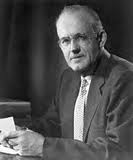
This quote from A.W. Tozer convinced me that my suspicion was correct—

Tozer“Dear Lord, I refuse henceforth to compete with any of Thy servants. They have congregations larger than mine. So be it. I rejoice in their success. They have greater gifts. Very well. That is not in their power nor in mine. I am humbly grateful for their greater gifts and my smaller ones. I only pray that I may use to Thy glory such modest gifts as I possess. I will not compare myself with any, nor try to build up my self-esteem by noting where I may excel one or another in Thy holy work. I herewith make a blanket disavowal of all intrinsic worth. I am but an unprofitable servant. I gladly go to the foot of the class and own myself the least of Thy people. If I err in my self judgment and actually underestimate myself I do not want to know it. I purpose to pray for others and to rejoice in their prosperity as if it were my own. And indeed it is my own if it is Thine own, for what is Thine is mine, and while one plants and another waters it is Thou alone that giveth the increase.” —A.W. Tozer (emphasis added by me)

A gutsy prayer! O Lord, may I always be able to pray this prayer in absolute integrity.

A Warning To The Itinerant Missionary

My cousin wrote this post mainly to himself, but it is an important reminder for everyone—missionary or pastor—who preaches the gospel.

Live DeadGuest Blogger: Dick Brogden 

Missionaries are given the immense privilege of representing God’s heart to both the nations and the church. When we return from our fields of obedience, we are invited into pulpits—grand and humble—to speak on behalf of both the lost and the Lord. We are feted and lauded, which can lead to pride. We observe shallowness and performance, which can lead to a critical spirit. The more we travel and speak, the more we must beware our own hearts. I sat down this weekend and wrote out some warnings to myself:

  • I do not deserve the pulpit; I have not “earned” it.
  • I am not better than the ones I preach to.
  • I cannot presume God’s favor or anointing.
  • I cannot live in sin and call others to holiness.
  • My life has to match my exhortations.
  • I can’t rely on old sermons. I am responsible to give God’s flock fresh bread. If a sermon is to be re-used, it must be fresh to my soul.
  • I cannot allow any whisper of entitlement into my heart. I am not owed praise, respect, attention, or any financial offering.
  • I cannot think my looks, height, posture, style, or natural ability is important, nor that natural gifts can in any way impart divine life to the hearer.
  • I cannot waste God’s time or money with half-hearted preparation, reflection, passion, or effort.The flock must see and feel that I love them, and more importantly that I love Jesus.
  • My spirit must be gentle even if my words are hard.
  • I must have true humility and lowliness. Nothing is as proud or as disgusting as false humility, whether to the individual or before the congregation.
  • I must care more about what God thinks than what man thinks and must obey His promptings and speak as His oracle.
  • If I do not ascend to the pulpit clothed and endued with the Holy Spirit, I am immediately exposed as naked and foolish before God, and it will not be long until I am exposed as a fraud before all men.
  • I must have a holy terror of speaking in my own strength or from my own wisdom. I must have a heavenly horror of speaking what is false, exaggerated, or misleading. I must be terrified of speaking one word without the covering and impetus of the Spirit.

I noted with sadness this weekend that even if all is said in the right spirit and under God’s authority, some ears remain deaf and others hear selectively. We cannot control our hearers, nor are we responsible for how they hear. We are responsible for what and how we speak. It is incumbent on us to speak the words of God in the way and in the spirit He requires. This is a fearful and awesome privilege. God help us. God watch over our hearts and lips.

** I encourage you to follow the Live Dead blog where Dick regularly posts.

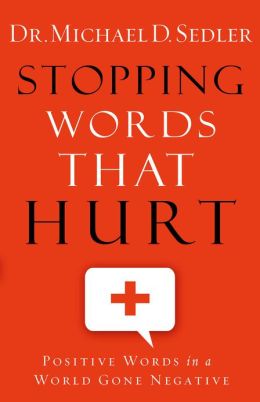
15 Quotes From “Stopping Words That Hurt”

Stopping Words That HurtThere was so much for me to process in Stopping Words That Hurt by Dr. Michael Sedler (you can read my full book review by clicking here). If you’ve ever been hurt by someone else’s words about you, there is help for you in this book. If you’ve ever hurt someone else with the words you’ve spoken, there is help for you in this book.

Bottom line: this book can help cut-off hurtful words and evil reports before they gain momentum. Please read this book!

Here are just a few quotes that stood out to me—

“We are so brainwashed into believing that it is permissible to violate one another verbally that it takes a concentrated effort to begin to have a new thought pattern.”

“It is imperative that you understand this truth: Just listening to an evil report can do tremendous damage to your perspective, viewpoint and overall spirit. … Joining in a negatively-driven conversation, no matter how small the participation, may destroy the testimony of a life. Listening to grumbling and ungodly attitudes eventually contaminates the spirit. The more we allow discontent to be taken in by our spirits, the greater the tendency to compromise our own speech patterns. We are being called to a high standard of living where the rewards for our faithfulness are eternal.”

“It is usual for most of us to listen without questioning. We oftentimes want to support a friend, supervisor or person of influence. In fact, a messenger may single us out because she knows we will not disagree with or question her. Are we being used because of our own gullibility and blindness to negative speech patterns?”

“We must have our antennas up and be prepared when we hear negative comments and subtle innuendos about others.”

“If we are unable to recognize the potential destruction caused by negative words, we will eventually cause injury to those around us. And, sadly, we often deceive ourselves into believing there was justification for our actions.”

“It is rude to knowingly be a part of gossip. It is not good manners to listen to verbal assaults and blatant character assassinations of people who are not present to defend themselves. It is foolishness and ignorance. We must open our eyes and discern when we are listening to evil reports in order to be accepted by the crowd.”

“A bold positive response can put out the fire.”

“Learn to avoid the trap of falling into emotional identification by getting information for yourself. Compare your feelings and thoughts with the Bible’s guidelines. Look for corroboration or contradictions as you assess the situation. And, finally, give a little more weight to the perspective of those who have been faithful, trustworthy and proven people of integrity than the words of a stranger or ‘expert’ who has no track record of honesty.”

“Fear can draw us toward God or pull us away. It can create a desire in us to cling to the truth or alter our perception of the truth. While satan wants to use fear to rob us of our faith in God, we need to continue to speak words of truth and confidence regarding our place with Christ.”

“Impurity occurs when we hear evil reports with our natural ears and minds without seeking spiritual wisdom and understanding. If we accept the words of others as truth, we will become filled with a mixture of philosophies, attitudes and beliefs.”

“A person who has responsibility over others also has great influence. If he or she shares a negative report with the general population, those with unguarded spirits will become contaminated.”

“I speak a strong word of caution to husbands and wives, significant others and close family members. We often take on the offense when a loved one is wronged or slighted. And though they may work through the issue, we still hold on to the anger and bitterness.”

“It is difficult to ‘have ears that hear’ at this point in the process. First of all, we do not see ourselves as defiled or polluted. We think we are right and can handle everything ourselves. We are suspicious about counsel. We question the motives of those giving it. We actually fight the process of cleansing using words such as manipulating, self-centered and controlling to describe the interventions of others. We accuse even our closest friends and supporters of being insensitive and uncaring. Whereas once we received challenges and guidance from others, now we meet each comment or suggestion with disdain and animosity. It is during this phase that people have a tendency to reject the process of cleansing, choosing instead to walk away from purity and to blame and curse others for their lack of support and love.”

“In order to heal with words, we must be willing to be persistent with them. Jesus frequently verbalized His love for His disciples. Once is not enough! Encouragement, praise and positive words continue to feed the soul in the same way water moistures the soil. Soil will eventually dry out and need another dose of fresh water.”

“Great people of God find a way to speak hope into others. They give a sense of purpose, of calling, of future, of destiny to those around them.”

Ministers Are Standard-Bearers

Pastor, this is a challenging word to us all…

McCheyne“Your sermon on Sabbath lasts but an hour or two; your life preaches all the week. Remember, ministers are standard-bearers. satan aims his fiery darts at them. If he can only make you a covetous minister, or a lover of pleasure, or a lover of praise, or a lover of good eating, then he has ruined your ministry forever. Ah! Let him preach on fifty years, he will never do me any harm. Dear brother, cast yourself at the feet of Christ, implore His Spirit to make you a holy man. Take heed to yourself and to your doctrine.”

—Robert Murray McCheyne

Enter The Pulpit Without Embarrassment

A.W. Tozer

“I am afraid of the pastor that is another man when he enters the pulpit from what he was before. Reverend, you should never think a thought or do a deed or be caught in any situation that you couldn’t carry into the pulpit with you without embarrassment. You should never have to be a different man or get a new voice and a new sense of solemnity when you enter the pulpit. You should be able to enter the pulpit with the same spirit and the same sense of reverence that you had just before when you were talking to someone about the common affairs of life.” —A.W. Tozer

My dear fellow pastor, your congregation wants a pastor-shepherd who is authentic, not plastic. One who is real and approachable, not high-and-mighty. One who is a tour guide on the journey with them, not a travel agent that stays behind. One who is the same in the pulpit, in the restaurant, on the ball field, in the “unguarded” moments.

UPDATE: I elaborate much more on this in my book especially for pastors and church leaders called Shepherd Leadership.

Happy Birthday, Mr. Lincoln

Abraham LincolnToday is Abraham Lincoln’s birthday. What an amazing man he was! Long before he became president of the United States, he had prepared himself to be a first-rate man at whatever he was going to do. How blessed we as a nation are to have a man worthy to be called “the savior of the Union” come into office at the time he did!

In honor of President Abraham Lincoln’s birthday, here are a few quotes and anecdotes from my files.

When he was a boy in Indiana, Lincoln borrowed a book about George Washington from a neighbor, Josiah Crawford. After rainwater ruined it, he went straight to Crawford, owned up to what had happened, and spent three days in Crawford’s cornfield working to pay for the book.

“I’ll prepare myself and be ready for opportunities as they come.” —Abraham Lincoln

When Lincoln was a young storekeeper in New Salem, Illinois, he accidentally shortchanged a customer by six and a quarter cents. As soon as he discovered the error, he closed the shop and walked six miles to pay the money back. Lincoln’s store was not a success. He and his partner, William Berry, went into debt trying to make a go of it. The store “winked out” anyway, as Lincoln put it, and left him owing a great deal of money, especially after Berry died. He could have done what so many others in similar situations did—simply head west for new frontiers and leave the debt behind. But he resolved to stay. For a young man of his means, it was a large burden. He called it, with grim humor, his “national debt.” It took him several years, but he paid it all back. 

“I have been driven many times upon my knees by the overwhelming conviction that I had nowhere else to go. My own wisdom and that of all about me seemed insufficient for that day.” —Abraham Lincoln

“That the Almighty does make use of human agencies and directly intervenes in human affairs is one of the plainest statements in the Bible. I have had so many evidences of His direction, so many instances when I have been controlled by some other power than my own will, that I cannot doubt that this power comes from above.” —Abraham Lincoln 

“The possibility that we may fail in the struggle ought not to deter us from the support of a cause we believe to be just.” —Abraham Lincoln

Horace Greeley, writing in the New York Tribune, wrote: “Never before did one so constantly and visibly grow under the disciplines of incessant cares, anxieties, and trials. The Lincoln of 1862 was plainly a larger, broader, and better man than he had been in ’61, while ’63 and ’64 worked his continued and unabated growth in mental and moral stature.” 

“It is more pleasing to God to see His people study Him and His will directly than to spend the first and chief of their efforts attaining comfort for themselves.” —Abraham Lincoln

“I destroy my enemies when I make them my friends.” —Abraham Lincoln 

“Surely God would not have created such a being as man to exist only for a day! No, no, man was made for immortality.” —Abraham Lincoln

Abraham Lincoln once turned down a job applicant citing, “I don’t like his face.” One of his Cabinet members let the President know that he didn’t think this was an adequate reason for turning down an applicant. To which Lincoln replied, “Every man over forty is responsible for his face.” 

“If often requires more courage to dare to do right than to fear to do wrong.” —Abraham Lincoln

“I remember my mother’s prayers and they have always followed me. They have clung to me all my life.” —Abraham Lincoln

“Die when I may, I would like it to be said of me, that I always pulled up a weed and planted a flower where I thought a flower would grow.” —Abraham Lincoln

Integrity At Home

I read this verse the other day in my devotions, and it’s really been doing a number on my heart.

…I will lead a life of integrity in my own home. (Psalm 101:2 NLT)

I would hate it if I was considered a hero at work, but considered a zero in my own home.

Here’s what I’m processing:

  • Do I earn the same level of respect at home as I do at the office?
  • Do I put in the same diligence into growing my home life as I do growing my career?
  • Am I as forgiving with my family as with friends and coworkers?
  • Do I have the same level of preparation at home as I do at work?
  • Am I learning the craft of being a husband and father like I’m learning the craft of being a pastor?
  • Do I honor my commitments at home like I do with others?

I don’t want to live as John Bunyan described Talkative in Pilgrim’s Progress: “He was a saint abroad and a devil at home.”

Instead one of my life verses is this: I have no greater joy than knowing my children all walk in the truth (3 John 4).

The only way this will be possible is if I led a life of integrity in my own home.

Humbled Dad

If you heard a popping sound earlier today, that was probably my suit coat buttons! I attended the Cedar Springs Rotary Club luncheon today as an honored guest, because my son Brandon was a winner in the essay contest.

The essay contest is for the entire 5th grade in Cedar Springs, where they are asked to write about someone who shows integrity. I’ve known for a couple of weeks that Brandon was one of only five winner selected, but he has carefully guarded his essay. Today at lunch was the first time either Betsy or I heard it.

You can watch Brandon read his essay here…

…or you can read the essay for yourself here:

Dad

     “And that is why God sent Jesus to earth.” That’s my dad practicing his sermon. If you didn’t just catch that, my dad’s occupation is a pastor. Personally I think my dad shows tons of integrity. Here’s some ways my dad shows this as a pastor.

     My first reason I think my dad shows integrity is he speaks God’s word to the people every Sunday and Wednesday at church, so in a way he’s educating people in God’s word.

     My second reason I think my dad shows integrity as a pastor is that he goes out of his way to counsel people at the church and people having a hard time in life. When he goes to hospitals or homes to pray for people, he’s showing his care. Maybe someone needs some tips for staying a healthy Christian, my dad can help.

     My next thing on the list is my dad helping people even in not so good places. Sometimes my dad has to go to the people when they need help. My dad says, “Jesus went to parties and bad places to spread God’s grace and love.” Sometimes my dad has to go to bad restaurants or has to sit in the smoker’s area of a restaurant. But he does it to show God’s love.

     My last reason I think my dad shows integrity as a pastor is he helps the city with activities. He gets the youth group involved and will do what he can.

     My dad also shows integrity as a dad. Here are some things I would say about my dad. My dad is always there for his family. If someone is in need of a ride home, my dad can probably squeeze it in. If someone gets hurt, he’s there for sure. If anyone has a problem, he’ll be there to solve it.

     My second reason my dad shows integrity to the family is by setting a good example for me to follow. But he still lets me grow in my own way. Those are the reasons my dad shows integrity to the family.

     I try to be more like my dad because my dad is a role model to me. He shows me the right from wrong. He helps me grow as a person and will always keep me on the right path. My dad plays with me and shows me humor. He’ll tell me stories about things he did, motivating me to do the same thing. But the thing I look to my dad for the most is to be a better Christian. My dad tells me a small sermon every day. It’s not something you would hear at church, but it just helps me go through my day.

     This is why I believe my dad is a great person and I hope from this story that you can see my dad shows integrity to everybody.

I am one humbled and PROUD dad!

Is Your Integrity Worth $12 Million

My wife alerted me to this almost unbelievable story this morning. Gil Meche, a pitcher for the Kansas City Royals baseball team, is walking away from the final year of his contract with the team.

He’s walking away from $12 million.

Why? Because Gil Meche is a man of integrity. He signed a contract to pitch for the Royals, but due to his injuries, he doesn’t think he can live up to his end of the bargain. I especially liked this part of the article:

“A lot of people might think I’m crazy for not trying to play and make this amount of money,” he said, “[but] I don’t think I’m going to regret it.”

This would have been the final season under the five-year, $55 million contract he signed with the Royals prior to the 2007 season. Health issues, with his back and then with his shoulder, plagued him the last two seasons.

I didn’t want to go try it again for another season and be the guy making $12 million and doing absolutely nothing to help this team,” he said.

There is no settlement, no nothing for Meche as he walks away from the guaranteed money.

“I think it really reaffirms and validates why we signed Gil Meche—the integrity and the class and the respect that he’s displaying,” Royals general manager Dayton Moore said.

What price can you put on integrity?

Or as Jesus asked, “And what do you benefit if you gain the whole world but lose your own soul?”

Thanks, Gil, for showing the world that integrity is worth even more than $12 million.