Winning The Argument Or The Battle

When I entered college, I did so as a science major: pre-med biomedical chemistry, to be exact. I still really enjoy all of the medical sciences: biology, microbiology, organic chemistry, inorganic chemistry, and the like.

As you might be aware many of the scientists today have a bent toward the theory of evolution. That means that a few of my professors and several of the authors I was reading taught and wrote from that paradigm.

This set up the environment for me to want to debate for my Creationist beliefs.

I had one professor who would specifically challenge me during lectures to refute what he had just said about evolution. An author who wrote a lengthy book about evolution carried on a year-long correspondence with me where we each brought out our best arguments. In all instances—although we believed passionately in our positions and could adequately defend them—the discussions never became shouting matches.

The Bible taught me how to do this.

(This week I’m discussing my favorite book—the Bible—from a couple of different aspects. You can read some of those thoughts here, here and here.)

At times I was tempted to “cross the line” to win the argument. And I may have won the argument, but I would have put myself in a position to lose the overall battle. There are two key passages of Scripture that I keep in mind to help me with this.

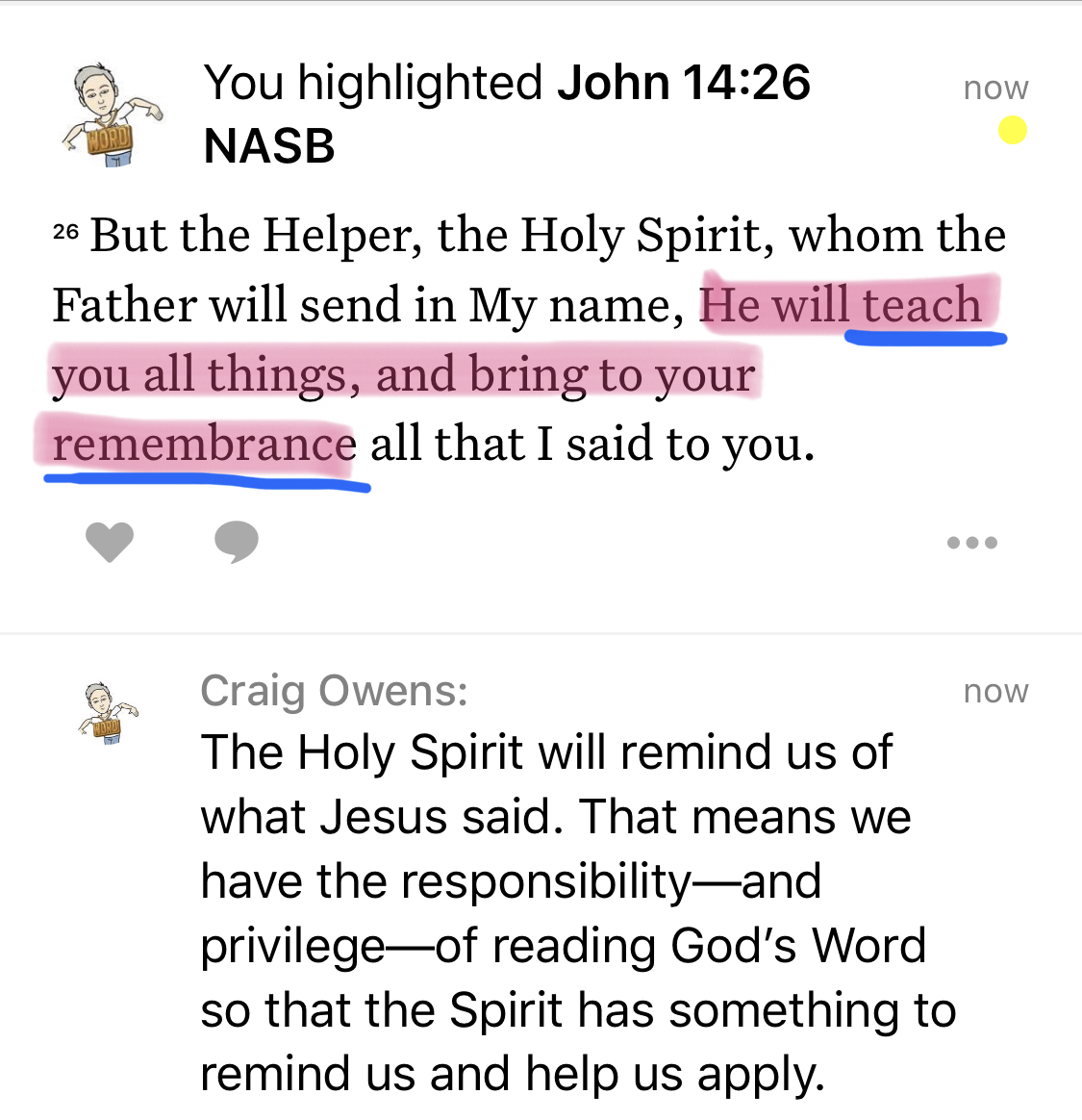
(1) In telling His followers about the Holy Spirit (John 14-16), Jesus said, “But when He, the Spirit of truth, comes, He will guide you into all truth” (John 16:13). And also, “But the Counselor, the Holy Spirit, whom the Father will send in My name, will teach you all things and will remind you of everything I have said to you” (John 14:26).

The Holy Spirit helps me apply biblical truths and principles to my everyday life. He guides me and reminds me of what I have studied.

(2) The second key passage is, “But in your hearts set apart Christ as Lord. Always be prepared to give an answer to everyone who asks you to give the reason for the hope that you have. But do this with gentleness and respect, keeping a clear conscience, so that those who speak maliciously against your good behavior in Christ may be ashamed of their slander” (1 Peter 3:15-16).

Yes, it is important for me to be prepared to give an answer, but this is the middle thought. First, I have to make sure what I’m saying is exalting Christ as Lord. Then I do my best to study and prepare to give an answer, but I must give that answer gently and respectfully.

Allowing the Holy Spirit to help you prepare from the Bible, and allowing Him to guide you into answering questions/critics gently and respectfully honors Christ. And that always wins the battle.
The Thinking Book

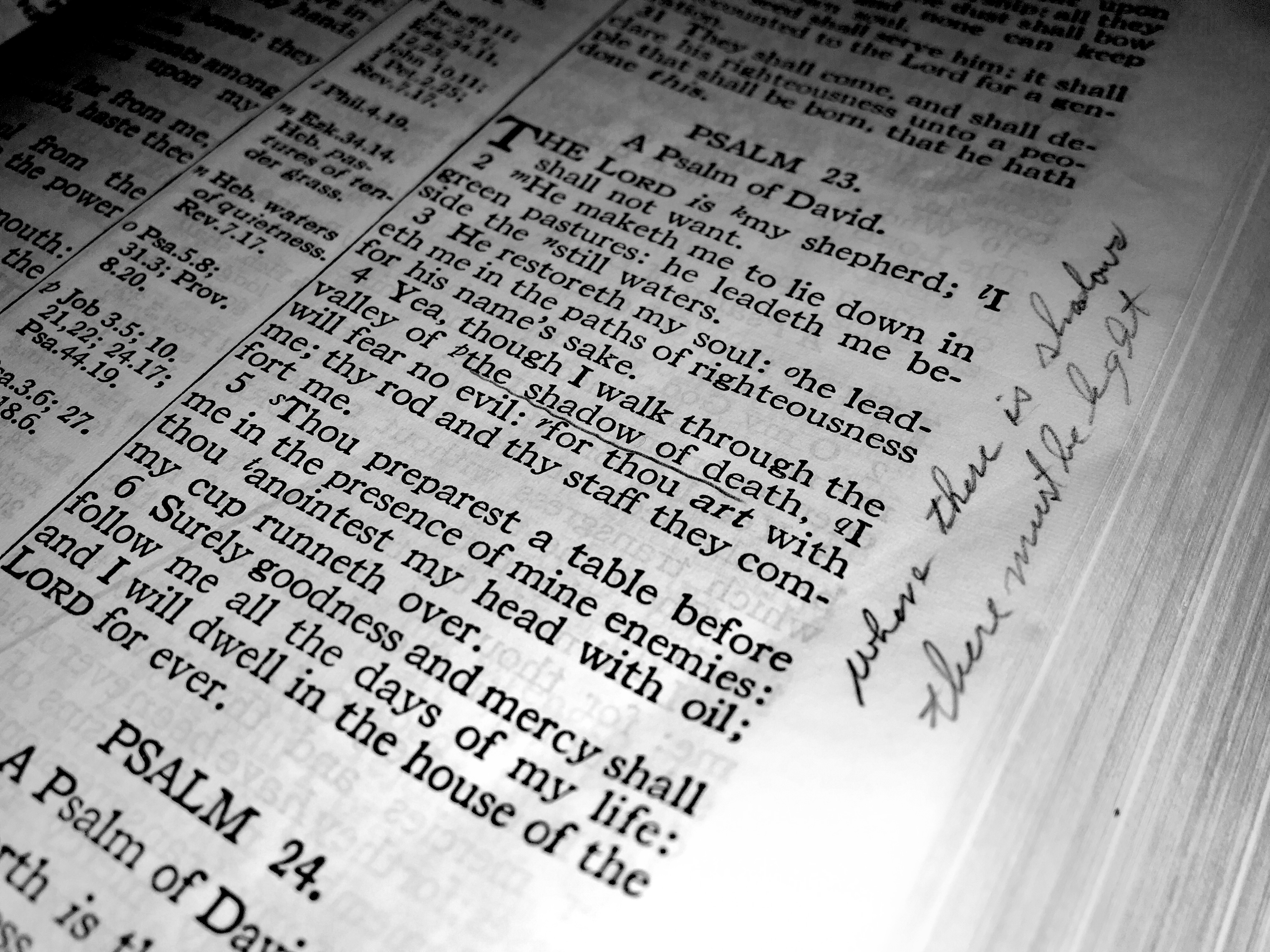
“The book to read is not the one which thinks for you, but the one which makes you think. No book in the world equals the Bible for that.” —James McCosh

My kids recently returned from a PK (Pastor’s Kids) Retreat weekend. Our Michigan Assembly of God District Youth Director Jeff Kennedy coordinates this weekend every year. A fun part of their time together is a take-off of Jeff Foxworthy’s “You might be a redneck if…” routine. It’s called “You might be a PK if….” Here are a couple of my favorites—

  • You might be a PK if you’ve used the church sound system as your personal stereo.
  • You might be a PK if National Take Your Kid To Work Day is any day you don’t have school.
  • You might be a PK if you’ve ever taken a bath in the baptismal tank.
  • You might be a PK if you occasionally take Sunday afternoon naps on a church pew.
  • You might be a PK if every answer your Dad gives you comes from the Bible.

Cute! And, for the most part, dead-on accurate!

But that last one got me thinking: do I do this? I sincerely hope (not just because I’m a pastor) that the answer is always “yes.”

I agree with James McCosh that no other book in the world compares to the Bible for challenging me to think. In the King James Version of the Bible, there is a phrase that James uses about God’s Word: he says that we should “receive with meekness the engrafted Word” (James 1:21).

The more I read the Bible, the more its principles become engrafted into my thought patterns. The more I think about the Bible, the more my attitude about life conforms to God’s attitude. And the more my attitude conforms to God, the more my actions and words align with the Bible.

You don’t have to read much every day for God’s Word to make a difference in your life. If you are honest with the Holy Spirit as He illuminates a passage of Scripture to you, you will see how God’s Word can be applied to your life today.

“The Bible is…a chart by which the Christian sails to eternity, the map by which he daily walks; the sundial by which he sets his life; the balance in which he weighs his actions.” —Thomas Watson

To be successful make sure you are looking often at the chart, the map, the sundial, and the balance of God’s Word.

Sharper Thinking

Yesterday I was challenged to do a lot of thinking. To think about things I’ve not considered before, and to think about things I have considered before but from a different perspective.

Yesterday a fellow pastor convened a Pastor’s Leadership Thinking Lab. The purpose was to use Warren Bullock’s book When The Spirit Speaks as a springboard to talk about the vocal gifts of the Holy Spirit in operation in our church services (see 1 Corinthians 12-14). At the outset, we all reaffirmed our unwavering commitment to our fellowship’s fundamental truths—those were non-negotiable. The challenge was to think about and discuss the practicalities of the how’s in our church services.

It was a bit intimidating being in the room with such smart people. These are guys with way more education and experience than me—guys who have had the privilege of studying and discussing this topic with some of the greatest Pentecostal thinkers of our generation. I felt a little out of place. In fact, during the lunch break, one of my friends commented, “Have you ever felt like that in a roomful of tuxedos you’re the one brown shoe?” My feelings exactly.

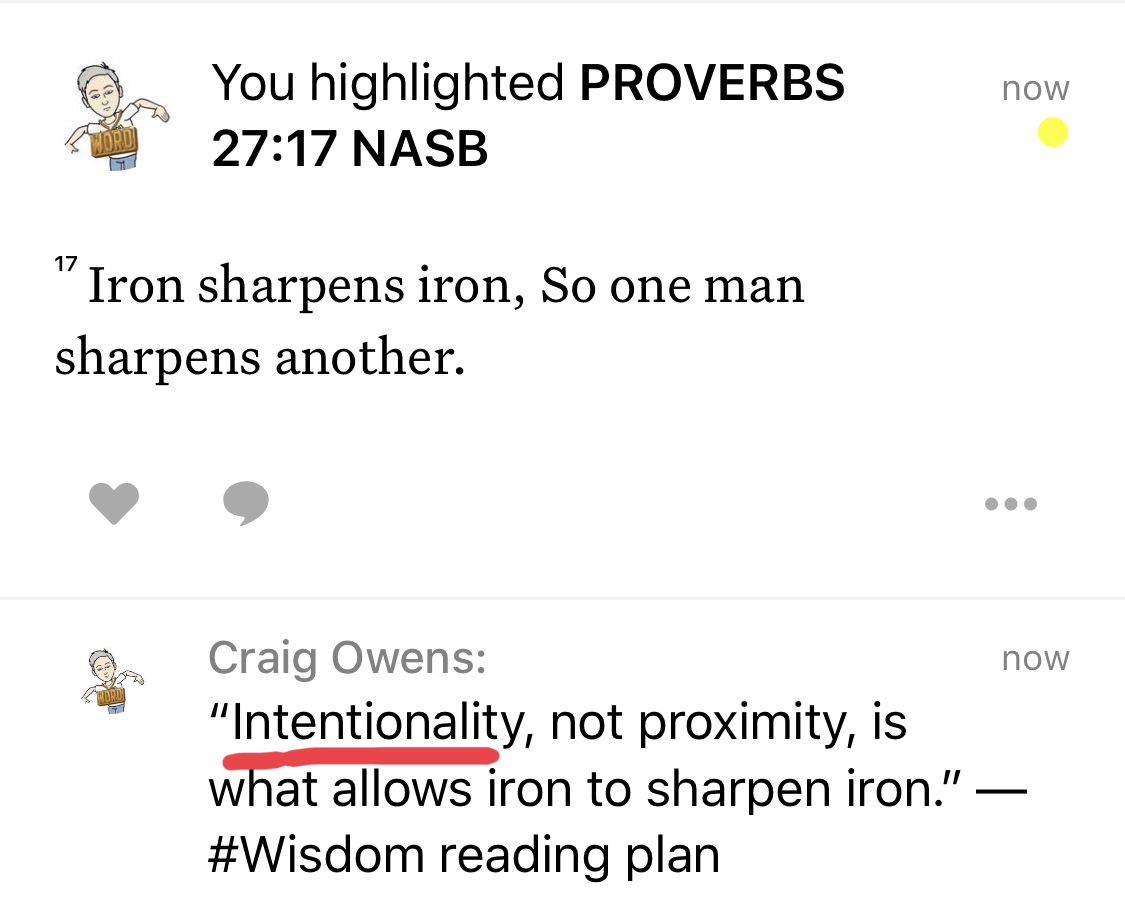
But King Solomon wrote, “As iron sharpens iron, so one man sharpens another” (Proverbs 27:17). The iron of my colleagues definitely sharpened me yesterday.

I also like what John Maxwell said, “Some of my best thinking has been done by others.” In other words, these really smart guys have thought about some things in ways I haven’t; they’ve been exposed to some great thinkers that I haven’t; they’ve experienced some things that I haven’t. But spending the day with them was like getting that education they received, having those conversations with great thinkers they had, and experiencing those things they experienced.

Did I agree with everything that was shared? No.

Was I challenged to think differently? Yes.

F. Scott Fitzgerald wrote, “The truest test of a first-rate mind is the ability to hold two contradictory ideas at the same time, and still retain the ability to function.”

If you really want to sharpen your thinking, get around some people smarter than you. Spend time with people who see things differently than you. But most of all, make sure these folks are one in purpose with you. All of the guys in this Lab shared the same passion to see God glorified and people drawn into a deeper relationship with Jesus. That’s what made yesterday so rewarding for me.

Do you have some “iron” friends in your life that are sharpening your thinking?


Anti-Sudoku Theology

I really enjoy Sudoku. It’s a challenging game of logic, and I’m (for the most part) a logical guy. I like knowing exactly where the digits one through nine are supposed to go, using logical deduction and inference to fill in all of the squares.

If I had my choice, all of life would be this logical. Simple. Neat. Well-defined. Clear. Easy. But, much to my dismay, it’s not.

If I’m following the example and teaching of Jesus, life with Him is anything but logical. Think about some of the paradoxes Jesus Christ taught and lived—

  • To advance, be humbled.
  • To have more, give away more.
  • To possess everything, desire nothing.
  • To connect with people (social), spend time alone with God (solitude).
  • To bring people in, go out.
  • To be a leader, be a servant.
  • To fill up with God, empty yourself of yourself.
  • To come first, come last.
  • To gain wisdom, become foolish.
  • To gain strength, become weak.
  • To live, die.

A.W. Tozer wrote about a godly man: “He has accepted God’s estimate of his own life. He knows he is as weak and helpless as God has declared him to be, but paradoxically, he knows at the same time that he is in the sight of God of more importance than angels. In himself, nothing; in God, everything.”

It isn’t logical, but it’s true: God loves me. And the greatest of all paradoxes: when I was the least worthy of God’s love, that’s when Jesus came to die for my sins.

God’s love for me—the greatest of paradoxes—helps me live these paradoxes Jesus taught. And His love will help you, too.

What other biblical paradoxes have you discovered?

Do-Over

In our backyard kickball games, the competition is sometimes intense. Given the fact that our field is unusually shaped—a big rock for first base, a third base (the middle tree of a group of three trees) is closer to home plate than first base is, the neighbor’s fence jutting out into right field—there are sometimes disagreements. Imagine that!

Of course, the quickest way to resolve some of these disagreements is to call, “Do over!

But do-overs never work out well. One team might be happy with the results while the other team still feels they got an unfair advantage to get their way.

So, too, with God. He does not allow do-overs. Ever. Nor would I want Him to allow me to have a do-over. There are things I have learned from painful episodes that have made me stronger, wiser, more empathetic, and more merciful than I would have been if I missed out on those experiences. If I could have called “do-over” I wouldn’t be the same person today.

In 2 Kings 6, the king of Israel wanted a do-over. He had an opportunity to kill some Aramean soldiers, but Elisha said, “No, give them dinner instead.” The entire Aramean army returned later and blockaded the capital city of Samaria, making for horrendous living conditions in the city. The king said, “If I only I would’ve rejected Elisha’s advice and killed those soldiers I wouldn’t be in this tough spot now. I want a do-over!”

But here’s what the king—and all of Israel with him—would have missed out on if they got their do-over. If the king got a do-over only a few Aramean soldiers would have been killed. But by not getting his do-over, the entire Aramean army was disarmed, defeated, and disgraced as they ran home scared and naked (see 2 Kings 7:5-7, 14-15).

NOT getting a do-over led to a greater victory! Not getting your do-over will also allow God to do something greater in you and through you. If you got your chance at a do-over for something in your past you wouldn’t be as strong, wise, empathetic, or merciful as you are today.

Check out what God says—

  • I know what I’m doing. I have it all planned out—plans to take care of you, not abandon you, plans to give you the future you hope for. (Jeremiah 29:11, The Message paraphrase)
  • And we know that all that happens to us is working for our good if we love God. (Romans 8:28, The Living Bible)

Don’t ask God for a do-over; instead, ask the Holy Spirit to show you what He’s doing in your life because you didn’t get the do-over. I promise you that God is doing something far, far greater—instead of defeating a few enemies, He’s defeating whole armies!

Feel free to share what lessons you may have learned by NOT taking a do-over.

Justifying Myself

One of my favorite prayers is recorded in Psalm 139. It is such an intimate prayer of how well God knows us. I‘m frequently struck by the two thoughts that seem to contradict themselves in the opening and closing verses.

David begins his prayer, “O Lord, You have searched me and You know me. … You perceive my thoughts from afar.” But then he ends his prayer with these words, “Search me, O God, and know my heart; test me and know my anxious thoughts. See if there is any offensive way in me, and lead me in the way everlasting.”

Now why would David ask God to search his heart and his thoughts after he said God had already searched him? I think it‘s because our natural tendency is to justify ourselves. It goes like this: God searches us → He shows us things that need to be changed → We justify why we don‘t need to change those things → We try to forget what God had pointed out to us and move on.

When the Holy Spirit points out an anxious thought or an offensive way, our natural response is to quickly say, “Yes, but…

  • …I know I shouldn‘t have said that to her, but you don‘t know how she pushes my buttons!”
  • …I know it‘s wrong of me to desire that, but having it won‘t really hurt anything.”
  • …I know I should make that change in my behavior, but it‘s just not realistic in my current situation.”
  • …I know I should have talked to him about Christ, but it wasn‘t the right time.”
  • …I know my I‘ve been battling anxiety over this, but I‘m scared to make any changes because things might get worse!”

I echo Augustine‘s prayer: “O Lord, deliver me from this lust of always vindicating myself.”

David sets an example for me that I‘m trying to make a consistent practice in my life: Regularly allowing the Holy Spirit to search me for any anxious thoughts or offensive ways, and then addressing those without trying to justify or vindicate myself (no “yes-but‘s”). Because if I justify myself, I‘m really saying I know better than God what’s best for my life.

And all the while, God is simply trying to lead me in the way everlasting. He‘s trying to occupy more of my life with His presence.

If thou couldst empty all thyself of self.
Like to a shell dishabited,
Then might He find thee on the Ocean shelf,
And say, “This is not dead,”
And fill thee with Himself instead.
But thou art all replete with very thou,
And hast such shrewd activity,
That, when He comes, He says, “This is enow
Unto itself—‘Twere better let it be:
It is so small and full, there is no room for Me.“ —T.E. Brown

Are you making room for Him today? Or are you justifying the anxious thoughts and offensive ways the Holy Spirit is trying to reveal to you? 

Do I Know Too Much?

Thomas Huxley wrote, “I object to Christians: they know too much about God.”

When Job was going through his trials, his “friends” showed up with all kind of knowledge about God. They knew that God would never allow the innocent to go through difficulty. They knew Job had sinned somewhere along the way. They knew that God always answers a righteous man‘s prayers exactly as he had prayed it.

They knew too much about God.

They put God in their box, telling Him how to behave the way they knew He should.

They became their own god.

Job didn’t know all that God was doing, but he did know, “He does great things too marvelous to understand” (Job 9:10). The Apostle Paul echoed the same thought: “Oh, how great are God‘s riches and wisdom and knowledge! How impossible it is for us to understand His decisions and His ways!” (Romans 11:33).

As I go through my own trials, I‘m learning a little more about the depths of God‘s love for me everyday—“We can rejoice, too, when we run into problems and trials, for we know that they help us develop endurance. And endurance develops strength of character, and character strengthens our confident hope of salvation. And this hope will not lead to disappointment. For we know how dearly God loves us, because He has given us the Holy Spirit to fill our hearts with His love” (Romans 5:3-5).

How about you: Do you know too much about God? Or are you still open to learn more?

The Sermon That Didn’t Happen

I planned, prayed, studied, prepared, tweaked, refined, practiced, and finalized my message for Sunday morning. We’re in a series called Tell Me A Story, where we’re looking at the great truths Jesus revealed in the amazingly-simple stories He told.

Yesterday we were going to look at a story that is so simple, it’s told in just one verse (Matthew 13:44). The kids drama team from The Rock had a very humorous skit ready to help me illustrate my message in a fun way. And I was fired up to share with our church the simple, yet profound, truths the Holy Spirit had spoken to my heart from this story.

Then something happened.

The Spirit of God moved into our service in such a powerful way that we couldn’t continue as planned.

At the close of our worship time, I felt like God was calling us to simply stay in His presence, so we continued to worship. Then God spoke to us through a prophetic word that was right on the mark. I encouraged the congregation to remain in an attitude of prayer as we just waited in God’s presence. Without hesitation, people came to the altars, kneeled at their seats, or stood in God’s presence.

No formal prayer. No stirring music. Just the sweet sound of spiritually-sensitive people sobbing in God’s presence. It was powerful! Another word was given—this one very challenging and exhorting.

Then I felt the Holy Spirit stir my heart. I opened my Bible to the one verse I had prepared to share. But when I opened my mouth, God gave me an entirely different message. I only spoke for a couple of minutes, and without a formal dismissal I simply called people back to prayer.

And our people prayed. And prayed. And prayed. For a long time members of our congregation simply waited in God’s presence.

The Holy Spirit did a deep and personal work in many people’s hearts yesterday—including mine! I cannot wait to see what changes come about as a result of our unplanned time with God yesterday. I’m so glad that my sermon didn’t happen!

Grateful For My Powerlessness

This has been a very hard week!

I conducted a funeral service yesterday for a family whose baby died after only 18 days on earth. As a pastor, without a doubt the most physically-, emotionally-, spiritually-, and mentally-draining activity I do is a funeral. The Bible says that we grieve with those who grieve, and yet in the midst of that grieving, the family and loved ones are still turning to me to give them answers. Sometimes it seems there are more questions than answers. Between the grieving and the answer seeking, it’s very draining!

But God was gracious to me. He gave me a comforting word to share at the funeral, and at the conclusion eight people said that after their days on earth were done they wanted to have the assurance that they would be welcomed into God’s presence, just as baby Blake was. I had the privilege of praying with those folks as they invited Christ into their lives!

Probably the second-most draining thing I have to do as a pastor is deal with problems in the church. And, boy, did a big one crop up this week! It was supposed to culminate in a meeting this afternoon. So yesterday I was dealing with my two most draining issues at the same time! Today, this church problem wasn’t resolved, but God gave me such a peace about its outcome. I’m not sure what’s going to happen next, but what a peace flooded my heart to let me know that He is in control.

This morning I read this great quote from Oswald Chambers—

“It is a good thing to feel our own powerlessness in the face of destruction, it makes us know how much we depend upon God. … When a man gets to despair he knows that all his thinking will never get him out, he will only get out by the sheer creative effort of God, consequently he is in the right attitude to receive from God that which he cannot gain for himself.”

I am grateful today for my powerlessness. I am grateful that I feel so dependant on God. I am grateful for the sheer creative effort of God. And I am grateful for His peace.

I’m also grateful for the challenges. Why? Because without the challenges, I would not have felt such gratitude for my powerlessness, God’s provision, and God’s peace.

My Big Three

three1Busy. Commute. Busy. Lesson prep. Busy. Kids’ schedules. Very busy. Meetings. Extremely busy. Household chores. Hectic busy. Hospital visits. Running-to-catch-myself busy.

In my busyness, something gets squeezed out of my life very easily. I don’t intend for this to happen, in fact it’s the last thing that should ever get squeezed out, but it does. I can tell when it does. Not right away, but soon it catches up with me and I’m running on vapors. I know that when I take the time to put it back into my life, the busyness doesn’t seem so busy anymore.

What is this power source? Consider the life of Jesus.

No one had more to accomplish in such a short period of time than Jesus. He only had three years to find, equip and launch the men who would take His message to all the world. No small task, and not a minute to lose. Yet instead of seeing Jesus run at the frantic pace I so easily slip into, I see these incredible pauses.

Very early in the morning, while it was still dark, Jesus got up, left the house and went off to a solitary place, where He prayed. (Mark 1:35)

How long did He pray? The Bible doesn’t say, but I suspect He was in prayer with His Heavenly Father until His conversation was concluded. It may have been a while, or it may have been somewhat shorter.

Then all throughout the day, Jesus was never rushed or pushed or running helter-skelter, but He seemed to move at just the right speed. This is because Jesus was taking His cues from His Father all day long:

For I did not speak of My own accord, but the Father who sent Me commanded Me what to say and how to say it. I know that His command leads to eternal life. So whatever I say is just what the Father has told Me to say. (John 12:49-50)

Sometimes when there were big decisions or momentous occasions facing Him, Jesus would spend an extended time in prayer. For example:

 One of those days Jesus went out to a mountainside to pray, and spent the night praying to God. When morning came, He called His disciples to Him and chose twelve of them, whom He also designated apostles. (Luke 6:12-13)

I’m trying to make Jesus’ big three my big three:

  1. An untimed conversation with God every morning.
  2. All-day sensitivity to the prompting of the Holy Spirit.
  3. Periodic prayer retreats before making big decisions.

This is taking all of the discipline I can muster, but I must make this my top priority!