Getting Back Up When Life Has Knocked You Down

The Bible never presents life as some sort of pie-in-the-sky, walk-in-the-park, everyday-is-always-rosy picture. If it did, we would reject the Bible because our experiences would immediately tell us otherwise. Instead, the Bible realistically portrays the challenges, and the pain, and the heartache, and the disappointments of life. But as it does so it also shows us that God’s way is the only way out of our sorrow and into His joy!

In our P119 Spiritual Workout series, we saw the bookends of the section daleth (Psalm 119:25-32) are:

I am laid low in the dust (v. 25) → You have set my heart free (v. 32).

How do we get this freedom when we are knocked down and laid low in the dust?

The Jews saw the Hebrew letter daleth as a door. Specifically, a door through which humble people stepped into a greater realization that He is God, and I’m not … that He has the answers, and I don’t … that He is in control, and I’m not. So part of going from down in the dust to a free heart is humbly acknowledging that you need God’s help!

In verses 26 and 27, the psalmist recalls his past history, and in so doing he is reminded that God has always been there. God has never left him nor forsaken him, so here’s what the psalmist resolves to do:

  • Teach me = I learned something before, so let me learn again.
  • Let me understand = help me to discern, distinguish; tell things apart. This word is used for things that are divinely disclosed; in other words, they’re things you and I cannot figure out on our own.
  • Meditate = talk with my soul about these new things the Holy Spirit has disclosed to me.

In verse 28, the psalmist says that his soul is weary with sorrow (or as the King James Version states it: my soul melteth for heaviness). The only way to overcome this is to ask for God’s help to energize us to go forward.

In the final four verses of this section you can sense the psalmist’s strength returning as he makes these bold statements:

  • keep me from deceitful ways (v. 29a) = keep me from lying to myself (NLT).
  • be gracious to me (v. 29b) = give me the privilege of knowing Your instructions (NLT).
  • I have chosen (v. 30a) = I have determined (NLT).
  • I have set (v. 30b) = I am long-sighted (on God), not short-sighted (on my problems).
  • I hold fast (v. 31) = the KJV says I have stuck to it!
  • I run (v. 32) = I will [not merely walk, but] run the way of Your commandments (AMP).

So when you are sad/disappointed/injured, run TO God. Don’t cling to your own (old) ways of thinking. Let Him take you from I am laid lowYou have set my heart free.

If you have missed any of the messages in our P119 series, you can access them all by clicking here.

Was That Sermon Successful?

Pastor, ever had one of those times when you delivered what you thought was an amazing sermon, but when it was over people looked completely unmoved?

Or maybe you sat down with someone to tell them something that would be so beneficial to their lives, and they responded by lashing out at you?

What happened? Did you miss something? Wasn’t God in your sermon or in your  counseling time?

The Apostle Paul has some great insight for us—

Now this is our boast: our conscience testifies that we have conducted ourselves in the world, and especially in our relations with you, in the holiness and sincerity that are from God…. (2 Corinthians 1:12)

Paul didn’t rely on external observations to gauge his success in following God, but he listened for the internal witness of the Holy Spirit. Paul wasn’t living to please an audience of people, but an audience of One. He was listening for either the approval or the reproof of the Spirit.

Those you and I preach to may say, “That was wonderful! Great word, pastor!” and have no change of heart at all.

Others may scowl at us, but only because the Holy Spirit is using our words to bring about a deep heart change in them.

So we cannot use the facial expressions, or the compliments, or the complaints of others to know if we hit the mark or not. We have to let the Holy Spirit testify to our conscience whether or not we have been obedient.

I’m praying for you (and for myself): Holy Spirit, remind us of this. Help us to be tuned into You, and not into the external cues we think we may be observing. You alone can approve or reprove us.

Thursdays With Oswald—God Builds My Character

This is a weekly series with things I’m reading and pondering from Oswald Chambers. You can read the original seed thought here, or type “Thursdays With Oswald” in the search box to read more entries.

God Builds My Character 

     Character is the whole trend of a man’s life, not isolated acts here and there, and God deals with us on the line of character building. 

     Remember, then, that we have the power to fix the form of our choice. “Delight yourself also in the Lord; and He shall give thee the desires of thine heart” [Psalm 37:4]. Desire embraces both determination and design. Some people when they read this verse, behave before God as people do over a wishing-bone at a Christmas dinner. They say, “Now I have read this verse, I wonder what I shall wish for?” That is not desire. Desire is what we determine in outline in our minds and plan and settle in our hearts; that is the desire which God will fulfill as we delight ourselves in Him. 

From Biblical Psychology

God is not a cosmic slot machine, where I drop in the coins of Bible reading, prayer time, church attendance, and a few good deeds here and there, and then I can select which reward I would like God to dispense for me. But I’ve met way too many people who feel that it should work that way!

The Holy Spirit changes me from the inside out. He builds my character piece by piece, conforming me to the image of Jesus Christ. There are certainly blessings along the way, but I shouldn’t go into this character-building process with the goal of getting rewarded for my efforts.

When I determine to fix my thoughts on God’s Word, to tune into the Spirit’s direction, then I will experience the reward of God’s approval. And there is no greater reward than knowing my Master says, “Well done, good and faithful servant!”

My prayer: Father, I want to delight only in You. I am determined to allow Your Spirit to build the character of Jesus in my heart and mind. I am committed. I am ready.

Your Personal Spiritual Trainer

If you are a Christian, you have a personal trainer for your spiritual workouts. He is the Holy Spirit.

We should never think of the Holy Spirit as showing up just in the New Testament. He is living and active all throughout Scripture. Yesterday we saw Him in the gimel section of our P119 Spiritual Workout (that’s verses 17-24 of Psalm 119).

A personal trainer who has our best interests in mind will always set a healthy pace for us: neither letting us loaf nor working us too hard that it does permanent damage. But that pace is almost always painful because it is stretching us into a new dimension of fitness. This is just as true—if not truer—in the spiritual realm.

Take a look at the Hebrew letter gimel. Do you see a silhouette of runner? The Jews did, and they gave this definition to gimel: a richer man running after a poorer man in order to bless him. Isn’t that a great picture of what God does for us?! The Holy Spirit wants to help us “keep pace” with what God is blessing. That’s why He makes the laws and statutes and decrees of Scripture come alive so that we can keep pace with all that God has for us.

Now remember that blessing has two components. One part is the rich rewards we receive, and the other part is the loving correction. Both rewards and loving correction are blessings because they both keep us on pace with God’s plan for our lives.

The Holy Spirit sets a pace for us to follow as He reveals God’s Word to us. It’s a bit painful to stretch and grow, but God will reward us as we obediently follow the Spirit’s leading. If we choose not to keep pace, we may be alright for a while. But eventually, we’ll start to fall short, or even get on a wrong path. Here the blessing of God is to lovingly rebuke and correct us, in the attempt to get us back on pace with Him.

And when we get back on pace with God’s plan for us, His richest rewards can continue to flow into our lives!

If you’re not allowing the Holy Spirit to be your Personal Spiritual Trainer, I suggest you invite Him to take that role in your life today. No one is more concerned about your spiritual growth and spiritual vitality than He is, and He alone can help you get to the place of optimal spiritual health. 

If you have missed any of the messages in our P119 series, you can access them all by clicking here.

Lord, I Need Your Anointing!

How miserable to try to preach a sermon if God’s anointing is not on it! The most gifted speaker’s words sound hollow without God’s help. The most educated theologian’s thoughts are mere babbling without the Holy Spirit’s aid. All your hours of pastoral study are utterly wasted unless the power of Christ is present.

Pastor, let these wise words soak in…

I know that it is dreadful work to be bound to preach when one is not conscious of the aid of the Spirit of God! It is like pouring water out of bottomless buckets, or feeding hungry souls out of empty baskets. A true sermon such as God will bless no man can preach of himself; he might as well try to sound the archangel’s trumpet.” ―Charles Spurgeon

“Keep yourself full to the brim in reading; but remember that the first great Resource is the Holy Ghost Who lays at your disposal the Word of God. The thing to prepare is not the sermon, but the preacher.” ―Oswald Chambers

“Apart from divine help, the enterprise of a Christian minister is only worthy of ridicule. Apart from the power of the Eternal Spirit, the things which the preacher has to do are as much beyond him as though he had to weld the sun and moon into one, light up new stars, or turn the Sahara into a garden of flowers. We have a work to do concerning which we often cry, ‘Who is sufficient for these things?’ and if we be put to this work but have not your prayers, and in consequence have not the supply of the Spirit, we are of all men the most miserable.” ―Charles Spurgeon

The character of our praying will determine the character of our preaching. Light praying will make light preaching. …The preacher must be preeminently a man of prayer. His heart must graduate in the school of prayer. In the school of prayer only can the heart learn to preach.” ―E.M. Bounds

“If you preachers lose your compassion, you can stop preaching, for it won’t be any good. You will only be successful as a preacher if you let your heart become filled with the compassion of Jesus. ―Smith Wigglesworth

Thursdays With Oswald—Guard Your Heart With Your Head

This is a weekly series with things I’m reading and pondering from Oswald Chambers. You can read the original seed thought here, or type “Thursdays With Oswald” in the search box to read more entries.

Guard Your Heart With Your Head

     The Bible puts the head in the prominent position, not the central position; the head is the “finish off,” the manifestation of what the heart is like; the outward expression of the heart, as a tree is the outward expression of the root. This is the relationship between the head and the heart which the Bible reveals. …

     In dealing with the Bible the danger is to come to it with a preconceived idea, to exploit it, and take out of it only what agrees with that idea. If we try, as has been tried by psychologists, to take out of the Bible something that agrees with modern science, we shall have to omit many things the Bible says about the heart. According to the Bible the heart is the center: the center of physical life, the center of memory, the center of damnation and of salvation, the center of God’s working and the center of the devil’s working, the center from which everything works which molds the human mechanism. 

From Biblical Psychology

Oswald Chambers was a holistic thinker: he knew the role of the Holy Spirit and the role of psychologists; he saw how the mind, spirit, and soul worked interdependently with each other. He never suggested that psychological issues be repaired with spiritual methods, nor that spiritual concerns be addressed by psychology.

But he also saw how easy it was to make heart matters (spiritual) concerns which should be addressed as head matters (psychological). The Bible says, “Above all else guard your heart, for from it flow all of the issues of life” (Proverbs 4:23).

So how do I guard my heart? Part of guarding my heart does start with my head: I need to think about what’s going into my heart. But, as Oswald Chambers says, the head is just the “finish off” of what is happening in the heart. So ultimately, to keep my head in the right place, I need to guard my heart. I need to make my heart exclusively the home of the Holy Spirit, and allow Him free access to all of the concerns in my heart.

This is the only way I can “finish off” the right way.

Do You Want To Be A (Better) People Pleaser?

I know a lot of people who want to please others. This pursuit, however, can get you into hot water. For instance, when you need to confront a friend on their poor behavior. Or when someone doesn’t properly express their appreciation to you for appreciating them.

The Bible gives us a better way to be a people pleaser. 

Paul wrote: So we make it our goal to please [God]… (2 Corinthians 5:9).

Instead of goal, the King James Version says, “we labor.” If it is labor, then it truly is a labor of love: work that is challenging, but rewarding. In fact, the rewards are so overwhelming, that the sweat of labor is quickly forgotten.

The Greek word for labor/goal means work that is activated by the love of honor, and so it brings forth our very best effort.

I desire to honor God and please Him, and I desire to be honored by God and find my full pleasure in Him. After all, as the Westminster Catechism says, “The chief end of man is to glorify God and enjoy Him forever.”

So my labor of love is activated first by my love for God; and secondarily by my love for others. Isn’t this what Jesus gave us as the Great Commandment (see Luke 10:27)?

It is God Who has made us for this very purpose [to enjoy Him forever] and has given us the Spirit as a deposit, guaranteeing what is to come [honor and eternal pleasure]. (2 Corinthians 5:5)

The Holy Spirit helps activate and direct my labor of love. The Spirit uses my labor of love to draw others to Christ; the Spirit assures me that my labor of love is bringing honor and pleasure to the Father. And in that knowledge, I find my pleasure to continue to labor in love.

So if I want to please people, my goal must be a labor in love that pleases God. Out of the knowledge of His pleasure and honor, I am better prepared to present a labor of love to others.

God pleaser (first) → People pleaser (as an overflow) 

The better we please God, the better we’ll please people.

Thursdays With Oswald—Examination

This is a weekly series with things I’m reading and pondering from Oswald Chambers. You can read the original seed thought here, or type “Thursdays With Oswald” in the search box to read more entries.

Examination 

     Sin destroys the power of the soul to know its sin, punishment brings awakening, self-examination brings chastisement and saves the soul from sleeping sickness, and brings it into a healthy satisfaction. 

From Biblical Psychology

There’s so much to unpack in this single sentence…

  • We are very good at self-medicating away any pain (even spiritual pain), so that we never address the source of the pain (Ephesians 4:18).
  • I can be “sin sick” and not even know it because I’m not allowing the Holy Spirit to examine me (1 Corinthians 10:12).
  • The pain of punishment and chastisement is for my eternal benefit (Hebrews 12:5-11).

What do I need to do? Invite the examination of the Spirit:

Search me, O God, and know my heart; test me and know my anxious thoughts. Point out anything in me that offends You, and lead me along the path of everlasting life. (Psalm 139:23-24)

So let a person examine himself first, and then he may eat of the bread and drink from the cup; for a person who eats and drinks without recognizing the body eats and drinks judgment upon himself. This is why many among you are weak and sick, and some have died! If we would examine ourselves, we would not come under judgment. But when we are judged by the Lord, we are being disciplined, so that we will not be condemned along with the world. (1 Corinthians 11:28-32)

Perfect? Yes!

The opening words of Psalm 119 describe the end result of going through what I’m calling the P119 Spiritual Workout. In a word: Blessed.

In fact, this word is so exciting that the Hebrew language uses the emphatic thought here. Bringing that into English means that the first two verses of this chapter both begin…

O!! How blessed!!

That’s a wonderful goal, but the next two verses seem to bring us crashing back to earth. In order to enjoy these heights of blessing we are asked to live like this:

  • They do nothing wrong as they walk in His ways (v. 3).
  • God’s precepts are to be fully obeyed (v. 4).

Yikes! Nothing wrong?! Full obedience?! No mistakes?!

Even Jesus said, “Be perfect, therefore, as your Heavenly Father is perfect” (Matthew 5:48).

But pay attention to this: The sign of a maturing Christian is not one who never sins; the sign of a maturing Christian is one who is closing the gap between sin and repentance.

How does that work? Here’s the progression…

Realization of sinRepentance of sin → Restoration of God’s blessing

The time gap between our repentance and God’s restoration is faster than the blink of an eye—faster than you can even comprehend. What often takes us a while is moving from realization to repentance. Instead, we explain, and justify, and make excuses, and drag our feet.

But a maturing Christian invites the inspection of the Holy Spirit through the reading of God’s Word and then is quick to realize sin and repent from it. When God restores us, do you know how we appear to Him? PERFECT!!

So realizing our sin, repenting of that sin, and experiencing God’s restoration is the fastest way to live as those who do nothing wrong and who are fully obeying God’s precepts.

Don’t wait any longer: realize and repent, and then experience God’s restoration as you stand perfect in His presence!

If you have missed any of the messages in our P119 series, you can access them all by clicking here.

Be Pleased To Visit Your Church

Several folks have asked me to share the prayer from Charles Spurgeon that I used to open our service this morning.

Dear God, 

Be pleased to visit Your Church with the Holy Spirit.

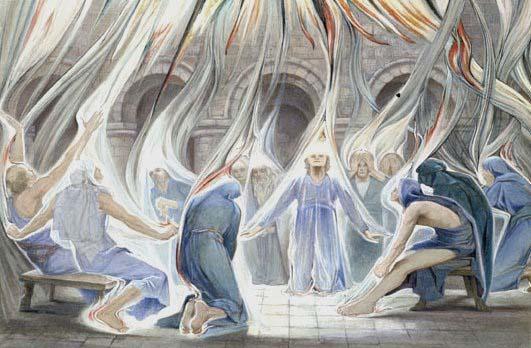
Renew the day of Pentecost in our midst, and in the midst of all gatherings of Your people, may there come the downfall of the holy fire, and the uprising of the heavenly wind. 

May matters that are now slow and dead become quick and full of life, and may the Lord Jesus Christ be exalted in the midst of His Church which is His fullness.

May multitudes be converted; may they come flocking to Christ with holy eagerness to find in Him a refuge as the doves fly to their dovecotes. 

Amen!