Thursdays With Oswald—Think As Christians

Listen to the podcast of this post by clicking on the player below, and you can also subscribe on AppleSpotify, or Audible. 

This is a weekly series with things I’m reading and pondering from Oswald Chambers. You can read the original seed thought here, or type “Thursdays With Oswald” in the search box to read more entries.

Think As Christians

     The [Holy] Spirit is the first power we practically experience but the last power we come to understand. The working of the Spirit is much easier to experience than to try and understand, the reason being that we form our ideas out of things we have seen and handled and touched; but when we come to think about the Godhead and the Spirit, language is strained to its limit, and all we can do is to use pictures to try and convey our ideas. 

     Yet in spite of the difficulty, it is very necessary that we should think as Christians as well as live as Christians. It is not sufficient to experience the reality of the Spirit of God within us and His wonderful work; we have to bring our brains in line with our experience so that we can think and understand along Christian lines. It is because so few do think along Christian lines that it is easy for wrong teaching and wrong thinking to come in, especially in connection with the Spirit. 

From Biblical Psychology

Christians should be first-rate thinkers. Why? Because the Holy Spirit in a Christian is the Mediator between our brains and our Creator.

We can have the mind of Christ, if we will but exercise our thoughts. As Paul said, we need to take our thoughts captive so that they line up with the reality of God (2 Corinthians 10:5). We cannot simply make a “theology” out of our experiences, but we need to use the thinking power of the Holy Spirit to help us find out what God is revealing to us about Himself through our experiences.

God created us with a mind, a will, and emotions. Let’s make sure we’re not emphasizing one to the diminishment—or exclusion—of the others!

►► Would you please prayerfully consider supporting this ministry? My Patreon supporters get behind-the-scenes access to exclusive materials. ◀︎◀︎

17 Quotes From “Jesus”

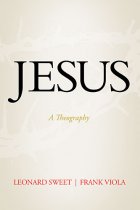
Jesus A TheographyJesus: A Theography is one of those rare books that I gave a “must read” designation (you can read my full review by clicking here). It’s impossible to share with you all of the incredible thoughts that are in this book, but here are 17 of my favorite quotes from Jesus.

Unless otherwise designated, all the quotes are from Leonard Sweet and Frank Viola.

“In Jesus the promise is confirmed, the covenant is renewed, the prophesies are fulfilled, the law is vindicated, salvation is brought near, sacred history has reached its climax, the perfect sacrifice has been offered and accepted, the high priest over the household of God has taken His seat at God’s right hand, the Prophet like Moses has been raised up, the Son of David reigns, the kingdom of God has been inaugurated, the Son of Man has received dominion from the Ancient of Days, the Servant of the Lord has been smitten to death for His people’s transgressions and borne the sins of many, has accomplished the divine purpose, has seen the light after the travail of His soul, and is now exalted and made very high.” —F.F. Bruce

“Jesus is the Logos. He is the Word, or the self-utterance, of God. So when God speaks, it is Christ who is being spoken about. When God breathes, it is Christ who is being imparted. The Spirit of God’s breath (the words ‘Spirit’ and ‘breath’ are the same in both Hebrew and Greek). The Second Testament tells us clearly that the Holy Spirit’s job is to reveal, magnify, and glorify Christ, Thus, because the Bible is inspired, it all speaks of Jesus. Again, Jesus Christ is the subject of all Scripture.” [The authors refer to the two sections of the Bible as the First and Second Testaments, in place of the usual designations of Old and New Testaments]

“Every word of the God-breathed character of Scripture is meaningless if Holy Scripture is not understood as the witness concerning Christ.” —G.C. Berkouwer 

“Your salvation was established, completed, and sealed before creation itself. Your Lord wrapped it up, won it, and came out victorious before anything ever went wrong.”

“What did He finish? He finished the old creation and the Fall. He finished sin. He finished a fallen world system. He finished the enmity of the Law. He finished satan. He finished the flesh. He put you to death and finished you completely. The person you were in Adam was terminated, swallowed up in death. And then He finished His greatest enemy, the child of sin itself, death. If that isn’t enough, He did something else beyond the rest: He raised you up in resurrection and glorified you.

“In Genesis 2:15, God commanded Adam to cultivate and keep the garden. The Hebrew word for cultivate is abad, and the Hebrew word for keep is shamar. These same Hebrew words are used to describe how the priests cared for the tabernacle of Moses. (The tabernacle was a precursor to the temple of Solomon.) The priests were to cultivate (abad) and keep (shamar) the tabernacle. In addition, we are told that God walked in the garden (Hebrew, hawlak) during the cool of the day. God also walked (hawlak) in the midst of the temple. The meaning is clear. The garden was a temple for God. Like the temple, the garden was the joining together of God’s space and man’s space—the intersection of the heavenly realm and the earthly realm. For this reason, Isaiah called it ‘the garden of the Lord,’ and Ezekiel called it ‘the garden of God.’ …Jesus Christ is the reality of the temple. (In the Greek, John 1:14 says Jesus ‘tabernacled among us.’) He is also the reality of the garden. He is the real Tree of Life and a flowing river. In Christ, God’s space and man’s space are joined together.”

“There are 184 verses in the birth narratives of the Second Testament. These 184 verses presuppose or repeat the words of 170 verses from eighteen verses of the First Testament.” 

“Jesus is the three shepherds: the good shepherd, the great shepherd, and the Chief Shepherd. Jesus presented Himself as both sheep and shepherd, the good shepherd who lays down His life for the sheep. …Jesus died on the cross at the ninth hour (about three o’clock in the afternoon) when the Passover lamb would be sacrificed in the temple. Christ, the Paschal Lamb, was slain to atone for the sins of humanity and to open the gate of the true temple that promises God’s salvation for all people.”

“In the Second Testament, as the sacrificial sign of the new covenant, Jesus Himself becomes the sin offering of humanity. In fact, Jesus’ very words on the cross, ‘It is finished!’ (‘Kalah’), are the words used by a priest at the conclusion of the sacrificial offering in the temple. In the ancient days, when the Jewish priest had killed the last lamb of the Passover, he uttered the Hebrew word Kalah, ‘It is finished.’” 

“At His birth, Jesus received the myrrh. At His death, He rejected it. Jesus’ earthly ministry centered on alleviating human suffering. He was the personification of myrrh. In His crucifixion, however, He was bearing the full brunt of human pain, suffering, and agony on the cross. He bore our shame and sorrows. So He rejected the myrrh and the wine that came with it. Jesus took the full dose of suffering for sin on the cross so we wouldn’t have to. And He rejected the myrrh so we would be able to receive it.”

“When in a garden relationship with God, humanity had no need of the Torah, for we had the Tree of Life. The Torah was the Tree of Life reborn, and Jesus was the Torah reborn.”

“We need the whole Jesus. The complete Jesus. Everything He said. Every detail of what He did.” —Eugene Peterson

“The temptation of Jesus was a playback of two episodes in the First Testament. First, it’s a replay of the first temptation in the garden of Eden. John tells us that the three enemies of the Christian are ‘the lust of the flesh, the lust of the eyes, and the pride of life.’ Each of these temptations was in play in the temptation of Adam and Eve in the garden:

    • The fruit was ‘good for food’ = the lust of the flesh. 
    • The fruit was ‘pleasant to the eyes’ = the lust of the eyes. 
    • The fruit was ‘desirable to make one wise’ = the pride of life. 

“…The temptations that satan leveled at Jesus in the wilderness struck the same three chords. Here is the ordered presented in Luke 4 (paraphrased):

    • ‘Turn these stones to bread’ = the lust of the flesh. 
    • ‘I will give you the kingdom of the world and their glory’ = the lust of the eyes. 
    • ‘Cast yourself down from here and angels will protect you’ = the pride of life.” 

“The Second Covenant knows the First Covenant: the Second Testament quotes from the First Testament more than 320 times, and that does not include times when biblical writers, searching for the scriptural reference, were reduced to admitting that ‘somewhere’ it reads thus and so.”

“Theology is nothing more than the Holy Spirit making His way through our brains, as the Scriptures make their way through our hearts.” 

“In biblical prophesy, the coming of Jesus is viewed as one event separated by parentheses that stretch from the ascension to His royal appearing at the end of the age. We are now living in the parentheses, wherein we look back to His first coming and anticipate His second coming. Put another way, the kingdom has come and will come. Jesus’ first coming inaugurated the kingdom of God; His second coming will consummate it. So the coming of the Messiah is one event separated by two moments: Bethlehem and the end of the age.”

“As followers of Jesus, we have a task before us. That task is to work for the kingdom. To continue the ministry of Jesus in the power of the Holy Spirit… to bear witness to the sovereign lordship of Christ… to embody the message that Jesus is both Lord and Savior, not just of our personal lives but of the entire world. And to find creative ways to manifest that kingdom where we live and travel.” 

Thursdays With Oswald—Don’t Let Others Stumble Because Of Me

This is a weekly series with things I’m reading and pondering from Oswald Chambers. You can read the original seed thought here, or type “Thursdays With Oswald” in the search box to read more entries.

Don’t Let Others Stumble Because Of Me

     There is a difference between “offense” and “stumbling.” And they were offended in Him. But Jesus said unto them, “A prophet is not without honor, save in his own country…” (Matthew 13:57). But Jesus knowing in Himself that His disciples murmured at this, said unto them, “Does this cause you to stumble?” (John 6:61; see also Matthew 5:29; 11:6; 13:41; 16:23; 17:27; 18:6-7). Offense means going contrary to someone’s private opinion, and it is sometimes our moral duty to give offense.

     …Stumbling is different from offense. For example, someone who does not know God as well as you do, loves you and continually does what you do because he loves you, and as you watch him you begin to discern that he is degenerating spiritually, and to your amazement you find he is doing what you are doing. No offense is being given, but he is stumbling, distinctly stumbling.

From Biblical Psychology

In 1 Corinthians 8 and 9 Paul talks about not causing someone else to stumble because of what we do. It’s a fine line sometimes between offense and stumbling, but it’s a distinct line that the Holy Spirit can help us discern.

Jesus often offended people because their mindset was so rigid, and He didn’t act in a way that fit their rigid religious stereotypes. But Jesus was very cautious about making sure He never caused someone to stumble. As Matthew points out, Jesus fulfilled the prophesy of Isaiah: He will not quarrel or cry out…. A bruised reed He will not break, and a smoldering wick He will not snuff out… (Matthew 12:19-20; Isaiah 42:1-4).

My prayer: Lord Jesus, please don’t let others stumble because of me! Let me have the discernment of the Holy Spirit to know when to offend, but to never cross the line to cause others to stumble. May I have Your same gentle spirit to not quarrel, and to treat the “bruised reeds” with utmost care.

Swing The Bat Of Prayer

Swing the batMy son Harrison plays high school baseball. Let’s just imagine that I’m his hitting coach. In order for this relationship to benefit him, a couple of things have to occur:

  1. He has to want to improve, and
  2. He has to want to receive instruction from me.

If he thinks he knows it all already, or if he wants to just hang out with the other guys on the team to try to pick up some tips by being around them, then my role of a coach isn’t going to benefit him much.

Let’s say that Harrison knows he needs to improve, and he’s willing to listen to my instruction. We head out for some batting practice, and he lets pitch after pitch sail by him without ever swinging at the ball. If he never swings the bat, there’s only one piece of advice I can give him: Swing the bat!

The same things hold true for us if we want to improve as pray-ers. We have to want to improve, and we have have to be willing to receive instruction from the Coach (in this case, the Holy Spirit). But we also have to give Him something to work with. If we let opportunity after opportunity sail by without praying about it, there’s only one piece of advice the Spirit can give us: Pray!

Jesus said the Holy Spirit would help lead us into oneness with Him—

The Counselor, the Holy Spirit, whom the Father will send in My name, will teach you all things and will remind you of everything I have said to you. (John 14:26)

If we want to become better pray-ers, here’s how the Holy Spirit can help:

  • You have to admit that you need help in your prayer life.
  • You need to read your Bible (the everything that God says to you), and use God’s Word to help form your prayers.
  • Then, pray… swing the bat of prayer! 
  • As you pray, listen to the voice of the the Counselor, the Holy Spirit, helping you to refine your prayers.

Your prayer time can become more meaningful, if you will tune into the Holy Spirit, and give Him something to work with.

To check out the others messages in this series on prayer called Praying Circles, please click here.

Thursdays With Oswald—God’s Honor Is At Stake

Listen to the podcast of this post by clicking on the player below, and you can also subscribe on AppleSpotify, or Audible. 

This is a weekly series with things I’m reading and pondering from Oswald Chambers. You can read the original seed thought here, or type “Thursdays With Oswald” in the search box to read more entries.

God’s Honor Is At Stake

      As long as a Christian complies with the standards of this world, the world recognizes him; but when he works from the real standard, which is God, the world cannot understand him, and consequently it either ignores or ridicules him….

      God’s honor is at stake in my eyes, in my hands and feet; His honor is at stake wherever I take my body. My body is the temple of the Holy Ghost, therefore I have to see that it is the obedient slave of the disposition Jesus Christ has put in to stand for Him.

From Biblical Psychology

God’s honor is at stake in how I live, so I must constantly allow the Holy Spirit to help me answer the questions, “How am I living?” and “How am I representing God?”

Here’s a passage of Scripture I try to keep in mind to help me answer those questions:

   But in your hearts set apart Christ as Lord. Always be prepared to give an answer to everyone who asks you to give the reason for the hope that you have. But do this with gentleness and respect, keeping a clear conscience, so that those who speak maliciously against your good behavior in Christ may be ashamed of their slander. It is better, if it is God’s will, to suffer for doing good than for doing evil. (1 Peter 3:15-17)

In light of that passage from Peter and the wise words from Oswald Chambers, these are some good questions to ask ourselves:

Remember, “God’s honor is at stake in my eyes, in my hands and feet; His honor is at stake wherever I take my body.”

May God always be honored in the way that we all live!

►► Would you please prayerfully consider supporting this ministry? My Patreon supporters get behind-the-scenes access to exclusive materials. ◀︎◀︎

Do It Again, Pastor!

Monday morning is one of my favorite times. I reflect back on the great things God did in our service the day before, and I look ahead with anticipation to what He is going to do in this next Sunday. If I look at this here-comes-Sunday-again cycle through merely human eyes, it can appear quite overwhelming. But God has called me to do this, and He energizes me by His Holy Spirit.

I love these words from Pastor James MacDonald—

“Only a pastor who preaches biblically for the glory of Jesus and the feeding of souls, week after week, can understand that pressure. It’s like finals week in college—but it happens every week. Explaining a Bible passage is child’s play compared to digging out a word from the Word about the WORD for your people.

“Can you give your best to it again, Pastor? Can you breathe on a passage of Scripture that is now unfamiliar, until it bursts into flame by the faithful ministry of the Holy Spirit in response to your hard work? Can you stoke that fire until it is bursting within you to be proclaimed as the ‘Bread of Life’?

“Yes, you can—and when you have, you will be exhausted but deeply satisfied in what God will do in and through you as a result. And you will count the days until you GET to do it again.”

Pastor, you can do it again! Doing God’s will, preaching His Word, should be your greatest joy and your greatest source of strength. This is why I don’t like to take Monday as my day off: I get so much more nourishment and refreshment from my time in God’s presence on Monday morning than I would get anywhere else.

Meanwhile [Jesus’] disciples urged Him, “Rabbi, eat something.” But He said to them, “I have food to eat that you know nothing about.” Then His disciples said to each other, “Could someone have brought Him food?”

“My food,” said Jesus, “is to do the will of Him who sent Me and to finish His work.”

(John 4:31-34)

Thursdays With Oswald—The Etceteras

This is a weekly series with things I’m reading and pondering from Oswald Chambers. You can read the original seed thought here, or type “Thursdays With Oswald” in the search box to read more entries.

The Etceteras 

     Do you regard yourself as a highly respectable, dignified Christian? Are you religiously self-important, placing yourself where you fancy you ought to be placed, in stately surroundings? If so, you are not following Jesus Christ’s example. 

     If you cannot do ordinary things and live as nobody anywhere, you are not a saint. Jesus left Heaven and lived nowhere of any importance all His earthly life. There is a religiosity that is inspired by the devil, that gathers its skirts around it and says, “No, I cannot be in ordinary places, or in ordinary avocations; I am a servant of God.” Then you will be found nowhere but in the very commonest of common places.

     You say you are called to be a missionary, a minister, a Christian worker: you are called to be a disciple of Jesus Christ, other things are etceteras

From God’s Workmanship 

I can think of only one reasonable response to this: I need to go look in the mirror and ask the Holy Spirit to show me where I’ve been more focused on the etceteras than I have on being a disciple of Jesus Christ.

Showers Of Blessings

My Word will not return emptyAs the rain and the snow come down from heaven, and do not return to it without watering the earth and making it bud and flourish, so that it yields seed for the sower and bread for the eater, so is My word that goes out from My mouth: It will not return to Me empty, but will accomplish what I desire and achieve the purpose for which I sent it. (Isaiah 55:10-11)

Pastor, please carefully read these words from Oswald Chambers, written nearly a century ago, but still so relevant for us today—

“God’s Word is a seed. The ‘seed-thought’ idea is one that preachers and evangelists need to remember. We imagine we have to plough the field, sow the seed, reap the grain, bind it into sheaves, put it through the threshing machine, make the bread—all in one discourse. … 

The truth is we don’t believe God can do His work without us. We are so anxious about the word, so anxious about the people who have accepted the word; we need not be, if we have preached what is a word of God it is not our business to apply it, the Holy Spirit will apply it. Our duty is to sow the word, see that it is the word of God we preach, and not ‘huckster’ it with other things, and God says it will prosper in the thing whereto He sends it. …

“He says, ‘My word…will not return to Me empty.’ Every temptation to exalt the human, human experience, human interests and blessings, will fall short; the only thing that prospers in God’s hands is His own word.”

From God’s Workmanship, emphasis added

I need to be reminded of that again. Perhaps, my fellow pastor, you needed it to. This Sunday just preach the word God has given you, and then let the Holy Spirit take it from there. God WILL bring the harvest in His time.

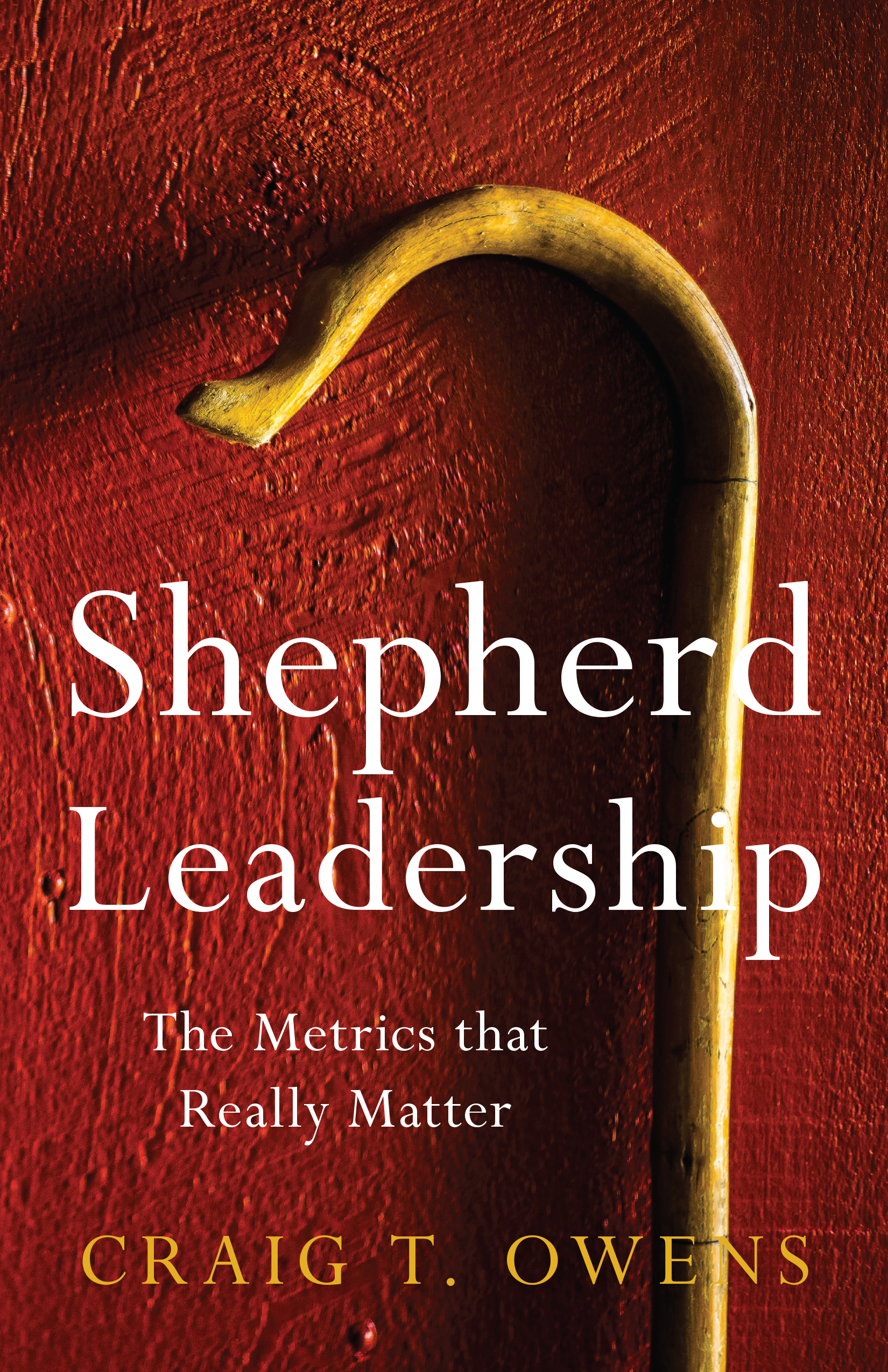
UPDATE: In the final chapter of my book Shepherd Leadership (a chapter entitled “Applause”) I wrote this:

      Did you catch that? Twice Paul reminds us that it is God who makes things grow [1 Corinthians 3:4-8]. God, not man. So is the only successful ministry the one that harvests? How did they harvest without someone watering the seed? What exactly were they watering if no one had planted any seeds? And even with everyone doing the work, it is still God who makes things grow. 

      According to Paul, what does God reward? It’s not numeric growth, but shepherds “will be rewarded for their own hard work … the work the Lord gave us.”

Thursdays With Oswald—Don’t Try To Be Humble

This is a weekly series with things I’m reading and pondering from Oswald Chambers. You can read the original seed thought here, or type “Thursdays With Oswald” in the search box to read more entries.

Don’t Try To Be Humble

     Whoever therefore shall humble himself as this little child, the same is the greatest in the kingdom of Heaven. (Matthew 18:4)

     If humility were put up as an ideal it would serve only to increase pride. Humility is not an ideal, it is the unconscious result of the life being rightly related to God and centered in Him. … 

     If we are born again and obeying the Holy Spirit, we shall unconsciously manifest humility all along the line. We shall easily be the servant of all men, not because it is our ideal, but because we cannot help it. Our eye is not consciously on our service, but on our Savior. 

From Biblical Psychology

Humility is so very fragile. If you look at your humility, you cannot help feeling pride at how humble you are. And—poof!—your humility disappears.

Oswald Chambers says in essence, “Don’t try to be humble. Don’t look at your humility. Just keep your eyes on Jesus, and serve only Him.” By doing so, you cannot help but live humbly.

“If we are born again and obeying the Holy Spirit, we shall unconsciously manifest humility all along the line. We shall easily be the servant of all men, not because it is our ideal, but because we cannot help it.”

Sola Deo Gloria

God wants to be glorified in your church service! That’s probably a “Duh!” statement, right? After all, who would disagree with that one?

But did you know God also wants to be glorified when you’re eating your dinner? And when you’re out with your friends? And when you’re on your job? And in your marriage? And in your private thought life?

Sola Deo gloria means that everything we do is only for the glory of God.

So whether you eat or drink or whatever you do, do it all for the glory of God. (1 Corinthians 10:31)

Sola Deo gloria means that there are no sacred/secular compartments in your life. You don’t have some activities that are for God and other activities that are not for God. All of life is for Him and for His glory.

“The shop, the barn, the scullery, and the smithy become temples when men and women do all to the glory of God! Then divine service is not a thing of a few hours and a few places, but all life becomes holiness unto the Lord, and every place and thing, as consecrated as the tabernacle and its golden candlestick.” —Charles Spurgeon

It borders on arrogance for me to say, “God, this is what I’m going to do and I want You to bless it.”

A better way to say it is like this: “God, what will bring You the most glory as I go to work? Or have a conversation with a friend? Or enjoy an evening out with my spouse? Or spend some time watching TV?”

What will bring You the most glory? If you ask this question, the Holy Spirit will answer it. Instead of you asking God to bless what you are going to do, He will show you what He’s already blessing—the ways in which He will be most glorified—and then you can go do that.

Try it this week: Ask the Holy Spirit to show you how you can bring glory to God in all that you do. Sola Deo gloria!

If you have missed any of the messages in this series, you can find them all here.

UPDATE: After posting this, I ran across a video from John Piper about God’s glory and I wanted to share it with you…