Archeological Study Bible (book review)

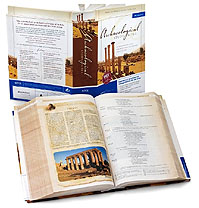
Archeological Study BibleNormally I post book reviews after I have completely read a book. But since I’m going to be working my way through The Archeological Study Bible for quite some time, I thought now was as good a time as any to share my thoughts.

I have never been able to read through the Bible in a year. I find too many fascinating subjects that keep me locked into a passage, and so it ends up putting me hopelessly behind such a rigorous reading schedule. In this study Bible, I’m finding even more fascinating reading that is making God’s Word come alive (and consequently causing me to pause even longer on certain passages)!

Since archeology and anthropology put human history in order, I am reading through the Scripture in its chronological order (i.e. not in the order the books appear in the Bible, but in the order the historical events occurred. There is a helpful chronological list on BibleGateway.com). The Archeological Study Bible is adding such a richness to the places and people and customs that are chronicled in Scripture. With each commentary, map, chart, graph, or in-depth article, I am learning about the cultures in which the people of the Bible lived, and the prevailing thoughts and customs in which biblical writers wrote the Spirit-inspired Scriptures. It is quite fascinating!

If you would like to add a new level of richness to your Bible study, this study Bible should definitely be a part of your library.
Mere Humanism

I’ve noticed a disturbing trend among many of my pastor colleagues. I’m not sure if it’s an attempt to be “relatable” or unoffensive, but it is dead wrong.

The trend is to tell stories (even Bible stories) without using the Bible. To give people good thoughts from Scripture without actually opening the Scripture. To tell people how they should live but to never show them the passages of God’s Word on which those thoughts are based.

Are we ashamed of the Scripture? How can someone “preach” without pointing their audience to the authority for their preaching?!?

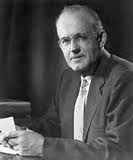
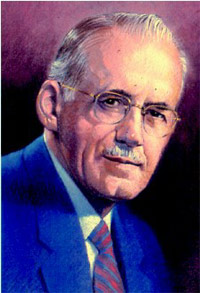
A.W. TozerA.W. Tozer warned us with these words—

“Any appeal to the public in the name of Christ that rises no higher than an invitation to tranquillity must be recognized as mere humanism with a few words of Jesus thrown in to make it appear Christian.”

Don’t just throw in some words of Christ; actually take them to His Word. This inspired Word is powerful, if we will just let people get their hands, and eyes, and hearts on it!

Praying ‘Round & ‘Round

There are lot of different ways to look at the function of prayer, but please allow me to share one more with you. Perhaps this prayer cycle will help you see the value of each aspect of prayer.

Prayer cycle

(To download a PDF of this file, click here → Prayer cycle)

Each step in this cycle helps facilitate the next step. If any step breaks down, the whole cycle of prayer can grind to a halt. But as any part of the cycle is strengthened, the whole cycle expands and grows in potency!

  • We need to be be assured that God’s Word is true when it says to come to Him in prayer.
  • Once we are assured that God’s Word is true, then the Holy Spirit will illuminate His Word to our present circumstance, giving us the mind of Our Lord. This is called discernment.
  • Having discernment will bring us the peace that knows God hears us, and that God is working on our behalf and for His glory.
  • All of these steps flowing together allow us to pray and live in greater boldness, which fuels the whole cycle again.
  • At the heart of this cycle is the empowerment of the Holy Spirit, who helps us at each step along the cycle of prayer.

Here are some Scriptures that correspond with the various steps in the cycle:

AssuranceIf you remain in Me and My words remain in you, ask whatever you wish, and it will be given you. (John 15:7)

DiscernmentBut the Counselor, the Holy Spirit, Whom the Father will send in My name, will teach you all things and remind you of everything I have said to you. (John 14:26)

PeacePeace I leave with you; My peace I give you. I do not give to you as the world gives. Do not let your hearts be troubled and do not be afraid. (John 14:27)

BoldnessAfter they prayed, the place where they were meeting was shaken. And they were all filled with the Holy Spirit and spoke the word of God boldly. (Acts 4:31)

Holy Spirit EmpowermentIn the same way, the Spirit helps us in our weakness. We do not know what we ought to pray for, but the Spirit Himself intercedes for us through wordless groans. And He who searches our hearts knows the mind of the Spirit, because the Spirit intercedes for God’s people in accordance with the will of God. And we know that in all things God works for the good of those who love Him, who have been called according to His purpose. (Romans 8:26-28)

The only way I know of to learn how to pray better is to pray more! Don’t wait for a better opportunity to begin to pray … Start right now!

Next Sunday I am continuing our series on prayer. If you are near Cedar Springs, please join us!

Sword Drills

© kpmoorse.deviantart.com

© kpmoorse.deviantart.com

When I was a kid in Sunday School, we used to have “sword drills.” Anyone remember those? We would hold our Bibles up in the air until the teacher gave us a reference to look up. The first one to find it, and stand up and read it, won that drill. For that, we received a sticker to put inside the front cover of our Bibles. I loved sword drills, and it showed: the front cover of my Bible was filled with stickers!

Oh, that we were as quick to pull out the Sword God has given us today! I wish we were as quick to flip open our Bibles as we seem to be to turn to something else. We call friends, consult a pastor or a counselor, pray about it, talk about, plan how to overcome it; but we are slow on pulling out our Swords. 

  • The writer of Hebrews tells us that the Word of God is sharper than a sword (Hebrews 4:12).
  • Paul told Timothy that the Bible was the premier place for teaching, rebuking, correcting and training (2 Timothy 3:16).
  • He told the Corinthians that God’s Word is what helps us capture wrong thoughts (2 Corinthians 10:5).
  • In Revelation we see satan defeated by the blood of the Lamb and the use of the Word (Revelation 12:11).
  • Jesus Himself demonstrated the power to defeat satan’s temptations when He used the Word to ward off every attack (Luke 4:1-13).
  • And Paul said the Sword is the weapon we should arm ourselves with every single day (Ephesians 6:17).

I love the story John Knox (1514-1572) told about defeating satan’s temptations by the Sword of the Word—

“All my life I have been tested and assaulted of satan. But my present test has assailed me most fearfully. He has set to devour me, and make an end of me. Before, he often would place all my sins before my eyes. He tried to ensnare me with the allurements of this world. But the Spirit broke those attacks. Now he has attacked me another way. This cunning devil has labored to persuade me that I have earned heaven by my faithfulness to my ministry! … Blessed be God who has enabled me to beat down and quench this fiery dart by passages from the Scripture. By the grace of God, I am what I am, not I, but the grace of God in me. Through Jesus Christ I have gained the victory.” (emphasis added)

What do you think? Is it time to brush up on our Sword-handling skills? Get some Sword drills in today, and see how God’s Word will help you!

Prayer’s Empowerment

Prayer is not about insurance, but assurance. Prayer is not about figuring things out, but about getting God’s mind on a subject.

But how does the faith to believe for that assurance, and the faith to capture God’s discernment come to us? It comes through the Third Person of the Trinity: the Holy Spirit. The Holy Spirit empowers us; He’s the central part of our prayer life.

Check out what Jesus said about the Holy Spirit’s role in your prayer life (see John 14:15-27).

EmpowermentAssurancethe Counselor [will] be with you forever (v. 16). The Holy Spirit doesn’t come and go, but He abides constantly. Jesus said I will not leave you as orphans (v. 18), but you will be loved by My Father (vv. 21-23). The Holy Spirit plays a vital role in bringing you into this intimate relationship (Romans 8:15).

Discernment—Jesus said a key component of your prayer life was if you remain in Me and My words remain in you (John 15:7). The Holy Spirit helps teach you what the Word says, and He will remind you of everything I have said to you (John 14:26). The more you can be reminded of God’s Word, the more you can pray and live with God’s discernment.

PeaceMy peace I give you … do not be afraid (v. 27). One of the names given to the Holy Spirit is Comforter. The Amplified Bible defines this title as, “Counselor, Helper, Intercessor, Advocate, Strengthener, and Standby.”

Boldness—when you have greater assurance of God’s Word, deeper discernment into the mind of the Lord, and a more tranquil peace because of prayer, you can pray and live boldly! Want to see boldness in action? Check out how the followers of Jesus lived and prayed after they were baptized in the Holy Spirit (Acts 1:8; 2:14; 4:8; 4:31).

Make no mistake about it:

How we pray is how we will live! 

Our prayers and our lives will be more assured, more discerning, more peace-producing and more bold when we let the Holy Spirit empower every aspect!

We will be continuing our series on prayer—If You Will Asknext Sunday. I would love to have you join us!

Now More Than Ever

I am very challenged by this quote, and it is one I will attempt to live out this year.

Tozer

“Now more than at any other time in generations, the believer is in a position to go on the offensive. The world is lost on a wide sea, and Christians alone know the way to the desired haven. While things were going well, the world scorned them with their Bible and hymns, but now the world needs them desperately, and it needs that despised Bible, too. For in the Bible, and there only, is found the chart to tell us where we are going on this rough and unknown ocean. The day when Christians should meekly apologize is over—they can get the world’s attention not by trying to please, but by boldly declaring the truth of divine revelation. They can make themselves heard not by compromise, but by taking the affirmative and sturdily declaring, ‘Thus saith the Lord.’” —A.W. Tozer

If … But If … If … But If …

IfNo, I’m not repeating myself; I’m just quoting the pattern in the Bible (specifically Leviticus 26).

God’s laws are inviolate. No conditions will be made, nor any exceptions allowed. The conditions in Leviticus 26 apply as much to the Israelites in 1400 BC as they do to us in the United States of America today.

IF we obey God’s Word, He will bless us with His favor (verses 3-13).

BUT IF we disobey, He will set His face against us (verses 14-17).

IF we continue to harden our hearts and remain unrepentant, God’s punishments will grow increasingly more severe (verses 18-39).

BUT IF we repent wholeheartedly, God will again restore us (verses 40-45).

It’s time for us in America to wake up to this reality! If God held His chosen people, the Israelites, to this, how much more so will He not hold us to it.

We in America have violated God’s principles for too long. We have clearly moved through the first IF and BUT IF stages. I believe we are now in the second IF stage. But the hopeful news is that there is still another BUT IF stage for us to obtain, if only we will repent and ask God’s forgiveness.

It starts with me and with you. Will you join me in asking for repentance and praying for God’s favor to visit us once again?

Don’t Give Up!

My dear pastor, I know the ministry can seem to be unrewarding at times. Maybe you’re even wondering if all of your labors are even making a difference. Hear this loud and clear: Your ministry is making an eternal difference … Don’t give up!

Let these encouraging words from Charles Spurgeon sink into your heart:

C.H. SpurgeonPutting our hand to this plough and looking back will prove that we were unworthy of the kingdom. If there be a hundred reasons for giving up your work of faith, there are fifty thousand for going on with it. Though there are many arguments for fainting, there are far more arguments for persevering. Though we might be weary, and do sometimes feel so, let us wait upon the Lord and renew our strength, and we shall mount up with wings as eagles, forget our weariness, and be strong in the Lord and in the power of His might….

As the rain climbs not up to the skies, and the snow flakes never take to themselves wings to rise to heaven, so neither shall the word of God return unto Him void, but it shall accomplish that which He pleases. We have not spent our strength in vain. Not a verse taught to a little girl, nor a text dropped into the ear of a careless boy, nor an earnest warning given to an obdurate young sinner, nor a loving farewell to one of the senior girls, shall be without some result or other to the glory of God. And, taking it all together as a mass, though this handful of seed may be eaten of the birds, and that other seed may die on the hard rock, yet, as a whole, the seed shall spring up in sufficient abundance to plentifully reward the sower and the giver of the seed. We know that our labor is not in vain in the Lord. (emphasis added)

Keep preaching God’s Word: it IS making a difference.

Thursdays With Oswald—God’s Word In Hard Places

This is a weekly series with things I’m reading and pondering from Oswald Chambers. You can read the original seed thought here, or type “Thursdays With Oswald” in the search box to read more entries.

Oswald Chambers

God’s Word In Hard Places     

To search for a word of God to suit one’s case is never Divine guidance, but guidance by human caprice and inclination. The Holy Spirit Who brings to our remembrance what Jesus has said and leads us into all truth, does so to glorify Jesus Christ. Divine guidance by the Word always makes us realize our responsibility to God…. 

     How often have our misunderstandings of God’s Word proved to us the need for the penetrating words of our Lord, “I have yet many things to say unto you, but you cannot bear them now.” In our prayings, in our desirings, in our patience, does our knowledge of God enable us to say and really mean, “Speak, Lord; for Your servant is listening”? Would we really hear God’s Word, or are we not rather in this immediate tribulation waiting for God to persuade us that our own way is right after all?

From Christian Disciplines

There is a difference between saying, “God get me out of this” and “God, what do You want to get out of this?”

There is a difference between praying, “God, please bless what I’m doing” and “God, please show me what You’re blessing so that I may do it.”

We need to be very careful that we don’t read into Scripture something that will justify what we’re feeling or doing or experiencing. Instead, we need to let the Holy Spirit speak God’s Word to us clearly and without any hidden agenda.

I know your situation may be tough, but don’t try to find a shortcut out of it. Let God accomplish what He wants to accomplish; let His Word be your guide; let the Holy Spirit make that Word come alive to you.

Learning & Teaching

LamedhI’ve been leading my congregation through a spiritual workout from the 119th Psalm. This psalm is unique for a couple of reasons: (1) It’s the longest chapter in the Bible; (2) It’s divided into twenty-two 8-verse segments, with each segment beginning with its own Hebrew letter; and (3) All but four of the 176 verses directly mention God’s Word (using words like command, precept, statues, commands, etc.).

Something else that makes this psalm interesting to study is the Hebrew alphabet itself. In our western world, a letter is just a letter: an L is just an L. But in the Hebrew language, the letters have a name, a meaning, and even a numeric value. So the Hebrew equivalent to our English L is the letter/word lamedh.

Lamedh is the tallest of all the Hebrew letters, so that means it stands out. The section called lamedh in Psalm 119 is one of big proportions. Words like eternal, boundless, established, enduring, and forever are prominent in these eight verses. The psalmist is inviting us to climb up into God’s Word and get a bigger view, a higher vantage point of who God is.

When we are in difficult places, we tend to focus more on our problems, and less on God’s awesomeness. So lamedh is a call to shift our gaze.

But this letter/word also has a definition, and lamedh is a double-edged definition. This word can mean to learn. Indeed, as we gaze upon God’s majesty, we learn so much more about Him! But lamedh also means to teach.

I have found that as I go through difficult times and choose to change my focus from my situation to my Savior, that I learn more about His faithfulness. But at the same time, others are learning from that decision to switch my gaze to God.

So I’ve got one word of advice for you if you feel like your problem is too big and you’re thinking about throwing in the towel: DON’T!!

By focusing on God’s bigness instead of your circumstance, you will learn to grow in faith. And at the same times you will be teaching others to place their faith in God too.

Those who wait on God will soar to new heights!

If you have missed any of the messages in our P119 series, you can access them all by clicking here.