Who Is Jesus?

JesusSome call Him Savior. Some call Him a moral teacher. Some call Him a prophet. Some only call His name as a curse word. Regardless of what people call Him, Jesus is almost universally known.

Despite what people call Him, and as much as people claim to know about Jesus, there are still so many questions that swirl around—

  • Who is this Man?
  • How can someone be both God and Man at the same time?
  • Did Jesus just show up in Bethlehem, or was He around earlier?
  • Was He really perfect? Could He really live His whole life without sinning once?
  • How could He die and yet come back to life?
  • Better yet: why did He have to die at all?
  • Does it really matter whether or not He was resurrected from the dead?

As we approach this Easter season, more and more people’s thoughts will be turning toward this Man. Please join me as we consider this simple, yet profound question: Who Is Jesus? The answer to that one simple question will be life-changing!

Check out all of the sermons in this series:

Keep On Asking

We finished The Q Series yesterday morning, but I hope the questions keep on coming. I always love answering questions, and doing it in the open forum like we did was both challenging and fun (at least I had a good time!).

But I also encouraged the Calvary Assembly of God family to keep on asking questions. It’s fine if the questions are directed to me, but the most important questions are the ones we ask of ourselves.

The Holy Spirit makes all of our lives a work-in-progress. This is what is called sanctification. That word really means to make a saint out of us (think of it as saint-ification).

That means He will constantly challenge us with questions that we are wise to answer. Things like:

  • Why are you thinking that?
  • What does the Bible say about that?
  • Is doing that for your comfort or for God’s glory?
  • Is that the wise thing to do?
  • How would Jesus handle that situation?

Over time the answers to these questions will change, as we should all be growing up in our relationship with God (1 Corinthians 13:11; Ephesians 4:15).

The Apostle Paul tells us that we should take every thought captive (2 Corinthians 10:5), because our minds will either be set on natural desires or set on spiritual truths (Romans 8:5).

So don’t tune out the Holy Spirit. Don’t stop asking those maturing questions. Don’t stop growing in your relationship with your Heavenly Father.

Keep on asking, and you’ll keep on growing!

My High Wire Act

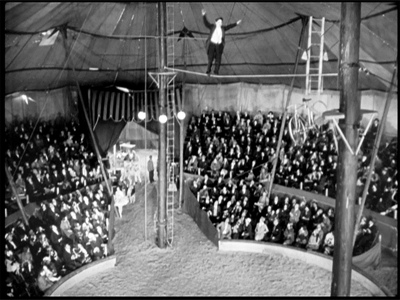
“Ladies and gentleman, high above you, balanced precariously on the tightrope high over your heads—and performing it all without a net—is your pastor!”

Well, that’s sorta what it feels like to me!

Last year, I took a couple of Sundays to field questions from our congregation. My hope was that lots of people would turn in their questions early, to give me a little time to prepare (that’s like performing with a net). But instead, most of the questions came as I was standing at the front of the church with the microphone in my hand. That’s definitely performing without a net!

But it was very well received, so we’re trying this high wire act again. Beginning next Sunday The Q Series allows anyone in attendance to ask their questions about the Bible, God, or anything else that’s on their mind about spiritual matters. People can either ask their question verbally, or they can text their question anonymously to the techs in our sound booth.

Of course, if you’d like to help me perform with a net, please ask a question or two (or three, or four…) in the comments below. If you’d like to see me perform without a net, join us at 10:30am this Sunday morning.

Here are some of the questions we have addressed:

Answer (Wo)Man

“Hey, pastor, I have a question for you….” As a pastor, do you feel like you need to have all the answers, all the time, to everyone’s questions? I’m not saying that as pastors we shouldn’t always be studying and learning and growing, but I think it’s a dangerous trap for us to feel like we need to have every answer.

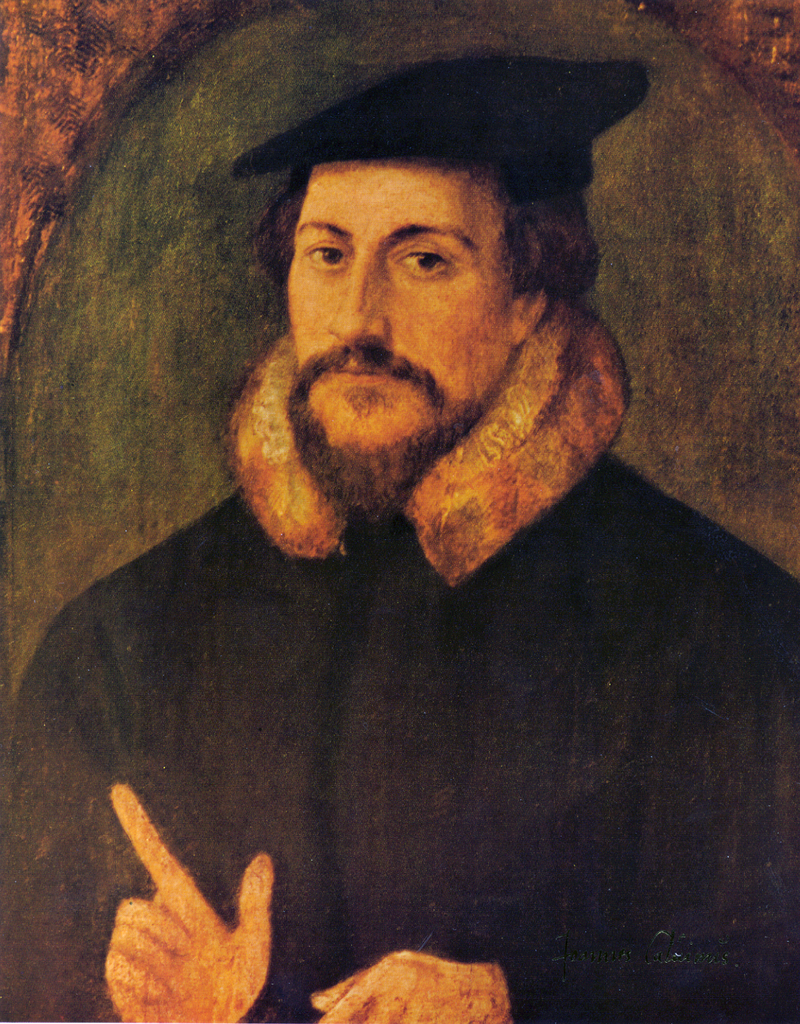
Here’s what John Calvin wrote in The Institutes of the Christian Religion

“And since the Holy Spirit always instructs us in what is useful, but altogether omits, or only touches cursorily on matters which tend little to edification, of all such matters, it certainly is our duty to remain in willing ignorance.

“…Let us here remember that on the whole subject of religion one rule of modesty and soberness is to be observed, and it is this, in obscure matters not to speak or think, or even long to know, more than the Word of God has delivered. A second rule is, that in reading the Scriptures we should constantly direct our inquiries and meditations to those things which tend to edification, not indulge in curiosity, or in studying things of no use.

“…The duty of a Theologian, however, is not to tickle the ear, but confirm the conscience, by teaching what is true, certain, and useful.”

Study for edification, not curiosity. Teach what is true and helpful, not what is tickling ears. And don’t feel like you need to have all the answers.

The Q Series

I love questions! Jesus seemed to love them too. Take a quick scan through the four Gospels of Matthew, Mark, Luke and John and you will see ?s all throughout the biblical text.

Over the next two Sundays, I am turning over the decision of what topics to cover on Sunday mornings to my Calvary Assembly of God family. In The Q Series, they get to submit the questions. I hope you can join us.

If not, feel free to submit your question(s) on Twitter, via email, or in the comment section below. I will be sure to answer it here, and—who knows—I may even use it in The Q Series too!

What Are These?

What happens when you read the Bible? Do you just read it, or do you ask questions of it? Some people seem hesitant to ask any questions, but the Bible itself is full of questions.

Zechariah was a prophet in the Old testament. If anyone would have been familiar with God’s Law, it would have been this guy. He grew up as a P.K. (priest’s kid), with several generations of religious leaders in his family tree. Yet as he was being shown the word of the Lord, he realizes how special it is, and wants to make sure he fully grasps it. So he fires away with the questions:

  • What are these?
  • What are these coming to do?
  • Where are you going? 
  • What is it? 
  • Where are they taking it?

The Word of God is living, active, and powerful. I should inquiry of it: what does this mean?

The same Holy Spirit that inspired the biblical writers is the same Holy Spirit Who will illuminate your mind to understand it.

All you have to do is ask!

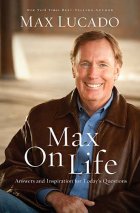
Max On Life (book review)

Have you ever wanted to have a conversation with Max Lucado? Just sit with him for awhile and pick his brain? With Max On Life you can do just that!

Max On Life is a compilation of 172 questions that Max has been asked. Some of his answers come from his previously written books, some are answers formed with brand new insights, but all of the answers come from his very pastoral heart.

The book is divided into seven sections – hope, hurt, help, him/her, home, have/have-nots, and hereafter. But even more helpful is the index of topics at the back of the book, as well as a listing of all of the scriptural references Max uses throughout Max On Life. I can imagine this book staying very close at hand, because I’m going to be referring to it often.

If you are a pastor or counselor, I think you will find a lot of helpful insights in this book to pass on to others. If you have a friend with lots of questions about the Christian faith, this book would make an excellent gift. Or if you just want to be a helpful friend when others are in need, this book will help prepare you to be a blessing to them.

I am a Thomas Nelson book reviewer.

Thursdays With Oswald—Pseudo-evangelism

This is a weekly series with things I’m reading and pondering from Oswald Chambers. You can read the original seed thought here, or type “Thursdays With Oswald” in the search box to read more entries.

Pseudo-evangelism

It was this form of pseudo-evangelism, so unlike the New Testament evangelism, that made [Thomas] Huxley say—“I object to Christians: they know too much about God.” … God is the only Being who can afford to be misunderstood; we cannot not, Job could not, but God can. If we are misunderstood we “get about” the man as soon as we can. St. Augustine prayed, “O Lord, deliver me from this lust of always vindicating myself.” God never vindicates Himself, He deliberately stands aside and lets all sorts of slanders heap on Him, yet He is not in any hurry.

From Baffled To Fight Better

I’m learning more and more that when people ask why God behaves in such-and-such a way that the best answer may be, “I don’t know why, but I still trust Him.” I trust Him even when I don’t have all of the answers, because I know He has all of the answers.

To try to answer for God—or, as is probably more likely, to try to defend my theology—is rightly called pseudo-evangelism. O Lord, deliver me from pseudo-evangelism!

Eat A Cookie

If you are going through a difficult place in your life … or if you are trying to process an event that doesn’t make much sense … or if there is a painful memory that makes you wonder, “Where was God in that?” … check out this short video clip:

Now, go eat a cookie and know that God IS working out something good.

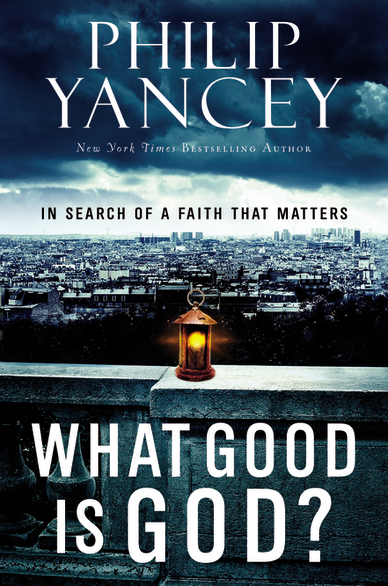
What Good Is God? (book review)

Philip Yancey always makes me think. He explores the edges of Christian faith, not content just to walk down the safe paths of well-worn, traditional preaching. Just the title of his latest book—What Good Is God?—tells you that this book will be no exception.

This book is laid out in ten sections, each with two chapters. The first chapter in each section gives you the setting, the second chapter is a speech that Yancey gave in that setting. And, wow, what tough settings they are! Every setting is one that makes you wonder, “Where was God in that?!?”

What Good Is God? will take you to settings like…

  • The campus of Virginia Tech after a gunman opened fire on faculty and students.
  • The secret house churches in Communist China.
  • The post-apartheid South Africa where wounds of hate are still healing.
  • The volatile Middle East where religious beliefs violently collide.
  • The middle of a terrorist attack in Mumbai, India.

In every section, Philip Yancey masterfully and empathetically takes us on a journey of discovery that shows that God is still God and that He is good. He does this through personal example, Biblical references, and always with a heart that seems to know his audience.

It’s a challenging read, but well worth your time.

I am a Faith Words book reviewer.