Myth Buster

Dick BrogdenGuest Blogger: Dick Brogden

Currently there is an inordinate emphasis on size and speed when it comes to the development of the church. Church history soberly shows that orthodoxy tends not to spread as swiftly as heresy and that bad teaching outpaces good. It is the slow, steady repeated truth of God that builds the enduring church. The largest church at the end of the first century was found in Rome, thought by most scholars to be around two hundred members. The churches in Ephesus, Corinth, Philippi, Colosse, and Thessalonica (among others) were most probably between fifteen and fifty. The record of Acts takes place over about fifty years. Biblical precedent indicates that it takes about a generation to get a few churches to what we now consider modest size. One myth is that the church has to grow quickly; another that a strong church is a big church. The best churches tend to grow slowly and steadily, and the normal first century church comprised less than fifty people.

Disciples, too, are forged over time. If a church is but a collection of disciples, then it makes sense that strong churches require time to become solid. Another common myth today in mission is that all new disciples need is the Bible and the Holy Spirit. As appealing as this sounds, it has never been true in history, and if we are honest, it has not been true for any of us experientially. Consider how many books, sermons, mentors, friends, and external inputs help shape and form our spirituality over time. None of us grew to where we are without multiple sources of input over disparate seasons, all the input submitted to the authority of Holy Spirit and the Word. Biblically there always remains the need for an outside catalyst to help correct our biases and heresies. A group of people studying the Scriptures can just as easily end up pooling ignorance as illumining one another. Acts 15 is a classic example of ongoing external input necessary for the formation of strong disciples and churches. The negative example of external input (requiring circumcision) does not negate the massive, ongoing positive external input.

Paul and Barnabas report the wonderful turning of the Gentiles to Jesus. They also report the negative external pressure. James and the counsel respond by correcting the error and reinforcing what is necessary. In Acts 15:20, James delineates what they should not do–former religious forms and rituals. Paul reminds the council that coming to Jesus demands conversion (v. 3) and James cites Peter that the Gentiles must come out of false religion (v. 14). In Acts 15:32, Judas and Silas “exhort and strengthen the brethren with many words.” In verse 35, Paul and Barnabas teach and preach to the Gentiles and in verse 36, Paul and Barnabas commit to revisit their converts to ensure they are walking correctly. Disciples and churches are forged over time. Let us continue to believe that God will do great things and bring millions into His church. Let us continue to understand that it is slow, steady, life-on-life work to make disciples and build churches.

Pastor, Stop Competing!

Whenever I’m with other pastors and they ask me, “How’s your church going?” I know the answer I give is not the answer they want. For most pastors “How’s your church going” is really code for “How many people are coming to your church services.” I have always had a sneaking suspicion that if I answered the “How’s it going” question with an attendance figure, that I have missed something.

This quote from A.W. Tozer convinced me that my suspicion was correct—

Tozer“Dear Lord, I refuse henceforth to compete with any of Thy servants. They have congregations larger than mine. So be it. I rejoice in their success. They have greater gifts. Very well. That is not in their power nor in mine. I am humbly grateful for their greater gifts and my smaller ones. I only pray that I may use to Thy glory such modest gifts as I possess. I will not compare myself with any, nor try to build up my self-esteem by noting where I may excel one or another in Thy holy work. I herewith make a blanket disavowal of all intrinsic worth. I am but an unprofitable servant. I gladly go to the foot of the class and own myself the least of Thy people. If I err in my self judgment and actually underestimate myself I do not want to know it. I purpose to pray for others and to rejoice in their prosperity as if it were my own. And indeed it is my own if it is Thine own, for what is Thine is mine, and while one plants and another waters it is Thou alone that giveth the increase.” —A.W. Tozer (emphasis added by me)

A gutsy prayer! O Lord, may I always be able to pray this prayer in absolute integrity.

Got Problems? Good!

The absence of problems in a church does not mean that everything is fine. It might mean that the church is dead.

Check out these words from A.W. Tozer—

Tozer“Some misguided Christian leaders feel that they must preserve harmony at any cost, so they do everything possible to reduce friction. They should remember that there is no friction in a machine that has been shut down for the night. Turn off the power, and you will have no problem with moving parts. Also remember that there is a human society where there are no problems—the cemetery. The dead have no differences of opinion. They generate no heat, because they have no energy and no motion. But their penalty is sterility and complete lack of achievement. What then is the conclusion of the matter? That problems are the price of progress, that friction is the concomitant of motion, that a live and expanding church will have a certain quota of difficulties as a result of its life and activity. A Spirit-filled church will invite the anger of the enemy.” (emphasis added)

What do you think?

The Dictatorship Of The Routine

Wow, I am really challenged by this word from A.W. Tozer! I pray that my personal life, and my life as a pastor, never falls under the dictatorship of the routine.

Tozer“The treacherous enemy facing the church of Jesus Christ today is the dictatorship of the routine, when the routine becomes ‘lord’ in the life of the church. Programs are organized and the prevailing conditions are accepted as normal. Anyone can predict next Sunday’s service and what will happen. This seems to be the most deadly threat in the church today. When we come to the place where everything can be predicted and nobody expects anything unusual from God, we are in a rut. The routine dictates, and we can tell not only what will happen next Sunday, but what will occur next month and, if things do not improve, what will take place next year. Then we have reached the place where what has been determines what is, and what is determines what will be. That would be perfectly all right and proper for a cemetery. Nobody expects a cemetery to do anything but conform…. Everyone and everything in a cemetery has accepted the routine. Nobody expects anything out of those buried in the cemetery. But the church is not a cemetery and we should expect much from it, because what has been should not be lord to tell us what is, and what is should not be ruler to tell us what will be. God’s people are supposed to grow.” —A.W. Tozer (emphasis added)

What do you think about this?

Growing Pains

Listen to the podcast of this post by clicking on the player below, and you can also subscribe on AppleSpotify, or Audible. 

I remember when I was a teenager having such an ache in my legs at night. I’d be laying on my bed trying to sleep, but I couldn’t get comfortable because of that dull, unrelenting ache in my legs. I’d go ask my Mom what was going on, and her reply was simple: “Those are growing pains.”

In order to grow in any area of our lives—physically, emotionally, mentally, relationally—we have to go through a certain amount of pain.

No pain, no gain.

The process is not always a lot of fun, but that’s why we have to keep our eyes on the goal. The process may not be something we like, but the end results will make the pain worth it.

For instance, you may not like dieting but you like the weight loss or lower cholesterol numbers, so you stick with it. You may not like saying, “I’m sorry, I was wrong, please forgive me” but you like the healed relationship, so you say it.

Throughout the New Testament the phrase one another is frequently used to address how members of the Body of Christ should relate to each other. God desires that all of us operate interdependently with one another. In order to get there, we must get ready for some growing pains!

In Ephesians 4:2, Paul tells us what is required to get to a place of unity and maturity in the Church:

  • Be completely humble (the King James Version says lowliness). This Greek word means not letting our thoughts rise far from the ground. In other words, we are thinking of ourselves as God thinks of us, not independently as a self-made man or woman, but viewing all of my success as God-appointed. This process toward interdependence starts in our thoughts—in our attitudes about ourselves and about others.
  • Gentle means strength under control. Gentleness says, “I could do this, but for your sake I won’t.”
  • Patient interaction (KJV: longsuffering) with others is allowing them the freedom to grow just as others allowed me the freedom to grow.
  • Bearing with one another in love. Think of a load-bearing wall in a building that is holding up the weight of the roof and walls. When we bear with one another we are helping to share the burdens.

Being humble with ourselves and gentle and patient with others is the way we go through the growing pains of bearing with one another in love. The process may not be a lot of fun, but the end result is something that glorifies God, that’s why we must stick with one another through all our growing pains.

Check out all of the other messages in our series Live Together by clicking here.

►► Would you please prayerfully consider supporting this ministry? My Patreon supporters get behind-the-scenes access to exclusive materials. ◀︎◀︎

Life Together

Life TogetherOne of the things that stands out so clearly about the first century church is this—they really liked being around each other! Even though the early Christians faced persecution, rejection by the Jewish religious leadership, and even martyrdom, they truly enjoyed a special bond with one another.

In fact, that’s the key phrase: one another. The New Testament says they were devoted to one another, they helped one another, they prayed with one another, they confessed their sins to one another, they opened up their homes to one another, and on and on. This doesn’t mean they were without problems and personality clashes at times, but they found that one another was so much more enjoyable and productive than being on their own.

This Sunday at Calvary Assembly of God as I begin a brand new series called Enjoying Life Together With One Another. If you missed any of the messages, you can check them out here:

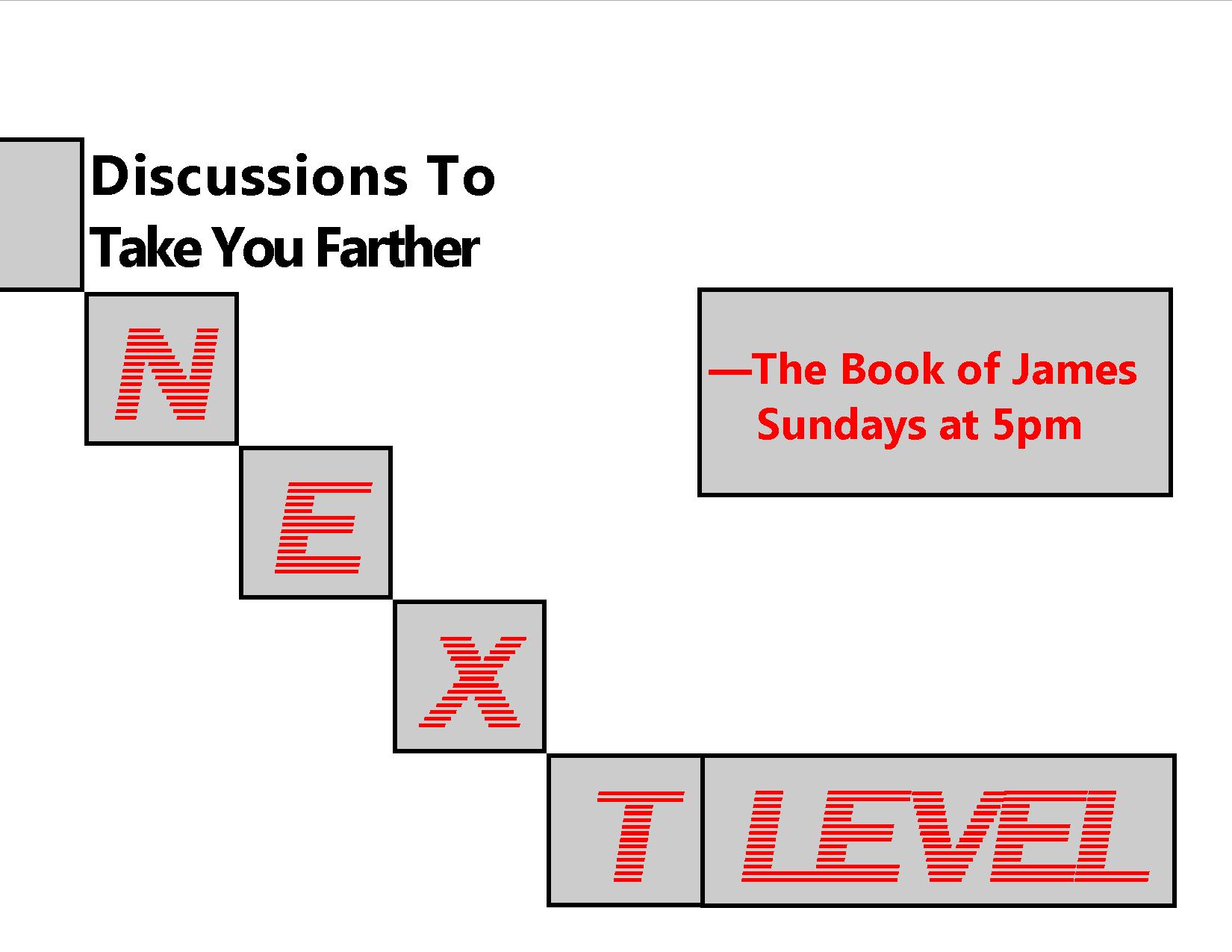
Next Level: James

It was a time of explosive growth. And with that growth came challenges, questions, problems, and opportunities! I’m talking about the Church in its earliest days in Jerusalem.

The Bible tells us that God prepares people in advance (Colossians 2:10) to do the works that He has equipped them to do. Into this environment of rapid growth and previously unheard-of opportunities stepped a man named James. His leadership and wisdom were just what the church needed then.

And his leadership and wisdom are just what the church needs now.

That’s why I’m leading our Next Level study group into an in-depth look at the book James wrote. The wisdom that is found in the Book of James has been called “the proverbs of the New Testament,” and we’ll be learning how to apply those proverbs to our lives and our church.

Please join me for this fascinating and informative study at 5pm each Sunday afternoon.

What Is “Success” For A Church?

“How’s it going,” a fellow pastor asked me. “How’s your church doing?”

If you’re a pastor, you probably get asked this often. How do you answer this question? Do you tell them what your attendance was on Sunday morning? Or about the newest program you’ve started?

When you look in the mirror and ask yourself, “How’s it going,” is your answer related to nickels and noses (offerings and attendance)? Is it how many people complimented your last sermon?

Listen to these sobering words:

Worldliness is not the trap that most endangers us as Christian workers; nor is it sin. The trap we fall into is extravagantly desiring spiritual success; that is, success measured by, and patterned after, the form set by this religious age in which we now live. 

We have a commercialized view—we count how many souls have been saved and sanctified, we thank God, and then we think everything is all right. (Oswald Chambers)

We need to be very careful about how we define “success” in a church setting. Let’s use Jesus as our example:

  • How big was His congregation? Twelve men. One betrayed Him, nine ran away when the going got tough, and one denied he even knew Him. Even after being raised from the dead (!) there were only 120 people in the upper room.
  • How much money did His church have? Not even enough to buy a gravesite for the Messiah.
  • What did people think of His sermons? Some of His sermons made people so mad they wanted to stone Him. And after one sermon the Bible says: From this time many of His disciples turned back and no longer followed Him (John 6:66).

Maybe “success” in the church is more like…

  • …people being reconciled to God. Remembering that “our work is not to save souls, but to disciple them” (Chambers).
  • …seeing disengaged people becoming actively involved in engaging others with the Gospel.
  • …“Never seek[ing] after anything other than the approval of God” (Chambers).
  • …to say with Jesus, “The Spirit of the Lord is on Me, because He has anointed Me to preach good news to the poor. He has sent Me to proclaim freedom for the prisoners and recovery of sight for the blind, to release the oppressed, to proclaim the year of the Lord’s favor” (Luke 4:18-19).

These are just some of my thoughts. What else should be on this list? How would you define “success” in the church?

I have also shared some questions that can help pastors and ministry leaders better gauge the level of effectiveness in their ministry.

UPDATE: This post was one of the seed thoughts that went into fashioning my book Shepherd Leadership: The Metrics That Really Matter.

Evangelizing The Evangelized?

I was talking to a friend the other day about church growth, and we both notice something disturbing: Most of the “new” people coming to church are actually not so new. Much of what has been called church growth is actually church transplants.

We’re not reaching the lost. Ouch!

I think Howard Hendricks nails it with this:

The Gospel is failing to produce results in some places today because it lacks an audience. Christians in churches are busy evangelizing the evangelized. We constantly face the danger of developing a fortress mentality: making occasional excursions into unfriendly territory and scurrying back to the safety of our church and its people when opposition arises. We tend to derive security from friendly surroundings rather than from Jesus Christ, and so we fail to penetrate our society for Christ.

I pray my greatest strength is my relationship with Jesus Christ, and that my driving passion is for others to know this beautiful relationship too.

May God help me to have an audience in Cedar Springs!

Men, Not Boys