8 Quotes From “More Than A Carpenter”

more-than-a-carpenterMore Than A Carpenter by Josh & Sean McDowell is a wonderful resource to prepare you to share the uniqueness of Jesus Christ. Check out my book review by clicking here, and then enjoy these quotes that I especially found interesting.

“Why don’t the names of Buddha, Mohammed, or Confucius offend people the way the name of Jesus does? I think the reason is that these other religious leaders didn’t claim to be God.” —Josh McDowell

“It was reserved for Christianity to present to the world an ideal which through all the changes of eighteen centuries has inspired the hearts of men with an impassioned love; has shown itself capable of acting on an all ages, nations, temperaments, and conditions; has been not only the highest pattern of virtue, but the strongest incentive to its practice. … The simple record of these three short years of active fife has done more to regenerate and soften mankind than all the disquisitions of philosophers and all the expectations of moralists.” —William Lecky, one of Great Britain’s most noted historians and a fierce opponent of organized Christianity

“This testimony [that Jesus was God], if not true, must be downright blasphemy or madness. … Self-deception in a matter so momentous, and with an intellect in all respects so clear and so sound, is equally out of the question. How could He be an enthusiast or a mad man who never lost the even balance of His mind, who sailed serenely over all the troubles and persecutions, as the sun above the clouds, who always returned the wisest answer to tempting questions, who calmly and deliberately predicted His death on the Cross, His resurrection on the third day, the outpouring of the Holy Spirit, the founding of His church, the distraction of Jerusalem—predictions which have been literally fulfilled? A character so original, so complete, so uniformly consistent, so perfect, so human and set so high above all human greatness, can be neither a fraud nor a fiction. The poet, as has been well said, would in this case be greater than the hero. It would take more than a Jesus to invent a Jesus.” —Philip Schaff

“There exists no document from the ancient world witnessed by so excellent a set of textual and historical testimonies, and offering so superb an array of historical data on which an intelligent decision may be made. An honest [person] cannot dismiss a source of this kind. Skepticism regarding the historical credentials of Christianity is based on an irrational bias.” —Clark H. Pinnock

“The Gospels tell us Jesus’ family, including James, were embarrassed by what He was claiming to be. They didn’t believe in Him; they confronted Him. In ancient Judaism it was highly embarrassing for a rabbi’s family not to accept him. Therefore, the Gospel writers would have no motive for fabricating this skepticism if it weren’t true. Later the historian Josephus tells us that James, the brother of Jesus, who was the leader of the Jerusalem church, was stoned to death because of his belief in his brother. Why did James’ life change? Paul tells us: the resurrected Jesus appeared to him. There’s no other explanation.” —J. P. Moreland

“The resurrection takes the question ‘Is Christianity valid?’ out of the realm of philosophy and makes it a question of history.”

“I believe in the resurrection, partly because a series of facts are unaccountable without it.” —Michael Ramsey, former Archbishop of Canterbury

“The Old Testament contains sixty major messianic prophecies and approximately 270 ramifications that were fulfilled in one Person, Jesus Christ. … We find the chances of just forty-eight of these prophecies being fulfilled in one person to be only 1 in 10157. … All of the prophecies about the Messiah were made at least four hundred years before He was to appear. … This description of the manner of [Christ’s] death was written eight hundred years before the Romans used crucifixion as a method of execution.” —Josh McDowell

I am always sharing quotes from More Than A Carpenter and other interesting authors regularly on both Twitter and Tumblr. Please make sure you are following me there as well to see these quotes as soon as they are posted.

Thursdays With Oswald—Is Your Christianity Actual Or Only Ideal?

Oswald ChambersThis is a weekly series with things I’m reading and pondering from Oswald Chambers. You can read the original seed thought here, or type “Thursdays With Oswald” in the search box to read more entries.
Is Your Christianity Actual Or Only Ideal? 

     Christianity is not adherence to a set of principles—righteousness, goodness, uprightness—all these things are secondary. The first great fundamental thing about Christianity is a personal relationship to Jesus Christ which enables a man to work out the ideal and actual as one in his own personal life. … 

     We are not built for mountains and dawns and artistic affinities; they are for moments of inspiration, that is all. We are built for the valley, for the ordinary stuff of life, and this is where we have to prove our mettle. A false Christianity takes us up on the mount and we want to stay there. “But what about the devil-possessed world?” “Oh, let it go to hell! We are having a great time up here.” … It is a great thing to be on the mount with God, and the mountains are meant for inspiration and meditation; but a man is taken there only in order that he may go down afterwards among the devil-possessed and lift them up. … 

     God won’t clear up our social conditions; Jesus Christ is not a social Reformer, He came to alter us first, and if there is any social reform done on earth, we will have to do it. … 

     If we cannot live in the demon-possessed valley, with the hold of God on us, lifting up those who are down by the power of the thing that is in us, our Christianity is only an abstraction.

From The Shadow Of An Agony

Jesus Christ did not stay on the mountaintops with His Father, aloof from the needs of people. He went away for times of refreshing, but always came back to the messiness of people’s lives.

Can the same be said of our Christianity? Are we content with merely knowing we are going to Heaven? Or are we daily going into the valleys to rescue those oppressed and held captive by the devil?

Ideal Christianity wants to be alone with Jesus on the mountain. Actual Christianity—that Jesus modeled for us—meets with Christ on the mountain only to be strengthened for the work in the valley. 

Is your Christianity actual, or only ideal?

Thursdays With Oswald—It All Comes Down To Jesus

Oswald ChambersThis is a weekly series with things I’m reading and pondering from Oswald Chambers. You can read the original seed thought here, or type “Thursdays With Oswald” in the search box to read more entries.
It All Comes Down To Jesus

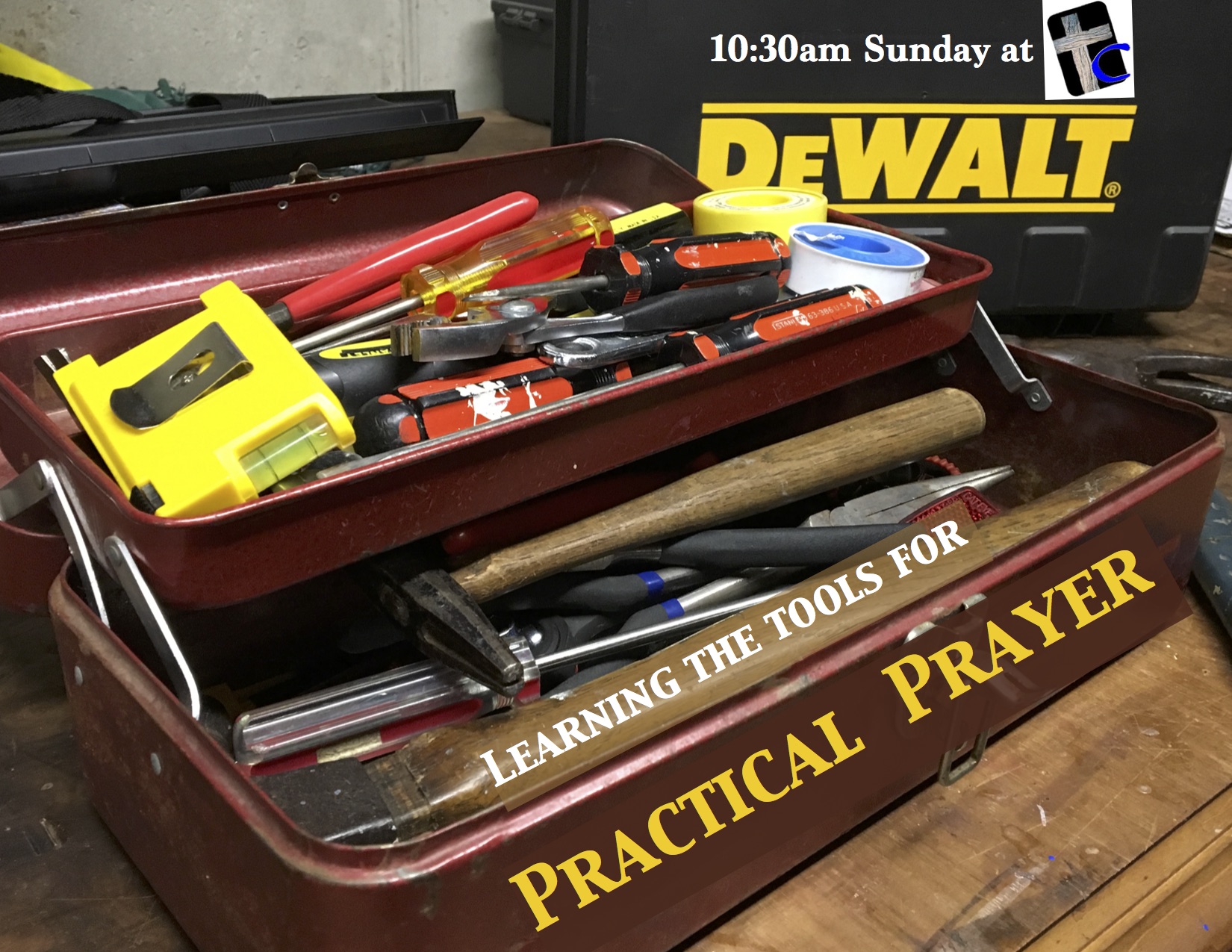
     The atheist, or socialist, or Christian—all who look to the future and express a view of what ought to be, see the same vision. They see the brotherhood of man, a time of peace on earth when there will be no more war, but a state of goodwill and perfect liberty, at present inconceivable. There is nothing wrong with the vision, and there is no difference in the vision because its source is the Spirit of God; the difference is in the way it is to be reached. The vision is of the nature of a castle in the air. That is where a castle should be; who ever heard of a castle underground! The problem is how to put the foundation under your castle in the air so that it can stand upon the earth. The New Testament says that the only foundation is not Rationalism but the absolute efficacy of the Redemption of Jesus Christ. … 

     There is only one thing as futile as the Roman Catholic Church and that is Protestantism. In Roman Catholicism the great dominating authority is Churchianity, the church is vested with all authority. In Protestantism it is what the Book says that is the supreme authority, and a man gets rest when he decides for either. “I am going to give up all the turmoil and let my Church do my thinking for me.” If you put your faith in a Church, it will solve your problems for you. Or you may stake your faith in Bibliolatry with the same result. “Ye search the Scriptures, because ye think in them ye have eternal life; and these are they which bear witness of Me, and ye will not come to Me that ye may have life” (John 5:39-40). Jesus Christ says neither the Church nor the Bible is the authority, but “I am the Way, the Truth, and the Life”; the Church and the Bible are secondary. 

From The Shadow Of An Agony 

Atheism, socialism, Christianism, Catholicism, Protestantism—all these –isms are man’s ideas.

Our priority should be a personal relationship to Jesus Christ! Stop fighting for an idea; but fight those ideas that want you to choose them over Jesus.

Only One is THE Way, Truth, and Life.

10 Quotes From “Light & Truth—Revelation”

light-and-truth-revelationHoratius Bonar gives excellent insights into the themes in Scripture. Having him as a guide through a challenging text like the Book of Revelation is a precious resource. Check out my review of his commentary Light & Truth—Revelation by clicking here.

“The tendency of the present age is to set aside prophecy as specially belonging to the supernatural, and therefore the incredible and impossible. Let us stand aloof from this incredulity, and welcome the prophetic word as all the more precious because supernatural and specially divine. … Prophecy is a sure word, and it is as blessed as it is sure. Woe to him who slights it! Blessed are all they who meditate on it, seek to know it, and take it for guidance and counsel in the evil day!” 

“Have we realized our own dignity? Do we feel the honour, the privilege, the responsibility of being kings and priests? Do we act, live, speak, feel accordingly? Do our glorious prospects tell upon us now? Are we walking daily in the anticipation of what shall be? Are we working, praying, praising, giving, suffering, denying self, under the influence of that honour which shall so soon be ours?”

“The world scoffs at the message, and believes in no advent save the advent of gold and silver, of commerce and science, of luxury and pleasure. The Church has lost sight of it, and says, ‘My Lord delayeth His coming.’” 

“Is the Church ready for this glorious day? Has she put on her apparel? Has she trimmed and lighted her lamp? Has she filled her vessel with oil? Is she sitting loose from the world? Is she remembering her coming Lord, and seeking to be faithful to Him in His absence? He has entrusted to her His cause, His truth, His honour. Is she alive to her responsibility, and acting accordingly? Is she realizing His nearness and His glory? Is she daily influenced by His sure world of promise, ‘Behold, I come quickly, and my reward is with Me?’ Is she labouring and suffering for Him? Or is she self-indulgent, worldly, indolent?”

“Be patient under wrong, and suffering, and weariness, and hope deferred! Fret not! He that believeth doth not make haste; the Lord is at hand; the kingdom is about to come; the tribulation will soon cease; the joy will soon begin; and once begun, it will never end.”

“Live, and act, and walk as sons of morning. Let the world recognize you as such. Let there be streaks of dawn seen upon you.”

“Pity a dark world, and its dark children, that have no hope and no morning before them. Point out the Morning-star to them; bid them look at it; tell them what its anticipated brightness has done for you. Win souls to Christ. Draw many into the kingdom by your words and by your walk. There is little time to lose; for the coming of the Lord draweth nigh.”

“It is not lukewarmness occasioned by the cold passing gradually into heat, but that produced by the heat passing into the cold. … Church of the living God, beware of letting your temperature sink even one single degree.”

“Be separate from the world. Abstain from fleshly lusts. Lay aside all filthiness. Walk soberly. Beware of earth’s folly and idle laughter. Set your affection on things above. Be prepared for suffering. Endure hardness. Take up your cross daily and bear it aloft, and be not ashamed of it. The footsteps of the old saints are still visible on the sands of time. Follow them. Their voice is still heard, and their hand still waves, beckoning you to follow. Believe what they believed.”

“Watch, for satan tries to lull you asleep. Watch, for the world, with it riches, and vanities, and pleasures, is trying to throw you off your guard. Watch upon your knees. Watch with your Bibles before you. Watch with wide-open eye. Watch for Him Whom not having seen you love.”

I will be sharing more quotes from this powerful book in the near future. You can enter your email address by the box that says “Sign me up!” to be notified immediately when these quotes are posted. And be sure to follow me on Tumblr and Twitter for a daily dose of notable quotes.

Sit Walk Stand [re-launch]

Sit Walk StandThis coming Sunday we re-start a series at Calvary Assembly of God which we first began in 2014, and re-launched in 2015, called Sit Walk Stand: A Study In The Book Of Ephesians.

Why Ephesians? Dr. Martyn Lloyd-Jones, who preached 232 sermons on this book to his packed-out church, said, “It is very difficult to speak of Ephesians in a controlled manner because of its greatness. Many have tried to describe it. One writer has described it as the crown and climax of Pauline theology. Another has said that it is the distilled essence of the Christian religion, the most authoritative and most consummate compendium of our holy Christian faith. What language! And it is by no means exaggerated.”

It is my desire that our congregation be as biblically literate as I can encourage and resource them to be. So Tom Kaastra, a 38-year veteran pastor, is going to co-teach with me again this year as we continue our attempt to master this powerful epistle.

The name of our series—Sit Walk Stand—comes from Watchman Nee, who wrote, “Of all Paul’s epistles, it is in Ephesians that we find the highest spiritual truths concerning the Christian life. The letter abounds with spiritual riches, and yet at the same time is intensely practical.”

Please join us at Calvary Assembly of God this Sunday at 10:30am.

Whether you were with us last year or not, I posted some sermon recaps each week which will help prepare you as we re-launch this series. Click on the links below:

From 2014—

From 2015—

11 More Quotes From “Culture”

cultureA.W. Tozer wrote almost 50 years ago, but his words to the church still ring true today. Check out my review of Culture, and then enjoy some additional quotes from this book.

“To preserve life the physician and the druggist use words of fixed meaning common to both. How much more should the pulpit and the pew have a clear understanding about the words of eternal life. The modern effort to popularize the Christian faith has been extremely damaging to that faith. The purpose has been to simplify truth for the masses by using the language of the masses instead of the language of the church. It has not succeeded, but has added to rather than diminished religious confusion.”

“The hope of the church yet lies in the purity of her theology, that is, her beliefs about God and man and the relation to each other. These beliefs have been revealed to her by the inspiration of the Holy Spirit in the sacred Scriptures. Everything there is clear-cut and accurate. We dare not be less than accurate in our treatment of anything so precious.”

“I think we make two mistakes in our attitude toward our Christian leaders, one is not being sufficiently grateful to them and the other in following them too slavishly.”

“Today we evangelicals are showing signs that we are becoming too rich and too prominent for our own good. With a curious disregard for the lessons of history we are busy fighting for recognition by the world and acceptance by society.”

“That terrible zone of confusion so evident in the whole life of the Christian community could be cleared up in one day if the followers of Christ would begin to follow Christ instead of each other.”

“The difficulty we modern Christians face is not misunderstanding the Bible, but persuading our untamed hearts to accept its plain instructions.”

“Our churches these days are filled (or one-quarter filled) with a soft breed of Christian that must be fed on a diet of harmless fun to keep them interested. About theology they know little. Scarcely any of them have read even one of the great Christian classics, but most of them are familiar with religious fiction and spine-tingling films. No wonder their moral and spiritual constitution is so frail.”

“To accept the call of Christ changes the returning sinner indeed, but it does not change the world. The wind still blows toward hell, and the man who is walking in the opposite direction will have the wind in his face. And we had better take this into account when we ponder on spiritual things.”

“Christianity’s scramble for popularity today is an unconscious acknowledgment of spiritual decline.”

“The desire to stand well with our fellow man is a natural one, and quite harmless up to a point, but when that desire becomes so all-consuming that we cannot be happy apart from the praises of man, it is no longer harmless, it is sinful in itself and injurious in its effects.”

“A Christian’s standing before God does not depend upon his standing before men. A high reputation does not make a man dearer to God, nor does the tongue of the slanderer influence God’s attitude toward His people in anyway.”

To read some additional quotes I shared from Culture, click here. You may also follow me on Twitter and Tumblr to read quotes which I share daily from Tozer and other notable thinkers.

Culture (book review)

cultureThe dictionary defines culture as “a particular stage of civilization.” In other words, culture is constantly being molded by those who are exercising influence on it at a particular moment. What about Christians? How are they supposed to influence culture? That is a subject that can be so perfectly addressed by A.W. Tozer in a collection of insights in the book with the apropos title Culture.

A.W. Tozer was a man ahead of his time. Although born in 1897, he had a God-given knack for reading the current culture, ascertaining how the church was influencing or being influenced by civilization, and making accurate predictions of what was coming next. This amazing foresight was on display throughout his long and extensive preaching and writing ministry.

Culture is a collection of chapters from more than a dozen of his books. Time and time again you will read how accurately he read the trends in civilization and warned the church how she should respond. Today we have the advantage of looking around us to see how many of his unheeded warnings have come to make up our current culture.

I love the sub-title for this book: Living as Citizens of Heaven on Earth. Although Tozer is no longer with us, his wise words still are. And it’s still not too late for the church to heed his words and make the changes he outlined. Anyone who believes that Christians can still make a difference in our culture will enjoy reading Culture.

I am a Moody Press book reviewer.

9 More Quotes From “Today’s Moment Of Truth”

Today's Moment Of TruthToday’s Moment Of Truth by Lee Strobel and Mark Mittelberg is so chockfull of helpful truths that I couldn’t possibly have shared all of the passages I highlighted. Here are a few more quotes I wanted to share with you:

“Jesus said, ‘Do not believe Me unless I do the works of My father. But if I do them, even though you do not believe Me, believe the works, that you may know and understand that the Father is in Me, and I in the Father’ (John 10:37-38). And Jesus did the miraculous works He referred to. Even the Pharisee Nicodemus conceded, ‘Rabbi, we know that You are a teacher who has come from God. For no one could perform the signs You are doing if God were not with Him’ (John 3:2).

“We can see such confirmation repeatedly in the lives of Jesus and the biblical prophets. But it never happened in the life of Mohammad, the founder of Islam. Mohammad believed Jesus was a prophet who performed miracles, including raising the dead. Muslims also believe Moses and Elijah performed miracles.

“However, according to the Qur’an, when unbelievers challenged Mohammad to perform a miracle, he refused. He merely said they should read a chapter in the Qur’an (Surah 2:118; 3:181-184; 4:153; 6:8, nine, 37).

“So, unlike Jesus, Mohammad never did miracles. It wasn’t until approximately 150 to 200 years after Mohammad’s death that some of his followers begin to come up with stories of miracles and ascribe them to him.” —Lee Strobel & Mark Mittelberg 

“There are two major competing worldviews to Christian theism—atheism and pantheism…. The problem with atheism is that, with its denial of God’s existence, there’s a loss of any ultimate moral basis by which to declare something good or evil. So atheists are left without any objective standard by which to judge something as being right or wrong. Instead, they’re left with mere preferences. I have mine. You have yours. Rape and murder may not be my cup of tea, but they maybe somebody else’s. And who are we to say that what others choose to do is wrong? [We are] not saying an atheist cannot live a moral life; we are saying that an atheist cannot define what morality is. ….

“If everything is part of god [as in pantheism], then what we call evil is actually part of that god as well. … This is the very god, or ultimate reality, that Eastern philosophy says we’re supposed to strive to become more like and eventually to become one with. This presents a tremendous problem: we’re supposed to join with the very entity that contains evil within itself!” —Lee Strobel & Mark Mittelberg

“Revering Christ as Lord and being prepared to defend our faith are ongoing processes in the Christian life. … It’s interesting that in the original Greek, the word Peter used for answer is apologia [1 Peter 3:15], from which we get our word apologetics. It literally means we are to be ready to give a speech of defense—a well-thought-out account of why our faith in Christ makes sense. … With God’s help we can present information that will remove intellectual barriers, helping people move one step closer to faith in Christ.” —Lee Strobel & Mark Mittelberg

“In 2 Chronicles 7, God says if Israel’s sin reaches a certain level, He’ll destroy the temple, exile the people, and leave them in a state of judgment. Sure enough, this comes to pass. The prophet Daniel prays in Daniel 9 that God would have mercy. God gives him a revelation about the temple being rebuilt. Before this new temple is destroyed, Daniel is told, several things are going to take place, including the bringing of everlasting atonement—the final dealing with sin.

“The prophet Haggai says the glory of the second temple will be greater than the glory of the first temple. God will fill the second temple with His glory. Then the prophet Malachi says the Lord will come to His temple. He uses a Hebrew term that always refers to God Himself: the Lord—He will come to that temple.

“Keep in mind the second temple was destroyed in AD 70. Atonement for sin had to be made and the divine visitation had to take place before the second temple was destroyed.

“So … if it’s not Yeshua, the Jewish name for Jesus, then throw out the Bible, because nobody except Him accomplished what needed to be done prior to AD 70. What divine visitation did take place if not for Yeshua? When else did God visit the second temple in a personal way? How else was the glory of the second temple greater than the first?

“Either the Messiah came two thousand years ago, or the prophets were wrong and we can discard the Bible. But they weren’t wrong. Yeshua is the Messiah—or nobody is.” —Michael Brown, a messianic Jew

“Even nonreligious people live in the trust that their nonreligious beliefs are accurate and that they won’t someday face a thoroughly religious Maker who actually did issue a list of guidelines and requirements that they failed to pay attention to.” —Mark Mittelberg 

“There can be no doubt that archaeology has confirmed the substantial historicity of Old Testament tradition.” —William F. Albright

“The noted Roman historian Collin J. Hemer, in The Book Of Acts In The Setting Of Hellenistic History, shows how archaeology has confirmed not dozens, but hundreds and hundreds of details from the biblical account of the early church. Even small details have been corroborated, like which way the wind blows, how deep the water is a certain distance from the shore, what kind of disease a particular island had, the names of local officials, and so forth.

“Now, Acts was authored by the historian Luke. Hemer gives more than a dozen reasons why Acts had to have been written before AD 62, or about thirty years after Jesus’ crucifixion. Even earlier, Luke wrote the Gospel of Luke, which is substantially the same as the other biblical accounts of Jesus’ life.

“So here you have an impeccable historian, who has been proven right in hundreds of details and never proven wrong, and it’s written within one generation while eyewitnesses were still alive and could have disputed it if it were exaggerated or false.” —Norman Geisler 

“No Book of Mormon cities have ever been located, no Book of Mormon person, place, nation, or name has ever been found, no Book of Mormon artifacts, no Book of Mormon scriptures, no Book of Mormon inscriptions,…nothing which demonstrates the Book of Mormon is anything other than myth or invention has ever been found.” —John Ankernerg and John Weldon

“Jesus did exist, whether we like it or not.” —Bart Ehrman, an agnostic

If you would like to read the first set or quotes from this book, please click here.

You can check out my review of Today’s Moment Of Truth here.

And to read some of the other quotes I’ll be sharing from this book, be sure to follow me on Tumblr and Twitter.

Charles Spurgeon – Resolve to Keep Close to Christ

Bentley's avatarThe Old Guys

Spurgeon

There is yet another stone wall which I will mention, namely, firmness of character. Our holy faith teaches a man to be decided in the cause of Christ, and to be resolute in getting rid of evil habits. “If thine eye offend thee”—wear a shade? No; “pluck it out.” “If thine arm offend thee”—hang it in a sling? No; “cut it off, and cast it from thee” True religion is very thorough in what it recommends. It says to us, “touch not the unclean thing.” But many persons are so idle in the ways of God that they have no mind of their own: evil companions tempt them, and they cannot say, “No.” They need a stone wall made up of noes. Here are the stones, “no, no, NO.” Dare to be singular. Resolve to keep close to Christ. Make a stern determination to permit nothing in your life…

View original post 88 more words

Theism Or Christianity?

J. Warner WallaceThis short 3-minute video is well worth your time, as J. Warner Wallace helps us understand how a sound, theistic apologetic actually points to the Jesus in which Christians believe.