Thursdays With Oswald—The Honor Of A Saint

Oswald ChambersThis is a weekly series with things I’m reading and pondering from Oswald Chambers. You can read the original seed thought here, or type “Thursdays With Oswald” in the search box to read more entries.

The Honor Of A Saint 

     It is up to us to live the life of a saint in order to show our gratitude to God for His amazing salvation, a salvation which cost us nothing but which cost God everything. In this passage [Galatians 2:20] Paul describes how this point of honor was reached in his life—“I have been crucified with Christ…and that life which I now live in the flesh….” The word “now” is very annoying, if only Paul had said “hereafter”—“This is the kind of life I am going to live after I am dead and in heaven; down here I am compassed about with infirmities and am a miserable sinner.” But he did not, he said “now,” “that life which I now live in the flesh…” i.e., the life men could see, “… I live in faith, the faith which is in the Son of God.” … 

     When the Spirit of God is in us He gives us intuitive discernment, we know exactly what He wants; then the point is, are we going through identification with our Lord in order that that intuitive light may become the discipline of our lives? It is this practical aspect that has been ignored. We have not sufficiently emphasized the fact that we have to live as saints, and that in our lives the honor at stake is not our personal honor, but the honor of Jesus Christ.

From Our Place Of Help

One question comes to my mind when I read this: Is Jesus Christ being honored by the way I live now?

The 10 Commandments Of Using Social Media

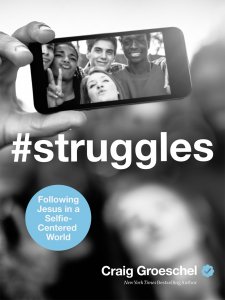
#strugglesI found a ton of great content in Craig Groeschel’s latest book #struggles. This book focuses on the proper balance between technology and personal relationships. Near the end of the book, Craig shared his 10 Commandments for Christians to use social media in a God-honoring way…

  1. Put God first in all you say and post.
  2. Love others as you want to be loved.
  3. Use social media to facilitate, not to replace, real relationships.
  4. Use social media instead of being controlled by it as an idol.
  5. Turn your virtual other cheek to posts that offend you.
  6. Do not post out of emotion.
  7. Always reflect Jesus, loving God whether online or off.
  8. Do not use social media to fuel temptations.
  9. Form your own opinions; do not follow the crowd.
  10. Do not base your identity on what people think.

You can read my book review of #struggles by clicking here.

I also shared some quotes from #struggles here and here. I also shared a special set of quotes from this book directed at online gossip, which you can read here.

Thursdays With Oswald—At Home With Jesus

Oswald ChambersThis is a weekly series with things I’m reading and pondering from Oswald Chambers. You can read the original seed thought here, or type “Thursdays With Oswald” in the search box to read more entries.

At Home With Jesus

     Beware of the people who tell you life is simple. Life is such a mass of complications that no man is safe apart from God. Coming to Jesus does not simplify life, it simplifies my relationship to God. … 

     God’s idea is that individual Christians should become identified with His purpose for the world. When Christianity becomes over-organized and denominational it is incapable of fulfilling our Lord’s commission; it doesn’t “feed His sheep,” it can’t (see John 21:15-17). …  

     If my religion is not based on a personal history with Jesus it becomes something I suffer from, not a joyous thing, but something that keeps me from doing what I want to do. 

From Disciples Indeed

Jesus came to give us life to the full. He didn’t come to help simplify life or organize our religion. The key word for our relationship with Jesus is personal. He wants you, not your religious ideas or religious activities.

Jesus died for you. Jesus lives for you. And Jesus wants to live in and through you. Jesus replied, “All who love Me will do what I say. My Father will love them, and We will come and make Our home with each of them (John 14:23).

Will you let Him be at home with you?

10 Benefits From Suffering

Horatius BonarCommenting on one of the opening passages in Paul’s second letter to the church at Corinth, Horatius Bonar shares ten benefits to Christians who will cling to God during times of suffering.

“The meaning and use of trial:

  1. It shows God to be in earnest with us. He does not let us alone. He takes great pains with our spiritual education and training. He desires fruit and progress.
  2. It assures us of His love.
  3. It draws us to prayer. When one member suffers all the others suffer with it. As soon as it is said, ‘such a brother or sister is in sorrow,’ all who hear of this begin to pray for the afflicted one. Thus sorrow becomes a magnet which attracts the prayers of the church.
  4. It knits us in sympathy to the whole body.
  5. It teaches us sympathy with brethren.
  6. It brings us into a mood more receptive of blessing. It makes our spirits tender, it softens our hearts, it makes our consciences alive, it empties us of adverse influences.
  7. It makes us prize the Word.
  8. It shuts out the world.
  9. It bids us look up.
  10. It turns our hope to the Lord’s great coming.”

10 Quotes From “Christian Behavior”

Christian BehaviorAlthough written over 300 years ago, and written in Old English, John Bunyan’s instructions in Christian Behavior still ring true today. You can read my full book review by clicking here. Below are just a few quotes; I’ll be sharing more soon.

“Faith alone can see the reality of what the Gospel saith.”

“God’s people are faithful in good works according to the proportion of their faith. If they be slender in good works, it is because they are weak in faith. … Therefore the way to be a more fruitful Christian; it is to be stronger in believing.”

“I shall propound unto you what it is for a work to be rightly good. First, a good work must have the Word for its authority. Second, it must, as of afore was said, flow from faith. Third, it must be both rightly timed and rightly placed. Fourth, it must be done willingly, cheerfully.”

“Good things mistimed are fruitless, unprofitable, and vain.”

“There are three things that a man should have in his eye in every work he doth. First, the honor of God (1 Corinthians 6:20). Second, the edification of his neighbor (1 Corinthians 14:26). Third, the expediency or inexpediency of what I am to do (1 Corinthians 6:12).”

In a section to the head of the household—

“But mark, when the Word saith thou art to provide for thy house, it giveth thee no license to distracting carefulness; neither doth it allow thee to strive to grasp the world in thy heart, or coffers, nor to take care for years or days to come, but so to provide for them, that they may have food and raiment; and if either they or thou be not content with that, you launch out beyond the rule of God (1 Timothy 6:8; Matthew 6:34).”

“Take heed of driving so hard after this world as to hinder thyself and family from those duties towards God which thou art by grace obliged to: as private prayer, reading the Scriptures, and Christian conference. It is a base thing for men so to spend themselves and families after this world as that they disengage their heart to God’s worship.”

In a section to husbands—

“When husbands behave themselves like husbands indeed, then will they be not only husbands, but such an ordinance of God to the wife, as will preach to her the carriage of Christ to his spouse. There is a sweet scent wrapped up in the relations of husbands and wives that believe (Ephesians 4:32).”

“Oh! How little sense of the worth of souls is there in the heart of some husbands, as is manifest by their unchristian carriage to and before their wives! … Beware that she takes no occasion from any unseemly carriage of design to proceed in evil. And here thou hast need to double thy diligence, for she lieth in thy bosom, and therefore is capable of his espying the least miscarriage in thee.”

“If she behave herself unseemly and unruly, as she is subject to do, being Christless and graceless, then labor thou to overcome her evil with thy goodness, her forwardness with thy patience and meekness. Take fit opportunities to convince her. Observe her disposition, and when she is most likely to bear, then speak to her very heart. When thou speakest, speak to purpose. Let all be done without rancor, or the least appearance of anger.”

More quotes from Christian Behavior coming soon…

Christian Behavior (book review)

Christian BehaviorCharles Spurgeon said of John Bunyan, “Read anything of his, and you will see that it is almost like reading the Bible itself. He had read it till his very soul was saturated with Scripture…. Prick him anywhere—his blood is Bibline, the very essence of the Bible flows from him. He cannot speak without quoting a text, for his very soul is full of the Word of God. I commend his example to you, beloved.” This is so true of Bunyan’s short treatise Christian Behavior

Bunyan wanted Christians to behave like, well, Christians! He wrote, “They which have believed in God should be careful to maintain good works.” He was quick to point out that good works don’t purchase salvation, but that Christian good works should be evidence of a person’s salvation.

His main text for this book comes from Titus 3:7-8. Of this passage he says,

“From this Scripture, therefore, I do gather these things observable: First, that good works do to flow from faith. Second, that everyone that believeth should be careful that their works be good. Third, that every believer should not only be careful that their works be good, and for the present do them, but should also be careful to maintain them. That is, they should carefully study to keep in a constant course of good works. Fourth, and lastly, that the best way to provoke both ourselves and others to this work, is to be often affirming to others the doctrine of justification by grace, and to believe it ourselves.”

Bunyan talks to husbands and wives, mothers and fathers, children, employers and employees, to challenge them to maintain those good works that would show others the admirable qualities of the Christian life. Even though Christian Behavior was written over 300 years ago, it’s message is as timeless as the Bible on which all of Bunyan’s thoughts were based.

Links & Quotes

link quote

“Although circumstances may bring us into the place of death, that need not spell disaster—for if we trust in the Lord and wait patiently, that simply provides the occasion for the display of His almighty power.” —L.B. Cowman

“Notice the singular ‘commandment’—‘This is His commandment, that we believe in the name of His Son Jesus Christ, and love one another, just as He commanded us’ [1 John 3:23]. These two things are so closely connected for John he calls them one commandment: believe Jesus and love others. That is your purpose. That is the sum of the Christian life. Trusting Jesus, loving people.” —John Piper

“We make progress in overcoming our sin when we have hope that our failures will be forgiven. If you don’t have hope that God will forgive your failures, when you start fighting sin, you give up.” —John Piper

“Impatient believers are offended when they see God working miracles all around them but not in their lives. They’re offended at what they believe is God’s slowness to answer them, and over time they feel neglected and imprisoned. Hebrews tells us such impatience is a form of spiritual laziness: ‘Be not slothful, but followers of them who through faith and patience inherit the promises’ (Hebrews 6:12). We are instructed to follow Abraham’s example: ‘After he had patiently endured, he obtained the promise’ (6:15).” —David Wilkerson

Tim Dilena has some amazing insights for every married couple in this video.

2 Quotes From Bill Hybels On Christmas Scenery

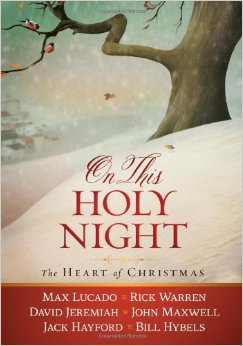
On This Holy NightI’ve been sharing some quotes from On This Holy Night, which is a great pre-read before Christmas. Here are two passages from Bill Hybels, who wrote a chapter entitled “Seeing The Christmas Scenery.”

“Let God determine the best way to lead you to His Son. The wise men would probably have preferred a more personalized kind of guidance, but the point is they were responsive to the guidance God provided. We should be too, however it comes, through whomever it comes.”

“God chose the stable for His Son to be born in for a very important reason. You see, when God sent His only Son to live on this earth, He made a strategic decision not to shelter Him from the harsh realities of this life. God had no intention of shielding His Son by having Him born into the make-believe world of the rich and famous. God wanted His Son to experience life in its blue-collar boldness. … From day one, God the Father determined not to shelter His Son from the rude, crude realities of life on planet earth. … For our sake, Jesus was given no aristocratic advantage. He had humbler beginnings than any of us. He was born into a real family, and He worked a real construction job. He lived in a neighborhood. He had real friends. He suffered hardship like the rest of us have, and He died a cruel death for a crime He didn’t commit. So when the Bible urges people who are going through disappointment and pain to pour their hearts out to the now-ascended Savior, we Christians can do so with the absolute assurance that Jesus understands. He’s been there.”

You can read my review of On This Holy Night here. And check out some quotes from John Maxwell’s chapter here.

Links & Quotes

link quote

“Christ did not risk death. He embraced it. That is precisely why He came: not to be served but to serve and give His life a ransom for many (Mark 10:45). … Christmas is for freedom. Freedom from the fear of death. Jesus took our nature in Bethlehem, to die our death in Jerusalem, that we might be fearless in our city. Yes, fearless. Because if the biggest threat to my joy is gone, then why should I fret over the little ones?” —John Piper

“The danger of all dangers would be to lose trust and confidence in the mercy of God. … To distrust Him would be a far more terrible thing than any physical evil which all the enemies of God put together could inflict on us, for without God’s permission neither the devils nor their human ministers could hinder us in the slightest degree.” —Francis Xavier

“Each instant of present labor is to be graciously repaid with a million ages of glory.” —J.W. Alexander

“If God did so much for us when enemies, what will He do, or rather, what will He not do, for us now that we are friends? … If Christ’s death did so much for us, what will not His life do?” —Horatius Bonar

“Ignorant men raise questions that wise men answered a thousand years ago.” —Goethe

[VIDEO] Tim Dilena shares some practical keys for a consistent prayer life.

“I would exhort those who have entertained an hope of their being true converts, and yet since their supposed conversion have left off the duty of secret prayer, and do ordinarily allow themselves in the omission of it, to throw away their hope. If you have left off calling upon God, it is time for you to leave off hoping and flattering yourselves with an imagination that you are the children of God.” —Jonathan Edwards

“For too many of us, Christian experience is episodic rather than continuous, with a few religious experiences interspersed throughout our lives, which are otherwise lived on our own terms. Such people can see little need or use for prayer.” —Ralph Lehman

Eric Metaxas helps us get ready for Religious Freedom Day on January 16.

[VIDEO] Not just at Christmas when you are receiving gifts, but all year long we should be people of appreciation. Check out John Maxwell’s short video—

4 Quotes From John Maxwell On The Wise Men

On This Holy NightOn This Holy Night is a great book to read during the countdown to Christmas. Check out my review by clicking here.

John Maxwell wrote a chapter in this book entitled “When you follow a star and find a stable.” Here’s a couple of thoughts he shared from that chapter.

“Strong Christians see God in both the good and the bad. The mature believer sees God not only in pleasures and palaces, but also in the barnyards and stables of life. … Weak Christians see God in only the good.”

“I believe that all wise men throughout the ages have done these three things when they come upon a stable—to a place or situation that isn’t exactly what they were expecting. (1) Wise men of every age, when handed a difficult situation, don’t panic about the problem, but hold steady and say, ‘God is somewhere in this stable of life. There’s something I can learn. I’ll hold steady because God is somewhere in this.’ (2) Wise men also give their best when they come to a stable. (3) Wise men allow God to change their direction.”

“The difference between the average and above average person lies in just three words: And Then Some. Great men of God, and great men of society, give their very best, and then some. They forgive people, and then some. They’re always walking the extra mile. They’re always taking the extra step. … Whether it’s in preaching, or working in a factory, or at your own business, or with in your own family, the mark of a Christian is that he will walk the second mile and turn the other cheek. A wise man or woman gives the extra effort, all for the glory of the Lord Jesus Christ.”

“We fancy that God can only manage His world through the big battalions of life, when all the while He is doing it through the beautiful babies that are being born into the world.” — Anonymous