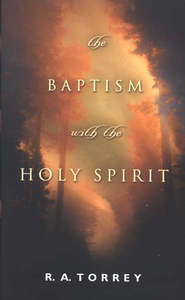
The Baptism With The Holy Spirit (book review)

Baptism with the Holy SpiritR.A. Torrey was successful as an evangelist, a pastor, a theologian, and an author. In The Baptism With The Holy Spirit he brings all four of these disciplines to bear on this major theological doctrine.

This book is fairly short, but if you take time to read all of the Scriptures that Rev. Torrey references, and if you take the time to contemplate all of his profound reasoning, there is enough here to keep you occupied for quite some time. I am a fourth generation Pentecostal (which means I grew up with these doctrines of the Holy Spirit being adhered to throughout my lifetime) and I still found quite a bit on which to think and search more deeply.

I sincerely appreciated the academic approach that Rev. Torrey brought to this book, and I would encourage anyone who wants to grow deeper in their relationship with God to take the time to really digest the material he has presented us.

Seven Men (book review)

Seven MenWhen I read Bonhoeffer, I knew Eric Metaxas was a special author, bringing such a vibrance and fullness to his subject. So I began Seven Men And The Secret Of Their Greatness with high expectations, and I’m happy to tell you that Eric Metaxas exceeded those expectations!

As the title implies, Seven Men is a collection of seven biographies of key men in history. These aren’t biographies covering the entire lives of these great men, but rather a zoomed-in look at a crucial moment in the lives of these men. Eric gives us just enough of an introduction to their early lives to set the stage, and then concentrates his look at the decisions or stands these men took to achieve the title of “great.”

How does one measure greatness? In the case of these seven men, Eric defines greatness as heroic character put to a test where most are tempted to stop short. These seven men stood firm mainly because of their godly character, and their conviction that a stand in their age would mean others in their own age would be able to stand as well.

Even if you’ve read or heard about George Washington, William Wilberforce, Eric Liddell, Dietrich Bonhoeffer, Jackie Robinson, Pope John Paul II, or Charles Colson, you owe it to yourself to read Seven Men to see why they are considered “great” men.

I am a Thomas Nelson book reviewer.

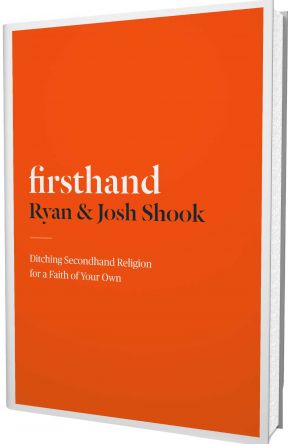
16 Quotes From “Firsthand”

FirsthandI strongly encourage Christian parents to put a copy of Firsthand into the hands of their children, high school age and older. This book will help them think through making their faith in Jesus something personal to them. You can read my book review by clicking here. Below are some quotes that stood out to me. All of these quotes are by the authors, unless otherwise noted.

“You must be emptied of that of which you are full, so that you may be filled with that of which you are empty.” —Augustine

“One of the most liberating and powerful statements of all time comes from the lips of Jesus: ‘You will know the truth, and the truth will set you free’ (John 8:32). And we’re writing this chapter to tell you something that will set you free. The only way we’ve been able to experience freedom is by making the choice to get completely gut-level honest with God and others.”

“God can use you and me through our brokenness, but first we have to get real and vulnerable with Him and with others. I think this powerful ‘get real’ dynamic works for a few reasons. First of all, being real with God and those around us invites us to drop the pride and pretense and to walk in humility. Second, honesty invites us to live every day in gratitude for the incredible grace that Lord has shown us. And third, since now we know we can’t make it on our own—and that’s okay—we’re ready to invite God’s power to do for us what we can’t do for ourselves. Paul said in 2 Corinthians 12:9, ‘I will boast all the more gladly about my weaknesses, so that Christ’s power may rest on me.’ This turns the concept of weakness and vulnerability on its head. We are saying that God makes up for our weaknesses. We are admitting that He is ready to work through them. Our weaknesses can actually become our greatest assets because they draw us closer to the Lord. And once we see how God can use them, we have all the more reason to be open about our struggles.”

“When all you see is a life in pieces, remember: the Remodeler wants to change you from the inside out. And He’s at work building your character to match His great calling and purpose for your life.”

“We have to decide, moment by moment, if we want to act changed or be changed.”

“It is more important to live one word of Scripture than it is to memorize volumes.” —Tim Hansel

“When our faith looks like a long list of things we should do, it’s usually a sign we’re not really focused on knowing God today for ourselves. Firsthand faith is all about a relationship with the God who is always faithful.”

“God is no less with you in your doubts that He is with you in your certainties.”

“Firsthand faith means we’re not afraid to bring our burning questions directly to God. But it also means that we’re not afraid to simply relax in His love. Even when all our questions haven’t yet been answered.”

“The needs of this world are endless. So whenever we feel a divine disturbance, it’s essential that we respond with firsthand action. If we don’t, it will quickly turn into secondhand bitterness.”

“James tells us that faith without works is dead (James 2:26). The most certain way to go back to living a secondhand faith is to refuse to act upon the Holy Spirit’s movement in your heart…. When you do not respond to a divine disturbance of the Holy Spirit, you get bitter and you criticize. That helps no one. … When you don’t respond to a divine disturbance in your life, you become the greatest obstacle between an unbelieving world and a loving God—a judgmental Christian.”

“Your eternal footprint—the impact you make on this earth—will be determined by whether you respond to the calling of the Spirit of the Lord in your heart to love a broken world, to step into the gifts and passions the Lord has blessed you with yo meet the needs that others overlook.”

“When we set out to discover our own firsthand faith, we were disillusioned with church. We had seen how imperfect the church could be, and we were certain that church was the problem. Coming full circle with our firsthand faith, we now realize that church was not the problem. The problem was out view and definition of the church itself. It took us a long time to understand that church wasn’t a building or a pastor or a sermon series. It’s easy to point out everything wrong with the church when you stand outside it and approach it with a consumer mentality. We thought the church had given us a secondhand faith, when in reality we had chosen to avoid a firsthand relationship with the community of Christ follower we claimed to care about.”

“The church is messy and imperfect because it is made up of broken and imperfect people. Are you sitting on the sidelines because the people in your church are imperfect or ‘just not like you’? … God designed you to be in community with your local church. He designed you to have firsthand relationships not only with Him but also with the people in your church. You can come up with plenty of excuses not to get involved and reasons that your church has it wrong, but when was the lat time you looked inside yourself and really searched your own heart for issues?”

“You can try to live out a firsthand faith on your own for as long as you want, but until you live out that faith in a community, you will never realize your full potential in Christ.”

“As a Christian, you are part of a movement that will outlast you, and you are part of the Firsthand Generation. As communities of believers rise up, we will gain momentum and create a movement that is stronger than anything we could ever accomplish on our own. Perhaps God is calling you to gather people and become a leader in the Firsthand Generation. Take up the challenge.”

Firsthand (book review)

FirsthandWhile I was reading Firsthand by Ryan & Josh Shook, I felt a little bit like I was reading my own autobiography. Ryan & Josh write about their journey to embrace faith in God as something personal for them—something firsthand. Prior to this point in their lives, these brothers felt like they were living and believing in a secondhand relationship with God.

I can relate. I’m a fourth-generation Christian, with my parents, grandparents, and great-grandparents professing a relationship with Jesus Christ. I remember vividly my “crisis of faith” as I wrestled with my burning questions: Do I believe what the Bible says about God just because my parents believed it, or do I believe it because it’s true?

I would encourage all Christian parents to purchase a copy of this book for their kids. Ryan & Josh’s words will resonate with them, and will prepare them for their own journey of discovery. We Christian parents must do all we can to help our children successfully navigate this crucial time in their lives, and Firsthand will be an invaluable resource.

Here’s a video review I did for WaterBrook Multnomah Publishers—

I am a WaterBrook book reviewer. Here are some quotes I shared from this book.

He Shall Glorify Me (book review)

He Shall Glorify MeI am continually astounded at the insight Oswald Chambers has on the Scripture and its practical applications to our lives! In He Shall Glorify Me, Chambers elaborates on the immensely important role the Holy Spirit plays in the lives of Christians.

The title of the book is taken from a statement Jesus made about the Holy Spirit: He will glorify Me because it is from Me that He will receive what He will make known to you (John 16:14). Chambers begins with the advent of the Holy Spirit, leads us through a thorough doctrine of the Spirit, and then shares practical applications for Spirit-directed living.

These were originally lectures he gave at college, then they were turned into articles for a magazine, and finally complied into a book form. As far as we know, Oswald Chambers didn’t plan for these lectures to be published as a book, so he had no say in a proposed title. But the title—He Shall Glorify Me—is perfect, as every single lecture/chapter shows us how the Holy Spirit wants to bring out of our lives only what will bring glory to Jesus.

For anyone serious about allowing the Holy Spirit to work more deeply in their lives, He Shall Glorify Me is an indispensable resource.

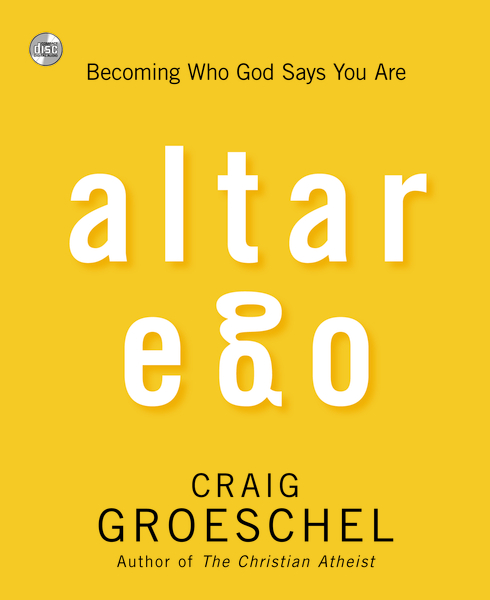
12 Quotes From “Altar Ego”

Altar EgoI loved reading Altar Ego (you can read my full book review by clicking here), but here are some quotes that especially caught my attention. Unless otherwise noted, these quotes are from Craig Groeschel—

“Don’t rely too much on labels, for too often they are fables.” —Charles Spurgeon

“When God helps you overcome a destructive label, He’ll often do what He did through Peter. He will take one of your greatest weaknesses and turn it into one of your greatest strengths. It has been said that our weakness is our genius—our greatest struggle often yields the greatest opportunity for our growth.”

“If you don’t know the purpose of your life, all you can do is misuse it. …Life with no purpose is life without meaning. When you don’t know the purpose of your life, everything you do is just an experiment. You just try on one thing after another, always hoping that the next shiny thing that catches your attention will finally be the one thing that makes a difference. …You are God’s masterpiece. Wouldn’t it make sense to ask God what you should do with your life? …The fact that God made you in this way tells us something else very important about your life. You have everything you need to do everything God wants you to do.”

“So are you spiritually soaring or are you crawling right now? If you feel like you’re still on the ground, then it’s time you realized that God wants you to fly. You’re not just another average, run-of-the-mill Christians barely making it. No, if you’re a Christian, then there is nothing regular about you. You must understand that you are filled with the same Spirit that raised Christ from the grave, and there’s nothing ordinary about that! You have access to the very throne of God; that’s not regular! You have authority to use the Name that is above every name, the name of Jesus Christ. There is nothing regular about you.”

“Why does generation after generation of intelligent adults make similar decisions every day? It’s simple. We allow our out-of-control, fleshly desires to overwhelm our better senses. We allow our egos, instead of our altar egos, to drive our desires. …The world offers substitutes for (or counterfeits of) real things: physical pleasures, materials things, pride in what we have and what we do. Before long, our sinful desires for the counterfeits of this world lure us into short-term decisions with long-term consequences. …So how do we move from living like the crowd? How do we overcome the cultural pull toward immediate ego gratification? We pursue God with all our hearts until His desires become our desires. …Our demanding egos become altar egos, with our selfish impatience sacrificed for something greater.”

“Integrity doesn’t come in degrees: low, medium, or high. You either have integrity or you don’t.” —Tony Dungy

“I’m convinced that the reason our culture is known worldwide as a place of dishonor is that we, as a culture, have dishonored God. All true honor is born out of a heart surrendered to the King of Kings. Psalm 22:23 says, ‘You who fear the Lord, praise Him! All you descendants of Jacob, honor Him! Revere Him, all you descendants of Israel!’ Our culture tends to treat God as common. We’re too familiar with Him. We refer to Him as ‘the Man Upstairs’ or ‘the Big Guy,’ or we say things like ‘Jesus is my homeboy.’ Jesus is not your homeboy. He is the soon-to-return, ruling, reigning King of Kings and Lord of Lords. He is the Alpha and Omega. When He returns, it will be with a sword. He is the Righteous One who shed His blood so that we would live. We have to stop treating God as common or ordinary.”

“Gratitude kills pride. Gratitude slays self-sufficiency. Gratitude crushes the spirit of entitlement. When we place our discontented egos on the altar of gratitude, we develop contented altar egos filled with thanksgiving.”

“So often fear keeps our egos front and center and in need of reassurance from other people or from our possessions or titles. But when we lay our egos on the altar of belief, our altar egos become liberated to live by faith and not by fear.”

“I believe Christians often perceive obedience to God as some test designed just to see if we’re really committed to Him. But what if it’s designed as God’s way of giving us what’s best for us?”

“Bold obedience triggers opposition. …If you’re not ready to face opposition for your obedience, you’re not ready to be used by God. When you obey God, opposition comes. Instead of smooth sailing, you may have to swim upstream in choppy water.”

“When we spend time with God, it leads to faith, which leads to boldness, which leads to results, which leads to more desire for Him, and more faith and more boldness and more glory to our Father.”

Altar Ego (book review)

Altar EgoCraig Groeschel is an amazing communicator! Partly because he shares the truth without watering it down or over-complicating it, and partly because he is so transparent with us. Altar Ego is a practical look at how and why God wants to “altar” our perception of ourselves.

The title of the book is not a misprint: Craig persuasively makes the case that we need to bring our view of ourselves to God’s altar so He can alter how we view ourselves. In the opening pages, Craig describes it this way—

If you’ve ever felt insecure, inadequate, or insufficient, this book is for you. Chances are good that you are like most of us. You attempt to draw worth or value from the wrong places. You’re inclined to believe what others say about you over what God says about you. You say you believe one thing but privately live out of a double-standard set of beliefs. If you call yourself a Christian, you probably hope to live a life pleasing to God but often find yourself trying to please others or yourself. If you can relate, I’ve got good news. You are not yet you you are supposed to be. 

Altar Ego is divided into three sections. In the first section you will learn how God sees you; in the second section you will learn how to live altarnative values to those the culture promotes; and in the final section you will discover a newfound boldness that comes with seeing yourself as God sees you.

Because of Craig’s easy-to-read style, and his forthrightness about his own shortcomings, you will not feel like these concepts are too complicated or only reserved for those who are more spiritual than you. Even if you don’t feel “insecure, inadequate, or insufficient,” there is still a lot to learn from Altar Ego.

I am a Zondervan book reviewer.

Did The Resurrection Happen … Really? (book review)

Did The Resurrection HappenJosh McDowell is an amazing apologist! He has a tremendous knack for being able to “put the cookies on the bottom shelf.” By that I mean that he can make complex topics accessible to a wider audience than most authors. In Did The Resurrection Happen … Really? he and Dave Sterrett do just that with some great arguments for and against the death and resurrection of Jesus Christ.

This book is classified as fiction, because fictional characters are having a discussion at a fictional university about the deep subjects of life and death, and life after death. Although the characters are fictional, the questions being discussed are real, and the sources quoted in defense of each side of the argument are all non-fictional.

McDowell and Sterrett (who are Christian apologists) don’t dumb-down the arguments against the claims of an actual physical death and an actual physical resurrection. They quote from some of the most well-known proponents of these arguments, and then thoughtfully and persuasively rebut those claims.

Because this book is written in a conversational style, it bring the reader right into the coffee chats of the characters. It also helps the reader see how he/she could have a similar dialogue with others who question the biblical account of the crucifixion and resurrection of Jesus Christ.

The book is well footnoted, so curious readers can dig deeper and research further. But don’t let this fact lead you to believe that this is a heady, academic book. As I mentioned earlier, McDowell and Sterrett definitely make these concepts accessible to a wide audience.

This would be an excellent book to read if you have friends who are skeptical to the biblical account. It would also be a very good resource for those preparing to attend a university where the faculty might be more antagonistic toward the biblical worldview. In any case, it was a very enjoyable and educational book.

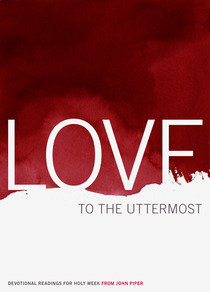
5 Quotes From “Love To The Uttermost”

Love To The UttermostI suggested last week that John Piper’s book Love To The Uttermost is an excellent resource to help guide you through the Holy Week with some fresh insights (you can read my review of this book by clicking here). Here are a few of the fresh insights that stood out to me.

“Luke 12:32 is a verse about the nature of God. It’s a verse about what kind of heart God has. It’s a verse about what makes God glad—not merely about what God will do or what He has to do, but what He delights to do, what He loves to do, and what He takes pleasure in doing. ‘Fear not, little flock, for it is your Father’s good pleasure to give you the kingdom.’ … This is what the word means: God’s joy, His desire, His want and wish and hope and pleasure and gladness and delight, is to give the kingdom to His flock.”

“Jesus was not accidentally entangled in a web of injustice. The saving benefits of His death for sinners were not an afterthought. God planned it all out of infinite love to sinners like us, and He appointed a time. Jesus, who was the very embodiment of His Father’s love for sinners, saw that the time had come and set His face to fulfill His mission: to die in Jerusalem for our sake. ‘No one takes my life from Me,’ Jesus said, ‘I lay it down of my own accord’ (John 10:18).”

“First, we know the depth of someone’s love for us by what it costs him. Second, we know the depth of someone’s love for us by how little we deserve it. Third, we know the depth of someone’s love for us by the greatness of the benefits we receive in being loved. Fourth, we know the depth of someone’s love for us by the freedom with which they love us.”

“[God] does not need us. If we stay away He is not impoverished. He does not need us in order to be happy in the fellowship of the Trinity. But He magnifies His mercy by giving us free access through His Son, in spite of our sin, to the one Reality that can satisfy us completely and forever, namely, Himself.”

“The resurrection of Jesus is given to us as the confirmation or evidence that He was indeed free in laying down His life. And so the resurrection is Christ’s testimony to the freedom of His love. … Of all the great things that Easter means, it also means this: it is a mighty ‘I meant it!’ behind Christ’s death. I meant it! I was free. You see how free I am? You see how much power and authority I have? I was able to avoid it. I have power to take up My life out of the grave. And could I not, then, have devastated My enemies and escaped the Cross? My resurrection is a shout over My love for My sheep: It was free! It was free! I chose it. I embraced it. I was not caught. I was not cornered. Nothing can constrain Me to do what I do not choose to do. I had power to take My life from death. And I have taken My life from death. How much more, then, could I have kept My life from death! I am alive to show you that I really loved you. I freely loved you. Nobody forced Me to it. And I am now alive to spend eternity loving you with omnipotent resurrection love forever and ever. Come to Me, all you sinners who need a Savior. And I will forgive you and accept you and love you with all My heart forevermore.”

23 Quotes From “The 5 Levels Of Leadership”

5 Levels of LeadershipThere is always so much rich content in a John Maxwell book, and The 5 Levels Of Leadership is no exception. You can read my full book review by clicking here. These are a few of the quotes that especially caught my attention. Unless otherwise noted, these quotes are from John Maxwell.

“At any level, a leader doesn’t automatically stay at that level. You must earn your level of leadership with each person, and that level can go up or down at any time.” 

“You have no control over how much talent you possess. You control only what you do with it.”

“Leadership is accepting people where they are, then taking them somewhere.” —C.W. Perry 

“Often to make themselves look better or to keep people from rising up and threatening them, positional leaders make other people feel small. How?

  • By not having a genuine belief in them.
  • By assuming people can’t instead of assuming they can.
  • By assuming people won’t rather than believing they will.
  • By seeing their problems more readily than their potential.
  • By viewing them as liabilities instead of assets.”

“Anytime you think you’ve arrived—whether your position is the lowest or the highest in the organization—you’ve lowered your expectations for yourself, sold your leadership short, and fallen into a no-growth mind-set.”  

“Above all else, good leaders are open. They go up, down, and around their organizations to reach people. They don’t stick to established channels. They’re informal. They’re straight with people. They make a religion out of being accessible.” —JackWelch

“You see, when there is danger, a good leader takes the front line. But when there is celebration, a good leader stays in the back room. If you want the cooperation of human beings around you, make them feel that they are important. And you do that by being humble.” —Nelson Mandela 

“People will not get ahead with others unless they are willing to work behind others.”

“[Good leaders] have more than an open-door policy—they know the door swings both ways. They go through it and get out among their people to connect.” 

“If you want to be successful on Level 2, you must think less in terms of systems and more in terms of people’s emotions. You must think more in terms of human capacity and less in terms of regulations. You must think more in terms of buy-in and less in terms of procedures. In other words, you must think of people before you try to achieve progress.”

“Care without candor creates dysfunctional relationships. Candor without care creates distant relationships. But care balanced with candor creates developing relationships. …Caring values the person while candor values the person’s potential. …Caring establishes the relationship while candor expands the relationship. … Caring defines the relationship while candor directs the relationship.” 

“Before having a candid conversation, make sure you can answer yes to the following questions:

  • Have I invested enough in the relationship to be candid with them?
  • Do I truly value them as people?
  • Am I sure this is their issue and not mine?
  • Am I sure I’m not speaking up because I feel threatened?
  • Is the issue more important than the relationships?
  • Does this conversation clearly serve their interests and not just mine?
  • Am I willing to invest time and energy to help them change?
  • Am I willing to show them how to do something, not just say what’s wrong?
  • Am I willing and able to set clear, specific expectations?”

“If achieving the vision is worth building the team, it is also worth risking the relationship. Building relationships and then risking them to advance the team creates tension for the leader. That tension will force you to make a choice: to shrink the vision or to stretch the people to reach it. If you want to do big things, you need to take people out of their comfort zones. They might fail. They might implode. They might relieve their own tension by fighting you or quitting. Risk always changes relationships. If you risk and win, then your people gain confidence. You have shared history that makes the relationship stronger. Trust increases. And the team is ready to take on even more difficult challenges. However, if you risk and fail, you lose relational credibility with your people and you will have to rebuild the relationships. Risk is always present in leadership. Anytime you try to move forward, there is risk. Even if you’re doing the right things, your risk isn’t reduced. But there is no progress without risk, so you need to get used to it.” 

“You can issue all the memos and give all the motivational speeches you want, but if the rest of the people in your organization don’t see you putting forth your very best effort every single day, they won’t either.” —Colin Powell

“The job of a leader is to build a complementary team, where every strength is made effective and each weakness is made irrelevant.” —Stephen Covey

“If you want to be an effective leader, you must move from perfectionist to pragmatist.”

“Since you can’t prevent mistakes, why not adopt and attitude in which you and your team learn from them?” 

“The individual leads in order that those who are led can develop their potential as human beings and thereby prosper.” —Socrates

“The highest goal of leadership is to develop leaders, not gain followers or do work.”

“Leadership is an opportunity to serve.” —J. Donald Walters

“No matter where you are in your leadership journey, never forget that what got you to where you are won’t get you to the next level.” 

“The reality is that no one is indispensable. Worse, allowing others to become dependent does little more that satisfy a leader’s ego. It is a very limiting leadership style that has a very short life span. The first step in developing leaders is to have a desire to develop people so that they can succeed without you. …If you want to develop people, you must help them discover and build upon their strengths. That’s where people have the most potential to grow. Helping to develop their strengths is the only way to help leaders become world-class.”

“What you do daily, over time, becomes your legacy.”