The Five Levels Of Leadership (book review)

5 Levels of LeadershipI was introduced to the wisdom and leadership prowess of John C. Maxwell when I stepped into my first real leadership position. In some of the earliest Maxwell books I devoured, he talk briefly about the five levels of leadership. Now in The Five Levels Of Leadership Dr. Maxwell has given us the in-depth training to these invaluable lessons in growing as a leader.

Leadership is an upward climb. But it’s not just about gaining skills, adding accomplishments to a resume, or even getting a bigger office. True leadership is about investing in more people more deeply. That’s what this book helps leaders do.

People who are content with merely a title, or a new bullet point on their resume, will hate this book because right from the outset Dr. Maxwell bluntly points out the short-sightedness of that pursuit. Instead, the title is just the invitation to Level 1, and the start of a journey that focuses on doing the best good for the most people possible.

For those who have read other Maxwell leadership books, you will hear the echoes of those books woven through these pages. In reality, all of the leadership principles Maxwell has written about—from developing yourself, to building a team, to planning for the future, to communicating with greater clarity—are all built into Levels 1 through 5 of this book.

I appreciated the assessment at the beginning of the book to give me an idea of which Level was going to require my greatest attention. Likewise, the list of needed qualities at the end of each Level’s teaching gave me a handy “To Do” list for my leadership growth plans.

For anyone in any type of leadership position, this book deserves your full attention.

Check out a whole bunch of quotes I share from The Five Levels of Leadership.

10 Quotes From “Habitudes”

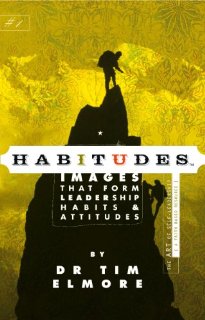
HabitudesHonestly, there were amazing things to digest each day that I read a new Habitude (you can read my full book review by clicking here), but here are 10 passages from this book that especially stood out to me.

Unless otherwise noted, all of these quotes are from the author, Dr. Tim Elmore.

“The best leaders almost without exception and at every level, are master users of stories and symbols.” —Tom Peters

“The goal of a leader is to focus, not expand. Growth is a product of focus. Clarify the vision. Focus your people, time, energy and resources. Remember this: just because you can do something doesn’t mean you should. Intensify, don’t diversify.”

“Leaders need people in their lives who don’t take from them, but who replenish them. If they don’t have this network of people in place, they will use their followers to meet this need. This almost always leads to unhealthy situations.”

“Without question, the greatest emotional need of people today is the need to be understood. And to understand we must listen. Leaders have to get this.”

“Bad listening habits:

  • Judgmental listening—jumping to conclusions about the speaker.
  • Selective listening—only hearing what you want to hear.
  • Impatient listening—finishing other people’s sentences.
  • Egocentric listening—thinking about what you will say as others are talking.
  • Patronizing listening—pretending to listen, but really off in your own world.
  • Stubborn listening—listening, but not open, because your mind is already made up.”

“Winning in this game [chess] is all a matter of understanding how to capitalize on the strengths of each piece and timing their moves just right.” —Bobby Fischer

“Great managing is not about control, but about connection and release. It’s not about your power but your empowerment of others.”

“Think about it: a mediocre leader believes values must be taught. An excellent leader believes that the best is already inside of people—they just need to find it. So, while a mediocre leader’s goal is to overcome weaknesses, the excellent leader’s goal is to identify strengths and focus on them.”

“Choir directors are a good picture of leadership and team building. They recruit, audition, assign parts, rehearse and direct music. But at the end of the performance, the applause goes to the choir.”

“Look at a man the way he is, and he only becomes worse. But look at a man as if he were what he could be, and he becomes what he should be.” —Goethe

Habitudes (book review)

HabitudesWhen you combine a memorable visual image with the challenge of a new leadership habit you create something powerful: a habitude. That’s exactly what Dr. Tim Elmore does in his series of exceptional books called Habitudes.

Our minds store information in picture format. For example, when you read “elephant,” you don’t think of the letters e-l-e-p-h-a-n-t, but you think of a huge, floppy-eared, tusk-bearing, mammal on the African savannah. So combining visual images (a right-brained exercise) with life-changing data (a left-brained activity) creates a concept that really sticks with us.

For each one of the 13 habitudes in this book, an image is first presented (for instance, a flood-ravaged home, with the brown swirling water flowing through the front door). Then add to this image some powerful insights from Dr. Elmore about a leader’s responsibility to keep everyone’s energies inside the banks for maximum effectiveness. If a leader doesn’t keep the river’s flow within the banks where it can do some good, the flood of misguided energies can lead to devastation.

Each habitude includes some workspace to help you work through the concepts presented with each image. The pictures create a great “hook” for the concepts to hang in your mind, and the follow-up exercises in each chapter help make the concepts applicable to your unique circumstances.

Each chapter is fairly short, but as the cliche goes, “A picture is worth a thousand words,” so expect each habitude to teach you a lot without using a lot of written words.

This is a great resource for anyone wanting to improve his or her leadership capabilities. But it would be especially useful for young leaders-in-training in a mentoring/protege role.

Check out some notable quotes from this book here.

The Man Who Knew Too Much (book review)

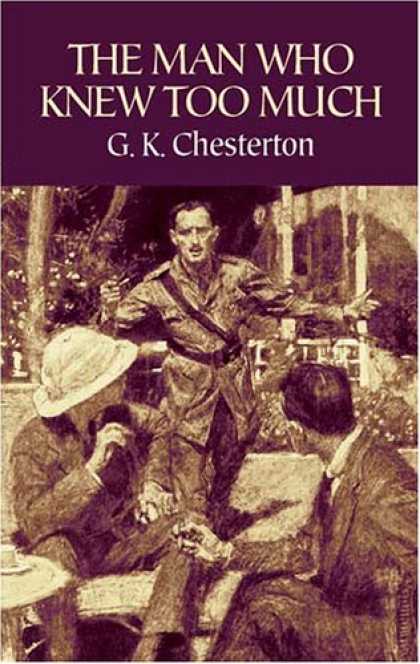
The Man Who Knew Too MuchRegular readers of this blog have probably noticed that I don’t read very much fiction. Partly this is because I have so much to read that I need to keep strict requirements on my reading list, and partly because many fictional works are so much mental cotton candy. By that I mean it’s sweet for the moment, but it’s quickly gone. But there are exceptions, and The Man Who Knew Too Much by G.K. Chesterton is a notable exception.

Chesterton is usually known for his non-fiction theological writings. But the wit, insight, wisdom and humor he uses in his non-fiction work is also on full display in this book, which chronicles the observation skills of Mr. Horne Fisher.

Fisher is the man who knows too much. Because he knows too much, he solves mysteries and riddles “backwards” from the way a typical detective would. Although Fisher is not a detective, but just a man who is well-known and well-connected, he seems to stumble upon the most bizarre settings. Fisher knows too much, so he spots what’s missing, and then works “backwards” to unravel the conundrum. It’s quite fascinating to watch him at work, and Chesterton’s insights into the human spirit make his characters very engaging.

These are not your typical detective stories, but the uniqueness of Horne Fisher’s crime-solving technique makes The Man Who Knew Too Much an enjoyable and enlightening book.

I typically share some of my favorite quotes from the books I review, but in this case I have included some of the wittier lines and descriptions that Chesterton employs. Check it out in the comment below.

10 Quotes From “You Don’t Need A Title To Be A Leader”

You Don't Need A Title To Be A LeaderMark Sanborn has given us a wonderful book to help people be more well-rounded in their leadership, whether they have a title or not. You can read my full book review by clicking here. These are some of the quotes from this book that caught my eye.

“Leaders, untitled or otherwise, realize the extraordinary impact they can have on others and the world around them. They consciously choose to exercise their abilities, skills, and knowledge to help make a difference.”

“The reality is that we all work ‘backstage’ in our lives at times. Real leaders bring the same commitment to excellence to whatever they do, whether on the stage or behind it.”

“I began to see what happened to me as an opportunity rather than an obligation. And it made all the difference. Now when the phone rings, I respond to each call as an opportunity to serve, earn, learn, influence, network, encourage, or teach. The difference isn’t in the caller or the purpose for the call; the difference is in my response. … Genuine, authentic leadership infuses meaning into your life, because you know that your efforts count and that you are serving the needs of others as well as your own.”

“I think of the ‘self-mastery index’ as the ratio between promises made and promises kept—both to oneself and to others. If your mouth keeps making promises that you can’t keep, there is a great deal of room for improvement. Integrity, after all, is measured by the distance between your lips and your life. If you want to be a leader in your own life and in the lives of others, you’ve got to follow through on your own promises, whether you have a title or not.”

“You don’t necessarily have to be smarter or better educated to succeed. Your power lies in your ability to focus on doing what is important. If you focus on the right things, and work at them often, you will achieve exceptional results.”

“People do things for their own reasons, not for yours. To be an effective leader, you need to know how to motivate others.”

“One of the greatest compliments you can be paid as a leader is to have someone say that you helped them be better than they thought they could be.”

“People remember stories. Stories are the coat pegs of the mind. They are where people hang their ideas. Once they have a memorable story to help them remember, they can recall whatever important moral or point you have to make. … Telling an entertaining story is important, but being the story is better.”

“When something doesn’t happen, there is always an explanation. But never accept an explanation as an excuse. … Instead, use explanations to figure out what happened, then look for the lesson that will prevent that something from happening again.”

“Everyone makes a difference. The choice we all have is whether we want to make positive difference or a negative one.”

You Don’t Need A Title To Be A Leader (book review)

You Don't Need A Title To Be A LeaderFar too many people confuse a title with “arriving” at a place of leadership. In Mark Sanborn’s book You Don’t Need A Title To Be A Leader, he not only shows the fallacy of this, but also shows that anyone, anywhere can lead, even if they are untitled.

Mark Sanborn is an excellent storyteller. He uses this skill to make his points about leading from any place in an organization, instead of writing a point-by-point academic outline of how to lead where you are. Mark uses stories from his own life, and from other friends and colleagues to show us that (as the subtitle of the book says) anyone, anywhere can make a positive difference.

Because this book contains several quotes and anecdotes, many left-brained folks will find it “fluffy.” But don’t be fooled by the power of a good story! Mark correctly shares how impacting telling stories is, but he says it’s even more effective to live your story. In other words, be the leadership story that others will follow. Leadership is not left-brained nor right-brained, but it is whole-brained, and this book will help awaken the creative side which far too many leaders leave dormant.

For anyone who wants to grow as a leader, this is a great book to add to your library.

I am a Random House book reviewer.

I have shared some quotes from this book here.

Love To The Uttermost (book review)

Love To The UttermostAs we approach Easter, we approach one of the most pivotal times in the greatest story ever told: They story of Jesus Christ’s victory over satan and death! Each year I look forward to allowing the Holy Spirit to show me something new about this amazing story. A great resource this year is going to be Love To The Uttermost by John Piper.

This is a FREE ebook from Desiring God which will guide you through Palm Sunday to Resurrection Sunday. For each of the eight days of this week Pastor Piper gives us a new angle to explore in Christ’s love that led Him to the Cross, and overcame the grave. Each day’s reading will only take you a few minutes, but the central truth shared will give you something to meditate upon all day.

I read through this entire book quickly in order to write this review, but now I’m looking forward to re-reading it beginning on Palm Sunday!

You can download this FREE ebook by clicking here.

I promise you that you will discover something fresh and exciting about our Savior’s love each day that you read Love To The Uttermost.

Check out some quotes I shared from this book here.

11 Quotes From “Jesus Is _____”

Jesus Is _____Judah Smith has a fresh, clear way for us to view Jesus and His love for us. You can read my full review of Jesus Is _____ by clicking here. Below are 11 quotes from this book that got me thinking—

“The Pharisees were zealous for the law, but they didn’t understand the love of God. They imposed judgment without mercy, punishment without love, criticism without understanding. In the name of hating sin, the Pharisees ended up hating sinners. Perhaps worst of all, they concluded that their aloofness from sinners was what made them holy. The measuring stick of their goodness was the badness of the people they rejected. …Before we get too furious at the Pharisees, though, realize that inside each of us is a Pharisee trying to get out. It’s happened to me. No sooner do I conquer a bad habit than I become the biggest critic of anyone who still does what I just stopped doing. I find that righteous indignation comes a lot easier than humility and compassion. Mentally chastising the bad deeds of other people is more comfortable than dealing with my own.”

“Rather than rejecting people out of a false sense of superiority, rather than judging and condemning those whose lives don’t measure up to my standard of holiness, I need to remember that I am still desperately in need of Jesus’ grace.”

“Besides writing off bad people, we too quickly write off ourselves. We swing from the self-righteous side of the pendulum (That filthy sinner deserves to go to hell!) to the self-condemning side (I’m a filthy sinner who deserves to go to hell!). Both extremes come from focusing on rules rather than on a relationship with Jesus.”

“I think if Jesus had one shot at fixing us, He’d tell us how much He loves us. …Jesus loves us right now, just as we are. He isn’t standing aloof, yelling at us to climb out of our pits and clean ourselves up so we can be worthy of Him. He is wading waist-deep into the muck of life, weeping with the broken, rescuing the lost, and healing the sick.”

“When we realize that grace is a Person, not a principle, abusing grace is no longer an option. It’s easy to abuse a principle, to manipulate a system, or to excuse away a doctrine. But it’s much harder to abuse a person or violate a relationship.”

“Rules are not bad, but they can’t save anyone. The best a rule or a law can do is set a boundary and threaten punishment for crossing that boundary. People still decide to obey the rule or not. …Rules are meant to lead us to relationship, not to replace relationship. …Focusing too much on rules and too little on grace tells children that what they do is more important than who they are. …These principles aren’t just for parenting. This is how our relationship with God works. For God, it’s more about relationship than about rules. Far more.”

“When we make up rules because we are afraid people will sin, we end up doing an end run around faith. It’s not fear that saves us—it’s faith. Fear of failure has a sneaky way of becoming a self-fulfilling prophesy. …Make rules and follow rules as needed, but don’t focus on rules. Focus on faith. Focus on grace. Focus on Jesus. …Here’s the bottom line: everything that rules can do, grace can do better, and more besides.”

“Rules address behavior, but they don’t deal with the heart. They don’t adjust attitudes. They don’t heal the inconsistencies and fractures deep in our souls that could destroy us in the end. Grace, on the other hand, is internal. It works on a heart level. Where rules attempt to force us to do the opposite of what we want, grace actually changes what we want. It creates internal consistency and integrity. Doing what is right becomes much easier. …When we focus on Jesus instead of a code of conduct, when grace changes our desires so we are internally motivated and not just externally restrained, we become a lot more fun to be around.”

“Grace wasn’t free for Jesus. It cost Him everything. That is precisely why we should receive it freely. The most insulting thing we could do is reject this costly gift and say, ‘No thanks, God, I got this.’ Please don’t tell me Jesus was beaten and mutilated and tortured so we could try to save ourselves through our paltry good deeds. Don’t cheapen Jesus’ sacrifice by trying to pay Him back.”

“The point isn’t to quit thinking about sin. It’s to quit thinking about self and to think about Jesus. It’s to become God-conscious, not me-conscious. Do you know what law does? Law makes us self-conscious. When we are self-conscious, we become sin-conscious. We take our eyes off Jesus, and we focus on our failures, our weaknesses, our shortcomings. And we end up sinning even more because that’s all we can think about. But grace makes us God-conscious. When we live by grace, we are continually amazed by the love, goodness, and holiness of God. When we think about Him, that motivates us to act like Him. Are you struggling with sin? You don’t need more willpower. You need more of Jesus. Loving Jesus, not avoiding sin, is the focal point of our lives.”

“Holiness results in happiness, and happiness is an expression of holiness. The two go together. I am happier because I am holy, and it’s easier to be holier because I am happy. Because of the good news, because of Jesus, I can be both holy and happy—what a concept!”

Jesus Is _____. (book review)

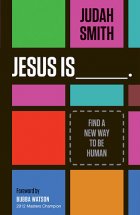
Jesus Is _____If someone asked you to fill in the blank to this question, could you do it quickly: “Jesus is ______”? After reading Judah’s Smith book by this title, you will find it much easier to get a clearer picture of just who Jesus is.

Through the 2000 years since Jesus Christ’s public ministry, many people have made statements trying to define Jesus. In Jesus Is_____, Pastor Judah Smith confronts head-on a lot of the incorrect stereotypes that exist for those both in the Christian tradition, and those outside of it. They are really quite simple statements—Jesus is your friend, Jesus is grace, Jesus is the point, Jesus is happy, Jesus is here, and Jesus is alive—but it’s amazing how complicated and messy we have made these simple thoughts.

Pastor Smith is very candid and personable in his writing, so he let us see inside his own thought processes as he wrestled with these concepts about who Jesus is. In each section, he brings a fresh perspective to help us cut through the haze created by so many people’s misunderstanding of Jesus Christ.

Whether you have had a relationship with Jesus for years, or whether you’ve only heard His name but aren’t really sure about much else concerning Him, Jesus Is _____ will help you see Jesus Christ more clearly. This is an excellent book to use in a small group discussion, as together the group can move into a clearer, biblically-sound picture of Jesus.

I am a Thomas Nelson book reviewer.

Check out some quotes from this book here.

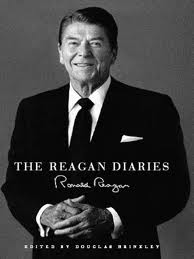
The Reagan Diaries (book review)

The Reagan DiariesPresident Ronald Reagan was the first president I was old enough to vote for, so he’s always held a special place in my own personal history. After reading several books about President Reagan, I wanted to read something in his own words. I’m so glad I did! The Reagan Diaries is a forthright look at an amazing man.

If you have studied American history during the Reagan presidency—or maybe you lived through that era of our history—you will gain a greater appreciation for the tough decisions that were made during this time. Reagan came into office on a platform that brought a sense of encouragement to an American people who were feeling a bit beat up, and then he tirelessly worked to follow through on the promises he had made, despite a Congress that was initially very antagonistic toward his policies.

Several things really stood out in these diaries. First is Reagan’s reliance on God. Time and again he writes about the wisdom he found in the Scriptures, or the strength he received in prayer. His faith is inseparable from his success in the White House. His faith was one that came to the forefront especially in dark times. Laying in the emergency room after being shot by a would-be assassin, he wrote:

“I focused on that tiled ceiling and prayer. But I realized I couldn’t ask for God’s help while at the same time I felt hatred for the mixed up young man who had shot me. Isn’t that the meaning of the lost sheep? We are all God’s children & therefore equally beloved by Him. I began to pray for his soul and that he would find his way back to the fold. …Whatever happens now I owe my life to God and will try to serve Him in every way I can.”

Another thing that appears in page after page is his love for Nancy. He writes frequently about how lonely the White House seemed when she was gone, he counted down the days until they would be reunited, and he looked forward to the all-too-short times when they could vacation together or take a break on the weekend just to be alone. On the first wedding anniversary they celebrated in the White House, he wrote, “more happiness than any man could rightly deserve.” And back at George Washington Hospital after the assassination attempt he said,

“I opened my eyes to find Nancy there. I pray I’ll never face a day when she isn’t there. Of all the ways God has blessed me giving her to me is the greatest and beyond anything I can ever hope to deserve.”

Finally, I love Reagan’s “realness.” He never took himself too seriously. He remained accessible to as many people in the White House as he could, and spent a lot of time calling and mailing United States’ citizens he read about in the newspapers or saw on the news reports. He was also brutally honest about his own shortcomings. After one press conference he wrote, “I wasn’t very scintillating.”

This is an excellent book to read for both a study in leadership, and as a companion to other U.S. history books of that period. At 700+ pages, it’s a hefty read, but well worth your time.