Taste And See (book review)

Taste & SeeTaste And See is made up of 140 short, powerful thoughts from the pen of John Piper. As the title advises, these are thoughts that you will want to chew on slowly, enjoying the flavorful way Pastor Piper brings Scripture to bear on our daily lives.

Each day’s reading is short (perhaps three pages long at the most), so you would almost think you could speed-read right through it. But the limited number of words for each reading is in no way an indication of the weight of those words. Some devotionals convicted me; some brought me to tears; some made me angry; but all of them made me think differently.

If you are already familiar with John Piper’s books, Taste And See will be a welcome addition to your library. If you haven’t read anything from him yet, this book will be an excellent introduction to this wise and gentle pastor/author.

Taste And See is part of a verse of Scripture which says, “Taste and see that the Lord is good; blessed is the the one who takes refuge in Him” (Psalm 34:8). Indeed, the best part of Pastor Piper’s writings is that you will taste and see more clearly how good and worthy of praise God is!

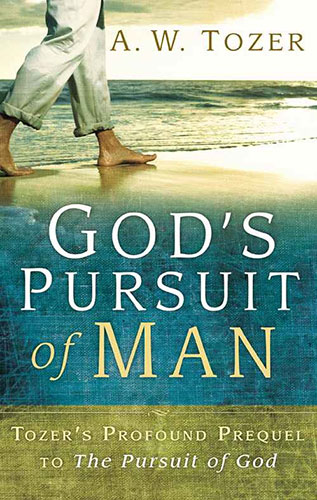
8 Quotes About The Holy Spirit From “God’s Pursuit Of Man”

God's Pursuit Of ManA.W. Tozer shows how important the Holy Spirit is in bringing us into a deeper relationship with the fullness of the Godhead in his book God’s Pursuit Of Man. Check out some quotes on this subject.

“One of the most telling blows which the enemy ever struck at the life of the Church was to create in her a fear of the Holy Spirit.” 

“The true Christian ideal is not to be happy but to be holy. The holy heart alone can be the habitation of the Holy Ghost.”

“For the Holy Spirit is not a luxury, not something added now and again to produce a deluxe type of Christian once in a generation. No, He is for every child of God a vital necessity, and that He fill and indwell His people is more than a languid hope. It is rather an inescapable imperative.” 

“God will not surprise a doubting heart with an effusion of the Holy Spirit, nor will He fill anyone who has doctrinal questions about the possibility of being filled.”

“If the Spirit takes charge of your life He will expect unquestioning obedience in everything. He will not tolerate in you the self-sins even though they are permitted and excused by most Christians. By the self-sins I mean self-love, self-pity, self-seeking, self-confidence, self-righteousness, self-aggrandizement, self-defense.”

“However wonderful the crisis experience of being filled with the Spirit, we should remember that it is only a means toward something greater: that greater thing is the lifelong walk in the Spirit, indwelt, directed, taught and empowered by His mighty Person.”

“We must make our thoughts a clean sanctuary for His holy habitation. He dwells in our thoughts, and soiled thoughts are as repugnant to Him as soiled linen to a king.” 

“The Spirit indwelt life is not a special deluxe edition of Christianity to be enjoyed by a certain rare and privileged few who happen to be made of finer and more sensitive stuff than the rest. Rather, it is the normal state for every redeemed man and woman the world over.”

You can read some other quotes from this book by clicking here.

You can read my review of God’s Pursuit Of Man by clicking here.

13 Quotes From “God’s Pursuit Of Man”

God's Pursuit Of ManA.W. Tozer paints such a vivid picture of God’s desire for us to be in a deeper relationship with Him. I love it! You can read my full book review by clicking here. Below are some quotes I especially appreciated from God’s Pursuit Of Man.

“We habitually stand in our now and look back by faith to see the past filled with God. We look forward and see Him inhabiting our future; but our now is uninhabited except for ourselves. Thus we are guilty of a kind of temporary atheism which leaves us alone in the universe while, for the time, God is not.” 

“Whatever else it embraces, true Christian experience must always include a genuine encounter with God. Without this, religion is but a shadow, a reflection of reality, a cheap copy of an original once enjoyed by someone else of whom we have heard. It cannot but be a major tragedy in the life of any man to live in a church from childhood to old age and know nothing more real than some synthetic god compounded of theology and logic, but having no eyes to see, no ears to hear and no heart to love.”

“Self-righteousness is an effective bar to God’s favor because it throws the sinner back upon his own merits and shuts him out from the imputed righteousness of Christ.” 

“Every man looks to his fellow men because he has no one else to whom he can look. David could say, ‘Whom have I in heaven but Thee? and there is none upon earth that I desire beside Thee’ (Psalm 73:25). But the sons of this world have not God; they have only each other, and they walk holding to each other and looking to one another for assurance like frightened children. But their hope will fail them, for they are like a group of men, none of whom has learned to fly a plane, who suddenly find themselves aloft without a pilot, each looking to the other to bring them safely down. Their desperate but mistaken trust cannot save them from the crash which must certainly follow. … Yet in their pride men assert their will and claim ownership of the earth. Well, for a time it is true that this is man’s world. God is admitted only by man’s sufferance. He is treated as visiting royalty in a democratic country. Everyone takes His name upon his lips and (especially at certain seasons) He is feted and celebrated and hymned. But behind all this flattery men hold firmly to their right of self-determination. As long as man is allowed to play host he will honor God with his attention, but always He must remain a guest and never seek to be Lord. Man will have it understood that this is his world; he will make its laws and decide how it shall be run. God is permitted to decide nothing. Man bows to Him and as he bows, manages with difficulty to conceal the crown upon his own head.”

“The degree of blessing enjoyed by any man will correspond exactly with the completeness of God’s victory over him.”

“A thousand years of remorse over a wrong act would not please God as much as a change of conduct and a reformed life. … We can best repent our neglect by neglecting Him no more. Let us begin to think of Him as One to be worshiped and obeyed. Let us throw open every door and invite Him in. Let us surrender to Him every room in the temple of our hearts and insist that He enter and occupy as Lord and Master within His own dwelling.”

“God made man in His own image and placed within him an organ by means of which he could know spiritual things. When man sinned that organ died. ‘Dead in sin’ is a description not of the body nor yet of the intellect, but of the organ of God-knowledge within the human soul. Now men are forced to depend upon another and inferior organ and one furthermore which is wholly inadequate to the purpose. I mean, of course, the mind as the seat of his powers of reason and understanding. Man by reason cannot know God; he can only know about God.” 

“The danger is that we think of ‘the power of God’ as something belonging to God as muscular energy belongs to a man, as something which He has and which might be separated from Him and still have existence in itself. We must remember that the “attributes” of God are not component parts of the blessed Godhead nor elements out of which He is composed. A god who could be composed would not be God at all but the work of something or someone greater than he, great enough to compose him. We would then have a synthetic god made out of the pieces we call attributes, and the true God would be another being altogether, One indeed who is above all thought and all conceiving.”

“Christianity takes for granted the absence of any self-help and offers a power which is nothing less than the power of God. This power is to come upon powerless men as a gentle but resistless invasion from another world, bringing a moral potency infinitely beyond anything that might be stirred up from within. This power is sufficient; no additional help is needed, no auxiliary source of spiritual energy, for it is the Holy Spirit of God come where the weakness lay to supply power and grace to meet the moral need.” 

Man, who moved out of the heart of God by sin, now moves back into the heart of God by redemption. God, who moved out of the heart of man because of sin, now enters again His ancient dwelling to drive out His enemies and once more make the place of His feet glorious.”

“To will the will of God is to do more than give unprotesting consent to it; it is rather to choose God’s will with positive determination. As the work of God advances, the Christian finds himself free to choose whatever he will, and he gladly chooses the will of God as his highest conceivable good.” 

“That terrible zone of confusion so evident in the whole life of the Christian community could be cleared up in one day if the followers of Christ would begin to follow Christ instead of each other.”

“Religious contentment is the enemy of the spiritual life always.”

God’s Pursuit Of Man (book review)

God's Pursuit Of ManA.W. Tozer was a prophet in his time, and his words still carry the same weight every time I read them. God’s Pursuit Of Man is a thus-saith-the-Lord wakeup call to realize how much God wants to be in a close relationship with us.

Each chapter took me deeper and deeper into God’s presence. Tozer uses the Scripture in a way that cuts through all of the excuses and posturing, and made me come face-to-face with what God really wants. He wants me. All of me.

As I read Tozer’s words, and then allowed the Holy Spirit to let those words sink in, I discovered more and more how much further I could be going into God’s presence. I realized I have as much of God in my life as I want.

But I want more. I want to answer a resounding “Yes!” to God’s passionate pursuit of me. If you want that too, this book is for you.

Christian & Hopeful From “Pilgrim’s Progress”

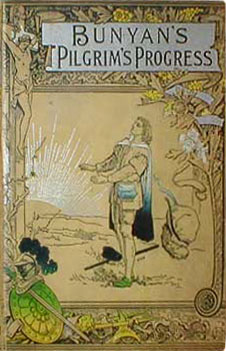
Pilgrim's ProgressI love Pilgrim’s Progress! You can read my full book review by clicking here. I’m sharing some of my favorite passages from this classic.

This is part of a dialogue between Christian and Hopeful—

Christian: “Then I say, sometimes (as I think) they may; but they being naturally ignorant, understand not that such convictions tend to their good; and therefore they do desperately seek to stifle them, and presumptuously continue to flatter themselves in the way of their own hearts. … True or right fear is discovered by three things: (1) By its rise: it is caused by saving convictions for sin. (2) It driveth the soul to lay fast hold of Christ for salvation. (3) It begetteth and continueth in the soul a great reverence of God, His word, and ways; keeping it tender, and making it afraid to turn from them, to the right hand or to the left, to any thing that may dishonour God, break its peace, grieve the Spirit, or cause the enemy to speak reproachfully. … Now the ignorant know not that such convictions that tend to put them in fear, are for their good, and therefore they seek to stifle them.”

Hopeful: “How do they seek to stifle them?”

Christian: “(1) They think that those fears are wrought by the devil (though indeed they are wrought of God), and, thinking so, they resist them, as things that directly tend to their overthrow. (2) They also think that these fears tend to the spoiling of their faith; when, alas for them, poor men that they are, they have none at all! and therefore they harden their hearts against them. (3) They presume they ought not to fear, and therefore in despite of them, wax presumptuously confident. (4) They see that those fears tend to take away from them their pitiful old self-holiness, and therefore they resist them with all their might.”

Read a dialogue between Faithful, Christian, and Talkative by clicking here.

Faithful, Christian & Talkative From “Pilgrim’s Progress”

Pilgrim's ProgressThe dialogue in Pilgrim’s Progress is all so rich and meaningful, that it’s hard to pull out “favorite” passages from this book. You can read my full book review by clicking here. Over the next few days I would like to share some of the passages which especially stood out to me this time reading through this classic.

This is part of a dialogue between Faithful, Christian and Talkative—

Faithful: “Well, I see that saying and doing are two things, and hereafter I shall better observe this distinction.”

Christian: “They are two things indeed, and are as diverse as are the soul and the body; for as the body without the soul is but a dead carcass, so saying, if it be alone, is but a dead carcass also. The soul of religion is the practical part. Pure religion and undefiled before God and the Father is this, to visit the fatherless and widows in their affliction, and to keep himself unspotted from the world. This Talkative is not aware of; he thinks that hearing and saying will make a good Christian; and thus he deceiveth his own soul.” …

Talkative: “Why, what difference is there between crying out against, and abhorring of sin?”

Faithful: “Oh! a great deal. A man may cry out against sin, of policy; but he cannot abhor it but by virtue of a godly antipathy against it. I have heard many cry out against sin in the pulpit, who can yet abide it well enough in the heart, house, and conversation.” …

Talkative: “You lie at the catch, I perceive.”

Faithful: “No, not I; am only for setting things right. But what is the second thing whereby you would prove a discovery of a work of grace in the heart?”

Talkative: “Great knowledge of gospel mysteries.”

Faithful: “This sign should have been first; but first or last, it is also false; for knowledge, great knowledge, may be obtained in the mysteries of the gospel, and yet no work of grace in the soul. Yea, if a man have all knowledge, he may yet be nothing, and so, consequently, be no child of God. When Christ said, Do you know all these things? and the disciples had answered, Yes, He added, Blessed are ye if ye do them.” …

Christian: “You did well to talk so plainly to him [Talkative] as you did. There is but little of this faithful dealing with men now-a-days, and that makes religion to stink so in the nostrils of many as it doth: for they are these talkative fools, whose religion is only in word, and are debauched and vain in their conversation, that (being so much admitted into the fellowship of the godly) do puzzle the world, blemish Christianity, and grieve the sincere. I wish that all men would deal with such as you have done; then should they either be made more conformable to religion, or the company of saints would be too hot for them.”

14 Quotes From “Beyond IQ”

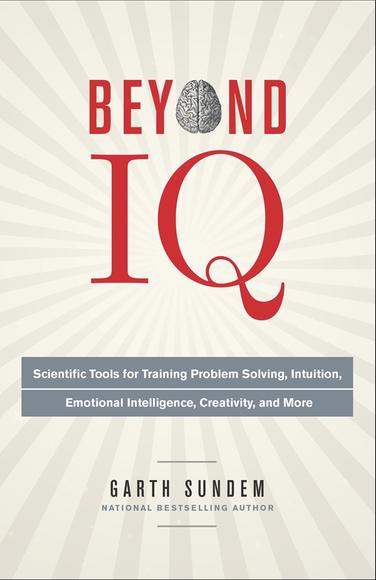
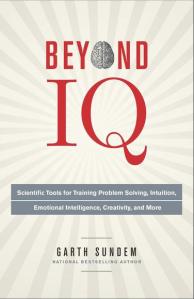
Beyond IQI found Beyond IQ by Garth Sundem to be engaging because of both the research he presents, and the engaging exercises he incorporates to make the research applicable to us. You can read my full book review by clicking here. Here are some of the quotes I especially appreciated.

“First, here’s why insight can be difficult: it requires a paradoxical mix of experience with openness. Usually, experience leads to set-in-stone ways of doing things. Typically, openness is only present when you’re forced by inexperience to remain available in your search for solutions. Experience mixed with openness is a rare cocktail. … Rather than opening your mind to insight, [John] Kounios and [Mark] Jung-Beeman show that if you want insight, the best thing you can do is to close it. A closed mind shows up on an fMRI as activation of the anterior cingulate cortex, your brain’s home of inhibiting distraction. It’s as if your ACC is a pair of noise-canceling headphones, and with these headphones in place you’re more able to hear your brain’s quiet, insightful whispers.” 

“Science has known that during sleep the brain’s hippocampus—the structure responsible for encoding new memories—replays the day’s experiences from short-term storage and filters them into the neocortex, where experiences are integrated into… ‘pre-existing knowledge representations.’ Insight is the novel connection of knowledge, and sleep knocks knowledge into new configurations.”

“[Robert] Sternberg and his frequent collaborator, Richard Wagner, showed that situational judgment tests…designed to measure practical intelligence are a much better predictor then IQ of job performance in business managers, bank managers, and graduate students. IQ doesn’t lead to success. Practical intelligence does.” 

“The language of problem-solving is: initial state, constraints, operations, and goal state. … [Richard] Mayer says that the most striking feature of people who successfully solve real-world problems is the time they spend studying the initial state and the constraints—the extra time they spend clarifying the problem.”

“University of California-San Bernardino researcher James Kaufman knows the recipe for creativity. It’s equal parts intrinsic motivation, experience, and something he calls low personal inhibition. Intrinsic motivation is pretty self-explanatory, but beware of the danger of ‘replacing intrinsic motivation and a natural curiosity with external rewards,’ says Kaufman. If a parent wants a child to become a creative pianist, the parent should encourage interest in the piano but not incentivize this interest with ice cream. Creativity blooms in fields you’re drawn to, not in fields into which you’re pushed. … Kaufman’s research has shown that creative people are hard workers with background knowledge and expertise in their creative domains. ‘It’s the “learn the rules so you can break them” approach,’ he says.” 

“Dean Keith Simonton of UC Davis found that the nineteenth-century scientists who wrote the most-cited papers also wrote the least-cited papers. … The more scientific papers or sonatas or sonnets a person writes, the greater chance that one or more will be especially creative.”

“In any kind of cognitive activity you have two kinds of things going on. You have intelligence, but there’s also learning and skill and knowledge based on practice. The more the second develops, the less important the first becomes. … Even more importantly, we’ve shown that with enough practice and hard work, you can actually change the neurophysiology of the brain. For example, practice can encourage the brain to grow greater myelin coating on neurons. Thus our behaviors become literally hard-wired. Developing expertise literally makes certain thought patterns more efficient than others.” —Paul Feltovich 

“Florida State researcher K. Anders Ericcson shows that it’s not only experience that creates expertise but a step-by-step method of sculpting experience that he calls deliberate practice. To Ericsson, famous for his theory that 10,000 hours of practice creates expertise in any field, the four-step path to expertise includes performing your skill, monitoring your performance, evaluating your success, and figuring out how to do it better next time. Completing only the first step—performing the skill itself—leads to automated, low-level, rote performance in which you perform the skill the same way every time. Monitoring, evaluating, and adjusting your skill allows you to modify it after every pass, helping skill evolved toward expertise.”

“The more you use your brain, the longer you’ll be able to use it. … People with ‘cognitively protected’ brains were those who challenge themselves through a lifestyle that included reading, writing, attending lectures, and doing word puzzles—in other words, they followed a self-imposed regimen of cognitive involvement. … Cognitive involvement is only one tine of a three-pronged approach to brain health in later life. The second tine is a healthy body. … In fact, your cardiovascular health in middle age is even more important for your later brain health than the same risk factors in old age itself. … The third tine: social interaction. … Nothing forces the brain to work like interacting with other brains.” 

“Moral reasoning and wisdom are linked. Specifically (and this is kind of cool albeit technical), for those who possess strong moral reasoning, wisdom increases with age. If you have lower moral reasoning, you gain no wisdom as you get older. So if you want wisdom later, train your moral reasoning now.”

“Wisdom requires thought and action without yourself in mind, and sociologist Monika Ardelt of the University of Florida shows that selflessness is also the best predictor of successful aging. In fact, the wisdom born of selflessness beats out physical health, income, socioeconomic status, physical environment, and even social relationships in predicting life satisfaction in old age.”

“Pressure…sits like a lead weight in your working memory, claiming space that could otherwise hold useful information. And because working memory is a mainline to general intelligence, space claimed by pressure makes you measurably dumber. … Pressure flips a mental switch from implicit to explicit thought, making you apply a layer of analysis to things that should be automatic. … Chronic pressure can make you chronically prioritize the quick rewards of drugs and alcohol while discounting their long-term risk. … So beware. Stress plugs your working memory, analysis paralysis forces you to try to use it anyway, and your dopamine circuits cry for a quick, risky solution.”

“Students with high emotional intelligence (EI) have lower rates of drug use and teachers with high EI get more support from their principals. Employees with high EI have higher job performance, especially when their IQ is low (implying that emotional intelligence can help compensate for low general intelligence—and also that these skills are distinct). EI is even implicated in resilience—the more EI you have, the higher your chances of bouncing back after trauma or negative life events.” 

“If IQ is the strength of the bulb in your lighthouse, willpower is the lens that focuses it into a beam.”

Pilgrim’s Progress (book review)

Pilgrim's ProgressIt’s been awhile since I have read Pilgrim’s Progress by John Bunyan, so I thought it was high time to re-read this amazing classic.

I was not disappointed!

In fact, I think I appreciated this time reading this amazing story more than any other time I’ve read it! The pilgrimages of Christian, Faithful, and Hopeful, and that of Christiana, Mercy and Great-heart are fantastic! Very few books have portrayed the journey of a Christian from salvation until arrival in Heaven with such accuracy and emotion.

Parents, your kids will love hearing you read this classic story to them. As your children get a little older, they can read Little Pilgrim’s Progress on their own. And then encourage them to read (and re-read) the original Pilgrim’s Progress throughout their lives. This book is a true blessing!

Beyond IQ (book review)

Beyond IQHow many times have you been told that your Intelligence Quotient (IQ) determines how smart you are? Probably quite often, but Garth Sundem’s new book Beyond IQ challenges that long-held assumption.

Sundem writes, “Raw intelligence is good: it helps shape your potential top speed. But there’s much, more more that goes into realizing it. This brain-training book for everything but IQ will teach you how to drive your mind—to get the most from what you’ve got under the hood.”

Indeed, Sundem not only shares the findings of top psychologists and other brain experts from around the world, but tells you the practical applications of those findings. Each chapter is loaded with brain-boosting exercises that you can do to tap into the intelligence that God has given you.

I found this book to be not only educational, but a lot of fun too! The exercises were engaging and challenging in a way that made me want to bookmark them and come back again and again. That, says Sundem, is what will allow you to harness the greatest potential in your brain power.

I am a Three Rivers Press book reviewer.

9 Quotes From “Bible Reading”

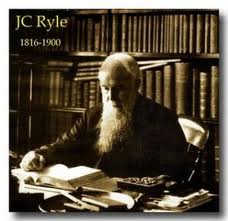
J.C. RyleJ.C. Ryle’s book Bible Reading has a question repeated all throughout the book: What are you doing with the Bible? do you read it? how do you read it? This is a book that will challenge and encourage both the Bible-reading novice, and the Bible-reading veteran. You can read my full book review by clicking here. Below are some quotes that I highlighted in this powerful little book.

“This is the Book to which the civilized world is indebted for many of its best and most praiseworthy institutions. Few probably are aware how many good things that men have adopted for the public benefit, of which the origin may be clearly traced to the Bible. It has left lasting marks wherever it has been received. From the Bible are drawn many of the best laws by which society is kept in order. From the Bible has been obtained the standard of morality about truth, honesty, and the relations of man and wife, which prevails among Christian nations, and which—however feebly respected in many case—makes so great a difference between Christians and heathen.” 

“The Bible applied to the heart by the Holy Spirit is the grand instrument by which souls are first converted to God. That mighty change is generally begun by some text or doctrine of the Word, brought home to a man’s conscience. In this way the Bible has worked moral miracles by the thousands. It has made drunkards become sober—immoral people become pure—thieves become honest and violent-tempered people become meek. It has wholly altered the course of men’s lives.”

“The Bible can show a believer how to walk in this world so as to please God. It can teach him how to glorify Christ in all the relationships of life, and can make him a good leader, employee, subordinate, husband, father, or son. It can enable him to bear misfortunes and loss without murmuring, and say, ‘It is well.’ It can enable him to look down into the grave, and say, ‘I will fear no evil’ (Psalm 23:4). It can enable him to think about judgment and eternity, and not feel afraid. It can enable him to bear persecution without flinching and to give up liberty and life rather than deny Christ’s truth.” 

“The Lord God knows the weakness and infirmities of our poor fallen understandings. He knows that, even after conversion, our perceptions of right and wrong are extremely vague. He knows how artfully satan can overlay error with an appearance of truth, and can dress up wrong with plausible arguments, till it looks like right. Knowing all this, He has mercifully provided us with an unerring standard of truth and error, right and wrong, and has taken care to make that standard a written Book—the Scripture.”

“A man must make the Bible alone his rule. He must receive nothing and believe nothing which is not according to the Word. He must try all religious teaching by one simple test—Does it square with the Bible? What does the Scripture say?” 

“A false minister may say, ‘You have no right to use your private judgment: leave the Bible to us who are ordained.’ A true minister will say, ‘Search the Scriptures, and if I do not teach you what is scriptural, do not believe me.’ A false minister may cry, ‘Listen to the Church,’ and ‘Listen to me.’ A true minister will say, ‘Listen to the Word of God.’”

“Love of the Word appears preeminently in our Lord and Savior Jesus Christ. He read it publicly. He quoted it continually. He expounded it frequently. He advised the Jews to search it. He used it as His weapon to resist the devil. He repeatedly said, ‘The Scripture must be fulfilled.’ Almost the last thing He did was to ‘open their minds so they could understand the Scriptures’ (Luke 24:45). I am afraid that man cannot be a true servant of Christ, who has not something of his Master’s mind and feeling towards the Bible.” 

“Read the Bible with Christ continually in view. The primary object of all Scripture is to testify about Jesus: Old Testament ceremonies are shadows of Christ; Old Testament judges and deliverers are types of Christ; Old Testament history shows the world’s need of Christ; Old Testament prophecies are full of Christ’s sufferings; Old Testament prophecies are full of Christ’s glory yet to come. … All these shine forth everywhere in the Bible. Remember this clue, if you would read the Bible right.”

“Let us resolve to read the Bible more and more every year we live. Let us try to get it rooted in our memories, and engraved into our hearts. … Let us resolve to be more watchful over our Bible reading every year that we live. Let us be jealously careful about the time we give to it, and the manner that time is spent. Let us be aware of omitting our daily reading without sufficient cause. Let us not be gaping, and yawning and dozing over our book, while we read. … Let us be very careful that we never exalt any minister, or sermon, or book, or tract, or friend above the Word. Cursed be that book, or tract, or human counsel, which creeps in between us and the Bible, and hides the Bible from our eyes! … Let us resolve to talk more to believers about the Bible when we meet them. Sorry to say, the conversation of Christians, when they do meet, is often sadly unprofitable! How many frivolous, and trifling, and uncharitable things are said! Let us bring out the Bible more, and it will help to drive the devil away, and keep our hearts in tune.”