Lincoln’s Battle With God (book review)

Lincoln's Battle With GodI’m a big fan of the historical and biographical work of Stephen Mansfield. His books are thoroughly researched but they don’t read like scholarly works, but have a more storytelling feel to them. This is especially true in his book Lincoln’s Battle With God.

I have read several biographies about our 16th president, Abraham Lincoln, but this is one of the most innovative angles of this great leader’s life. Mansfield tells the story of Lincoln as a boy growing up in an overly-strict, hyper-Calvinistic home where religious observance was demanded and oppressive. Lincoln’s father was distant and didn’t have satisfactory answers for his young son when life was painful.

This contributed to Lincoln as a young man who, while searching for answers, went the opposite direction of his father’s faith, and became immersed in rationalism and even agnosticism. Through it all as Lincoln searched for answers, he and his friends had to cope with Lincoln’s “hypo” (his word for deep, almost debilitating, depression).

When rationalism didn’t help him discover the answers he so desperately desired, Lincoln came full circle to begin to explore the tenants of Scripture once again. But this time he looked at the Bible through a different paradigm, being much more thoughtful and circumspect.

His journey to the White House where he had to deal with a nation torn apart by Civil War and the premature death of his young sons exposed him once again to events which would have caused the younger Lincoln to spiral into depression. But his faith in God now had grown rock solid and sustaining.

This book is a fascinating journey through Lincoln’s spiritual struggles, and it’s one that I think many will benefit from reading. Those who are admirers of Abraham Lincoln, those battling depression, and even those searching for life’s answers will find a lot to learn in these pages.

12 Additional Quotes From “Transforming Grace”

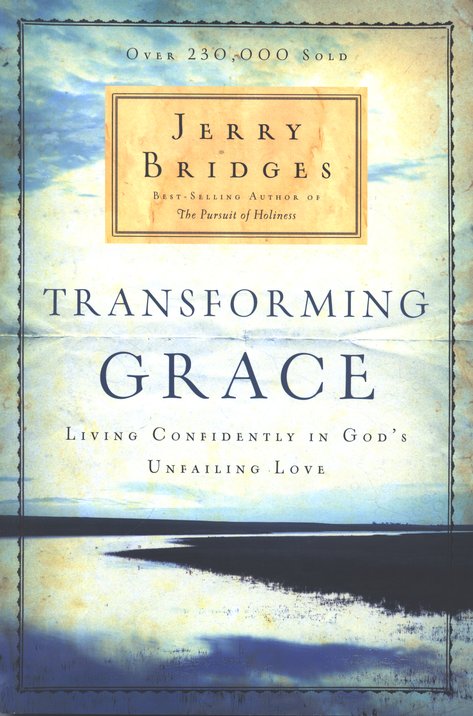
Transforming GraceI already shared a few quotes from Transforming Grace by Jerry Bridges (you can read them by clicking here). Bridges also extensively quoted other authors in this amazing book, so I wanted to share a few of those quotes as well.

“Grace ceases to be grace if God is compelled to bestow it in the presence of human merit…. Grace ceases to be grace if God is compelled to withdraw it in the presence of human demerit…. Grace is treating a person without the slightest reference to desert whatsoever, but solely according to the infinite goodness and supper and purpose of God.” —Dr. C. Samuel Storms

“The most shining deeds and valuable qualities that can be found among men, though highly useful and truly excellent, when set in their proper places, and referred to suitable ends, are, as to the grand article of justification treated as nonentities…. For divine grace disdains to be assisted in the performance of that work which peculiarly belongs to itself, by the poor, imperfect performances of men. Attempts to complete what grace begins, betray our pride and offend the Lord; but cannot promote our spiritual interest. Let the reader, therefore, carefully remember, that grace is either absolutely free, or it is not at all: and, that he who professes to look for salvation by grace, either believes in his heart to be saved entirely by it, or he acts inconsistently in affairs of the greatest importance.” —Abraham Booth

“Perhaps the most difficult task for us to perform is to rely on God’s grace and God’s grace alone for our celebration. It is difficult for our pride to rest on grace. Grace is for other people—for beggars. We don’t want to live by a heavenly welfare system. We want to earn our own way and atone for our own sins. We like to think that we will go to heaven because we deserve to be there.” —R.C. Sproul 

“A lawdriver insists with threats and penalties; a preacher of grace lures and incites with divine goodness and compassion shown to us; for he wants no unwilling works and reluctant services, he wants joyful and delightful services of God.” —Martin Luther, commenting on Romans 12:1

“The great mistake made by most of the Lord’s people is in hoping to discover in themselves that which is to be found in Christ alone.” —Arthur W. Pink

“In the person of Christ God beholds a holiness which abides His closest scrutiny, yea, which rejoices and satisfies His heart; and whatever Christ is before God, He is for His people.” —Arthur W. Pink

“Only what God has commanded in His Word should be regarded as binding; in all else there may be liberty of actions.” —John Owen

“Let us never surrender our judgments or our consciences to be at the disposal and opinions of others, and to be subjected to the sentences and determinations of men. … It is my exhortation therefore to all Christians to maintain their Christian freedom by constant watchfulness. You must not be tempted or threatened out of it; you must not be bribed or frightened from it; you must not let either force or fraud rob you of it. … We must not give up ourselves to the opinion of other men, though they be never so learned, never so holy, merely because it is their opinion. The apostle directs us to try all things and to hold fast that which is good (1 Thessalonians 5:21). It often happens that a high esteem of others in respect of their learning and piety makes men take up all upon trust from such, and to submit their judgments to their opinions, and their consciences to their precepts. This should not be so.” —Samuel Bolton (1645)

“So God supplies perfectly measured grace to meet the needs of the godly. For daily needs there is daily grace; for sudden needs, sudden grace; for overwhelming needs, overwhelming grace. God’s grace is given wonderfully, but not wastefully; freely, but not foolishly; bountifully, but not blindly.” —John Blanchard

“For men have no taste for God’s power till they are convinced of their need of it and they immediately forget its value unless they are continually reminded by awareness of their own weakness.” —John Calvin

“Yet the duties God requires of us are not in proportion to the strength we possess in ourselves. Rather, they are proportional to the resources available to us in Christ. We do not have the ability in ourselves to accomplish the least of God’s tasks. This is a law of grace. When we recognize it is impossible for us to perform a duty in our own strength, we will discover the secret of its accomplishment. But alas, this is a secret we often fail to discover.” —John Owen

“Christian humility does not consist in denying what there is of good in us; but in an abiding sense of ill-desert, and in the consciousness that what we have of good is due to the grace of God.” —Charles Hodge

You can read my full review of Transforming Grace by clicking here.

13 Quotes From Jerry Bridges In “Transforming Grace”

Transforming GraceI think Transforming Grace by Jerry Bridges is one of the best books about God’s grace I have ever read! You can read my full book review by clicking here. There are way too many quotes for me to share from this book, so here are a few that really zero-in on grace (I’ll be posting more quotes soon).

“I think most of us actually declared temporary bankruptcy. Having trusted in Christ alone for our salvation, we have subtly and unconsciously reverted to a works relationship with God in our Christian lives. We recognize that even our best efforts cannot get us into heaven, but we do think they earn God’s blessings in our daily lives.” 

“It was because of His grace that God the Father sent His only Son to die in our place. To say it another way, Christ’s death was the result of God’s grace; grace is not the result of Christ’s death.”

“The gospel is addressed to those who have no money or good works. It invites us to come and ‘buy’ salvation without money and without cost [Isaiah 55:1]. But note the invitation to come is addressed to those who have no money—not to those who don’t have enough. Grace is not a matter of God’s making up the difference, but of God’s providing all the ‘cost’ of salvation through His Son, Jesus Christ.” 

“We can never rightly understand God’s grace until we understand our place as those who need His grace.”

“We were dead in our transgressions, but God intervened. We were in bondage to sin, but God intervened. We were objects of wrath, but God intervened. God Who is rich in mercy intervened. Because of His great love for us, God intervened and made us alive with Christ, even when we were dead in our transgressions and sins. All this is summed up in one succinct statement: ‘it is by grace you have been saved.’ Our condition was hopeless, but God intervened in grace.” 

“God’s grace, then, does not supplement our good works. Instead, His grace overcomes our bad works, which are our sins. God did this by placing our sins on Christ and by letting fall on Him the wrath we so richly deserved. … That’s the way His grace operates. It looks not to our sins or even to our good deeds but only to the merit of Christ.”

“The apostle John wrote that Jesus was ‘full of grace and truth,’ and ‘from the fullness of His grace we have all received one blessing after another’ (John 1:14, 16). The idea portrayed in verse 16 is analogous to the ocean waves crashing upon the beach. One wave has hardly disappeared before another arrives. They just keep coming from an inexhaustible supply. So it is with the grace of God through Christ. He is full of grace and truth, and it is from His inexhaustible fullness that we received one blessing after another.” 

“God often does bless people who seem to us to be quite unworthy. But that is what grace is all about, because we are all unworthy.”

“We all want grace, but we cannot enjoy grace when there is an attitude of comparing.” 

“Under a sense of legalism, obedience is done with a view to meriting salvation or God’s blessing on our lives. Under grace, obedience is a loving response to salvation already provided in Christ, and the assurance that, having provided salvation, God will also through Christ provide all else that we need.”

“All Christians look to Christ alone for their justification, but not nearly as many also look to Him for their perfect holiness before God. … Holiness should be an objective for your daily life. But to live by grace, you must never, never look to the work of the Holy Spirit in you as the basis for your relationship with God. You must always look outside of yourself to Christ. You will never be holy enough through your own efforts to come before God. You are holy only through Christ.” 

“When our Father looks at us, He does not see our miserable performance. Instead, He sees the perfect performance of Jesus.”

“We died to the observance of the law as a requirement for attaining righteousness before God. We died to the curse and condemnation that resulted from our inability to perfectly keep the law. … Being under law implies the wrath of God, whereas grace implies forgiveness and favor. Law implies a broken relationship with God, whereas grace implies a restored relationship with Him. So when Paul said we died to the law, he meant we died to that entire state of condemnation, curse, and alienation from God.” 

Transforming Grace (book review)

Transforming GraceWhen many people think of God’s grace, the most appropriate adjective they offer is amazing. I totally agree! And when I think of Jerry Bridges’ book Transforming Grace, the word amazing quickly comes to my mind again.

Truly this is one of the best books I have read addressing the topic of God’s grace. Bridges doesn’t range far and wide, but sticks to this one topic: when we truly begin to understand God’s grace, it will absolutely transform our lives.

Early in the book Bridges states the problematic paradigm many of us have about God’s grace—

“My observation of Christendom is that most of us tend to base our personal relationship with God on our performance instead of on His grace. If we’ve performed well—whatever ‘well’ is in our opinion—then we expect God to bless us. If we haven’t done so well, our expectations are reduced accordingly. In this sense, we live by works rather than by grace. We are saved by grace, but we are living by the ‘sweat’ of our own performance.” (emphasis added)

This book is jam-packed with so many paradigm-shifting thoughts, and is well grounded in the Scripture. Bridges transparently shares his own personal struggles with coming to grips with the true nature of God’s grace, and shares the quotes of many notable theologians as well. I loved this book!

If you want to live with a deeper understanding of how God’s grace can transform your life, I couldn’t recommend this book any more highly … this is a must read!

12 Quotes From “The Love Of God”

The Love Of GodOswald Chambers has a way of writing about biblical truths that satisfy both the head and the heart. You can read my review of Chambers’ book The Love Of God by clicking here. Below are just a few of the many, many quotes I highlighted in this amazing book.

“In the future, when trial and difficulties await you, do not be fearful, whatever and whoever you may lose faith in, let not this faith slip from you—God is Love; whisper it not only to your heart in its hour of darkness, but here in your corner of God’s earth and man’s great city, live in the belief of it; preach it by your sweetened, chastened, happy life; sing it in consecrated moments of peaceful joy, sing until the world around you ‘is wrought to sympathy with hopes and fears it heeded not.’ The world does not bid you sing, but God does. Song is the sign of an unburdened heart; then sing your songs of love unbidden, ever rising higher and higher into a fuller conception of the greatest, grandest fact on the stage of Time—God is Love.”

“God did not create man as a puppet to please a despotic idea of His own, He created us out of the superabundant flow of overflowing love and goodness, He created us susceptible of all the blessedness which He had ordained for us.”

“Drink deep and full of the love of God and you will not demand the impossible from earth’s loves, and the love of wife and child, of husband and friend, will grow holier and healthier and simpler and grander.”

“Love is difficult to define, but the working definition I would like to give is that ‘Love is the sovereign preference of my person for another person, embracing everyone and everything in that preference.’”

“The majority of us are unnoticed and unnoticeable people. If we take the extraordinary experience as a model for the Christian life, we erect a wrong standard without knowing it.” 

“God will use any number of extraordinary things to chisel the detail of His ‘lily work’ in His children. He will use people who are like hedgehogs, He will use difficult circumstances, the weather; He will use anything and everything, no matter what it is, and we shall always know when God is at work because He produces in the commonplace something that is inspiring.”

“A Christian is one in whom the indwelling Spirit of God shines out all the time.”

“Our Lord did not say to His disciples: ‘I have had a most successful time on earth, I have addressed thousands of people and been the means of their salvation; now you go and do the same kind of thing.’ He said: ‘If I then, your Lord and Master, have washed your feet; you also ought to wash one another’s feet.’ We try to get out of it by washing the feet of those who are not of our own set. We will wash the heathen’s feet, the feet in the slums; but fancy washing my brother’s feet! my wife’s! my husband’s! the feet of the minister of my church! Our Lord said one another’s feet. It is in the ordinary commonplace circumstances that the unconscious light of God is seen.”

“The reason we are going through the things we are is that God wants to know whether He can make us good bread with which to feed others. The stuff of our lives, not simply of our talk, is to be the nutriment of those who know us. … It is in the solitary life that we prove whether we are willing to be made the unadvertised life for the community to which we belong—whether we are willing to be made bread or to be simply the advertisement for bread? If we are to be made bread, then we must not be surprised if we are treated in the way Our Lord was treated.”

“For a man to lay down his life is not to lay it down in a sudden crisis, such as death, but to lay it down in deliberate expenditure as one would lay out a pound note. Not—‘Here it is, take it out in one huge martyrdom and be done with it.’ It is a continual substitution whereby we realize that we have another day to spend out for Jesus Christ, another opportunity to prove ourselves His friends.”

“The test of spiritual life is the power to descend; if we have power to rise only, there is something wrong. … Spiritual selfishness makes us want to stay on the mount; we feel so good, as if we could do anything—talk like angels and live like angels, if only we could stay there. But there must be the power to descend; the mountain is not the place for us to live, we were built for the valleys. … We never live for the glory of God on the mount, we see His glory there, but we do not live for His glory there; it is in the valley that we live for the glory of God. … The reason we have to live in the valley is that the majority of people live there, and if we are to be of use to God in the world we must be useful from God’s standpoint, not from our own standpoint or the standpoint of other people. … As disciples of Jesus we have to learn not only what Our Lord is like on the Mount of Transfiguration, but what He is like in the valley of humiliation, where everything is giving the lie to His power, where the disciples are powerless, and where He is not doing anything.”

“We shall find that the spheres God brings us into are not meant to teach us something but to make us something.”

10 Quotes From “The Furious Longing Of God”

Furious Longing Of GodI love the way Brennan Manning writes! It’s so gut-level real. His words both convict me and encourage me to go deeper into God’s love. You can read my full book review of The Furious Longing Of God by clicking here. Below are some of the quotes I especially appreciated.

“The God I’ve come to know by sheer grace, the Jesus I met in the grounds of my own self, has furiously loved me regardless of my state—grace or disgrace. And why? For His love is never, never, never based on our performance, never conditioned by our moods—of elation or depression. The furious love of God knows no shadow of alteration or change. It is reliable. And always tender.”

“The foundation of the furious longing of God is the Father who is the originating Lover, the Son who is the full self-expression of that Love, and the Spirit who is the original and inexhaustible activity of that Love, drawing the created universe into itself.”

“Pagan philosophers such as Aristotle arrived at the existence of God via human reason and referred to Him in vague, impersonal terms: the uncaused cause, the immovable mover. The prophets of Israel revealed the God of Abraham, Isaac, and Jacob in a warmer, more compassionate manner. But only Jesus revealed to an astonished Jewish community that God is truly Father.” 

“The degree of Abba’s love for me is in direct proportion to His love for Jesus. For example, I can love the mailman with twenty percent and my best friend with ninety percent. But with God, there is no division, no more and no less. God loves me as much as He loves Jesus. Wow!”

“First, if we continue to picture God as a small-minded bookkeeper, a niggling customs officer rifling through our moral suitcase, as a policeman with a club who is going to bat us over the head every time we stumble and fall, or as a whimsical, capricious, and cantankerous thief who delights in raining on our parade and stealing our joy, we flatly deny what John writes in his first letter (4:16)—‘God is love.’ In human beings, love is a quality, a high-prized virtue; in God, love is His identity. Secondly, if we continue to view ourselves as moral lepers and spiritual failures, if our lives are shadowed by low self-esteem, shame, remorse, unhealthy guilt, and self-hatred, we reject the teaching of Jesus and cling to our negative self-image.”

“Healing becomes the opportunity to pass off to another human being what I have received from the Lord Jesus; namely His unconditional acceptance of me as I am, not as I should be. He loves me whether in a state of grace or disgrace, whether I live up to the lofty expectations of His gospel or I don’t. He comes to me where I live and loves me as I am.”

“To affirm a person is to see the good in them that they cannot see in themselves and to repeat it in spite of appearances to the contrary.”

“Jesus said the world is going to recognize you as His by only one sign: the way you are with one another on the street every day. You are going to leave people feeling a little better or a little worse. You’re going to affirm them or deprive them, but there’ll be no neutral exchange.”

“The question is not can we heal? The question, the only question, is will we let the healing power of the risen Jesus flow through us to reach and touch others, so that they may dream and fight and bear and run where the brave dare not go?” 

“How is it then that we’ve come to imagine that Christianity consists primarily in what we do for God? How has this come to be the good news of Jesus? Is the kingdom that He proclaimed to be nothing more than a community of men and women who go to church on Sunday, take an annual spiritual retreat, read their Bibles every now and then, vigorously oppose abortion, don’t watch x-rated movies, never use vulgar language, smile a lot, hold doors open for people, root for the favorite team, and get along with everybody? Is that why Jesus went through the bleak and bloody horror of Calvary? Is that why He emerged in shattering glory from the tomb? Is that why He poured out His Holy Spirit on the church? To make nicer men and women with better morals? The gospel is absurd and the life of Jesus is meaningless unless we believe that He lived, died, and rose again with but one purpose in mind: to make brand-new creations. Not to make people with better morals, but to create a community of prophets and professional lovers, men and women who would surrender to the mystery of the fire of the Spirit that burns within, who would live in ever greater fidelity to the omnipresent Word of God, who would enter into the center of it all, the very heart and mystery of Christ, into the center of the flame that consumes, purifies, and sets everything aglow with peace, joy, boldness, and extravagant, furious love.”

The Furious Longing Of God (book review)

Furious Longing Of GodBrennan Manning at times seems to tap into dimensions of our relationship with God that I had never considered before, and his book The Furious Longing Of God is a great example of this.

It is almost foreign in a Christian’s vocabulary, or even understanding of Scripture, to think of God furiously longing for a relationship with the people He has created. But God does long for this, and Manning pulls out those biblical passages and weaves them together with his own life story to create a hunger in us for more of God.

Each chapter builds on the previous chapter, creating in me a longing to experience God’s longing. This book is not difficult to read, but it is confronting. I doubt you can read Manning’s words are remain unmoved by God’s passionate, relentless, furious longing for you.

If you too long for a deeper relationship with your Creator, this is a great book to help you on that journey.

15 Quotes From “Finding The Love Of Your Life”

Finding The Love Of Your LifeFinding The Love Of Your Life by Dr. Neil Clark Warren is a wonderful resource for anyone contemplating marriage, or for parents to help prepare their children for marriage. You can rad my full book review by clicking here. Below are some of the quotes I found especially interesting in this book.

“The person you can become is far more important than the person you are today. … When you start with who you are today and commit yourself to moving steadily toward goals, the progress you experience will not only make you feel genuinely proud, but it will also make you significantly more attractive to members of the opposite sex. … This kind of emotional growth is best achieved when you start with a deep understanding that you are totally lovable just the way you are. If your pursuit of excellence grows out of an appreciation for the way you have been created, you’ll grow by leaps and bounds.”

“The crucial thing is not to seek after someone whose personality is like your father’s or mother’s, but to search for that person whose personality would make you genuinely happy through the years.”

“Research has consistently shown that religious commitment and marital success are highly related.” 

“Research findings are highly consistent: the most stable marriages are those involving two people with many similarities. … For couples, similarities are like money in the bank, and differences are like debts they owe. Suppose you received two bank statements in the mail today, one showing the amount of money in your savings account, the other showing the amount you owe on your credit card. If you have a large savings account and little debt, you’re in a position of strength and you can weather economic storms. If a financial crisis arises, you have the means to handle it. You can make decisions and purchases without scrambling to figure out how you’ll manage. But the reverse is also true. With big debts and little savings, you’re on shaky financial ground. You have to work a lot harder to cover the bills, and you worry about job security and making ends meet. … If you want to make a marriage work with someone who is very different from you, you had better have a large number of similarities as permanent equity in your account. If you don’t, your relationship could be bankrupt at a frighteningly early stage. Why is this the case? Because every difference you have requires negotiation and adaptation. One of you has to give a lot, or both of you have to give some, and in either case there is the need for plenty of change.”

“If the qualities that attracted you to someone are different from your own, be cautious.” 

“A great marriage requires two healthy people, and the time to get healthy is before you get married. … What I am particularly concerned about here is the emotional and mental health of the two people considering a lifelong partnership.”

“When we marry, it will be ideal if in relation to our parents (1) we are essentially free from them—emotionally independent individuals—so we do not have to make decisions and live our lives to please them; (2) we are clear about what is particularly true of our relationship with our mother and father, and what is true in relation to our spouse. When we confuse these relationships, we leave our spouse feeling violated and helpless; and (3) we have established a relationship with our parents in which they will not intrude in our marriage, will not dictate to us in any authoritative ways, and yet we can still maintain a closeness and connectedness to them.”

“The desire to touch, hold hands and hug is critical for long-term satisfaction. I agree. Building a great marriage is virtually impossible without the attraction and excitement that comes with passionate love. … I am deeply convinced that any two people who choose to marry need to maintain clear minds until the moment they say ‘I do.’ Because of this, I believe in sexual abstinence prior to marriage. Sexual intercourse before marriage is a clear act of commitment! Once you have become sexually involved with a potential mate, your ability to think clearly and objectively becomes impossible. … In one impulsive moment, two people cut short the process of ‘choosing’ one another, and they rob themselves of their own wisdom. Once they are sexually involved, they forfeit their combined ability to make a wise, unhindered decision.”

“(1) Passionate love between two people is a crucial ingredient if they are to have a long and satisfying relationship. (2) Passionate love always involves strong physical attraction. (3) Physical involvement must be managed with extreme care. (4) Every progression of physical activity establishes a new plateau—and it is extremely difficult to retreat once it has been reached. (5) When sexual expression is not kept in check, the emotional, cognitive and spiritual aspects of the relationship become slaves to the physical desires.”

“Too many failed marriages involve fantasy triumphing over fact.”

“When you are intimate with the person you love, you create unlimited possibilities for the growth of your relationship. Intimacy has the potential for lifting the two of you out of the lonely world of separateness and into the stratosphere of emotional oneness. Conversely, the number one enemy of any marriage is the lack of intimacy. If two people do not know each other deeply, they can never become what the Bible calls ‘one flesh.’” 

“You have to know yourself if you’re going to be intimate with someone else.”

“When two people discover that they have a spiritual hunger or spiritual awareness in common, they are strongly drawn to one another. In fact, I have found that a lack of mutually held spiritual beliefs often signals an intimacy deficit that leaves couples dangerously unconnected. In fact, one research study showed that spirituality ranked among the six most common characteristics of strong families. The strongest families in this study reported experiencing ‘a sense of power and a purpose’ greater than themselves—a spiritual orientation.”

“The fatal flaw of our society is that the principles of business have increasingly infiltrated our intimate relationships. That’s why society has found it necessary to trivialize wedding vows, to pretend they are no longer binding or relevant. Marriage makes very little sense when viewed from a business perspective. Let me explain: Two fundamental principles in business are: (1) What you pay for something is based on what you get in return; (2) When a business arrangement is no longer a ‘good deal,’ you either alter the arrangement or terminate it. But marriage is radically different! It depends on unconditional commitment. When you get married, you pledge to love, honor and cherish another person for a lifetime. If your mate changes over time, you are not released from your pledge. … Relationships that are conditional allow almost no room for trust and intimacy.”

“There is only one time to think about commitment-—before you make it!

Finding The Love Of Your Life (book review)

Finding The Love Of Your LifeQuite possibly one of the most important life decisions that you will make is deciding whom you will marry. Neil Clark Warren has a very needed book to help with this decision called Finding The Love Of Your Life.

The book is compromised of 10 principles to aid in the selection of a mate. Dr. Warren combines his years of experience as a psychologist with lots of data to make up these 10 easy-to-understand principles. This book was originally published nearly 20 years ago, but the results of research and surveys over that time have only served to strengthen the points that Dr. Warren makes here. Thus, telling me that his 10 principles are truly timeless.

Who should read this book? (1) Young people who are dating; and (2) their parents.

There is plenty of information in this book to get a conversation started, so I would encourage parents to read this book along with their children who are dating, and then talk about each of these principles in relationship to the person whom they are dating.

A great resource that is very readable. Go get it!

Links & Quotes

link quote

Some good reading from this weekend…

“I do not agree with a big way of doing things. What matters is the individual. If we wait till we get numbers, then we will be lost in the numbers and we will never be able to show that love and respect for the person.” —Mother Teresa

For anyone struggling with an addiction to pornography, this sounds like a helpful book: 10 Lies Men Believe About Pornography.

According to Cosmopolitan magazine, if you are pro-life political candidate you are automatically disqualified from getting support from any “enlightened” woman.

Obama & ISIS[INFOGRAPHIC] This is scary … do you know how much money ISIS makes every day from selling the oil they have captured?

“It is right to pour out our whole soul before Him that careth for us. But it is good, likewise, to unbosom ourselves to a friend, in whom we can confide.” —John Wesley

“That is always the way with a truly healthy Christian; God’s grace is externally manifested. There is the inner life within, it is active, and by and by when it is in a right state, it saturates everything. You talk with the gracious man, he cannot help talking about Christ; you go into his house, you will soon see that a Christian lives there; you notice his actions and you will soon see he has been with Jesus. He is so full of sap [Psalm 104:16] that the sap must come out. He has so much of the divine life within, that the holy oil and divine balsam must flow from him.” —Charles Spurgeon

“O God, of Thy goodness give me Thyself, for Thou art enough for me, and I may ask nothing that is less and find any full honors to Thee. God give me Thyself!” —Lady Julian

“Yes—at first one is sort of concussed and ‘life has no taste and no direction.’ One soon discovers, however, that grief is not a state but a process—like a walk in a winding valley with a new prospect at every bend.” —C.S. Lewis

A great post from Dave Barringer for married couples: Faking Your Death.

“Christianity is the only world religion whose primary source documents are in a language other than the founder of the religion. In other words, the New Testament texts are not in Aramaic, but in Koine Greek. … This makes a vitally important theological statement which so dramatically contrasts, for example, with Muslims who maintain that the Qur’an is untranslatable and that the Word of Allah can be conveyed truly and fully only in Arabic. For, at the very outset of the Christian message, the translatability of the gospel is enshrined in our primary source documents.” —Dr. Timothy C. Tennent, President of Asbury Theological Seminary, The Translatability Of The Gospel