Little Is Not Insignificant

gods-promise-to-youPastor Phillips Brooks visited Israel in the mid-1800s. While there he visited a small church just outside of Bethlehem. Listening to the worshipful songs being sung in that quiet countryside, he was inspired to pen the words to O Little Town Of Bethlehem.

Because of that quiet setting, notice how Rev. Brooks notices things we often miss—

  • little town on Bethlehem
  • in thy dark streets
  • while mortals sleep
  • no ear may hear His coming

But little does not mean insignificant. And just because we can’t see or hear something doesn’t mean it doesn’t exist or it isn’t important.

Sometimes we’ve looked and listened and waited and searched for so long that we have given up and we begin to drift off to sleep. We continue to live in our own “little town” surrounded by silence. And we are in danger of missing a miracle right in our midst!

We know today that Jesus was born in Bethlehem. But did you know that this little town was still so obscure in Christ’s day that many people in Israel were unaware of what went on there? (See John 7:41-43). Even after King Herod had gruesomely killed all the baby boys in Bethlehem, scarcely anyone outside of that town knew about it or cared about it.

But God cared. And He knew exactly what He was doing.

But when the proper time had fully come, God sent His Son (Galatians 4:4)—the exact right moment—to be born in Bethlehem—the exact right place (Micah 5:2). Notice even Micah says of Bethlehem though you are small among the clans of Judah, giving birth to the title of Rev. Brooks’ poem.

How small was it? Look at the description of the territory for the tribe of Judah (in Joshua 15), and you can easily glossed over the names of all of the towns. But look more closely and you will see something you didn’t read in that list of towns. Take a close look at all 38 cities: it’s still missing.

There are a couple of very notable figures that dominate the Old and New Testaments, and they have something in common—King David and Jesus both come from the tribe of Judah. And both of them were born in Bethlehem. But in the list of towns in Judah’s territory, there is absolutely no mention of Bethlehem.

This town either didn’t exist, or it was so “insignificant” that Joshua didn’t even think to mention it. It would be almost another 500 years before David would be born in Bethlehem, and then another 900 years after that before Jesus would be born in this little town of Bethlehem.

God had in mind for the greatest earthly king in Israel’s history and the King of all kings to come from such humble origins… from a village that didn’t even make the list. Bethlehem was ready for these kings at just the right moment!

Jesus said heaven and earth will pass away, but His words will never pass away. What promise in His Word do you need to cling to? 

Just as those awaiting the Messiah clung to Micah’s promise until it came to pass, you must find God’s promise for you in His Word, cling to it, and don’t let go until it comes to pass in your little town.

If you’ve missed any of the messages in our series The Carols Of Christmas, you can find the full list here.

8 Quotes From “More Than A Carpenter”

more-than-a-carpenterMore Than A Carpenter by Josh & Sean McDowell is a wonderful resource to prepare you to share the uniqueness of Jesus Christ. Check out my book review by clicking here, and then enjoy these quotes that I especially found interesting.

“Why don’t the names of Buddha, Mohammed, or Confucius offend people the way the name of Jesus does? I think the reason is that these other religious leaders didn’t claim to be God.” —Josh McDowell

“It was reserved for Christianity to present to the world an ideal which through all the changes of eighteen centuries has inspired the hearts of men with an impassioned love; has shown itself capable of acting on an all ages, nations, temperaments, and conditions; has been not only the highest pattern of virtue, but the strongest incentive to its practice. … The simple record of these three short years of active fife has done more to regenerate and soften mankind than all the disquisitions of philosophers and all the expectations of moralists.” —William Lecky, one of Great Britain’s most noted historians and a fierce opponent of organized Christianity

“This testimony [that Jesus was God], if not true, must be downright blasphemy or madness. … Self-deception in a matter so momentous, and with an intellect in all respects so clear and so sound, is equally out of the question. How could He be an enthusiast or a mad man who never lost the even balance of His mind, who sailed serenely over all the troubles and persecutions, as the sun above the clouds, who always returned the wisest answer to tempting questions, who calmly and deliberately predicted His death on the Cross, His resurrection on the third day, the outpouring of the Holy Spirit, the founding of His church, the distraction of Jerusalem—predictions which have been literally fulfilled? A character so original, so complete, so uniformly consistent, so perfect, so human and set so high above all human greatness, can be neither a fraud nor a fiction. The poet, as has been well said, would in this case be greater than the hero. It would take more than a Jesus to invent a Jesus.” —Philip Schaff

“There exists no document from the ancient world witnessed by so excellent a set of textual and historical testimonies, and offering so superb an array of historical data on which an intelligent decision may be made. An honest [person] cannot dismiss a source of this kind. Skepticism regarding the historical credentials of Christianity is based on an irrational bias.” —Clark H. Pinnock

“The Gospels tell us Jesus’ family, including James, were embarrassed by what He was claiming to be. They didn’t believe in Him; they confronted Him. In ancient Judaism it was highly embarrassing for a rabbi’s family not to accept him. Therefore, the Gospel writers would have no motive for fabricating this skepticism if it weren’t true. Later the historian Josephus tells us that James, the brother of Jesus, who was the leader of the Jerusalem church, was stoned to death because of his belief in his brother. Why did James’ life change? Paul tells us: the resurrected Jesus appeared to him. There’s no other explanation.” —J. P. Moreland

“The resurrection takes the question ‘Is Christianity valid?’ out of the realm of philosophy and makes it a question of history.”

“I believe in the resurrection, partly because a series of facts are unaccountable without it.” —Michael Ramsey, former Archbishop of Canterbury

“The Old Testament contains sixty major messianic prophecies and approximately 270 ramifications that were fulfilled in one Person, Jesus Christ. … We find the chances of just forty-eight of these prophecies being fulfilled in one person to be only 1 in 10157. … All of the prophecies about the Messiah were made at least four hundred years before He was to appear. … This description of the manner of [Christ’s] death was written eight hundred years before the Romans used crucifixion as a method of execution.” —Josh McDowell

I am always sharing quotes from More Than A Carpenter and other interesting authors regularly on both Twitter and Tumblr. Please make sure you are following me there as well to see these quotes as soon as they are posted.

More Than A Carpenter (book review)

more-than-a-carpenterHolidays are usually really good times for Christians to start up a conversation about their faith. Especially Christmas. C’mon, Christ’s name is the main part of CHRISTmas, right?! But I realize as well that some folks are reluctant to begin such a conversation because they think they might be at a loss as to what to say. This is where More Than A Carpenter by Josh McDowell and Sean McDowell will be an excellent ally.

Christians and atheists alike found More Than A Carpenter compelling reading when it was first published nearly 40 years ago. Now the book has been given a makeover, incorporating new discoveries that have further validated the book’s content, and adding a new chapter by Sean McDowell specifically addressing the “new atheists.”

Jesus is an historical character. He actually lived and walked and died and was resurrected in places that are verified by historical records. And yet Jesus was so much more than merely a person in history. His life impacted history in ways that are still being discovered today. His life is still changing the trajectory of people’s lives today.

Clearly Jesus was much more than merely a first century carpenter! 

In easily-readable language, Josh and Sean arm you with all of the evidence you will need to have compelling conversations about Jesus.

  • You will learn about the historical accuracy of the authors who recorded the details of Jesus Christ’s life.
  • You will learn what science, philosophy and archeology verify about His life.
  • You will get insight into the arguments that some atheists use to deny Christ’s deity, and how you can offer alternative facts to counteract those arguments.
  • And you will hear about Josh’s personal life-changing encounter with this Carpenter from first-century Israel.

This is a phenomenal book for you to read as we head into this CHRISTmas season. This is also a great resource for you to put into the hands of someone who is skeptical or even antagonistic toward the claims of Christians. In short: you will be better prepared to have meaningful conversations with others after you have read More Than A Carpenter!

I am a Tyndale book reviewer.

If you would like to access a ton of great resources associated with More Than A Carpenter, I highly recommend you check out the Josh McDowell Ministry’s store by clicking here.

The Tabernacle Of Israel (book review)

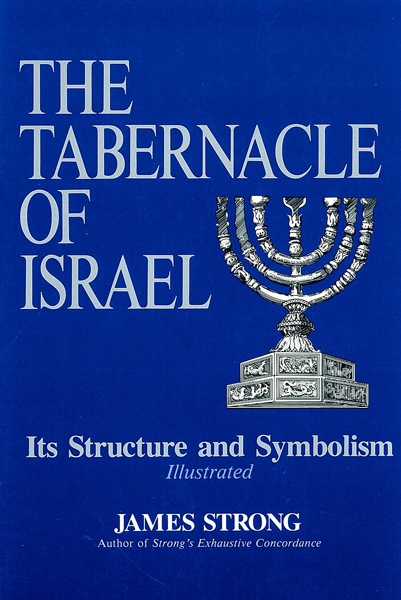
the-tabernacle-of-israelIf you have ever used the Strong’s Exhaustive Concordance Of The Bible, you are probably familiar with the work of Dr. James Strong. By the way, if you haven’t used this concordance, it is 1500+ pages listing every word in the Bible and their Hebrew or Greek word and definition. By contrast, Dr. Strong’s book on The Tabernacle Of Israel is only 170 pages, but it’s just as jam-packed with helpful information.

I was recently reading through the books of the Bible where God gives Moses highly specific instructions for the portable Tabernacle that is to be used for the Hebrews to conduct their worship services. This temporary Tabernacle not only served them while they sojourned in the wilderness for 40 years, but it became the pattern for the brick-and-mortar Temple that King Solomon built years later, and its pattern is referred to again in the New Testament book of Hebrews as being a pattern of the worship in heaven. Obviously this is a significant thing!

Dr. Strong uses his extraordinary skills to compile an easy-to-follow study of the design guidelines, building materials, and exact layout of this Tabernacle. He uses not only the biblical accounts, but also augments his work with extensive archeological discoveries.

Then to wrap up the book, Dr. Strong talks about the significance of the layout, colors, materials, and even mathematical significance of the Tabernacle’s design, showing how it still impacts the New Testament Christian to this day.

This is an academic book, but it is well worth your time if you would like to get a more in-depth knowledge of the Tabernacle which God commanded Moses to build.

On This Day (book review)

on-this-dayI truly believe George Santayana’s maxim about learning from history so that we don’t have to repeat its painful lessons. On This Day: 365 Amazing and Inspiring Stories about Saints, Martyrs and Heroes by Robert Morgan not only helped me learn history, but see that history through a biblical lens.

Each day of the year Robert Morgan will introduce you to someone who played a key part in church history. Some of the names will be well-known to you, and some of them will be brand new; some of the stories will make you smile, and some will break your heart. But all of the stories reinforced two major themes for me—(1) All of history is God’s story, and (2) God uses ordinary people to accomplish His extraordinary purpose.

Each day’s entry is short enough that you can easily add it to your daily schedule. If you are a teacher or a parent, these stories would be a great way to talk about current events in light of what God has already done in past history. Either by yourself or with others, you will gain a greater appreciation for God and the gifts He gives to men and women.

Archeological Study Bible (book review—part 2)

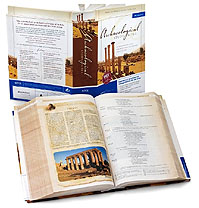
Archeological Study BibleI wrote a review on the Archeological Study Bible when I was roughly halfway through the Bible, but as I have now finished, I thought another review was in order.

Zondervan did an amazing job on this project! I love reading the Bible, and I love studying history, and this study Bible helped me to do both of those things without getting lost on too many “rabbit trails.” Some study Bibles I have read require a lot of page flipping to follow a thought or do a little research. But the ABS kept the historical articles, maps, and graphics close at hand to the biblical text I was reading, so page flipping was kept to a minimum.

At over 2300 pages, there is so much history that came alive as I read through the Bible. I also read through the Bible in chronological order, so I really felt like the ABS was helping me move seamlessly along the timeline of history.

Purchasing this Bible gives you access to an online gallery of many of the photos and other study materials. I also purchased the Kindle version of this Bible, to make searching for content much easier.

If you are looking for a fresh way to study the history surrounding the Scripture, I highly recommend the Archeological Study Bible to you.

9 More Quotes From “Today’s Moment Of Truth”

Today's Moment Of TruthToday’s Moment Of Truth by Lee Strobel and Mark Mittelberg is so chockfull of helpful truths that I couldn’t possibly have shared all of the passages I highlighted. Here are a few more quotes I wanted to share with you:

“Jesus said, ‘Do not believe Me unless I do the works of My father. But if I do them, even though you do not believe Me, believe the works, that you may know and understand that the Father is in Me, and I in the Father’ (John 10:37-38). And Jesus did the miraculous works He referred to. Even the Pharisee Nicodemus conceded, ‘Rabbi, we know that You are a teacher who has come from God. For no one could perform the signs You are doing if God were not with Him’ (John 3:2).

“We can see such confirmation repeatedly in the lives of Jesus and the biblical prophets. But it never happened in the life of Mohammad, the founder of Islam. Mohammad believed Jesus was a prophet who performed miracles, including raising the dead. Muslims also believe Moses and Elijah performed miracles.

“However, according to the Qur’an, when unbelievers challenged Mohammad to perform a miracle, he refused. He merely said they should read a chapter in the Qur’an (Surah 2:118; 3:181-184; 4:153; 6:8, nine, 37).

“So, unlike Jesus, Mohammad never did miracles. It wasn’t until approximately 150 to 200 years after Mohammad’s death that some of his followers begin to come up with stories of miracles and ascribe them to him.” —Lee Strobel & Mark Mittelberg 

“There are two major competing worldviews to Christian theism—atheism and pantheism…. The problem with atheism is that, with its denial of God’s existence, there’s a loss of any ultimate moral basis by which to declare something good or evil. So atheists are left without any objective standard by which to judge something as being right or wrong. Instead, they’re left with mere preferences. I have mine. You have yours. Rape and murder may not be my cup of tea, but they maybe somebody else’s. And who are we to say that what others choose to do is wrong? [We are] not saying an atheist cannot live a moral life; we are saying that an atheist cannot define what morality is. ….

“If everything is part of god [as in pantheism], then what we call evil is actually part of that god as well. … This is the very god, or ultimate reality, that Eastern philosophy says we’re supposed to strive to become more like and eventually to become one with. This presents a tremendous problem: we’re supposed to join with the very entity that contains evil within itself!” —Lee Strobel & Mark Mittelberg

“Revering Christ as Lord and being prepared to defend our faith are ongoing processes in the Christian life. … It’s interesting that in the original Greek, the word Peter used for answer is apologia [1 Peter 3:15], from which we get our word apologetics. It literally means we are to be ready to give a speech of defense—a well-thought-out account of why our faith in Christ makes sense. … With God’s help we can present information that will remove intellectual barriers, helping people move one step closer to faith in Christ.” —Lee Strobel & Mark Mittelberg

“In 2 Chronicles 7, God says if Israel’s sin reaches a certain level, He’ll destroy the temple, exile the people, and leave them in a state of judgment. Sure enough, this comes to pass. The prophet Daniel prays in Daniel 9 that God would have mercy. God gives him a revelation about the temple being rebuilt. Before this new temple is destroyed, Daniel is told, several things are going to take place, including the bringing of everlasting atonement—the final dealing with sin.

“The prophet Haggai says the glory of the second temple will be greater than the glory of the first temple. God will fill the second temple with His glory. Then the prophet Malachi says the Lord will come to His temple. He uses a Hebrew term that always refers to God Himself: the Lord—He will come to that temple.

“Keep in mind the second temple was destroyed in AD 70. Atonement for sin had to be made and the divine visitation had to take place before the second temple was destroyed.

“So … if it’s not Yeshua, the Jewish name for Jesus, then throw out the Bible, because nobody except Him accomplished what needed to be done prior to AD 70. What divine visitation did take place if not for Yeshua? When else did God visit the second temple in a personal way? How else was the glory of the second temple greater than the first?

“Either the Messiah came two thousand years ago, or the prophets were wrong and we can discard the Bible. But they weren’t wrong. Yeshua is the Messiah—or nobody is.” —Michael Brown, a messianic Jew

“Even nonreligious people live in the trust that their nonreligious beliefs are accurate and that they won’t someday face a thoroughly religious Maker who actually did issue a list of guidelines and requirements that they failed to pay attention to.” —Mark Mittelberg 

“There can be no doubt that archaeology has confirmed the substantial historicity of Old Testament tradition.” —William F. Albright

“The noted Roman historian Collin J. Hemer, in The Book Of Acts In The Setting Of Hellenistic History, shows how archaeology has confirmed not dozens, but hundreds and hundreds of details from the biblical account of the early church. Even small details have been corroborated, like which way the wind blows, how deep the water is a certain distance from the shore, what kind of disease a particular island had, the names of local officials, and so forth.

“Now, Acts was authored by the historian Luke. Hemer gives more than a dozen reasons why Acts had to have been written before AD 62, or about thirty years after Jesus’ crucifixion. Even earlier, Luke wrote the Gospel of Luke, which is substantially the same as the other biblical accounts of Jesus’ life.

“So here you have an impeccable historian, who has been proven right in hundreds of details and never proven wrong, and it’s written within one generation while eyewitnesses were still alive and could have disputed it if it were exaggerated or false.” —Norman Geisler 

“No Book of Mormon cities have ever been located, no Book of Mormon person, place, nation, or name has ever been found, no Book of Mormon artifacts, no Book of Mormon scriptures, no Book of Mormon inscriptions,…nothing which demonstrates the Book of Mormon is anything other than myth or invention has ever been found.” —John Ankernerg and John Weldon

“Jesus did exist, whether we like it or not.” —Bart Ehrman, an agnostic

If you would like to read the first set or quotes from this book, please click here.

You can check out my review of Today’s Moment Of Truth here.

And to read some of the other quotes I’ll be sharing from this book, be sure to follow me on Tumblr and Twitter.

The Gospels Side-By-Side (book review)

Gospels Side By SideI love reading. But hands-down, without a doubt, my favorite book to read is the Bible. So I’m always intrigued by any resource that can help me get more out of my time in the Scriptures. In The Gospels Side-By-Side by Rose Publishing, I found a goldmine.

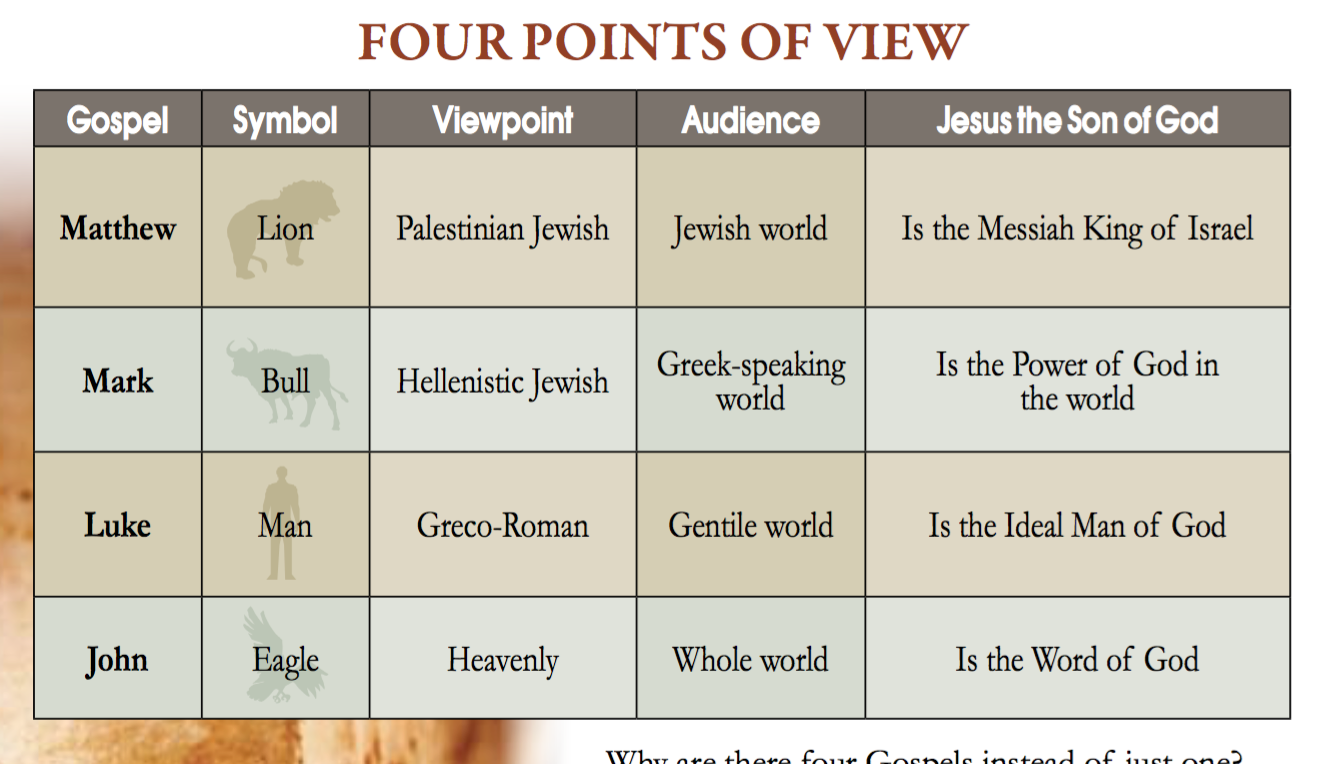
This short pamphlet is chockfull of graphics, charts, maps and historical background information  that helped me see the bigger picture of the story of Jesus that the Gospel writers were conveying to us. It begins with the unique perspective of each Gospel writer, and launches us deeper into the Bible from there.

In this book you will see things like:

  • The events of Christ’s life, and which Gospel tells particular events
  • The miracles of Jesus
  • The parables of Jesus
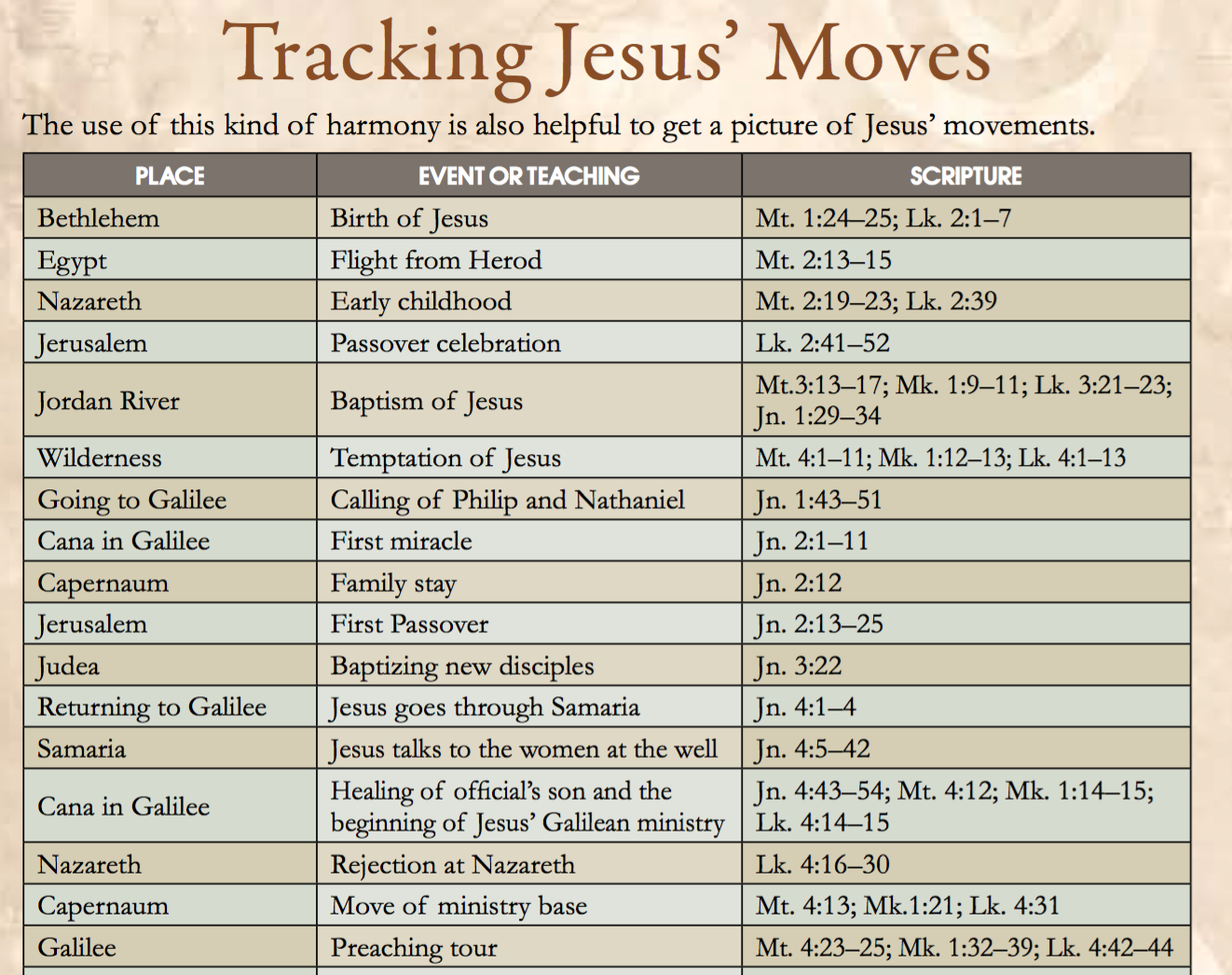
  • The chronological movements of Jesus
  • How Jesus celebrated Passovers during His public ministry
  • How these biblical biographies compare to other biographies of the era
  • Even the historical harmony of the Gospel message in the post-apostolic age

This should bring new life to any Bible student’s reading time! I highly recommend you check out not only this pamphlet, but many of the other resources available at Rose Publishing.

Here are a couple of screenshots from the book…


Screen Shot -Christ's movesScreenshot - gospel writers

10 More Quotes From “Answering Jihad”

Answering JihadNabeel Qureshi has given us a very timely book in Answering Jihad. He cuts through the confusion and misinformation to give us an informed, clear look at the teachings of Islam in regard to jihad.

I already shared one set of quotes from this book (which you can read here). Here is the next set of quotes I found eye-opening.

“At the risk of over-generalizing, this common understanding of Islam boils down to this: True obedience to Allah will result in Muslim dominance.”

“I have heard many people, frustrated by the increasing frequency and scale of Islamist terrorism, suggest that Islam needs a reformation. What they may not realize is that radical Islam is the Islamic reformation. This might sound shocking, but consider: Just as the Protestant Reformation was an attempt to raze centuries of Catholic tradition and return to the canonical texts, so radical Islam is an attempt to raze centuries of traditions of various schools of Islamic thought and return to the canonical texts of the Quran and Muhammad’s life.”

“Violent expressions of Islam adhere more consistently and more literally to the foundational texts of the Islamic faith, the Quran and the hadith. Peaceful versions of Islam must reinvent traditions from Muhammad’s life in order to be internally consistent, or they must ignore them outright.”

“Instead of fearing Muslim immigrants, we should embrace them and be the element of change we wish to see. … I suggest friendship rather than fear has a better way forward.”

“Christians believe Jesus is God, but the Quran is so opposed to this belief that it condemns Jesus worshipers to hell (5:72).”

“According to Jesus, God is our Father, yet the Quran very specifically denies that God is a father (112:1-4).”

“Islam roundly condemns worship of the Trinity (5:73), establishing in contrast its own core principle of Tawhid, the absolute oneness of God. Tawhid emphatically denies the Trinity, so much so that it is safe to say the doctrine of God in Islam is antithetical to the doctrine of God and Christianity. … The Trinity teaches that God is not a person, but three Persons: Father, Son, and Spirit. To assert that the God of Islam is the same person as the God of Christianity becomes almost nonsensical at this point, as the Christian God is tripersonal, two persons of Islam specifically denies in the Quran.”

“One can both love Muslims and insist that the God they worship is not the same as the Christian God.”

“In the Christian worldview, the exemplar for followers of God is no mere man but God Himself. Since God cares for those who are His enemies, even blessing them with rain, Christians ought to love their enemies and pray for those who persecute them, so that they can follow God’s example. This contrasts with the teaching of the Quran, where Allah tells Muslims, ‘O you who believe! Do not take my enemies or your enemies as allies, offering them your friendship when they do not believe’ (60:1). Of course, that is not to condemn the Quran, as it is counterintuitive to love one’s enemy. The Christian command may make little earthly sense, but it is the explicit teaching of Jesus.” 

“Even though Muslims are often raised with the teaching that ‘Islam is the religion of peace,’ when they study the texts for themselves, they are faced with the reality that Muhammad in the Quran calls for jihad. They will stand at the crossroads for only so long before they choose what path they will take—apostasy, apathy, or radicalization. As Muslims make that choice, it would benefit the whole world if they did not make it alone, or worse, with radical recruiters. We need to show compassion for Muslims and befriend them.”

Be sure to check out my review of Answering Jihad, and then pick up a copy for yourself.

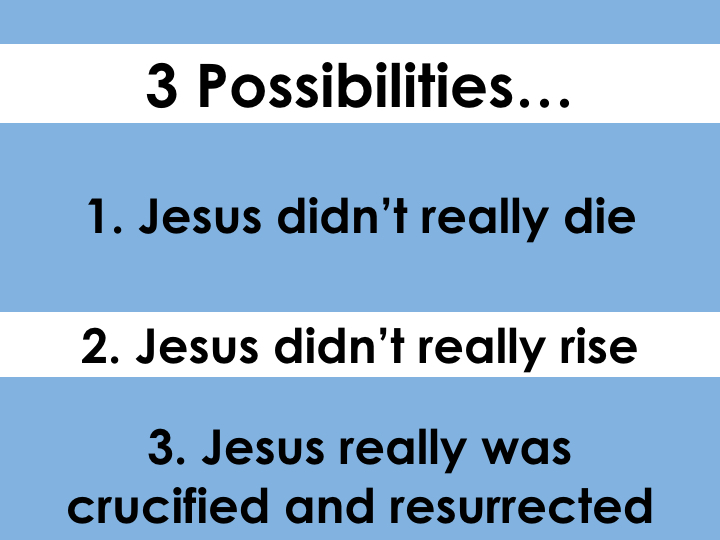
3 Possibilities For An Empty Tomb

3 possibilitiesLast week we explored the validity of the evidence for the accuracy of the biblical accounts for the life of Jesus (you can check that out here). You might be one who says, “Okay, I think Jesus was a good Man, but I think it’s a bit of a stretch to believe that anyone could be raised from the dead after three days.” I think that’s a reasonable thing to explore…

If the tomb where Jesus was placed is really empty, then there are only three possibilities for us to consider.

(1) Jesus didn’t really die.

  • It’s hard to imagine anyone could go through the intense torture Jesus did prior to His crucifixion unscathed.
  • The crucifixion process itself is one of the most gruesome forms of execution man has ever invented.
  • As a result, forensic science shows that Jesus most likely died of a heart attack. The mention in John 19:34 of the blood and water that flowed from Christ’s body is an indication of the cardiac distress His body experienced.
  • Men who were followers of Jesus handled His dead body, and undoubtedly would have checked for any signs life (John 19:38-40).
  • A Roman centurion reported to the Roman governor Pilate that Jesus had in fact died (Mark 15:43-45).
  • Extra-biblical historians, many of whom were unfriendly to Jews and Christians, reported Christ’s death as an historical fact.

(2) Jesus didn’t really rise.

  • Some have claimed that Christ’s followers “saw” Jesus only in a grief-induced hallucination. The problem is, Jesus appeared to individuals, small groups, and large groups multiple times and in multiple settings over the course of 40 days (1 Corinthians 15:3-8).
  • At least one of Christ’s closest followers said he wouldn’t be convinced by verbal testimony alone, but needed to touch Christ’s body for Himself (John 20:24-28).
  • The disciples were afraid and lacked any military training that would have allowed them to get past the trained soldiers guarding the tomb (Matthew 27:62-66; 28:11-15).

(3) Jesus really did die on a Cross and was raised back to life.

Arthur Conan Doyle’s Sherlock Holmes rightly said, “When you have eliminated the impossible, whatever remains, however improbable, must be the truth.”

Real-life cold-case detective J. Warner Wallace explains how detectives use abductive reasoning to examine all of the evidence and infer to the most reasonable explanation from that. As a result, Detective Wallace says about this third explanation:

“The last explanation (although it is a miraculous, supernatural explanation) suffers from the least number of liabilities and deficiencies. If we simply enter into the investigation without a pre-existing bias against anything supernatural, the final explanation accounts for all of the evidence without any difficulty. The final explanation accounts for the evidence most simply and most exhaustively, and it is logically consistent…. The final explanation is also superior to all other accounts (given that it does not suffer from all the problems we see with the other explanations).” —J. Warner Wallace, Alive

The truth is Jesus loved you so much that He had to die for you. He had to pay the penalty for your sins. And God loved His Son so much, that He raised Him back to life. Jesus can live in you now, and you can live with Him forever, if you will simply believe what He did for you on Calvary.

Jesus left an empty tomb behind to show how powerful His love and life is!