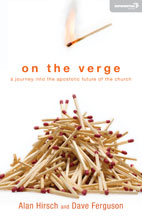
I’ve only been acquainted with the writings of Alan Hirsch for a short time, but—wow!—do his thoughts resonate with me. On The Verge, which was co-authored with Dave Ferguson, is a thought-provoking, paradigm-challenging look at the potential of the church.
Alan and Dave make it very clear right from the outset that the church in America is at a crucial make-or-break point. They point out that the church in Europe and Australia have already lost their effectiveness in their cultures, and if the church in America doesn’t wake up soon, it will soon head down that same sad path toward irrelevancy.
The good news is that everything the church needs to become the disciple-making, missionally-minded, Christ-centered force it should be is right within it. If churches are willing to realign themselves with the apostolic gene at their core, they are right on the verge of something great!
On The Verge focuses on how churches can imagine, shift, innovate, and then move. Both Alan and Dave are well-suited to inspire their readers to take up this challenge before it’s too late. Alan’s thoughts about the church are so far ahead of the curve, and Dave is not just a church theorist, but he’s successfully doing all of the practices shared in this book.
Pastors and church leaders especially need to read this book. But—as Alan and Dave point out—this is not an issue just for professional clergy. In fact, if the church in America is going to survive and thrive, everyone needs to be involved. This will be a challenging book to read, but well worth your time.
Many times in our nation’s history, our presidents have called for a time for our citizens to pause from their normal routine, and seek God’s face in prayer. America needs prayer! But instead of this call to prayer coming from Washington, D.C., this one comes from Austin, TX, as Governor Rick Perry is appealing for us to pray.
Part of his proclamation reads:
“Given the trials that beset our nation and world, from the global economic downturn to natural disasters, the lingering danger of terrorism and continued debasement of our culture, I believe it is time to convene the leaders from each of our United States in a day of prayer and fasting, like that described in the book of Joel. I urge all Americans of faith to pray on that day for the healing of our country, the rebuilding of our communities and the restoration of enduring values as our guiding force.”
Right on cue the “usual suspects” have filed a lawsuit to stop this, claiming its unconstitutionality. HA!! One of those leading the charge to stop this day of prayer and fasting even said, “Nothing fails like prayer. It’s the ultimate political cop-out.” [1] DOUBLE HA!!
I won’t presume to speak for anyone else, but I know from personal experience that prayer works! And I also know from my history books that our Founding Fathers would be appalled at those who continually try to paint them as atheists or deists.
The Founding Fathers were so emphatic in their belief that prayer was to be an integral part of daily public life and public service that by 1815 they had called the people to pray 1,400 times! [2]
If you’d care to peruse some of the national, presidential calls to prayer from our so-called atheist/deist presidents, check out the resources at Wall Builders to see quotes from George Washington, John Adams, James Madison, Abraham Lincoln, and others.
Despite the naysayers’ complaints, I’m answering Gov. Perry’s call to prayer and fasting on Saturday, August 6, 2011. I hope you will join me!
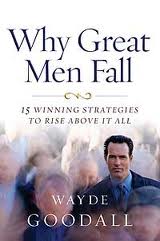
Dr. Wayde Goodall addresses a subject that I wish didn’t have to be addressed in Why Great Men Fall. Unfortunately, we’ve all seen it; perhaps you’ve even experienced it firsthand with someone close to you. How tragic it is when we see spiritual, business or political leaders lose their influence in the wake of a devastating fall.
Dr. Goodall pulls no punches as he identifies the things that seem to trip men up time and time again. He looks squarely at the root causes – not just the symptoms – and challenges men to do the same. We’re all susceptible to sin and failure. The Bible warns us: “So, if you think you are standing firm, be careful that you don’t fall!” (1 Corinthians 10:12).
These words from J.C. Ryle are a sober reminder:
“Great falls seldom happen to a saint, without a previous course of secretbacksliding. The church and the world are sometimes shocked by the sudden misconduct of some great professor of religion. Believers are discouraged and stumbled by it. The enemies of God rejoice and blaspheme. But if the truth could be known, the explanation of such cases would generally be found to have been private departure from God. People fall in private, long before they fall in public. The tree falls with a great crash, but the secret decay which accounts for it, is often not discovered until it is down on the ground.”
Why Great Men Fall is not a long book, nor does Dr. Goodall present complicated arguments. It’s a straightforward, easy-to-understand diagnosis of the most common things which trip up great men. I cannot encourage you strongly enough to not only read this book, but to read it with a friend who will hold you accountable.
Guys, your family, your church, and your community need you to STAND STRONG!
Psalm 22 is a prayer of raw desperation. I love how transparent David is with his emotions. Many people would hide this sort of thing: never daring to admit that they had doubts. But David freely admits that he’s frustrated by what is happening—or actually not happening—in his life.
I see three points of David’s desperation:
God, why don’t You answer me (vv. 1-2).
God, why don’t You defend my honor (vv. 6-8).
God, why don’t You rescue me (vv. 11-18).
Do you think David had a right to say these things against God? Remember Jesus said them too!
Do you think David was over-reacting when he said these things? Remember Jesus said them too!
David truly, deeply, felt these things. He truly believed that God wasn’t answering him, or defending him, or rescuing him. At least, AS HE THOUGHT GOD SHOULD!
But David says something VITAL after each of his points of desperation. It’s summed up in one conjunction each time…
Yet (vv. 3-5).
Yet (vv. 9-10).
But (vv. 19-21).
In all of these David recalls past history. David looks to the past to help him look to the future.
He BACKCASTS so that he can have a better FORECAST!
Looking back gives David assurance of God’s faithfulness. This assurance gives David hope for the future. So now look how he responds in his present desperate situation:
I will declare Your name (v. 22a)
I will praise You (v. 22b)
He calls others to join him in praise (v. 23)
He realizes that God has not hidden His face… but He has listened to his cry for help (v. 24)
He decides to praise God in spite of the temporary disappointments, giving all glory to God (vv. 25-31)
This is what is called a typio-prophetic Messianic psalm: what David experienced, Jesus would both experience and fulfill. So although Jesus cried out, “My God, My God, why have You forsaken Me,” He too could backcast to forecast and get the strength He needed to persevere…
Let us fix our eyes on Jesus, the Author and Perfecter of our faith, Who for the joy set before Him endured the Cross, scorning its shame, and sat down at the right hand of the throne of God. (Hebrews 12:2)
This is why I’m a big believer in journals: writing things down now will give you ammunition for future trials. Then when you are in those trials, you can backcast to get a better forecast of the hope for God’s deliverance. That will give you joy in the present, just like David. And just like Jesus!
Yesterday at Calvary Assembly of God, we continued our series called In It Not Of It, in which we are considering how to biblically engage our culture. In alarmingly high numbers, more and more people have thoughts that are positively unChristian toward those who call themselves Christian.
How do we undo this cultural bias? I think we have to be people of overwhelming grace.
Being grace-filled people is the only way I can see for us to unDo the unChristian mindset. To see how Jesus did this, see His interaction with a particular woman in John 8:2-11.
The Apostle Paul also gave us a good example of grace-filled living. In his letter to the Romans, Paul says he is indebted to all mankind, which makes him eager to preach the Gospel (Romans 1:14-15). I love Oswald Chambers’ commentary on these verses:
“Paul was overwhelmed with the sense of his indebtedness to Jesus Christ, and he spent his life to express it. The greatest inspiration in Paul’s life was his view of Jesus Christ as his spiritual creditor. Do I feel that same sense of indebtedness to Christ regardingEVERYunsaved soul? As a saint, my life’s spiritual honor and duty is to fulfill my debt to Christ in relation to these lost souls. Every tiny bit of my life that has value I owe to the redemption of Jesus Christ. Am I doing anything to enable Him to bring His redemption into evident reality in the lives of others? I will only be able to do this as the Spirit of God works into me this sense of indebtedness. …
“Quit praying about yourself and spend your life for the sake of others as the bondservant of Jesus. This is the true meaning of being broken bread and poured-out wineIN REAL LIFE.”
I am committed to living a life of overwhelming grace poured out for EVERY unsaved soul. And I am SO BLESSED to be able to pastor a church that feels and acts the same way! We’re not going to be passive reactionaries to the unChristian cultural bias … we’re going to liveIN REAL LIFE as proactive, grace-filled people, so that we can unDo unChristian!
Listen to the podcast of this post by clicking on the player below, and you can also subscribe on Apple or Spotify.
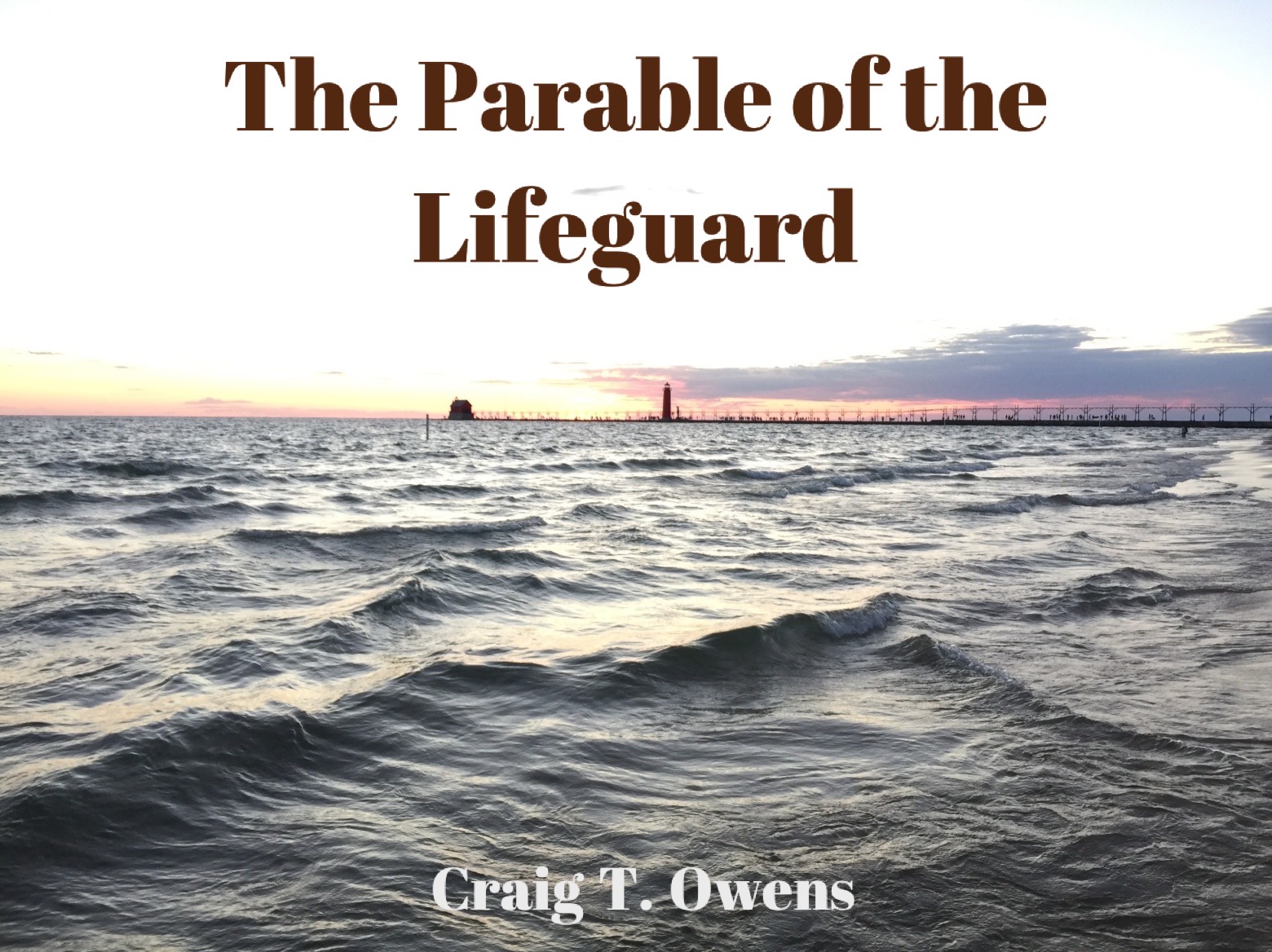
The waters looked choppy, the waves seemed so strong, and the rocks where the surf crashed on the shore seemed like cruel, dull, black teeth. And who knew what was under the surface of the water that I couldn’t see? Just the thought of swimming in those murky gray-green waters made my stomach twist into knots! But my friend announced, “I’m going for a swim.”
I tried to talk him out of it, “You’re joking, right? Do you realize how dangerous that is?”
“Relax,” my friend tried to reassure me with an unconvincing smile, “I know what I’m doing. I’ve swum in waters like these before, lots of times. I can handle it.” He headed off toward that pounding, angry sea with what seemed to be a swagger of confidence, but there was something in his eyes that seemed to be silently imploring me, “Please, save me!”
My friend had been going through a rough patch. His business which started out so well was now on the brink of closing in this crummy economy. Instead of realizing there was not much he could do in this downturn, my friend began to think that he was the failure. Recently at church—where turning from one’s sordid past is supposed to be celebrated—some scoundrels dredged up his past and used it as a cruel weapon against him. These mean-spirited, unforgiving people were jealous of my friend’s success in allowing Jesus to help him turn his life around. My friend did nothing wrong, but the spiteful words of these hypocritical church-attendees made him relive his forgiven past. Although he didn’t say it, I knew these hurtful words caused him to second-guess his value to God. And now, just last week, my friend happened to be in the wrong place at the wrong time and was charged by the police with a minor misdemeanor. No jail time nor fines were going to be imposed on him, just a few hours of community service. But yet again my friend’s self-esteem took a hit as he walked through this embarrassing process.
So now here he is feeling beat up, thinking to himself, “I’m a worthless failure,” walking toward something dangerous. I can’t understand why. Is he trying to escape reality? Does he really feel that poorly about himself? Doesn’t he see how much his wife and his friends love him? Does he feel so dead inside that this dangerous behavior makes him feel something again? Or does he feel too much and this dive into risky waters is merely an attempt to numb the pain, to self-medicate away the accusing thoughts?
While I was contemplating all of this, I didn’t realize what my friend had done. He had not only reached the shore and waded into the swirling waters, but he was now bobbing quite far from shore. All I could see was his head and shoulders. And his blank, lifeless, passionless face.
He seemed to be bobbing further and further away from me, and closer and closer to those vicious teeth-like rocks.
I ran down to the shore, as close to that angry ocean as I could get, and yelled. I don’t know whether he was ignoring me or couldn’t hear me, but he didn’t respond. He bobbed farther away and I yelled louder and waved my arms. I pointed at the rocks looming closer and closer with every swell of the sea. I screamed until my throat was raw. He drifted farther from me. He waved. And I heard just two distinguishable syllables above the pounding surf and howling wind, “…okay….”
“Okay?! Do you think it’s okay?! You’re killing yourself! It’s not okay!” My friend’s face changed. No longer was it a blank stare, there was emotion there now. I blinked my eyes against the spray of the ocean; I looked intently at my friend’s face. Then I saw it etched in the lines on his forehead. I saw it in his eyes. Panic!
I stared at him, my mind racing what to do. And then I heard it: two more syllables distinguishable above the roar. Two syllables that shot me into action: “Help me!”
I frantically looked around and spotted a tattered, faded orange life vest. It was really only half a life vest, but at least it still floated. It was tangled in seaweed and stained with muddy sand. I grabbed it, ran toward the shore, and flung the life vest toward my friend. It wasn’t a very good throw. Whether it was the wind or my weak attempt, the orange vest didn’t get very close to him. But even so, what was more disturbing was that my friend didn’t even make a movement toward it.
I got frustrated and stomped my foot in anger. Angry at my poor first attempt at a rescue, and angry that my friend made no attempt to reach out for what I had thrown him. I looked around again. I spotted an unattended lifeguard station 75 yards away. I raced to it and found an intact white life ring with a bright red cross emblazoned on it. I grabbed the life ring, sprinted back as close to my friend as I could get, and heaved the life ring as far as I could. It flew through the air. It seemed unimpeded by the wind, and landed within a few feet of my friend! The white and red ring stood out clearly in the dark waters!
I almost let out a shout of victory! Salvation for my friend was within arm’s reach of him! Yet my friend didn’t move. He wouldn’t reach for the help that was right there.
“Does your friend need help?” a strong voice behind me asked.
I wheeled around to see a tall, athletic man. A Lifeguard! “Yes! Yes, he needs help!”
The Lifeguard looked out across the churning waves and saw my friend getting closer and closer to those jagged rocks. It seemed like the next swell of the sea would dash him on those black sea-teeth. “Yes,” the Man said, “I can help him.”
My heart leaped and then seemed to stop in the very next heartbeat. The Lifeguard wasn’t moving. He just stood there looking at my friend.
“I can help him,” he repeated, “If he will simply ask for My help.”
“He did ask for help,” I argued. “I’ve been trying to help him.”
“No, he really doesn’t want help,” the Lifeguard said. “I can save him, but he has to ask Me to do it. And,” he added turning to look at me, “you have to leave.”
“What? He’s my friend! I’m not leaving him!”
“If he is your friend, you have to. You have to love him enough to leave him to Me. He’s been here before, and I have rescued him before. But as long as you’re here throwing flotation devices to him he will keep the rescue attempts alive without ever actually allowing himself to be rescued. The most loving thing you can do for your friend is leave him to Me.”
“How long?” I asked quietly, knowing in my heart that noble Lifeguard was right.
“That all depends on him,” the Lifeguard said. “As soon as you leave, that may get his attention and he may call out for My help immediately. Or he may wait until things get even more desperate. It’s his choice. I am the only One who can save him from this surf now. But he must call on Me before he is smashed on the rocks. I will not leave this spot. I will not sleep or become distracted. I will never leave your friend because I love him. I love him even more than you love him. So the sooner you leave him to Me, the sooner he can cry out for My help.”
I stood there weighing the Lifeguard’s words. I knew He was right, yet I didn’t want to leave my friend. And then He repeated, “The most loving thing you can do for your friend is leave him to Me.”
So I walked away.
That was last night. No word from the Lifeguard or my friend yet. I’m still waiting—and praying—that my friend will cry out for help to the only Lifeguard that can save him now.
I did the most loving thing I could have done. I left my friend to Him.
This is a weekly series with things I’m reading and pondering from Oswald Chambers. You can read the original seed thought here, or type “Thursdays With Oswald” in the search box to read more entries.
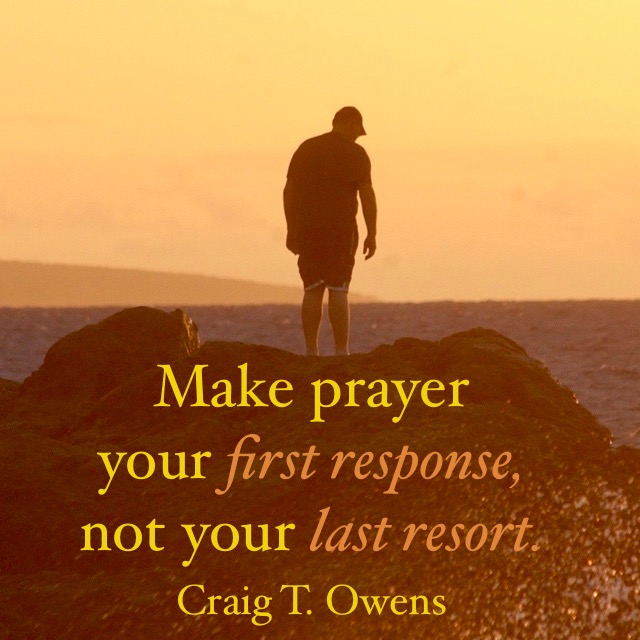
Pray Early, Pray Often
The only way to find God is through prayer. In the religious life of the Pharisee, prayer becomes a rite, a ceremony. In all religion based on sound principles prayer is an exercise, a ceremony, it is not blood or passion, not actual from the whole manhood. In such prayers there is magnificently beautiful diction which one needs to be in a calm, quiet state of mind to appreciate. The most beautiful prayers are prayers that are rites, but they are apt to be mere repetition, and not of the nature of Reality….
We do not pray at all until we are at out wits’ end. ‘Their soul fainted in them. Then they cried unto the Lord in their trouble’ (Psalm 107:5-6). … When a man is at his wits’ end it is not a cowardly thing to pray, it is the only way he can get in touch with Reality.
From Baffled To Fight Better
Why do I wait until I’m at my wits’ end to pray?
Why don’t I just pray early and pray often?
One more from Oswald Chambers:
“The man who prays ceases to be a fool, while the man who refuses to pray nourishes a blind life within his own brain and he will find no way out that road.”
I don’t want to be a fool, so I guess I need to pray more.
Have you ever asked yourself, “Why do I have to go through these difficulties?” Or maybe: “What is being accomplished through this pain and heartache?” I know I’ve asked these questions of myself—and of God—numerous times. I have come to three conclusions why Christians must go through hard times:
So that I know that I can trust God to help me pass this test.
So that God will be glorified in helping me pass this test.
So that others will know that God can help them pass their test.
These trials will show that your faith is genuine. It is being tested as fire tests and purifies gold—though your faith is far more precious than mere gold. So when[not “if”]your faith remains strong through many trials, it will bring you much praise and glory and honor on the day when Jesus Christ is revealed to the whole world. (1 Peter 1:7)
Others will see this and be encouraged to trust God too! Look what Thomas Paine wrote in The Crisis:
“I love the man that can smile in trouble, that can gather strength from distress, and grow brave by reflection. ‘Tis the business of little minds to shrink; but he whose heart is firm, and whose conscience approves his conduct, will pursue his principles unto death.”
So to help in your hard times, may this prayer from Charles Spurgeon encourage you:
The graces of the Christian character must not resemble the rainbow in its transitory beauty, but, on the contrary, must be established, settled, abiding.
May your character not be a writing upon the sand, but an inscription upon the rock!
May your faith be no baseless fabric of a vision.
But may it be built of material able to endure that awful fire which shall consume the wood, hay, and stubble of the hypocrite.
May you be rooted and grounded in love.
May your convictions be deep, your love real, your desires earnest.
May your whole life be so settled and established, that all the blasts of Hell, and all the storms of earth shall never be able to remove you.
Back in the pre-cell phone days, my parents had to develop another system to communicate with me. Many times it was simply an agreement before I left the house like, “Be home at 6 o’clock for dinner.” Or maybe something like, “Come inside when the streetlight turns on.”
I was usually pretty good about following through on this. But occasionally I would get so caught up in what I was doing with my friends that time just sort of got away from me. That’s when I would hear the distinct voice of my Mom calling me. Not on the phone, but with her hands cupped to her mouth, yelling, “Craaaiiig! Time to come home!”
If she was calling me, that meant I missed the deadline. I wasn’t where I was supposed to be.
Uh oh!
I spoke to them, but they did not listen; I called to them, but they did not answer. (Jeremiah 35:17)
God spoke to His people at first because they were close to Him. But then He had to call to them because they had gotten farther away from Him.
If God is calling me, perhaps it’s because I’ve gotten too far away. Maybe not on purpose. Maybe I just got caught up in what I was doing. Maybe I allowed something else to capture my attention.
I don’t want God to have to call me. I don’t even want to be close enough that He has to speak to me. I want to be so close to Him that just His whisper gets my undivided attention.
The main point I made yesterday is that we need to be aware of the messages the media is sending out, but not pre-occupied by those media messages.
Then we need to decide what part(s) of media we can receive, what part(s) we must reject, and what part(s) we can attempt to redeem.
The final point I would add for Christians who want to biblically engage their culture, is a point I made yesterday—
Instead of criticizing media … critique it. That means skillfully and artfully addressing it.
Instead of condoning media … challenge it by asking “Is this the best message” questions.
When deciding to receive, reject or redeem—or critique and challenge—use this filter from Philippians 4:8.
Does this pass the filter of being true … noble … right … pure … lovely … admirable … excellent … praiseworthy? If so, I can defintiely receive it. However, if it doesn’t meet ALL of these criteria, then I must decide if I can redeem it. If can’t redeem it, then it must be rejected.



 I’ve only been acquainted with the writings of Alan Hirsch for a short time, but—wow!—do his thoughts resonate with me. On The Verge, which was co-authored with Dave Ferguson, is a thought-provoking, paradigm-challenging look at the potential of the church.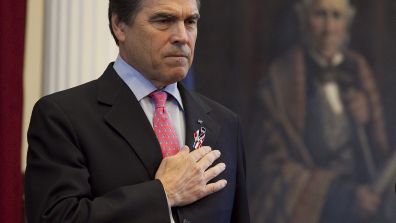






 Craig T. Owens