Neglect Of Our Gift

Pastors, I’m challenged by these words from Charles Bridges—

It is indeed a ‘neglect of the gift of God that is in us,’ to trifle either in the study or in the pulpit. God will bless our endeavors—not our idleness. Our Master, and our people for our Master’s sake, have a just claim to our best time and talents, our most matured thoughts, and most careful studies. To venture upon this infinite work of God with slender furniture, proves a guilty unconcern to our high responsibility.

Idleness is not just laziness (although it can be that too). Think of your car when it’s idling: perhaps it’s not in gear, or maybe your foot is still on the brake. In either case, the car is not moving along to its full potential.

It’s the same for us. If we’re not moving along to our full potential as pastors, we’re idling. And that, in the words of Charles Bridges, is a neglect of the gift of God that is in us.

How might you and I be idling?

  • Not spending enough time in prayer? If we’re not praying, we’re operating in our own strength, not in God’s strength.
  • Hunting for a text to share, instead of seeking the mind of the Lord and letting Him reveal the text we should share?
  • Taking on too many projects?
  • Not delegating?
  • Not organizing or planning ahead?
  • Not taking care of our physical health, so we’re battling staying alert or staying healthy?
  • Not spending enough time in personal devotions, so our “tank” is nearly dry?

Those are just a few thoughts that came to my mind. The Holy Spirit can reveal where you may be idling and possibly neglecting such a precious gift, if you will ask Him.

Let’s always be men and women who live up to the full potential of what God has called us to. I’m praying for you!


Thursdays With Oswald—Prayerful Havoc

This is a weekly series with things I’m reading and pondering from Oswald Chambers. You can read the original seed thought here, or type “Thursdays With Oswald” in the search box to read more entries.

Prayerful Havoc

     There are supernatural powers and agencies of which we are unconscious which, unless we are garrisoned by God, can play with us like toys whenever they choose. The New Testament continually impresses this on us. “For we wrestle not against flesh and blood, but against principalities, against powers, against the rules of the darkness of this world, against spiritual wickedness in high places” (Ephesians 6:12). All that is outside the realm of our consciousness. 

     If we only look for results in the earthlies when we pray, we are ill-taught. A praying saint performs far more havoc amongst the unseen forces of darkness than we have the slightest notion of. “The effectual fervent prayer of a righteous man availeth much.” We have not the remotest conception of what is done by our prayers, nor have we the right to try and examine and understand it; all we know is that Jesus Christ laid all stress on prayer. “And greater works than these shall he do; because I go unto My Father. And whatsoever ye shall ask in My name, that will I do [John 14:12].” 

From Biblical Psychology (emphasis added)

What an amazing reminder! Prayer is doing havoc in the spiritual realm, but much of that realm is outside of my conscious awareness.

Prayer accomplishes much. I may not see it in the earthlies each time I pray, but I must remain confident that my prayers are always heard and always make an impact.

Don’t let the lack of “visible” results keep you from praying. You may not see with your natural eyes what is happening when you do pray, but you can be assured that nothing at all will happen if you don’t pray!

Remember: “A praying saint performs far more havoc amongst the unseen forces of darkness than we have the slightest notion of.”

Sola

On October 31, 1517, a sea change in world history was begun. On that day Martin Luther nailed his 95 theses to the door of a church, challenging the traditions of organized religion which he believed had strayed far from the instructions in the Bible.

The Reformation had been launched.

I truly believe that we all must be students of history, partly because all of his story is His Story. When we study history, we can see how God is working out His Story.

Second, we also need to know our history because as George Santayana rightly said, “Those who do not learn from history are doomed to repeat it.”

A third reason to (re)learn the thoughts brought out during the Reformation is for doctrinal strength. It’s important to know not only what why believe but why we believe it. And there are some valuable doctrinal truths in the history of the Reformation.

Finally, I believe an important part of learning is unlearning. Sometimes we accept something just because it’s been handed down to us. That is in large part what Luther and other reformers were challenging, and calling us to unlearn tradition and relearn what the Bible has to say.

So beginning this Sunday we will be walking through the five Sola doctrinal statements the reformers taught. I am really looking forward to relearning and unlearning, and just outright learning the biblical truths of the five solas.

I hope you can join me at Calvary Assembly of God.

Here are the topics we covered in this series:

I Have Arrived!

Listen to the podcast of this post by clicking on the player below, and you can also subscribe on AppleSpotify, or Audible.

Do you remember when you got your first job that came with your name on a business card? What about when you were promoted to an office with your name on the door? Even better: what if you became so influential that your name is now on the stationary, or even becomes a part of the organization’s official name?!?

Look at you! You’ve arrived!

At least that’s how a lot of people see it. The more their name is plastered all over something, the more powerful they feel.

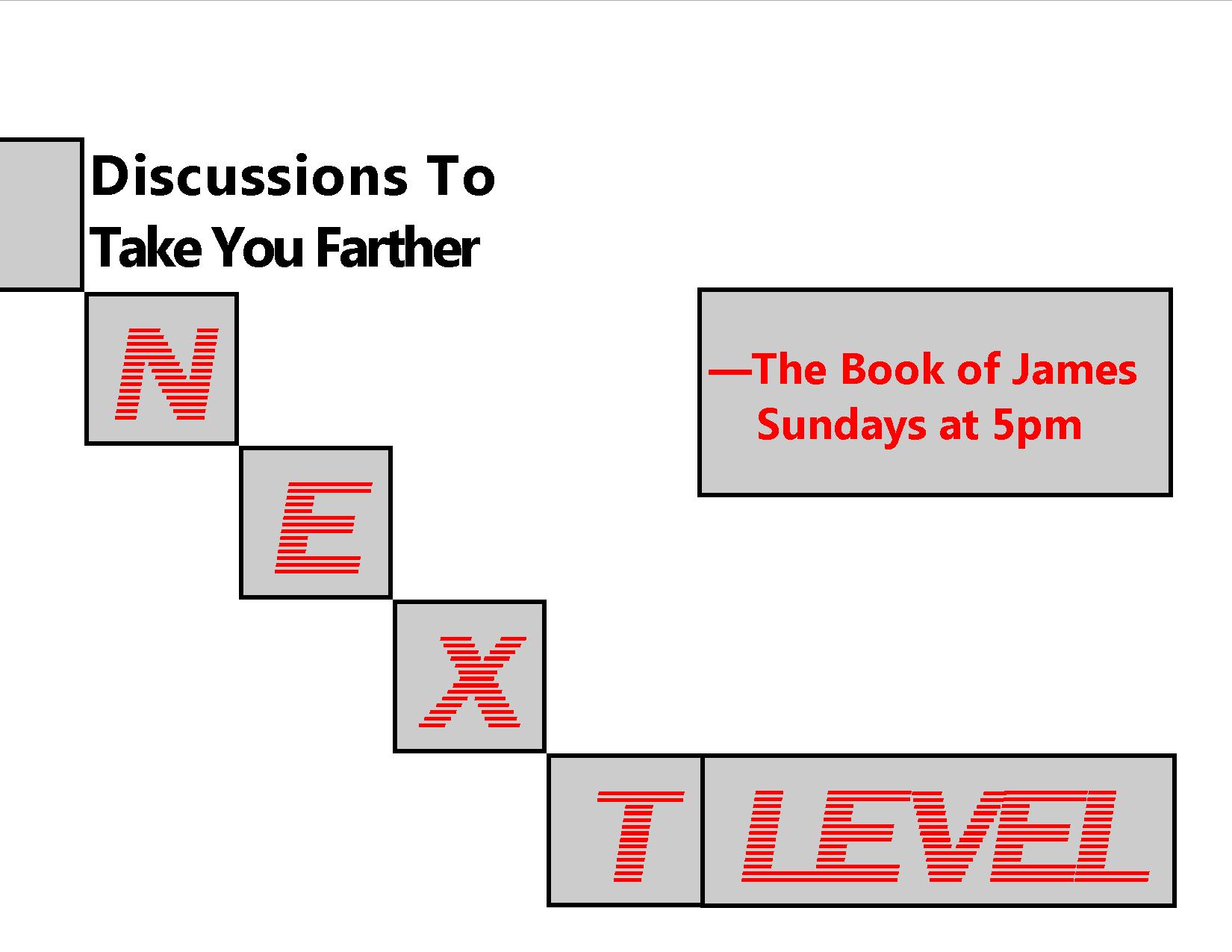
On Sunday evenings our Next Level Bible study is looking at the Book of James. In the first week of our study, we barely got past the first word: James. Who was this guy that has his name attached to a book in the Bible?

  • James was the half-brother of Jesus. In fact, since his name is listed first, he probably was the next oldest sibling after Jesus. Isn’t this the carpenter’s Son? Isn’t His mother’s name Mary, and aren’t His brothers James, Joseph, Simon and Judas? (Matthew 13:55).
  • Since Joseph (the earthly father of Jesus) is not mentioned again in the New Testament, many feel he died while Jesus was a teenager. As a result, after Jesus began His public ministry, the head-of-the-household responsibilities would have passed to James.
  • James met with Jesus one-on-one after His resurrection. Then [Jesus] appeared to James, then to all the apostles (1 Corinthians 15:7).
  • James was recognized by others as the leader of the Church in Jerusalem. James, Peter and John, those reputed to be pillars… (Galatians 2:9). He was also the chairman of the Council in Acts 15, and his decision was the final decision at that meeting.

From all appearances, it looks as though James has arrived! He’s got his name in all the right places, and is one of the most influential people in the early Church.

Yet look at how James referred to himself: James, a servant of God and of the Lord Jesus Christ (James 1:1).

If James thought he had “arrived,” it was only to arrive as a servant. His name may have been on the business card, or the church door, or the church letterhead. But he was only there to serve!

History gives us two other names for this great man: James The Just and Old Camel Knees (because of how much time he spent kneeling in prayer, and kneeling in service to Jesus and His followers).

If I ever “arrive,” I pray that like James I’ve only arrived to serve!

►► Would you please prayerfully consider supporting this ministry? My Patreon supporters get behind-the-scenes access to exclusive materials. ◀︎◀︎

Full

These are my unedited notes in my personal journal after reading…

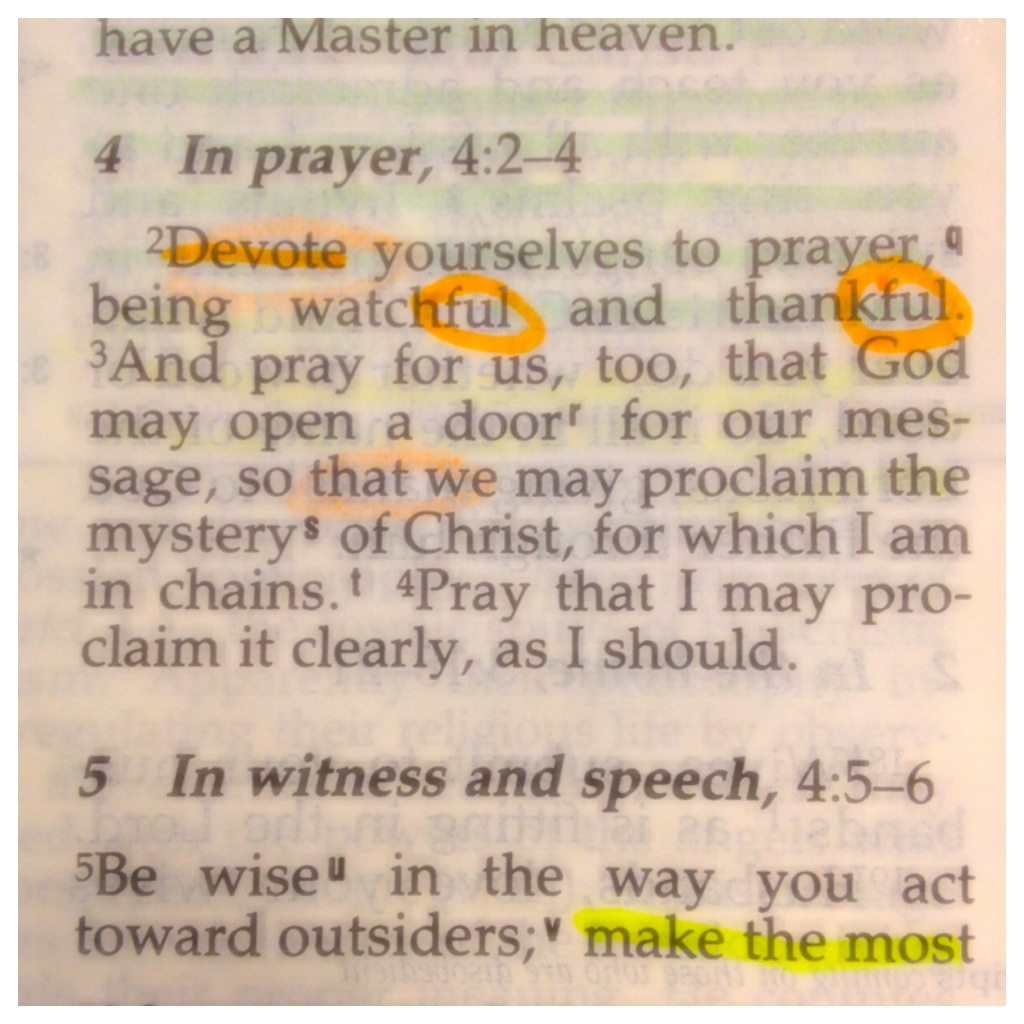
Devote yourselves to prayer, being watchful and thankful. And pray for us, too, that God may open a door for our message, so that we may proclaim the mystery of Christ, for which I am in chains. Pray that I may proclaim it clearly, as I should. Be wise in the way you act toward outsiders; make the most of every opportunity. Let your conversation be always full of grace, seasoned with salt, so that you may know how to answer everyone. (Colossians 4:2-6)

Wisdom = sophia → heavenly wisdom that is earthly practical. I use this wisdom to “let my conversation be always full of grace, seasoned with salt, so that I may know how to answer everyone” (v. 6).

Every opportunity … always full of grace … answer everyone

How do I stay “salty” and graceful?

Grace-full comes from being prayer-full, watch-full, and thank-full (v. 2). And these come from being devoted to those things. I am not grace-full by accident; it is the fruit of prayer-fullness, watch-fullness, and thank-fullness. I don’t accidentally pray, watch, and give thanks; those come because I am devoted to them.

Or rather, devoted to the One who is eternally grace-filled. The One who is supremely worthy to be worshiped, and adored, and served, and glorified. I worship Him and glorify Him best when I tell others about Him. After all, I don’t glorify and promote anything in which I’m only casually interested. My devotion to God spills out in my devotion to prayer, watching, and thanking. And this develops the fruit of grace-fullness, which draws others to God.

O Lord, may I be utterly FULL of You!

Preying Or Praying

Listen to the podcast of this post by clicking on the player below, and you can also subscribe on AppleSpotify, or Audible.

I wrapped up our Ticked Off! series yesterday with a sad story. It appears right in the opening pages of the Bible, and it’s a story where one man’s anger preys on him, like a lion on a wounded animal.

Now Able kept flocks, and Cain worked the soil. In the course of time Cain brought some of the fruits of the soil as an offering to the Lord. But Able brought fat portions from some of the firstborn of his flock. The Lord looked with favor on Able and his offering, but on Cain and his offering He did not look with favor. So Cain was very angry, and his face was downcast. 

Then the Lord said to Cain, “Why are you angry? Why is your face downcast?” If you do what is right, will you not be accepted? But if you do not do what is right, sin is crouching at your door; it desires to have you, but YOU MUST MASTER IT.” (Genesis 4:2-7, emphasis added)

We’re not sure exactly why “the Lord looked with favor on Able and his offering, but not on Cain and his offering.” Except we know that the Bible says obedience is better than sacrifice. In other words, it’s not what they brought as a sacrifice, but how they brought their sacrifice. Apparently, Able’s heart was worshipful and Cain’s was begrudging.

Able’s heart was focused on God; Cain’s heart was focused on himself. That’s why Cain became so selfishly angry, because he wasn’t getting what he thought he deserved!

This anger was setting up Cain for disaster. Anger itself is not a sin, but unaddressed anger can put us on a slippery slope toward sin!

Notice God told Cain, “YOU must master it.” God can’t help us until we stop trying to help ourselves. God wants to help us defeat the crouching lion of sin, but we have to ask him to help us.

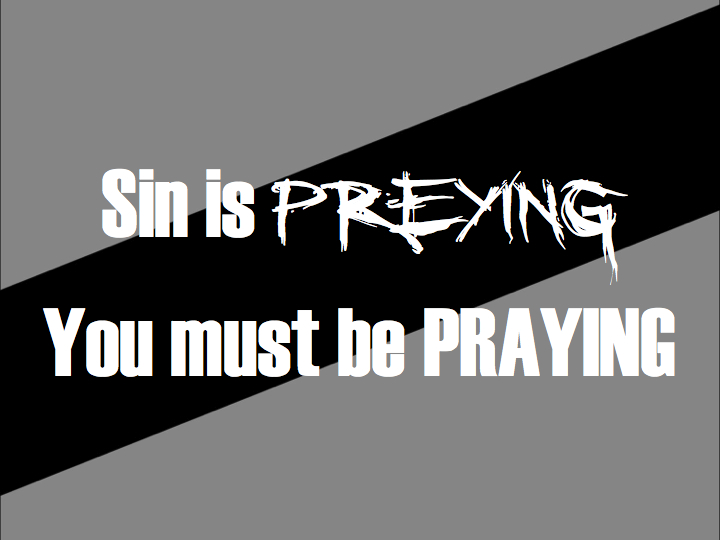
Sadly, there is no biblical record of Cain asking God for His help. Instead in the next verses Cain—so consumed by his anger that he cannot think straight—murders his own brother. Cain was preyed upon by anger because Cain didn’t pray about his anger.

The devil is looking for any opening at all where he can pounce on you. And Ephesians 4:26-27 says that unaddressed anger is just such an opening. Don’t let your anger defeat you as it did Cain. Confess your anger to God (Psalm 32:1-5) and let God help you defeat the crouching lion of anger.

Sin is PREYing. You must be PRAYing.

If you want to check out the other messages in our series called Ticked Off! you may click here.

►► Would you please prayerfully consider supporting this ministry? My Patreon supporters get behind-the-scenes access to exclusive materials. ◀︎◀︎

THAT Kind Of Church

Listen to the podcast of this post by clicking on the player below, and you can also subscribe on AppleSpotify, or Audible.

The book of James is written to a bunch of Christians. James knew his audience was the Church (see James 1:1).

Keep that firmly in mind when you read these words from James 3:2—

We all stumble in many ways. (New International Version)

For we all often stumble and fall and offend in many things. (Amplified Bible)

Indeed, we all make many mistakes. (New Living Translation)

I hate to break the news to you, but that means:

  • Your pastor’s not perfect
  • Your church isn’t perfect
  • You’re not perfect

You attend a church with people who stumble, and offend, and mess it up. Your pastor stumbles, and offends, and messes up. And so do you!

Isn’t that wonderful?! We all make mistakes! So we all need to give and receive the same forgiveness. We all need to extend grace to others and receive grace from others. You need to help others back up when they stumble, and you need to admit when you’ve stumbled, and let others help you get back up.

Abraham Kuyper wrote—

“Sin is a destroyer that creeps in everywhere. Therefore we must expect an imperfect church. In fact, we church members carry the sin of the world with us into the church, too often hiding it under a veil of spirituality. If the church were not the Bride of His Son, surely God would in holy wrath destroy not first of all the church, but rather first of all the wretched sin-ridden church.”

To these beautifully imperfect Christians, James concludes his teaching with these words:

Confess your sins to each other and pray for each other so that you may be healed. The prayer of a righteous man is powerful and effective. … My brothers, if one of you should wander from the truth and someone should bring him back, remember this: Whoever turns a sinner from the error of his way will save him from death and cover over a multitude of sins. (James 5:16, 19-20)

Yeah, let’s be THAT kind of church!!

►► Would you please prayerfully consider supporting this ministry? My Patreon supporters get behind-the-scenes access to exclusive materials. ◀︎◀︎

Next Level: James

It was a time of explosive growth. And with that growth came challenges, questions, problems, and opportunities! I’m talking about the Church in its earliest days in Jerusalem.

The Bible tells us that God prepares people in advance (Colossians 2:10) to do the works that He has equipped them to do. Into this environment of rapid growth and previously unheard-of opportunities stepped a man named James. His leadership and wisdom were just what the church needed then.

And his leadership and wisdom are just what the church needs now.

That’s why I’m leading our Next Level study group into an in-depth look at the book James wrote. The wisdom that is found in the Book of James has been called “the proverbs of the New Testament,” and we’ll be learning how to apply those proverbs to our lives and our church.

Please join me for this fascinating and informative study at 5pm each Sunday afternoon.

Thursdays With Oswald—Two Dangerous Extremes

This is a weekly series with things I’m reading and pondering from Oswald Chambers. You can read the original seed thought here, or type “Thursdays With Oswald” in the search box to read more entries.

Two Dangerous Extremes 

     Possibly the best illustration we can use is that of a lamp. A lamp unlighted will illustrate individuality; a lighted lamp will illustrate personality. The lighted lamp takes up no more room, but the light permeates far and wide; so the influence of personality goes beyond that of individuality. “You are the light of the world” said our Lord. Individually we do not take up much room, but our influence is far beyond our calculation. … 

     Individuality, then, is a smaller term than personality. Personality means that peculiar, incalculable being that is meant when you speak of “you” as distinct from everybody else. People say, “Oh, I cannot understand myself”; of course you can’t! “Nobody can understand me”; of course they don’t! There is only one Being Who understand us, and that is our Creator. … 

     There are possibilities below the threshold of our lives which no one but God knows…. God makes a man know that He is searching him. … 

     Introspection without God leads to insanity. … The people with no tendency to introspect are those described in the New Testament as “dead in trespasses and sins,” they are quite happy, quite contented, quite moral, all they want is easily within their grasp, everything is all right with them; but they are dead to the world to which Jesus Christ belongs, and it takes His voice and His Spirt to awaken them. …

     The path of peace is for us to hand ourselves over to God and ask Him to search us, not what we think we are, or what other people think we are, or what we persuade ourselves we are or would like to be, but, “Search me out, O God, explore me as I really am in Thy sight.” 

From Biblical Psychology

There are two dangerous extremes: Never looking within ourselves, and looking within ourselves without God’s help.

If you want your personality to shine far and wide, you must pray regularly as David did: “O Lord, You have searched me and You know me. Now search me again, and reveal to me anything that is offensive or displeasing to You, and then help me to change those things” (see Psalm 139:23-24).

Prayer For Israel

In addition to praying for the elections in the United States, the Bible also encourages us to pray for the peace of Israel—

Pray for peace in Jerusalem. May all who love this city prosper. O Jerusalem, may there be peace within your walls and prosperity in your palaces. For the sake of my family and friends, I will say, “May you have peace.” For the sake of the house of the Lord our God, I will seek what is best for you, O Jerusalem. (Psalm 122:6-9 NLT)

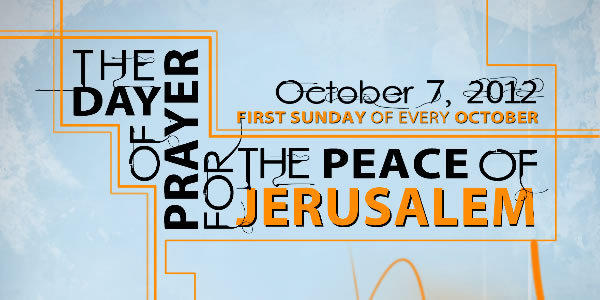
Sunday, October 7, has been designated as a day of prayer for Israel. We will be praying at Calvary Assembly of God, and I hope you and your church will join us in praying this very God-honoring prayer.

You can get more information and sign a prayer resolution by clicking here.