



“We do not get at God through Nature, as the poets say, we get at Nature through God when once we are rightly related to Him, and Nature becomes a sacrament of His Presence.” —Oswald Chambers
“We do not get at God through Nature, as the poets say, we get at Nature through God when once we are rightly related to Him, and Nature becomes a sacrament of His Presence.” —Oswald Chambers

Some good reading from today…
“Spread love everywhere you go; first of all in your house. Give love to your children, to your wife or husband, to a next door neighbor. Let no one ever come to you without leaving better and happier.” —Mother Teresa
“Many people don’t achieve their dream because it’s out of reach, but because they quit.” —John Maxwell
“Good things as well as bad, you know, are caught by a kind of infection. If you want to get warm you must stand near the fire: if you want to be wet you must get into the water. If you want joy, power, peace, eternal life, you must get close to, or even into, the thing that has them. They are not a sort of prize which God could, if He chose, just hand out to anyone. They are a great fountain of energy and beauty spurting up at the very centre of reality. If you are close to it, the spray will wet you: if you are not, you will remain dry.” —C.S. Lewis
Want some free music from U2? They released a new album free on iTunes.
More reasons to be skeptical of so-called “global warming” alarmists.
 When I say “Law” what sort of words come to your mind. Do you think of words like: restrictive? killjoy? barriers? hindrances? no fun?
If you’re a Christian, perhaps the same descriptive words come to mind when you think of biblical commandments. Maybe you think, “Don’t do that” (or for those of you who think in King James English: Thou shalt not).
But if we think of the law/commandments that way, that also means we have to think of the Lawgiver that way. In other words, God becomes a Policeman. He is closely watching to see who will break His laws so that He can dispense the appropriate punishment. After all, if the laws are a bunch of no-nos, then Someone has to be watching for law-breakers and handing out the penalties.
If that’s the case, what do we do with the Bible’s description of God that says “God is love”? If the Lawgiver is Love, how does that change our view of the laws themselves?
It must mean that God’s laws are an expression of His love. It must mean that His love is in the laws He has given us.
Join us this Sunday at Calvary Assembly of God as we talk about The Love In The Law. We’ll be working our way through the Ten Commandments, especially looking at God’s love that make each commandment a giant YES for our lives. Prayerfully, this series will completely change how we view God’s laws and commands.
If you have missed any of the messages in this series, check them out here:
 The “therefores” in Scripture always intrigue me. They are a signal that there is a natural conclusion to the words that just came before the therefore, so it’s important to look at both sides.
The prophet Hosea opens his book with these words: “…the land is guilty of the vilest adultery in departing from the Lord” (Hosea 1:2). The picture is painted of God’s people acting like a wife that has not only abandoned her husband, but turned to prostitution as well. So the list of things that follow God’s therefore are what we might expect—
Then here is what I find almost inconceivable: the very next word of the very next verse is therefore again, and God says things that, in my mind, are completely unexpected—
This kind of love is mind-blowingly incomprehensible to me. It is so unexpected, so lavish, so overwhelming! This is absolutely the last thing I would have expected God to say, and yet His love is furious and relentless and boundless!
How could I ever slight such a love?!
Some good reading from today…
“One doesn’t realize in early life that the price of freedom is loneliness. To be happy one must be tied.” —C.S. Lewis
“The Savior looks at sin through the glass of compassion; we often look upon it through the lens of Pharisaic pride.” —Charles Spurgeon
“The longer the answer is delayed and the more effectually you pray, the more important He becomes and the less important the answer becomes.” Read more from David Wilkerson in his post Power In Prayer.
I always enjoy Tim Elmore’s insights into the youth mindset. Check out his post 4 Meta-Beliefs of Generation iY.
I think it is quite comical that so-called serious scientist says that a certain level of CO2 gas is “symbolic,” and how they extrapolate data with no regard to past data nor any mitigating future events. All in all, “climate change” proponents are more philosopher than they are scientist.
 Taste And See is made up of 140 short, powerful thoughts from the pen of John Piper. As the title advises, these are thoughts that you will want to chew on slowly, enjoying the flavorful way Pastor Piper brings Scripture to bear on our daily lives.
Each day’s reading is short (perhaps three pages long at the most), so you would almost think you could speed-read right through it. But the limited number of words for each reading is in no way an indication of the weight of those words. Some devotionals convicted me; some brought me to tears; some made me angry; but all of them made me think differently.
If you are already familiar with John Piper’s books, Taste And See will be a welcome addition to your library. If you haven’t read anything from him yet, this book will be an excellent introduction to this wise and gentle pastor/author.
Taste And See is part of a verse of Scripture which says, “Taste and see that the Lord is good; blessed is the the one who takes refuge in Him” (Psalm 34:8). Indeed, the best part of Pastor Piper’s writings is that you will taste and see more clearly how good and worthy of praise God is!
Some good reading & watching from today…
“Christ calls us to take risks for kingdom purposes. Almost every message of American consumerism says the opposite: Maximize comfort and security—now, not in heaven. Christ does not join that chorus. To every timid saint, wavering on the edge of some dangerous gospel venture, He says, ‘Fear not, you can only be killed’ (Luke 12:4).” —John Piper
“Impotent dreaming will not do. The religious urge that is not followed by a corresponding act of the will in the direction of that urge is a waste of emotion.” —A.W. Tozer
“We dare not eat our seed. It’s our turn to give ourselves in mission. It’s our turn to take the baton and continue the tradition that began 100 years ago and with God’s help participate in the greatest evangelism the world has ever seen.” —Bill Leach
“Here’s what I know: If you don’t do it, it can’t come back to haunt you. That doesn’t just go for taking nude pictures of yourself. It also goes for speaking angry words, buying something you can’t afford, flirting with a married coworker, gossiping about a friend, drinking alcohol, using drugs, or letting a relationship go too far.” —Mark Atteberry
[VIDEO] The hilarious Ken Davis says, “Husbands: Do Not Answer This Question!”
Pastor Dave Barringer tells us to stop trying to be the perfect spouse!
I love this: Special Kneads Bakery creates jobs just for special needs adults.
Great reminders: 14 quotes from Mother Teresa on changing the world.
Believe it or not, there was a time when the US government promoted sexual purity & abstinence.
Good news: the Obama administration is dropping their appeals against some businesses after the Supreme Court ruling on Hobby Lobby’s case.
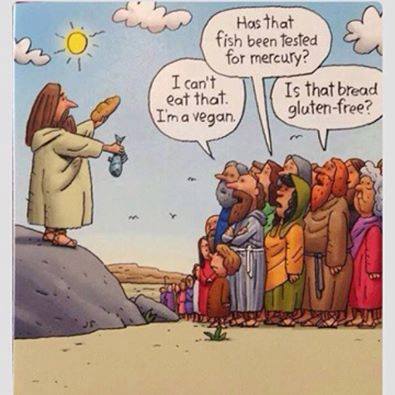 I think we have made the Church and Christianity something different than what the New Testament shows us. We’ve created far too many “things” which simply aren’t in the Bible. That’s not to say these things are wrong, but they may become stumbling blocks to us if we make secondary things the primary thing.
It might surprise you to know that the word church is only used twice by Jesus (Matthew 16:18, 18:17). He used a Greek word ekklesia, which meant a gathering of people called out from their homes into some public place. This word originally had more of a “town hall” meaning to it, but Jesus used this as a starting point to show us true church.
In Christ’s time the church for Him was…
Mobile—wherever He was, church was. Look at the extensive traveling He did. He held as many “church services” in people’s dining rooms as He did in the synagogues.
Messy—often as Jesus was speaking…
Meaningful—
Jesus asked His disciples Who they thought He was (see Matthew 16:13-18). The correct answer was Peter’s declaration, “You are the Christ, the Son of the living God!” Jesus said, “You’re right, and on that declaration I will build My church.”
Our job is to make Jesus known as the Christ, the Son of the living God (v. 16).
Christ’s job is to build His Church (v. 18).
He didn’t tell us to build a building and invite people to come on Sundays.
He didn’t tell us to start a Sunday School or a feeding program or a youth group.
There’s nothing wrong with these things, but they are not the main thing.
The main thing is Jesus being seen as the Son of the living God. Where we are gathered together in that confession and purpose—even just two or three of us—that’s where His church is (see Matthew 18:20).
We must be mobile, taking a meaningful message into people’s messy lives. That is true church.
 This is an amazing view of our universe, which puts me even more in awe of our Creator!
The heavens declare the glory of God; the skies proclaim the work of His hands. Day after day they pour forth speech; night after night they reveal knowledge. They have no speech, they use no words; no sound is heard from them. Yet their voice goes out into all the earth, their words to the ends of the world. (Psalm 19:1-4)
Some good reading & watching from this weekend…
“Our mistake is that we want God to send revival on our terms. We want to get the power of God into our hands, to call it to us that it may work for us in promoting and furthering our kind of Christianity. We want still to be in charge, guiding the chariot through the religious sky in the direction we want it to go, shouting ‘Glory to God,’ it is true, but modestly accepting a share of the glory for ourselves in a nice inoffensive sort of way. We are calling on God to send fire on our altars, completely ignoring the fact that they are our altars and not God’s.” —A.W. Tozer
Eric Metaxas has a great take on depression in his post Depression And Black Dog Beliefs.
[VIDEO] I’m not a huge Duck Dynasty fan, but this short quote from Phil Robertson is pure gold!
Paleontologists has found the bones of a huge dinosaur called Dreadnoughtus, that was bigger than a 737 airplane! It sounds a lot like what God described to Job.
Earth has a new address. Our home supercluster is called Laniakea (for the Hawaiian word meaning immeasurable heaven).
Whether you are a Detroit Tigers fan or not, this is a great story about teammates and friends.
“We are atheists in this matter of prayer compared to the early church. Many today look upon secret prayer as hard work and boring, so they do it only occasionally. Can you imagine a husband and wife living in the same house, hardly ever speaking and yet in public speaking as if they were intimate? So some treat our blessed Lord! Prayer, hidden secret prayer, is the mightiest weapon God has given His people; yet it is neglected, disdained, and seldom used.” —David Wilkerson
“Kindness is an inner desire that makes us want to do good things even if we do not get anything in return.” —Emmanuel Swedenborg
“Now if God be wisdom, as truth and Scripture testify, then a true philosopher is a lover of God.” —Augustine


 Craig T. Owens