10 Quotes From “The Psychology Of Redemption”

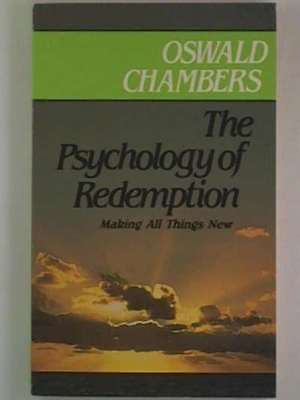
The Psychology Of RedemptionOswald Chambers always gives me a paradigm-expanding look at the Bible and Christianity. In The Psychology Of Redemption (see my book review here), he does so in a unique way, by joining psychology and theology. Here are just a few of the many, many passages I highlighted in this fascinating book.

“Christian Psychology is the study of a supernatural life made natural in our human life by the Redemption.” 

“Sin dwells in human nature, but the Bible makes it very clear that it is an abnormal thing, it has no right there, it does not belong to human nature as God designed it. Sin has come into human nature and perverted and twisted it. The Redemption of God through our Lord Jesus Christ delivers human nature from sin, and then begins the possibility of the manifestation of the life of Jesus in our mortal flesh. We are saved by God’s grace, but, thank God, we have something to do. We must take care to meet God’s supernatural work of grace by our human obedience.”

“The vital relationship which the Christian has to the Bible is not that he worships the letter, but that the Holy Spirit makes the words of the Bible spirit and life to him.” 

“The practicing is ours, not God’s. God regenerates us and puts us in contact with all His divine resources, but He cannot make us walk according to His will. If we will obey the Spirit of God and practice through our physical life all that God has put in our hearts by His Spirit, then when the crisis comes we shall find that we have not only God’s grace to stand by us but our own nature also, and the crisis is passed without any disaster, but exactly the opposite happens, the soul is build up into a stronger attitude towards God.”

“Jesus Christ sets the standard of God’s life in us. We have not to ask what good men have experienced, but to go direct to the Lord Jesus Christ and study His exhibition of the character of God’s normal man.”

“When Christ is formed in us, we are a satisfaction to our Lord and Master wherever He places us. The point of importance is to know that we are just exactly where He has engineered our circumstances. There is no ‘foreign field’ to our Lord.”

“Another evidence of new birth is that we see the rule of God. We no longer see the haphazard of chance for fate, but by the experience of new birth we are in able to see the rule of God everywhere. … We all see the common occurrences of our daily life, but who amongst us can perceive the arm of the Lord behind them? The saint recognizes in all the ordinary circumstances of his life the hand of God and the rule of God, and Jesus says we cannot do that unless we are born from above. … Nothing happens by chance to a saint, no matter how haphazard it seems. It is the order of God.”

“The Sermon on the Mount is a statement of the life we will live when the Holy Spirit is getting His way with us.”

“We have to nourish the life of the Son of God in us, and we do it by obedience, that is, by bringing our natural life into accordance with His life and transforming it into a spiritual life.”

“The curse of much modern religion is that it makes us so desperately interested in ourselves, so overweeningly concerned about our own whiteness. Jesus Christ was absolutely interested in God, and the saint is to be a simple, unaffected, natural human being in dwelt by the Spirit of God. If the saint is paying attention to the Source, Jesus Christ, out of him and unconsciously to him are flowing the rivers of living water wherever he goes (John 7:37-39). Men are either getting better or worse because of us.”

To read more Oswald Chambers quotes, you may want to subscribe to my blog. Every Thursday I publish a lengthy passage from the current Chambers book I am reading. You can subscribe by simply filling in your email address in the blank on the right side of the screen.

I also share Oswald Chambers quotes frequently on both Twitter and Tumblr.
F.B. Meyer On The Purpose Of Obstacles

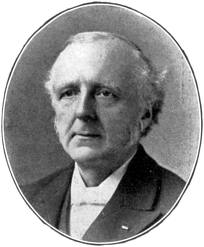
F.B. Meyer“God will make our obstacles serve His purposes. …

“The obstacles may be untruths told about us; a difficult occupation; ‘a thorn in the flesh’ (2 Corinthians 12:7); or our daily cross. And often we pray for their removal, for we tend to think that if only these were removed, we would live a more tender, pure, and holy life. … These are the very conditions we need for achievement, and they have been put in our lives as the means of producing the gifts and qualities for which we have been praying so long.

“We pray for patience for many years, and when something begins to test us beyond our endurance, we run from it. We try to avoid it, we see it as some insurmountable obstacle to our desired goal, and we believe that if it was removed, we would experience immediate deliverance and victory. This is not true! We would simply see the temptations to be impatient end. This would not be patience.

“The only way genuine patience can be acquired is by enduring the very trials that seem so unbearable today. Turn from your running and submit. … There is nothing in your life that distresses or concerns you that cannot become submissive to the highest purpose. Remember, they are God’s mountains. He puts them there for a reason, and we know He will never fail to keep His promise.” —F.B. Meyer

The Psychology Of Redemption (book review)

The Psychology Of RedemptionTo put psychology (a social science) and redemption (a decidedly theological term) together in the same title seems a bit paradoxical. Yet Oswald Chambers was such a well-rounded, well-studied man, that The Psychology Of Redemption seems like a perfect topic for him to tackle!

Chambers himself described these collection of thoughts this way: “Christian Psychology is based on the knowledge of the Lord Jesus Christ, not on the knowledge of ourselves. It is not the study of human nature analyzed and expounded, but the study of the new life that is born in us through the Redemption of our Lord, and the only standard of that new life is our Lord Himself.”

Chambers goes on to explain in this outstanding work that our true self was marred when Adam sinned. We were made by God, so we can best understand ourselves (psychology) when we are reestablished in our original relationship with God (redemption). So the topics that Oswald Chambers goes into in this book are some of the deepest topics of any I have read to-date in his books. But he does it in such an accessible way, that anyone from a novice, to a trained psychologist, to a trained theologian will find value in his thoughts.

Editor David Lambert further advises us: “To profit by this book demands concentrated thought, with Bible in hand, and with a humble eagerness to ‘act on the Word, instead of merely listening to it and deluding yourselves’ (James 1:22).’”

The Experiment That Spooked Einstein

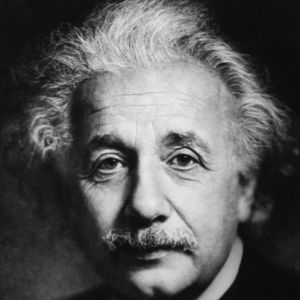
Albert EinsteinScience does not have all the answers (despite what many scientists want to tell us!). Here is a quantum physics mystery that has baffled the best and brightest minds. Even Albert Einstein called this “spooky actions at a distance.”

Watch this short video and see what you think…

A few other Einstein quotes come to mind:

“There are only two ways to live your life: one is as if everything is a miracle, the other is as though nothing is a miracle.”

“The important thing is not to stop questioning. Curiosity has its own reason for existing. One cannot help but be in awe when he contemplates the mysteries of eternity, of life, of the marvelous structure of reality. It is enough if one tries merely to comprehend a little of this mystery every day. Never lose a holy curiosity.”

“Even though the realms of religion and science in themselves are clearly marked off from each other, nevertheless there exist between the two strong reciprocal relationships and dependencies … The situation may be expressed by an image: science without religion is lame, religion without science is blind.”

“Every one who is seriously engaged in the pursuit of science becomes convinced the laws of nature manifest the existence of a spirit vastly superior to that of men, and one in the face of which we with our modest powers must feel humble.”

Spend This Week For God

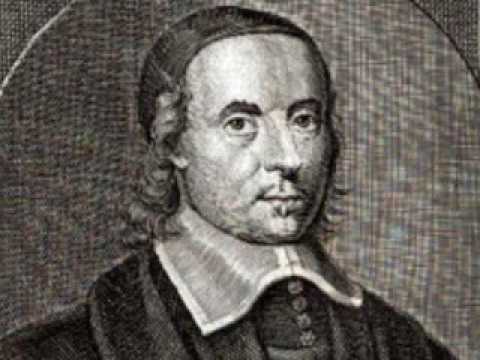
Joseph AlleineJoseph Alleine was very concerned about using every moment of his time to honor God. He wrote, “Give me a Christian that counts his time more precious than gold.” To help him do this, he built in reminders to his weekly journaling and prayer times.

At the beginning of each week he wrote in his journal—“Another week is now before us, let us spend this week for God.”

And each morning he wrote in his journal—“Let us live this one day well!”

The Bible instructs us to:

What can you do this week to make sure that you spend this week for God?

Charles Spurgeon – Resolve to Keep Close to Christ

Bentley's avatarThe Old Guys

Spurgeon

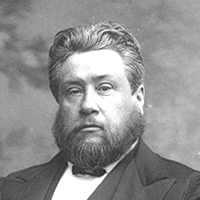
There is yet another stone wall which I will mention, namely, firmness of character. Our holy faith teaches a man to be decided in the cause of Christ, and to be resolute in getting rid of evil habits. “If thine eye offend thee”—wear a shade? No; “pluck it out.” “If thine arm offend thee”—hang it in a sling? No; “cut it off, and cast it from thee” True religion is very thorough in what it recommends. It says to us, “touch not the unclean thing.” But many persons are so idle in the ways of God that they have no mind of their own: evil companions tempt them, and they cannot say, “No.” They need a stone wall made up of noes. Here are the stones, “no, no, NO.” Dare to be singular. Resolve to keep close to Christ. Make a stern determination to permit nothing in your life…

View original post 88 more words

Poetry Saturday—Which Tent?

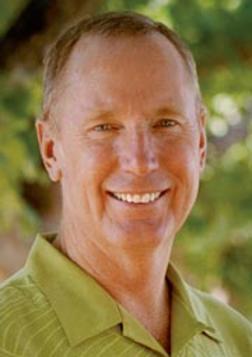
Max LucadoAll men live in one of two tents: Content or Discontent 
In which tent do you live? 

The contented man looks beyond his circumstances and sees a better day.

The discontented man looks at his circumstances and sees no other way.


The contented man understands the purpose for which he was born.
The discontented man looks at others’ success with a face that’s filled with scorn.

The contented man has surrendered to a purpose that demands his very best.

The discontented man selfishly hoards much, and grasping for more, will not rest.


The contented man has placed his values on things that will forever last. 
The discontented man has placed his values on things which will soon be passed. 

The contented man is anchored to clear goals and hardly is ever swayed. 

The discontented man has no goals that anchor him, and many times has become dismayed. 


The contented man counts his blessings, and names them one by one. 
The discontented man counts others’ blessings, and thinks he has no fun.

All men live in one of two tents: Content or Discontent. 
In which tent do you live? —Max Lucado

Chocolate Or Bullets?

Corrie ten Boom tells a short story with a profound lesson in her book I Stand At The Door And Knock.

Corrie ten Boom“At the beginning of World War II there was a young man in one of my clubs who had to serve in the military. He and his father ran a bakery and confectionery. He was a cheerful lad. One night he and the other soldiers were called to march out immediately. ‘War has broken out,’ they said. He didn’t believe it at all and thought, ‘It will be another of those boring maneuvers.’ So he quickly put some bars of chocolate in his ammunition bag instead of ammunition. That’s how he wanted to cheer up his comrades, because they had been called out in the middle of the night. In the fields he realized that it really was war. Fortunately his superiors never heard what he had done. There is a heavy battle on its way and maybe it has already started: the battle between Jesus Christ and the Antichrist. And each child of God will be at the frontline. Do we want to fight with chocolate or with bullets?”

If you would like to read other quotes from this book, check them out here.

Thursdays With Oswald—God’s Plan For Building Spiritual Muscles

Oswald ChambersThis is a weekly series with things I’m reading and pondering from Oswald Chambers. You can read the original seed thought here, or type “Thursdays With Oswald” in the search box to read more entries.

God’s Plan For Building Spiritual Muscles

     If a man has used his arm only for writing, and then becomes a blacksmith, he will groan for days with the tremendous pain in the deltoid muscle until by practice the time comes when there is no more pain because the muscle has become rightly adjusted to its new work. 

     The same thing happens spiritually, God begins to teach us how to walk and over and over again we begin to howl and complain. May God save us from the continual whine of spiritual babes—“Teach us the same things over and over again, don’t give us the revelations of God which are painful, give us the ‘simple gospel,’ what we have always believed, don’t tell us of things we have never thought about before, because that causes pain” (Hebrews 5:12). Of course it does. 

     Thank God there is a pain attached to being saved, the pain of growing until we come to maturity where we can do the work of a son or daughter of God. … 

     Look back over your life in grace, whether long or short, and ask yourself which are the days that have furthered you most in the knowledge of God—the days of sunshine and peace and prosperity? Never! The days of adversity, the days of strain, the days of sudden surprises, the days when the earthly house of this tabernacle was strained to its last limit, those are the days when you learned the meaning of this passion of “Go.” 

From The Philosophy Of Sin

The only way to build physical muscles is to push them beyond their comfort level.

The only way to build physical stamina is to run farther than you have run before.

The only way God can build our spiritual muscles—and our spiritual stamina—is to push us beyond our comfort zone, to challenge us to go deeper and farther than we’ve gone before. Don’t push Him away. God loves you too much to leave you where you are!

Dr. Martin Luther King On Abortion

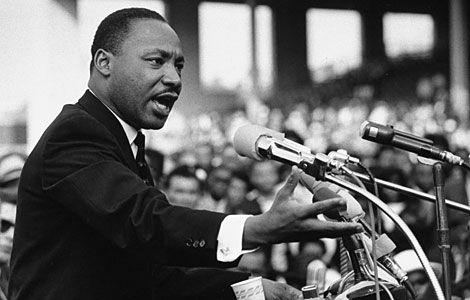
Dr. Martin Luther King Jr.In preparing for a recent book review, I re-read Dr. Martin Luther King’s amazing Letter From A Birmingham Jail. Dr. King was addressing some pastors who had advised him to slow down in his push to abolish segregation.

I believe there are some amazing parallels to what Dr. King wrote about abolishing segregation, and what many are writing and speaking about today in abolishing abortion.

Below are a few quotes from Dr. King’s Letter that I think are appropriate in the context of calling the church to not slow down in her push to abolish abortion. Just as Dr. King spoke up for the people whose voices were not being heard, we need to speak up for those children in the womb whose voices are not being heard.

I have taken the liberty to make a couple of changes in Dr. King’s original letter, to clarify how I believe he would have addressed the abortion issue. My changes are in brackets.

“You express a great deal of anxiety over our willingness to break laws. This is certainly a legitimate concern. Since [many] so diligently urge people to obey the Supreme Court’s decision of [1973 ‘legalizing’ abortion], at first glance it may seem rather paradoxical for us consciously to break laws. One may well ask: ‘How can you advocate breaking some laws and obeying others?’ The answer lies in the fact that there are two types of laws: just and unjust. I would be the first to advocate obeying just laws. One has not only a legal but a moral responsibility to obey just laws. Conversely, one has a moral responsibility to disobey unjust laws. I would agree with St. Augustine that ‘an unjust law is no law at all.’ 

“Now, what is the difference between the two? How does one determine whether a law is just or unjust? A just law is a man-made code that squares with the moral law or the law of God. An unjust law is a code that is out of harmony with the moral law. To put it in the terms of St. Thomas Aquinas: An unjust law is a human law that is not rooted in eternal law and natural law. Any law that uplifts human personality is just. Any law that degrades the human personality is unjust. All [abortion] statutes are unjust because [abortion kills an unborn] soul and [destroys a] personality. It gives the [abortionist and those who advocate for abortion] a false sense of superiority and the [aborted human baby] a false sense of inferiority. … 

“An unjust law is a code that a numerical or power majority group compels a minority group to obey but does not make binding on itself. This is a difference made legal. By the same token, a just law is a code that a majority compels a minority to follow and that it is willing to follow itself. This is sameness made it legal. Let me give another explanation. A law is unjust if it is inflicted on a minority that, as a result of being denied the right to [live], had no part in enacting or devising the law. …

“One who breaks an unjust law must do so openly, lovingly, and with a willingness to accept the penalty. I submit that an individual who breaks a law that conscience tells him is unjust, and who willingly accepts the penalty of imprisonment in order to arouse the conscience of the community over its injustice, is in reality expressing the highest respect for law.” 

“We will have to repent in this generation not merely for the [murder of innocent human beings] but for the appalling silence of the good people. Human progress never rolls in on wheels of inevitability; it comes through the tireless efforts of men willing to be co-workers with God, and without this hard work, time itself becomes an ally of the forces of social stagnation. We must use time creatively, in the knowledge that the time is always ripe to do right.” 

“So the question is not whether we will be extremists, but what kind of extremists we will be. Will we be extremist for hate or for love? Will we be extremist for the preservation of [abortion laws] or for the [saving] of [life]?” 

“I have heard many ministers say: ‘Those are social issues, with which the gospel has no real concern.’ And I have watched many churches commit themselves to a completely other-worldly religion which makes a strange, un-Biblical distinction between body and soul, between the sacred and secular.” 

“Yes, I see the church as the body of Christ. But, oh! how we have blemished and scarred that body through social neglect and through fear of being nonconformists.” 

“There was a time when the church was very powerful—in that time when the early Christians rejoiced at being deemed worthy to suffer for what they believed. In those days the church was not merely a thermometer that recorded the ideas and principles of popular opinion; it was a thermostat that transformed the mores of society. Whenever the early Christians entered a town, the people in power became disturbed and immediately sought to convict the Christians for being ‘disturbers of the peace’ and ‘outside agitators.’ But the Christians pressed on, in the conviction that they were ‘a colony of heaven,’ called to obey God rather than man. Small in number, they were big in commitment. They were too God intoxicated to be ‘astronomically intimidated.’ By their effort and example they brought an end to such ancient evils as infanticide and gladiatorial contests. 

“Things are different now. So often the contemporary church is a weak, ineffectual voice with an uncertain sound. So often it is an arch-defender of the status quo. Far from being disturbed by the presence of the church, the power structure of the average community is consoled by the church’s silent—and often even the vocal—sanction of things as they are.

“But the judgment of God is upon the church as never before. If today’s church does not recapture the sacrificial spirit of the early church, it will lose its authenticity, forfeit the loyalty of millions, and be dismissed as an irrelevant social club with no meaning for the [twenty-first] century.” 

“Over the past few years I have consistently preached that nonviolence demands that the means we use must be as pure as the ends we seek. I have tried to make clear that it is wrong to use immoral means to attain moral ends. But now I must affirm that it is just as wrong, or perhaps even more so, to use moral means to preserve immoral ends.”