C.S. Lewis On Christ’s Second Coming

“The idea which here shuts out the Second Coming from our minds, the idea of the world slowly ripening to perfection, is a myth, not a generalization from experience. And it is a myth which distracts us from our real duties and our real interest. It is our attempt to guess the plot of a drama in which we are the characters. But how can the characters in a play guess the plot? We are not the playwright, we are not the producer, we are not even the audience. We are on the stage. …

“The doctrine of the Second Coming teaches us that we do not and cannot know when the world drama will end. The curtain may be rung down at any moment: say, before you have finished reading this paragraph. This seems to some people intolerably frustrating. So many things would be interrupted. Perhaps you were going to get married next month, perhaps you were going to get a raise next week: you may be on the verge of a great scientific discovery; you may be maturing great social and political reforms. Surely no good and wise God would be so very unreasonable as to cut all this short? Not now, of all moments!

“But we think thus because we keep on assuming that we know the play. We do not know the play. We do not even know whether we are in Act I or Act V. We do not know who are the major and who the minor characters. The Author knows.” —C.S. Lewis, in The World’s Last Night

This is a great portrayal of a conversation between J.R.R. Tolkien and C.S. Lewis on the value of myths…

A “Hallelujah!” Lifestyle

David shows us a picture of a man who made prayer the cornerstone of all he did. He’s quick to cry, “Help!” when he’s in trouble, and he doesn’t hold back when he’s crying out to God.

But he also shows us that prayer isn’t just for times of trouble. Prayer should be an ongoing conversation with God so that we can get to know His heart. God knows what’s going to happen (Isaiah 46:10), and He wants us to ask Him to make things clear to us (Jeremiah 33:3).

In Psalm 145, David challenges us to lift up our praise to God, as well as our prayers. This psalm of praise teaches us that we don’t have to only praise God for what He’s done—although that’s a great thing to do—but we can also praise God simply for Who He is!

In this psalm, David says God is…

…worthy of praise (v. 3a) 
…great beyond comprehension (v. 3b) 
…majestic (v. 5)
…awesome (v. 6)
…abundantly good (v. 7)
…gracious, compassionate, slow to anger, rich in love (v. 8)
…good to all (v. 9)
…mighty (v. 11)
…everlasting (v. 13)
…strong (v. 14)
…righteous and loving (v. 17) 
…near to us (v. 18)
…fulfilling (v. 19)
…watchful (v. 20)

Let’s not be known just for our petitions, but for our praise.

Let’s not be known just for our “Help!” but for our “Hallelujah!

Please join me in our continuing look at the Prayers Of David.

8 More Quotes From “Whisper”

In Whisper, Mark Batterson gives us seven love languages which God uses to speak to us (check out my review of Whisper here). Mark always does a masterful job of weaving together Scripture, quotes from other authors, historical and his own personal accounts. Here are some of the quotes he shared from others.

“The voice of the Spirit is as gentle as a zephyr. So gentle that unless you are living in a perfect communion with God, you never hear it.” —Oswald Chambers

“The sole cause of man’s unhappiness is that he does not know how to stay quietly in his room.” —Blaise Pascal

“The best translation of the Hebrew in Genesis 1 was not ‘and God said’ but ‘and God sang.’” —Leonard Bernstein

“How much happier you would be, how much more of you there would be, if the hammer of a higher God could smash your small cosmos!” —G.K. Chesterton

“Vocatus atque non vacates, Deus aderit. Bidden or not bidden, God is here.” —Desiderius Erasmus

“A Bible that’s falling apart usually belongs to someone who isn’t.” —Charles Spurgeon

“The Christian shoemaker does his duty not by putting little crosses on the shoes, but by making good shoes, because God is interested in good craftsmanship.” —Martin Luther

“No crooked table legs or ill-fitting drawers ever, I dare swear, came out of the Carpenter’s shop at Nazareth.” —Dorothy Sayers

For more quotes from Whisper, click here.

A Leader’s Appropriate Anger

…he became very angry (1 Samuel 11:6).

Sometimes we think of godly leaders as always being cool, calm, and collected. But to remain calm when the situation calls for a vigorous response is unbecoming of the title of “godly” leader, and may even be a sin.

The Israelite city of Jabesh-Gilead had been surrounded by the forces of King Nahash. His terms of surrender to these Israelites was unduly harsh: “I will gouge out the right eye of every one of you as a disgrace to all Israel! (v. 2).

When this message got to King Saul, “the Spirit of God came powerfully upon Saul, and he became very angry.” He sent messengers to all of Israel demanding all the able-bodied men to come out to join his army in counter-attacking King Nahash.

Notice that what prompted Saul’s anger was God’s Spirit coming upon him. Since Israel was about to be disgraced, Saul had to act! Also notice this: “And the Lord made the people afraid of Saul’s anger, and all of them came out together as one” (v. 7).

The opposite of love is not hate; the opposite of love is apathy. God expresses strong emotions without sinning. When the Spirit of God made Saul angry at the oppression and potential disgrace of His people, Saul acted. To not act—to shrug his shoulders in apathy and say, “That’s not my problem”—would have been a sin.

Sometimes Christians want to suppress a strong feeling of hate or anger. But when God hates something or is angry at something, we would do well to pay attention to that and feel and act as God would have us act. The Bible tells us not to sin in our anger, but it never tells us not to be angry. 

Anything that is keeping someone from God’s love or God’s presence should arouse our righteous anger to do righteous things.

A mark of a godly leader is one who knows the right things to hate.

This is part 19 in my series on godly leadership. You can check out all of my posts on this topic by clicking here.

Thursdays With Oswald—An Aroma From God’s Garden

Oswald ChambersThis is a weekly series with things I’m reading and pondering from Oswald Chambers. You can read the original seed thought here, or type “Thursdays With Oswald” in the search box to read more entries.

An Aroma From God’s Garden

     [Oswald Chambers is speaking about how the prodigal son returned home.] 

     Did the father send any message to the far country after the younger boy? There is no record of any message being sent. What did the younger boy have to do? He had to do exactly what is recorded in Hosea long before that picture was painted by Our Lord—he had to return. Drawn by God? It does not say so. Read the fourteenth chapter of Hosea: “I will heal their backsliding” [Hosea 14:4]; but the backslider has to get up first, leave the pigs and what pigs eat, and go back to where he came from. Help granted him? None whatever. Messages from the home country? Not one. Tender touches of God’s grace on his life? No. Can you picture that prodigal son returning, a degraded, sunken, sin-stained man, going back in all the cruel, bald daylight? Oh, it is a hard way to go back out of the backslider’s hell; a hard, hard way! Every step of it is cruel, every moment is torture. But what happened? Before that younger son had gotten very far, the father saw him “and ran to his son, threw his arms around him and kissed him”!

     Worker for God among backslidden souls, remember God’s way, put the sting, if you can, into the backslider’s soul that he may get up and come back to God, and what has he to do? Take with him words and say, “Forgive all my sins and receive me graciously” [Hosea 14:2]. Did the prodigal son take with him words? He did, he rehearsed them over and over again where he was amongst the pigs—“I will say to my father this and that,” he had it all by heart. Does Hosea say the same? He does: “My sins have been my downfall” [Hosea 14:1]. … 

     I just said now that no message was sent to the far country; God sends none, but, worker for God, will you be a message from the Father? Will you so bathe your life in the atmosphere of prayer that when you come in contact with a backslidden soul, it will awaken a remembrance of the Father, awaken a remembrance of what that soul once was? Will you let your life be like a bunch of flowers from the Father’s home garden, just awakening for one moment a remembrance of what life once was, and then pass on, and pray and watch, and you will be mightily rewarded by God when you see that poor backslidden soul get up and go back to God, taking with him words and saying, “My sins have been my downfall.” 

From Workmen Of God

What about you, my friend? Do you love the prodigals enough to be the Father’s message from home to them?

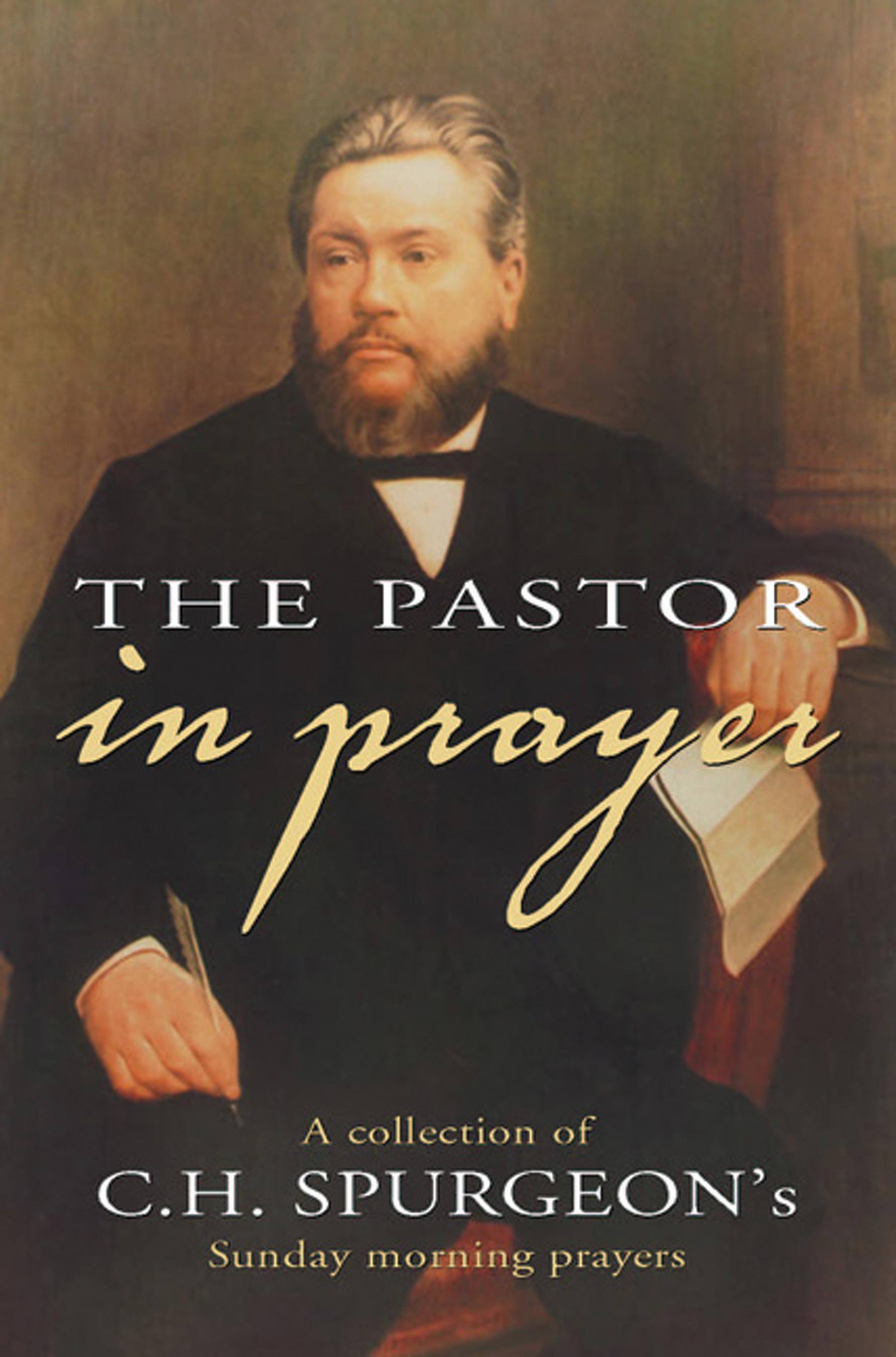
7 Quotes From “The Pastor In Prayer”

In The Pastor In Prayer we discover that Charles Spurgeon is not only the prince of preachers, but the prince of pray-ers as well. Check out my review of this fabulous book by clicking here.

“Thy grace must give us even to know our need of grace. We are not willing to confess our own sinfulness until Thou dost show it to us. Though it stares us in the face our pride denies it, and our own inability is unperceived by us. We steal Thy power and call it our own till Thou dost compel us to say that we have no strength in ourselves.”

“Thy grace has almost out-graced itself, Thy love has reached its height love to rebels; so to love that even Thy Son could not be spared. O God, we are afflicted in our hearts to think we do not love Thee more after such love as this.”

“O God, we beseech Thee bring men away from all their false trusts to rest in the great sacrifice of Thy dear Son.”

“Oh that we might live so near to the great Shepherd as to be familiar with His voice, to know its tones, that so a stranger we may not follow, for we know not the voice of strangers.”

“Thou art good when Thou givest, and Thou art good when Thou takest away. Thou art good when the night gathers heavy about us. Thou art good when the sun shineth and gladdeneth our pathway. Thou art always good and doest good, and blessed be the name of the Lord from the rising of the sun unto the going down thereof, and through the night watches let His praise be still celebrated.”

“And truly since we have received so many mercies at Thy hand, we do feel that Thou wilt never forsake us in any darkness which may be in our path in the future. Thou hast done too much for us to desert us now. We have cost Thee so much—Oh wondrous price that Thou hast paid for us—and Thou hast spent so much of wise thought, and gracious act upon us, that we are persuaded Thou wilt go through with the work which Thy wisdom has undertaken. But give us faith to believe this when the stormy times come, let us not doubt.”

“Lord, while we work for Thee, always keep us sitting at the feet of Jesus. Let our faith never wander away from the simplicity of its confidence in Him. Let our motive never be anything but His glory; may our hearts be taken up with His love, and our thoughts perpetually engaged about His person.”

The Pastor In Prayer (book review)

Charles Spurgeon was called (and rightly so!) “the prince of preachers.” I think in large part this was because Spurgeon’s sermons were so steeped in God’s Word. But Spurgeon was also renown for his moving prayers, and again I think this is due to the biblical content that was used to weave these prayers. We get a small sample of these prayers in The Pastor In Prayer.

In D.L. Moody’s first sermon at his church in Chicago, he recounted his time visiting Spurgeon’s church. The editor of The Pastor In Prayer summarizes Moody’s words this way: “What impressed him most was not the praise, though he thought he had never heard such grand congregational singing; it was not Mr. Spurgeon’s exposition, fine though it was, nor even his sermon; it was his prayer. He seemed to have such access to God that he could bring down the power from heaven; that was the great secret of his influence and his success.”

Truly prayer is the fuel for any meaningful church activity. We are blessed to have access to these moving, fueling prayers which Spurgeon prayed over his congregation every week. We can hear echoes of his sermon, challenges to draw closer to God, calls to repentance, pleas for revival, blessings on his congregation and on his country.

Truly Spurgeon’s prayers are as memorable and moving as are his sermons!

Pastor, I urge you to read this book and follow Spurgeon’s monumental example in praying for your congregation and in calling them to bolster their own prayer life. But even if you are not in the pastorate, all Christians can be inspired to greater depth in prayer by Mr. Spurgeon’s moving, passionate prayers.

A Christian Should Be Neither Boasting Nor Belittling

“Boasting is an evidence that we are pleased with self; belittling, that we are disappointed in it. Either way we reveal that we have a high opinion of ourselves.

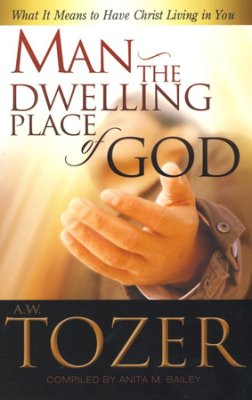
The victorious Christian neither exalts nor downgrades himself. His interests have shifted from self to Christ. What he is or is not no longer concerns him. He believes that he has been crucified with Christ and he is not willing either to praise or deprecate such a man.” —A.W. Tozer, in Man—The Dwelling Place Of God (emphasis mine)

Rediscovering Some Mighty Precious Values

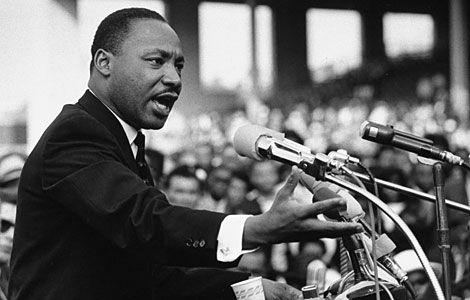
“The trouble isn’t so much that we don’t know enough, but it’s as if we aren’t good enough. The trouble isn’t so much that our scientific genius lags behind, but our moral genius lags behind. The great problem facing modern man is that, that the means by which we live have outdistanced the spiritual ends for which we live. So we find ourselves caught in a messed-up world. The problem is with man himself and man’s soul. …

“The great danger facing us today is not so much the atomic bomb that was created by physical science. Not so much that atomic bomb that you can put in an aeroplane and drop on the heads of hundreds and thousands of people—as dangerous as that is. But the real danger confronting civilization today is that atomic bomb which lies in the hearts and souls of men, capable of exploding into the vilest of hate and into the most damaging selfishness—that’s the atomic bomb that we’ve got to fear today. …

“My friends, all I’m trying to say is that if we are to go forward today, we’ve got to go back and rediscover some mighty precious values that we’ve left behind.” —Martin Luther King, Jr. (February 28, 1954)

Saturday In The Psalms—Sing A New Song

Oh, sing to the Lord a new song! (Psalm 96:1).

God is so great—His worth is infinite—that He deserves a new song every time we sing to Him. There is no need to copy or duplicate something done before, but we should continually find new ways to praise Him.

Look at the angels encircling God’s throne. They continually sing out, “Holy! Holy! Holy!” as they perceive new dimensions of God’s grace, love, faithfulness, beauty, and majesty.

“Oh! Did you see that? Holy!” 

“Look at that! Amazing!” 

“Wow, I just saw something else breathtaking” Worthy!”

Our praise of God should follow that example: “Holy! Holy! Holy!” This is what Psalm 96 tells us…

Sing!
Bless His name!
Tell how good He is!
Declare His glory everywhere!
He is great!
He is greatly to be praised!
Look at His majesty!
Stand in awe of His beauty!
Give Him the glory due His name!
Worship! 
Thrill at the beauty of His holiness!
Bow before His majesty!
Rejoice!
Be glad!
Listen to creation praising their Creator!
Join creation in their song!
He is coming soon!
Maranatha!
Oh, sing to the Lord a new song!
Sing it now and forever and ever!