This is a weekly series with things I’m reading and pondering from Charles Spurgeon. You can read the original seed thought here, or type “Thursdays With Spurgeon” in the search box to read more entries.
Not Puffed Up, Not Despised
We magnify our office, though we would not magnify ourselves. We hold that nothing can dignify a man more than being appointed to an office in a Christian church. I would rather be a deacon of the church than lord mayor of London. A minister of Christ is, in my estimation, an infinitely higher honor than the world can bestow. My pulpit is to me more desirable than a throne, and my congregation is an empire more than large enough. An empire before which the empires of the earth dwindle into nothing in everlasting importance.
Why does God give to one man a special call by the Holy Spirit to be a minister and pass by another? There is another man more gifted, perhaps, but we dare not put him in a pulpit because he has not had a special call. … The man whom some would perhaps think most suitable for the office is passed by and another chosen. There is a manifestation of God’s sovereignty in the appointment to office in putting David on a throne, and making Moses the leader of the children of Israel through the wilderness, in choosing Daniel to stand among princes, in electing Paul to be the minister to the Gentiles and Peter to be the apostle of the circumcision. And you who have not the gift of honorable office must learn the great truth contained in the question of the Master, “Is it not lawful for Me to do what I wish with My own things?” [Matthew 20:15]
We say again, the sovereignty of God is here displayed in the distribution of gifts honorable. Learn here, O Christian man, if you have gifts, to cast the honor of them at the Savior’s feet, and if you possess them not, learn not to murmur. Remember that God is equally as kind when He keeps back as when He distributes His favors. If any among you is exalted, let him not be puffed up. If any is lowly, let him not be despised. For God gives to every vessel His measure of grace. Serve Him after your measure and adore the King of heaven who does as He pleases.
From Divine Sovereignty
God is sovereign and He knows what He is doing!
This should awaken in us a humble confidence. We are humbled that God would choose us for anything, but we are also confident that since He did choose us and place us where we needed to be that nothing can remove us or diminish what God is doing through us.
Don’t get puffed up. Don’t feel despised. God knows exactly what He is doing!
“Why do God’s children so often fail to have consistent habits of happy, fruitful prayer? Unless I’m badly mistaken, one of the reasons is not so much that we don’t want to, but that we don’t plan to.” —John Piper
The word strategy carries in its definition the idea of the preparation that takes place before the actual engagement begins. A coach’s strategy is worked out on the practice field. A general’s strategy is worked out in the training of his soldiers. A CEO’s strategy is worked out in the board room.
Sadly, many Christians fall short in the time of battle simply because they hadn’t trained ahead of time—they didn’t make a plan to pray.
Join me this Sunday as we begin a new series called Prayer Plan where I hope everyone will end up being able to say an enthusiastic “yes” to the question: Are you ready to pray?
If you cannot join us in person at 10:30am on Sunday mornings, please check out our Facebook Live broadcast.
If you have missed any of the messages in this city, be sure to check them out here:
Although most nativity scenes show the wise men visiting Jesus alongside the shepherds the night He was born, in reality the Magi showed up much later.
They came first to Israel’s capital city—Jerusalem—and went to the man who currently bore the title King of the Jews—Herod—with an odd question, “Where is He who has been born King of the Jews? We’ve come to worship Him.”
The call to come to worship the Christ has always stirred different responses in people’s hearts. But I have noticed that the responses today aren’t any different than they were over 2000 years ago at Christ’s first Advent.
Notice these four responses in the Gospel of Matthew:
The word disturbed means an inward commotion, someone robbed of any calmness; someone who has become restless and agitated.
King Herod wasn’t all that different from a lot of people today who have their personal lives organized according to their own plans. They have everything figured out. They are masters of their own fate. They know how everything is supposed to work. They are god of their own world.
But inside it’s a different story. They may not acknowledge it to anyone else, but they are uneasy. King Herod was political, not religious. He knew how to play the games with the right Jewish leaders and Roman politicians to get and keep his throne. So when he hears, “Where is He who is born KING OF THE JEWS?” you can understand why he instantly becomes so agitated! He feels like his well-ordered world and best-laid plans are about to crash in on him!
The people of Jerusalem had a love-hate relationship with King Herod. If you were on his side, he could be quite generous with his gifts and favorable with his influence. But if you were against him, he could be incredibly cruel (just take a look at verse 16!).
So when Herod got upset, you can imagine why the citizens of Jerusalem were as well. They all longed for the Messiah—the Christ—to come and set them free, but in the meantime they were trying to keep their options open. They wanted the Messiah, if they could have Him, but they didn’t want to abandon Herod yet, just in case the Messiah couldn’t follow through.
Of all the people looking for the Christ, you would think the chief priests and teachers of the law would be the most excited! When Herod asked them for the birthplace of the Messiah, they immediately knew the answer, but after they delivered this information to King Herod they aren’t mentioned again in this narrative. Bethlehem was only 6 miles away, but they didn’t do a single thing! The Messiah being born in such a lowly manner didn’t fit the image they had concocted in their minds. Later on, Jesus would challenge them on this (see John 5:38-40).
Whereas the Jewish religious leaders were only 6 miles away, the Magi that came from the east might have been anywhere from 400-800 miles away. They left the comforts of their home to travel perhaps as long as 4 months. But, Oh! the journey was so worth the effort! They got to see the Christ with their very own eyes! We read that they were overjoyed, and that they bowed down and worshiped Him and opened their treasures.
What’s your idea about Jesus?
What about you? What’s your idea about Jesus? He isn’t just a Baby in a manger; He’s also King and Judge and Ruler and Lord. When you hear the call to come worship Him, what will your response be?
Ten years ago God called me to pastor at Calvary Assembly of God, and we have so thoroughly enjoyed our time in Cedar Springs! One of the really cool things I get to do is teach an amazing group of people every Sunday. Here’s a recap of the series and messages from 2019.
Boldly Praying—As a general rule, God would like us to pray much more boldly than we typically do. Jesus told us that we could pray mountain-moving prayers, but C.S. Lewis rightly observed, “If we consider the unblushing promises of reward and the staggering nature of the rewards promised in the Gospels, it would seem that our Lord finds our desires, not too strong, but too weak.”
Christ’s Passionate Journey—In action movies, the crucial moment usually is filmed in slow motion. The Gospels do the same as Jesus approaches the Cross. For example, Mark doesn’t mention anything about the birth of Jesus and only gives us one verse to tell about satan’s temptation of Jesus in the wilderness. But he uses nearly 40% of his writing to describe the last week of Christ’s life.
We Are: Pentecostal—Pentecost for over 1000 years was a celebration in Jerusalem that brought in Jews from all over the world. But on the Day of Pentecost that came just ten days after Jesus ascended back into heaven, the meaning of Pentecost was forever changed!
Is That In The Bible?—Sometimes things that sound “biblical” aren’t actually in the Bible at all, and sometimes they are there but are misquoted.
Selah—When you see this word in the Bible it can mean either a pause from the noise to reflect on something, a preparation for an exciting accent, or a reflective time of consideration. We are working our way through the Selahs in the Psalms.
Major Lessons From Minor Prophets—The five major prophets consist of 182 chapters, whereas the 12 minor prophets only have 67 chapters. The volume of these prophets writing may be minor, but their content carries major messages of meteoric power!
Fading Gratitude—Looking back at the history of God’s people in the Bible, there is a distinct up-and-down cycle. I believe their slipping away from God can be directly linked to their forgetfulness. If there is a peril in our forgetfulness, there is also a power in our thankfulness!
The Carols Of Christmas—How many “old familiar carols” have you heard Christmas after Christmas until the words have almost lost their meaning? If we’re not careful, any song repeated too often can lose the richness of its original intent.
We will be returning to a couple of these series in 2020, and we’ll be launching some brand new ones as well. In either case, if you don’t have a home church in the northern Kent County area, I would love to have you join us!
This is a weekly series with things I’m reading and pondering from Charles Spurgeon. You can read the original seed thought here, or type “Thursdays With Spurgeon” in the search box to read more entries.
God Sovereignly Gives Gifts
…Am I not permitted to do what I choose with what is mine? (Matthew 20:15)
There is no attribute of God more comforting to His children than the doctrine of divine sovereignty. Under the most adverse circumstances, in the most severe troubles, they believe that sovereignty has ordained their afflictions, and that sovereignty overrules them and that sovereignty will sanctify them all. …
On the other hand, there is no doctrine more hated by worldlings, no truth of which they have made such a football, as the great, stupendous, but yet most certain doctrine of the sovereignty of the infinite Jehovah. Men will allow God to be everywhere except on His throne. … When God ascends His throne, His creatures then gnash their teeth. And when we proclaim an enthroned God and His right to do as He wills with His own, to dispose of His creatures as He thinks well, without consulting them in the matter, then it is that we are hissed and execrated. …
O you who are gifted with a noble frame, a comely body—boast not yourself therein, for your gifts come from God. Oh, glory not, for if you glory you become uncomely in a moment. The flowers boast not of their beauty, nor do the birds sing of their plumage. Be not vain, you daughters of beauty. Be not exalted, you sons of comeliness. And, all you men of might and intellect, remember that a sovereign Lord bestows all you have. …
Therefore I say do not exalt yourself above measure, but use what God has given you, for it is a royal gift and you should not lay it aside. But if the sovereign Lord has given you one talent and no more, lay it not up in a napkin, but use it well. … Bless God that you have more than others and thank Him also that He has given you less than others, for you have less to carry on your shoulders. And the lighter your burden, the less cause you will have to groan as you travel on toward the better land. Bless God, then, if you possess less than your fellows, and see His goodness in withholding as well as in giving.
From Divine Sovereignty
God does all that He does on purpose. Just because you or I cannot perceive His purpose doesn’t mean that there is no purpose. There is!
God is sovereign. We can fight against this, or we can see it as the amazing comfort that God intends for it to be. Since God is sovereign, I can rest assured that I am where He needs me to be, equipped with all He has given me to bring Him glory in that place!
Listen to the podcast of this post by clicking on the player below, and you can also subscribe on Apple, Spotify, or Audible.
A “mondegreen” is a misunderstood word or phrase usually because it’s in a song lyric that is misunderstood. In Christmas carols, many mondegreens come from the fact that the Old English lyrics are sometimes up to 200 years old and simply aren’t the way Americans talk today. One of my favorite mondegreens comes from I Heard The Bells On Christmas Day where people say “the bell freeze up all Christians dumb” instead of “the belfries of all Christendom”!
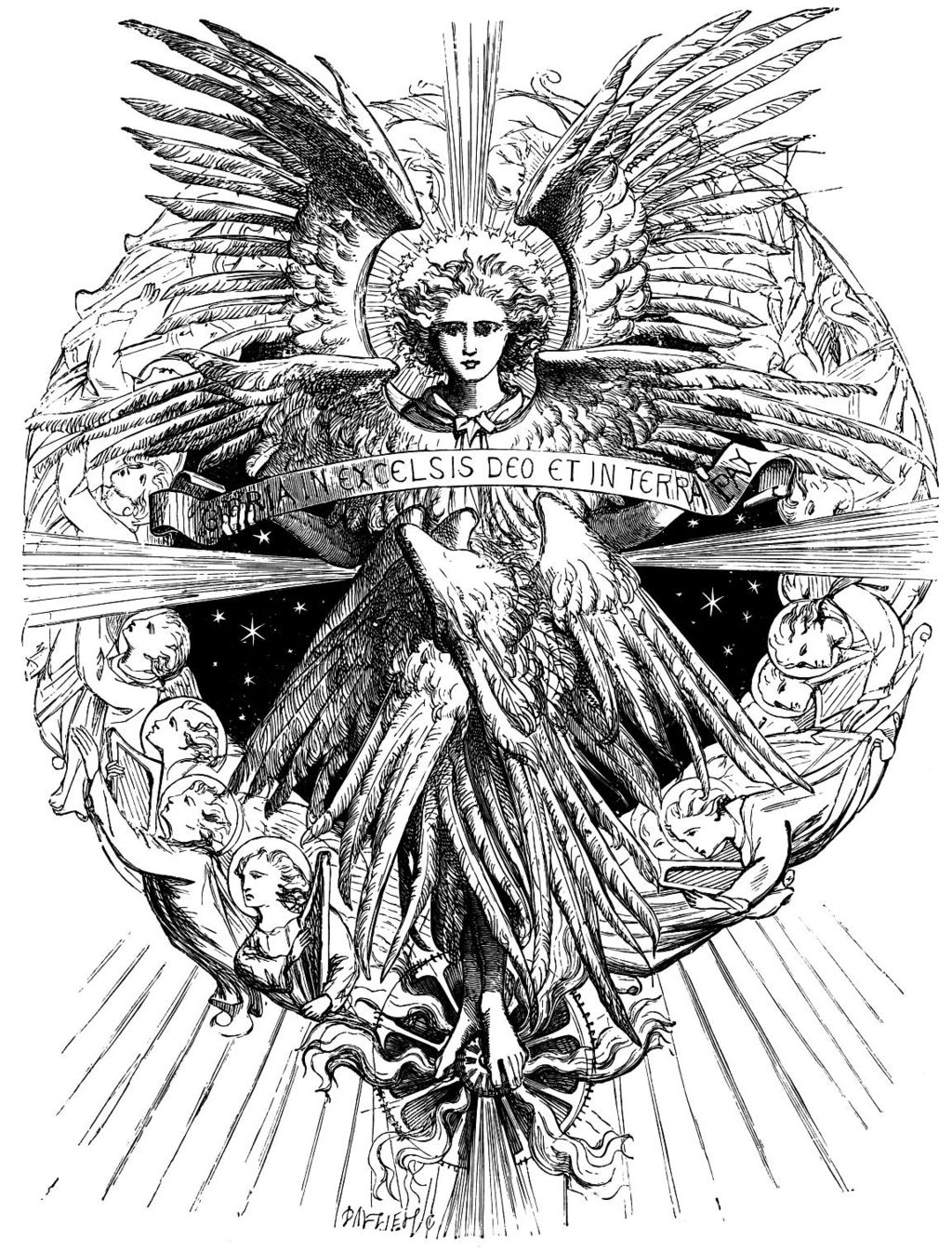
If this happens to 200-year-old songs written in English, can you imagine what happens to a song that is 1700 years old and was originally written in Latin?! I’m talking about the chorus from Angels We Have Heard On High which simply says, “Gloria in excelsis Deo.”
That Latin phrase means Glory to God in the highest! The idea is that our praise of God is both excellent and increasing in its level of adoration. The Latin phrase is shorthand for a doxology that is traced back to 300 AD.
The angels aren’t the subject of this carol, but the focal point is to Whom their song is being raised—“Come to Bethlehem and see Him Whose birth the angels sing; come adore on bended knee Christ the Lord, the newborn King.”
The idea of gloria in excelsis is to keep making our praise bigger and more magnificent. We are to MAGNIFY what God has done for us through the advent of Jesus.
In Hebrew, the word gadal is usually translated as “magnify” or “glorify” in English, and it means something that is growing and becoming more powerful. David uses gadal as he not only praises God from deep within his soul but encourages others to join in his song (Psalm 34:1-3).
In Greek, the word megalynō is also translated “magnify,” and means to make something great, make it obvious, declare it to be great, celebrate it. Mary’s song called The Magnificat begins with this word (Luke 1:46).
Just like a magnifying glass doesn’t make an object bigger, it just helps us see it better. So, too, our praise and adoration don’t make God bigger, it just helps others see Him better.
So I have a question to ask you—which I’ve already been asking myself:
►► Would you please prayerfully consider supporting this ministry? ◀︎◀︎
If you’ve missed any of the message in this series, you can check them out by clicking here.