Listen to the podcast of this post by clicking on the player below, and you can also subscribe on Apple, Spotify, or Audible.
Christians need to be known more for what is good than for what is bad. Jesus hasn’t called us to point out what’s bad, but to point out how good Jesus is.
G.K. Chesterton wrote, “The whole difference between construction and creation is exactly this: that a thing constructed can only be loved after it is constructed; but a thing created is loved before it exists, as the mother can love the unborn child.”
God loved you before you were born. He had a plan in mind for your life before you were conceived.
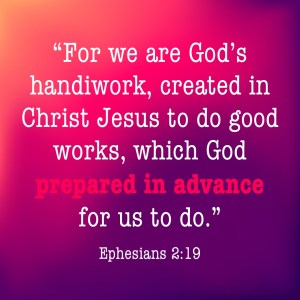
For we are God’s handiwork, created in Christ Jesus to do good works, which God prepared in advance for us to do. (Ephesians 2:10)
Even as God formed you in your mother’s womb, He implanted in you all that you would need to live for His glory.
Your eyes saw my unformed body; all the days ordained for me were written in Your book before one of them came to be. (Psalm 139:16)
God couldn’t love you any more than He already does because His love for you is infinite and eternal❣️
Listen to the podcast of this post by clicking on the player below, and you can also subscribe on Apple, Spotify, or Audible.
The second-to-last book of the New Testament is a short letter to the Church in which Jude felt urged by the Holy Spirit to challenge Christians to “contend for the faith that was once for all entrusted to the saints.” Does contend mean Christians are supposed to be combative about sharing their faith? We can learn a lot from the way Jude opens this letter.
First, let’s look at who wrote this book.
The names of the brothers of Jesus are listed twice (Mark 6:3; Matthew 13:55), and Jude is either the youngest or second youngest of these male siblings. He was a part of the family delegation that went to bring Jesus home because they thought He was out of His mind (Mark 3:21, 31). Later on, Jude would also mockingly taunt Jesus (John 7:5).
James is the oldest brother after Jesus. When Paul writes that Jesus appeared to James after the resurrection (1 Corinthians 15:7), it’s possible that it means Jesus appeared to all of his brothers, because Paul also mentions that the brothers of Jesus had become evangelists (9:5). It’s not surprising that Jude calls himself a brother of James, but it is quite shocking that he calls himself a servant of Jesus Christ.
In fact, he calls Jesus:
our only Sovereign and Lord (v. 4)
the One who gives us eternal life (v. 21)
the only One who is our entrance into Heaven (vv. 24- 25)
We need to adopt this servant’s mindset as we interact with others.
Second, let’s notice who Jude’s audience is.
Jude writes to people who are called, sanctified, preserved (NKJV).
called = invited to the banquet
sanctified = hagiazo = holy ones or saints
preserved / kept = carefully attended to
Finally, let’s consider how Jude expects saints to be living each day.
Jude says in verse 2 that we are to live…
mercifully = not wanting people to get the punishment they deserve
peacefully = having our soul so secure that we fear nothing from God
lovingly = agape love like Jesus (John 3:16, 13:1) and like us (13:35, 15:9)
And all of these things are to be in abundance—ever multiplying!
After all of this, we are now in a place to consider how to live contending for the faith (v. 3).
We are servants of Jesus, called to His banquet, set apart and preserved for His glory; we are intimately aware of His mercy, peace, and love, which we want others to know for themselves.
Before we learn how to contend, let’s ask the Holy Spirit to check our attitude to ensure we indeed have the attitude of a secure servant.
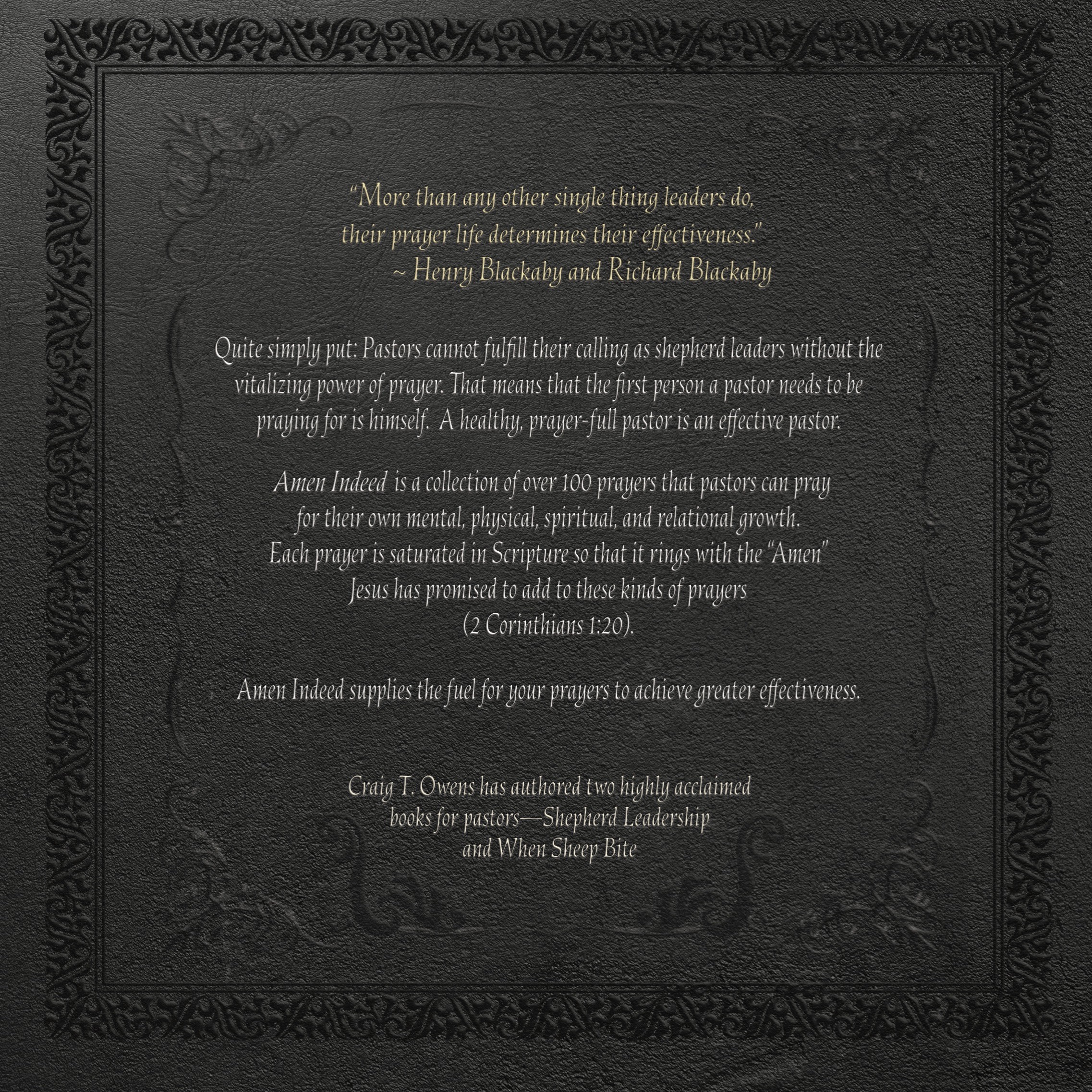
Pastors can only fulfill their calling as shepherd leaders with the vitalizing power of prayer, and must pray for themselves first. A healthy, prayer-full pastor is an effective pastor. My newest book is to help pastors in this vital discipline of prayer.
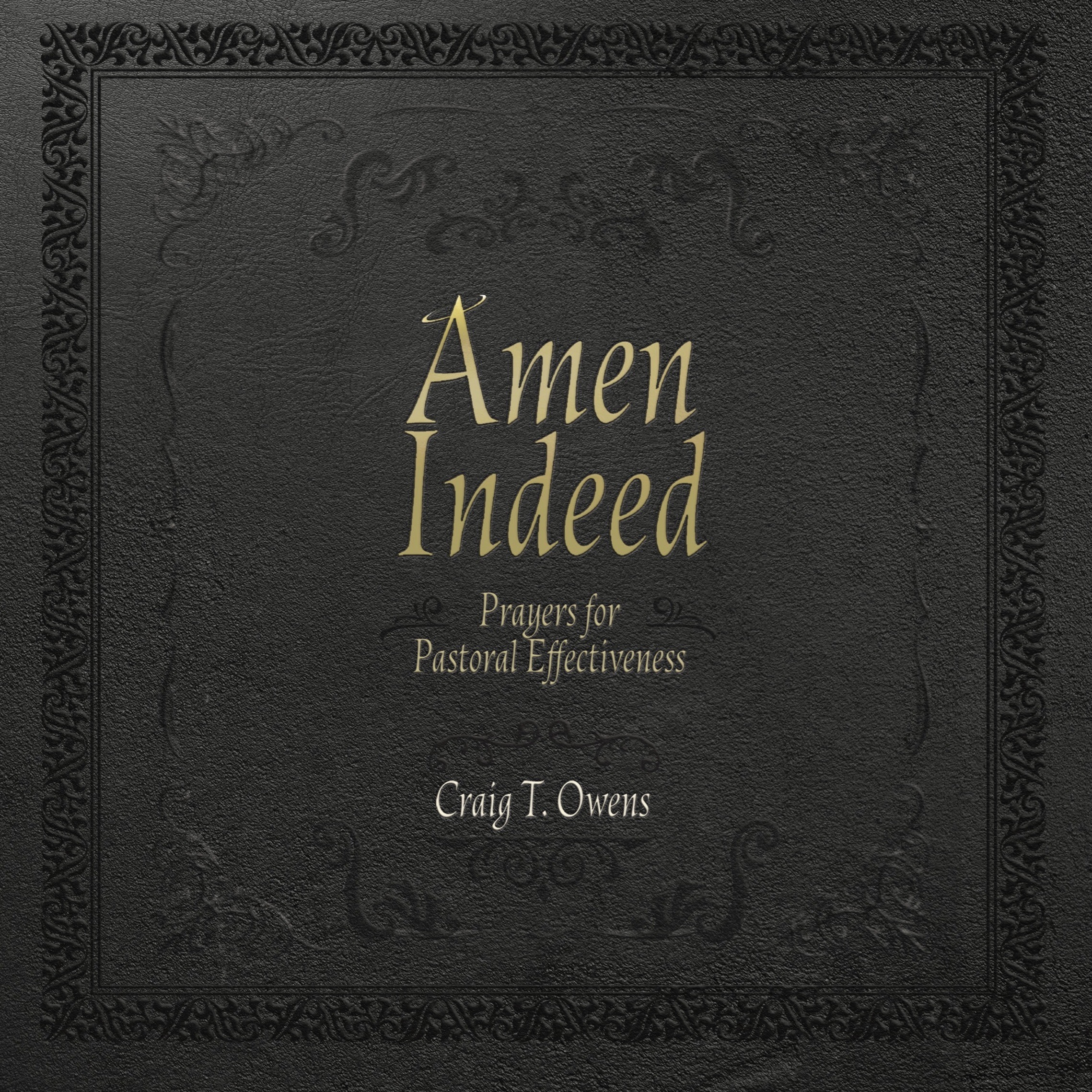
Amen Indeed fuels growth by providing more than 100 prayers for pastors to pray for their own mental, physical, spiritual, and relational growth. Each is sourced from Scripture and rings with the “Amen” that Jesus promised to add (2 Corinthians 1:20).
“There is one assured way for our prayers to be answered: It is to pray the will of God.
“There is one assured way to pray the will of God: It is to pray Scripture.
“As ministers of the Gospel we would be wise then to primarily pray Scripture, for ‘the word of our God stands forever’ (Isaiah 40:8).” —Dick Brogden, Founder of the Live Dead Movement
“When it comes to prayer, we need some help. And in Amen Indeed, help is at hand. Whatever is keeping us from prayer, Craig Owens can help us push through to a more consistent and more consistently joyful and fruitful life of prayer.” —T.M. Moore, Principal of The Fellowship of Ailbe
Have you felt under attack spiritually lately? Especially when things are going well, we need to stay on guard because the enemy of our soul is always looking for an opening. Don’t give him any opening at all—stay vigilant!
“All men are ordinary men; the extraordinary men are those who know it.” —G.K. Chesterton
I thoroughly enjoy reading the words of Oswald Chambers (check out my lengthy Thursdays with Oswald feature). Dr. Steve Nichols shared a mini-biography about this extraordinary pastor on his 5 Minutes In Church History podcast.
Over a week before the assassination of Charlie Kirk, Abdu Murray had a chilling prediction in his commentary From Cancel Culture to Assassination Culture.
“Practice, which some regard as a chore, should be approached as just about the most pleasant recreation ever devised.” —Babe Didrikson Zaharias
Using a question about the recreational uses of marijuana, John Piper notes something deeper: “The church for a long time has leaned too heavily on the overlap between the state and the church for the strength of our conviction concerning what is right and wrong.” This post is a call for Christians to dig into the Scriptures for what we believe, and not just follow what society says.
“The man who thinks he can live without others is mistaken; the one who thinks others can’t live without him is even more deluded.” —Hasidic Proverb
This 12-minute video from Daniel Pink has some solid insights on higher productivity.
Listen to the podcast of this post by clicking on the player below, and you can also subscribe on Apple, Spotify, or Audible.
“Kids these days just don’t understand!”
That’s probably a phrase you’ve heard more than a few times from members of generations your elder, and there is some truth to it! Each generation has very diverse experiences which make them unique from the groups before and after them. In today’s episode, Greg and I want to encourage you to understand and embrace generational differences to make your team stronger.
Listen to the podcast of this post by clicking on the player below, and you can also subscribe on Apple, Spotify, or Audible.
We are getting ready to kick off a new series at Calvary Assembly of God based on the Book of Jude. When I read the opening line of this letter, it makes me pause. Jude writes, “Jude, a servant of Jesus Christ and a brother of James” (v. 1).
Men like Peter and John had spent years in Christ’s company, and they called Him Lord and said they were His servants. Paul had supernatural encounters with the risen Savior, and said that he was a man devoted to His service. James and Jude shared a home and family with Jesus, and they call themselves His servant.
How could I ever claim a title any higher than servant?
Even if Jude didn’t say it in a bragging fashion, if he simply stated, “Jesus is my Brother,” I am pretty sure that has got to be a door opener for him! People would probably give him an audience and an opportunity—perhaps they would even give his words greater weight—simply because of the fact that they were brothers. But Jude uses this open door to point people to Jesus, not to himself.
So that got me thinking, “What will I do with the open doors, the opportunities, and the listening audiences that are before me? Will I use those things to promote my own agenda or will I use those things to promote Jesus? Will I speak what’s on my mind or what the Holy Spirit puts in my mind?”
I pray that I may use every opportunity to turn as many eyes and hearts as I am able to Jesus. May I use every open door to invite others to come closer to Christ. May I never promote my agenda, but merely be a servant who is speaking the words which I’ve been instructed and anointed to share.
Jude, the half-brother of Jesus, wrote a letter to the church. He said he was hoping to write about salvation, but looking at the conditions in the culture around him, he felt urged by the Holy Spirit to challenge Christians to “contend for the faith that was once for all entrusted to the saints.”
What does this word “contend” mean for us today? Are Christians supposed to be combative about sharing their faith? Are they supposed to argue with anyone and everyone who disagrees with them on any point?
Jude gives us Holy Spirit-inspired wisdom to understand how to deal with those who have departed from the purity of biblical truth.
I hope you can join us at Calvary Assembly of God for this timely series of sermons. Here’s what we have covered:
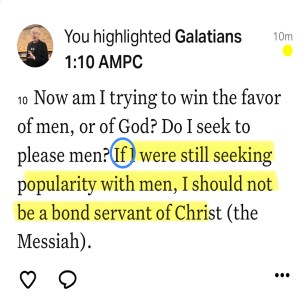
Now am I trying to win the favor of men, or of God? Do I seek to please men? If I were still seeking popularity with men, I should not be a bond servant of Christ (the Messiah). —Galatians 1:10 AMPC
Trying to please men ultimately becomes a lose-lose attempt.
First, people are fickle and I cannot please all of them all of the time. Second, in attempting to please some people I would have to compromise the truth of the Bible.
The only favor I should seek is the One who saved me and sent me. It is Christ’s voice alone that I long to hear say, “Well done, good and faithful servant.”
Listen to the podcast of this post by clicking on the player below, and you can also subscribe on Apple, Spotify, or Audible.
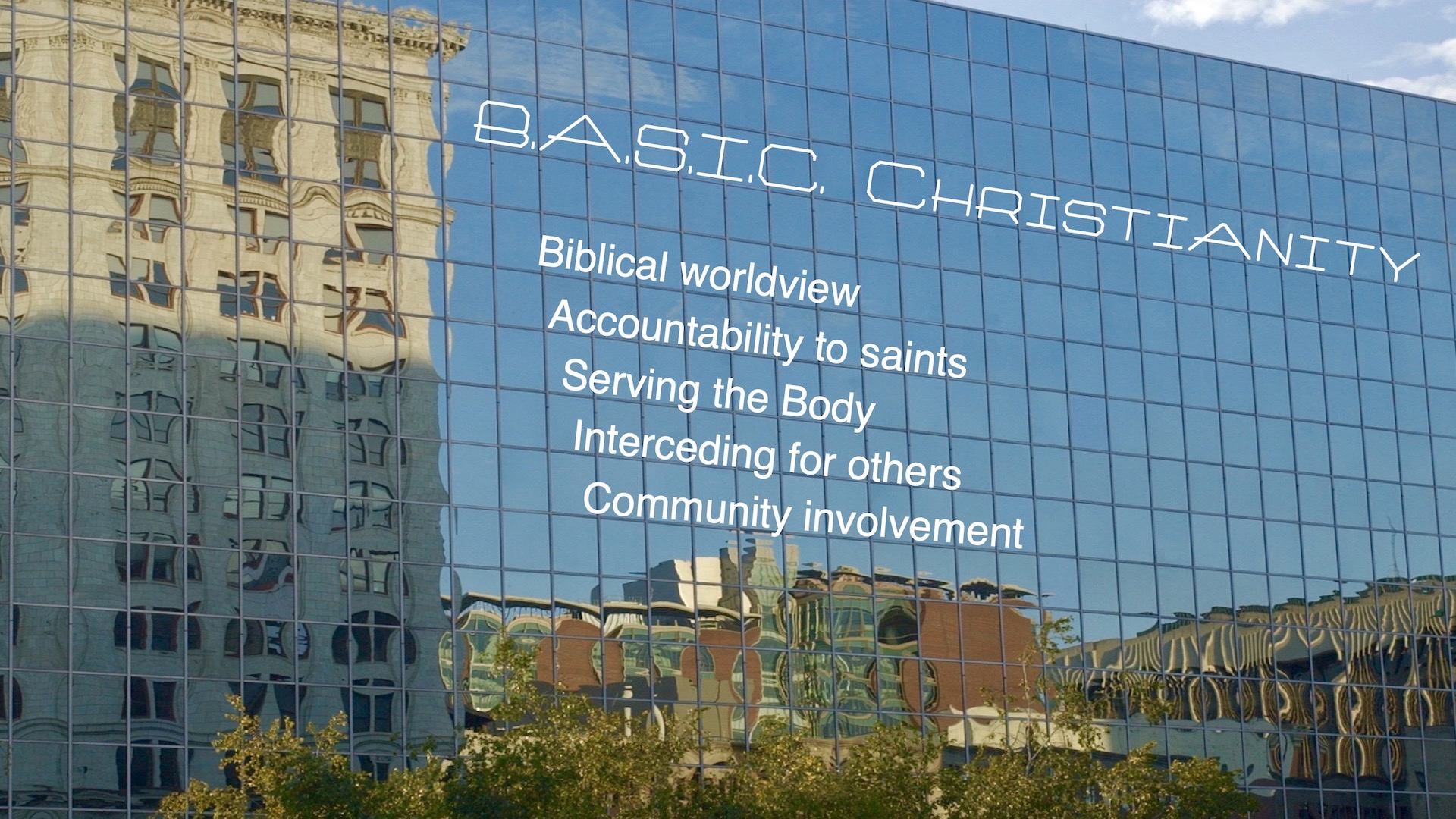
The letters we’ve looked at so far—B, A, S, and I—are bringing about greater fruitfulness and joy-fullness in our lives, which is then enhancing our personal testimony. So the B, A, S, and I all lead up to the C—community involvement.
One of the first things we need to consider about our community is our role—both what the Bible says is and isn’t our area of concern. Jesus helps us with a parable about wheat and weed and its explanation a few verses later (Matthew 13:24-30, 36-43).
From Jesus we learn that the world was created good—that’s what God said at each day of Creation. Since the fall of man, satan has sown his evil seeds alongside Christ’s good seeds.
Our responsibility isn’t about pointing out what’s wrong in the world
It isn’t about rooting out the evil in the world
It isn’t about judging the evil or even the evildoers in the world
Our responsibility is to proclaim how good our God is
Our responsibility is to bear as much God-honoring fruit as we can
Our responsibility is to embody biblical principles and proclaim the benefits of God’s Kingdom to others
The apostle Paul helps us see our role in our community with his payer in Ephesians 1:17-20. Paul desires that we know…
The hope to which God has called us. A rock-solid, irrevocable, eternal hope!
The riches of His inheritance in His saints. The treasure is in us. We get to be God’s blessing to those around us.
God’s incomparably great power for us. We’re never lacking anything because His power is for us—God Himself is for us!
When our eyes are opened to this, we can see better how to live in our communities. God has placed us and equipped us to proclaim His glorious Gospel in our Personal Mission Field. The PMF includes places like our:
Family—John 1:35-42
Friend group—John 1:43-46
Neighborhood—Colossians 1:3-8
Workplace—Ephesians 6:5-9
How do we do this?
We talk about the daily interactions you have with Jesus—make it clear that He is a real Person with Whom you have a relationship.
We live out our biblical worldview.
We stay in fellowship with out saints so that we are sharpened and prepared to give an answer for the reason for the hope we have.
We continually monitor our conversation and attitude to make sure they are Christ-like.
Let us saints be known for what we’re for more than for what we’re against!
Instead of railing on the evil, proclaim the favor of God, proclaim the soul-satisfying joy of a relationship with Jesus, and proclaim the advantages of the Holy Spirit’s continual counsel.
If you’ve missed any of the previous messages in our series B.A.S.I.C. Christianity, you can find them all here.





















 Craig T. Owens