Jude, the half-brother of Jesus, wrote a letter to the church. He said he was hoping to write about salvation, but looking at the conditions in the culture around him, he felt urged by the Holy Spirit to challenge Christians to “contend for the faith that was once for all entrusted to the saints.”
What does this word “contend” mean for us today? Are Christians supposed to be combative about sharing their faith? Are they supposed to argue with anyone and everyone who disagrees with them on any point?
Jude gives us Holy Spirit-inspired wisdom to understand how to deal with those who have departed from the purity of biblical truth.
I hope you can join us at Calvary Assembly of God for this timely series of sermons. Here’s what we have covered:
Now am I trying to win the favor of men, or of God? Do I seek to please men? If I were still seeking popularity with men, I should not be a bond servant of Christ (the Messiah). —Galatians 1:10 AMPC
Trying to please men ultimately becomes a lose-lose attempt.
First, people are fickle and I cannot please all of them all of the time. Second, in attempting to please some people I would have to compromise the truth of the Bible.
The only favor I should seek is the One who saved me and sent me. It is Christ’s voice alone that I long to hear say, “Well done, good and faithful servant.”
Listen to the podcast of this post by clicking on the player below, and you can also subscribe on Apple, Spotify, or Audible.
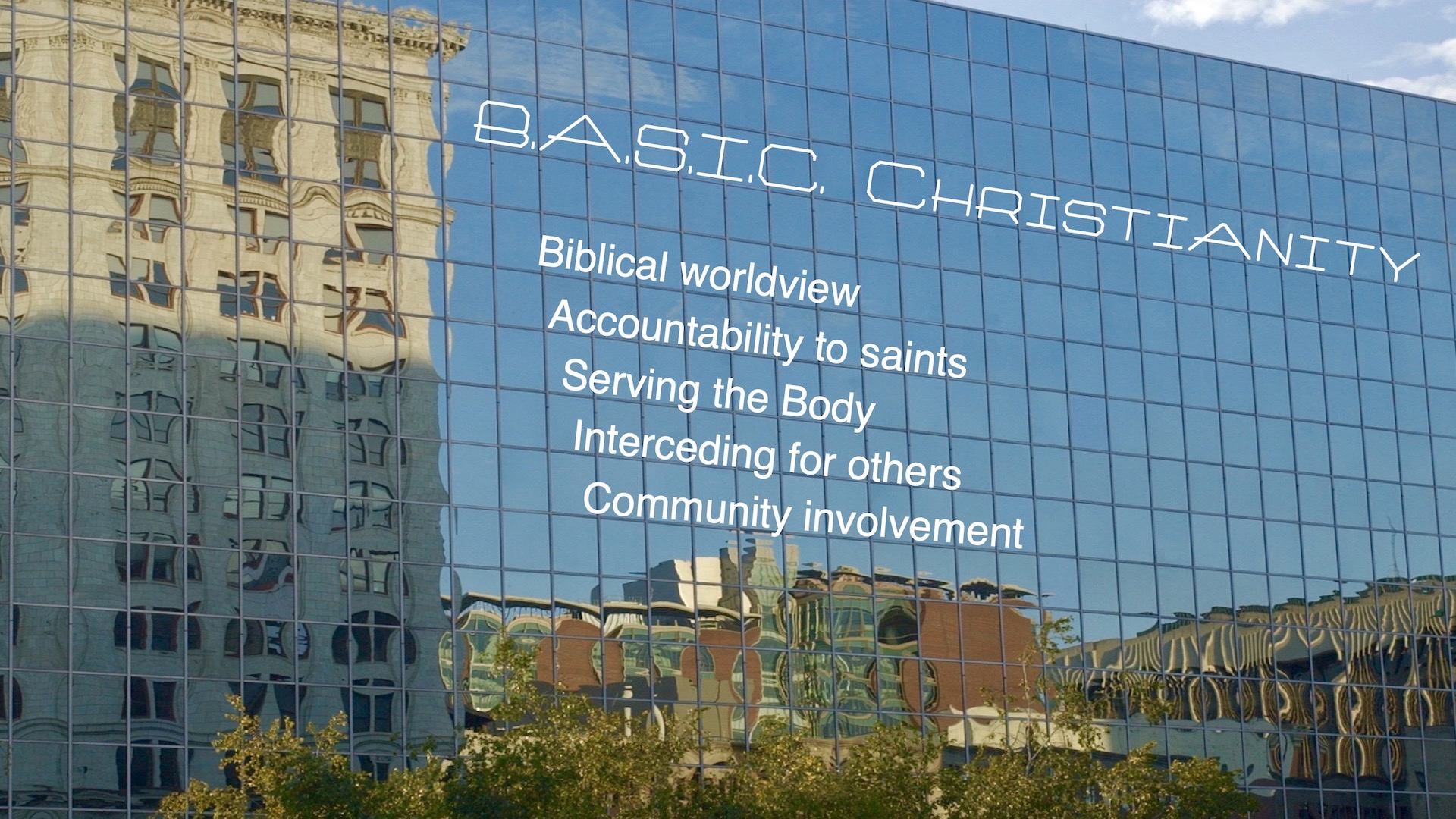
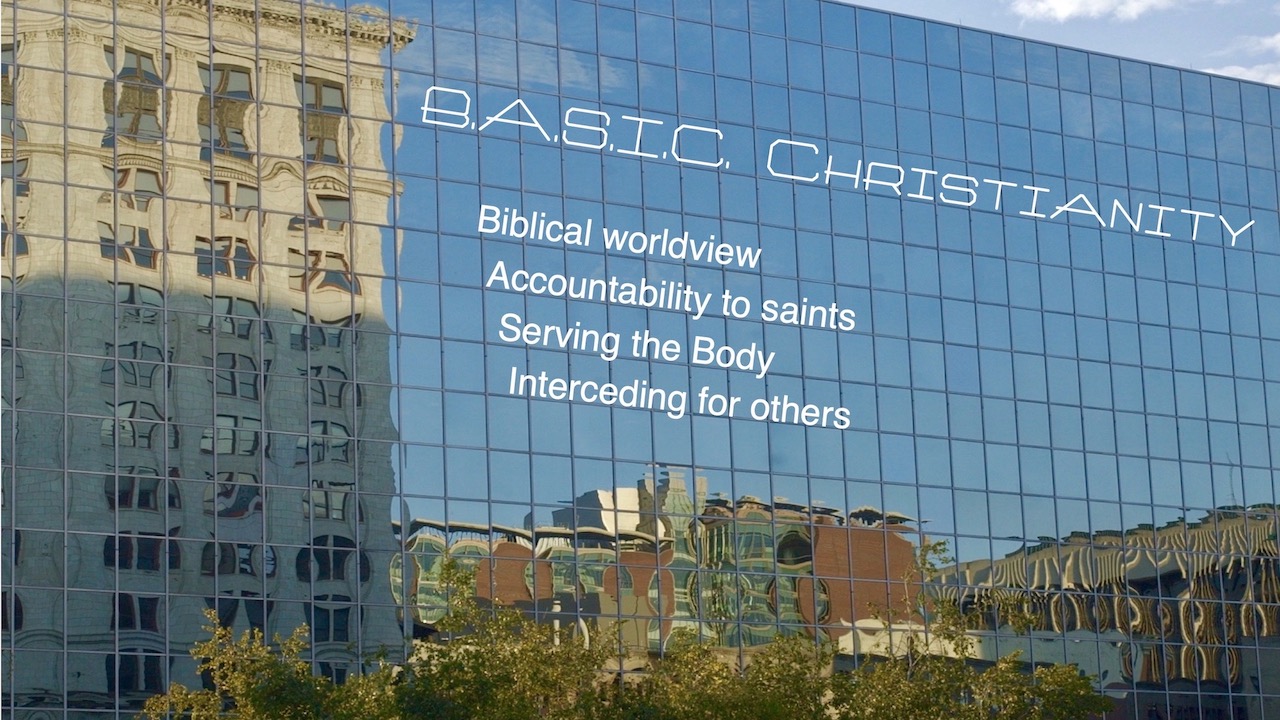
The letters we’ve looked at so far—B, A, S, and I—are bringing about greater fruitfulness and joy-fullness in our lives, which is then enhancing our personal testimony. So the B, A, S, and I all lead up to the C—community involvement.
One of the first things we need to consider about our community is our role—both what the Bible says is and isn’t our area of concern. Jesus helps us with a parable about wheat and weed and its explanation a few verses later (Matthew 13:24-30, 36-43).
From Jesus we learn that the world was created good—that’s what God said at each day of Creation. Since the fall of man, satan has sown his evil seeds alongside Christ’s good seeds.
Our responsibility isn’t about pointing out what’s wrong in the world
It isn’t about rooting out the evil in the world
It isn’t about judging the evil or even the evildoers in the world
Our responsibility is to proclaim how good our God is
Our responsibility is to bear as much God-honoring fruit as we can
Our responsibility is to embody biblical principles and proclaim the benefits of God’s Kingdom to others
The apostle Paul helps us see our role in our community with his payer in Ephesians 1:17-20. Paul desires that we know…
The hope to which God has called us. A rock-solid, irrevocable, eternal hope!
The riches of His inheritance in His saints. The treasure is in us. We get to be God’s blessing to those around us.
God’s incomparably great power for us. We’re never lacking anything because His power is for us—God Himself is for us!
When our eyes are opened to this, we can see better how to live in our communities. God has placed us and equipped us to proclaim His glorious Gospel in our Personal Mission Field. The PMF includes places like our:
Family—John 1:35-42
Friend group—John 1:43-46
Neighborhood—Colossians 1:3-8
Workplace—Ephesians 6:5-9
How do we do this?
We talk about the daily interactions you have with Jesus—make it clear that He is a real Person with Whom you have a relationship.
We live out our biblical worldview.
We stay in fellowship with out saints so that we are sharpened and prepared to give an answer for the reason for the hope we have.
We continually monitor our conversation and attitude to make sure they are Christ-like.
Let us saints be known for what we’re for more than for what we’re against!
Instead of railing on the evil, proclaim the favor of God, proclaim the soul-satisfying joy of a relationship with Jesus, and proclaim the advantages of the Holy Spirit’s continual counsel.
If you’ve missed any of the previous messages in our series B.A.S.I.C. Christianity, you can find them all here.
When leaders come into a new organization, they need to be aware that they have to overcome the expectations—good or bad—that others have from their former leader.
Greg Morse has an intriguing question for preachers: “Lawyers, politicians, celebrities, actors, podcasters, YouTubers all train to improve their voices—why not those who speak the very oracles of God?” But he also concludes, “Yet the aim is to speak like you—not like Chrysostom, Whitefield, Spurgeon, or your favorite preacher, though we learn from them. God made you to sound like you.”
Researchers discovered tree amber where it shouldn’t be: deep within the ocean! “These sedimentary rocks contain more than amber. The researchers found abundant plant debris, including pieces of large tree trunks, some longer than four feet, mixed into the layers. The tree trunks showed no sign of erosion from transport or borings from shallow marine organisms, indicating they moved fast out to the deep water and were quickly buried.” This is more evidence for the worldwide Flood described in the Bible.
Axis’ Culture Translator shared this important note especially for parents: “In his book Achilles in Vietnam, Veterans Affairs psychologist Jonathan Shay unpacks the psychological devastation of war and the causes of PTSD. He makes the argument that PTSD isn’t just caused by witnessing trauma, but by seeing people in authority choose not to act against evil—what he calls a ‘moral injury.’ War correspondent Sebastian Junger takes this research a step further. In his book Tribe, he concludes that being exposed to a traumatic event without any resilience training, and without a strong, cohesive community to help us process violence, are two strong risk factors for PTSD—stronger even than experiencing prolonged, bloody, hand-to-hand conflict. We see evidence for this theory in emerging research about drone operators and intelligence officers, who appear to experience PTSD at higher rates than other veterans. When our kids open their social media feeds, they encounter a war zone, and they haven’t even had basic training. They are looking to those in authority to help them understand what they just saw. But instead, they often get a cacophony of competing voices and no clear answer. They get a moral injury. Our broken society makes cult heroes of deeply disturbed individuals who are controlled by evil forces and motivated by their own pain. But Proverbs 3:31 is absolutely clear that we are never to envy those who do violence, and not to choose any of their ways. His private counsel, His intimacy, His secret—lies with the upright, and we can have it. But only if we dare to make distinctions, refuse to celebrate wrongdoing no matter the circumstances, and unapologetically stand up for human life.”
Listen to the podcast of this post by clicking on the player below, and you can also subscribe on Apple, Spotify, or Audible.
One of the most important boundaries that shepherd leaders need to establish—especially when contending with biting sheep—is the protection of their family. Check out this clip from The Craig and Greg Show.
You can watch the full episode in which Greg and I talk about some of the principles in When Sheep Biteby clicking here.
Please pick up a copy of When Sheep Bite for yourself by clicking here.
Listen to the podcast of this post by clicking on the player below, and you can also subscribe on Apple, Spotify, or Audible.
Near the end of his letter to the saints in Galatia, Paul takes a minute to talk about “those who want to impress people” (Galatians 6:12). Check out how some of the other translations render this phrase—
NLT: want to look good to others
AMPC: make a good impression
NASB: make a good showing
There’s only one way that I can think of for men to look good to other men, and that is to create a man-made program that plays to my strength so that others are impressed with how good I am. It’s only playing a game.
Paul calls out this foolish pursuit, saying, “the only reason they do this is to avoid being persecuted for the Cross of Christ” (v. 12). In other words, they think that if they are popular with men, men will leave them alone, not troubling them for their belief in Jesus.
In Paul’s letter to the saints at Philippi, he says that these earthly-minded people might make themselves look good to other earthly-minded people, but they really “live as enemies of the Cross of Christ” (Philippians 3:18).
Doesn’t this put my desire to look good to other people in a different light when I realize that earthly popularity may make me an enemy of the Cross?
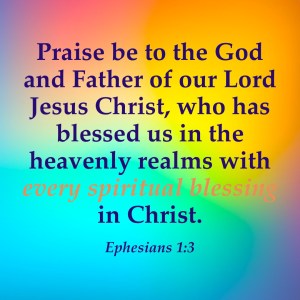
Praise be to the God and Father of our Lord Jesus Christ, who has blessed us in the heavenly realms with every spiritual blessing in Christ. (Ephesians 1:3)
These blessings are not found just anywhere. They are found only in Jesus and because of Jesus.
The completeness of perfect blessing is found in Who my Heavenly Father is for me because of the finished work of Jesus!
Listen to the podcast of this post by clicking on the player below, and you can also subscribe on Apple, Spotify, or Audible.
Sanctification (“saint-ification”) is an ongoing process that usually involves the help of other saints. We learn this by having a biblical worldview (that’s the “B”), being accountable with saints (“A”), and serving the Body of Christ (“S”). These are the things that bring out increased fruitfulness in our lives, make us more joy-full people, and enhance our testimony to others.
What a blessing it is to be involved in all of these saint-ification things alongside other brothers and sisters. Isn’t nice to know that you’re not all alone on your journey?
Two brothers walked up the hill to the park every afternoon to play baseball. One day a neighbor who lived near the bottom of the hill saw the younger brother pulling his older brother up the hill in a wagon. He observed this for a couple of days before he finally asked what was going on.
The younger brother said, “My big brother broke his leg so I pull him in the wagon so he can watch us play baseball and can be our coach.”
“He must be heavy,” the neighbor replied.
“He’s not heavy,” the little boy said, “he’s my brother!”
In the first brothers that the Bible shows us, we see the origin of the phrase “brother’s keeper.” Cain was jealous of the way God was blessing his younger brother, and so he murdered Able. God came to Cain and asked him, “Where is your brother Able?”
Cain responded with another question, “Am I my brother’s keeper?” (Genesis 4:9).
The word brother is someone connected to me by blood or some other common bond. Cain used the same word for brother but then asked if He was supposed to be his brother’s keeper—his guard, helping to keep him in bounds, celebrating his victories.
The clear teaching of Scripture is that the answer to Cain’s question is an emphatic “Yes!”
That definition of brother’s keeper sounds a lot like the definition of an intercessor. In the Hebrew, that word mean to go to God on someone else’s behalf (Genesis 25:21; 2 Samuel 24:25). The Greek of the New Testament sounds more intense (hyperentygchano): to meet a person of the purpose of conversation in behalf of someone else.
Remember that the Hebrew word for brother was pretty narrow? The Christians in the New Testament took the word for relative-by-blood (adelphos) and made it a synonym for fellow saint, regardless of where they are from (Acts 9:17; 2 Corinthians 13:11).
John used Cain’s misunderstanding of brother’s keeper to show us the spiritual responsibility we have to our adelphos (1 John 3:12, 15-16).
When we intercede for our adelphos—our fellow saints—we are participating in the same work as both the Spirit and Jesus (Romans 8:26-27, 34;Hebrews 7:25; 1 John 5:16).
A couple of weeks ago we looked at Philemon’s service to the Body of Christ. Look at how Paul’s intercession may have released Philemon to do this (Philemon 7, 16, 20).
As Paul said to Philemon, I say to you—
I appeal to you on the basis of love: Be your brother’s keeper!
Guard your adelphos, keep them in bounds, and celebrate both their righteousness and God’s blessing on their lives.
T.M. Moore is sharing a fascinating series of posts on economics through a biblical worldview. “All the ancient laws of Israel contain principles like this, principles which, if rightly understood and faithfully practiced, could tap into the grace of God and bring more honesty, respect, fairness, justice, generosity, forbearance, and love into the economic practice of a powerful nation such as the United States—more of grace and less of greed to our economic life.”
“Christ had even a literary style of His own, not to be found, I think, elsewhere; it consists of an almost furious use of the a fortiori. His ’how much more’ is piled one upon another like castle upon castle in the clouds. The diction used about Christ has been, and perhaps wisely, sweet and submissive. But the diction used by Christ is quite curiously gigantesque; it is full of camels leaping through needles and mountains hurled into the sea.” —G.K. Chesterton
David Mathis writes that the Bible is not just “a Book.” He says, “In my mind, one of the greatest imaginable tragedies is a professing Christian who is bored with the Bible. Could a truly loving husband cherish his wife but not care for her words? Could an adoring wife respect her husband but not what he says? What are words anyway? They are the breathed-out expressions of the person himself. Words are audible revelations of the otherwise unknown heart.”
Another archeological study supports the historicity of the Bible. This one identifies the battle preparations that King Joash made.
Listen to the podcast of this post by clicking on the player below, and you can also subscribe on Apple, Spotify, or Audible.
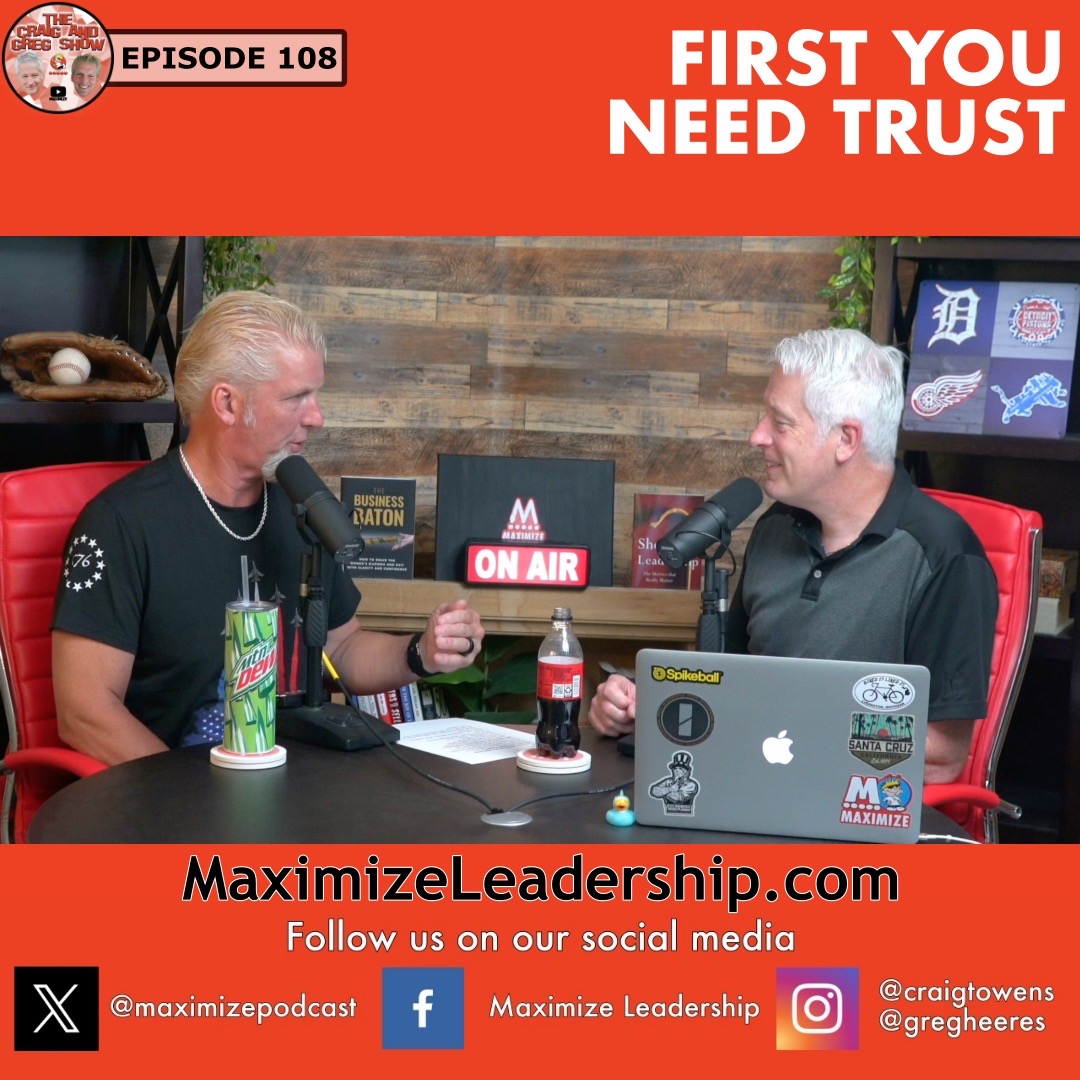
In the wise words of John C. Maxwell, “He who thinketh he leadeth and hath no one following him is only taking a walk.” As always Maxwell is right on the money. And the first step to getting others to follow you is trust. If you want to lead your team into uncharted territory they have to first trust that you’re not going to lead them off a cliff! In today’s episode Greg and I cover why trust is so vital and offer suggestions on how to build and maintain trust.
[0:42] People only listen to leaders that they can trust.
[2:03] Trust is an emotional glue between a leader and the team.
[3:03] Trust has to be built over time.
[6:07] Sometimes our teammates will test our trustworthiness.
[6:57] How leaders build trust.
[10:22] Phrases leaders should never use!
[12:07] Be careful of becoming defensive if someone questions your trustworthiness.
[13:26] Some people are unaware that they are not trustworthy.
[13:59] In building trust, be sure to extend grace to others.
[15:10] An external coach can help you spot the areas where you may be undermining your own foundation of trust.
[16:28] Trust builds culture and culture builds trust.
[18:04] Trusting cultures foster greater creativity and camaraderie.



 Jude, the half-brother of Jesus, wrote a letter to the church. He said he was hoping to write about salvation, but looking at the conditions in the culture around him, he felt urged by the Holy Spirit to challenge Christians to “contend for the faith that was once for all entrusted to the saints.”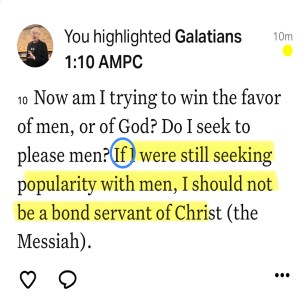












 Craig T. Owens