13 Quotes From “Seeking Allah, Finding Jesus”

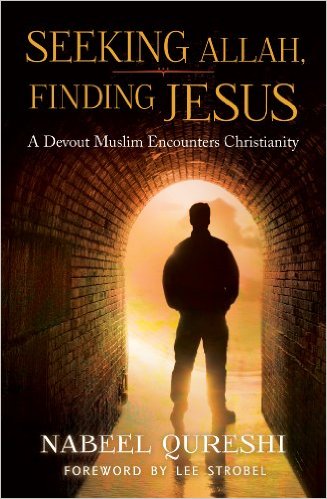
Seeking Allah Finding JesusIf you want to know about Islam from an insider’s perspective, Seeking Allah, Finding Jesus by Nabeel Qureshi is simply a phenomenal book! Check out my book review by clicking here. Below are just a few of the quotes I found quite educational.

“There is much division in Islam. The best determination of whether a man is Muslim is if he exclusively declares that Allah is God and Mohammad is Allah’s messenger. Beyond this point, there is great diversity in Islam.”

“There is no book of sharia. We must derive the law from a hierarchy of sources using a process of jurisprudence called fiqh. The first and greatest source is the Quran. Nothing can supersede the Quran because it is the word of Allah. But the Koran is not comprehensive. As Muslims, there is much we must do and believe that is not found in the Quran. For this, we go to the second source, hadith. The hadith elaborate and clarify what is found in the Quran, but they never contradict. There is no contradiction in Islam. If a hadith is found in any way to contradict the Quran, then it is inauthentic and must be disregarded. If no hadith can be found to clarify an issue, then we must turn to the third source of sharia: the ulema, Muslim scholars who are wise and experienced in Islam.”

“Muftis from different schools of thought have different precedents and therefore provide different fatwas. Each denomination differs on what hadith they consider accurate. Since the hadith are the second rung of sharia, these differences of opinion have real consequences. Many of the differences between the ways Sunnis and Shias practice Islam are over this very matter. Their books of hadith are disparate. This difference, combined with the Shia position regarding the authority of imams, results in a significantly different view of sharia. … Most Muslims do not know these things. They know Islam to the extent that they practice it, and these are matters for the learned.”

“Christians believe Jesus is God incarnate, and this is a necessary belief for orthodox Christianity. Muslims believe that Jesus is no more than a prophet, and to consider Him God incarnate would be blasphemy and would cause one to be condemned to hell eternally, according to the Quran.”

“Regarding Jesus, there are two issues on which Muslims particularly disagree with Christians: that Jesus died on the Cross and that Jesus claimed to be God. The Quran specifically denies both of these beliefs.” 

“Sahih Bukhari…is the most trustworthy book of hadith, compiled by Imam Bukhari. The hadith were not collected into the books until a long time after Mohammad’s death. Many false hadith had been fabricated, and it was difficult to determine which ones were accurate. Imam Bukhari sifted through five hundred thousand hadith and pick out the five thousand most accurate.”

“The earliest historical records show that Mohammad launched offensive military campaigns and used violence at times to accomplish his purposes. He used the term jihad in both spiritual and physical contexts, but the physical jihad is the one Mohammad strongly emphasizes. The peaceful practice of Islam hinges on later, often Western, interpretations of Mohammad’s teachings, whereas the more violent variations of Islam are deeply rooted in orthodoxy and history.”

“The Bible and the Quran were nothing alike. Not in the slightest. … Mohammad dictated the contents of the Quran to his scribes over a period of twenty-three years. Only after his death was the Quran collected into a book. Verses that had been dictated years or decades apart are frequently found side-by-side in the Quran, often with no obvious connection. The result is that Muslims placed relatively little weight on surrounding passages when trying to interpret sections of the Quran.”

“Almost everything Muslims know about Mohammad comes to them orally, rarely from primary sources. Unlike Christians learning about Jesus from the Bible, the Quran has very little to say about Mohammad.”

“Mohammad’s first biography, Sirat Rasul Allah by Ibn Ishaq, comes down to our date only through the transmission of a later biographer, Ibn Hisham. In his introduction, Ibn Hisham explains that he altered the story of Mohammad’s life. ‘Things which it is disgraceful to discuss, matters which would distressed certain people, and such reports as [my teacher] (sic) told me he could not accept as trustworthy—all these things I have omitted.’”

“According to the hadith, Mohammad named four men as the best teachers of the Quran. The first one was Abdullah ibn Mas’ud, whome Mohammad distinguished as the foremost expert of the Quran. The last one was Ubay ibn Ka’b, whom Sahih Bukhari identifies as the best reciter of the Quran. These were the men that Mohammad hand selected as the best teachers of the Quran, but as I studied the early sources, I found that they did not agree with the final Quran, which has been passed down as today’s version. They did not even agree with each other. … Ubay is known to have had 116 chapters in his Quran, two more than Zaid’s edition. Ibn Mas’ud had only 111 chapters in his Quran, insisting that the additional chapters in Zaid’s Quran and Ubay’s Quran were just prayers, not Quranic recitation.”

“In Islam, there is only one unforgivable sin, shirk, the belief that someone other than Allah is God. Shirk is specifically discussed in the context of Jesus in 5:72. He who believes Jesus is God, ‘Allah has forbidden Heaven for him, and his abode will be the Hellfire.’”

“All suffering is worth it to follow Jesus. He is amazing.”

Links & Quotes

link quote

“Are our ears ever open? Are we eager listeners? As ready to hear as God is to speak? Oh, how much we lose of happy wisdom, simply from not listening!” —Horatius Bonar

“It would be a great folly and a great tragedy if a man loved his wedding band more than he loved his bride. But that is what this passage [Romans 1:22-23] says has happened. Human beings have fallen in love with the echo of God’s excellency in creation and lost the ability to hear the incomparable, original shout of love [Psalm 19:1-2].” —John Piper

Charles Spurgeon was a Calvinist, which means he held to the doctrine of predestination, but read how he pulled together both predestination and freewill. “It is a wonderful thing how God effects His purpose while still the creature is free. They who think that predestination and the fulfillment of the divine purpose is contrary to the free-agency of man, know not what they say, nor whereof they affirm. It would be no miracle for God to effect His own purpose, if He were dealing with stocks and stones, with granite and with trees; but this is the miracle of miracles, that the creatures are free, absolutely free, and yet the divine purpose stands. Herein is wisdom. This is a deep unsearchable. Man walks without a fetter, yet treads in the very steps which God ordained him to tread in, as certainly as though manacles had bound him to the spot. Man chooses his own seat, selects his own position, guided by his will he chooses sin, or guided by divine grace he chooses the right, and yet in his choice, God sits as Sovereign on the throne; not disturbing, but still over-ruling, and proving Himself to be able to deal as well with free creatures as with creatures without freedom, as well able to effect His purpose when He has endowed men with thought, and reason, and judgment, as when He had only to deal with the solid rocks and the imbedded sea.” —Charles Spurgeon

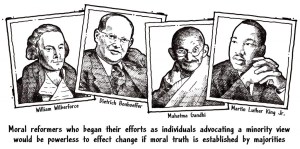
Moral truth advocatesJ. Warner Wallace asks, “Are moral truths a product of culture? Can they be explained by purely naturalistic forces?”

[VIDEO] Are you on the wrong side of history? Check out Jonah Goldberg’s insightful commentary on this question—

Seeking Allah, Finding Jesus (book review)

Seeking Allah Finding JesusI have a family member who works in predominately Muslim areas of the world. I recently asked him how I could learn more about Muslims and the Islamic belief system, and he highly recommended Seeking Allah, Finding Jesus by Nabeel Quereshi. I am so glad he did!

This book is told in the narrative style of an autobiography, as Nabeel walks us through his devout Muslim upbringing, and the conversations and confrontations that got him thinking about his religion in contrast to Christianity. The book has a “documentary” feel to it, as Nabeel takes us inside his home, school and mosque to let us see his life portrayed almost in real-time. Many of the conversations include Arabic phrases, which Nabeel footnotes at the beginning of the book, and then continues to use without the footnoted translation later, allowing the reader to become more immersed in his world.

Nabeel states his three main purposes for his book:

  1. To tear down walls by giving non-Muslim readers an insider’s perspective into a Muslim’s heart and mind. The mystical beauty of Islam that enchants billions cannot be grasped by merely sharing facts. But it is my prayer that by entering my world, you will come to understand your Muslim neighbor, so you can love him as yourself.
  2. To equip you with facts and knowledge, showing the strength of the case for the gospel in contrast with the case for Islam.
  3. To portray the immense inner struggle of Muslims grappling with the gospel, including sacrifices and doubts.

In my mind, he accomplished all three of these purposes beautifully. In addition, I discovered a whole new way to pray for my Muslim friends, as well as feeling like I may now carry on a more intelligent conversation with them about their cherished beliefs.

I too highly recommend this book to anyone who wants to learn more about what Muslims believe.

Links & Quotes

link quote

“The real trouble is that ‘kindness’ is a quality fatally easy to attribute to ourselves on quite inadequate grounds. Everyone feels benevolent if nothing happens to be annoying him at the moment. Thus a man easily comes to console himself for all his other vices by a conviction that ‘his heart’s in the right place’ and ‘he wouldn’t hurt a fly’, though in fact he has never made the slightest sacrifice for a fellow creature.” —C.S. Lewis

“It is better to have men reproach you for holy living than have God damn us for sinful living.” —Thomas Watson

“Sooner or later, the ones who told you that this isn’t the way it’s done, the ones who found time to sneer, they will find someone else to hassle. Sooner or later, they stop pointing out how much hubris you’ve got, how you’re not entitled to make a new thing, how you will certainly come to regret your choices. Sooner or later, your work speaks for itself. Outlasting the critics feels like it will take a very long time, but you’re more patient than they are.” —Seth Godin

“Over all Scripture the quickening, life-giving fragrance of His name is defused. Christ and life; life in Christ; Christ our life—these form the very essence, the sum and burden, of the Scriptures. ‘These are they that testify of Me.’” —Horatius Bonar

The Cedar Springs Post has a nice article about our church’s exciting move.

Max Lucado writes, “Something tells me that in the whole scheme of things the tender moments with a child are infinitely more valuable than anything I do in front of a computer or a congregation.” Check out his post Tender Moments.

4 reasons why same-sex “marriage” will never measure up to the real thing.

Laughing At Christ?

These words of Charles Spurgeon are gripping. Especially the questions at the end…

But when we continue in our sin, when we laugh at what God disallows, we do indeed laugh at Jesus hanging on that Cross.

Christ on the Cross“See Him; like a cart pressed down with sheaves He goes through the streets of Jerusalem. Well may you weep, daughters of Jerusalem, though He bids you dry your tears; they hoot Him as He walks along bowed beneath the load of His own Cross which was the emblem of your sin and mine. They have brought Him to Golgotha. They throw Him on his back, they stretch out His hands and His feet. The accursed iron penetrates the tenderest part of His body, where most the nerves do congregate. They lift up the Cross. O bleeding Savior, Thy time of woe has come! They dash it into the socket with rough hands; the nails are tearing through His hands and feet. He hangs in extremity, for God has forsaken Him; His enemies persecute and take Him, for there is none to deliver Him. They mock His nakedness; they point at His agonies. They look and stare upon Him with ribald jests; they insult His griefs, and make puns upon His prayers. He is now indeed a worm and no man, crushed till you can think scarcely that there is divinity within. The fever gets hold upon Him. His tongue is dried up like a potsherd, and He cries, ‘I thirst!’ Vinegar is all they yield Him; the sun refuses to shine, and the thick midnight darkness of that awful mid-day is a fitting emblem of the tenfold midnight of His soul. Out of that thick horror He cries ‘My God, My God, why hast Thou forsaken Me?’ Then, indeed, was He pressed down! O there was never sorrow like unto His sorrow. All human griefs found a reservoir in His heart, and all the punishment of human guilt spent itself upon His body and His soul. O shall sin ever be a trifle to us? Shall I ever laugh at that which made Him groan?” —Charles Spurgeon

18 Quotes From Wise People In “15 Invaluable Laws Of Growth”

15 Invaluable Laws of GrowthJohn Maxwell always shares great quotes in his books! This is the hallmark of a true servant leader, who doesn’t hoard what he reads or hears, nor is he concerned about getting all the credit. Here are some of the quotes I enjoyed from Maxwell’s book The 15 Invaluable Laws Of Growth.

“Character is a quality that embodies many important traits such as integrity, courage, perseverance, confidence, and wisdom. Unlike your fingerprints that you were born with and can’t change, character is something that you create within yourself and must take responsibility for changing.” —Jim Rohn

“I’ve concluded that while nobody plans to mess up their life, the problem is that a few of us plan not to. That is, we don’t put the necessary safeguards in place to ensure a happy ending.” —Andy Stanley

“I bless you, prison—I bless you for being in my life—for there lying on rotting prison straw, I learned the object of life is not prospering as I had grown up believing, but the maturing of the soul.” —Alexander Solzhenitsyn

“Character cannot be summoned at the moment of crisis if it has been squandered by years of compromise and rationalization. The only testing ground for the heroic is the mundane. The only preparation for that one profound decision which can change a life, or even a nation, is those hundreds of half-conscious, self-defining, seemingly insignificant decisions made in private. Habit is the daily battle ground of character.” —Senator Dan Coats

“If you plan on being anything less than you are capable of being, you will probably be unhappy all the days of your life.” —Abraham Maslow

“It’s never too late to be what you might have been.” —George Elliot

“A sign of wisdom and maturity is when you come to terms with the realization that your decisions cause your rewards and consequences. You are responsible for your life, and your ultimate success depends on the choices you make.” —Denis Waitley

“When we are no longer able to change a situation, we are challenged to change ourselves.” —Viktor Frankl

“The great secret of success is to go through life as a man who never gets used up.” —Albert Schweitzer

“All meaningful and lasting change starts first in your imagination and then works its way out.” —Albert Einstein

“It’s better to look uninformed than to be uninformed.” —Richard Thalheimer

“When average people ask themselves, ‘Can I do this?’ they base it on the circumstances they see. … An abundant thinker asks different questions. An abundant thinker asks, ‘How can I?’ This simple twist of semantics changes everything. It forces your mind to create a solution.” —Brian Klimmer

“It is not wise, or even possible, to divorce private behavior from public leadership…. By its very nature, true leadership carries with it the burden of being an example.” —Gordon B. Hinckley

“Never confuse the giftedness of a person with the person. Their gifts allow them to do amazing things but the person may be flawed, which will eventually cause harm.” —Fred Smith

“Great things happen whenever we stop seeing ourselves as God’s gift to others, and begin seeing others as God’s gift to us.” —James S. Vuocolo

“Your doubts are not the product of accurate thinking, but habitual thinking. Years ago you excepted flawed conclusions as correct, begin to live your life as if those warped ideas about your potential were true, and ceased the bold experiment in living that brought you many breakthrough behaviors as a child.” —Price Pritchett

“If you send a rocket to the moon, about 90 percent of the time it’s off course—it ‘fails’ its way to the moon by continually making mistakes and correcting them.” —Price Pritchett

“Self-fulfillment thinks of how something serves me. Self-development thinks of how something helps me to serve others. With self-fulfillment, feeling good is the product. With self-development, feeling good is the by-product.” —Fred Smith

I have shared a lot of other content from this book:

Links & Quotes

link quote

“What we long to see and know is a Person Whose power is unlimited, Whose kindness is tender, and Whose purpose is single and unflinching. Novelists and poets and movie-makers and TV writers now and then create a shadow of this Person. But they can no more fill our longing to worship than this month’s National Geographic can satisfy my longing for the Grand Canyon. We must have the real thing. We must see the Original of all power and kindness and purposefulness. We must see and worship the risen Christ.” —John Piper

“Brethren, we have no right to thrust a brother into the ministry until he has first given evidence of his own conversion, and has also given proof not only of being a good average worker but something more. If he cannot labor in the church before he pretends to be a minister, he is good for nothing. If he cannot perform all the duties of membership with zeal and energy, and if he is not evidently a consecrated man whilst he is a private Christian, certainly you do not feel the guidance of God’s Holy Spirit to bid him enter the ministry. No man has a right to aspire to come into that office until he has shown that he is really devoted to Christ by having served Him as others have done.” —Charles Spurgeon

“People of our time are losing the power of celebration. Instead of celebrating we seek to be amused or entertained. To be entertained is a passive state, it is to receive pleasure afforded by an amusing act or a spectacle. Celebration is an active state, an act of expressing reverence and appreciation.” —Abraham Joshua Heschel

Exactly right: The “prosperity” gospel creates poor Christians.

The messed-up thinking of Margaret Sanger that is still seen in Planned Parenthood’s practices today.

A good apologetic piece: Reasons to believe in the resurrection of Jesus Christ.

Once again Murray Vassar gets it right…

Screen Shot 2015-08-23 at 5.59.06 PM

Screen Shot 2015-08-23 at 5.59.15 PM

Screen Shot 2015-08-23 at 5.59.23 PM

Screen Shot 2015-08-23 at 5.59.30 PM

Screen Shot 2015-08-23 at 5.59.39 PM

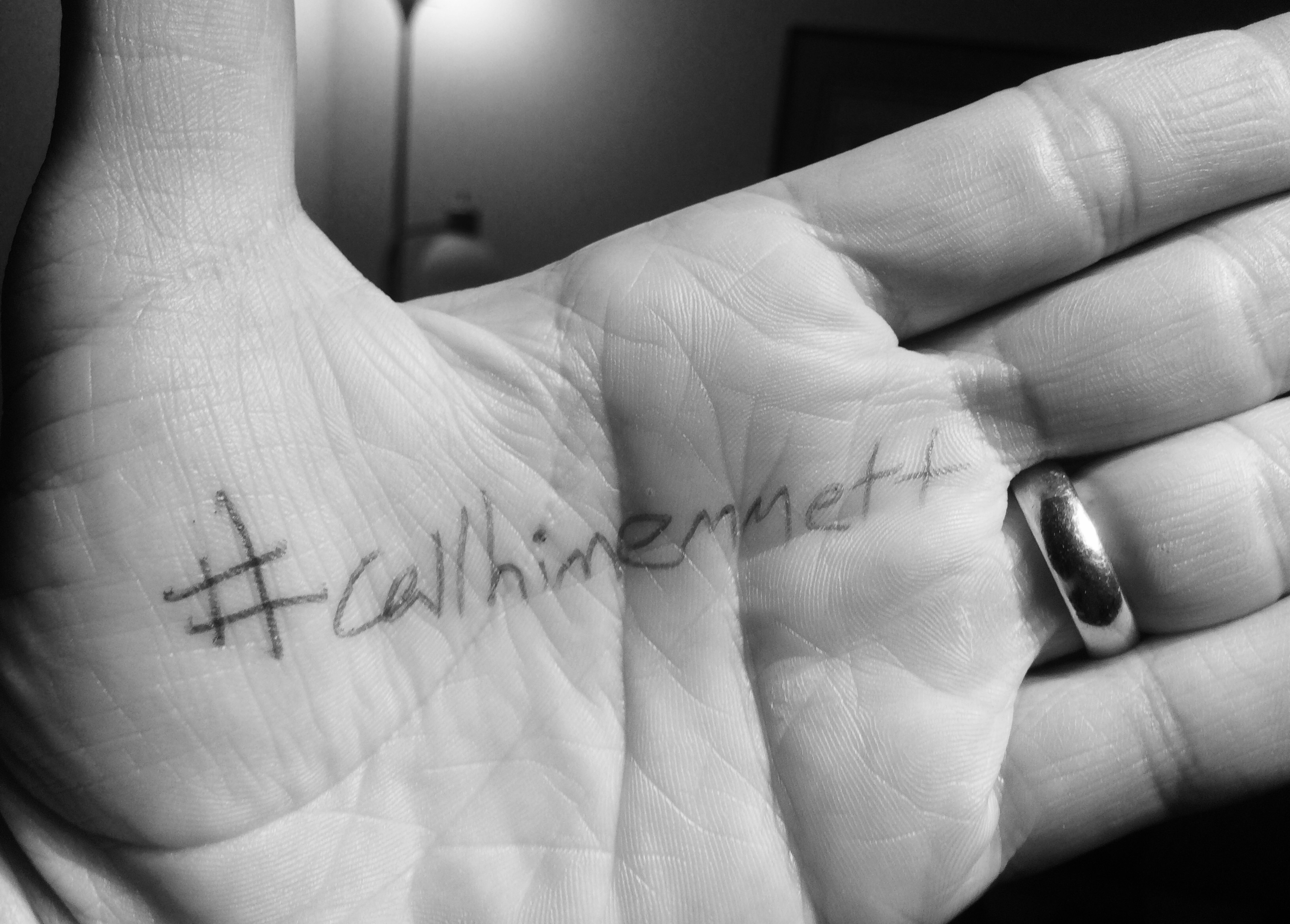
Speak out about abortion: check out the #callhimemmett campaign.


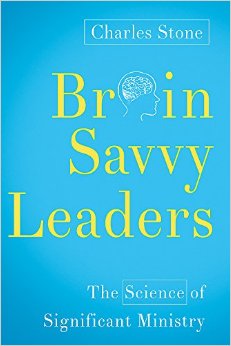
5 Quotes On Problem Solving From “Brain-Savvy Leaders”

Brain-Savvy LeadersCharles Stone’s book Brain-Savvy Leaders is chockfull of helpful information! When you understand more how your brain works, you can leverage its power more efficiently. Here are some quotes he shared about problem solving.

“Only in the mystery of the incarnate Word does the mystery of man take on light.” —Pope Paul VI 

“As a part of the C-system, the prefrontal cortex processes bits of information one after the other (serial) instead of several at the same time (parallel). … When we try to process too much information at once, the prefrontal cortex’s serial processing nature can result in mental processing bottlenecks that in turn can lead to unfinished thoughts and tasks. … When we attempt many mental tasks at once, our thinking degrades, accuracy drops, we focus on the urgent instead of the important, we forget things, and the quality of future decisions gets muddied.”

Coffee, caffeinated drinks (but not too many), exercise, and novelty can increase the amount of these neurotransmitters and get us into a more productive and focused state.”

“Charlan Nemeth, a psychology professor at the University of California-Berkeley, performed a creativity study in 2003. She divided 265 female students into groups of five and asked them to generate as many ideas as possible on how to decrease traffic congestion in the San Francisco Bay area. Each team received one of three conditions and was given twenty minutes to complete the task. Either they used the traditional ‘no criticism’ brainstorming technique, or they generated as many ideas as possible but could debate and criticize each one, or they received no instructions. The ‘debate and criticize’ teams generated 20 percent more ideas than the other two groups. … Debate…adds the element of surprise that engages the brain.”

“When trying to solve problems, encourage your team to imagine themselves a year from now instead of imagining themselves tomorrow. Studies show that this time perspective fosters more creativity.”

You can read my book review of Brain-Savvy Leaders by clicking here.

I have also shared other quotes from this book on learning, brain health, and emotional health.

Are You Sickened Enough Yet?

MindAre you sickened enough yet by what Planned Parenthood is doing? How much more do you need to see before you will speak out?

Our politicians aren’t going to do anything unless they feel it’s “politically beneficial.” That is, if enough people call and email to tell them to defund Planned Parenthood—enough calls and emails to make them realize that re-election is at stake—then perhaps they will do the right thing.

This is the most appalling video from the Center For Medical Progress yet. I dare you to watch every stomach-churning minute of this video…

It’s clear that the mainstream media isn’t going to cover this. Mainly because they are getting awards from Planned Parenthood for not covering their barbaric, murderous practices.

But the Students For Life are doing something that can get noticed. If enough of us will share the #callhimemmett hashtag, we can make this a trending topic … we can push this to the forefront of every social media outlet.

Check this out—

Will you join me?

CallHimEmmett#callhimemmett

Links & Quotes

link quote

“Remember it is God, and not man, that must have the glory. It is not much speaking, but much faith, that is needed.” —Robert Murray McCheyne

“That very church which the world likes best is sure to be that which God abhors.” —Charles Spurgeon

Mark Atteberry asks a good question: “Aren’t we out-of-touch, narrow-minded, sexually-repressed Christians supposed to be the only ones who are bothered by rampant sexuality? Why, then, are these such big stories Jared Fogle, Ashley Madison, Larry Flynt], worthy of reporting on national newscasts?” Check out his post A Big Day For Sexual Sin.

Reminder: There is no such thing as free pornography. “The simple truth is that porn always costs us dearly, and it is never a victimless crime. Peer-reviewed research suggests that porn is highly addictive, negatively affects our behavior, and functionally operates as a destructive drug.”

Eric Metaxas shares some cool archeological findings about Jesus Christ’s hometown of Nazareth.

“Believing in your heart that God raised Jesus from the dead is much more than accepting a fact. It means being confident that God is for you, that He has closed ranks with you, that He is transforming your life, and that He will save you for eternal joy.” —John Piper