If You’re Going To Do It, Then Do It

Have you ever watched someone attempt something they really didn’t want to do? Like when a parent asks a child to pull weeds in the garden—they go grumbling, dragging their feet, finding excuses to delay starting, pull a couple of weeds, and then complain about the heat. Is it any wonder that the job takes twice as long and is completed half as well as it should have been?!?

Solomon wrote this:

Whatever your hand finds to do, do it with all your might… (Ecclesiastes 9:10).

In other words, it’s like my Mom used to always remind me: If anything’s worth doing, it’s worth doing well!

Don’t go halfway. Put all you’ve got into it and get it done. And done well.

I think Solomon (and my Mom) would have loved Seth Godin’s blog post called Outsmart

Outsmart

or…

Outlead

Outcare

Outmaneuver

Outinvest

Outlisten

Outconnect

Outgive

Outlearn

Outwork

Outspend

Outrespect

Outinnovate

Outrisk

Outpersevere

Outinspect

Outproduce

Outrisk

Outlove…

In my opinion, no one should work harder, more enthusiastically, better, smarter, and more lovingly than one who calls themselves a follower of Jesus Christ. Check out my ongoing series of posts on godly leadership.

Open Door

Listen to the podcast of this post by clicking on the player below, and you can also subscribe on Apple or Spotify.

The phrase open door shows up several times in the New Testament, and it shows up quite a bit in the present-day vocabulary of many Christians too. But I’m not sure we mean the same thing.

I hear Christians saying things like, “I’m praying for God to open a door for a new job,” or “I’m waiting to see what door God will open for my schooling,” or something to that effect. In other words, the open door seems to be for our personal benefit.

The apostle Paul said this:

A great door for effective work has opened to me, and there are many who oppose me (1 Corinthians 16:9).

Let’s get one thing clear: God opens doors (we don’t), and our job is to obediently walk through those open doors (God won’t shove us through them).

Paul knew that the open door was not for his benefit, but for the benefit of those who were presently outside of the Kingdom of God. God opens doors for His people so that those outside His Kingdom can come inside (see Acts 14:27; 2 Corinthians 2:12; Colossians 4:3).

It might look like God opened a door by providing a job, but that job is His means to help you invite others into His Kingdom. The open door (the job, in this case) isn’t primarily for you; it’s for you to invite others in.

That’s why when God opens doors there will be many who oppose you. They are not really opposing you, but they are opposing the opportunity for the kingdom of darkness to be robbed and the Kingdom of God to be enriched.

So when you pray for open doors, remember:

  • When God opens a door, it’s mainly for the benefit of those outside the Kingdom of Heaven
  • You will be opposed by the kingdom of darkness

If you’re ready for both of those, then by all means pray for open doors!

►► Would you please prayerfully consider supporting this ministry? ◀︎◀︎

Artificial Maturity (book review)

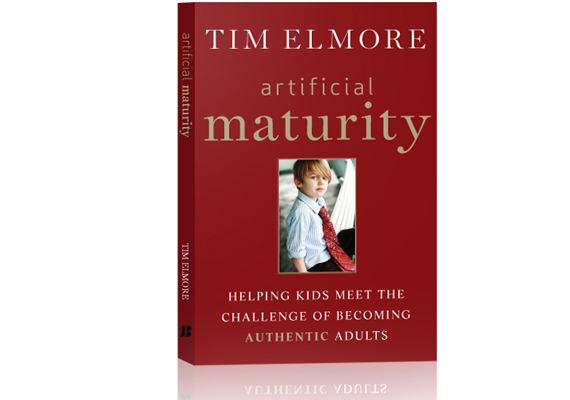
When I posted my review of Tim Elmore’s previous book Generation iY, I said that book earned a rare “must read” rating from me. Whether you read that book or not, Artificial Maturity has earned the coveted must-read rating again!

If Generation iY described who this current youth generation is, Artificial Maturity describes how to help these youth achieve genuine maturity. Here’s how Dr. Elmore sets the stage for this book from the very first page:

“…I believe in this generation like none before. I believe they have the potential to be the greatest generation—a population Warren Bennis calls the “Crucible Generation.” He and many others believe these young people may just be the ones who transform society globally and restore democracy and goodwill.

I believe this with one caveat. I predict all this is possible if we, the adults, will rethink the way we parent, lead, teach, coach, pastor, and manage them. It’s up to us what kinds of adults our kids will become. So far, many of them are a part of a leaderless generation. The adults have done more protecting than preparing. Some moms and dads want to be pals rather than parents. And many adults are just overwhelmed with the notion of leading kids today—and they surrender their role as leaders.”

So this is not a book that tells you how to change kids, but how we as adults must change.

With persuasive evidence, scientific studies, personal observations, and years of hands-on experience, Dr. Elmore so accurately details how we as parents have contributed to our kids becoming artificially mature. In other words, they know lots of things, but they don’t know how to effectively apply that knowledge to be productive at work, school, and in relationships. 

I, too, share Dr. Elmore’s optimism about this generation. But if I want to see my kids—and other young people with whom I interact—excel and mature, I have to look at myself in the mirror. This generation can’t succeed if we continue to parent, and teach, and pastor, and manage as we have been doing.

I cannot urge pastors, youth pastors, parents, teachers, principals, coaches, and employers to read Artificial Maturity right away! This generation needs us to help them soar!

I am a Jossey-Bass book reviewer.

UPDATE: Read some of my favorite quotes from Artificial Maturity by clicking here.

Perfect? Yes!

The opening words of Psalm 119 describe the end result of going through what I’m calling the P119 Spiritual Workout. In a word: Blessed.

In fact, this word is so exciting that the Hebrew language uses the emphatic thought here. Bringing that into English means that the first two verses of this chapter both begin…

O!! How blessed!!

That’s a wonderful goal, but the next two verses seem to bring us crashing back to earth. In order to enjoy these heights of blessing we are asked to live like this:

  • They do nothing wrong as they walk in His ways (v. 3).
  • God’s precepts are to be fully obeyed (v. 4).

Yikes! Nothing wrong?! Full obedience?! No mistakes?!

Even Jesus said, “Be perfect, therefore, as your Heavenly Father is perfect” (Matthew 5:48).

But pay attention to this: The sign of a maturing Christian is not one who never sins; the sign of a maturing Christian is one who is closing the gap between sin and repentance.

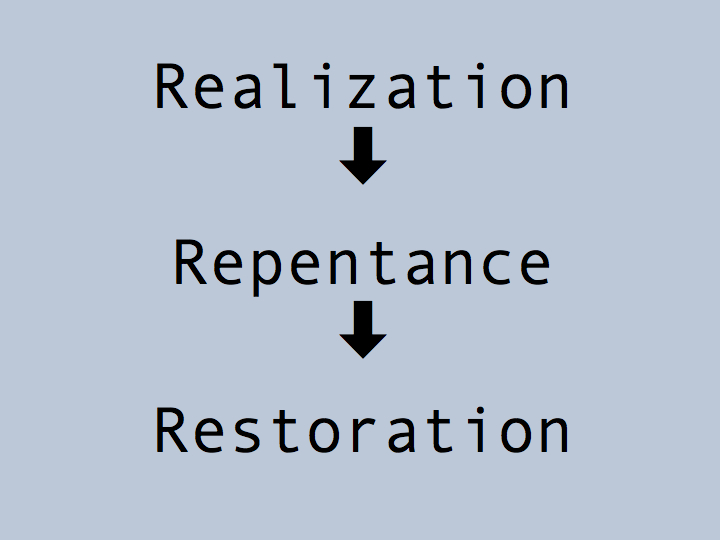
How does that work? Here’s the progression…

Realization of sinRepentance of sin → Restoration of God’s blessing

The time gap between our repentance and God’s restoration is faster than the blink of an eye—faster than you can even comprehend. What often takes us a while is moving from realization to repentance. Instead, we explain, and justify, and make excuses, and drag our feet.

But a maturing Christian invites the inspection of the Holy Spirit through the reading of God’s Word and then is quick to realize sin and repent from it. When God restores us, do you know how we appear to Him? PERFECT!!

So realizing our sin, repenting of that sin, and experiencing God’s restoration is the fastest way to live as those who do nothing wrong and who are fully obeying God’s precepts.

Don’t wait any longer: realize and repent, and then experience God’s restoration as you stand perfect in His presence!

If you have missed any of the messages in our P119 series, you can access them all by clicking here.

Be Pleased To Visit Your Church

Several folks have asked me to share the prayer from Charles Spurgeon that I used to open our service this morning.

Dear God, 

Be pleased to visit Your Church with the Holy Spirit.

Renew the day of Pentecost in our midst, and in the midst of all gatherings of Your people, may there come the downfall of the holy fire, and the uprising of the heavenly wind. 

May matters that are now slow and dead become quick and full of life, and may the Lord Jesus Christ be exalted in the midst of His Church which is His fullness.

May multitudes be converted; may they come flocking to Christ with holy eagerness to find in Him a refuge as the doves fly to their dovecotes. 

Amen!

Good Memory / Bad Memory

When you look back into your memories, what do you see? Do you recall the good things? The bad things? Which most readily springs to mind?

“I do not find fault with short memories, but with good memories which are treacherous towards divine things. What I complain of is that memory may be very strong concerning self-interest, grievances, and trials, and yet towards God’s mercies it may be very weak.” ―Charles Spurgeon

When one of the psalmists was downcast, his thoughts started to go back to the bad memories, but he chose to remember the good

…my soul is downcast within me; therefore I will remember You… (Psalm 42:6)

Did you catch that therefore?

This psalmist said, “As soon as I realize I am focusing on the bad, I will remember my God!”

This is why I am a big proponent of using a prayer journal: a written record of your prayers, answers to those prayers, revelations the Holy Spirit has shown you in the Scriptures, and other good memories. That way when your soul is downcast, you can remember the good things God has said and done for you.

Don’t let the bad memories trump the good things God has done for you. Remember … remember … remember!

My Prayer

I want people to say this after every encounter with me: Everyone was gripped with great wonder and awe, and they praised God, exclaiming, “We have seen amazing things today!” (Luke 5:26)

Why not?

Why do I think this should be something just in the past? Didn’t Jesus say…

I tell you the truth, anyone who believes in Me will do the same works I have done, and even greater works, because I am going to be with the Father. You can ask for anything in My name, and I will do it, so that the Son can bring glory to the Father. Yes, ask Me for anything in My name, and I will do it! (John 14:12-14)

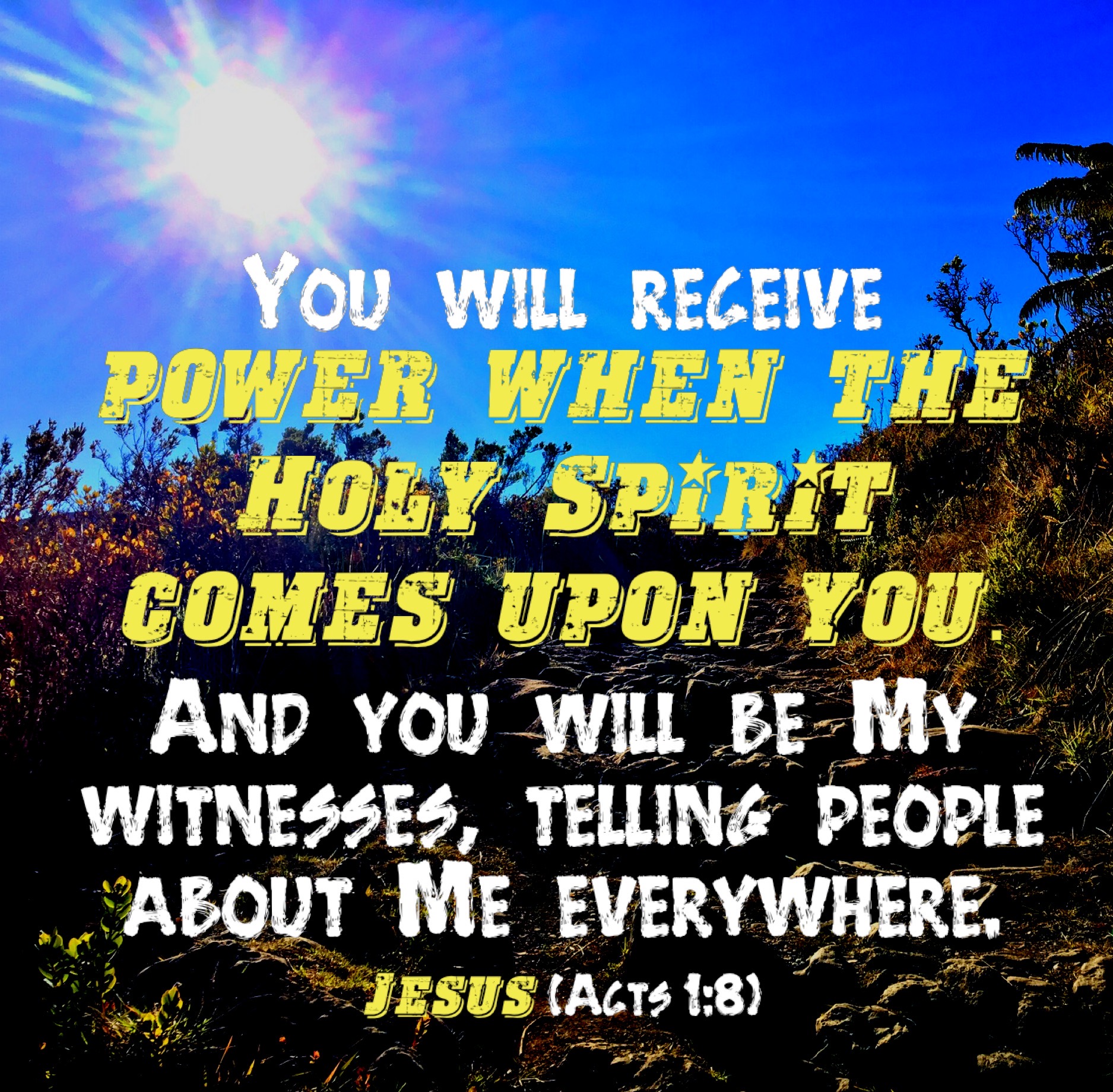
Jesus continues in John 14 to talk about the help the Holy Spirit would bring us. And in Acts 1:8 Jesus tells us that the Holy Spirit is the source of power for being living witnesses.

Oh, how I want the Spirit’s presence!

To be filled.

To be changed.

To be fruitful.

To be a witness.

To bring glory to God!

Let it be: Everyone was gripped with great wonder and awe, and they praised God, exclaiming, “We have seen amazing things today!”

That’s my prayer.

Be Your Sermon

Listen to the podcast of this post by clicking on the player below, and you can also subscribe on AppleSpotify, or Audible.

Pastor, what’s God been speaking to you personally?

How has the Holy Spirit been working your sermon on your heart this week?

What has Scripture shown you about you (not just about your congregation)?

When you tell your congregation how God has been working on you, the Word comes alive. Because now they don’t see you as a perfect person preaching at them, but as a fellow traveler who’s hearing from God and learning on the journey just as they are.

“The preacher must throw his thought into his teaching. He must not weary the people by telling them the truth in a stale and unprofitable manner with nothing fresh from his own soul to give it force. Above all he must put heart work into preaching. He must feel what he preaches. It must be with him. It is never an easy thing. He must feel as if he could preach his very life away before the sermon is done.” ―Charles Spurgeon

I’d rather see a sermon than hear one any day;
I’d rather one should walk with me than merely show the way.
The eye’s a better pupil and more willing than the ear;
Fine counsel is confusing, but example’s always clear.
And the best of all preachers are the men who live their creeds.
For to see the good in action is what everybody needs.
I can soon learn how to do it if you’ll let me see it done;
I can watch your hands in actions, but your tongue too fast may run.
And the lectures you deliver may be very wise and true,
But I’d rather get my lesson by observing what you do.
For I may misunderstand you and the high advice you give,
But there’s no misunderstanding how you act and how you live. (Edgar A. Guest) 
 

C’mon, pastor, let us SEE your sermon!

►► Would you please prayerfully consider supporting this ministry? My Patreon supporters get behind-the-scenes access to exclusive materials. ◀︎◀︎

Quotes From “From Santa To Sexting”

If you are a parent of children middle school age or younger, or if you are a teacher or youth pastor that works with this age group, I cannot urge you strongly enough to read From Santa To Sexting (you can read my review here).

These are some quotes from this book that really got me thinking…

Sexual Activity & Sexual Roles

“What helps young adolescents accept a heterosexual sex role identity? Psychiatrist David P. Ausubel, the author of Theory And Problems of Adolescent Development, writes that accepting a heterosexual sex role is aided by the following: 1) witnessing a happy marriage between parents; 2) having positive experiences with the opposite sex; and 3) possessing a strong, positive identification with the parent of the same sex. …In addition, Ausubel believes that parents exert a strong influence on their adolescent’s adoption of a particular biological sex role. For example, if the parent of the opposite sex is negative about the sex role of his child, the child will find it difficult to identify with that role. Suppose a father, for example, put his wife down and is negative about women. Then his impressionable young daughter will find it hard to embrace her femininity and identify with her own sex. The converse is true for boys. According to Ausubel, the preadolescent, depending on the ‘psychological climate’ of his home, may adopt one of three attitudes toward gender: 1) acceptance, leading to heterosexuality; 2) rejection, leading to homosexuality or asexuality (the renunciation of all sexual expression); and 3) ambivalence, resulting in bisexuality, perversion, or sexual delinquency.”

“The evidence is that early sexual experience has consequences for both boys and girls. Joe McIlhaney, MD, an obstetrician and coauthor of the book Hooked: New Science on How Casual Sex is Affecting Our Children, told us that ‘sex is a primary stimulator and molder of the brain. When we have sex, the body secrets the hormone dopamine, and that makes us want to do it again and again. That’s one of the primary reasons to abstain from sex when you’re young, because it becomes addictive.’ He adds, ‘The body also secrets the hormone oxytocin, that some label the love hormone—a hormone that seems to contribute to a girl’s trusting a man she is intimate with and also bonding to him emotionally.’ Then comes the breakup. McIlhaney continues, ‘When young people break up, MRIs show that the pain center of the brain lights up. Emotional and physical pain are felt in the same brain center.’ McIlhaney believes that when kids have multiple breakups, they seem to contribute to their losing their ability to forge lasting connections or attachments with the opposite sex. In addition, they sometimes become depressed and some become suicidal.”

Empathy 

“Sensing what others feel without their saying so captures the essence of empathy. Others rarely tell us in words what they feel; instead, they tell us in their tone of voice, facial expressions, or other nonverbal ways. The ability to sense these subtle communications builds on more basic competencies, particularly self-awareness and self-control. Without the ability to sense our own feelings—to keep them from swamping us—we would be hopelessly out of touch with the moods of others.” —Daniel Goleman 

“Empathy has twin components—one in the affective or emotional area and the other in the cognitive. On other words, we feel the distress of others from birth, but as we grow and our brain develops, we begin to think about what they are feeling and can decide how to help the poor, the distressed, and the handicapped.” 

“If you’re in a relationship, the relationship is a part of you, there’s no way around it. You get an empathetic child not by trying to teach the child and admonish the child to be empathetic; you get an empathetic child by being empathetic with the child. The child’s understanding of relationship can only be from the relationships he has experienced.” —Alan Sroufe 

“If empathy is caught, not taught, then the effect of training students to be empathetic is only skin-deep. The training is focused on a cognitive-behavioral approach; it does not take into account the emotional aspect of empathy and the fact that empathy emerges from an intimate relationship or emotional bond.”

School

“Dr. Robert Balfanz, a research scientist at Johns Hopkins University who studies risk factors for dropping out of school, has found that future dropouts can be identified as early as sixth grade. …Dr. Balfanz’s study of fourteen thousand students in Philadelphia, Pennsylvania, found that sixth grader with just one of the following distress signals had ‘at least a three in four chance’ of dropping out when they reached high school. Here are the four areas he says parents and teachers should monitor:

  • A final grade of F in mathematics;
  • A final grade of F in English;
  • Attendance below 80 percent for the year;
  • A final ‘unsatisfactory’ behavior mark in at least one class.”

“Parents are the first and best anti-bullying program around.”

Video Games & Media

“Scientifically speaking, the notion that media violence harms kids is an open-and-shut case; research has found that violent video games increase levels of aggression hormones in teen players. While their onscreen personas kicked, punched, cut, and shot their way through enemies, testosterone and adrenaline levels rose significantly in the bodies of the players behind the controls…. The strength of the evidence linking media violence to youth aggression is stronger than the evidence linking lead poisoning with mental retardation and more definitive than the case linking secondhand smoke with cancer.” —Dr. David Walsh, Why Do They Act That Way? 

Home Life

“We found that we could actually measure how parents were getting along in two ways. We could either ask them how happy they were—how much conflict they were having—or we could take a 24-hour urine sample from their kids and measure how many stress hormones, particularly adrenaline, were getting secreted in the children’s bodies. So if you’re fighting, your kids are secreting adrenaline. And if they’re secreting adrenaline because they’re stressed out, one of the things that happens to them is that the first and most sensitive system to reflect this stress is the attentional system—the kid’s ability to focus attention, the kid’s ability to shift attention when they want to, and the kid’s ability to sustain attention. And part of what we’re seeing in all of this diagnosis of hyperactivity is, in part, a reflection of increased family stress, increased stress between parents. So the attentional system is really a very sensitive indicator of whether kids are stressed out.” —Dr. John Gottman

“People who become Christians before their teen years are more likely than those who are converted when older to remain ‘absolutely committed’ to Christianity.” —Barna Group

“Revolutionary parenting, which is based on one’s faith in God, makes parenting a priority. Those who engage in revolutionary parenting define success as intentionally facilitating faith-based transformation in the lives of their children, rather than simply accepting the aging and survival of the child as a satisfactory result.” —George Barna

Thursdays With Oswald—Jesus Can Satisfy

This is a weekly series with things I’m reading and pondering from Oswald Chambers. You can read the original seed thought here, or type “Thursdays With Oswald” in the search box to read more entries.

Jesus Can Satisfy 

     [There] are indications from innumerable passages in God’s Book which prove that this complex soul which we have been examining can be satisfied and placed in perfect harmony with itself and with God in its present existence. The thought that a human soul can fulfill the predestined purpose of God is a great one. The human soul, however, can also be stagnated by ignorance. In the beginning, we do not know the capabilities of our souls and are content to be ignorant; but when we come under the conviction of sin, we begin to understand the awful, unfathomable depths of our nature and the claim of Jesus Christ that He can satisfy this abyss. Every man who knows what his soul is capable of, knows its possibilities and terrors, but knows also the salvation of God, will bear equal testimony with the written Word of God that Jesus Christ can satisfy the living soul. 

From Biblical Psychology

I think Chambers explains why some people don’t read the Bible regularly. Because when we read the Word, the Holy Spirit does show us the abyss between where we are and where God wants our souls to be. Then we are convicted and restless. And, as Augustine said, “Our souls are restless until they find their rest in You.”

But with that realization of the separation—the abyss—also comes the recognition that Jesus paid the price for our atonement (our at one-ment). Our souls can find their full satisfaction here and now if we will just turn from the thoughts and practices that are separating us from God.

Don’t wait for the “sweet by and by” to find satisfaction with God:

  1. Read the Word
  2. Let the Holy Spirit convict you of the abyss in your soul
  3. Obey the Spirit’s prompting so you can repent
  4. Experience the at one-ment with God that Jesus paid for!