What The Bible Says About The Holy Spirit (book review)

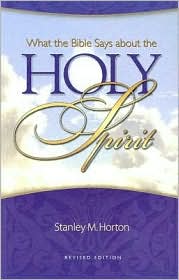
I know a lot of people get uneasy when people starting talking about the Holy Spirit. But what about when the Bible talks about the Holy Spirit? In Dr. Stanley M. Horton’s book, What The Bible Says About The Holy Spirit, you won’t get opinion, just Scripture.

I’m a fourth generation Pentecostal, which means I’ve grown up in an environment where the discussions about the Holy Spirit were numerous and candid. As a result, I thought I knew quite a bit about Him, but it turns out I was so wrong! Dr. Horton is a brilliant scholar, and his knowledge of Scripture is wonderfully on display in this book.

Dr. Horton begins with the Pentateuch and progresses all the way through the Bible, showing exactly what the Bible says about the Holy Spirit. Other books I have read talk more about what the Holy Spirit does, but Dr. Horton pulls out the Scriptures to show Who the Holy Spirit is. And, believe me, there’s a huge difference! The first approach broadens your mind; the second approach deepens your relationship.

If you want to go deeper in your relationship with the Holy Spirit, or if you are simply interested in learning more about (as Francis Chan calls Him) the Forgotten God, then check out What The Bible Says About The Holy Spirit.

Empowering The Team

In reading Leadership Is Dead, one passage particularly stood out to me:

“The wise leader understands that sharing the burden benefits the entire team over the long term. Empowering others makes tasks manageable while also allowing team members to sharpen their skills and build upon their strengths. When a leader refuses to share the load, he brings disservice to the organization because those on his team are not allowed to develop their own leadership skills, and the next generation of leaders are not developed properly for future organizational success.”

Think back to the first two kings in Israel’s history: Saul and David. Both stood out from everyone around them as a strong leader. But only one of them left behind a lasting leadership legacy.

Both Saul and David had men who were immediately attracted to them. Saul was surrounded by valiant men, while David was surrounded by society’s rejects. But clearly David was an empowering leader, and Saul was not. Want proof?

The Bible gives a lengthy list of David’s mighty men, along with quite a résumé of their heroic accomplishments. The list of Saul’s mighty men is: .

I think David was secure in the fact that God called him to lead, while Saul was constantly second-guessing.

  • This made David generous, and Saul jealous.
  • David liberated his men, and Saul contained his men.
  • David encouraged, and Saul controlled.

In the end: David left a legacy, and Saul did not.

What kind of leader do you want to be?

UPDATE: Being secure to serve is one of the main points I tackle in my book Shepherd Leadership: The Metrics That Really Matter. Check out this short clip—

Leadership Is Dead (book review)

It’s not that we don’t need leaders anymore; actually, we need more leaders. But we also need the right kind of leaders. It is exactly those right kinds of leaders that Jeremie Kubicek calls upon in Leadership Is Dead: How Influence Is Reviving It.

Many leadership books tend to be very head-oriented. That is, most leadership books give you the how to’s. Jeremie takes a different approach. Instead of leading with the how to’s, he leads with the why. From the opening chapter Jeremie wants his readers to look deep inside to find out why they want to be a leader, or a better leader. Then once that is firmly in mind, he begins to dismantle all of the self-serving motivations, and replace them with the ultimate tool for effective leadership: influence.

In many ways this book is as much a people-skills book as it is a leadership book. But, after all, unless you are leading sheep, you need to know about interacting with people. Rest assured, Leadership Is Dead is not a touchy-feely book; it is an in-your-face confrontation about doing reviving true leadership.

The last chapter is called “Why You Probably Won’t Do This.” In this chapter, Jeremie says, “Most leaders never reach the levels of significant influence because their instincts for self-preservation are too strong.” And then he adds, “True influence comes when you change yourself to change the world.”

Do you want to make a lasting impact on your world? It starts when you can make the changes in yourself that will lead to greater levels of influence on those around you. Because in order to change your world, you’re going to need a lot of help from a lot of other people! This book can help.

(Special thanks to Michael Hyatt for selecting me as a winner on his blog, so that I could get a copy of this book. And thank you as well to Howard Books for making these books available to Michael Hyatt.)

(Dis)Approval

Have you ever been doing or saying something, and then “the look” on someone’s face caused you to stop or change what you were saying/doing? We often look to certain people for their (dis)approval to gauge how we’re doing.

But what if we’re looking at the wrong faces?

God called Jeremiah to be a prophet while he was still fairly young. So when this young man starts saying, “This is what God says,” can you imagine the looks he’s going to get?!

So right out of the gate, God says two things to Jeremiah: Do not be afraid of them … Do not be terrified by them (Jeremiah 1:8, 17). I like how the King James Version renders these verses: Do not be afraid of their faces … Do not be dismayed by their faces.

  • Afraid means to look at faces for approval.
  • Dismayed or terrified means to look at faces for disapproval.

But people’s faces aren’t the faces Jeremiah—or you or I—should be looking at. The only face that matters is God’s! Look how many “I” statements God makes about Himself in this chapter:

  • I formed you (v. 5a)
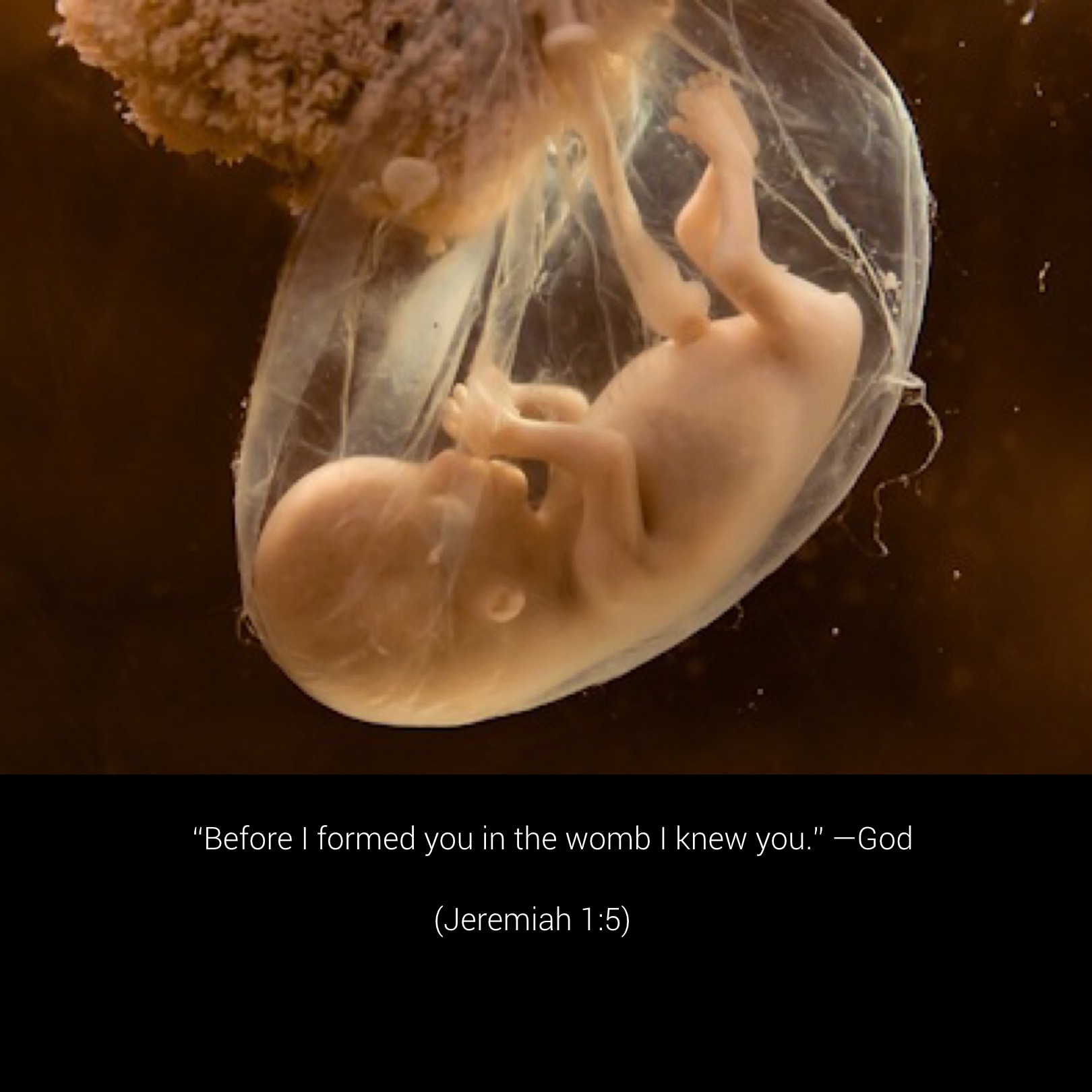
  • I knew you in advance (v. 5b)
  • I set you apart (v. 5c)
  • I appointed you (v. 5d, 10)
  • I am sending you (v. 7a)
  • I give you the words to say (v. 7b, 17)
  • I am with you (v. 8a, 19a)
  • I will rescue you (v. 8b, 19b)
  • I will put my words in your mouth (v. 9)
  • I am watching over you (v. 12)
  • I am making you strong (v. 18)

The faces of people are not how you and I should gauge (dis)approval.

How sad to look at other faces for approval, only to hear God say, “Depart from Me. I never knew you!

How liberating to know that even though other faces may disapprove me, I can still hear my Master say, “Well done, good and faithful servant!

Whose face are you looking at today?

Weekend Review

I feel so full after such a wonderfully full-filling weekend.

On Saturday morning our worship team helped kick-off Lifewalk 2011, by leading some worship songs during the registration time. I love doing spiritual battle alongside this team! It was a great way to remind everyone why we were there.

God gave us beautiful weather for Lifewalk! Along our route we stopped to pray at Cedar Spring City Hall, The Springs Church, Alpha Family Center, and Red Hawk school. When we returned to our starting point in Morely Park, we were greeted with the great news that Lifewalk had raised nearly $12,000!

I had the privilege of addressing the Lifewalk participants just before we released our balloons. I spoke from Ephesians 2:10, where we read that God created us in advance to do good works that would bring Him glory. Unfortunately, tens of millions of babies have been aborted before they had a chance to do their good works, so it is now up to us, the living, to redouble our efforts. We need to do not only the good works God prepared us to do, but also the good works of those aborted lives. It was a somber, yet empowering, reminder.

20110620-063303.jpgOn Sunday morning I spoke to our Dads on Father’s Day. I told the story of Boaz the kinsman-redeemer from the book of Ruth. Boaz was a man motivated by God’s word, and a man who did not give in to culture’s pull. Boaz was also a picture of Jesus Christ as the ultimate Kinsman-Redeemer. I challenged our Dads to remember that they are the representation of Christ to their wives and kids.

The highlight of Sunday morning for me was watching all of our Dads serve Communion to the rest of the church. Powerful! What a reminder to all of us that Dads are to love and serve their families just as Christ loves and serves His Church.

To cap it all off, I got to have lunch with both my Dad and my kids. It was a very moving thing for me to not only honor my Dad, but to read the notes my kids had written to me. Part of what I wrote to my Dad was about the investment he made in my life. Then he and I both watched that investment being compounded in the lives of his grandkids. How awesome is that!

When I experience such a full weekend, only one thought dominates my mind: How blessed am I! I love living my life to honor my Heavenly Father, and I’m so grateful I get to share that life with so many other incredible people.

What’s Your Take On “Church”?

Here’s what I want to see…

From the book of Acts:

All the believers devoted themselves to the apostles’ teaching, and to fellowship, and to sharing in meals (including the Lord’s Supper), and to prayer. A deep sense of awe came over them all, and the apostles performed many miraculous signs and wonders. And all the believers met together in one place and shared everything they had. They sold their property and possessions and shared the money with those in need. They worshiped together at the Temple each day, met in homes for the Lord’s Supper, and shared their meals with great joy and generosity—all the while praising God and enjoying the goodwill of all the people. And each day the Lord added to their fellowship those who were being saved. (Acts 2:42-47, New Living Translation)

Here’s how N.T. Wright puts it:

“The life of believers, individually and collectively, is intended to incarnate the biblical reality of human dignity. The church is called to be an alternative society, living in contrasting style in the midst of the world. Its members are, in God’s design, not self-promoting, as the world is; they are not competitive, as the world is; they do not advance at the expense of others, as the world does; they do not take advantage of the weakness of others, as the world does. They love one another and do good to and for one another. Failing that, there is no compelling reason for the world to pay attention. Which is to say that the only means by which Christians can commend a truly godly vision of human rights is to incarnate them in their individual and collective lives, to announce God’s actions and intentions that constitute the Gospel, and to act justly in the name of God.”

And Rubel Shelly’s take:

“It is a mistake of monumental proportions to think that the priestly ministry of the church is a Sunday-focused event. It is the whole life of the whole church that is our living-body sacrifice to the Lord. Sunday praise is to be joined with Tuesday work and Thursday golf, Wednesday family life and Saturday yard work. Everything in the life of a Christian is to be seamless in terms of its appropriateness for displaying the excellence of God’s heart and character.”

What’s your take?

Father’s Day

I love digging up stories in the Old Testament that are so timely for today! And I’ve got a great story to share with our men on Father’s Day.

It’s the story of a man who had the title kinsman-redeemer. Culturally, we don’t practice this anymore. But spiritually, the concepts are so on-target for today. I am really excited to share this with our men this Sunday, and then to watch our guys step up to the challenge of becoming a modern-day kinsman redeemer for the families.

If you’re in the area, I hope you will join us for a great morning.

Thursdays With Oswald—Unconscious Blasphemy

This is a weekly series with things I’m reading and pondering from Oswald Chambers. You can read the original seed thought here, or type “Thursdays With Oswald” in the search box to read more entries.

Unconscious Blasphemy

     For you to say, “Oh, I’m no saint,” is acceptable by human standards of pride, but it is unconscious blasphemy against God. You defy God to make you a saint, as if to say, “I am too weak and hopeless and outside the reach of the atonement by the Cross of Christ.” Why aren’t you a saint? It is either that you do not want to be a saint, or that you do not believe that God can make you into one.

From My Utmost For His Highest

To Him who is able to keep you from stumbling and to present you before His glorious presence without fault and with great joy—to the only God our Savior be glory, majesty, power and authority, through Jesus Christ our Lord, before all ages, now and forevermore! Amen. (Jude 1:24-25)

God is ABLE to make you His saint.

Jesus is WILLING to make you His saint.

The Holy Spirit is WORKING to make you His saint.

Will you let Him?

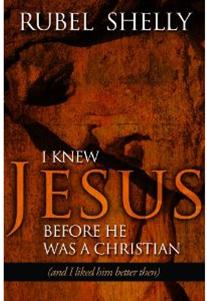
I Knew Jesus Before He Was A Christian (book review)

You know the cliché: “Never judge a book by its cover.” But with Rubel Shelly’s book, it’s really hard not to give in to this! The complete title is I Knew Jesus Before He Was A Christian… And I Liked Him Better Then. Provocative, huh?

His idea is that the Jesus that is presented in the Bible—which is also the Jesus that is presented to someone who doesn’t have a personal relationship with Him—is different from the Jesus people see in the organized church and in professing Christians. The Jesus in the Bible (or before someone becomes a Christian) is seen in freedom and abundant life. But the Jesus in the church (or after someone becomes a Christian) is a rule-keeping killjoy.

Honestly, I expected this book to be a church-bashing book. I excepted Rubel Shelly to come out blasting away on the rephrase I-love-Jesus-but-I-can’t-stand-His-followers! So I was more than pleasantly surprised right from the first chapter—appropriately titled “Pro-Jesus and Pro-Church”—that this book was not taking that track. Instead, Shelly makes the distinction between “institutionalized religiosity” and a vibrant personalized relationship between God and mankind. Then out of the overflow of this personalized relationship with God, a Christian’s outward lifestyle toward others should be notably more Christ-like.

This book is not targeted at any one segment. There are parts that every pastor would do well to heed. Then there are other parts that anyone who calls themselves Christian should read. And there are even parts that those not involved in a church or a relationship with Christ should take note of.

If, by the title, you were expecting to see the church get beat up, you will be sadly disappointed. However, if you feel like the Church has no room for improvement, you will not only be disappointed, but probably a bit angered too! On the other hand, those who love Christ and love His Bride (the Church), and want to see the Church operating more as she should, you will find much to process in this book.

I am an ACU Press book reviewer.

Examination

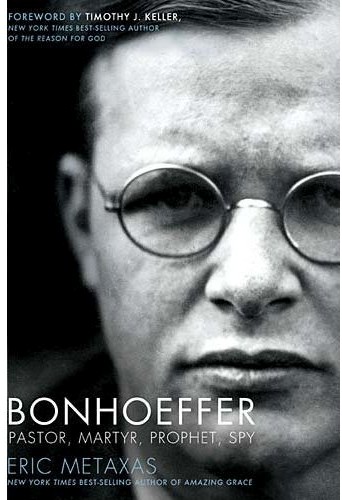
I’m reading Eric Metaxas’ fascinating biography of Dietrich Bonhoeffer.

Here’s something amazing to me: Bonhoeffer had a degree in theology (having studied under some of the most esteemed theologians of the day), taught Sunday School classes, lectured on biblical doctrine, served as an interim pastor for a full year, and even earned his doctoral degree. Yet after all this, people noticed a change in Bonhoeffer.

Listen how he described the change himself:

I plunged into work in a very unchristian way. … Then something happened, something that has changed and transformed my life to the present day. For the first time I discovered the Bible…. I had often preached. I had seen a great deal of the Church, and talked and preached about it—but I had not yet become a Christian. … I know that at that time I turned the doctrine of Jesus Christ into something of personal advantage for myself…. I pray to God that that will never happen again.

If such a man as Dietrich Bonhoeffer discovered that he knew about Jesus without knowing Jesus personally, shouldn’t we, too, “Examine yourselves to see if your faith is genuine. Test yourselves. Surely you know that Jesus Christ is among you; if not, you have failed the test of genuine faith” (2 Corinthians 13:5).