Links & Quotes

Having too many items listed as “priorities” on your To Do list can actually paralyze you. You have keep your list manageable to keep your leadership effective. Check out the full conversation Greg and I had on setting goals and making changes. This is also an important aspect of maintaining good mental health.

I have lots of new content every week, which you can check out on my YouTube channel.

According to Leslie T. Lyall, the secret of Hudson Taylor’s life and ministry could be summed up in four simple propositions: “There is a living God. He has spoken in His Word. He means what he says. And He is willing and able to perform what He has promised.”

“Hard times create strong men. Strong men create good times. Good times create weak men. And, weak men create hard times.” —G. Michael Hopf

In lamenting the rise of worldliness in our churches, John Piper said, “About forty years ago, David Wells wrote a book called No Place for Truth, which made the case that in the American church, God rests far too lightly on the people of God. He doesn’t have weight. It was the same heart cry from Dr. Wells as from J.B. Phillips. God is marginal. God has little weight in our worship services and little weight in our lives. He’s taken lightly. He’s simply one among many factors rather than the all-consuming factor, and I have thought that if I were to write a book today with a similar burden, it might have this title: Your Christ Is Too Cheap, Your Heaven Is Too Distant, Your Earth Is Too Big.”

The Institute for Creation Research reported, “In July of 2024, Science magazine confidently reported, ‘The last ancestor shared by all living organisms was a microbe that lived 4.2 billion years ago, had a fairly large genome encoding some 2600 proteins, enjoyed a diet of hydrogen gas and carbon dioxide, and harbored a rudimentary immune system for fighting off viral invaders.’ That’s quite a statement that details an unknown creature living somewhere on this planet 4.2 billion years ago.” Of course, this is an unobservable, unprovable claim, but that’s part and parcel of the evolutionists’ claims. 

Fight The New Drug explains what sextortion is and how to protect yourself and your family from this insidious online threat.

“What we do on some great occasion will probably depend on what we already are; and what we are will be the result of previous years of self-discipline.” —H.P. Liddon, nineteenth-century theologian 
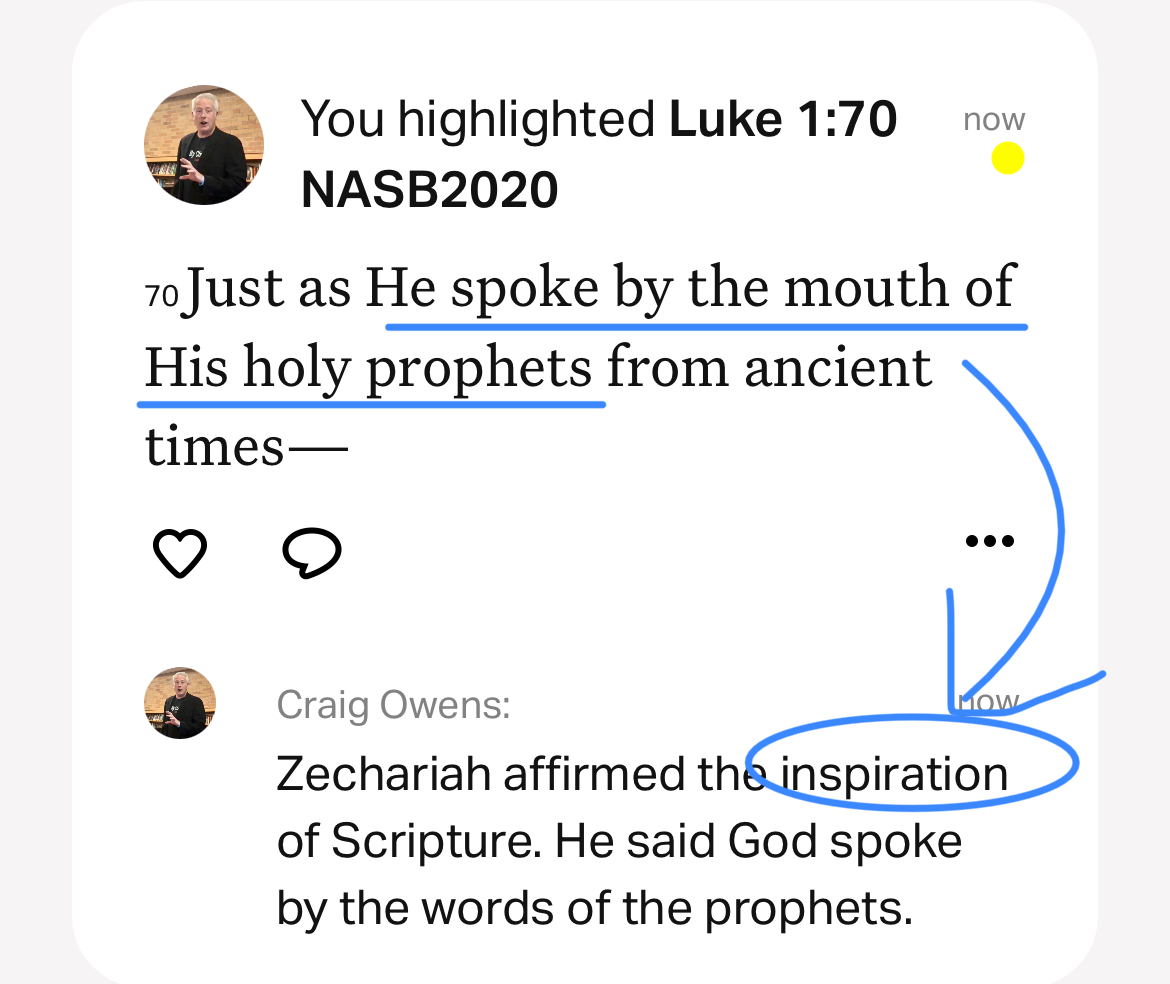
Lenny Esposito has a great podcast for Christian apologists called the Come Let Us Reason podcast. On a recent episode, Lenny used a passage in the Book of Jeremiah to talk about the inspiration of Scripture.

“God will work when He pleases, how He pleases, and by what means He pleases. He is not bound to keep our time, but He will perform His word, honor our faith, and reward them that diligently seek Him.” —Matthew Henry 

As the first Christian church dealt with a serious complaint that could have split the church internally, there are a number of leadership gifts that are in play to provide a wise solution. Most of these leadership gifts get overlooked by the casual observer, but they are all absolutely indispensable. This is new exclusive content I regularly share with my Patreon supporters. Would you prayerfully consider supporting this ministry?

What Does It Mean To Be “Worldly”?

A lot of Christians struggle with what is considered “worldly,” trying hard to avoid such things. In our last Q Series, this was a question that was asked by a couple of people: what exactly makes something “worldly”? Check out this short video clip…

In the video I reference the following Scriptures:

You can check out some other topics that we addressed in the Q Series like an apologetic for the Bible, parables, end times events, and prayer.

Links & Quotes

link quote

“What life have you if you have not life together? There is no life that is not in community.” —T.S. Eliot

“Dr. Karl Menninger once observed that sin dropped out of the national vocabulary in the middle of the twentieth century. The word no longer has a place in public discourse because it conveys images that the majority of the people will not accept. … Perhaps holiness dropped out of our vocabulary because we are accustomed to a Christian civilization where our Christianity seldom demanded that we stand apart from our society. Worldliness, the opposite of holiness, has also dropped from our vocabulary. Where we have made peace with our culture, the words ‘holiness’ and ‘worldliness’ lose their meaning, for we cannot imagine how Christianity would demand that we separate from the dominant standards of our time.” —James W. Thompson

“A real Christian allows his mind to run up the sunbeam to the sun.” —C.S. Lewis

“Here’s the secret of the lilies [Luke 12:27]: they bask. … Waiting for the Lord has the connotation of waiting for Him to show up, or do something or grant a provision. It’s like focusing on the sunbeam. Waiting upon the Lord is running up the sunbeam to the Lord Himself, beyond what He does, and basking under the influence of who He is.” —Curt Dalaba

What Is “Success” For A Church?

“How’s it going,” a fellow pastor asked me. “How’s your church doing?”

If you’re a pastor, you probably get asked this often. How do you answer this question? Do you tell them what your attendance was on Sunday morning? Or about the newest program you’ve started?

When you look in the mirror and ask yourself, “How’s it going,” is your answer related to nickels and noses (offerings and attendance)? Is it how many people complimented your last sermon?

Listen to these sobering words:

Worldliness is not the trap that most endangers us as Christian workers; nor is it sin. The trap we fall into is extravagantly desiring spiritual success; that is, success measured by, and patterned after, the form set by this religious age in which we now live. 

We have a commercialized view—we count how many souls have been saved and sanctified, we thank God, and then we think everything is all right. (Oswald Chambers)

We need to be very careful about how we define “success” in a church setting. Let’s use Jesus as our example:

  • How big was His congregation? Twelve men. One betrayed Him, nine ran away when the going got tough, and one denied he even knew Him. Even after being raised from the dead (!) there were only 120 people in the upper room.
  • How much money did His church have? Not even enough to buy a gravesite for the Messiah.
  • What did people think of His sermons? Some of His sermons made people so mad they wanted to stone Him. And after one sermon the Bible says: From this time many of His disciples turned back and no longer followed Him (John 6:66).

Maybe “success” in the church is more like…

  • …people being reconciled to God. Remembering that “our work is not to save souls, but to disciple them” (Chambers).
  • …seeing disengaged people becoming actively involved in engaging others with the Gospel.
  • …“Never seek[ing] after anything other than the approval of God” (Chambers).
  • …to say with Jesus, “The Spirit of the Lord is on Me, because He has anointed Me to preach good news to the poor. He has sent Me to proclaim freedom for the prisoners and recovery of sight for the blind, to release the oppressed, to proclaim the year of the Lord’s favor” (Luke 4:18-19).

These are just some of my thoughts. What else should be on this list? How would you define “success” in the church?

I have also shared some questions that can help pastors and ministry leaders better gauge the level of effectiveness in their ministry.

UPDATE: This post was one of the seed thoughts that went into fashioning my book Shepherd Leadership: The Metrics That Really Matter.

Is My Church Worldly?

I read this quote this morning from David F. Wells. It’s very challenging. I believe my responsibility as a pastor is to always be wrestling with issues like this.

What do you think about this quote:

“. . . Where Christian faith is offered as a means of finding personal wholeness rather than holiness, the church has become worldly.

“There are many other forms of worldliness that are comfortably at home in the evangelical church today. Where it substitutes intuition and feelings for biblical truth, it is being worldly. Where its appetite for the Word has been lost in favor of light discourses and entertainment, it is being worldly. Where it has restructured what it is and what it offers around the rhythms of consumption, it is being worldly, for customers are actually sinners whose place in the church is not to be explained by a quest for self-satisfaction but by a need for repentance. Where it cares more about success than about faithfulness, more about size than spiritual health, it is being worldly. Where the centrality of God to worship is lost amidst the need to be distracted and to have fun, the church is being worldly because it is simply accommodating itself to the preeminent entertainment culture in the world.

“Is it not odd that in so many church services each Sunday, services that are ostensibly about worshiping God, those in attendance may not be obliged to think even once about His greatness, grace, and commands? Worship in such contexts often has little or nothing to do with God.” —David F. Wells