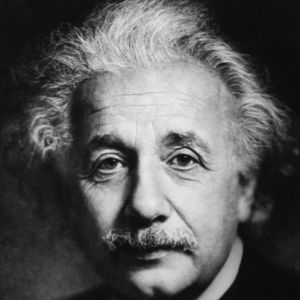
Science does not have all the answers (despite what many scientists want to tell us!). Here is a quantum physics mystery that has baffled the best and brightest minds. Even Albert Einstein called this “spooky actions at a distance.”
Watch this short video and see what you think…
A few other Einstein quotes come to mind:
“There are only two ways to live your life: one is as if everything is a miracle, the other is as though nothing is a miracle.”
“The important thing is not to stop questioning. Curiosity has its own reason for existing. One cannot help but be in awe when he contemplates the mysteries of eternity, of life, of the marvelous structure of reality. It is enough if one tries merely to comprehend a little of this mystery every day. Never lose a holy curiosity.”
“Even though the realms of religion and science in themselves are clearly marked off from each other, nevertheless there exist between the two strong reciprocal relationships and dependencies … The situation may be expressed by an image: science without religion is lame, religion without science is blind.”
“Every one who is seriously engaged in the pursuit of science becomes convinced the laws of nature manifest the existence of a spirit vastly superior to that of men, and one in the face of which we with our modest powers must feel humble.”
When you have a decision to make, isn’t it nice when you know the outcome of each option ahead of time? I mean, it makes it way easier to decide when you know what you’re going to get with each decision.
Like just before the Israelites head into the Promised Land, God says, “You can choose Me and have a whole lot of blessings, or you can choose another god and miss out on all My blessings” (Deuteronomy 30:11-20).
Easy choice, right?
I think the songwriter of Psalm 125 had that Deuteronomy passage in mind when he wrote his song of ascent. Basically, he says, you can trust God (v. 1) or you can walk on crooked paths (v. 5). What does it mean to trust God? Literally it means to have a confident expectation that He is Who He says He is, and He does what He says He’s going to do.
To help make the decision easier, the songwriter lists four blessings that come when we trust God—
We become as secure and unshakeable as Heaven is (v. 1).
We experience God’s “surroundedness” over, around, above and beneath us (v. 2).
We escape evil’s clutches (v. 3).
We experience God doing good for us (v. 4).
Of course, we can also choose not to trust God. We can try another path on our own. The curse for doing that is pretty sad—God will allow those who aren’t responsive to His voice to walk away from Him (v. 5).
Just like the story of the prodigal son (in Luke 15), the Father will allow you to walk away, but He will continue to long after you. And hopefully like that wayward son you will “come to your senses” and return to your Father. When you do, He will run to you, wrap you in His love, restore you to His family, and allow you to experience all of His blessings again!
The choice is up to you. I pray you will choose life and blessing and surroundedness, and God’s goodness toward you.
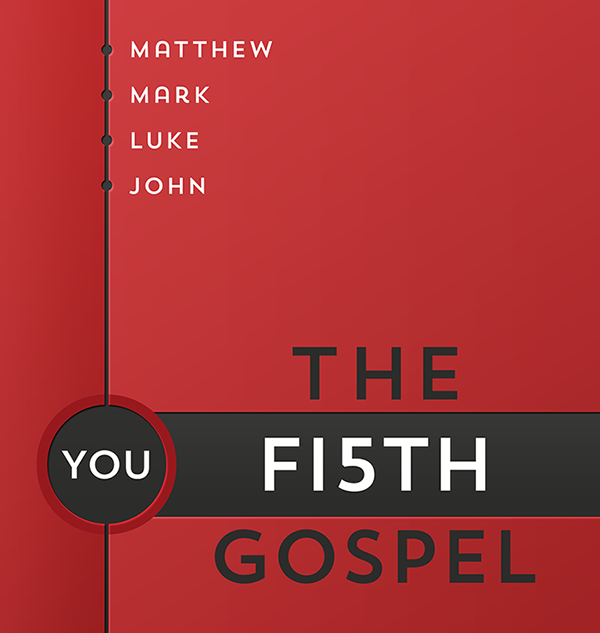
I have been watching the One Minute Apologist videos from Bobby Conway for quite awhile, and find them very helpful. Recently I finished a reading plan in YouVersion based on Bobby’s book The Fi5th Gospel. Here are a few quotes that especially caught my attention.
“If I am the only Gospel people will ever experience are they experiencing the true Gospel?”
“At no other time in human history has God so plainly and blatantly revealed Himself than at Calvary. At no point has He so graphically uncovered His heart for mankind. It was there, on a hill outside Jerusalem, the Messiah bled for us, suffering hellish agony and sin-induced banishment, all the while enduring the brutal wrath of a holy and righteous God.”
“The exclamation point to this graphic love letter to us was the resurrection—Jesus’ conquering moment of triumph over sin, satan, and the grave. This is what Christians are all about right? It’s how we are saved. Take away the Cross and we’re no different from any other religious idea. It’s Jesus Christ, His death and resurrection. Strip away all the modern church fluff and this is what you find at the core of our faith. It’s essential. Nonnegotiable. Undeniable. It’s what makes us who we are. It’s what makes Christians ‘Christian.’ And it’s why Jesus is the answer to all of life’s deepest issues.”
“The sacrifice [God] requires isn’t death on a cross, but rather death to our pride and fear of what other might think. God just wants us to be proud of Jesus and what He has done for us. He wants us to be unashamed of His Son.”
“Though we were originally created in God’s image, God’s reflection in us was marred in the Garden of Eden when Adam and Eve sinned. And though His image wasn’t completely erased, it was defaced and tarnished. When you trusted in Christ, the Holy Spirit began a beautiful work of ‘image restoration’ in you; masterfully remaking you to more accurately reflect God’s virtue. He began sculpting, forming, and transforming your character to better display Christ to the world. You become His image-bearer, and His ongoing work in your life distinguishes you from the world. This is a lifelong process, by the way, and one God is committed to completing.”
“None of us will ever perfectly represent God’s character. As long as we’re on this earth, we’ll have imperfections. And it’s these imperfections that some unbelievers are quick (and happy) to point out and expose. But there is value in listening to what others say, of taking an honest look in the mirror, of stepping into an unbeliever’s shoes to see what they perceive about Jesus and His bride. Think of it as a spiritual awareness-building exercise.”
This short 3-minute video is well worth your time, as J. Warner Wallace helps us understand how a sound, theistic apologetic actually points to the Jesus in which Christians believe.
Fear is crippling. Fear robs us of seizing opportunities. Fear cuts short the abundant life God desires for us to have. One definition of fear captures it well: F.E.A.R is False Evidence Appearing Real.
Oversized fears can turn into what psychologists call phobias. One website actually lists 543 unique phobias!
Where does this fear come from? Why are so many plagued by fears?
I believe the answer is found in this: fearful people aren’t looking far enough ahead. They are looking at their fears, and not the Champion of their fears.
King David knew what it was to have assassins stalking him, to be on the run for his life, to not know if someone was a friend or foe, to not even know where he was going to sleep at night. So he begins his second song of ascent with this thought: “If the Lord had not been on our side, here’s a list of really bad things that would have happened to us.”
Notice the “if” statements. David is not saying “if there were no God,” of “if God didn’t care for us.” In other words, David is clearly saying that God exists, and that God is for us!
I like this—Oh, blessed be God! He didn’t go off and leave us. He didn’t abandon us defenseless, helpless as a rabbit in a pack of snarling dogs (v. 6, in The Message).
David is not telling us how to escape our fears, but to begin celebrating that we have already been freed from our fears!
We seem to think that satan and Jesus are still duking it out, that the outcome of the struggle is still up for grabs. I’ve got fantastic news: Jesus already won! He is already the Champion!!
We’ve flown free from their fangs, free of their traps, free as a bird. Their grip is broken; we’re free as a bird in flight (v. 7, The Message).
Speaking of birds flying free, J.B. Figgis wrote, “Do you find yourself asking, ‘But am I to step out onto nothing?’ That is exactly what the bird is seemingly asked to do, yet we know that the air is there and that the air is not nearly as insubstantial as it seems. And you know that the promises of God are there, and they certainly are not insubstantial at all” (emphasis added).
What fears plague you? Jesus has already set you free from that. The battle has already been won. You just need to find the promise of God in the Bible that tells you how He has canceled that fear.
Now begin to swing that promise like a sword at your fear every time it raises its ugly head! Stop being crippled by your fear, and lift your eyes up to the Maker of heaven and earth who has set you free!
…laughed at for living out your biblical convictions?
…excluded from the “in” crowd?
…put down because your morals are too strict?
The writer of the song of ascent in Psalm 123 must have experienced this quite a bit. He uses phrases like we have endured much contempt and we have endured much ridicule.
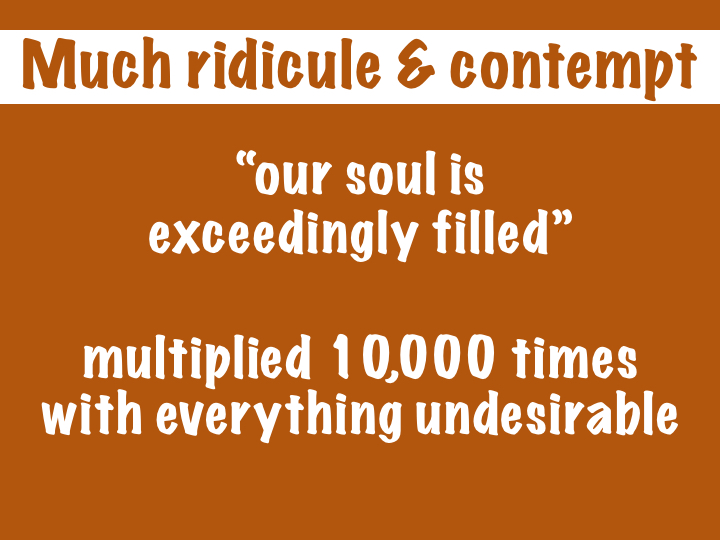
These are not words which the songwriter could easily brush off. One translation says, “our soul is exceedingly filled with the scorning” of these ridiculing people. In other words, it’s not something he could just brush off by thinking, “They don’t know what they’re talking about.”
Literally translated, the phrases exceedingly filled mean bad things multiplied 10,000 times!
The ridicule and the contempt hurts! So the psalmist cries out Mercy! three times. This isn’t like saying “Uncle,” or having your cornerman throw in the towel, or even tapping out in a UFC match. This is a soul crying out, “God, if You will give me Your gracious favor for one more round, I will not tap out, I will not go down, I will go through!”
So he looks to the only One who can help him—my eyes wait upon Jehovah. Just like a servant who is completely dependent on his master for his daily bread, just like a maid who is trusting her mistress will give her favor, this guy says, “My eyes are fixed on Jehovah! If He can’t help me, no one can.”
The songwriter’s conclusion is this: “I will continually lift my eyes up to You, to You Whose throne is in heaven.” There are distractions, and hurts, and those who ridicule me—lots of them!—but I will develop the habit of redirecting my eyes UPto look to God.
When I feel anxious: I will redirect my eyes UP.
When I feel scorned: I will redirect my eyes UP.
When I’m hurt by others: I will redirect my eyes UP.
When I’ve had my fill of ridicule and contempt: I will redirect my eyes UP.
When I don’t think I can answer the bell for another round: I will redirect my eyes UP.
No matter what: I will redirect my eyes UP!
Check out the full video of this encouraging message. And if you are in the area, join us this Sunday as we continue our look at the Psalms of Ascent.
King David loved God, and he loved God’s people. He was passionate about everyone getting as deeply connected with God as he was, so he wrote worship songs, setup worship teams, and organized the temple for worshippers.
The first song of ascent he wrote was one anticipating how good it was going to be when everyone got to the temple in Jerusalem to worship.
In fact, David was so excited about what he was expecting to happen in their worship together that he practically glowed with joy! Really! The word for rejoiced in his song means to be so cheerful and happy that you make others around you bright by your happiness. 😀
What was it that David thought was going to happen? First of all, we need to look at the name Jerusalem. Traditionally this means the City of Peace, but the two words that make up “Jerusalem” are much richer than that. Yes, -salem means “peace.” But the first part of the word (yara-) literally means water flowing through, or an arrow being shot out.
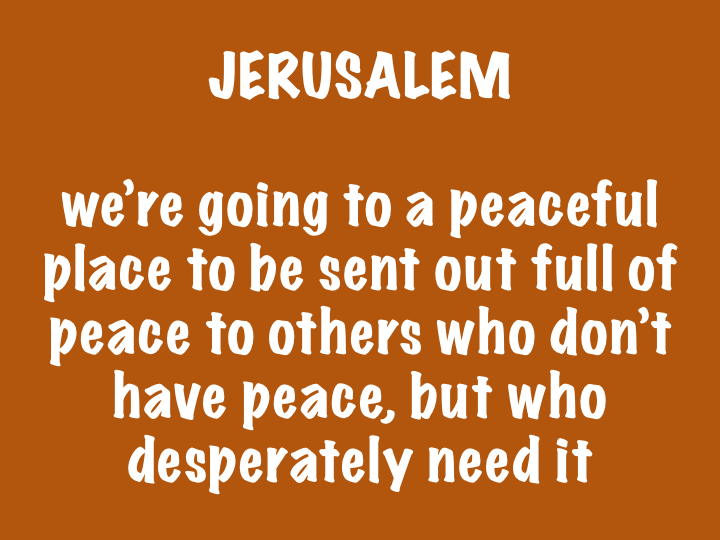
In other words, David anticipated that we are going to a peaceful place to be sent out full of peace, to take that peace to others who don’t have it, but desperately need it.
While we are in our “Jerusalem” (for us in the New Testament, this is our “church,” even if it’s just two or three people getting together), here are five blessings you should expect—
Unity—with all the “tribes” joining together.
Praise—joining together to tell God how great He is!
Learning—we come together to learn God’s statutes.
Judgment—what?! How is judgment a blessing? If you are nervous about being judged, just remember Who does the judging in God’s temple: the Holy Spirit. He judges us in a loving way, and in a way that allows us an opportunity to see our sin, repent from it, and experience unconditional forgiveness. That is exciting!
Peace, security, prosperity—the word shalom is used multiple times in the closing verses of this song. The best definition of shalom is: nothing missing, nothing broken. In other words, when we gather together to worship we should expect that God will heal any dis-ease we have, that He will supply what has fallen short, that He will fill up what’s empty.
With those five blessings in mind, here’s the declaration all Christians can make—
Inside these walls…
we live in unity
we praise the Lord
we learn God’s laws
we judge ourselves by God’s standards
repenting, confessing, forgiving, and being forgiven
we fight for peace
we bless God and one another
We descend back to the valleys
to take this message to valley-dwellers
that they, too, may pilgrimage
with us to Jerusalem
It starts here in God’s family!
It starts with me!
Check out the full video of this message, where I explain each of these ideas more fully. And if you’re in the area, join us on Sunday as we continue our look at the Psalms of Ascent.
“The fruit of the Spirit (Galatians 5:22-23) do not automatically become evident in our lives. If we are not discerning enough to recognize their availability to us, to desire them, and then to nourish them in our thoughts, they will never become embedded in our nature or behavior. Every further step of spiritual growth in God’s grace must be preceded by acknowledging our lack of a godly attribute and then by exhibiting a prayerful determination to obtain it. …
“Today many people are attempting to use their mental capacity and logical thinking to obtain sanctification, yet this is nothing but a religious fabrication. They believe that if they just mentally put themselves on the altar and believe the altar provides the gift of sanctification, they can then logically conclude they are fully sanctified. Then they go happily on their way, expressing their flippant, theological babble about the ‘deep’ things of God.
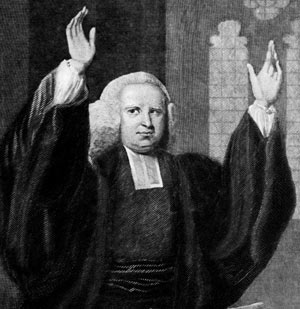
“Yet the heartstrings of their old nature have not been broken, and their unyielding character, which they inherited from Adam, has not been ground to powder. Their soul has not throbbed with the lonely, gushing groans of Gethsemane. Having no scars from their death on Calvary, they will exhibit nothing of the soft, sweet, gentle, restful, victorious, overflowing, and triumphant life that flows like a spring morning from an empty tomb.” —George Whitefield
“It’s not easy to overcome recurring sexual temptation. That’s because sexual sin is, at the most basic level, an illegitimate way of fulfilling a deep and legitimate human need: the need for love and intimacy.” —Focus On The Family
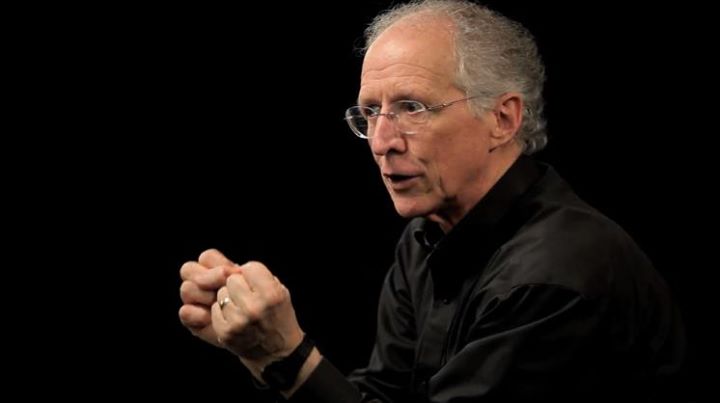
“Here is the secret of the power of faith to break the enslaving force of sinful attractions. If the heart is satisfied with all that God is for us in Jesus, the power of sin to lure us away from the wisdom of Christ is broken.” —John Piper
No matter how you look at it, being a Dad is hard work! Men have this constant balancing act between being tough and being tender. Guys have to have their game face on at work, and their family face on at home. They’ve got to work hard knocking down work competitors, and then work just as hard building up their family members.
But there is one key decisionthat will determine how successful a man will be at work, at home, in his social circles, and even in his relationship with God.
In Acts 10 we meet a centurion named Cornelius. Centurions were professional military officers in charge of a centuria (usually 100 soldiers). Centurions were always “on the clock,” never letting down their guard nor their professionalism.
All of the centurions mentioned in the New Testament have noble characteristics associated with them. Whereas someone might be uncertain how a typical Roman soldier would behave, people felt more assured when the centurion was on the scene. Even Roman governors like Pilate, and Jewish kings like Herod, all seemed to fully trust the judgement, honesty, and resourcefulness of centurions.
Centurions worked hard to get where they were, and had some well-earned perks:
“Men of authority” with soldiers and servants reporting to them (Matthew 8:8-9).
Opportunity for advancement (Rome was the dominate world force).
A certain degree of autonomy (they had their own residences (Matthew 8; Acts 10).
In order to keep this position, they would have to buy into kurios Caesar (Caesar is lord). To do otherwise was to put their position and future advancement at risk.
Yet Cornelius was different.
He was a trusted centurion, but something unusual stood out about his life. Luke the historian describes him as devout and God-fearing, mentioning his pious activities of prayer and giving to the poor. Cornelius’ own soldiers referred to him as righteous and respected by notable people in the community.
But probably most telling of all: God noticed how committed Cornelius was (see Acts 10:3-4)!
Cornelius had a lot to lose by rejecting kurios Caesar for, as the Christians said, kurios Iesous (Jesus is Lord). Yet after carefully weighing his options, he saw that trusting God was the best thing he could do for his family. His view of the eternal outweighed anything that he could gain in the temporal.
This one decision changed everything!
Because Cornelius trusted God, look at the expansiveness of his influence, not only at home, but at work, and among his friends and extended family, and throughout his community:
His family—ALL his family were devout and God-fearing (v. 2)
His employees—a devout soldier (v. 7)
His community—respected by ALL the Jewish people (v. 22)
His relatives and friends—his relatives and close friends (v. 24)
In fact everyone around him—we are ALL here in the presence of God (v. 33)
And most importantly, with God—your prayers and gifts have come up as a memorial offering before God (v. 4)
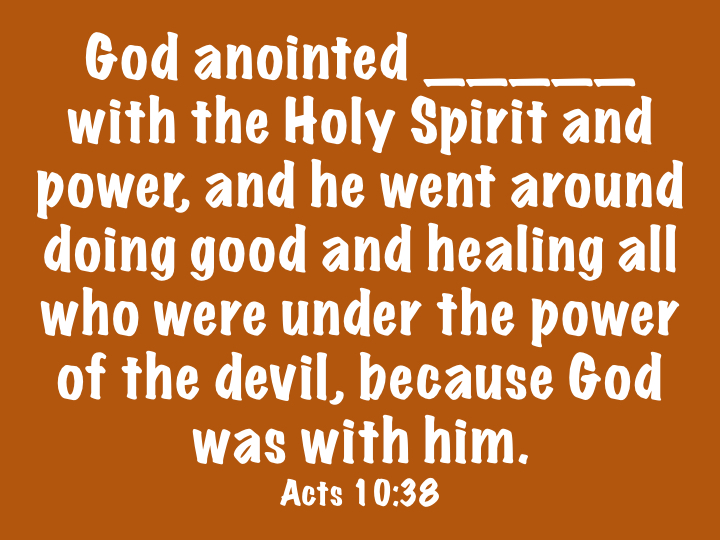
Fellas, you can have this same level of influence if you, too, will decide to live karios Iesous: Jesus is Lord. If you will do that, you can have said about your life what was said about Cornelius and Jesus: “God anointed ___________ with the Holy Spirit and power, and he went around doing good and healing all who were under the power of the devil, because God was with him!” (see Acts 10:38).



 Science does not have all the answers (despite what many scientists want to tell us!). Here is a quantum physics mystery that has baffled the best and brightest minds. Even Albert Einstein called this “spooky actions at a distance.”





 Craig T. Owens