Hot Pursuit

Listen to the podcast of this post by clicking on the player below, and you can also subscribe on AppleSpotify, or Audible.

While I was reading From Azusa To Africa To The Nations, I came across a fascinating statement from William Seymour, the pastor who led his congregation into that early 20th-century revival that shook the world. Pastor Seymour was so hungry for God’s presence in his life that he set aside five hours each day to seek God’s deeper touch. He prayed liked this for over 3 years. At this point He read about the outpouring of the Holy Spirit in the Book of Acts, and something stirred in him to pray for this same outpouring on himself and on his congregation. He then increased his prayer time to seven hours a day, and continued to pray in this fashion for another two years before the answer came and the revival broke out.

I did the math. That means he prayed 11,500 hours!

How many of us get tired after praying just one hour?

Would it be easier for you to tenaciously pursue God in prayer if you knew He was also tenaciously pursuing you? Mark Batterson points out in The Circle Maker that the verb in Psalm 23:6 is poorly translated in English as shall follow me. He reminds us that it’s really a hunting term, used for a hunter in hot pursuit of his quarry. God’s love and mercy are in hot pursuit of you!

The Lord longs to be gracious to you; He rises to show you compassion. For the Lord is a God of justice. Blessed are all those who wait for Him! (Isaiah 30:18)

Want to see a great story about this in the life of Jesus? Matthew tells us about a get-away that Jesus and His disciples took. While they were relaxing, a woman barged in, imploring Jesus to heal her daughter. She would not be denied. She tenaciously implored Jesus to minister to her daughter. At last Jesus cried out, “Woman, you have great faith! Your request is granted.”

(Check out this video where I talk more in-depth about this persistent mother.)

It may sound like this woman was pursuing Jesus. But Jesus put Himself in a place for her to find Him. He pursued her first.

  • As a Canaanite (a non-Jew), it was unsafe for her to travel to southern Israel.
  • As a woman, it was unacceptable for her to go talk to a man.
  • As a mother with a sick child at home, it was unwise for her to leave home.

So Jesus traveled to a region He has never been to before, and would never go back to again. He pursued this mother-in-need so that she could find Him in prayer!

God is in hot pursuit of you, too. He hears every prayer, so keep on tenaciously praying. Don’t settle, don’t give up, don’t stop! Pray as long as it takes for God to say to you, “You have great faith! Your request is granted.”

To check out the others messages in this series on prayer called Praying Circles, please click here.

►► Would you please prayerfully consider supporting this ministry? My Patreon supporters get behind-the-scenes access to exclusive materials. ◀︎◀︎

Swing The Bat Of Prayer

Swing the batMy son Harrison plays high school baseball. Let’s just imagine that I’m his hitting coach. In order for this relationship to benefit him, a couple of things have to occur:

  1. He has to want to improve, and
  2. He has to want to receive instruction from me.

If he thinks he knows it all already, or if he wants to just hang out with the other guys on the team to try to pick up some tips by being around them, then my role of a coach isn’t going to benefit him much.

Let’s say that Harrison knows he needs to improve, and he’s willing to listen to my instruction. We head out for some batting practice, and he lets pitch after pitch sail by him without ever swinging at the ball. If he never swings the bat, there’s only one piece of advice I can give him: Swing the bat!

The same things hold true for us if we want to improve as pray-ers. We have to want to improve, and we have have to be willing to receive instruction from the Coach (in this case, the Holy Spirit). But we also have to give Him something to work with. If we let opportunity after opportunity sail by without praying about it, there’s only one piece of advice the Spirit can give us: Pray!

Jesus said the Holy Spirit would help lead us into oneness with Him—

The Counselor, the Holy Spirit, whom the Father will send in My name, will teach you all things and will remind you of everything I have said to you. (John 14:26)

If we want to become better pray-ers, here’s how the Holy Spirit can help:

  • You have to admit that you need help in your prayer life.
  • You need to read your Bible (the everything that God says to you), and use God’s Word to help form your prayers.
  • Then, pray… swing the bat of prayer! 
  • As you pray, listen to the voice of the the Counselor, the Holy Spirit, helping you to refine your prayers.

Your prayer time can become more meaningful, if you will tune into the Holy Spirit, and give Him something to work with.

To check out the others messages in this series on prayer called Praying Circles, please click here.

The Pastor & Prayer

E.M. BoundsMy fellow pastor, please consider these wise words from E.M. Bounds—

“No one having any knowledge of the existing facts, will deny the comparative lack of expository preaching in the pulpit effort of today. And none, we should, at least, imagine, will do other than lament the lack. Topical preaching, polemical preaching, historical preaching, and other forms of sermonic output have, one supposes, their rightful and opportune uses. But expository preaching—the prayerful expounding of the Word of God is preaching that is preaching—pulpit effort par excellence. For its successful accomplishment, however, a preacher needs must be a man of prayer. For every hour spent in his study-chair, he will have to spend two upon his knees.”

I believe God will be honored if we spend twice as much time praying our sermons as we do preparing our sermons. 

Keep Striking

Keep strikingThere is an unusual story in 2 Kings about King Jehoash. Elisha the prophet was on his deathbed, Israel was morally bankrupt and on the brink of defeat. The entire Israeli army had been reduced to fifty horsemen, ten chariots, and ten thousand infantry. It was in this hour of desperation that Jehoash sought out the counsel of Elisha.

Elisha said [to Jehoash], “Get a bow and some arrows,” and he did so. “Take the bow in your hands,” he said to the king of Israel. When he had taken it, Elisha put his hands on the king’s hands.

“Open the east window,” he said, and he opened it. “Shoot!” Elisha said, and he shot. “The Lord’s arrow of victory, the arrow of victory over Aram!” Elisha declared. “You will completely destroy the Arameans at Aphek.”

Then he said, “Take the arrows,” and the king took them. Elisha told him, “Strike the ground.” He struck it three times and stopped. The man of God was angry with him and said, “You should have struck the ground five or six times; then you would have defeated Aram and completely destroyed it. But now you will defeat it only three times.”

What made Elisha angry is what I believe makes God angry. Jehoash came to God when the situation seemed impossible, but he wouldn’t pray it through. It’s almost as if he felt like three times was enough to pray, and then he needed to take it from there.

God wants us to pray BIG, but He also wants us to pray LONG.

We need to keep striking the ground (or as Mark Batterson would say, keep drawing the circle) until God answers. God gave Jehoash a promise of victory, but Jehoash didn’t pray long enough to see it through.

What are you praying for? What promise has God given you? God is glorified when you place your request in His hands, and leave it there. Keep on praying. Keep on striking. Keep on circling until God brings about what He has promised!

To check out the others messages in this series on prayer called Praying Circles, please click here.

Praying Circles

Praying CirclesI grew up hearing a constant refrain from my Grandma Owens, “I prayed it through.” Grandma prayed until God answered.

Sadly, one of the biggest hindrances to our prayer lives today is that we are in too much of a hurry to pray it through.

I grew up hearing another reminder from my boyhood pastor, “The church moves forward on her knees.” So I like to begin each new year with a reminder of the importance of prayer.

This year I’m using the thoughts I read a year ago in Mark Batterson’s powerful book The Circle Maker as the inspiration behind our series on prayer that I’m calling Praying Circles. This series of messages is intended to remind us of the power of praying with perseverance. Or as my Grandma might have said, the power of praying it through.

Mark Batterson said this in The Circle Maker

“Just like the sound barrier, there is a faith barrier. And breaking the faith barrier in the spiritual realm is much like breaking the sound barrier in the physical realm. If you want to experience a supernatural breakthrough, you have to pray through. But as you get closer to the breakthrough, it often feels like you’re about to lose control, about to fall apart. That is when you need to press in and pray through. If you allow them to, your disappointments will create drag. If you allow them to, your doubts will nosedive your dreams. But if you pray through, God will come through and you’ll experience a supernatural breakthrough.

Please join me as we rediscover the power of praying through with perseverance. Check out all of the messages in this series:

Scared Half To Death

Mega fearHave you ever had a really good scare that turned your life around? For some people, they need to be scared half to death in order for them to make changes in their lives.

I think this is what happened to the shepherds outside Bethlehem the night Jesus was born (Luke 2:8-20). The Bible says that when the glory of the Lord shone around them they were terrified (the King James Version is very picturesque when it says they were sore afraid). The Greek word for fear is phobeo, but the phrase Luke uses here for “terrified” is megas phobeo phobos. Get the picture? They were scared half to death!!

But now, what to do what that fear? The angel gave them the first step—Go find Jesus. He didn’t tell them to get themselves cleaned up, or start going to church, or even to stop acting a certain way. Simply go find Jesus.

The shepherds obeyed and went to meet Jesus, and then something amazing happens.

  • Their fear is turned to praise—the shepherds returned, glorifying and praising God.
  • Their silence is turned to testimony—they spread the word concerning what had been told them.

Jesus was born as a Man to experience all our fears and sorrows and pains. But He took these upon Himself as He became the perfect, once-for-all sacrifice. Now there are no fears that can keep us from God’s presence. Jesus conquered all that kept us from God! 

There was nothing beautiful or majestic about His appearance, nothing to attract us to Him.He was despised and rejected—a Man of sorrows, acquainted with deepest grief. We turned our backs on Him and looked the other way. He was despised, and we did not care. Yet it was our weaknesses He carried; it was our sorrows that weighed Him down. And we thought His troubles were a punishment from God, a punishment for His own sins! But He was pierced for our rebellion, crushed for our sins. He was beaten so we could be whole. He was whipped so we could be healed.

All praise to God, the Father of our Lord Jesus Christ, who has blessed us with every spiritual blessing in the heavenly realms because we are united with Christ. Even before He made the world, God loved us and chose us in Christ to be holy and without fault in His eyes. (Isaiah 53:2-5; Ephesians 1:3-4)

This Christmas I pray you will…

Find Jesus for yourself!

Let your praises to Him ring out!

Tell others what Jesus has done for you!

If you have missed any of the messages in our Fear Not! series, you can find them all by clicking here.

Another Christmas Message?!?

Christmas presentBelieve it or not, I actually heard a pastor say this: “I’m not sure I’m going to preach a Christmas message this year. It’s the same story all over again, and everyone’s already heard it.”

Are you kidding me?!?

This is the greatest story. Ever! God coming to earth—the Infinite invading our finite world—yields infinite possibilities in how to re-tell this story. One of the biggest cop-outs there could ever be is to say, “I couldn’t possibly think of another way to tell the Christmas story.”

Pray. Ask the Holy Spirit to illuminate your mind. Read the story again. Insert yourself into the story. Imagine how those first century characters felt. Re-read the story in a different translation. Slow down. Soak in the text.

There are so many ways to share this amazing story. It’s not just another Christmas message. It’s THE greatest story that can be shared in an infinite number of ways.

Pastor, may God give you a fresh view of this amazing story!

What Does It Mean To Fear God?

Fear GodWhat does it mean to fear God? Does it mean we cower before Him? That He is utterly unapproachable? Or maybe it means we’re always looking over our shoulder wondering if God is coming after us in anger?

Let me ask the question another way:

  • Are you afraid that you won’t buy the right Christmas gift for someone?
  • Are you afraid that you’ll forget someone?
  • Are you afraid that your response won’t be right when you open a gift?
  • Are you afraid you’ll offend a family member by something you say or do?
  • Do other people’s opinion of you factor into your decisions?

If you answered “Yes” to the above questions, you have a fear problem. That is: you fear letting other people down.

I think this was the issue for Joseph in the Bible (Matthew 1:18-25). When he found out that Mary was pregnant before their marriage, Joseph carefully deliberated his response. Based on the meaning of the words had in mind and considered, and examining the way the angel told Joseph to “Fear not,” it appears that Joseph, too, lived in this same fear of letting others down.

But here’s the issue: Joseph placed greater value on people’s opinions than he did on God’s opinion. And what makes it even worse is that Joseph simply assumed what people would say about him, as he never actually asked anyone.

The angel challenged Joseph to re-evaluate his value system. To give greater weight to God’s opinion than to man’s opinion. In short, to change his fear of man to fear of God.

That’s really what it means to fear God: To give greater weight to His Word and His opinion than to anyone or anything else.

The wise king Solomon explored everything he could to find the meaning of life. He tried money, education, art, travel, women, food, power, and the like. At the end of his exploration, he came to this conclusion—

Now all has been heard; here is the conclusion of the matter: Fear God and keep His commandments, for this is the whole duty of man. (Ecclesiastes 12:13).

We should be living for the approval of an Audience of One. 

We should be longing to hear, “Well done, good and faithful servant” from our Creator. 

We should be listening only for the applause from nail-scarred Hands. 

“The remarkable thing about fearing God is that when you fear God you fear nothing else, whereas if you do not fear God you fear everything else.” —Oswald Chambers

If you have missed any of the messages in our Fear Not! series, you can find them all by clicking here.

Are You Worthy Of God’s Favor?

Listen to the podcast of this post by clicking on the player below, and you can also subscribe on AppleSpotify, or Audible. 

Today some call her “the holy mother” and revere her as a saint. But 2000 years ago, Mary saw herself as only an ordinary, faceless, fame-less, Israelite girl.

  • She came from Nazareth (a town of which people said, “Can anything good come from Nazareth?!”)
  • Nazareth was in the region of Galilee (an area of which people said, “No one special has ever come from Galilee”)
  • She was pledged to be married (probably a marriage that she had no say in)
  • And she was a young teenager

What did Mary think of herself? We can infer her self-image from what went on her mind when God’s angel greeted her with the words, “Greetings, you who are highly favored! The Lord is with you.”

She was greatly troubled and wondered what kind of greeting this might be. Psychologists today would describe Mary’s response as inner dissonance—the feeling that something is not quite right, but she couldn’t put her finger on exactly what was wrong. The phrase greatly troubled is a single Greek word which means agitated and perplexed by doubts.

In short: the way the angel greeted Mary didn’t jive with the way Mary saw herself (see Luke 1:26-38).

Mary, like many of us still today, didn’t think she was worthy of God’s attention, let alone His special blessings.

But the word the angel used when he said she was highly favored is a wonderful word! It’s root word is grace, and it only appears twice in the New Testament. This word means God’s grace which is constantly reaching out to us, even when we’re unaware of it. Look at the other passage where this word is used—

God decided in advance to adopt us into His own family by bringing us to Himself through Jesus Christ. This is what He wanted to do, and it gave Him great pleasure. So we praise God for the glorious grace He has poured out on us who belong to His dear Son. (Ephesians 1:5-6 NLT)

How amazing! God wants to adopt you! It’s something that brings Him great pleasure, so He constantly pours out the blessing of His grace on us!

Are you worthy of God’s favor? YES!! Not because you did anything to earn it, but because Jesus paid the price for you on the Cross.

Now you need to respond the way Mary did. The angel told Mary to “Fear not!” The verb tense implies that Mary needed to stop fretting about her (un)worthiness, and simply accept the grace that God was extending to her. In other words, she needed to see herself as God saw her.

Mary’s response should be our response: “I am the Lord’s servant. May it be to me as you have said.”

If you have missed any of the messages in our Fear Not! series, you can find them all by clicking here.

►► Would you please prayerfully consider supporting this ministry? My Patreon supporters get behind-the-scenes access to exclusive materials. ◀︎◀︎
Showers Of Blessings

My Word will not return emptyAs the rain and the snow come down from heaven, and do not return to it without watering the earth and making it bud and flourish, so that it yields seed for the sower and bread for the eater, so is My word that goes out from My mouth: It will not return to Me empty, but will accomplish what I desire and achieve the purpose for which I sent it. (Isaiah 55:10-11)

Pastor, please carefully read these words from Oswald Chambers, written nearly a century ago, but still so relevant for us today—

“God’s Word is a seed. The ‘seed-thought’ idea is one that preachers and evangelists need to remember. We imagine we have to plough the field, sow the seed, reap the grain, bind it into sheaves, put it through the threshing machine, make the bread—all in one discourse. … 

The truth is we don’t believe God can do His work without us. We are so anxious about the word, so anxious about the people who have accepted the word; we need not be, if we have preached what is a word of God it is not our business to apply it, the Holy Spirit will apply it. Our duty is to sow the word, see that it is the word of God we preach, and not ‘huckster’ it with other things, and God says it will prosper in the thing whereto He sends it. …

“He says, ‘My word…will not return to Me empty.’ Every temptation to exalt the human, human experience, human interests and blessings, will fall short; the only thing that prospers in God’s hands is His own word.”

From God’s Workmanship, emphasis added

I need to be reminded of that again. Perhaps, my fellow pastor, you needed it to. This Sunday just preach the word God has given you, and then let the Holy Spirit take it from there. God WILL bring the harvest in His time.

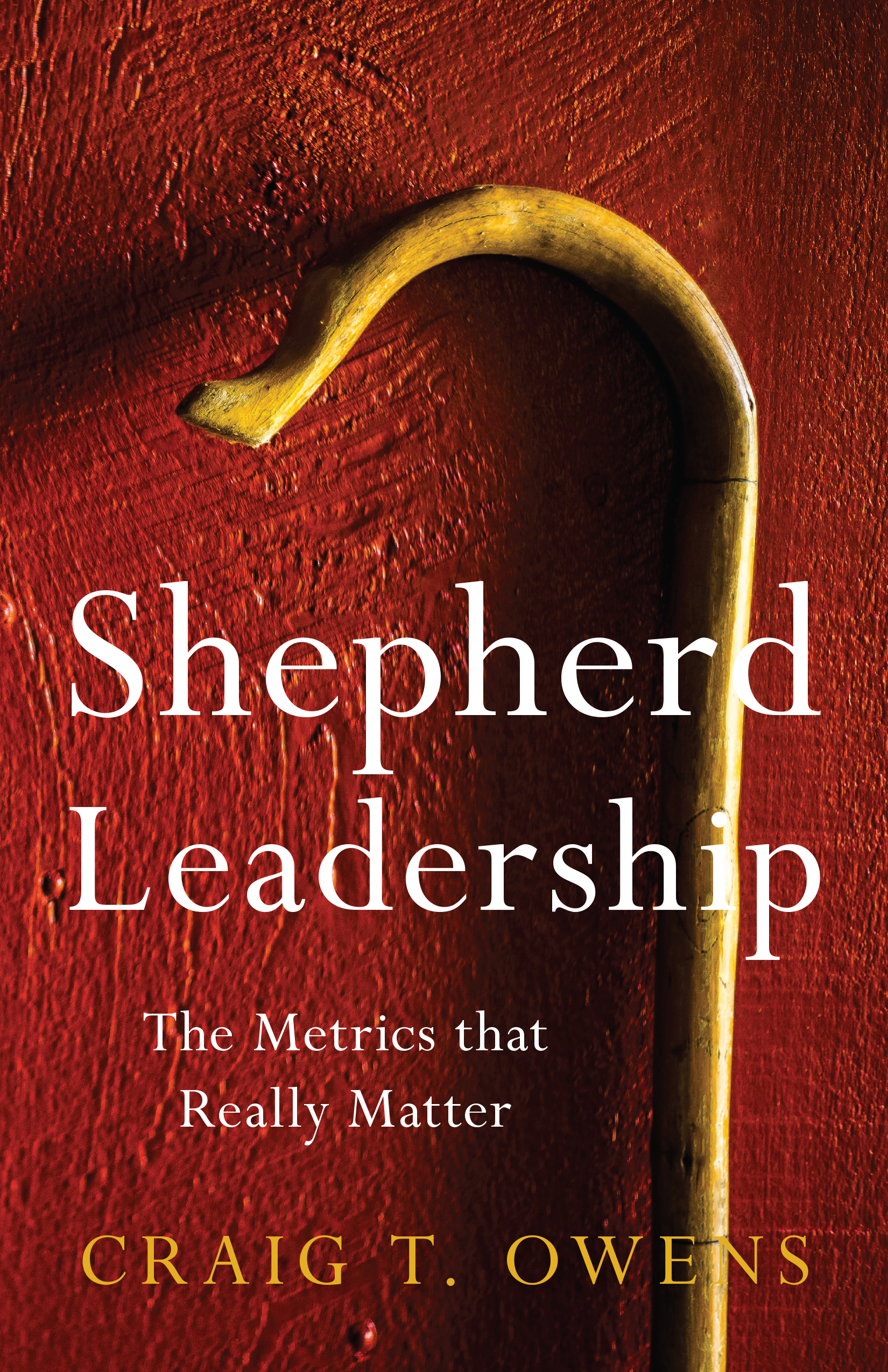
UPDATE: In the final chapter of my book Shepherd Leadership (a chapter entitled “Applause”) I wrote this:

      Did you catch that? Twice Paul reminds us that it is God who makes things grow [1 Corinthians 3:4-8]. God, not man. So is the only successful ministry the one that harvests? How did they harvest without someone watering the seed? What exactly were they watering if no one had planted any seeds? And even with everyone doing the work, it is still God who makes things grow. 

      According to Paul, what does God reward? It’s not numeric growth, but shepherds “will be rewarded for their own hard work … the work the Lord gave us.”