Listen to the podcast of this post by clicking on the player below, and you can also subscribe on Apple, Spotify, or Audible.
Jesus began to speak to them in parables… (Mark 12:1).
What Jesus relates here in the 12th chapter of Mark’s Gospel is only the fourth parable that Mark records, and as the final parable that Jesus shares, it brings His public ministry to a close.
Jesus concludes this parable by quoting from Psalm 118. This Psalm is the last of the “Hallel Psalms” that were sung at the conclusion of the Passover celebration. This song specifically looks eagerly forward to the arrival of the Messiah. It contains the words that the crowd used on Palm Sunday: “Lord, save us! Lord, grant us success! Blessed is He who comes in the name of the Lord” (Psalm 118:25-26). By quoting from the same Psalm—that was perhaps hundreds of years old, but had just been sung and shouted by the crowd—Jesus was claiming to be the Messiah longed for in that Hallel Psalm.
As you may recall, these shouts from the crowd and the activities of Jesus as He cleansed the temple got the religious leaders riled up! They, in essence, asked Jesus, “Who do You think You are?!” His answer is contained in this parable of Mark 12.
At the conclusion of this parable, the religious leaders “knew He had spoken this parable against them” (Mark 12:12).
Pastors, if you want to deliver soul-shaking, life-transforming, eye-opening, heart-melting sermons, you must follow this example of Jesus: Stick with the Scripture!
We don’t need to try to be clever or witty or even memorable. We just need to speak the Word of God that is inspired by the Holy Spirit, and then allow the Holy Spirit to illuminate that inspired Word to each person’s needs. As Randy Pope noted, “Preaching is not talking to people about the Bible; it is talking to people about themselves from the Bible.”
I don’t want to try to make my voice impress people, but I am desperate for God’s voice to impact people. Nearly every week as I prepare a sermon, I’ll pray this prayer from Oswald Chambers: “In my preaching, cause Thy glorious voice to be heard, Thy lovely face to be seen, Thy pervasive Spirit felt.” My dear pastor, I would encourage you to make this your prayer as well.
Listen to the podcast of this post by clicking on the player below, and you can also subscribe on Apple, Spotify, or Audible.
A teacher of the law asked Jesus an important question. In essence, he asks, “There are a lot of commandments in the Scripture. If I have to give a student the most basic of instruction, which of the commandments is the most vital?”
The response from Jesus is especially important for two reasons:
Which commandments He listed
The relatively few words He spoke
Check out His short reply—
The most important one, is this: “Hear, O Israel: The Lord our God, the Lord is one. Love the Lord your God with all your heart and with all your soul and with all your mind and with all your strength.” The second is this: “Love your neighbor as yourself.” There is no commandment greater than these. (Mark 12:29-31)
In this sermon from Jesus, He speaks a total of 57 words. Notice the breakdown of the words He spoke:
Words from Scripture: 40 words
His own words: 17 words
I wonder how many times we get this reversed? How many times do we share a short passage from the Bible and then use a whole bunch of our own words to try to explain the Scripture? Do we think the Holy Spirit needs our help to illuminate the inspired Word?
Solomon warned twice of the dangers of “many words” (Ecclesiastes 5:3, 7), and Jesus said that if we think a lot of words spoken in prayer makes that prayer effective, we are really just babbling (Matthew 6:7).
The teacher of the law is astounded at this sermon Jesus delivered. He speaks almost as many words as Jesus (52 words), but nearly all of his words are simply repeating what Jesus had said. Jesus said this man’s synopsis of His message was “wise” and indicated that he was “not far from the kingdom of God” (Mark 12:32-34).
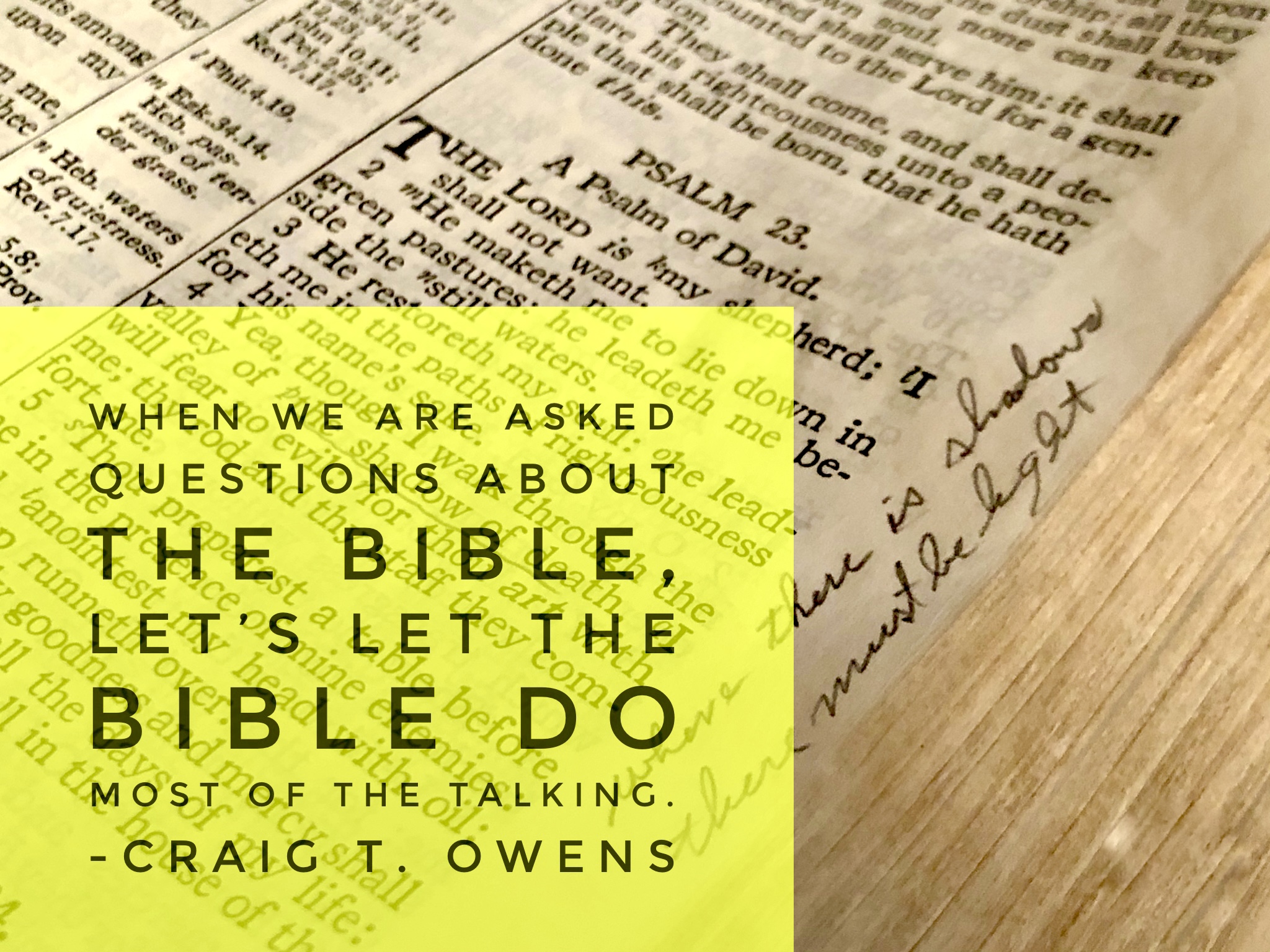
When we are asked questions about the Bible, let’s let the Bible do most of the talking. Let’s be careful that our attitude is not one of trying to “help” the Holy Spirit, but let’s rely on the Holy Spirit to help us know what Scripture to quote, what limited commentary to share, and when to be silent to allow the Word to do its irresistible work.
Listen to the podcast of this post by clicking on the player below, and you can also subscribe on Apple, Spotify, or Audible.
Jesus began to speak to them in parables… (Mark 12:1).
This is only the fourth parable that Mark records, and as the final parable that Jesus uses in this Gospel, it brings His public ministry to a close.
Jesus concludes this parable by quoting from Psalm 118. This psalm is the last of the “Hallel Psalms” to be sung at the conclusion of the Passover celebration—it is the psalm that looks eagerly to the Messiah‘s arrival. It contains the words that the crowds just used on Palm Sunday: “Lord, save us! Lord, grant us success! Blessed is He who comes in the name of the Lord” (Psalm 118:25-26; Mark 11:9-10).
At the conclusion of this parable, the religious leaders “knew He had spoken this parable against them” (Mark 12:12).
This is important for pastors as they prepare their sermons, but it’s also important for every Christian. We face challenges every day. The Holy Spirit can give us the timeliest of words. The Word of God is the inspired message for us. It is just as relevant and applicable today as it was the day the words were penned. The same Holy Spirit who inspired the authors of Scripture is the same Holy Spirit in us today who will illuminate and apply the Word for us (John 14:26).
Let’s not find our “timely word” from the ever-changing attitudes and opinions of culture, but let us continually go back to the unchanging, always-timely, always-relevant Word of God. That is the only place to find the timeliest of words every single time!
Listen to the podcast of this post by clicking on the player below, and you can also subscribe on Apple, Spotify, or Audible.
I enjoy reading devotional books that are based on passages of Scripture, but I get quite frustrated when there is more devotional thought than there is Scripture. This is decidedly not the case in Dick Brogden’s devotional book Proverbs: Amplified And Applied.
Full disclosure: Dick Brogden is my cousin, so I may be just slightly biased on this book. But I don’t think my bias in any way contradicts my statement about the volume of Scripture contained in this powerfully insightful devotional work.
Dick has taken the Book of Proverbs and gone deep on every single verse. Each note is a treasure trove of insights, cross-references to other biblical concepts, and action steps that can immediately become a prayer request or a daily goal.
Let me give you an example. Provers 2:7 says, “He holds success in store for the upright, He is a shield to those whose walk is blameless.” Dick’s amplification and application for this verse says—
“Wisdom is a supply and a defense. Wisdom gained now provides in the present and protects in the future. God in His benevolence stockpiles wisdom for us. He gives neither Spirit nor wisdom by measure. He delights to flood, saturate, fill, overwhelm, and lavish the spirit of wisdom, counsel, discernment, and understanding upon us. When we walk in the light, in integrity, it is as if we have a library card that allows us free checkout of heaven’s daily living manuals. Our integrity is what gives us access to all the stored-up wisdom of God. Integrity also shields us from the attacks of folly. The grandest folly comes wrapped in deceptive intelligence. The devil is able (cunning angel of light that he is) to make foolish things seem wise. We are able to see through his disguises and be shielded from his traps when we have a legacy of continually checking out, reading, and applying God’s insight. It is the familiarity with the feel of the true that helps us recognize the false.”
I’m reading through the Book of Proverbs very slowly this year, allowing Dick’s commentary to help me let these principles sink in deep. For those who love the wisdom of Proverbs, I would greatly encourage you to get a copy of Dick’s book for yourself.
Listen to the podcast of this post by clicking on the player below, and you can also subscribe on Apple, Spotify, or Audible.
Plato said, “Arguments, like men, are often pretenders.” This is both true and a logical syllogism. It is true because men often pretend, and they design their arguments to support their pretenses.
One of my favorite classes in college was “Introduction to Logic.” In fact, it is one of my few college textbooks that is still in my personal library today. It always struck me that God created logic. That means He is infinitely logical.
So we can restate Plato’s quote like this, “God’s arguments, like God Himself, are always authentic, logical, and valid.”
In my Bible study time, I often highlight the words that denote premisses and conclusions. In just Ezekiel 36 alone I find:
therefore (6x)
because (2x)
then (6x)
for (1x)
so that (1x)
We can argue against God’s logic, and we can even try to invalidate His arguments. But to do so makes me illogical. God not only gives the premisses and the conclusion, but He makes them both logical and valid. God told Jeremiah, “I am watching to see that My word is fulfilled” (Jeremiah 1:12).
So any of my attempts to redefine or re-order or invalidate what God has logically presented ultimately brings disorder, collapse, and frustration. It is far better for me to simply follow the premisses and trust God to bring about His promised—and logical—conclusion.
I encourage you to look for these logic statements as you read the Bible yourself. Here is a Bible study from Proverbs 2 that can help get you started.
Listen to the podcast of this post by clicking on the player below, and you can also subscribe on Apple, Spotify, or Audible.
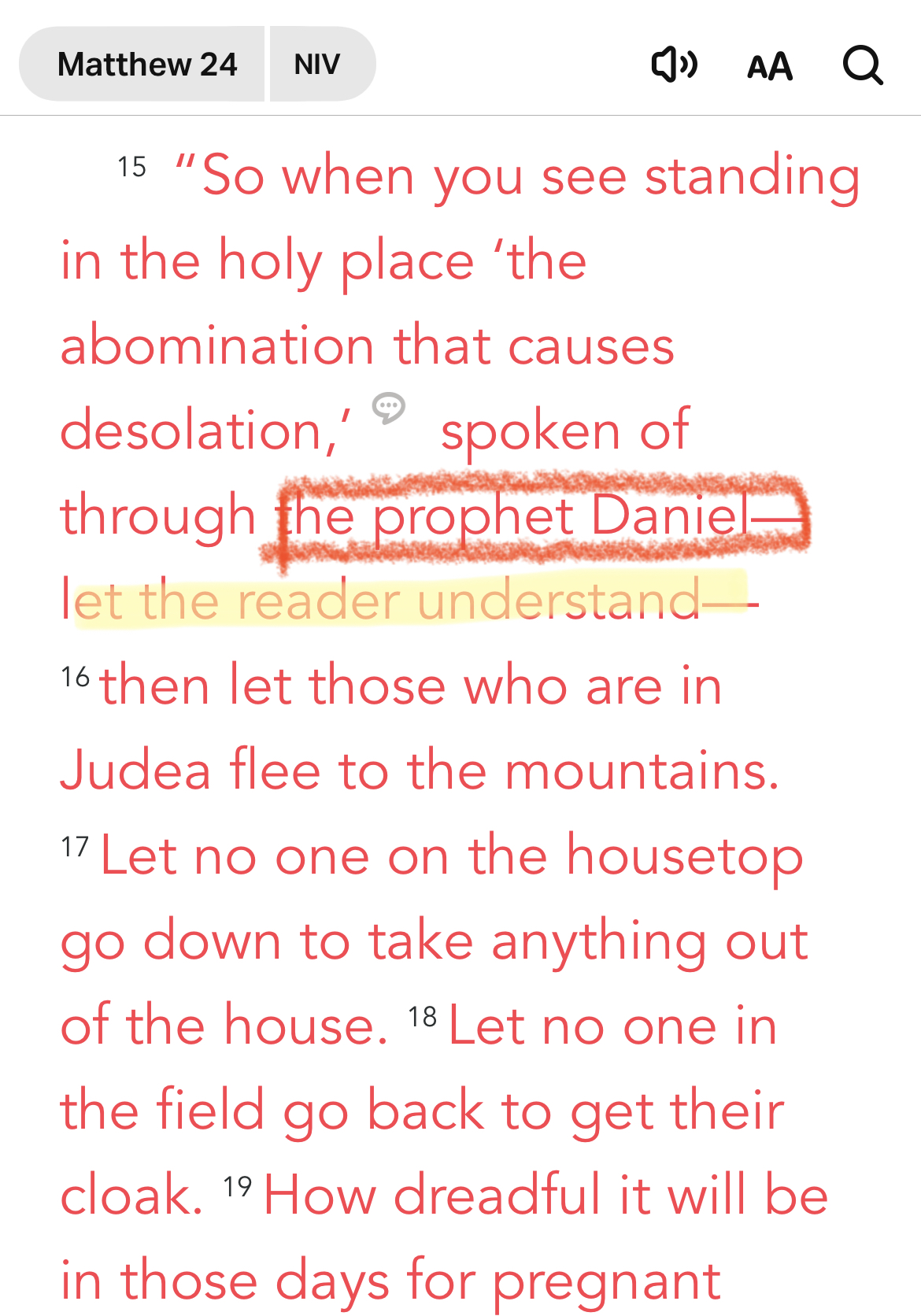
When Jesus said, “Let the reader understand,” He was saying He wants us to be able to understand and apply every Scripture we read. Check out this teaching video—
And although I didn’t mention it in the video, you can check out five different kinds of Bible studies I have shared here and here.
I’m excited to hear about your Bible study journey. If you have questions or other resources to share, please get in touch with me or leave a comment below.
Listen to the podcast of this post by clicking on the player below, and you can also subscribe on Apple, Spotify, or Audible.
A meme that makes me chuckle every time I see it is a “quote” attributed to Abraham Lincoln in which he says, “The problem with quotes found on the internet is that they are often not true.”
(Not to spoil the joke for you, but unless Lincoln knew how to time travel to the future, I don’t think he knew about the modern internet! 😂)
I love this meme because it captures something that so many people fall into: a quick acceptance of a statement without verifying its source or thinking through the implications of the statement’s truthfulness.
Some insightful comments sound Shakespearean, but William never wrote them.
Some pieces of wisdom sound Socratic, but Socrates never taught them.
Some religious maxims sound godly, but the Bible never recorded them.
I would like to invite you to join me as we relaunch this series called Is That In The Bible? I think you may be surprised to discover just how many phrases we call biblical aren’t, and how many phrases there are that we never realized are actually in the Bible.
By the way, if you have a phrase that you would like to have us explore in this series, please leave it in a comment below. You may want to check out the questions we addressed in both the first installment and second installment of this series.
In this installment of this series, we asked: Is this in the Bible…






 Craig T. Owens
Proverbs: Amplified And Applied (book review)
January 10, 2023 — Craig T. OwensListen to the podcast of this post by clicking on the player below, and you can also subscribe on Apple, Spotify, or Audible.
Full disclosure: Dick Brogden is my cousin, so I may be just slightly biased on this book. But I don’t think my bias in any way contradicts my statement about the volume of Scripture contained in this powerfully insightful devotional work.
Dick has taken the Book of Proverbs and gone deep on every single verse. Each note is a treasure trove of insights, cross-references to other biblical concepts, and action steps that can immediately become a prayer request or a daily goal.
Let me give you an example. Provers 2:7 says, “He holds success in store for the upright, He is a shield to those whose walk is blameless.” Dick’s amplification and application for this verse says—
“Wisdom is a supply and a defense. Wisdom gained now provides in the present and protects in the future. God in His benevolence stockpiles wisdom for us. He gives neither Spirit nor wisdom by measure. He delights to flood, saturate, fill, overwhelm, and lavish the spirit of wisdom, counsel, discernment, and understanding upon us. When we walk in the light, in integrity, it is as if we have a library card that allows us free checkout of heaven’s daily living manuals. Our integrity is what gives us access to all the stored-up wisdom of God. Integrity also shields us from the attacks of folly. The grandest folly comes wrapped in deceptive intelligence. The devil is able (cunning angel of light that he is) to make foolish things seem wise. We are able to see through his disguises and be shielded from his traps when we have a legacy of continually checking out, reading, and applying God’s insight. It is the familiarity with the feel of the true that helps us recognize the false.”
I’m reading through the Book of Proverbs very slowly this year, allowing Dick’s commentary to help me let these principles sink in deep. For those who love the wisdom of Proverbs, I would greatly encourage you to get a copy of Dick’s book for yourself.
►► Would you please prayerfully consider supporting this ministry? My Patreon supporters get behind-the-scenes access to exclusive materials. ◀︎◀︎
Share this: