William Law On Prayer

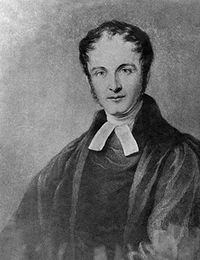
William LawSome quotes from William Law on prayer …

“There is nothing that makes us love a man so much as praying for him.” —William Law

“He who has learned to pray has learned the greatest secret of a holy and happy life.” —William Law

“The greatest saint in the world is not he who prays most or fasts most; it is not he who gives alms, or is more eminent for temperance, chastity, or justice. It is he who is most thankful to God.” —William Law

Poetry Saturday—Light Shining Out Of Darkness

William CowperGod moves in a mysterious way,
His wonders to perform;
He plants His footsteps in the sea,
And rides upon the storm.

Deep in unfathomable mines
Of never failing skill,
He treasures up His bright designs,
And works His Sovereign will.

Ye fearful saints, fresh courage take,
The clouds ye so much dread
Are big with mercy, and shall break
In blessings on your head.

Judge not the Lord by feeble sense,
But trust Him for His grace;
Behind a frowning Providence,
He hides a smiling face.

His purposes will ripen fast,
Unfolding every hour;
The bud may have a bitter taste,
But sweet will be the flower.

Blind unbelief is sure to err,
And scan His work in vain;
God is His own interpreter,
And He will make it plain. —William Cowper, Light Shining Out Of Darkness

Poetry Saturday—There Is A Safe & Secret Place

Henry Francis LyteThere is a safe and secret place,
Beneath the wings Divine,
Reserved for all the heirs of grace;
O be that refuge mine!

The least and feeblest there may bide,
Uninjured and unawed;
While thousands fall on every side
He rests secure in God.

He feeds in pastures, large and fair,
Of love and truth Divine;
O child of God, O glory’s heir,
How rich a lot is thine.

A hand almighty to defend,
An ear for every call,
An honored life, a peaceful end,
And heaven to crown it all! —Henry Francis Lyte


Faithful, Christian & Talkative From “Pilgrim’s Progress”

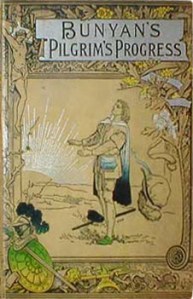
Pilgrim's ProgressThe dialogue in Pilgrim’s Progress is all so rich and meaningful, that it’s hard to pull out “favorite” passages from this book. You can read my full book review by clicking here. Over the next few days I would like to share some of the passages which especially stood out to me this time reading through this classic.

This is part of a dialogue between Faithful, Christian and Talkative—

Faithful: “Well, I see that saying and doing are two things, and hereafter I shall better observe this distinction.”

Christian: “They are two things indeed, and are as diverse as are the soul and the body; for as the body without the soul is but a dead carcass, so saying, if it be alone, is but a dead carcass also. The soul of religion is the practical part. Pure religion and undefiled before God and the Father is this, to visit the fatherless and widows in their affliction, and to keep himself unspotted from the world. This Talkative is not aware of; he thinks that hearing and saying will make a good Christian; and thus he deceiveth his own soul.” …

Talkative: “Why, what difference is there between crying out against, and abhorring of sin?”

Faithful: “Oh! a great deal. A man may cry out against sin, of policy; but he cannot abhor it but by virtue of a godly antipathy against it. I have heard many cry out against sin in the pulpit, who can yet abide it well enough in the heart, house, and conversation.” …

Talkative: “You lie at the catch, I perceive.”

Faithful: “No, not I; am only for setting things right. But what is the second thing whereby you would prove a discovery of a work of grace in the heart?”

Talkative: “Great knowledge of gospel mysteries.”

Faithful: “This sign should have been first; but first or last, it is also false; for knowledge, great knowledge, may be obtained in the mysteries of the gospel, and yet no work of grace in the soul. Yea, if a man have all knowledge, he may yet be nothing, and so, consequently, be no child of God. When Christ said, Do you know all these things? and the disciples had answered, Yes, He added, Blessed are ye if ye do them.” …

Christian: “You did well to talk so plainly to him [Talkative] as you did. There is but little of this faithful dealing with men now-a-days, and that makes religion to stink so in the nostrils of many as it doth: for they are these talkative fools, whose religion is only in word, and are debauched and vain in their conversation, that (being so much admitted into the fellowship of the godly) do puzzle the world, blemish Christianity, and grieve the sincere. I wish that all men would deal with such as you have done; then should they either be made more conformable to religion, or the company of saints would be too hot for them.”

Poetry Saturday—The Lay Of The Last Minstrel


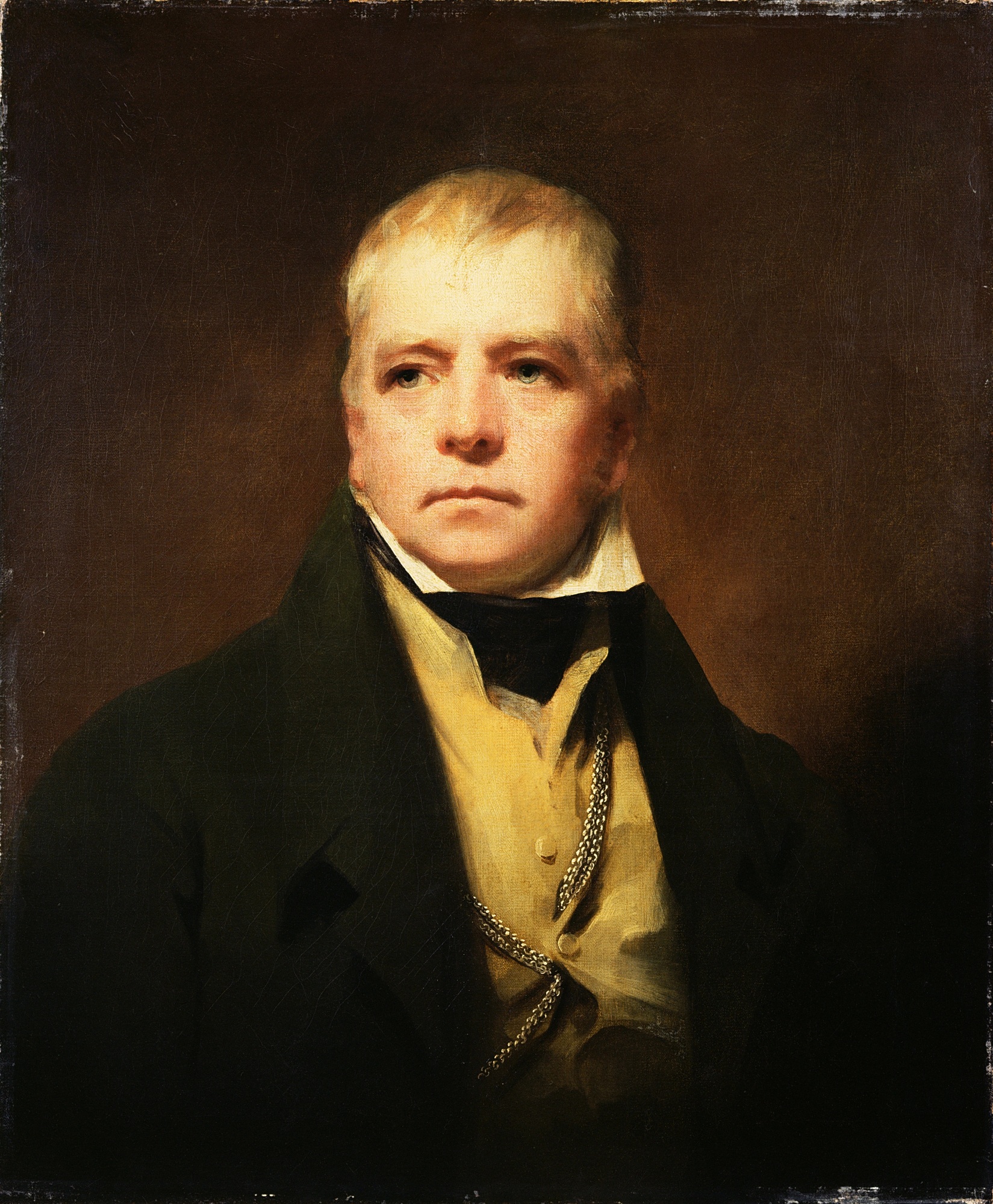
NGS68272In peace, Love tunes the shepherd’s reed; 
In war, he mounts the warrior’s steed; 
In halls, in gay attire is seen; 
In hamlets, dances on the green. 
Love rules the court, the camp, the grove, 
And men below, and saints above; 
For love is heaven, and heaven is love. … 

But earthly spirit could not tell 
The heart of them that loved so well; 
True love’s the gift which God has given 
To man alone beneath the heaven. 
It is not Fantasy’s hot fire, 
Whose wishes, soon as granted, fly; 
It liveth not in fierce desire, 
With dead desire it doth not die: 
It is the secret sympathy, 
The silver link, the silken tie, 
Which heart to heart, and mind to mind, 
In body and in soul can bind.

—Sir Walter Scott


Thursdays With Oswald—What The Spirit Does

This is a weekly series with things I’m reading and pondering from Oswald Chambers. You can read the original seed thought here, or type “Thursdays With Oswald” in the search box to read more entries.

What The Spirit Does      

     The majority of us “hang on” to Jesus Christ, we are thankful for the massive gift of salvation, but we don’t do anything towards working it out. That is the difficult bit, and the bit the majority of us fall in, because we have not been taught that that is what we have to do, consequently there is a gap between our religious profession and our actual practical living. …      

     The great factor in Christian experience is the one our Lord continually brought out, viz., the reception of the Holy Spirit who does in us what He did for us, and slowly and surely our natural life is transformed into a spiritual life through obedience.

From Conformed To His Image

There is a process whereby the Holy Spirit brings our Christ-likeness from us; it’s called sanctification (or as I like to say it, saint-ification).

This is how the Spirit forms us into God’s saints. But here’s the key point: we have to let the Spirit do His work. If we say, “No thanks, I’d rather not work on that area of my life,” He will leave you alone.

But, oh, the rewards that we miss out on when we don’t receive all that the Holy Spirit has for us!

Thursdays With Oswald—Character Development

Oswald ChambersThis is a weekly series with things I’m reading and pondering from Oswald Chambers. You can read the original seed thought here, or type “Thursdays With Oswald” in the search box to read more entries.

Character Development 

     God can put a saint into a right relationship with Himself, but He cannot make him work out that relationship, the saint must do that himself. … 

     God alters our disposition, but He does not make our character. When God alters my disposition the first thing the new disposition will do is to stir up my brain to think along God’s line. As I began to think, begin to work out what God has worked in, it will become character. Character is consolidated thought. God makes me pure in heart; I must make myself pure in conduct.

From Conformed To His Image 

I like to think of the word sanctification this way: saint-ification. Through His Holy Spirit, God is making me a saint, by making it possible for me to demonstrate Christlike conduct.

Are you allowing the Holy Spirit to make a saint out of you? What’s holding you back?

(If you are in the Cedar Springs area this Sunday, I will be talking more about the Holy Spirit’s role in this saint-ification process. Please join me!)

Thursdays With Oswald—The Patience Of The Saints

This is a weekly series with things I’m reading and pondering from Oswald Chambers. You can read the original seed thought here, or type “Thursdays With Oswald” in the search box to read more entries.

Oswald Chambers

The Patience Of The Saints

     The patience of the saints may be illustrated by the figure of a bow and arrow in the hands of God. He sees the target and takes aim, He strains the bow, not to breaking-point, however sever the pain may seem to the saint, but to just that point whence the arrow will fly with surest, swiftest speed to the bull’s-eye. 

     The patience of the saints, like the patience of our Lord, puts the sovereignty of God over all the saint’s career…. 

From Christian Disciplines

This talk of patience is the last thing Oswald Chambers discusses in his rather lengthy book Christian Disciplines. We have to remember that God is working in our lives with the view of eternity in mind. We often want things microwave-fast: “Okay, God, go ahead and do something in my life, but do it quickly!”

God’s timing is perfect. His plan is set, and He knows exactly when, where, and how to launch us. Wait for Him. Wait in expectation. Wait in readiness. Wait in hope that He will accomplish exactly what He wants to accomplish, at exactly the right moment He wants to accomplish it.

What God Will You Choose?

What God:godMy friend Chuck and I have a sort of shorthand when we talk. We’ve been through so many experiences together, that now just a single word can bring to our minds the fullness of that time, with all of its tears and laughter. Someone listening to one of our conversations might not get the full impact, but we sure do!

It’s the same way when we read one of the Apostle Paul’s letters. He is writing to a church or an individual with whom he had a rich, personal experience. So when he alludes to something, those friends who went through that experience with him recall all of the fullness. When reading the letter to the church at Ephesus, you can experience some of that fullness by reading about Paul’s experience in that city in Acts 19.

In Acts 19 you will meet the followers of Jesus who were already there and see them get baptized in the Holy Spirit … watch Paul teach for three months in the synagogue before the Jewish troublemakers run him out … see Paul lecture for the next three years in the Hall of Tyrannus, so that everyone in that province heard the Word of God … see how God authenticated Paul’s ministry with miracles … experience those who tried to counterfeit what Paul was doing … see many in that city turn from their witchcraft and idol worship … and finally experience the tumult of a near-riot started by the merchants who were losing their income on sales of mythological trinkets because so many were turning to Christ.

With this backdrop, you can then understand why Paul uses such specific language in the opening greeting of his letter to Ephesus (see Ephesians 1:1-3). By doing so he is contrasting the followers of Jesus with the followers of Artemis—

  • Christians for whom God has a specific plan (“by the will of God” [1:1a]; see also 1:4 and 2:10) versus Artemis’ followers who felt like they had no choice (Acts 19:26).
  • Christians who are called saints (set apart for God’s special use) and faithful (trusting Jesus implicitly [1:1b]) versus those followers of Artemis who are self-serving (Acts 19:24, 25).
  • Christians who experience God’s grace and peace (1:2) versus those followers of Artemis who did not even know why they were there (Acts 19:32).

But the most specific language is in Ephesians 1:3—Praise be to THE God and Father of our Lord Jesus Christ (emphasis added)….

  • Not “a” god, but “THE” God.
  • Not a god that needs to be appeased, but THE loving Father.
  • Not a god that may or may not be able to respond, but OUR Lord Jesus Christ Who overcame death, hell and the grave so that our sins can be forgiven!

The question Paul invites the Ephesians to consider is the same question we must consider:

What God / god will you choose?

We will be continuing our study on the book of Ephesians next Sunday, and I would love to have you join us!

Thursdays With Oswald—The Vocation Of A Saint

This is a weekly series with things I’m reading and pondering from Oswald Chambers. You can read the original seed thought here, or type “Thursdays With Oswald” in the search box to read more entries.

Oswald Chambers

The Vocation Of A Saint 

     The vocation of a saint is to be in the thick of it “for His sake.” Whenever Jesus Christ refers to discipleship or to suffering, it is always, “for My sake.” The deep relationship of a saint is a personal one, and the reason a saint can be radiant is that he has lost interest in his own individuality and has become absolutely devoted to the Person of the Lord Jesus Christ.

From Christian Disciplines

As the Westminster Catechism states: The chief end of man is to glorify God and to enjoy Him forever.

It is in this glorifying of God and the enjoyment of Him that the saint becomes radiant. And this radiance continues even through suffering or persecution. Am I willing to step into this discipleship relationship, and stay in it? YES!!