9 Quotes From “Keep Your Love On!”

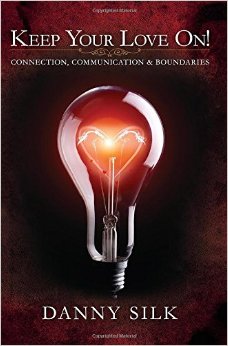
Keep Your Love OnPastors and counselors should definitely add Keep Your Love On! to their bookshelf. This book by Danny Silk is a goldmine of helps for repairing, restoring and strengthening relationships. You can read my full book review by clicking here. Below are a few quotes from this book.

“Most people haven’t learned to build their relationships on the premise, ‘I choose you.’ Their premise for relationships is, ‘You choose me.’ … However, if all our relationships are based solely on our natural impulse to return liking for liking, then we are going to have problems. Liking is a conditional state—it changes. Making ‘You choose me’ the foundation of a relationship dooms it to change, and probably collapse, the minute one person’s liking happens to turn south.” 

“A healthy, lasting relationship can only be built between two people who choose one another and take full responsibility for that choice. This choice must be based on who they are, what they want, and what they are committed to doing as individuals. … In order to be able to make and keep commitments like this—commitments to enduring, intimate relationships—you need to be a certain kind of person. You need to be a powerful person. Powerful people take responsibility for their lives and choices. Powerful people choose who they want to be with, what they are going to pursue in life, and how they are going to go after it.”

“Often the first thing that reveals a powerless mindset is powerless language. Frequent use of the phrase is ‘I can’t’ and ‘I have to’ is a hallmark of a powerless person. … Powerless people also throw in ‘I’ll try’ to absolve them if they do not come through on a commitment or promise.”

“Powerless people approach relationships as consumers. They are always looking for other people who have resources of love, happiness, joy, and comfort to offer in a relationship to share with them, because they don’t have any.”

“Powerless people often blame the messes they make on other people. The reason their life, marriage, child, finances, job, or whatever is the way it is has nothing to do with their choices. Someone else—their parents, their spouse, their teachers, society—created the life they’re living. They don’t have the power to create their own lives.” 

“The classic relational dynamic created by powerless people is called triangulation. When you believe that other people are scary, unsafe, and more powerful than you, and when you believe that you need to get them to meet your needs, then you have three possible roles you get to play in relationships: the victim, the bad guy, or the rescuer. If you’re the victim, you’re looking for a rescuer to make you feel safe and happy. If you’re the bad guy, you are using control and intimidation to protect yourself or get someone to meet your needs. If you’re a rescuer, you’re taking responsibility for someone else’s life in an attempt to feel powerful. Powerless people will switch in and out of these roles in relational interactions.”

“In order to stay in relationship, powerless people make an agreement to exercise mutual control over each other. The unspoken pact between them is, ‘It’s my job to make you happy, and your job to make me happy. And the best way to get you to work on my life is to act miserable. The more miserable I am, the more you will have to try to make me feel better.’ Powerless people use various tactics, such as getting upset, withdrawing, nagging, ridiculing, pouting, crying, or getting angry, to pressure, manipulate, and punish one another into keeping this pact. … A relational bond built on mutual control simply cannot produce anything remotely like safety, love, or trust. It can only produce more fear, pain, distrust, punishment, and misery.” 

“Powerful does not mean dominating. In fact, a controlling, dominating person is the very opposite of a powerful person. Powerful people do not try to control other people. They know it doesn’t work, and that it’s not their job. Their job is to control themselves. As a result, they are able to consciously and deliberately create the environment in which they want to live. They don’t try to get people to respect them; they create a respectful environment by showing respect. They deliberately set the standard for how they expect to be treated by the way they treat others. As they consistently act in responsible, respectful, and loving ways, it becomes clear that the only people who can get close to them are those who know how to show respect, be responsible, and love well. Life does not happen to powerful people. Powerful people are happening—they are happening all the time.”

“What is the goal in your close relationships? Are you trying to create a safe connection or a safe distance? Are you building a skill set to move away from or control the distance between you and your husband, wife, friend, child, etc.? Or are you building a skill set to move toward them and keep your love on no matter what?”

Stay tuned: more quotes from Keep Your Love On! coming soon…

How To End The Sin Of __________

C.H. SpurgeonCharles Spurgeon was addressing drunkenness in this passage, but what would happen if you filled in sin you are most prone to commit in these blanks…

“You cannot wipe out all the national iniquity, but if each man reformed himself of __________, by God’s grace, this great evil would cease. … Have you heard ringing in your ears the precept, ‘Be ye holy, for I am holy’? Has the Holy Spirit by His mighty grace kept you from indulging in __________? Have you in any way fallen into lightness of talk and thought, and so helped to increase the flood of __________? … Let us bow our heads in penitence, and seek the God of all grace.”

Heavenly Father, may I be more sensitive to the sin in my life than I am aware of the sin in the world. Amen.

Liquid Leadership (book review)

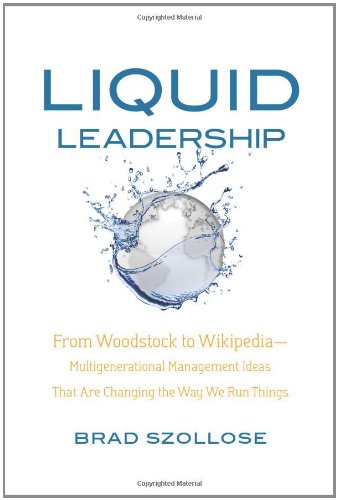
Liquid LeadershipIn Liquid Leadership, Brad Szollose proposes to teach leadership principles for those who have younger employees, or for those who lead organizations that need to relate to a younger demographic. Brad says that liquid leaders are able to flow effortlessly between older and younger generations.

Brad’s seven laws say that a liquid leader…

  1. …places people first.
  2. …cultivates an environment where it is free and safe to tell the truth.
  3. …nurtures a creative culture.
  4. …supports reinvention of the organization.
  5. …leads by example.
  6. …takes responsibility.
  7. …leaves a lasting legacy.

I agree with all of these points: not just for “liquid leaders” but for all leaders. If leadership principles (or laws, as Brad calls them) are true, then they are also applicable in every setting: Gen Y or Baby Boomer, for-profit or charity, Western or Eastern.

The “meat” of Liquid Leadership comes in the opening chapter, with the remaining chapters consisting primarily of Brad’s personal experiences, or his observations of other success/failure stories, to help bolster his point.

If you are looking for a book with good stories to make your case for leadership, check this out. But if you are looking for a book about serious leadership development, look elsewhere.

The Fearful Privilege Of Being A Pastor

PreachingI was studying the life of the Old Testament prophet Ezekiel, and I jotted down some thoughts in my journal of what God was speaking to me. But I also felt like this was a message for my fellow pastors as well. So here are my unedited thoughts, just as I penned them in my journal. 

The Lord said to me, “Son of man, look carefully, listen closely and give attention to everything I tell you….” (Ezekiel 44:5).

I have to take personal responsibility for this. This is not something I can pass off to anyone else―“instead of carrying out your duty in regard to My holy things, you put others in charge of My sanctuary” (44:8). No, never!

I have been given the privilege and heavy responsibility for souls in this community. I must, therefore, hear what God has to tell me about this city and these people. He knows, and He wants to share with me. He calls me to look carefully, listen carefully, and give careful attention to what He’s saying. He is desirous that everyone in this community will see His radiant glory (43:2), and―wonders of wonders!―He has asked me to deliver His message of life to my community.

Who am I that You would choose me? But you have, and I am grateful. I am also filled with holy dread that I carry out my duties in a way that pleases and glorifies You, my King. I need Your help. I need to hear Your voice. I need Your Spirit to stamp the image of Christ ever more clearly in me.

May I only live to bring You praise!

Don’t Misuse God’s Name

Representing God's nameYou’ve heard the old nursery rhyme: Sticks and stones may break my bones but words will never hurt me. We all know this isn’t true: words do hurt, and names that people call us may leave lasting wounds.

Words and names are important to God. God used His word to create the universe (God said, “Let there by light”); Jesus was called The Word (see John 1:1); God has named people and even renamed them to reflect their character or destiny.

The most important name of all is God’s own name, so the Third Commandment says, “You shall not misuse the name of the LORD your God…” (Exodus 20:7). How can we misuse God’s name? There are five ways—

(1) As emptiness or nothingness

  • Are our words empty? Do we use filler phrases like “Oh my God!” that neither talk to Jehovah or about Jehovah? We shouldn’t use God’s name unless we’re talking to Him or about Him in a respectful way.

(2) In vanity

  • In reality this means calling ourselves a Christian, but speaking in an un-Christlike way.
  • “Giving God a ‘bad name’ might diminish or demolish people’s belief, respect, and awe for God, a tragedy for a world that needs holiness. … It is a major responsibility to represent God; one which should not be taken lightly.” —Dr. Laura Schlessinger

(3) Being insincere

  • Are our promises empty, or is our word our bond? If we have to use phrases like “I swear to God that I will…” then that means we cannot be trusted on our own merits. When we claim to be Christians but cannot be trusted, we undermine the trustworthiness of God in the minds of other people.
  • “The godly man, therefore, will make promises cautiously but keep them conscientiously once they are made, knowing that irresponsibility and unreliability here are great and grievous sins.” —J.I. Packer

(4) Having an unholy vocabulary

  • Holy means something set apart for a special use. Perhaps there are words we use to describe God that we are also using for lesser things. It might be good to listen to how the Holy Spirit would challenge us to have a unique vocabulary to talk to or about our unique God.

(5) Worthlessness of conduct

  • As the cliche goes, “What you do speaks so loudly that I cannot hear what you are saying.” So we need to make sure that we both talk like Jesus talked and live like Jesus lived.

Anything less than these standards just may be misusing God’s holy name and character by misrepresenting Him or giving Him a “bad name.” What do you think?

If you have missed any of the messages in our series The Love In The Law, you can find them all by clicking here.

A Leader’s Nudge And Covering

Nudge & coverLeadership carries a heavy responsibility. I often paraphrase what the Apostle James wrote, “Not many of you should presume to be leaders because you know leaders will be judged more strictly” (see James 3:1).

Consider what was said to Jeroboam, the king of Israel: “And God will give Israel up because of the sins Jeroboam has committed and has caused Israel to commit” (1 Kings 14:16, emphasis added).

A leader’s action has consequences not only for himself, but for all the people under his care. Sure, some Israelites were going to sin regardless of how Jeroboam lived, but his sinful lifestyle gave a nudge to those who took their cues from him. In other words, Jeroboam’s sin made it that much easier for others to sin.

I’m sure there were some Israelites who didn’t follow Jeroboam into sin, yet they were now exposed to God’s “jealous anger” (1 Kings 14:22) because Jeroboam’s sin removed the covering of God’s blessing on those northern tribes.

These principles still hold true today for me as a dad, a husband, a pastor, a citizen of Cedar Springs. And they hold true for you in your role as a spouse, a parent, an employer or employee, a Christian. Your sin may be the nudge to others that causes them to sin; your sin will remove God’s covering and expose people to His judgment.

Leaders best serve by staying wholly committed to God. 

It’s only as I am wholly—and holy—His that I can nudge people toward righteousness and preserve the covering of God’s blessing.

May our lives never arouse God’s righteous anger, but may we be a blessing by wholly serving Him all the days of our lives.

Painting With Your Words

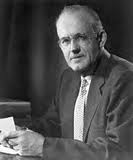
My dear fellow pastors, please heed this admonition from A.W. Tozer. Our responsibility of presenting the Good News of Jesus Christ must include mastery of the language in which we will be speaking. We must not be lax in this!

Tozer“For the very reason that God has committed His saving truth to the receptacle of human language, the man who preaches that truth should be more than ordinarily skillful in the use of language. It is necessary that every artist master his medium, every musician his instrument. For a man calling himself a concert pianist to appear before an audience with but a beginner’s acquaintance with the keyboard would be no more absurd than for a minister of the gospel to appear before his congregation without a thorough knowledge of the language in which he expects to preach.” —A.W. Tozer

Boomerang

BoomerangI was very hesitant to enter the pastorate. As I look back now, I see God had been preparing me for this all my life, but I was reluctant to take on such a heavy spiritual responsibility.

When I finally submitted, I made a covenant with God: “I never want to preach a sermon where my finger is pointed at the congregation, where I am saying, ‘You people better listen to this!’ But I only want to share what You have been challenging me to do and become. I want the congregation to hear an overflow of the work being done in me.”

I recently read a paragraph from Oswald Chambers that validates that covenant I made—

“It is an easy business to preach, an appallingly easy thing to tell other people what to do; it is another thing to have God’s message turned into a boomerang—‘You have been teaching these people that they should be full of peace and of joy, but what about yourself? Are you full of peace and joy?’ The truthful witness is the one who lets his light shine in works which exhibit the disposition of Jesus; one who lives the truth as well as preaches it.

My pastor friend, don’t preach it if you’re not living it! Or another way: live it first, then preach it.

6 Quotes From “The Global War On Christians”

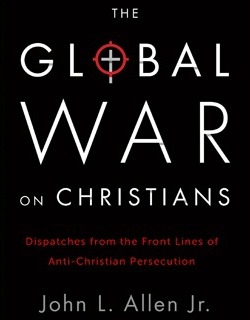
The Global War On ChristiansYesterday I shared some eye-opening statistics from The Global War On Christians by Jeff L. Allen, Jr. Below are some of the quotes which especially stood out to me. If you want to read my full review of this book, please click here.

“Spectacular outbreaks of violence are often produced by less intense incidents, such as believers being harassed on the streets, slurred in the media, shunned in the workplace, and hassled as they gather to worship. The usual cycle is for complaints to be made about these incidents, which are then ignored or dismissed. That failure to act usually serves to emboldened the perpetrators, who then may become more likely to move on to even more lethal assaults, in effect testing the limits of official tolerance.”

“The bottom line is that the global war on Christians will never be won as long as the myth persists that nobody’s really responsible for it.”

“Perpetuating the idea that Islam is by far the primary threat facing Christians in the early twenty-first century also stokes the idea of a ‘clash of civilizations’ between the two faiths, adding fuel to the fire of those who long for a new holy war. That doesn’t do justice to the complex reality of the situation, as there are examples of both conflict and coexistence, and for every virulent and dangerous current in the Islamic world there are also movements and individuals devoted to peace.” 

“Politically correct silence does no one any good, and arguably insults the dignity of those who run risks to life and limb on a daily basis to keep the faith alive.”

“Politics distorts perceptions of the global war on Christians in another sense. Ideological bias tempts observers in the West to see only part of the picture. Those on the political left may celebrate martyrs to corporate greed or to right-wing the police states, but fear to speak out about the suffering of Christians behind the lines of the Islamic world. Conservatives may be reluctant to condemn the situation facing Christians in the state of Israel or in regimes that are presently in fashion on the right has allies in the ‘war on terror.’ Either way, the result is a reductive reasoning of the true score of anti-Christian persecution, and a double standard when it comes to engaging its protagonists. If we want to see the global war on Christians clearly, we have to stop looking at it through the funhouse mirror of secular politics.”

“Historically, waves of persecution have fueled major advances for Christianity. … Today, it’s no accident that zones where persecution of Christians is the most intense… are also the places where Christianity is growing the most dramatically.”

Ho Hum, It’s Election Day

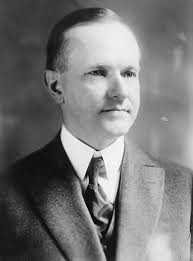
Calvin CoolidgeSadly, that’s the attitude of far too many people in the United States of America. And it’s flat-out wrong! 

If America is to stay true to the designs of our brilliant Founding Fathers, we must vote intelligently. In this age of easy internet access, there is no excuse for you not to find out where each candidate stands. So get informed and go vote!

Almost 90 years ago President Calvin Coolidge had some challenging words for Americans which should still grab our attention today—

“All the opportunity for self-government through the rule of the people depends upon one single factor. That is the ballot box…. The people of our country are sovereign. If they do not vote they abdicate that sovereignty, and they may be entirely sure that if they relinquish it other forces will seize it, and if they fail to govern themselves some other power will rise up to govern them. The choice is always before them, whether they will be slaves or whether they will be free. The only way to be free is to exercise actively and energetically the privileges, and discharge faithfully the duties which make freedom. It is not to be secured by passive resistance. It is the result of energy and action. … Persons who have the right to vote are trustees for the benefit of their country and their countrymen. They have no right to say they do not care. They must care! They have no right to say that whatever the result of the election they can get along. They must remember that their country and their countrymen cannot get along, cannot remain sound, cannot preserve its institutions, cannot protect its citizens, cannot maintain its place in the world, unless those who have the right to vote do sustain and do guide the course of public affairs by the thoughtful exercise of that right on election day.” (emphasis added)