10 Quotes From C.S. Lewis

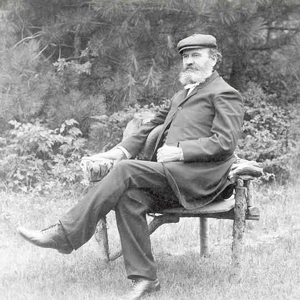
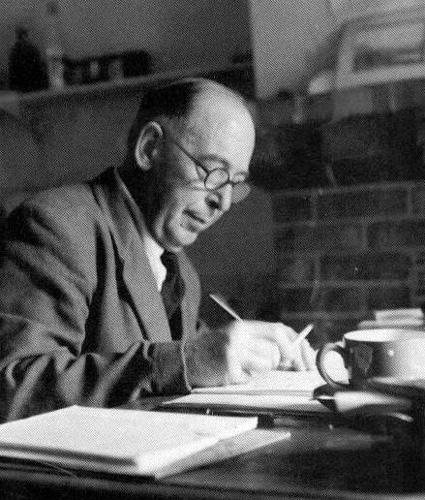
C.S. Lewis(When is it ever not a good day to share C.S. Lewis quotes?!)

“There is either a warning or an encouragement here for every one of us. If you are a nice person—if virtue comes easily to you—beware! Much is expected from those to whom much is given. If you mistake for your own merits what are really God’s gifts to you through nature, and if you are contented with simply being nice, you are still a rebel: and all those gifts will only make your fall more terrible, your corruption more complicated, your bad example more disastrous. The devil was an archangel once; his natural gifts were as far above yours as yours are above those of a chimpanzee.” —C.S. Lewis 

“The monstrosity of sexual intercourse outside marriage is that those who indulge in it are trying to isolate one kind of union (the sexual) from all the other kinds of union which were intended to go along with it and make up the total union. …You must not isolate that pleasure and try to get it by itself, any more than you ought to try to get the pleasures of taste without swallowing and digesting, by chewing things and spitting them out again.” —C.S. Lewis

“On the contrary, those who are seriously attempting chastity are more conscious, and soon know a great deal more about their own sexuality than anyone else. They come to know their desires as Wellington knew Napoleon, or as Sherlock Holmes knew Moriarty; as a rat-catcher knows rats or a plumber knows about leaky pipes. Virtue—even attempted virtue—brings light; indulgence brings fog.” —C.S. Lewis

“For there are two things inside me, competing with the human self which I must try to become. They are the Animal self, and the Diabolical self. The Diabolical self is the worse of the two. That is why a cold, self-righteous prig who goes regularly to church may be far nearer to hell than a prostitute. But, of  course, it is better to be neither.” —C.S. Lewis

 “A great deal of our anxiety to make excuses comes from not really believing in it, from thinking that God will not take us to Himself again unless he is satisfied that some sort of case can be made out in our favor. But that would not be forgiveness at all. Real forgiveness means looking steadily at the sin, the sin that is left over without any excuse, after all allowances have been made, and seeing it in all its horror, dirt, meanness, and malice, and nevertheless being wholly reconciled to the man who has done it. That, and only that, is forgiveness, and that we can always have from God if we ask for it.” —C.S. Lewis 

“To be a Christian means to forgive the inexcusable, because God has forgiven the inexcusable in you.” —C.S. Lewis

“The human lives in time but our enemy destines them to eternity. He therefore, I believe, wants them to attend chiefly to two things, to eternity itself, and to that point of time which they call the Present. For the Present is the point at which time touches eternity. Of the present moment, and of it only, humans have an experience analogous to the experience which our Enemy has of reality as a whole; in it alone freedom and actuality are offered them. He would therefore have them continually concerned either with eternity (which means being concerned with Him) or with the Present—either meditating on their eternal union with, or separation from, Himself, or else obeying the present voice of conscience, bearing the present cross, receiving the present grace, giving thanks for the present pleasure.” —C.S. Lewis

“War creates no absolutely new situation; it simply aggravates the permanent human situation so that we can no longer ignore it.” —C.S. Lewis

“The rescue of drowning men is, then, a duty worth dying for, but not worth living for.” —C.S. Lewis

“Christianity does not simply replace our natural life and substitute a new one; it is rather a new organization which exploits, to its own supernatural ends, these natural materials.” —C.S. Lewis

Lettie Cowman On Prayer

Lettie Cowman“Often it is simply the answers to our prayers that cause many of the difficulties in the Christian life.

“We pray for patience, and our Father sends demanding people our way who test us to the limit, ‘because…suffering produces perseverance’ (Romans 5:3). …

“We pray to be unselfish, and God gives us opportunities to sacrifice by placing other people’s needs first and by laying down our lives for other believers. …

“We pray to the Lord, as His apostles did, saying, ‘Increase our faith!’ (Luke 17:5). Then our money seems to take wings and fly away; our children become critically ill; an employee becomes careless, slow, and wasteful; or some other new trial comes upon us, requiring more faith than we have ever before experienced.

“We pray for a Christlike life that exhibits the humility of a lamb. Then we are asked to perform some lowly task, or we are unjustly accused and given no opportunity to explain….

“We pray for gentleness and quickly face a storm of temptation to be harsh and irritable.

“We pray for quietness, and suddenly every nerve is tested to its limit with tremendous tension so that we may learn that when He sends His peace, no one can disturb it.

“We pray for love for others, and God sends unique suffering by sending people our way who are difficult to love and who say things that get on our nerves and tear at our heart. …

The way to peace and victory is to accept every circumstance and every trial as being straight from the hand of our loving Father.” —Lettie Cowman

Pentecost Sunday

For Pentecost Sunday, I think these words from Charles Spurgeon are vital for us to hear again…

“The Holy Spirit’sC.H. Spurgeon power was gloriously manifested in and after Pentecost. He remains at this hour the present Immanuel—God with us, dwelling in and with His people, quickening, guiding, and ruling in their midst. Is His presence recognized as it ought to be? We cannot control His working; He is most sovereign in all His operations, but are we sufficiently anxious to obtain His help, or sufficiently watchful lest we provoke Him to withdraw His aid? Without Him we can do nothing, but by His almighty energy the most extraordinary results can be produced…. The Holy Ghost is no temporary gift, He abides with the saints. We have but to seek Him aright, and He will be found of us.” —Charles Spurgeon

10 More Quotes From “Answering Jihad”

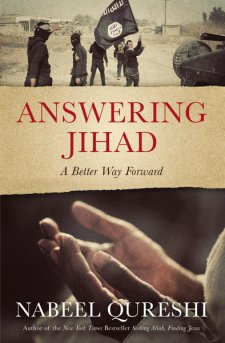
Answering JihadNabeel Qureshi has given us a very timely book in Answering Jihad. He cuts through the confusion and misinformation to give us an informed, clear look at the teachings of Islam in regard to jihad.

I already shared one set of quotes from this book (which you can read here). Here is the next set of quotes I found eye-opening.

“At the risk of over-generalizing, this common understanding of Islam boils down to this: True obedience to Allah will result in Muslim dominance.”

“I have heard many people, frustrated by the increasing frequency and scale of Islamist terrorism, suggest that Islam needs a reformation. What they may not realize is that radical Islam is the Islamic reformation. This might sound shocking, but consider: Just as the Protestant Reformation was an attempt to raze centuries of Catholic tradition and return to the canonical texts, so radical Islam is an attempt to raze centuries of traditions of various schools of Islamic thought and return to the canonical texts of the Quran and Muhammad’s life.”

“Violent expressions of Islam adhere more consistently and more literally to the foundational texts of the Islamic faith, the Quran and the hadith. Peaceful versions of Islam must reinvent traditions from Muhammad’s life in order to be internally consistent, or they must ignore them outright.”

“Instead of fearing Muslim immigrants, we should embrace them and be the element of change we wish to see. … I suggest friendship rather than fear has a better way forward.”

“Christians believe Jesus is God, but the Quran is so opposed to this belief that it condemns Jesus worshipers to hell (5:72).”

“According to Jesus, God is our Father, yet the Quran very specifically denies that God is a father (112:1-4).”

“Islam roundly condemns worship of the Trinity (5:73), establishing in contrast its own core principle of Tawhid, the absolute oneness of God. Tawhid emphatically denies the Trinity, so much so that it is safe to say the doctrine of God in Islam is antithetical to the doctrine of God and Christianity. … The Trinity teaches that God is not a person, but three Persons: Father, Son, and Spirit. To assert that the God of Islam is the same person as the God of Christianity becomes almost nonsensical at this point, as the Christian God is tripersonal, two persons of Islam specifically denies in the Quran.”

“One can both love Muslims and insist that the God they worship is not the same as the Christian God.”

“In the Christian worldview, the exemplar for followers of God is no mere man but God Himself. Since God cares for those who are His enemies, even blessing them with rain, Christians ought to love their enemies and pray for those who persecute them, so that they can follow God’s example. This contrasts with the teaching of the Quran, where Allah tells Muslims, ‘O you who believe! Do not take my enemies or your enemies as allies, offering them your friendship when they do not believe’ (60:1). Of course, that is not to condemn the Quran, as it is counterintuitive to love one’s enemy. The Christian command may make little earthly sense, but it is the explicit teaching of Jesus.” 

“Even though Muslims are often raised with the teaching that ‘Islam is the religion of peace,’ when they study the texts for themselves, they are faced with the reality that Muhammad in the Quran calls for jihad. They will stand at the crossroads for only so long before they choose what path they will take—apostasy, apathy, or radicalization. As Muslims make that choice, it would benefit the whole world if they did not make it alone, or worse, with radical recruiters. We need to show compassion for Muslims and befriend them.”

Be sure to check out my review of Answering Jihad, and then pick up a copy for yourself.

The Safe Walk Of Faith

David Wilkerson“We sometimes think that when God commands us to do something and we obey, everything will be smooth sailing. We think He’ll be grateful for our obedience so He will place us on a four-lane freeway to blessing. Abraham obeyed God’s Word, but the fact is, one act of obedience doesn’t add up to a walk of obedience.

“Abraham had a promise from God, but along the way he had to go through the Negev desert, over snow-covered mountains, through another desert, and past the warring people of Canaan. Then he ended up in the midst of a famine in Egypt. I’m glad God didn’t tell Abraham about the path he would be walking!

“This particular path was like no other Abraham had walked. Yet, through it all, he was never in any danger. Nobody could touch him. God was his shield and protector every day. And because of his faith, Abraham was becoming a friend to God.” —David Wilkerson

11 Quotes From “Answering Jihad”

Answering JihadAnswering Jihad by Nabeel Qureshi is an excellent resource to get clarity on all of the terms floating around about Islam, Muslims, and the use of jihad. You can read my full book review by clicking here.

Below are the first set of quotes from this book that I’d like to share with you. Unless otherwise noted, all the quotes are from Nabeel Qureshi.

“There is a great deal of violence in Islam, even in the very foundations of the faith, and it is not all defensive. Quite to the contrary, if the traditions about the prophet of Islam are in any way reliable, then Islam glorifies violent jihad arguably more than any other action a Muslim can take.”

“As Islam is practiced in a way that calls Muslims to return to its foundations, violence will follow.”

“Islam is not Muslims, and Muslims are not Islam. Though Muslims are adherents of Islam, and Islam is the worldview of Muslims, the two are not the same, as many uncritically believe. … Islam is not Muslims, and one can criticize Islam while affirming and loving Muslims.” 

“Islam was first called ‘the religion of peace’ as late as 1930, and the title of a book published In India. … The phrase was slow to take off, but by the 1970s it was appearing more and more frequently in the writings of Muslims for western audiences.” —Mark Durie, a research scholar of linguistics and Islam at Melbourne School of Theology, in an article for the Independent Journal

“The Quran never says, ‘Islam is the religion of peace,’ nor do the traditions of Muhammad.”

“To contend that the word Islam signifies peace in the absence of violence is incorrect. Islam signifies a peace after violence, or under the threat of it. According to Islamic tradition, that is how Muhammad himself used the word. His warning to neighboring tribes is famous: Aslim taslam, ‘If you surrender, you will have peace.’ It was a play on words, as aslim also connotes becoming Muslim: ‘If you convert, you will have safety through surrender.’”

“The vast majority of Muslims inherit their understanding of Islam and have not investigated the foundations of Islam for themselves. If they were raised in the West and taught that Islam is the religion of peace, as I was, then their first foray into the foundations might be somewhat of a shock, and they will probably soon find themselves either in a defensive position or grappling with significant cognitive dissonance.”

“Since there are thousands of verses in the Quran and hundreds of thousands of hadith, it is expected that only trained Muslim jurists can engage in determining what sharia teachers. The jurist must give primacy to the Quran, then consider the actions (sunnah) and sayings (hadith) of Muhammad, followed by reviewing the consensus of Islamic scholars, or ijma, before using his own reasoning (qiyas). By following these four steps, a Muslim jurist can make a decision, or fatwa, about what sharia teaches on a given matter. The ultimate goal is to apply the teachings of sharia to Muslim life, and that is called fiqh.”

“As is probably clear by now, at no point was the average Muslim expected to read the Quran to decide upon correct Islamic practices by himself or herself. Not only is Islam not a faith that upholds the sufficiency of scripture alone, the complexity of its foundations virtually necessitates a reliance on jurists and scholars for proper practice.”

“Islam was not in fact ‘spread by the sword’—conversion was not forced on the occupants of conquered territories—but the conquests created the necessary preconditions for the spread of Islam. With only a few exceptions… Islam has become the majority faith only in territories that were conquered by force. Thus, the conquests and the doctrine that motivated these conquests—jihad—were crucial to the development of Islam.” —David Cook

“I ask your pardon, but I really do feel that the Christian teaching of loving one’s enemies, even in the face of death, might perhaps be the most powerful answer to jihad at our disposal today. Not only does it allow us to counter jihad, it also enables us to treat Muslims with the utmost dignity: as image bearers of God.” 

Stay tuned for more quotes from Answering Jihad

The Danger Of Unbelief

Horatius Bonar“Unbelief in Scripture is spoken of as the sin of sins. As faith is the root of all good, so is unbelief of all evil. God hates it; Christ condemns it; our own hearts cannot but say it is evil. ‘The evil heart of unbelief’ is the most evil of all. … Unbelief is injustice—

  1. To God—It assumes that He is not to be trusted or credited; that He is not the being that He has said He is. It does gross injustice to His whole character; His love, His grace, His veracity, His unchangeableness. It misinterprets and misrepresents Him in all respects, and so dishonors Him, and separates us from Him.
  2. To Christ—It rejects the testimony which God has given of Him; it refuses to accept the character which the Father has given of Him, and treats Him as one like ourselves. Every act of unbelief, every doubt, every suspicion is an injustice to Him—to one who has not deserved such treatment at our hands. It keeps us apart from Him, and Him from us; it will not allow us to be satisfied with what Scripture has revealed concerning Him.
  3. To the Holy Spirit—All unbelief is a rejection of the Spirit’s testimony to the Son; a grieving of the Spirit. It is a doing injustice to His love and power; to His willingness to bless. It is making Him a liar. It is casting discredit on that Book which He has written for us concerning the love of God.
  4. To the Cross—All unbelief, more or less, directly assails the cross. It says—(1) That Cross is insufficient, it cannot save unless assisted by goodness in us; (2) That Cross may save ordinary sinners, it cannot save me; (3) That Cross is not the place of substitution, but merely of example of a divine self-surrender. Thus it insists that we shall not take our peace from the cross alone.
  5. To the blood—The special thing which marks the Cross is the blood; and unbelief specially sets aside the blood in its value and efficacy. It refuses to take peace from the blood alone. …
  6. To the gospel—It makes void the good news, and turns them into evil tidings, or at least into no tidings at all. It makes the faith which receives the gospel a work to be done, a condition to be performed; and upon the right doing of that work, and the right performance of that condition….

“Unbelief checks prayerfulness—Prayer implies expectancy: ‘Ask, and ye shall receive.’ Where unbelief comes in, this expectancy is stopped; and prayer becomes irksome, and in the end brief and infrequent.” —Horatius Bonar

Abundantly Able

Yet Abraham did not waver through unbelief regarding the promise of God, but was strengthened in his faith and gave glory to God, being fully persuaded that God had power to do what He had promised. (Romans 4:20-21)

A.B. Simpson“The literal translation of this passage from the Greek expresses the thought in this way: God is not merely able but abundantly able, bountifully and generously able, with an infinite surplus of resources, and eternally able ‘to do what He had promised.’ He is the God of limitless resources—the only limit comes from us. Our requests, our thoughts, and our prayers are too small, and our expectations are too low. God is trying to raise our vision to a higher level, call us to have greater expectations, and thereby bring us to greater appropriation. Shall we continue living in a way that mocks His will and denies His Word?” —A.B. Simpson

Stand Firm!

C.H. Spurgeon“‘Stand firm and you will see the deliverance the Lord will bring you today’ (Exodus 14:13). This verse contains God’s command to me as a believer for those times when I am confronted with dire circumstances and extraordinary difficulties. What am I to do when I cannot retreat or go forward and my way is blocked to the right into the left? The Master’s word to me is, ‘Stand firm.’ And the best thing I can do at these times is to listen only to my Master’s word, for others will come to me with their suggestions and evil advice.

Despair will come, whispering, ‘Give up—lie down and die.’ …

Cowardice will come and say, ‘You must retreat to the world’s way of acting. It is too difficult for you to continue living the part of a Christian. Abandon your principles.’ …

Impatience will come, crying, ‘Get up and do something! To “stand firm” and wait is sheer idleness.’ …

Arrogance will come, boasting, ‘If the sea is blocking your way, march right into it and expect a miracle.’ …

“‘Stand firm.’ I must maintain the posture of one who stands ready for action, expecting further orders, and cheerfully and patiently awaiting the Director’s voice. It will not be long until God will say to me, as distinctly as He told Moses to tell the children of Israel, ‘Move on’ (Exodus 14:15).” —Charles Spurgeon

11 Quotes From “The Duty Of Pastors”

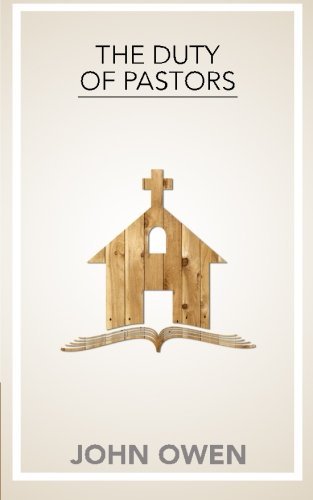
The Duty Of PastorsJohn Owen has some fascinating insights on pastors and ministers (hint: they’re not the same thing) in his book The Duty Of Pastors. Here are some of the quotes I liked from this book. Remember this book was written in the 17th-century, so don’t let the Old English keep you from discovering the rich truths in these passages.

“Why should any speak where the Holy Ghost is silent? … Where things are obscured, it is a safer way to prove the practice of men by God’s precept, charitably supposing them to have been obedient, than to wrest the divine rule to their observation, knowing how prone men are to deify themselves by mixing their inventions with the worship of God.”

“The lights which God maketh are sufficient to rule the seasons for which they are ordained. As, in creating of the world, God ‘made two great lights, the greater light to rule the day, and the lesser light to rule the night;’ so, in the erection of the new world of His church, He set up two great lights, the lesser light of the Old Testament to guide the night, the dark space of time under the law, and the greater light of the New Testament to rule the glorious day of the gospel. And these two lights do sufficiently enlighten every man that cometh into this new world. There is no need of the false fire of tradition where God sets up such glorious lights.”

“All faithful ministers of the gospel, inasmuch as they are ingrafted into Christ and are true believers, may, as all other true Christians, be called priests; but this inasmuch as they are members of Christ, not ministers of the gospel. It respecteth their persons, not their function, or not them as such.”

“Thus, this metaphorical appellation of priests is, in the first place an intimation of that transcendent privilege of grace and favour which Jesus Christ hath purchased for everyone that is sanctified with the blood of the covenant.”

“Not to lose myself and reader in this digression, the sum is, the unspeakable blessings which the priesthood of Christ hath obtained for us are a strong obligation for the duty of praise and thanksgiving; of which that in some measure we may discharge ourselves, He hath furnished us with sacrifices of that kind to be offered unto God.” 

“That the name of priests is nowhere in the Scripture attributed peculiarly and distinctively to the ministers of the gospel as such. … And yet, when Christ ascended on high, He gave some to be prophets, for the edification of His body, Eph. iv. 11; none, as we find, to be priests. Priests, then (like prelates), are a sort of church-officers whom Christ never appointed.”

“Never fear the equity of what God sets thee upon. No excuses of disability or any other impediment ought to take place; the Lord can and will supply all such defects.”

“God never sendeth any but whom He doth so extraordinarily and immediately call and ordain for that purpose; and that this may be manifested unto others, He always accompanieth them with His own almighty power, in the working of such miracles as may make them be believed, for the very works’ sake which God by them doth effect.”

“We do not read of any such miracles wrought by the prophet Amos, and yet he stands upon his extraordinary immediate vocation, ‘I was no prophet, neither was I a prophet’s son, but the Lord took me,’ etc. It sufficeth, then, that they be furnished with a supernatural power, either in, 1. Discerning; 2. Speaking; or 3. Working. … The sum is, that seeing such men pretend that their revelations and miracles are from heaven, let us search whether the doctrine they seek to confirm by them be from heaven or no.”

“There is a general obligation on all Christians to promote the conversion and instruction of sinners, and men erring from the right way.”

“For a public, formal, ministerial teaching, two things are required in the teacher: first, Gifts from God; secondly, Authority from the church (I speak now of ordinary cases). He that wants either is no true pastor.”

Be sure to check out my review of The Duty Of Pastors by clicking here.