Quieting The Storms

Listen to the podcast of this post by clicking on the player below, and you can also subscribe on AppleSpotify, or Audible. 

“Anxiety disorders are the most common mental illness in the U.S., affecting 40 million adults in the United States age 18 and older, or 18.1% of the population every year.” —Anxiety & Depression Association of America 

A multitude of factors go into someone’s anxiety: genetics, temperament, brain chemistry, life experiences. In addition to those factors, we have to keep in mind that humans are a three-part being—with a body, mind, and spirit—and a disease in one area does affect the other two areas. 

All of this means that there is no one-size-fits-all solution for anxiety. But there is one Healer: 

  • He may supernaturally heal your body, mind, or spirit 
  • He may direct you to a medical doctor, a mental health professional, or a spiritual counselor 
  • But always, He will walk through the challenges with you, strengthening you, and preparing you to minister to others going through a similar struggle (Psalm 23:1-6; 2 Corinthians 1:3-4) 

David wrote, “When I am afraid, I put my trust in You” (Psalm 56:3). Notice that he said “when” not “if.” David knows what you probably know too: we can be easily consumed by our anxiety, doubts, and fears. But David also knows (and I hope you do too) that at those moments, we can go to God as our trustworthy First Source. 

One of the dictionary definitions of anxiety is a feeling of disquiet. All of the conflicting thoughts make it hard to concentrate, the abundance of noise makes it difficult to talk to yourself, let alone talk to God. 

I’d like you to consider another psalmist’s words. Look at the first half of Psalm 94:19—

  • When anxiety was great within me… (NIV) 
  • In the multitude of my anxious thoughts… (AMP)
  • When doubts filled my mind… (NLT) 

The setting of this psalm is one of lots of disquieting voices: a desire to see the wrongdoers punished, listening to arrogant words, getting fed up with boasting words, seeing good people being trampled, hearing foolish words uttered about God (vv. 1-8). 

Experiencing anxiety is not sinful, but I do think that we grieve God’s heart when we immediately run to other sources for relief instead of going to our loving Heavenly Father first. After dealing with the disquiet in the opening verses of Psalm 94, the psalmist says, “My anxiety level was sky high!” But then notice how that verse concludes—

  • Your consolation brought me joy (NIV) 
  • Your comforts cheer and and delight my soul (AMP)
  • Your comfort gave me renewed hope and cheer (NLT)

Jesus told us about our Comforter who would always be with us (John 14:1, 16-17). A little further on in these same remarks Jesus also said, “These things I have spoken to you, that in Me you may have peace. In the world you will have tribulation; but be of good cheer, I have overcome the world” (John 16:33 NKJV). 

I like that phrase, “Be of good cheer.” That phrase is just one word in Greek, and sometimes it’s translated “be of good courage.” In every single instance, it’s only used by Jesus and it’s only used when He comes close to anxious people (Matthew 9:2, 9:22, 14:27; Mark 6:50, 10:49; Luke 8:48; John 16:33; Acts 23:11). 

A furious squall battered the boat, almost swamping it. The disciples were—to say the least—disquieted! In their anxious state they notice Jesus peacefully sleeping. They wake Him up with, “Don’t You care that we’re drowning?!” Jesus stands up and says to the storm, “Quiet. Be still.” 

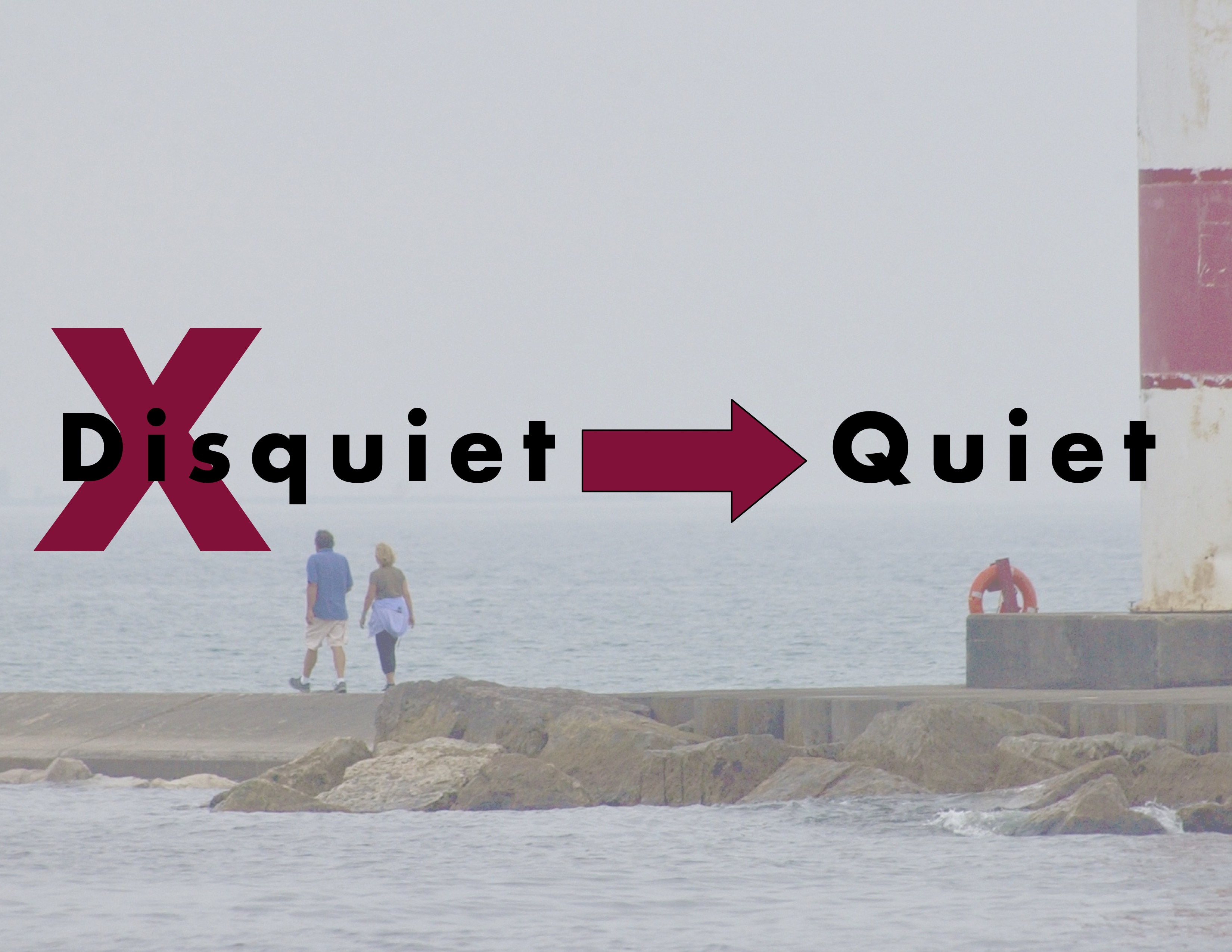
Recall that one of the descriptions of anxiety was being disquieted. That prefix dis- means to be separated: our anxiety would seek to distance us from God’s presence, to make us feel like His help is too far away. But when we go to Jesus, He alone can say, “Quiet” to our disquieting thoughts. He can remove the “dis-” and bring us close to Him. Only His peace can X-out the noise of the storm and bring you to a place of quiet rest. 

After Jesus said, “Quiet. Be still,” notice this: “THEN the wind died down and it was completely calm” (Mark 4:39). And the great thing is this: Even if another storm begins disquieting us just a few minutes after the calm, we can go to Him again. There is no limit: We can continually go to the Eternal Source of peace, to the only One who can speak, “Quiet” to our anxious thoughts. 

Please follow along with us as we learn more about X-ing out our anxieties. 

►► Would you please prayerfully consider supporting this ministry? ◀︎◀︎

Poetry Saturday—Wait

Listen to the podcast of this post by clicking on the player below, and you can also subscribe on AppleSpotify, or Audible.

Cease from disquietude,
Fret not, this is unto thee a preparation time;
Thou must be made in likeness unto Him thou wouldest serve.
Wait, the diamond must be cut ere from its tiny facets
Flash the glory of the sun’s pure ray.
Rain must descend,
Else from yon dull grey bulb springeth no sweet perfumed flower.
Be silent upon God, thy time for service has not come;
Patience, this waiting trial is by Him who loves thee sent;
Be still—He knoweth all, thou knowest that His will is best. —Oswald Chambers

►► Would you please prayerfully consider supporting this ministry? ◀︎◀︎

8 Quotes From Gordon MacDonald In “Ordering Your Private World”

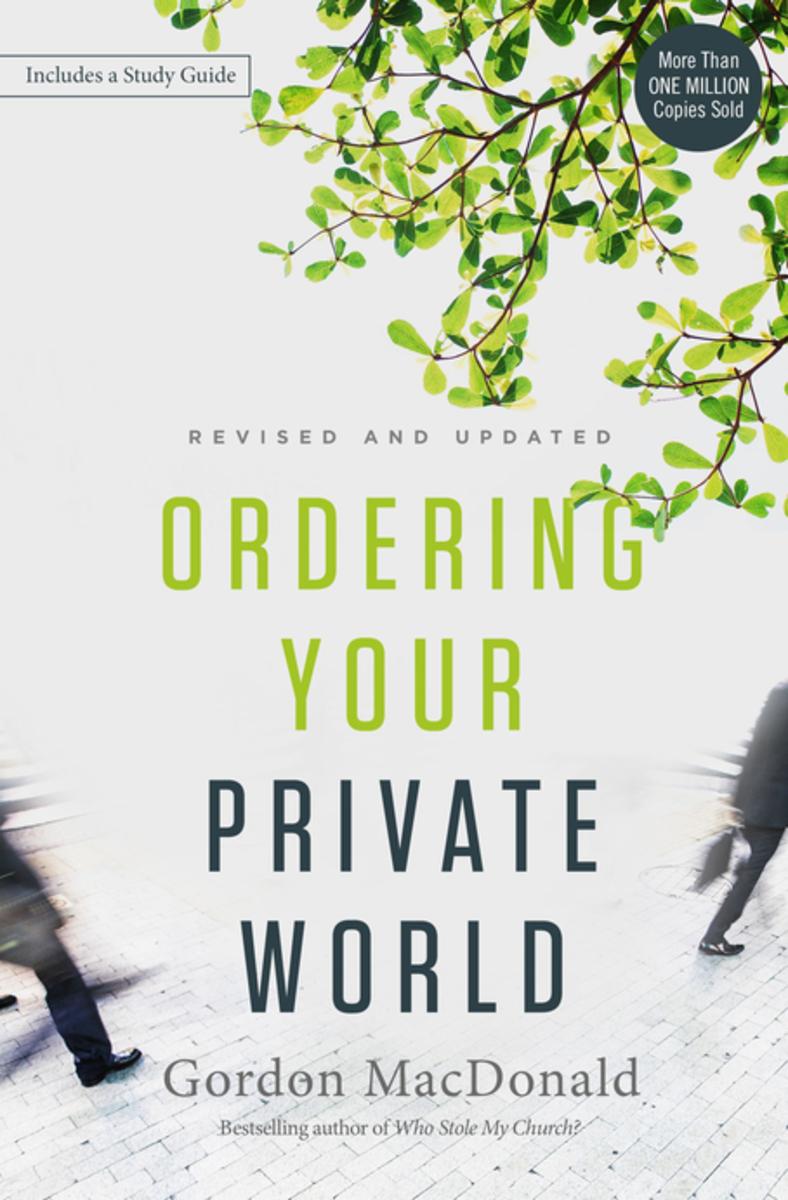
In the quiet solitude of our inner lives is where real growth takes place. Or said another way: if we won’t make time to order our private world, our public world will be limited in its scope and effectiveness. Gordon MacDonald unpacks some fantastic principles to help us in his newly updated and expanded book Ordering Your Private World. Check out my full book review by clicking here, and then enjoy these quote from Gordon MacDonald.

“There is a busyness that reflects a plan of activity, a pattern of priorities, and a sense of purposefulness. It is a good and satisfying busyness through which one grows and increases competence. But there is also a busyness (a destructive busyness, actually) that reflects a chaotic way of life—a way of doing in which one is simply responding to the next thing in the day. The next thing! It makes no difference whether it has significance; it’s just the next thing, and one does it because it’s there to do.”

“A soul—our spiritual space—is empty when one tries to do soul-based things but makes little or no effort to keep that soul filled.”

“Driven people boast of their drivenness. They have forgotten how to play. Spiritual activity seems a waste of time. They are usually too busy for the pursuit of ordinary relationships in marriage, family, or friendship, or even to carry on a relationship with themselves—not to speak of one with God. Because driven people rarely think they have accomplished enough, they seize every available minute to attend more meetings, to study more material, to initiate more projects. They operate on the precept that a reputation for busyness is a sign of success and personal importance. Thus, they attempt to impress people with the fullness of their schedules.”

“Our careers, our assets, our natural and spiritual gifts, our health—are these things owned, or merely managed in the name of the One who gave them? Driven people consider them owned; called people do not. When driven people lose those things, it is a major crisis. When called people lose them, nothing of substance changes. The private world remains the same, perhaps even stronger.”

“It is worth taking time to ask how Our Lord’s command of time is demonstrated. … The first thing that impresses me is that Jesus clearly understood His mission. … A second insight into Jesus’ personal organization of time is that He understood His own limits. … Jesus included a third important element in His strategy of time budgeting, for He set time aside for the training of the Twelve.”

“Unmanaged time flows toward my weaknesses. Unmanaged time comes under the influence of dominant people in my world. Unmanaged time surrenders to the demands of all emergencies. Unmanaged time gets invested in things that gain public acclamation.”

“The unthinking Christ-follower does not realize it, but he is dangerously absorbed into the culture about him. Because his mind is untrained and unfilled, it lacks the ability to produce the hard questions with which the world needs to be challenged. The private world of a Christ-follower will be weak, defenseless, and disorganized if serious attention has not been given to this sector of intellectual growth.”

“We do not develop our intellects merely for our own personal advancement, but we put our thinking power to work for the use of others. … As my mind grows, it may make possible the growth of others.”

We Should Be Better Christians

clouds-and-water“We should be better Christians if we were more alone; we should do more if we attempted less, and spent more time in retirement, and quiet waiting upon God.

“The world is too much with us; we are afflicted with the idea that we are doing nothing unless we are fussily running to and fro; we do not believe in ‘the calm retreat, the silent shade.’ As a people, we are of a very practical turn of mind; ‘we believe,’ as someone has said, ‘in having all our irons in the fire, and consider the time not spent between the anvil and the fire as lost, or much the same as lost.’

Yet no time is more profitably spent than that which is set apart for quiet musing, for talking with God, for looking up to Heaven. We cannot have too many of these open spaces in life, hours in which the soul is left accessible to any sweet thought or influence it may please God to send.” —Lettie Cowman

Charles Spurgeon On Quiet Confidence

C.H. SpurgeonIn quietness and in confidence shall be your strength (Isaiah 30:15).

“It is always weakness to be fretting and worrying, questioning and mistrusting. What can we do if we wear ourselves to skin and bone? Can we gain anything by fearing and fuming? Do we not unfit ourselves for action and unhinge our minds for wise decision?

“We are sinking by our struggles when we might float by faith. Oh, for grace to be quiet!

“Why run from house to house to repeat the weary story which makes us more and more heart-sick as we tell it? Why even stay at home to cry out in agony because of wretched forebodings which may never be fulfilled? It would be well to keep a quiet tongue, but it would be far better if we had a quiet heart. Oh, to be still and know that Jehovah is God!

“Oh, for grace to be confident in God! The holy One of Israel must defend and deliver His own. He cannot run back from His solemn declarations. We may make sure that every word of His will stand though the mountains should depart. He deserves to be confided in; and if we would display confidence and consequent quietness, we might be as happy as the spirits before the throne.

“Come, my soul, return unto thy rest, and lean thy head upon the bosom of the Lord Jesus.” —Charles Spurgeon

Be Quiet With God

I was preparing for a prayer gathering at our church and reading some insights on prayer from noted author and pastor E.M. Bounds, when I read this passage:

E.M. Bounds“It is not an easy task for the lips to try to pray while the heart is absent from it. The charge which God at one time made against His ancient Israel was, that they honored Him with their lips while their hearts were far from Him. The very essence of prayer is the spirit of devotion. Without devotion prayer is an empty form, a vain round of words. Sad to say, much of this kind of prayer prevails, today, in the church. 

“This is a busy age, bustling and active, and this bustling spirit has invaded the church of God. Its religious performances are many. The church works at religion with the order, precision and force of real machinery. But too often it works with the heartlessness of the machine. There is much of the treadmill movement in our ceaseless round and routine of religious doings. We pray without praying. We sing without singing with the Spirit and the understanding. We have music without the praise of God being in it, or near it. We go to church by habit, and come home all too gladly when the benediction is pronounced. We read our accustomed chapter in the Bible, and feel quite relieved when the task is done. We say our prayers by rote, as a schoolboy recites his lesson, and are not sorry when the Amen is uttered. Religion has to do with everything but our hearts. It engages our hands and feet, it takes hold of our voices, it lays its hands on our money, it affects even the postures of our bodies, but it does not take hold of our affections, our desires, our zeal, and make us serious, desperately in earnest, and cause us to be quiet and worshipful in the presence of God.” —E.M. Bounds (emphasis added)

The Bible says that early in the morning, while it was still dark, Jesus went off by Himself to a solitary place to pray. Do you find a quiet, uninterrupted place to be alone with God, or is your prayer time busy?

Listen, O My Soul

Listen O my soulDavid wraps up the 35th Psalm with a thought that is familiar to him—

My tongue will speak of Your righteousness and of Your praises all day long. (Psalm 35:28)

Praise is good for the soul! But in the midst of enemies gloating over David, hating him without reason, devising false accusations against him, and making plans to do him in (see verses 19-21), where could David get the strength to sing about God’s goodness?

As I said, it’s the last verse where David declares his unending praise. This verse is the result of seeing God move. But much earlier in this psalm David says, “Say to my soul, ‘I am your salvation’” (v. 3).

Before David could speak it, he had to hear it! He had to quiet himself in the midst of all the assaults on him to hear God say, “I AM your salvation!”

Not “my ears,” but “my soul”: the very center of my being, my mind, my emotions. I need the I AM to reassure the soul He created that He is still there. Unless I hear that assurance at the core of my being, I can only go through the motions. True worship comes from a real, personal encounter with the I AM.

O, listen my soul! Hear your Savior speak the assurance of His salvation. Only then can I open my lips in endless praises all day long.

Thursdays With Oswald—Solitude

This is a weekly series with things I’m reading and pondering from Oswald Chambers. You can read the original seed thought here, or type “Thursdays With Oswald” in the search box to read more entries.

Oswald Chambers

Solitude 

     Solitude with God repairs the damage done by the fret and noise and clamor of the world. … The disaster of shallowness ultimately follows the spiritual life that takes not the shining way upon the Mount of God. Power from on high has the Highest as its source, and the solitudes of the Highest must never be departed from, else that power will cease. 

From Christian Disciplines 

We live in a go, go faster, then go some more world. Everything is urgency and immediacy. It is vital for Christians to find times of solitude to tune out the clamor and tune in to God’s Voice.

The prophet Elijah was one who learned that God was not in the noise, but in the still, small Voice (see 1 Kings 19:1-13). Are we quieting ourselves enough to hear His Voice? If we don’t, we run the risk of spiritual burnout, just as Elijah experienced. Find Make some time for solitude this week.

Endless Noise

Listen to the podcast of this post by clicking on the player below, and you can also subscribe on AppleSpotify, or Audible.

The psalmist said it this way, “Be still, and know that I am God” (Psalm 46:10).

The apostle Paul said, “Study to be quiet” (1 Thessalonians 4:11).

And the prophet Elijah learned that God was not in the big crashing, jarring noises but in “a still small Voice” (1 Kings 19:12).

We are bombarded by noise. Are we missing God in all the noise? When was the last time I was quiet? Quiet enough to hear His still small Voice?

Nearly 80 years ago T.S. Eliot wrote a poem called Choruses From The Rock. Check out this passage—

The endless cycle of idea and action,
Endless invention, endless experiment,
Brings knowledge of motion, but not of stillness;
Knowledge of speech, but not of silence;
Knowledge of words, and ignorance of the Word.
All our knowledge brings us nearer to our ignorance,
All our ignorance brings us nearer to death,
But nearness to death no nearer to God.
Where is the Life we have lost in living?
Where is the wisdom we have lost in knowledge?
Where is the knowledge we have lost in information?
The cycles of Heaven in twenty centuries
Bring us farther from God and nearer to the Dust.

Jesus found time early in the silent morning to get alone with His Father. We would do well to follow this example. Let’s make some quiet time today to hear what God is saying to our hearts.

►► Would you please prayerfully consider supporting this ministry? My Patreon supporters get behind-the-scenes access to exclusive materials. ◀︎◀︎

Can You Hear Him Now?

Wow, my life is busy! Sometimes I feel like a starter’s pistol goes off first thing in the morning, and I’m on a dead sprint all day long.

<BANG!> Get everyone up … get dressed … make breakfast … feed the pets … pack lunches … get everyone out the door on time … work at the church … meetings … errands … En-Gedi Youth Center … after-school activities … grocery store … make dinner … clean up … more meetings … homework … <WHEW!>

That’s why I have made it a long-standing habit to spend some quality quiet time in the morning. It’s time well-spent reading my Bible, sipping some tea, and just listening for God’s unmistakable Voice.

The apostle Paul advised us to study to be quiet (1 Thessalonians 4:11). Make it a habit to tune out the noise and business.

Francois Fenelon said it this way—

“God does not cease to speak, but the noise of the creatures without, and of our passions within, confines us and prevents our hearing. We must silence every creature, including self, that in the deep stillness of the soul we may perceive the ineffable voice of the Bridegroom. We must lend an attentive ear, for His voice is soft and still, and is only heard of those who hear nothing else.”

I hope you will choose to make some time to hear His Voice today, and everyday.