Poetry Saturday—An Owens Haiku

Listen to the podcast of this post by clicking on the player below, and you can also subscribe on Apple or Spotify.

Craig loved Betsy first.
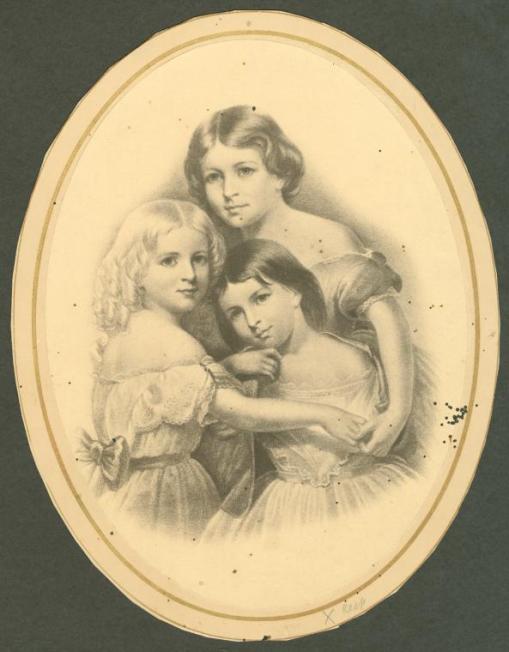
Then came three lovable kids.
All five love Jesus.

Then God sent us west.
To the town of Cedar Springs.
We all love our church.

God added spouses.
Lovable mates for our kids.
The blessings increase. —Craig T. Owens

Poetry Saturday—The Scriptures

Listen to the podcast of this post by clicking on the player below, and you can also subscribe on iTunes or Spotify.

Note: the spelling in this poem is preserved from the 1663 edition of Herbert’s book of poems

Oh that I knew how all Thy lights combine,
And the configurations of their glorie!
Seeing not onely how each verse doth shine,
But all the constellations of the storie.

This verse marks that, and both do make a motion
Unto a third, that ten leaves off doth lie:
Then as dispersed herbs do watch a potion,
These three make up some Christian’s destinie:

Such are Thy secrets, which my life makes good,
And comments on Thee: for in ev’ry thing
Thy words do finde me out, & parallels bring,
And in another make me understood.

Starres are poore books, & oftentimes do misse:
This book of starres’ lights to eternall blisse. —George Herbert (see Psalm 19:1, 7, 10-11)

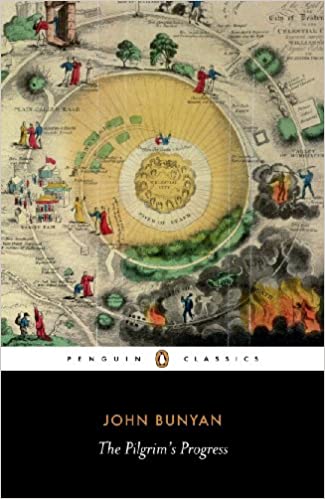
Poetry Saturday—Selections From “The Pilgrim’s Progress”

Listen to the podcast of this post by clicking on the player below, and you can also subscribe on iTunes or Spotify.

The hill, though high, I covet to ascend,
The difficulty will not me offend;
For I perceive the way to life lies here.
Come, pluck up heart, let’s neither faint nor fear;
Better, though difficult, the right way to go,
Than wrong, though easy, where the end is woe. —John Bunyan’s Christian, in The Pilgrim’s Progress

He that is down needs fear no fall;
   He that is low, no pride:
He that is humble ever shall
   Have God to be his Guide.
I am content with what I have,
   Little be it or much:
And, Lord, contentment still I crave,
   Because Thou savest such.
Fullness to such a burden is
   That go on pilgrimage:
Here little, and hereafter bliss,
   Is best from age to age. —John Bunyan’s Mr. Great-heart, in The Pilgrim’s Progress

Poetry Saturday—The Lovetobutcants

Listen to this post as a podcast by clicking here:

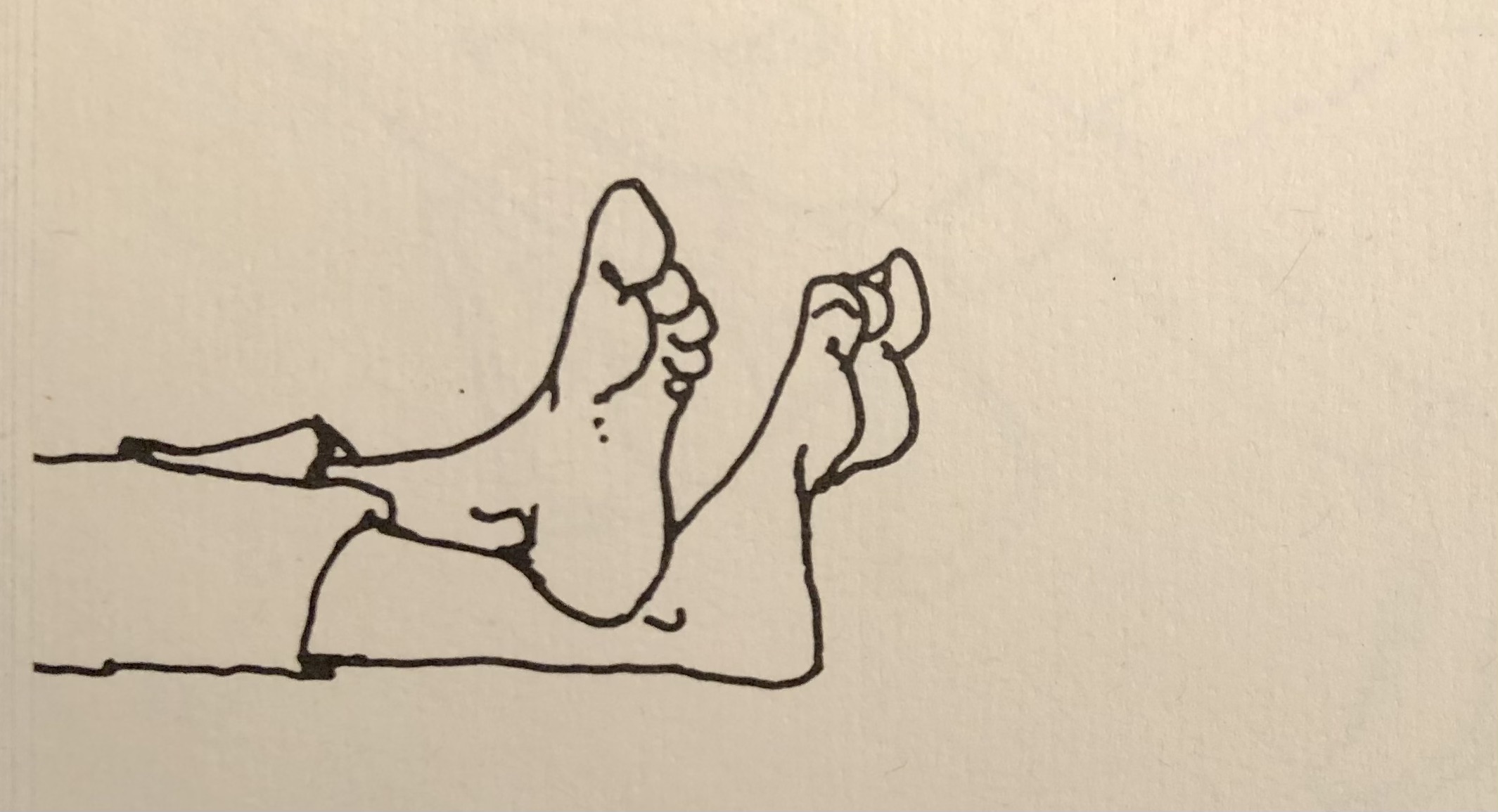
I have a disease called
The “lovetobutcants”—
I think it’s time I told it.
I’d love to help with that garbage can
But my fingers just can’t hold it.
Hand me a bag of groceries and
My wrists just turned to jelly.
Cuttin’ grass and hedges
Gives me flutters of the belly.
The smell of paint will make me faint,
Sweat makes my eyes start itchin’.
Dishwater on my little hands
Will start ‘em shaky-twitchin’.
Pickin’ clothes up off the floor
Would paralyze my shoulder.
I must not try to close the door,
At least not till I’m older.
So though I’d love to join the work—
Till this disease is done,
I’ll have to lie here in the shade
While you have all the fun. —Shel Silverstein

Poetry Saturday—Indispensable Man

Sometime when you’re feeling important;
Sometime when your ego’s in bloom;
Sometime when you take for granted
You’re the best qualified in the room.

Sometime when you feel that your going
Would leave an unfillable hole;
Just follow this simple instruction,
And see how it humbles your soul.

Take a bucket and fill it with water,
Put your hand in it up to the wrist;
Pull it out and the hole that’s remaining,
Is a measure of how you’ll be missed.

You may splash all you please when you enter,
You can stir up the water galore;
But stop and you’ll find in a minute,
That it looks quite the same as before.

The moral of this quaint example
Is to do just the best that you can;
Be proud of yourself, but remember
There’s no indispensable man —Saxon White Kessinger

Poetry Saturday—The Children’s Hour

Between the dark and the daylight,
      When the night is beginning to lower,
Comes a pause in the day’s occupations,
      That is known as the Children’s Hour.

I hear in the chamber above me
      The patter of little feet,
The sound of a door that is opened,
      And voices soft and sweet.

From my study I see in the lamplight,
      Descending the broad hall stair,
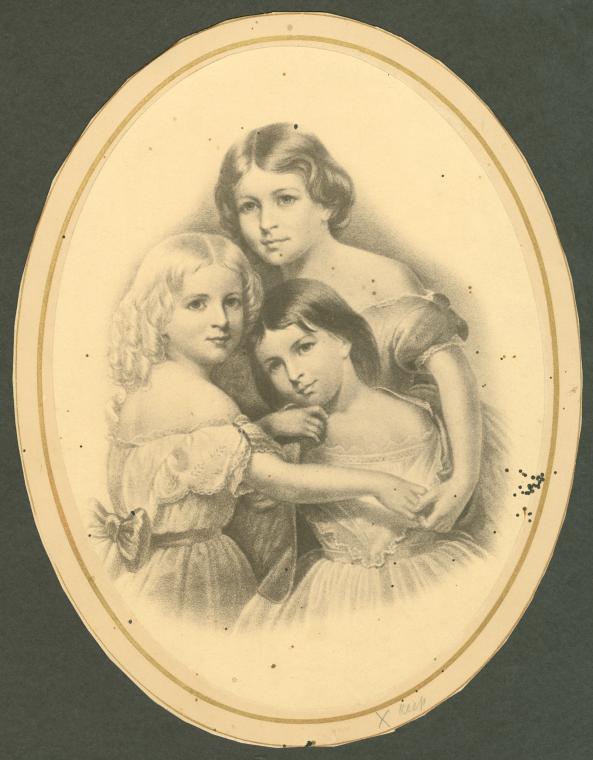
Grave Alice, and laughing Allegra,
      And Edith with golden hair.

A whisper, and then a silence:
      Yet I know by their merry eyes
They are plotting and planning together
      To take me by surprise.

A sudden rush from the stairway,
      A sudden raid from the hall!
By three doors left unguarded
      They enter my castle wall!

They climb up into my turret
      O’er the arms and back of my chair;
If I try to escape, they surround me;
      They seem to be everywhere.

They almost devour me with kisses,
      Their arms about me entwine,
Till I think of the Bishop of Bingen
      In his Mouse-Tower on the Rhine!

Do you think, O blue-eyed banditti,
      Because you have scaled the wall,
Such an old mustache as I am
      Is not a match for you all!

I have you fast in my fortress,
      And will not let you depart,
But put you down into the dungeon
      In the round-tower of my heart.

And there will I keep you forever,
      Yes, forever and a day,
Till the walls shall crumble to ruin,
      And moulder in dust away! —Henry Wadsworth Longfellow

Poetry Saturday—Hymn #120

What shall the dying sinner do
That seeks relief for all his woe?
Where shall the guilty conscience find
Ease for the torment of his mind?

How shall we get our crimes forgiv’n?
Or form our natures fit for heav’n?
Can souls all o’er defiled with sin
Make their own powers and passions clean?

In vain we search, in vain we try,
Till Jesus brings His gospel nigh;
‘Tis there such power and glory dwell
As save rebellious souls from hell.

This is the pillar of our hope
That bears our fainting spirits up:
We read the grace, we trust the Word,
And find salvation in the Lord.

Let men or angels dig the mines,
Where nature’s golden treasure shines;
Brought near the doctrine of the Cross,
All nature’s gold appears but dross.

Should vile blasphemers with distain
Pronounce the truth of Jesus vain,
I’ll meet the scandal and the shame,
And sing and triumph in His name. —Isaac Watts

Book Reviews From 2020

Poetry Saturday—The Nativity

Among the oxen (like an ox I’m slow)
I see a glory in the stable grow
Which, with the ox’s dullness might at length
   Give me an ox’s strength.

Among the asses (stubborn I as they)
I see my Savior where I looked for hay;
So may my beastlike folly learn at least
   The patience of a beast.

Among the sheep (I like a sheep have strayed)
I watch the manger where my Lord is laid;
Oh that my baa-ing nature would win thence
   Some wooly innocence! —C.S. Lewis

Poetry Saturday—Of The Father’s Love Begotten

Of the Father’s love begotten
ere the worlds began to be,
He is Alpha and Omega,
He the Source, the Ending He,
of the things that are, that have been,
and that future years shall see,
evermore and evermore!

O that birth forever blessed,
when the Virgin, full of grace,
by the Holy Ghost conceiving,
bore the Savior of our race;
and the Babe, the world’s Redeemer,
first revealed His sacred face,
evermore and evermore!

This is He whom heav’n-taught singers
sang of old with one accord,
whom the Scriptures of the prophets
promised in their faithful word;
now He shines, the long expected;
let creation praise its Lord,
evermore and evermore!

O ye heights of heav’n, adore Him;
angel hosts, His praises sing:
all dominions, bow before Him
and extol our God and King;
let no tongue on earth be silent,
ev’ry voice in concert ring,
evermore and evermore!

Christ, to Thee, with God the Father,
and, O Holy Ghost, to Thee,
hymn and chant and high thanksgiving
and unwearied praises be,
honor, glory, and dominion
and eternal victory,
evermore and evermore! —Aurelius Clemens Prudentius