Heaven Is Rejoicing!

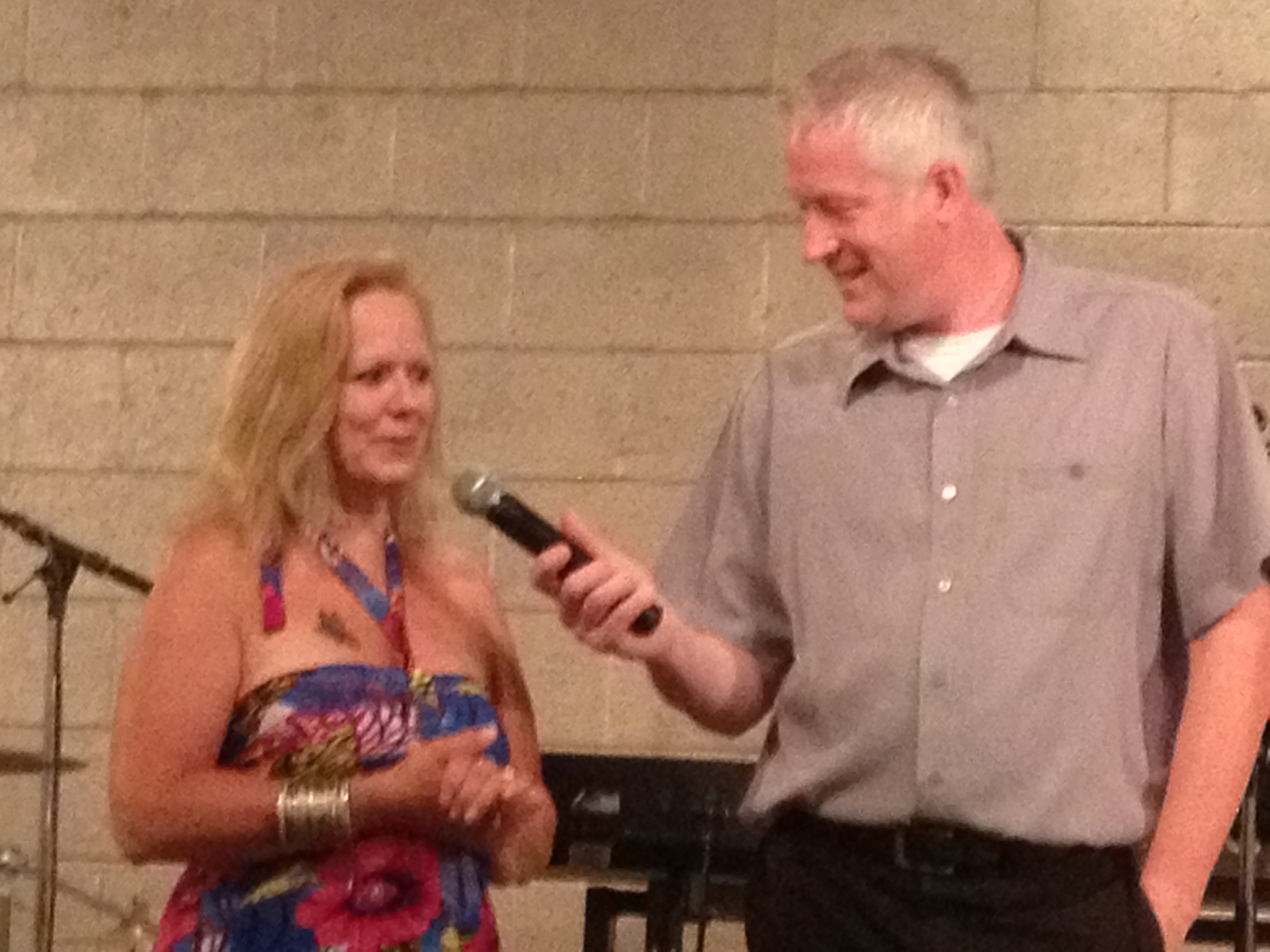
One of my all-time favorite things to do as a pastor is water baptism. I love hearing the stories of lives that have been completely transformed by Jesus Christ! This morning the Calvary Assembly of God family celebrated with Crystal as she made her public declaration that she is totally sold-out for God!

Gentle Correction

As a parent (and a pastor), delivering correction is one of my least favorite things to do. But it must be done.

The apostle Paul seemed to feel the same way. We get some insight into his heart in his letter to the Corinthians, where he reminds them of why he had to write such a stern letter of correction.

For I wrote to you out of great distress and anguish of heart and with many tears, not to grieve you but to let you know the depth of my love for you. (2 Corinthians 2:4)

The loving shepherd’s heart longs for the advancement, the betterment, of all the sheep under his care. He is hurt when his sheep are wounded. His approach to discipline is always gentle; not weak, but strength lovingly applied.

The loving shepherd looks at his own life first, before correcting the sheep, to address anything he may have done or failed to do which caused the sheep to stray.

The loving shepherd knows that discipline may be painful for a moment, but it is to bring greater life. Just as a parent will allow a child to suffer the momentary pain of an immunization injection, to spare that child the unbearable pain of a disease later on.

And the loving shepherd always approaches a time of correction with “confidence in all of you, that you would all share my joy” (v. 3). The shepherd doesn’t view them as “dumb sheep” that cannot improve; rather, he is confident and assured that they will receive loving correction and make the change that leads to joy for all.

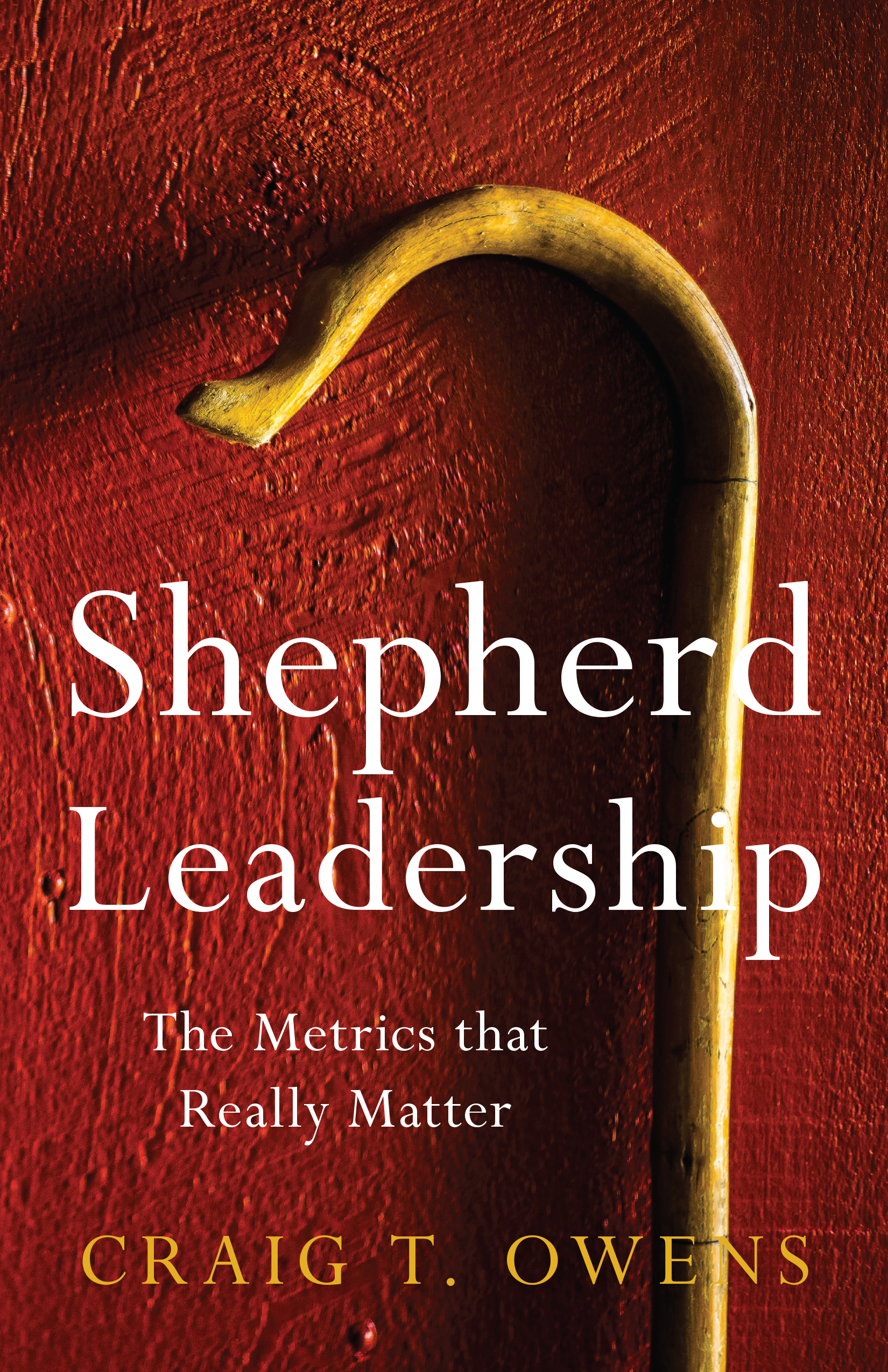
UPDATE: If you want to dive deeper into the ideas of being a shepherd leader, please check out my book Shepherd Leadership: The Metrics That Really Matter.

Artificial Maturity (book review)

When I posted my review of Tim Elmore’s previous book Generation iY, I said that book earned a rare “must read” rating from me. Whether you read that book or not, Artificial Maturity has earned the coveted must-read rating again!

If Generation iY described who this current youth generation is, Artificial Maturity describes how to help these youth achieve genuine maturity. Here’s how Dr. Elmore sets the stage for this book from the very first page:

“…I believe in this generation like none before. I believe they have the potential to be the greatest generation—a population Warren Bennis calls the “Crucible Generation.” He and many others believe these young people may just be the ones who transform society globally and restore democracy and goodwill.

I believe this with one caveat. I predict all this is possible if we, the adults, will rethink the way we parent, lead, teach, coach, pastor, and manage them. It’s up to us what kinds of adults our kids will become. So far, many of them are a part of a leaderless generation. The adults have done more protecting than preparing. Some moms and dads want to be pals rather than parents. And many adults are just overwhelmed with the notion of leading kids today—and they surrender their role as leaders.”

So this is not a book that tells you how to change kids, but how we as adults must change.

With persuasive evidence, scientific studies, personal observations, and years of hands-on experience, Dr. Elmore so accurately details how we as parents have contributed to our kids becoming artificially mature. In other words, they know lots of things, but they don’t know how to effectively apply that knowledge to be productive at work, school, and in relationships. 

I, too, share Dr. Elmore’s optimism about this generation. But if I want to see my kids—and other young people with whom I interact—excel and mature, I have to look at myself in the mirror. This generation can’t succeed if we continue to parent, and teach, and pastor, and manage as we have been doing.

I cannot urge pastors, youth pastors, parents, teachers, principals, coaches, and employers to read Artificial Maturity right away! This generation needs us to help them soar!

I am a Jossey-Bass book reviewer.

UPDATE: Read some of my favorite quotes from Artificial Maturity by clicking here.

Be Your Sermon

Listen to the podcast of this post by clicking on the player below, and you can also subscribe on Apple, Spotify, or Audible.

Pastor, what’s God been speaking to you personally?

How has the Holy Spirit been working your sermon on your heart this week?

What has Scripture shown you about you (not just about your congregation)?

When you tell your congregation how God has been working on you, the Word comes alive. Because now they don’t see you as a perfect person preaching at them, but as a fellow traveler who’s hearing from God and learning on the journey just as they are.

“The preacher must throw his thought into his teaching. He must not weary the people by telling them the truth in a stale and unprofitable manner with nothing fresh from his own soul to give it force. Above all he must put heart work into preaching. He must feel what he preaches. It must be with him. It is never an easy thing. He must feel as if he could preach his very life away before the sermon is done.” ―Charles Spurgeon

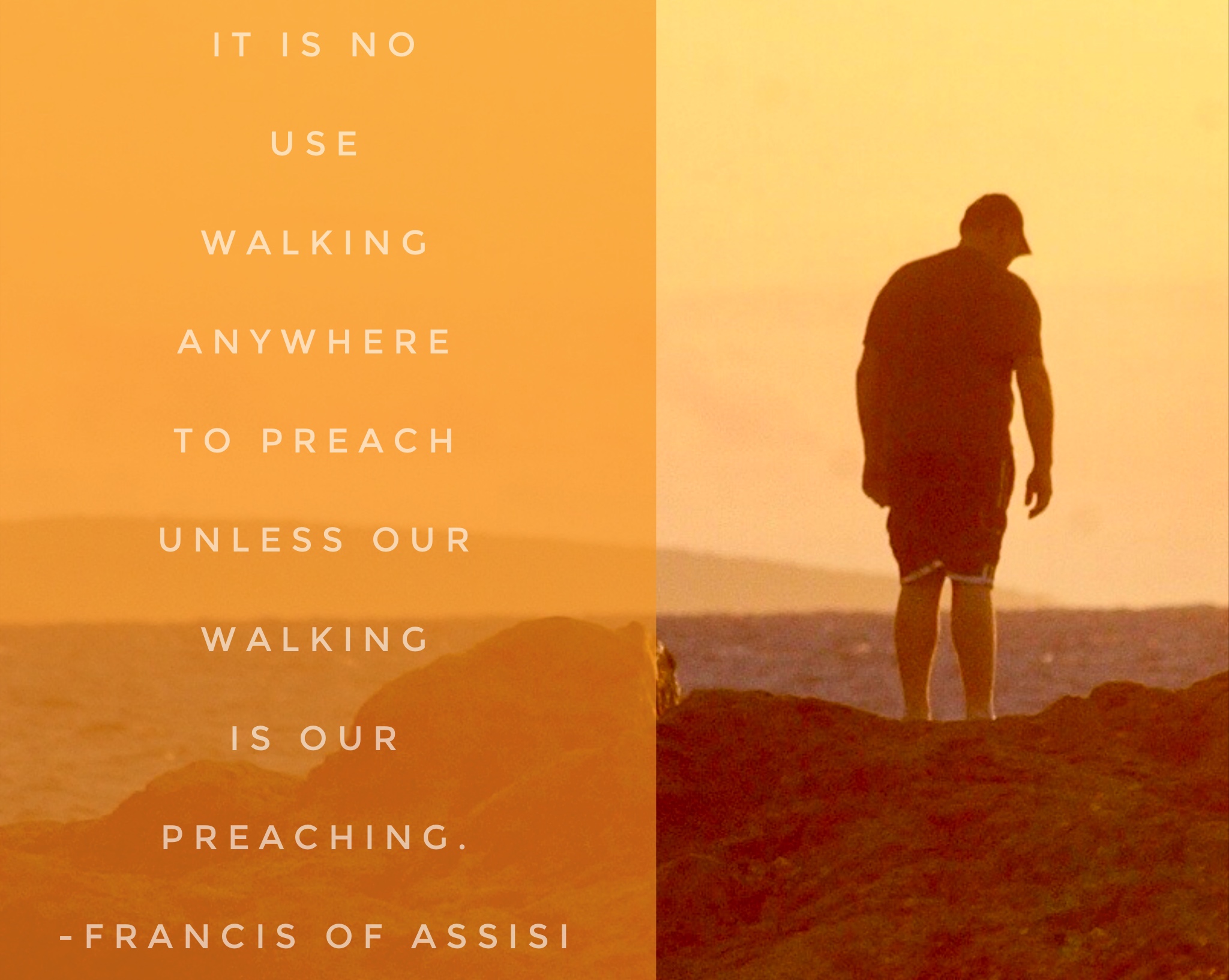
I’d rather see a sermon than hear one any day;
I’d rather one should walk with me than merely show the way.
The eye’s a better pupil and more willing than the ear;
Fine counsel is confusing, but example’s always clear.
And the best of all preachers are the men who live their creeds.
For to see the good in action is what everybody needs.
I can soon learn how to do it if you’ll let me see it done;
I can watch your hands in actions, but your tongue too fast may run.
And the lectures you deliver may be very wise and true,
But I’d rather get my lesson by observing what you do.
For I may misunderstand you and the high advice you give,
But there’s no misunderstanding how you act and how you live. (Edgar A. Guest) 
 

C’mon, pastor, let us SEE your sermon!

►► Would you please prayerfully consider supporting this ministry? My Patreon supporters get behind-the-scenes access to exclusive materials. ◀︎◀︎

Be A Foolish Preacher

Pastor, do you realize how clever we try to be?

  • We come up with a catchy sermon series and add some stylish graphics.
  • Then we labor over sermon titles that sound so compelling.
  • As we write our sermons we try to dream up memorable patterns, like all three of our main points start with “S,” or we spell out the word “P.E.A.C.E.”

When the truth of the matter is, what we’re saying is foolishness.

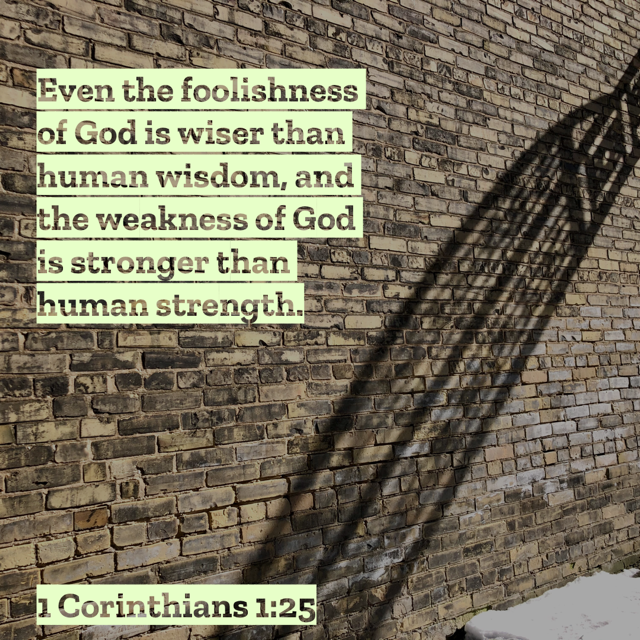
Where is the wise man? Where is the scholar? Where is the philosopher of this age? Has not God made foolish the wisdom of the world? For since in the wisdom of God the world through its wisdom did not know Him, God was pleased through the foolishness of what was preached to save those who believe. Jews demand miraculous signs and Greeks look for wisdom, but we preach Christ crucified: a stumbling block to Jews and foolishness to Gentiles, but to those whom God has called, both Jews and Greeks, Christ the power of God and the wisdom of God. For the foolishness of God is wiser than man’s wisdom, and the weakness of God is stronger than man’s strength. (1 Corinthians 1:20-25)

You don’t have to try to make God’s Word clever. It is already profound!

You don’t have to try to make it memorable. The Holy Spirit makes it memorable (John 14:26)!

You don’t have to make the Bible relevant. It is the most relevant, applicable wisdom that humanity has ever known! 

D.L. Moody said it this way:

“If God has given you a message, go and give it to the people as God has given it to you. It is a stupid thing for a man to try to be eloquent. Make your message, and not yourself, the most prominent thing. Don’t be self-conscious. Set your heart on what God has given you to do, and don’t be so foolish as to let your own difficulties or your own abilities stand in the way.”

Don’t try to be clever. Just be Spirit-led and you will utter the most profound, compelling, and memorable words ever spoken by a preacher!

Filled To Be Emptied

This is a post especially for my pastor friends. 

Dear Friend,

I know you have a lot on your mind. You’re probably reviewing how Sunday went and thinking about what you’re going to share next Sunday. You’ve probably got a pretty full agenda this week: staff meetings, board meetings, maybe a counseling appointment or two, and a hospital visit. There’s lots happening (there always is, right?).

Can I break into your week to ask you a simple question: What did you read in your Bible this morning for you? You know, your personal devotional time—what was God’s Word saying just to you?

Dietrich Bonhoeffer wrote this:

“We are reading the Word of God as God’s Word for us. Therefore, we do not ask what this text has to say to other people. For those of us who are preachers that means we will not ask how we would preach or teach on this text, but what it has to say to us personally.”

Here’s a simple principle: You cannot give to others what you have not received yourself. So you need to be filled up so that you can be emptied out.

Although your week may be busy, please, please, please take the time to read God’s Word for yourself. It will help you and your congregation as well.

May God fill you and then empty you, my friend, for His glory!

Cheering you on, I am your friend,

Craig

What Is Successful Church Ministry?

I like to keep asking myself and my leadership team this question: How do we know if our church is successful? 

The apostle Paul uses two words to help answer these questions: Quality and Faithfulness.

But each one’s work will be shown for what it is; the Day will disclose it, because it will be revealed by fire—the fire will test the quality of each one’s work. (1 Corinthians 3:13)

Now it is required that those who have been given a trust must prove faithful. (1 Corinthians 4:2)

So here are two important questions we need to ask ourselves:

  • Am I doing quality work?
  • Am I faithfully doing my work?

To help answer those questions, I like this thought from Leonard Sweet’s book I Am A Follower:

“The most important metrics we must rely on, the crucial ‘deliverables’ we can present, must focus on the newly formed lives of the disciples we are making, the followers who are following Christ into a place of serving Him by serving others. The most important measure of our faithfulness to Christ must be the extent of transformation into the living image of Christ Himself. …

The quantifiable fruit of our church is not found in the number of people we can gather on a weekly basis. What counts is what is happening in the lives of those who have gathered. …It is quite possible to have a ‘successful’ life—and a ‘successful’ church—without God. But it is absolutely impossible to have a truly fruitful one.”

Again, Paul’s advice here is invaluable:

My conscience is clear, but that does not make me innocent. It is the Lord who judges me. Therefore judge nothing before the appointed time; wait till the Lord comes…. (1 Corinthians 4:4, 5)

Pastor, you need to think about these questions about “success.” But they should be questions framed around your quality and faithfulness of work as revealed to you by the Holy Spirit, not by some “expert” or anyone else.

(By the way, if you’re interested in exploring this further, I framed this question a different way in this post.)

UPDATE: This post was one of the seed thoughts that went into fashioning my book Shepherd Leadership: The Metrics That Really Matter.

Do You LOVE Your Church?

Okay, pastors, here are some tough questions:

  • Do you love your congregation?
  • Do you think they’re some of the greatest people on earth?
  • If you didn’t pastor your church, would you attend your church?
  • Do you enjoy recreating with your church family?

This is an important principle: You cannot treat someone differently than you think about them.

Listen to what Paul said about the church in Rome:

I myself am convinced, my brothers, that you yourselves are full of goodness, complete in knowledge and competent to instruct one another. (Romans 15:14)

Do you hear what high regard Paul had for them? He told them that they were good people, growing in their relationship with Christ, and were competent to be teachers themselves!

Not only did Paul write this to them, but he bragged about them to others too:

Everyone has heard about your obedience, so I am full of joy over you. (Romans 16:19)

Pastor, Jesus called us to feed and care for His sheep. We can do this so much more effectively if we think so highly of those precious people.

I pray that you can answer a resounding, whole-hearted “YES!” to those four opening questions. I think that’s what Jesus would want.

The Hard Word

As a pastor, you are going to have to deliver the hard word from time to time. You will have to address touchy subjects, both corporately and privately. It is very instructive to see how the apostle Paul approached the hard word.

In Romans 9, Paul is getting ready to address one of the most sensitive subjects of his day. The Jews felt they were “in” with God just because they were Jews, and the Gentiles were “out” with God just because they weren’t Jews. Paul is going to have to deliver the word that both Jews and Gentiles can be accepted by God because of what Jesus did on the Cross.

So notice how he begins:

I speak the truth in Christ—I am not lying, my conscience confirms it in the Holy Spirit—I have great sorrow and unceasing anguish in my heart.

1. I speak the truth in Christ. It wasn’t his opinion, but the word from God. I must settle this matter before delivering the hard word. Far too often we can put our preferences on par with God’s Word. I cannot do this!

2. My conscience confirms it in the Holy Spirit. Before I speak a hard word that people may not like to hear, I need to make sure my conscience is right before the Holy Spirit. He alone confirms His Word. The reaction of the audience, however, may or may not confirm what God says.

3. I have great sorrow and unceasing anguish in my heart. It should be a major red flag if I looked forward to delivering a painful/challenging/correcting word. I need to put myself in their place, not try to put someone else in their place!

My job as a pastor is not to condemn, nor even to convict; the Holy Spirit will do that. My job is to (a) hear God’s truth, (b) get my conscience right with the Spirit, and (c) empathize with people as I lovingly speak the truth to them.

A Warning To Shepherds

If you are a pastor, God sees you as a shepherd (see John 21:15-17; 1 Peter 5:1-4).

If you are a shepherd, there is a heavy responsibility on you to lovingly, attentively care for God’s precious sheep. We cannot shirk this responsibility for even a moment.

God loves His sheep so much that He gave His sheep YOU!

God loves His sheep so much that He will remove you, if He has to.

Consider this:

“What sorrow awaits the leaders of My people—the shepherds of My sheep—for they have destroyed and scattered the very ones they were expected to care for,” says the Lord. Therefore, this is what the Lord, the God of Israel, says to these shepherds: “Instead of caring for My flock and leading them to safety, you have deserted them and driven them to destruction. Now I will pour out judgment on you for the evil you have done to them. …Then I will appoint responsible shepherds who will care for them, and they will never be afraid again. Not a single one will be lost or missing. I, the Lord have spoken!” (Jeremiah 23:1, 2, 4)

This is a HEAVY word, and should not be taken lightly.

Pastor, never assume you are leading God’s sheep in the right paths. Ask the Holy Spirit to tell you if you are leading God’s sheep in the right paths!

UPDATE: This post was one of the seed thoughts that went into fashioning my book Shepherd Leadership: The Metrics That Really Matter.