
Thursdays With Oswald—Instantly Detecting Compromise

This is a weekly series with things I’m reading and pondering from Oswald Chambers. You can read the original seed thought here, or type “Thursdays With Oswald” in the search box to read more entries.
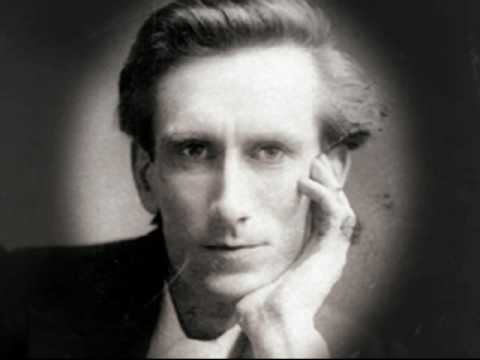
Instantly Detecting Compromise

     We must be continually renewed in the spirit of our mind so that the slightest beginning of compromise with the spirit of the world is detected. “Well, what’s the harm; there’s nothing wrong in it,” when you hear that you know you have the spirit of the world, because the Spirit that comes from Jesus says, “Does this glorify God?”

From Biblical Ethics

There’s a HUGE difference between a Christian being in the world and of the world. A Christian who is compromising, is slowly becoming of the world. They say, “This isn’t wrong.”

A Christian who is uncompromising, is slowly becoming in the world but of Heaven. They judge everything by whether or not it brings glory to God.

Compromise is the slow erosion. Seldom does one go from a passionate follower of God to a worldly person suddenly. It is the small compromises day after day that are the most dangerous.

So one of my frequent prayers must be—

Search me, O God, and know my heart; test me and know my anxious thoughts. Point out ANYTHING in me that offends You. (Psalm 139:23-24, NLT)

Thursdays With Oswald—My God Came Down The Stairs

This is a weekly series with things I’m reading and pondering from Oswald Chambers. You can read the original seed thought here, or type “Thursdays With Oswald” in the search box to read more entries.

My God Came Down The Stairs

     It is not our earnestness that brings us into touch with God, nor our devotedness, nor our times of prayer, but our Lord Jesus Christ’s vitalizing death; and our times of prayer are evidences of reaction on the reality of Redemption, so we have confidence and boldness of access into the holiest. What an unspeakable joy it is to know that we each have the right of approach to God in confidence, that the place of the Ark is our place, “Having therefore, brethren, boldness.” What an awe and what a wonder of privilege, “to enter into the holiest,” in the perfectness of the Atonement, “by the blood of Jesus.”

Oh, long and dark the stairs I trod,
With stumbling feet to find my God:
Gaining a foothold bit by bit,
Then slipping back and losing it:
Never progressing, striving still,
With weakening gasp and fainting will,
Bleeding to climb a God: while He
Serenely smiled, unnoting me.
Then came a certain time when I
Loosened my hold and tell thereby.
Down to the lowest step my fall,
As if I had not climbed at all.
And while I lay despairing thereby.
I heard a footfall on the stair,
In the same path where I, dismayed,
Faltered and fell and lay afraid.
And lo! when hope had ceased to be,
My God came down the stairs to me.

From Christian Disciplines

I am so grateful my God came down the stairs to me!

I am so awed that I now can come into His presence with confidence!

I am so humbled that God would save a sinner such as me!

Thursdays With Oswald—Love Comes With Hatred

This is a weekly series with things I’m reading and pondering from Oswald Chambers. You can read the original seed thought here, or type “Thursdays With Oswald” in the search box to read more entries.

Love Comes With Hatred

     Love to be anything at all must be personal; to love without hating is an impossibility, and the stronger and more emphatic the love, the more intense its obverse, hatred. God loves the world so much that He hates with a perfect hatred the thing that switched men wrong; and Calvary is the measure of His hatred. The natural heart of man would have argued—“God loves the world that of course He will forgive its sin”: God loved the world that He could not forgive its sin.

From Biblical Ethics

God had to allow Jesus to become all of your sins and my sins, so that those sins which He hates so much could be nailed once for all to the Cross. Without the Cross, there could be no forgiveness.

Because He hated sin so much, Jesus chose to personally identify with us, and carry our sins away from us. God could not merely look away from our sin, so He allowed Jesus to take away our sin.

Such perfect hatred … such wondrous love!

Thursdays With Oswald— Publicly Holy

This is a weekly series with things I’m reading and pondering from Oswald Chambers. You can read the original seed thought here, or type “Thursdays With Oswald” in the search box to read more entries.

Publicly Holy

     Try and develop a holy life in private, and you find it cannot be done. Individuals can only live the true life when they are dependent on one another. …

     In the early Middle Ages people had the idea that Christianity meant living a holy life apart from the world and its sociability, apart from its work and citizenship. That type of holiness is foreign to the New Testament; it cannot be reconciled with the records of the life of Jesus. The people of His day called Him “the Friend of publicans and sinners” because He spent so much time with them.

From Biblical Ethics

Jesus never told us to stay, but to go.

He didn’t tell us to separate, but to season and shine.

We cannot influence people from a distance. We must live and work and interact where they are.

Jesus taught us: “Let your light shine before men, that they may see your good deeds and praise your Father in heaven.” (Matthew 5:16)

Jesus prayed for us: “My prayer is not that You take them out of the world but that You protect them from the evil one. … As You sent Me into the world, I have sent them into the world. (John 17:15, 18)

I must be around people who need to see The Light.

Thursdays With Oswald—Not To Tell Us, But To Make Us

This is a weekly series with things I’m reading and pondering from Oswald Chambers. You can read the original seed thought here, or type “Thursdays With Oswald” in the search box to read more entries.

Not To Tell Us, But To Make Us

     Our righteousness has to be in excess of the righteousness of the man whose external conduct is blameless according to the law—what does that produce? despair straightaway. When we hear Jesus say “Blessed are the pure in heart,” our answer, if we are awake is, “My God, how am I going to be pure in heart? If ever I am to be blameless down to the deepest recesses of my intentions, You must do something mighty in me.” That is exactly what Jesus Christ came to do. He did not come to tell us to be holy, but to make us holy.

From Biblical Ethics

Does it ever bother you that Jesus tells us, “Be perfect, therefore, as your heavenly Father is perfect”? It bothers me, because it sounds too hard, even unrealistic. Okay, let’s be honest: It sounds impossible!

It is impossible if I try to be perfectly righteous on my own. But the death and resurrection of Jesus paid for my atonement—my “at one-ment” with God. And Jesus has also asked the Father to send me the Holy Spirit. He is sanctifying me — making me into a holy, perfectly righteous saint in the eyes of my Heavenly Father.

I can’t do it.

But I can surrender and let Him do it.

Thursdays With Oswald—You Must Say, “You Must”

This is a weekly series with things I’m reading and pondering from Oswald Chambers. You can read the original seed thought here, or type “Thursdays With Oswald” in the search box to read more entries.

You Must Say, “You Must”

     If we do not fit ourselves by practice when there is no crisis, we shall find that our nature will fail us when the crisis comes. The grace of God never fails, but we may fail the grace of God. Unless our nervous system is made the ally of the new life from God it becomes a humiliation to us, and we sit down under a tyranny of nerves. Once we receive the Holy Spirit we must sit down to nothing. … When your nervous system, which has been ruled by the wrong disposition, is inclined to say “I can’t,” you must say, “You must,” and to your amazement you find you can!

From Biblical Ethics

The time to learn how to do the God-honoring thing is when there is no crisis in my life. That’s my training time, to prepare me for when the heat is on. The apostle Paul learned this too. As a result of his training, he learned to tell himself, “You must,” in every circumstance:

I have learned to be content whatever the circumstances. I know what it is to be in need, and I know what it is to have plenty. I have learned the secret of being content in any and every situation, whether well fed or hungry, whether living in plenty or in want. I can [I must!] do everything through Him who gives me strength. (Philippians 4:11-13)

Don’t waste your non-crisis times. Learn from them how God wants to help you in the midst of your crisis.

Thursdays With Oswald—God’s Silence

This is a weekly series with things I’m reading and pondering from Oswald Chambers. You can read the original seed thought here, or type “Thursdays With Oswald” in the search box to read more entries.

God’s Silence

     Has God trusted you with His silence—a silence that has great meaning? God’s silences are actually His answers. Just think of those days of absolute silence in the home at Bethany [John 11:1-6]! Is there anything comparable to those days in your life? Can God trust you like that, or are you still asking Him for a visible answer? God will give you the very blessings you ask if you refuse to go any further without them, but His silence is the sign that He is bringing you into an even more wonderful understanding of Himself. Are you mourning before God because you have not had an audible response? When you cannot hear God, you will find that He has trusted you in the most intimate way possible—with absolute silence, not a silence of despair, but one of pleasure, because He saw that you could withstand an even bigger revelation. If God has given you a silence, then praise Him—He is bringing you into the mainstream of His purposes.

From My Utmost For His Highest

Can God trust you like that, or are you still asking Him for a visible answer? Wow! I need to think about this one for awhile…

Thursdays With Oswald—The Mountain & The Valley

This is a weekly series with things I’m reading and pondering from Oswald Chambers. You can read the original seed thought here, or type “Thursdays With Oswald” in the search box to read more entries.

The Mountain And The Valley

    It is a wonderful thing to be on the mountain with God, but a person only gets there so that he may later go down and lift up the demon-possessed people in the valley (see Mark 9:14-18). We are not made for the mountains, for sunrises, or for the other beautiful attractions in life—those are simply intended to be moments of inspiration. We are made for the valley and the ordinary things of life, and that is where we have to prove our stamina and strength. Yet our spiritual selfishness always wants repeated moments on the mountain. We feel that we could talk and live like perfect angels, if we could only stay on the mountaintop. Those times of exaltation are exceptional and they have their meaning in our life with God, but we must beware to prevent our spiritual selfishness from wanting to make them the only time.

     …The moments on the mountaintop are rare moments, and they are meant for something in God’s purpose.

     …The height of the mountaintop is measured by the dismal drudgery of the valley, but it is in the valley that we have to live for the glory of God. We see His glory on the mountain, but we never live for His glory there. It is in the place of humiliation that we find our true worth to God—that is where our faithfulness is revealed.

From My Utmost For His Highest

God gives me mountaintop experiences to prepare me to live for Him in the valley experiences. So I must never doubt in the valley what God revealed to me on the mountain. Even though I walk through the valley of the shadow of death, I will fear no evil, for You are with me.

It is true: it is in the valley that I have to live for the glory of God. Otherwise, my experience on the mountaintop was meaningless.

Thursdays With Oswald—Judging A Life

This is a weekly series with things I’m reading and pondering from Oswald Chambers. You can read the original seed thought here, or type “Thursdays With Oswald” in the search box to read more entries.

Judging A Life

     God holds us responsible for the way we judge a young [Christian] life; if we judge it by the standards by which we would judge a mature life, we will be grossly unjust. … Be as merciless as God can make you towards the vices of a mature life, but be very gentle and patient with the defects of a growing life.

From Biblical Ethics

It’s a delicate balance that requires true discernment from the Holy Spirit. The ‘defects’ that we see in those who are new in the Christian walk need gentle correction, but the ‘vices’ of those who should know better by now need to be dealt with forcefully.

I see both the gentle and forceful in Paul’s words to the Corinthian church:

Dear brothers and sisters, when I was with you I couldn’t talk to you as I would to spiritual people. I had to talk as though you belonged to this world or as though you were infants in the Christian life. I had to feed you with milk, not with solid food, because you weren’t ready for anything stronger. And you still aren’t ready, for you are still controlled by your sinful nature. You are jealous of one another and quarrel with each other. Doesn’t that prove you are controlled by your sinful nature? Aren’t you living like people of the world? (1 Corinthians 3:1-3)

My prayer: God, help me to be perfectly balanced and directed by You. I don’t want to be too forceful with the young, nor too gentle with the mature. I want to see everyone growing in their relationship with You.

Thursdays With Oswald—Unblameable In The Sight Of God

This is a weekly series with things I’m reading and pondering from Oswald Chambers. You can read the original seed thought here, or type “Thursdays With Oswald” in the search box to read more entries.

Unblameable In The Sight Of God

     If the ‘Oughts’ of the Old Testament were difficult to obey, Our Lord’s teaching is unfathomably more difficult. … Jesus Christ does not simply say, ‘Thou shalt not do certain things’; He demands that we have such a condition of the heart that we never even think of doing them, every thought and imagination of heart and mind is to be unblameable in the sight of God.

     …The purity God demands is impossible unless we can be re-made from within, and that is what Jesus Christ undertakes to do through the Atonement. … It is not a question of applying Jesus Christ’s principles to our actual life first of all, but of applying them to our relationship to Himself, then as we keep our souls open in relation to Him our conscience will decide how we are to act of that relationship.

From Biblical Ethics

I want every part of my life to be unblameable in the sight of God. I have to keep the eyes of my heart fixed on Jesus.

Since, then, you have been raised with Christ, set your hearts on things above, where Christ is seated at the right hand of God. Set your minds on things above, not on earthly things. For you died, and your life is now hidden with Christ in God. When Christ, Who is your life, appears, then you also will appear with Him in glory. (Colossians 3:1-4)