Like Jesus, when we are full of and led by the Holy Spirit everywhere we walk is holy ground; every moment is a sacred moment; every work is worship to God because we are occupied about the Father’s business.
Check out the full series of messages about the empowerment of the Holy Spirit in the series We Are: Pentecostal.
Listen to the podcast of this post by clicking on the player below, and you can also subscribe on Apple, Spotify, or Audible.
The phrase “Jesus knew” specifically appears twice in John chapter 13 (vv. 1, 3), but the idea appears in multiple places. Jesus was continually and intimately aware of His Father’s plan and the Holy Spirit’s empowerment to help Him live out that plan.
Check out some of the things Jesus knew:
He knew His mission—I have come into the world as a light, so that no one who believes in Me should stay in darkness (John 12:46)
He knew His role in fulfilling that mission—For I did not come to judge the world, but to save the world (12:47)
He knew His Father’s voice directing Him in His mission—For I did not speak on My own, but the Father who sent Me commanded Me to say all that I have spoken.I know that His command leads to eternal life. So whatever I say is just what the Father has told Me to say(12:49–50)
He knew His Father’s timing for His mission—Jesus knew that the hour had come for Him to leave this world and go to the Father (13:1)
He knew His Father’s empowerment to complete the mission—Jesus knew that the Father had put all things under His power (13:3)
He knew what He must do to bring glory to His Father as He fulfilled His mission—Having loved His own who were in the world, He loved them to the end. … So He got up from the meal, took off His outer clothing, and wrapped a towel around His waist. After that, He poured water into a basin and began to wash His disciples’ feet, drying them with the towel that was wrapped around Him(13:1, 4-5)
Jesus said that He was in His believer’s lives, just as He was in the Father (John 14:20). That means He takes us into His Father, and He also told us that He would impart His Holy Spirit to us.
That means you and I have all that we need to know all that Jesus knew and to live like Jesus lived.
My question is: Why don’t I live this way?
Why am I not living up to this potential every day?
The simple conclusion must be that I am not operating in the full resources that are mine as a child of God.
I must make sure that I am abiding more and more intimately with my Savior, that I am tuning into the prompting of the Holy Spirit more and more consistently, and that I am increasingly aware of my Father’s will for my life.
If we strive for this, we can know what Jesus knew and we can live like Jesus lived. This is how we bring glory to God, just as Jesus did!
Listen to the podcast of this post by clicking on the player below, and you can also subscribe on Apple, Spotify, or Audible.
Jesus was constantly cognizant of His mission. We see it at the beginning of His ministry and all the way through to the very end. At the beginning, He makes a decision where to live and base His ministry “to fulfill what was said through the prophet Isaiah” (Matthew 4:12-16). At the end, He knows “that everything had now been finished, and so that Scripture would be fulfilled” He makes a final request (John 19:28).
So “when Jesus heard that John had been put in prison, He withdrew to Galilee…and lived in Capernaum…in the area of Zebulun and Naphtali.” This residency fulfilled Isaiah’s prophetic word.
Jesus knew He had to go to this region. The event of John’s imprisonment prompted His move to Capernaum.
My sovereign God makes no mistakes; nothing is random nor inconsequential. I should develop the habit of praying, “Now that this has happened, what would You have me do?” I believe this is how Jesus lived.
My life, just like Jesus’ life, has a purpose. Just as the Holy Spirit directed the movements of Jesus, He will direct my steps as well, if I will only listen for His voice.
I think we would be wise to form a daily prayer something along these lines—
Father, in my heart I may have planned a course for today, but I trust You to direct my steps. I will not stubbornly nor thoughtlessly lean on my own understanding, but at every moment I will listen for Your wise and perfect counsel. Jesus, just as You lived dependent on the Holy Spirit, I want to live this way as well. In Jesus’ name, Amen. (see Proverbs 16:9, 3:5-6; James 4:13-15)
Listen to the podcast of this post by clicking on the player below, and you can also subscribe on Apple, Spotify, or Audible.
During my freshman year of college, I was once the butt of a good-natured joke. I didn’t mind it so much except for the fact that there were several people in the room that didn’t know me, so they would have walked away thinking I was a jerk. As I vented to my roommate about this, his counsel was simply, “Just forgive ‘em, man!”
Yeah, right … easier said than done! I didn’t want forgiveness—I wanted payback! Ever been there?
The Hebrew word Selah is a call for us to pause and calmly think about what’s going on in our heart and mind. For instance, in those moments where we may want someone to get justice for the way they hurt us.
In Psalm 75, God is literally the One who speaks the Selah. In fact, God speaks twice in this short psalm: once in verses 2-5 and again in verse 10 to close this psalm. Putting together His two speeches, God says, “I choose the right time, I judge perfectly, I hold everything firm. Selah. I will cut off the horns of all the wicked, but the horns of the righteous will be lifted up.”
What is meant by “the horn of the wicked” or “the horn of the righteous”? Literally, it means a show of strength, but it can be used in both a negative or a positive sense.
In the negative sense it means:
boasting of your own power
standing in defiant opposition to all other powers
proudly trumpeting your own strength
the English words “arrogant” and “boast” in verse 5 are both the same word Hebrew word halal. This means to shine a light on yourself, literally to say “Hallelujah!” to or about yourself!
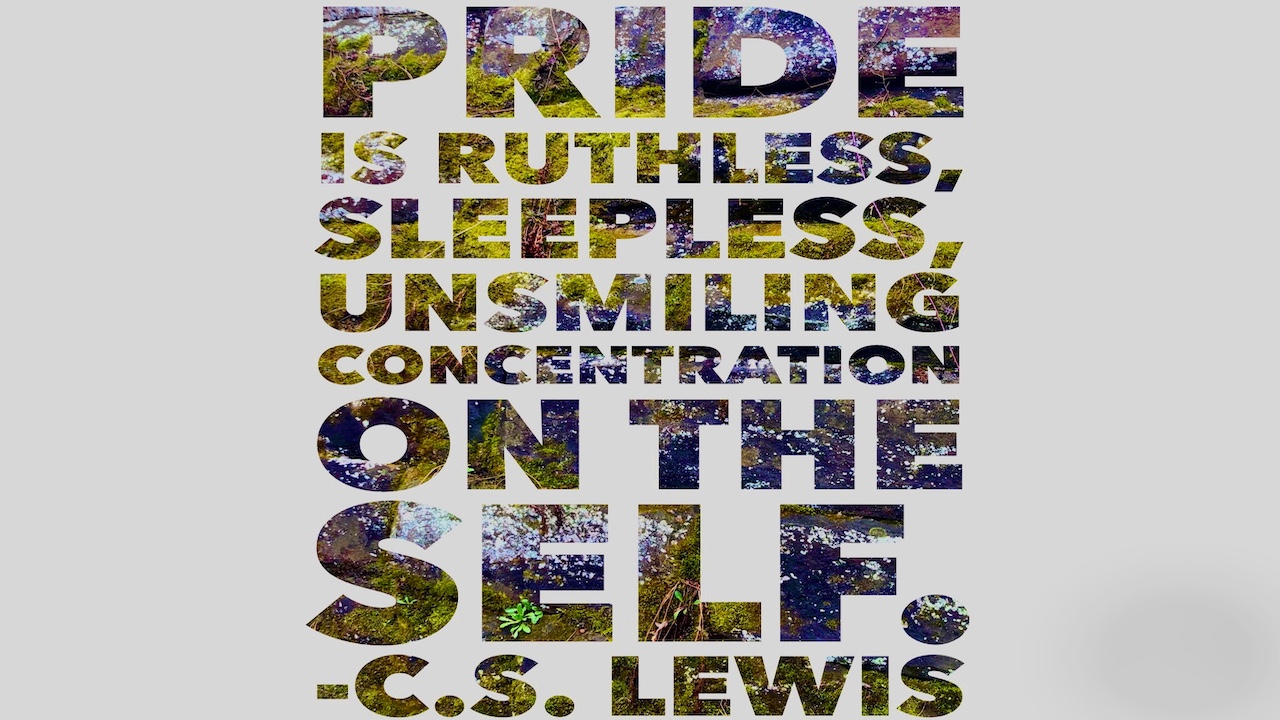
This pride is so dangerous! As C.S. Lewis said, “Pride is ruthless, sleepless, unsmiling concentration on the self.”
In the positive sense, a horn means the righteous person who shines a light on God, who concentrates on Him, who knows that anything good they have comes from Him.
The wicked lift up their own horn (literally lift up themselves), while the righteous bow their horn (literally lift up God). What does God do? God opposes the proud but shows favor to the humble (1 Peter 5:5).
This psalm essentially has God giving two warnings:
To the wicked He says, “Do not lift up your horn against Me.”
To the righteous He says, “Submit to Me and do not try to rush My timing.”
Notice that Asaph says “a cup of foaming wine” is coming to the wicked (v. 8). This symbolizes God’s judgment (Revelation 19:11-16). This was to be our just punishment too, but Jesus took the cup of God’s wrath Himself, and in its place gave us the cup of God’s blessing (Isaiah 51:22; Matthew 26:39-42; 1 Corinthians 10:16). This switching of the cups is what we celebrate every time we drink the cup of Communion.
God was patient with us and He is still being patient with the boastful wicked, which is why He warns them—and us—to Selah. We were rescued from judgment and now God calls upon us to tell others about Him, so that they may also be reconciled to Him through Jesus Christ (Proverbs 24:11-12; 2 Peter 3:9).
Here’s the call to Christians: Watch your horn! Don’t shine a light on yourself, but shine a light on Jesus Christ and remain on-mission to rescue those who persist in blowing their own horn.
D.L. Moody passionately and persuasively dismantles all of the hesitations Christians have to being active and outspoken about their relationship with Jesus. Check out my full book review by clicking here.
“I have often said that if I had to convict men of sin I would have given up the work long ago. That is the work of the Holy Ghost. What we have to do is to scatter the good seed of the Word, and expect that God will bless it to the saving of men’s souls.”
“One of the great obstacles in the way of God’s work today is this want of love among those who are the disciples of the Lord Jesus Christ. … To address men well they must be loved much.”
“Those who have been greatly used of God in all ages have been men of courage. If we are full of faith we shall not be full of fear, distrusting God all the while. That is the trouble with the Church of Christ today—there are so many who are fearful, because they do not believe that God is going to use them. What we need is to have the courage that will compel us to move forward.”
“If you cannot engage in any active work yourselves you can do a good deal by cheering on others.”
“Let us not be discouraged, but let us use all these wonderful opportunities, and honor God by expecting great things. If we do we will not be disappointed. God is ready and willing to work, if we are ready and willing to let Him, and to be used by Him.”
“A good many people are afraid of the word enthusiasm. Do you know what the word means? It means ‘In God.’ … People say that if we go on in that way many mistakes will be made. Probably there will. You never saw any boy learning a trade who did not make a good many mistakes. If you do not go to work because you are afraid of making mistakes, you will probably make one great mistake—the greatest mistake of your life—that of doing nothing. If we all do what we can, then a good deal will be accomplished.”
“When God wanted to bring the children of Israel out of bondage, He did not send an army; He sent one solitary man. So in all ages God has used the weak things of the world to accomplish His purposes.”
“If this world is going to be reached, I am convinced it must be done by men and women of average talent. After all there are comparatively few people in the world who have great talents. … I do not believe, either, that all God’s work is going to be done by ministers, and other officers in the Churches. This lost world will never be reached and brought back to loyalty to God, until the children of God wake up to the fact that they have a mission in the world.”
“Philip was called away from a great work in Samaria to go and speak to one man in the desert. Christ’s great sermon on Regeneration was addressed to one man; and that wonderful discourse by our Lord on the Water of Life was spoken to one poor sinful woman. I pity those Christians who are not willing to speak to one soul; they are not fit for God’s service. We shall not accomplish much for God in the world, if we are not willing to speak to the ones and twos. … The Lord expects us to do what we can. We can all do something.”
This is a weekly series with things I’m reading and pondering from Charles Spurgeon. You can read the original seed thought here, or type “Thursdays With Spurgeon” in the search box to read more entries.
The Wonderful Works Of God
Now there were staying in Jerusalem God-fearing Jews from every nation under heaven. … Utterly amazed, they asked “Are not all these men who are speaking Galileans…declaring the wonders of God in our own tongues!” (Acts 2:5-11)
The Holy Spirit being thus at work, what was the most prominent subject that these full men begin to preach about with words of fire? Suppose that the Holy Spirit should work mightily in the church. What would our ministers preach about? We should have a revival, should we not, of the old discussions about predestination and free agency? I do not think so! These are happily ended, for they tend toward bitterness, and, for the most part, the disputants are not equal to the task. We should hear a great deal about the premillennial and the postmillennial advent, should we not? I do not think so! I never saw much of the Spirit of God in discussions or dreams upon times and seasons that are not clearly revealed. Should we not hear learned essays about advanced theology? No, sir. When the devil inspires the church, we have modern theology—but when the Spirit of God is among us, that rubbish is shot out with loathing!
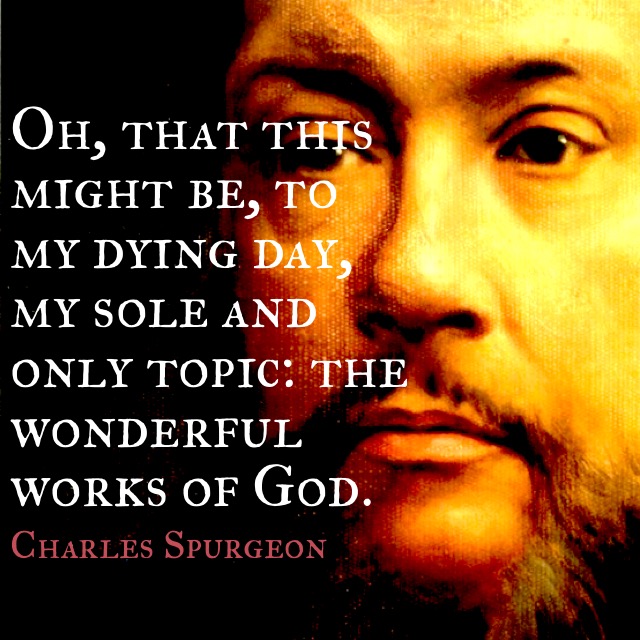
What did these men preach about? Their hearers said, ‘We hear them speaking in our own tongues the wonderful works of God’ (Acts 2:11). The subject was the wonderful works of God! Oh, that this might be, to my dying day, my sole and only topic: ‘the wonderful works of God.’
From Pentecostal Wind And Fire
Whether we are pastors or parishioners, may our heart cry echo that of Charles Spurgeon: May all that comes from my lips be words that tell of the wonderful works of God!
After the Church was born on that Pentecost Sunday, their message wasn’t one of doctrinal differences or the ills of society. No! These Spirit-baptized Christians went everywhere proclaiming how wonderful it was to be in a personal relationship with our Heavenly Father through the way opened to us by the death and resurrection of Jesus.
May we emulate their example today: Empowered by the Holy Spirit to go everywhere and tell everyone how wonderful our God is!
This is a weekly series with things I’m reading and pondering from Charles Spurgeon. You can read the original seed thought here, or type “Thursdays With Spurgeon” in the search box to read more entries.
Church On Fire
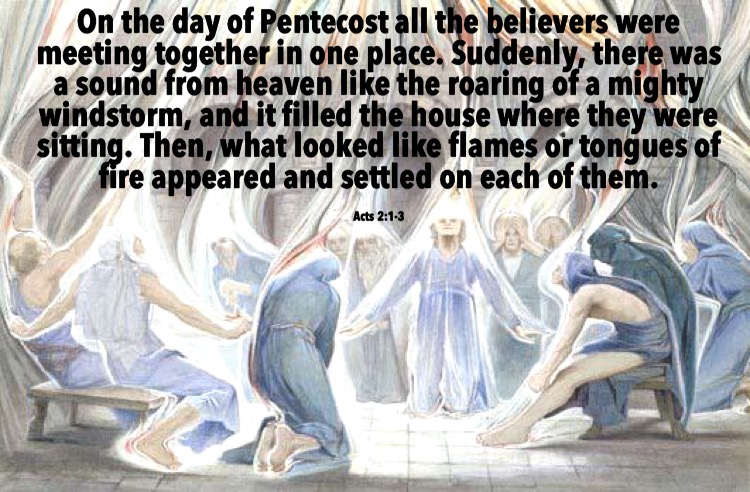
On the day of Pentecost all the believers were meeting together in one place. Suddenly, there was a sound from heaven like the roaring of a mighty windstorm, and it filled the house where they were sitting. Then, what looked like flames or tongues of fire appeared and settled on each of them. (Acts 2:1-3)
We are poor, empty things by nature, and useless while we remain so. We need to be filled with the Holy Spirit. Some people seem to believe in the Spirit of God giving utterance only, and they look upon instruction in divine things as of secondary importance. Dear, dear me! What trouble comes when we act upon that theory! How the empty vessels clatter, rattle, and sound! … Where the Spirit of God is truly at work, He first fills and then gives utterance—that is His way. …
Full! Then they were not cold, dead, and empty of life as we sometimes are. Full. Then there was no room for anything else in any one of them! They were too completely occupied by the heavenly power to have room for the desires of the flesh! Fear was banished; every minor motive was expelled! The Spirit of God, as it flooded their very beings, drove out of them everything that was extraneous. They had many faults and many infirmities before, but that day, when they were filled with the Spirit of God, faults and infirmities were no more perceptible! They became different men from what they had ever been before. Men full of God are the reverse of men full of self! …
The next Pentecostal symbol was utterance. … When the Spirit of God really comes upon a man, he does not wait till he has gathered an audience of the size that he desires, but he seizes the next opportunity! He speaks to one person. He speaks to two. He speaks to three—to anybody. …
When the Spirit of God fills a man, he speaks so as to be understood. … The crowd not only understood, they felt. There were lancets in this Pentecostal preaching, and the hearers ‘were pricked in their heart’ (Acts 2:37). … Those are the two effects of the Holy Spirit—a fullness of the Spirit in the ministry and the church, and next, a fire ministry and a church on fire, speaking so as to be felt and understood by those around!
From Pentecostal Wind And Fire
Oh, how I want this today!
Let’s seek the fullness and the utterance that can only come through the baptism in the Holy Spirit! Let’s be set on fire so that we can impact the world around us!
This is a weekly series with things I’m reading and pondering from Charles Spurgeon. You can read the original seed thought here, or type “Thursdays With Spurgeon” in the search box to read more entries.
The Purpose Of The Baptism In The Holy Spirit
On the day of Pentecost all the believers were meeting together in one place. Suddenly, there was a sound from heaven like the roaring of a mighty windstorm, and it filled the house where they were sitting. Then, what looked like flames or tongues of fire appeared and settled on each of them. (Acts 2:1-3)
Ordinary winds blow from this or that quarter of the skies, but this descended from heaven itself. It was distinctly like a downdraft from above. This sets forth the fact that the true Spirit, the Spirit of God, comes from neither this place nor that, neither can His power be controlled or directed by human authority. His working is always from above, from God Himself! The work of the Holy Spirit is, so to speak, the breath of God, and His power is always, in a special sense, the immediate power of God. …
Tongues of flame sitting on each man’s head symbolized a personal visitation to the mind and heart of each one of the chosen company. The fires came not to consume them, for the flaming tongue injured no one. To men whom the Lord has prepared for His approach, there is no danger in His visitations. They see God and their lives are preserved. They feel His fires and are not consumed. This is the privilege of only those who have been prepared and purified for such fellowship with God. The intention of the symbol was to show them that the Holy Spirit would illuminate them as fire gives light. ‘He will guide you into all truth’ (John 16:13). …
But the fire does more than give light; it inflames, and the flames that sat upon each show them that they were to be ablaze with love, intense with zeal, burning with self-sacrifice, and that they were to go forth among men to speak not with the chill tone of deliberate logic, but with burning tongues of passionate pleading, persuading, and entreating men to come to Christ that they might live! The fire signified inspiration. God was about to make them speak under a divine influence, to speak as the Spirit of God should give them utterance. …
O You who are our God, answer us by fire, we pray! Answer us both by wind and fire and then we will see You to be God indeed. The kingdom comes not and the work is flagging. Oh, that You would send the wind and fire! You will do this when we are all of one accord: all believing, are expecting, and all prepared by prayer. Lord, bring us to this waiting state!
This is a weekly series with things I’m reading and pondering from Charles Spurgeon. You can read the original seed thought here, or type “Thursdays With Spurgeon” in the search box to read more entries.
The Initiation Of Power
Whatever the Holy Spirit was at the first, He is that now, for as God, He remains forever the same. … We would greatly grieve the Holy Spirit if we supposed that His might was less today than in the beginning. …
If at the commencement of the gospel we behold the Holy Spirit working great signs and wonders, may we not expect a continuance of and, if anything, increased displays of His power as the ages roll on? …
It ought not to be forgotten that Pentecost was the feast of firstfruits. It was the time when the first ears of ripe corn were offered to God. If, then, at the commencement of the gospel harvest we see so plainly the power of the Holy Spirit, may we not most properly expect infinitely more as the harvest advances and, most of all, when the most numerous sheaves will be gathered? May we not conclude that if the Pentecost was thus marvelous, the actual harvest will be still more wonderful?
From Pentecostal Wind And Fire
When Jesus was approaching the Cross, He gathered His disciples together to tell them what was coming. One of the assurances He gave His followers was this: “I assure you, most solemnly I tell you, if anyone steadfastly believes in Me, he will himself be able to do the things that I do; and he will do evengreaterthings than these, because I go to the Father” (John 14:12).
Pentecost wasn’t the culmination, it was the initiation.
Pentecost was the launching point for followers of Jesus to be filled with dunamis power that would enable them to go into all the world and preach the gospel, and to have signs and wonders follow to confirm the preaching of the Word.
As Spurgeon said, we greatly grieve the Holy Spirit when we attempt to put Him in a box as to what He can or can’t do today, or if we try to limit Him to one era of long-past history. The Holy Spirit is as vital for a Christian today as He was on that Pentecost Sunday described in Acts 2!
This is a weekly series with things I’m reading and pondering from Charles Spurgeon. You can read the original seed thought here, or type “Thursdays With Spurgeon” in the search box to read more entries.
A Christian’s Waiting Activity
They were looking intently up into the sky as He [Jesus] was going, when suddenly two men dressed in white stood beside them. “Men of Galilee,” they said, “why do you stand here looking into the sky? This same Jesus, who has been taken from you into heaven, will come back in the same way you have seen Him go into heaven.”(Acts 1:10-11)
Despisers tell us nowadays, ‘Your cause is done for! Christianity is spun out! Your divine Christ is gone! We have not seen a trace of His miracle-working hands, nor of that voice that no man could rival.’ Here is our answer: We are not standing gazing up into heaven. We are not paralyzed because Jesus is away. He lives, the great Redeemer lives, and though it is our delight to lift up our eyes because we expect His coming, it is equally our delight to turn our heavenly gazing into an earthward watching and to go down into the city and there to tell that Jesus is risen, that men are to be saved by faith in Him, and that whoever believes in Him will have everlasting life! We are not defeated! Far from it—His ascension is not a retreat, but an advance! His tarrying is not for lack of power, but because of the abundance of His long-suffering. …
It is clear that He has not quit the fight nor deserted the field of battle. Our great Captain is still heading the conflict! He has ridden into another part of the field, but He will be back again, perhaps in the twinkling of an eye [Revelation 22:12; Matthew 25:21]. …
Brothers and sisters, do not let anybody spiritualize away all this from you! Jesus is coming as a matter of fact—therefore go down to your sphere of service as a matter of fact. Get to work and teach the ignorant, win the wayward, instruct the children, and everywhere proclaim the sweet name of Jesus! … Jesus is not coming in a sort of mythical, misty, hazy way. He is literally and actually coming—and He will literally and actually call upon you to give an account of your stewardship. Therefore now, today, literally not symbolically, personally and not by deputy, go out through that portion of the world that you can reach and preach the gospel to every creature according as you have opportunity, for this is what the men in white apparel meant—be ready to meet your coming Lord. …
If you would meet Him with joy, serve Him with earnestness!
From The Ascension And The Second Advent Practically Considered
Jesus was about His Father’s business the whole time He was on earth. As He ascended to heaven, He promised us His authority and the empowerment of the Holy Spirit so we too could be about our Father’s business.
In one of His parables about stewarding our Master’s gifts and resources until He returned, Jesus said, “Occupy until I return” (Luke 19:13). I love Spurgeon’s remind: “If you would meet Him with joy, serve Him with earnestness!”
Yes, we are waiting for Jesus to return, but our waiting is an active waiting. With one eye toward the heavens and one eye toward earth, we actively tell others about our soon returning King. Occupy! Stay active! Stay alert! Meet Him with joy!



 Like Jesus, when we are full of and led by the Holy Spirit everywhere we walk is holy ground; every moment is a sacred moment; every work is worship to God because we are occupied about the Father’s business.







 Craig T. Owens