Bill Hybels’ 10 Rules Of Respect

My mind and heart were expanded once again at this year’s Global Leadership Summit! Bill Hybels opened the conference with a call to leaders to promote civility in our areas of influence. Here are a few notes I jotted down.

“The solution to incivility must begin with me.” —Bill Hybels

“Christians do not get to chose whom they will respect [1 Peter 2:17].” —Bill Hybels

Bill Hybels’ 10 rules of respect:

  1. Leaders must set the standard of how to disagree without demonizing the other person.
  2. Leaders must allow spirited conversations without it getting personal.
  3. Leaders must not interrupt others who are talking.
  4. Leaders must limit their volume level and eliminate belittling words.
  5. Leaders must set the example of being courteous.
  6. Leaders must never stereotype.
  7. Leaders must apologize immediately if they are wrong.
  8. Leaders must form opinions carefully.
  9. Leaders must set the example of showing up on time and doing what they say they will do.
  10. Leaders must set rules of respect for the organization and enforce them relentlessly.

Bill Hybels closed with this challenge—“When was the last time I reflected deeply on my own convictions about respecting others?”

A Leader’s Most Powerful Resource

…Sanballat…mocked the Jews… (Nehemiah 4:1).

Sanballat mocked. How did Nehemiah respond to the mocking? He told Sanballat, “                .” Absolutely nothing!

At least he said nothing to Sanballat. But to God Nehemiah prayed, “Hear, O our God, for we are despised; turn their reproach on their own heads” (v. 4).

Once again the bad guys “conspired together to come and attack Jerusalem and create confusion” (v. 8). And once again Nehemiah said nothing to the conspirators; “nevertheless we made our prayer to our God” (v. 9).

When the gossip and rumors about the conspirators begin to discourage the Israelites, Nehemiah redirected them back to God: “Do not be afraid of them. Remember the Lord, great and awesome” (v. 14).

Even when the opposition was internal—with those who were looking out for themselves only and taking advantage of their brothers—Nehemiah again called them to look to God: “Should you not walk in the fear of our God?” (5:9).

Indeed, because of Nehemiah’s own example of the fear of the Lord, he had the moral authority to call them out, and to ask God for His blessing (vv. 14-19).

Whatever criticism or opposition Nehemiah faced, his first response was to turn to God.

A mark of a godly leader is one whose first response to problems is prayer.

This is Part 6 in my series on godly leadership. To read my other posts, please click here.

Godly Leaders Can Inspire Everyone To Pursue One Vision

And I told them of the hand of my God which had been good upon me, and also all of the king’s words that he had spoken to me. So they said, “Let us rise up and build.” Then they set their hands to this good work. (Nehemiah 2:18)

The mark of a godly leader is one who can inspire all sorts of people to pursue the same vision.

Nehemiah did such a good job casting the vision God had given him that people from all professions and persuasions immediately joined in. Although the vision was to rebuild the walls around Jerusalem, most of those who joined Nehemiah in pursuing this vision were anything but builders. They were…

  • Priests
  • Fathers and their sons
  • Fathers and their daughters
  • Natural-born Israelites
  • God-fearing foreigners
  • Goldsmiths
  • Perfume makers
  • Leaders
  • Laypeople
  • Those living within the city
  • Those who lived outside the city
  • Merchants

With one voice they cried out, “Let’s rise up and build!” and they got down to business.

All these different people buying-in to one godly leader’s vision!

This is Part 5 in my series on godly leadership. To read my other posts, please click here.

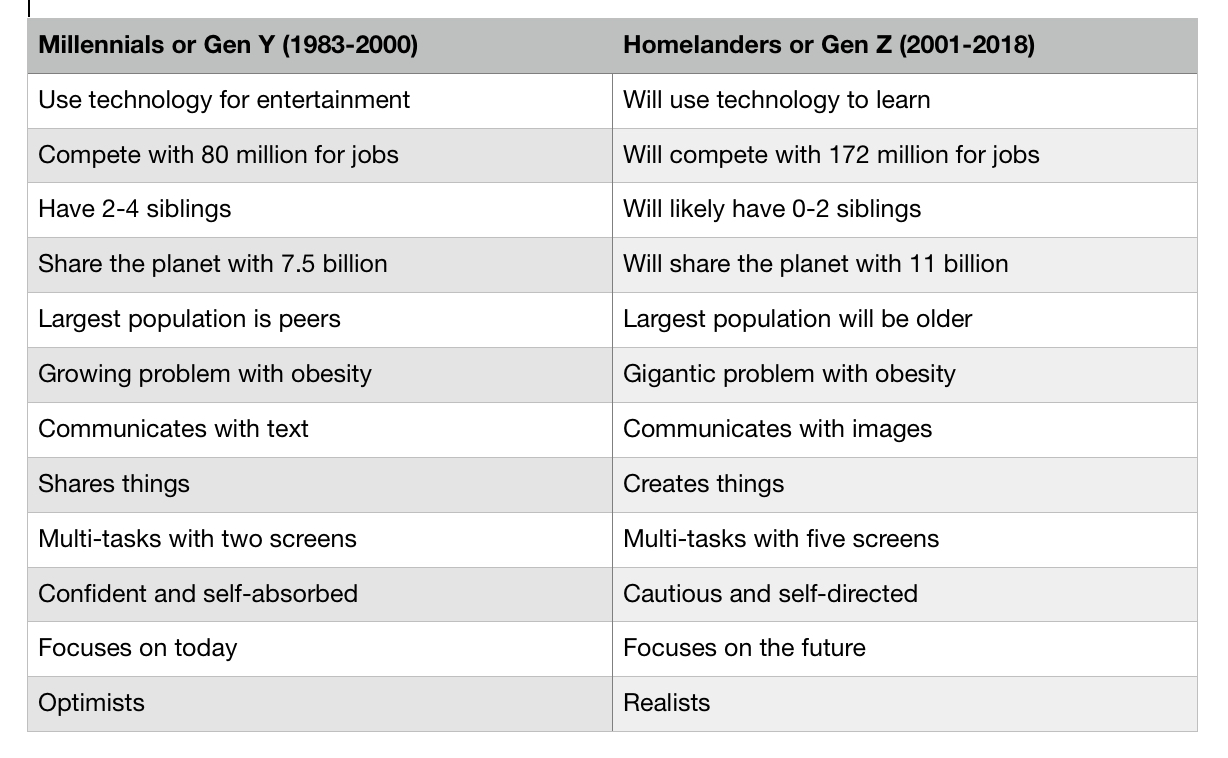
7 Quotes + 1 Infographic From “Marching Off The Map”

Once again, Tim Elmore has given us invaluable insight into the emerging youth culture. If you have kids or work with kids, you must read Marching Off The Map. You can check out my full book review by clicking here. Below is the first set of quotes I want to share with you, but there will be plenty more coming in the future, so stay tuned!

“Thanks to technology, information streams into their lives 24/7 and often has no filter on it, even for young children. When we determined not to censor content in the media, we had no idea (understandably) how it would affect our kids. We’re removing the opportunity for them to experience innocence and wonder. However, because they’re still maturing emotionally, socially, cognitively and biologically in their first 25 years, we have now begun to witness a strange paradox in our young: the extinction of childlikeness and the extension of childishness. …

“Since they are exposed to so much adult information, so early in their lives, they can prematurely lose (1) their sense of innocence, (2) their sense of wonder and (3) their sense of trust …

“Biologically, the graduate is an adult. Emotionally, the graduate may be unprepared for the adult world.” 

“If you think our kids are pitifully impulsive on social media—just look at the adult population. … If you think teens are addicted to Facebook, just study the hours their mothers spend on it. If you think young athletes on the Little League baseball field act childish, just look at their dads. The behavior of adults and children has become more and more similar. Society has baptized ‘youthfulness.’ We want to look young, feel young, dress young, talk young and act young. We argue with our children’s teachers. We push our kid’s coaches to get them special treatment. We are not good at delaying gratification, and we frequently don’t keep commitments we make … very much like children. The result? Adulthood has lost much of its aura and authority.”

“As you stand in front of your classroom or your own children—you are, in a sense, Galileo. You are Magellan. You are Christopher Columbus. You are Lewis and Clark. You are Neil Armstrong. Ready or not, they need you to play this role.

“Our world is both expanding and shrinking. Our past maps and methods are antiquated. Like it or not, we’re moving into unfamiliar territory and many think it’s too difficult to explore. We have fallen in love with our old maps. … 

“For educators, our role must change as we teach a generation of students who don’t need adults to get information.

“For parents, our role must change as we raise kids in a time of terrorism, economic recession, racial unrest, underemployment and ubiquitous technology.

“For coaches, our role must change as we train young athletes who have eight-second attention spans, and may arrive at practice with little resilience or grit.

“For youth workers, our role must change as we mentor students who have few life skills or values because adults either over-functioned or were absent.

“For employers, our role must change as we onboard young employees who may have never had a real job before, and may ask when ‘spring break’ will be.”

“Adults must enable the students to leverage what is new, yet at the same time, hold on to what is ancient, yet valuable. We must be both timeless and timely. So, our job as we serve the next generation is two-fold:

  • To adopt or adapt. We must seize what is new and help kids leverage it well.
  • To explain and equip. We must relate to them the timeless ideals every generation needs.”

“I believe we must cultivate one significant skill set in ourselves: we must be able to either adapt to the new world that’s emerging, or we must explain why a timeless virtue or value is still relevant in our 21st century world.”

“A third of young Americans say they don’t belong to any religion. I’ve found, however, they’ve traded in one God for many gods. They want to ‘feel’ spiritual, so they’ve created a buffet—seeking something to satisfy their soul. I often hear students say, ‘I don’t believe in religion, but I want to be a spiritual person.’ Today—pluralism is expanding across the landscape. It’s easier to say ‘no’ to one and enjoy a mixture of many.”

“A third of young Americans say they don’t belong to any religion. I’ve found, however, they’ve traded in one God for many gods. They want to ‘feel’ spiritual, so they’ve created a buffet—seeking something to satisfy their soul. I often hear students say, ‘I don’t believe in religion, but I want to be a spiritual person.’ Today—pluralism is expanding across the landscape. It’s easier to say ‘no’ to one and enjoy a mixture of many.”

“The Latin root word for ‘educate’ is ‘ducere’ which means to ‘push out.’ … We should not put students in a passive mode as we teach. We must be inspirers of learning. We must help pull ambition out of them, not push information into them.”
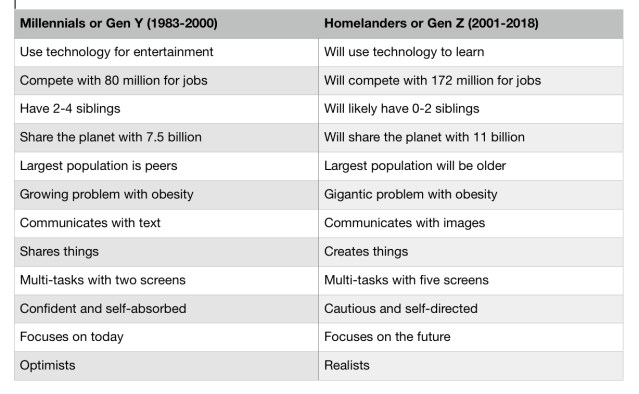
I’ll be posting some more quotes from Marching Off The Map next week.

Godly Leaders Prayerfully Plan

“… I pray…grant me mercy in the sight of this man [King Artaxerxes]…” (Nehemiah 1:11).

Nehemiah prayed this in the month of Chislev. Four months later—in the month of Nisan—we read Nehemiah’s words, “So I prayed to the God of heaven” (2:4).

It took four months before God began to answer Nehemiah’s prayer, but he definitely wasn’t idle during this time!

During these four months, Nehemiah did more than pray; he planned. In Nisan, the king asked Nehemiah why he seemed heartsick.

“This is nothing but sorrow of heart,” said the king. “What’s bothering you, Nehemiah?”

“My hometown is in ruins,” replied Nehemiah.

Then the king asked, “What would you like to do?”

“So I prayed to the God of heaven. And then I said to the king…” (vv. 2-5).

Nehemiah’s request to King Artaxerxes was very specific.

  • He told the king how long he would be gone
  • He told him the building supplies he would need
  • He requested a letter from the king granting him safe passage
  • He requested another letter authorizing him to have access to the forest for lumber

“And the king granted them to me according to the good hand of my God upon me” (v. 8). Not only that, but the King gave Nehemiah an armed escort back to Jerusalem!

Nehemiah prayed and planned, allowing God to determine the perfect timing. Nehemiah didn’t just pray and wait; he worked while he waited.

A mark of a godly leader is one who prayerfully plans his strategy.

My prayer—May all my plans be made with prayer to You for guidance. You know the best plans and the perfect timing, so I will pray and plan; plan and pray.

This is Part 4 in my series on godly leadership. To read my other posts, please click here.

A Godly Leader’s “We”

When Nehemiah heard about the devastation in Jerusalem, the first thing he did was a very good thing: “I sat down and wept, and mourned for many days; I was fasting and praying before the God of heaven” (Nehemiah 1:4).

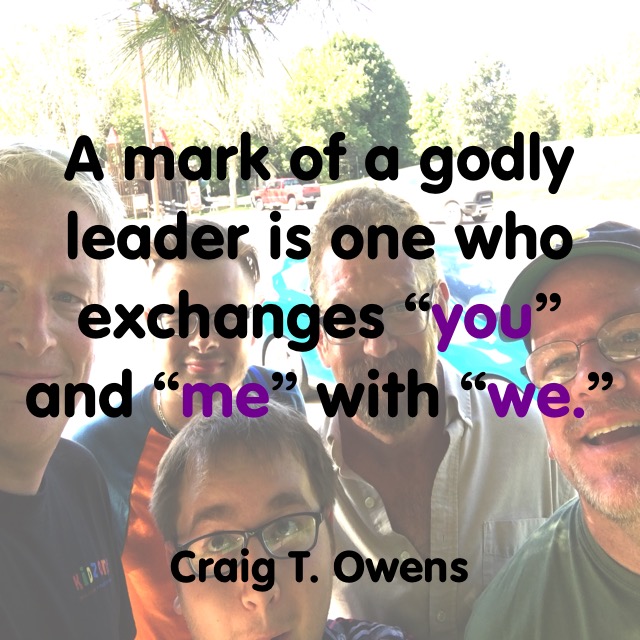
An important mark of a godly leader is one who exchanges “you” and “me” for “we.”

Godly leaders identify themselves with their people; they don’t think of themselves more highly nor look down on others.

Nehemiah said in his prayer, “BOTH my father’s house and I have sinned. WE have acted corruptly against You” (vv. 6, 7). Given the fact that this is 70 years after Judah went into captivity, it is doubtful that Nehemiah was captured in Jerusalem, but he was probably born in exile. Yet he said WE sinned against God.

He also asks God to “be attentive to the prayer of Your servant, AND to the prayer of Your servantS” (v. 11). Once again Nehemiah identifies himself with all the people by not claiming that his prayer carries any more weight than anyone else’s prayer. Every prayer, in Nehemiah’s mind, was equally as pleasant to God’s ears.

My prayer—Help me to be a “we” leader.

This is Part 23 in my series on godly leadership. To read my other posts, please click here.

Godly Leaders Must Do Hard Things

“Arise, for this matter is your responsibility. We also are with you. Be of good courage, and do it” (Ezra 10:4).

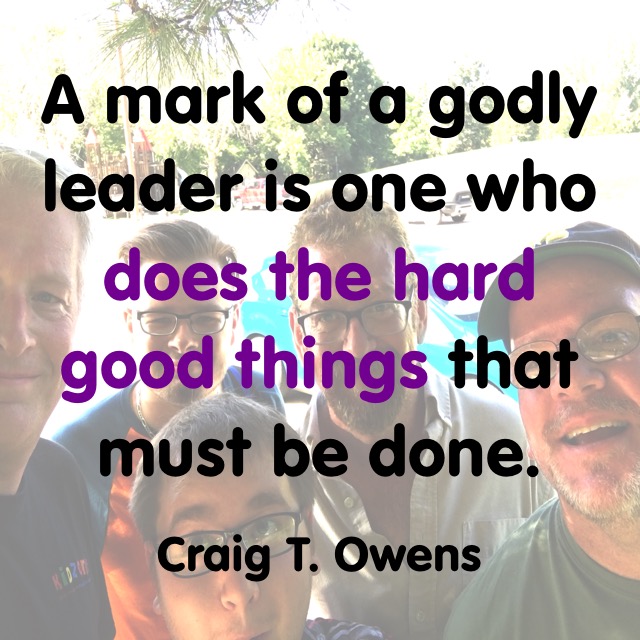
Leaders have to do hard things. The responsibility is theirs, and the team is imploring their leader to take the responsibility to lead!

Ezra had to deal with a difficult issue. The issue was intermarriage between the Israelites and pagan nations. To complicate matters, Ezra discovered that “the hand of the leaders and rulers had been foremost in this trespass” (Ezra 9:2). I would guess these leaders had committed the sin of commission (intermarrying themselves or allowing their children to do so), and of omission (not speaking out against trespassers).

But those “who trembled at the words of the God of Israel” were greatly grieved at this national sin (v. 4).

Ezra’s first response was a good one: he fasted and prayed, confessing the sins of the people and identifying himself with them (notice the use of “we” in his prayer). Ezra knew there was a window of opportunity for revival that was about to close, so he must act quickly (vv. 5-15).

Prayer is a great start, but after prayer there must be action: “Arise … and do it”!

I am sure looking transgressors in the eye—especially those who were leading men and women in the community—and calling out their sin wasn’t an easy thing nor a pleasant thing for Ezra to do, but it had to be done.

A mark of a godly leader is one who does the hard good things that must be done.

Ezra doing the hard good thing opened the door for God’s blessing to fall on the people. This is still true for godly leaders today.

My prayer—Lord, strengthen me to “arise and do it” when the hard good things must be done.

This is Part 2 in my series on godly leadership. To read my other posts, please click here.

Godly Leaders Raise Up Godly Leaders

“…as the hand of the Lord my God was upon me…I gathered leading men of Israel to go up with me” (Ezra 7:28).

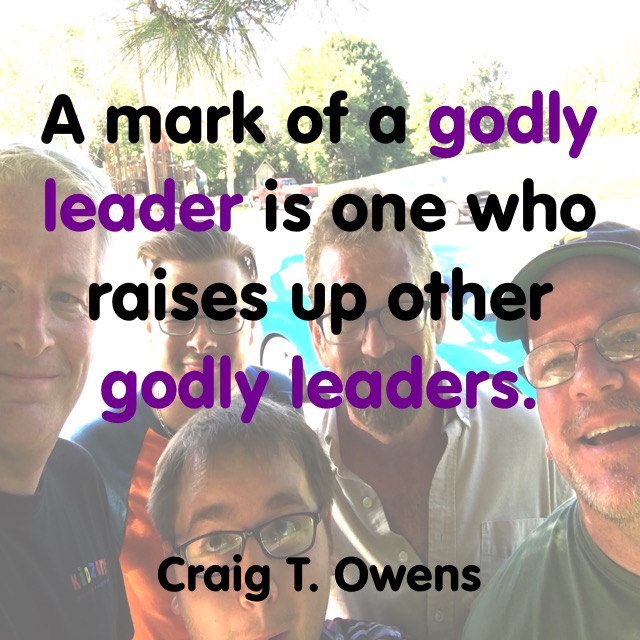
A mark of a godly leader is one who raises up other godly leaders. He doesn’t want to walk alone; he doesn’t want to keep God’s blessings to himself. He knows that there can never be too many God-fearing leaders.

How did Ezra raise up more godly leaders?

  1. Ezra made sure his team had everyone it needed to be successful. When he discovered his team had no Levites to oversee functions in the temple, he made an appeal for a Levite to join his team. “Then, by the good hand of our God upon us” God sent Ezra nearly 250 Levites (Ezra 8:18-20)!
  2. Ezra made sure his team would be adequately cared for. He prayed and fasted as he asked for God’s direction and protection for his team (vv. 21-23).
  3. Ezra trusted his teammates. He entrusted them with precious, irreplaceable treasures (vv. 24-34).

What Ezra did became contagious. The leading men that came to follow Ezra all brought other potential leaders with them as well.

Godly leaders are never content arriving at their destination alone—they want as many other godly leaders alongside them as possible.

My prayer—God, place Your good hand on me to empower me to raise up godly leaders.

This is the first part of my series on godly leadership. To check out all of the posts, please click here.

10 Quotes From “Legacy Leadership”

I just finished an outstanding reading plan on YouVersion called Legacy Leadership by Dr. J. Lee Whittington. For anyone interested in the biblical concept of servant-leadership, I highly recommend you check out this reading plan.

Here are a few quotes I especially liked…

“Legacy Leadership is a process of intentional influence that takes place in the context of a relationship.”

“There is a recurring pattern of affirmation and exhortation in Paul’s leadership. He provided a dynamic balance between challenging his followers to grow and acknowledging their progress. He was affirming, but never content.”

“There is a growing trend to attack, criticize, and resent anyone who has talent or achievements that sets them apart from others. This tendency extends to those who resent the efforts of leaders who challenge the status quo. Opponents of change initiatives often attempt to marginalize leaders by attacking their character and questioning their motives. If the messenger is flawed, then the message and vision they offer cannot be trusted. As disappointing as it is, these challenges come with the territory of leadership.

“If I am to lead with integrity, I must always confront my own lack of integrity. This demands a willingness to constantly reflect on my motives and the courage to confront my own hypocrisy. It also requires me to allow myself the discomfort of inviting the scrutiny of both the Lord and others who care enough to confront me about my motives, my attitudes, and my behavior.”

“The most effective leaders are able to exert influence without asserting their formal authority. … Paul deliberately chose to forego the legitimate, reward, and coercive power inherent in his position. Instead, he leaned into another base of power: referent power. Referent power is based on respect and admiration. When this is present, the followers identify with and want to emulate their leader. This power base does not come from the leader’s position or control of resources. Rather, it is based on the leader’s character and integrity. Referent power is based on who the leader is.”

“Legacy Leaders do not lead from a distance. They imitate Jesus who said, ‘I am among you as one who serves’ (Luke 22:27). They are comfortable sharing their lives with their followers.”

“The best relationships between a leader and their followers are those that are characterized by a great deal of mutual trust and shared information. The responsibility for creating this type of relationship rests squarely on the shoulders of the leader.”

“Authentic leaders have a seamless link between their values and their actions. But the congruence between values and attitudes is just the starting point for authentic leadership.  From the perspective of scripture, a leader’s attitudes and actions must be anchored to God’s standards. When a leader’s enacted values are in congruence with their espoused values, and those espoused values are in turn anchored to God’s principles, the leader had moral authority.”

“It’s easy to critique the authenticity of others.  But, if we are really serious about developing our own authenticity, we must focus on ourselves. I read this statement several years ago: ‘If we are to be people of integrity, we must constantly confront our lack of integrity.’”

“Legacy Leaders embrace the principles of servant-leadership and understand that the conscious choice to lead comes after the desire to serve. This inclination is not natural. It must be energized by continuous reliance on the empowering presence of God’s Spirit.”

13 Quotes From “No Limits”

John Maxwell has a unique and gifted way of challenging his readers to move forward by giving them both the motivation and the practical steps to do so. No Limits is no exception. You can check out my full review of his book by clicking here. Below are the first set of quotes from this book that I would like to share with you.

“What stops people from reaching their capacity often isn’t lack of desire. It’s usually lack of awareness.”

“Sad is the day for any man when he is absolutely satisfied with the life that he is living, thoughts that he is thinking, deeds that he is doing, until there ceases to be forever knocking on the door of his soul, a desire to do something greater for God and his fellow-man.”

“Dysfunctional people want others to function on their level. Average people want others to be average. High achievers want others to achieve.”

“Emotionally strong people honor their relationships while at the same time guarding against letting others control them, especially in difficult relationships.”

“What’s the fastest way to make a relationship better? Make yourself better so that you have more to give. That requires an abundance mind-set.”

“How can we make things better? If you’re already successful, this is a fantastic question to ask yourself and your team. Anytime we’re successful, there is a temptation to be lulled into a feeling a false security, to believe that we have arrived. But the greatest detriment to continual success is relying on past success.”

“No one has ever had to work at limiting their capacity. That happens naturally. The world tries to talk us out of working hard. We convince ourselves that we can’t get ahead. We feel down, and we watch our lives go downhill. There are even people who will tell you that others have put you there, that the system is rigged, that successful people have pushed you down and have gotten to the top by stepping on you. Well, I have good news for you … Your production capacity is within your own control.” 

“No one has ever stayed the same, while at the same time rising to a higher level. Being willing to change is one of the prices we pay to grow.”

“Repeated choices to take responsibility give you mental and emotional momentum, which only makes you feel stronger and better about yourself.”

“Everyone sees people’s success without realizing that 90 percent of what leads to it is unseen, yet that 90 percent is what makes it possible.”

“The bottom line is that you cannot manage your life if you do not manage yourself. You cannot maximize your capacity if you cannot increase your discipline.”

“Resilient people don’t focus on the negative experience. They focus on what they can learn from the experience.”

“Winning is overrated. Growing is underrated.”

I will be sharing another batch of quotes from No Limits soon, so stay tuned. To check out other quotes I share daily, please follow me on Twitter and Tumblr.