8 Quotes from “Leading In Tough Times”

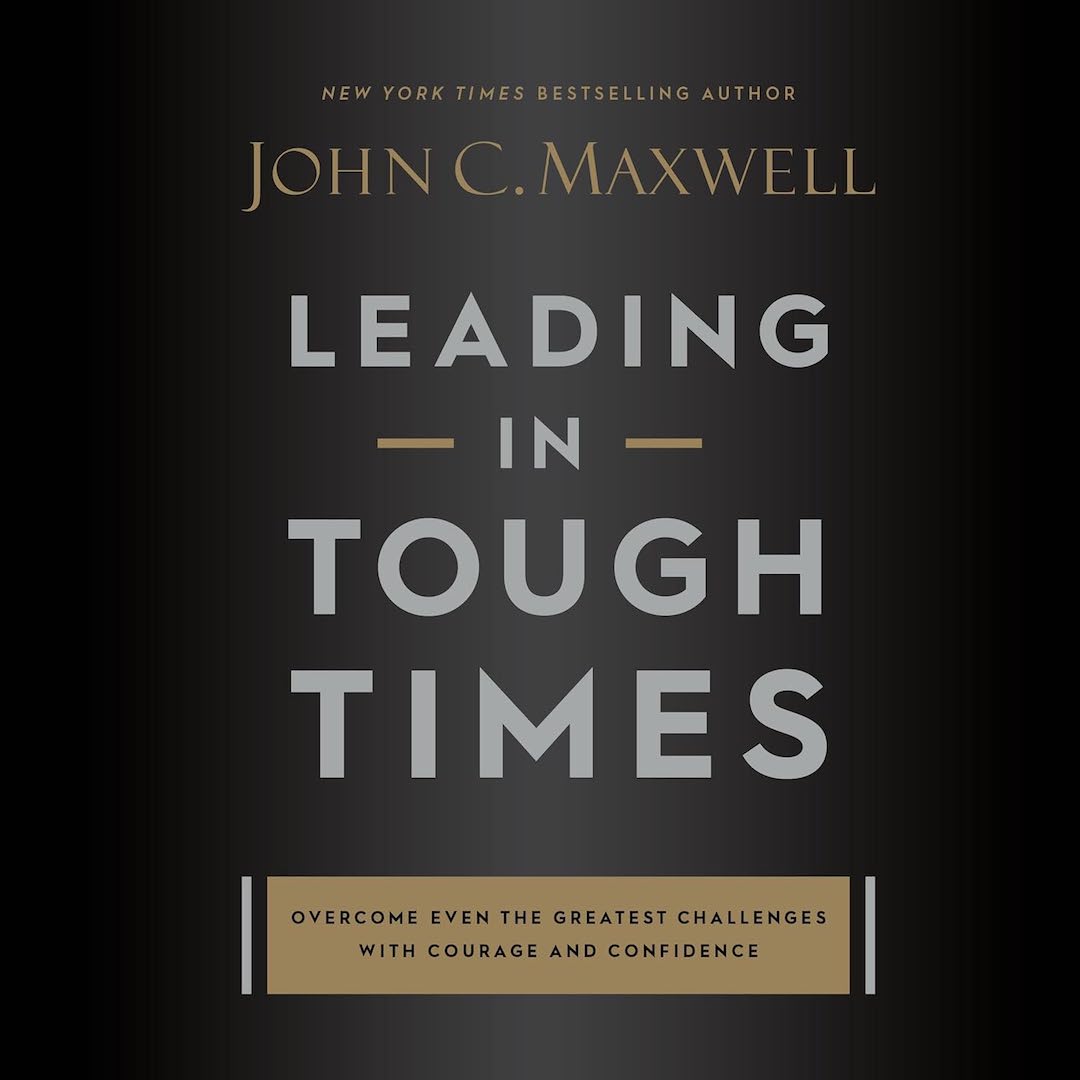
Everyone faces tough times, but leaders who encounter these difficult times have the opportunity to help their teams thrive or fall during this time. John Maxwell shares the challenges leader face in these situations, and how they can overcome them and help successfully bring others along as well. Check out my full book review of Leading in Tough Times. 

“Good leaders understand that adversity and challenges are actually opportunities to rise up in leadership.

  1. Adversity introduces us to ourselves
  2. Adversity is a better teacher than success
  3. Adversity opens doors for new opportunities
  4. Adversity writes our story if our response is right” 

“How do people overcome problems, challenges, and difficulties? They make changes. Improvement requires change. Innovation requires change. Seizing opportunities requires change. … As a leader in tough times, you need to become a change agent. You need to help others embrace positive change, even when it takes them outside their comfort zone. You need to help them get results, even when they worry that it might not be possible.” 

“There is no downside to adding value to people. Yes, it will cost you time and effort. But when you add value to people, you help them and make them more valuable.” 

“If you lead people who are falling short of their potential, you need to start asking why. Have you put them in their strength zones? Are you providing the training and resources they need to be successful? Is there something they need that you’re not giving? You always need to make sure you are not the problem before you look to see where the problem is.” 

“If you are a leader, the true measure of your success is not getting people to work. It’s not getting people to work hard. It is getting people to work hard together.” 

“In times of difficulty, relationships are a shelter. In terms of opportunity, they are a launching pad. Trust is required for people to feel safe enough to create, share, question, attempt, and risk. Without it, leadership is weak and teamwork is impossible.” 

“One of the best ways to persuade others is with your ears. That may seem counterintuitive, because we expect persuasion to involve speaking. But when a leader listens to members of the team, that act gives the leader greater credibility and therefore influence. In contrast, when team members no longer believe that their leader listens to understand them, they start looking around for someone who will.” 

“Care and candor must be in balance. Care without candor creates dysfunctional relationships. Candor without care creates distant relationships. But care balanced with candor creates developing relationships. … Caring values the person while candor values the person’s potential.” 

My Patreon supporters have access to all of the quotes I shared from this book. You can join them to get exclusive content and early access to other content by becoming a supporter today.
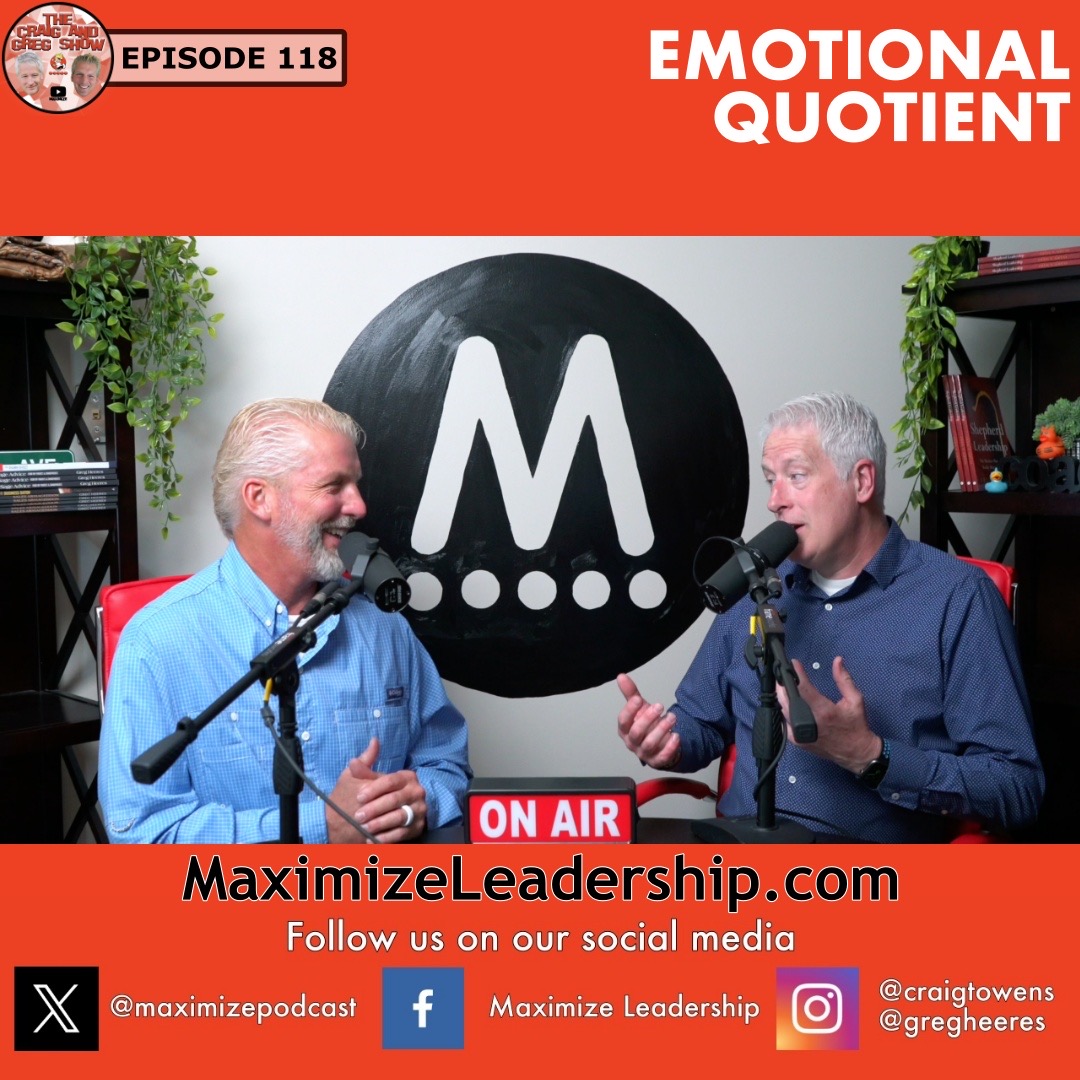
The Craig And Greg Show: Emotional Quotient

Listen to the podcast of this post by clicking on the player below, and you can also subscribe on AppleSpotify, or Audible.

Are you in touch with your emotions? While it might sound like something out of a Hallmark movie to some, having a robust emotional quotient is a vital skill for a leader. Join Greg and me as we get all emotional in this episode.

  • [0:32] There is something more important than IQ, and that’s EQ.
  • [1:51] Is EQ innate or is it learned?
  • [4:08] Is EQ a hard skill or a soft skill? How do we measure EQ?
  • [5:37] EQ is not necessarily emotional regulation, although it is an important component of EQ.
  • [6:36] Some thoughts on how we can grow our EQ.
  • [8:07] Humility is absolutely essential to growing in EQ.
  • [11:27] Leaders who strive to put others first can grow in EQ.
  • [15:01] We have to get better at truly seeing people and knowing where they are emotionally.
  • [16:40] Leaders have to be aware of their own emotional state.
  • [17:31] It’s invaluable to have a third-party who isn’t emotionally invested in your situation come alongside you to give you perspective.
  • [18:26] Mentors can help us see ourselves more clearly, which helps us see others more clearly.
  • [21:30] Leaders need to remember that people are no machines, so we cannot think of them in terms of efficiency.
  • [23:14] Greg and I share examples of people who taught us how to be more aware of our emotional interactions with people.
  • [27:05] People want to know that leaders see them and hear them. Remembering this will help leaders grow their EQ.

Leading In Tough Times (book review)

Listen to the podcast of this post by clicking on the player below, and you can also subscribe on AppleSpotify, or Audible. 

Some people have a misconception about leadership that John Maxwell dispels in the opening words of his book Leading in Tough Times. He writes, “Good leaders understand that adversity and challenges are actually opportunities to rise up in leadership.” 

In fact, I would say that some of the best leaders have gone through some of the toughest of times, learning lessons that have set them apart as an exemplary leader. 

Tough times come to every organization—no matter its size—but leaders who will seize the opportunity to navigate the difficulty successfully will grow both themselves and the organization they lead. That’s because there are some lessons that can be learned in no other way than to grow through difficulties. 

If those statements inspired you, then Leading in Tough Times is the book for you! As he does in all of his books, John Maxwell culls the best advice from the best sources and distills it down into actionable steps for leaders who are ready to learn. In this book, Mr. Maxwell shares seven challenges that give leaders opportunities not just to go through difficulties, but to grow through difficulties. 

If you are in a challenging season right now, this book could be a lifeline for you. If you aren’t in a difficult season right now, use this book as a training manual for both you and the emerging leaders around you to prepare for the next challenge. After all, the challenging times are inevitable, but our growth as leaders in these times is entirely up to us. 

►► Would you please prayerfully consider supporting this ministry? My Patreon supporters get behind-the-scenes access to exclusive materials. ◀︎◀︎

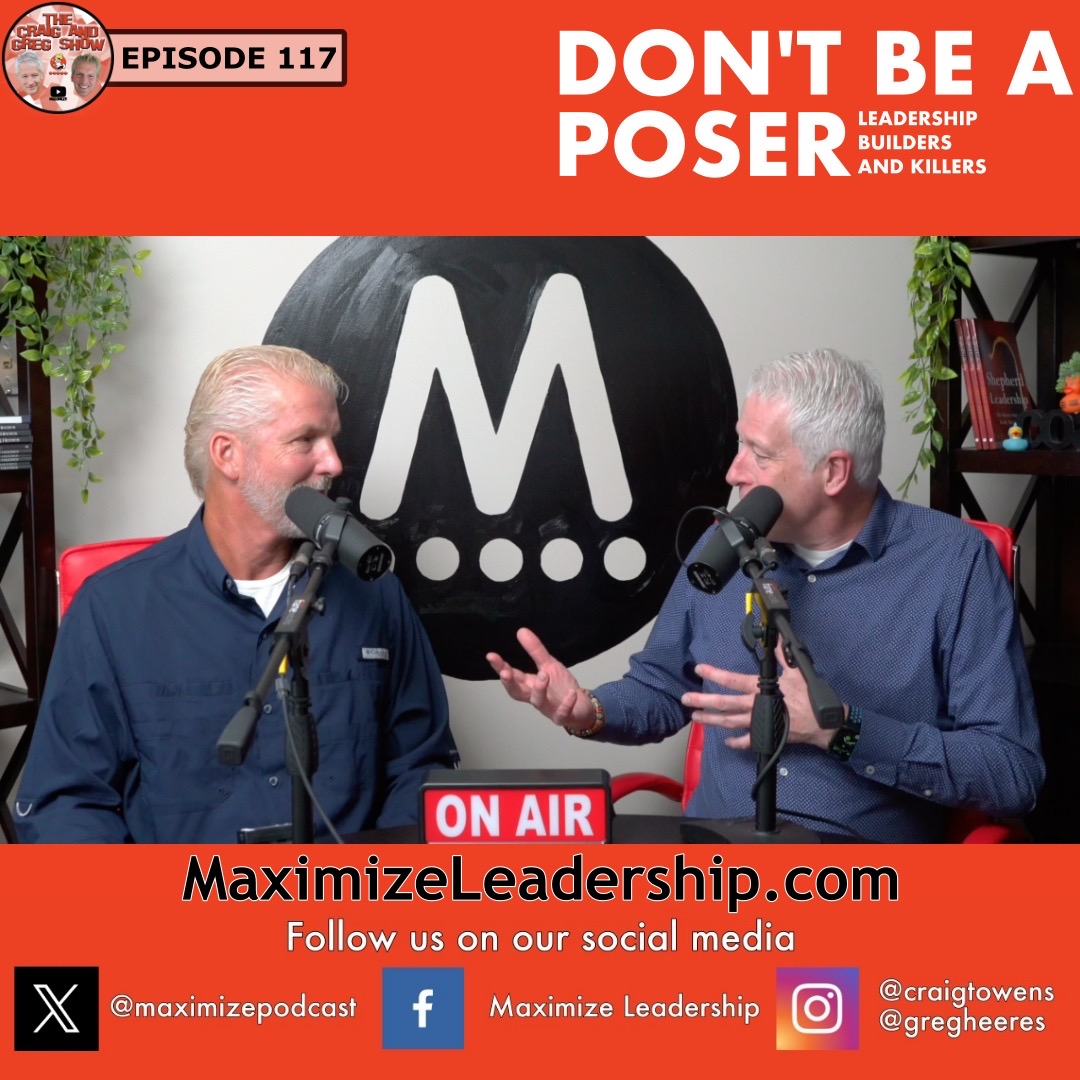
The Craig And Greg Show: Don’t Be A Poser

Listen to the podcast of this post by clicking on the player below, and you can also subscribe on AppleSpotify, or Audible. 

Everyone wants to fit in—it’s an entirely natural human instinct to desire the approval of those around you. However, when this instinct causes us to change who we are it can become very destructive to us both personally and professionally. In today’s episode Greg and I discuss how being a poser is a sneaky leadership killer that can creep in without you even noticing. 

  • [0:00] Introduction 
  • [1:38] Posing is a leadership killer that might not be obvious to a leader.
  • [2:52] Why would a leader think they have to pose in front of certain groups?
  • [5:38] Leaders need to be cautious of thinking, “I have to fit in. I have to be liked by this group.”
  • [7:31] Posing isn’t changing a style of communication.
  • [8:26] Being misunderstood is very difficult for everyone, but we cannot fall into the posing trap in order to try to be understood.
  • [10:30] Our teams need to know what to expect from us.
  • [11:48] How does posing limit leadership effectiveness? How does authenticity launch a team?
  • [15:15] Posing leaders force their teams to think inside-the-box.
  • [16:54] Authentic leaders want to hire authentic team members to promote an authentic culture.
  • [19:40] Leaders need to be confident to be authentic, and that authenticity is incredibly freeing!
  • [23:40] Coaches who listen and observe and can help you spot the hidden areas of posing. Check out the Maximize Leadership coaching services.

Intentional Habits

Listen to the podcast of this post by clicking on the player below, and you can also subscribe on AppleSpotify, or Audible. 

Consistent leaders are exemplary leaders, but consistency doesn’t happen automatically. Effective leadership of others starts with effective leadership of yourself. 

Check out the full conversation Greg and I had about leadership consistency. 

You may also want to check out a couple of related posts: 

And I take several chapters in my book Shepherd Leadership talking about the habit that are necessary for us to excel in our ministry positions.

►► Would you please prayerfully consider supporting this ministry? My Patreon supporters get behind-the-scenes access to exclusive materials. ◀︎◀︎

The Don’ts And Dos Of Leadership

Listen to the podcast of this post by clicking on the player below, and you can also subscribe on AppleSpotify, or Audible. 

In 2 Timothy 2:22, the apostle Paul puts together two unlikely words: flee and pursue. 

You may think those words are opposites, but actually they are partners in a leader’s effectiveness. Godly leaders have Don’ts and Dos that help them operate at their peak effectiveness. It seems to me that the Don’ts need to be attended to first, which will enable leaders to do the Dos better. 

Or as Paul might say it: Flee the Don’ts to pursue the Dos. 

In vv. 22-26, here is what we learn—

Flee these Don’ts:

  • Don’t pursue merely temporal desires 
  • Don’t engage in foolish arguments about meaningless things 
  • Don’t be quarrelsome 
  • Don’t resent others, even those who are opposing you 

Pursue these Dos: 

  • Do strive for righteousness, faith, love, and peace to be more evident in all of your relationships 
  • Do be kind to everyone 
  • Do learn to teach well, especially those who have been taken captive to do the devil’s will 

The Dos require a full-time engagement of my time and energy, allowing me to continually grow in my faith in God and in my leadership acumen. The Don’ts will cause my growth to plateau and then to stagnate. 

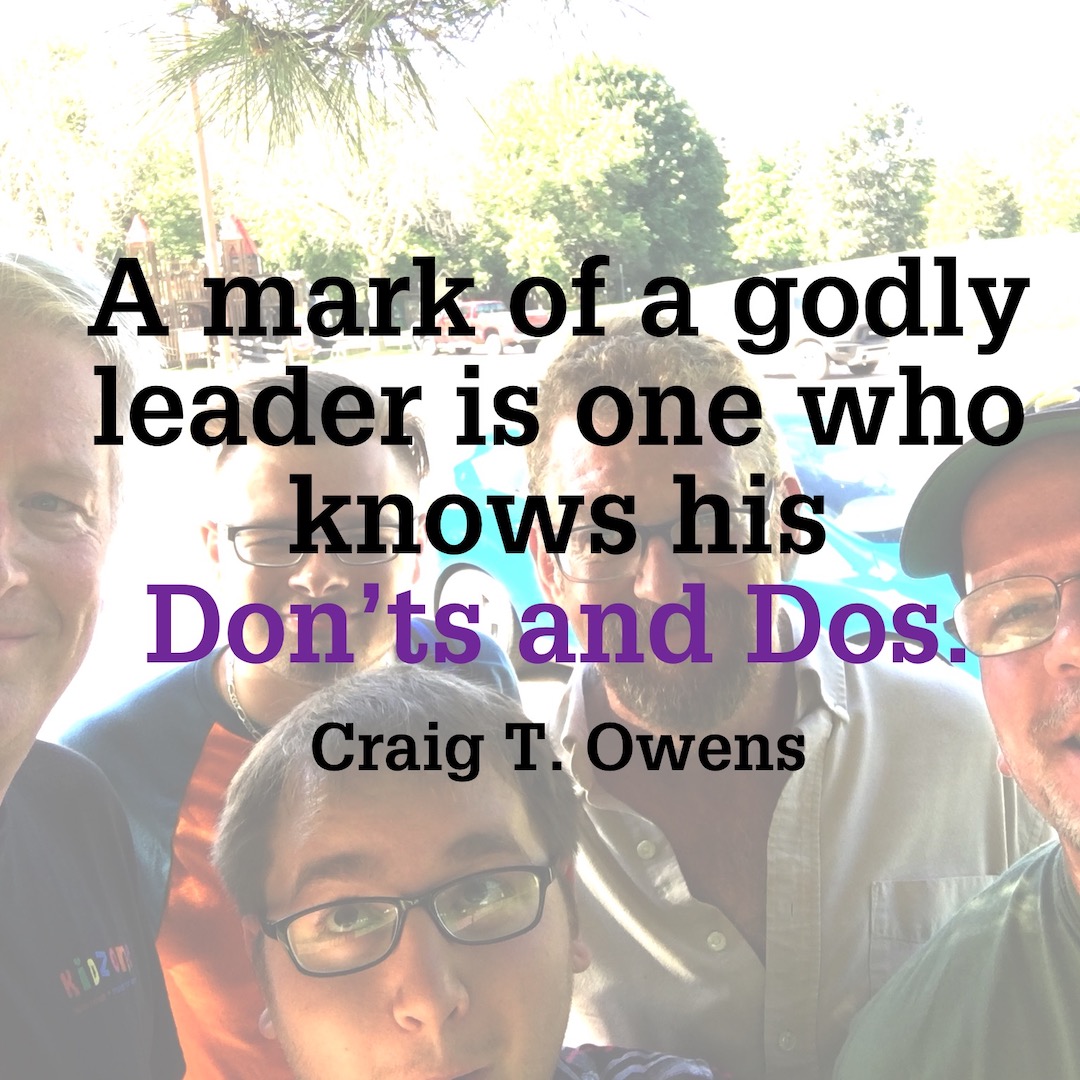
A mark of a godly leader is one who knows his Don’ts and Dos. 

So I challenge you: don’t do the Don’ts so that you can do the Dos better, which will then allow your leadership influence to continue to grow. 

This is part 87 in my series on godly leadership. You can check out all of my posts in this series by clicking here.

P.S. You may also want to read my post I Checked Nothing Off My To Do List Today.

►► Would you please prayerfully consider supporting this ministry? My Patreon supporters get behind-the-scenes access to exclusive materials. ◀︎◀︎

The Craig And Greg Show: Consistency Strengthens Leaders

Listen to the podcast of this post by clicking on the player below, and you can also subscribe on AppleSpotify, or Audible. 

Like many popular phrases in the lexicon you’ve probably heard “consistency is key” thousands of times and rarely given it a second thought, but Greg and I want to challenge you to revisit this vital area. In today’s episode we discuss how an intentional focus on consistency will make you a better leader—which in turn will make your team more effective and productive.

  • [0:00] Intro
  • [0:30] People naturally gravitate towards certainty.
  • [1:20] One of a leader’s biggest goals should be to be consistent for their team.
  • [2:29] Greg discusses how an inconsistent leader can derail an organization.
  • [3:50] What is the message to your team when you’re not consistent?
  • [5:05] We use non-business examples to highlight the importance of consistency.
  • [6:44] Consistency takes effort and intentionality.
  • [9:03] What are people looking for from their leader to be consistent?
  • [10:53] Greg shares a quote from Aristotle.
  • [12:46] Excellence isn’t just “a habit,” it is an intentional choice of habits.
  • [17:42] Protect your spirit.
  • [18:26] I reveal what has made me the most consistent.
  • [22:41] Greg and I want you to be more successfully consistent as well!

Loving, Truthful, And Calm

Listen to the podcast of this post by clicking on the player below, and you can also subscribe on AppleSpotify, or Audible. 

Greg and I took some time to discuss some of the best traits we’ve experienced in some memorable leaders in our work careers. Three traits are linked together in a powerful combination. 

Check out the full conversation we had on Memorable Leaders. 

You may also want to check out a blog post and video I shared previously called “Speak the Truth in Love.” 

And speaking of leadership models, my book Shepherd Leadership calls us back to the leadership model that is most consistently used throughout the Bible. 

►► Would you please prayerfully consider supporting this ministry? My Patreon supporters get behind-the-scenes access to exclusive materials. ◀︎◀︎

The Influence Of Jesus

Listen to the podcast of this post by clicking on the player below, and you can also subscribe on AppleSpotify, or Audible. 

Leadership is influence. 

Influence doesn’t try to get a following, but people naturally follow a leader who quietly, consistently, and effectively shows up for them. 

Jesus saw the needs of people and was moved by compassion to relieve their distress. Peter said He simply went around doing good (Acts 10:38). He gave value to the overlooked, He touched the so-called untouchable, He embraced the rejected. 

Jesus said, “I didn’t come to be served but to serve and to give My life away” (Mark 10:45).

This commentary from the folks at He Gets Us is spot-on:

   So often our idea of leadership is about asserting dominance and wielding authority; Jesus on the other hand revealed a radically different approach to greatness. 

   Jesus chose a path that seemed almost counterintuitive, especially to many of those around Him. He showed that true influence doesn’t come from throwing your weight around or flexing your authority—it comes from genuine empathy, authentic care, and intentionally seeing people and going toward them. 

   Instead of building a platform or demanding attention, Jesus moved quietly through communities, transforming lives through genuine relationships. 

   He didn’t network with the powerful or chase prestigious connections. 

   He sat with the overlooked. 

   He listened to the ignored. 

   He gave dignity to those society had dismissed. 

   Jesus’ approach to influence and greatness wasn’t about commanding rooms or dominating conversations—it was about creating spaces where others felt seen, heard, and valued, demonstrating great love in those moments. 

   When He had opportunities to grasp power, He chose instead to empower others. 

   His visible leadership wasn’t built on titles or positions, but on authentic relationships He cultivated and the lives He transformed through His genuine care and concern. (‘What is Greatness?’)

True influence loves and serves others like Jesus does. Don’t try to grab the top spot, but grab a towel and serve others. 

I would also humbly recommend that you check out my book Shepherd Leadership, where I explore the leadership of Jesus in greater depth.

►► Would you please prayerfully consider supporting this ministry? My Patreon supporters get behind-the-scenes access to exclusive materials. ◀︎◀︎

The Craig And Greg Show: Memorable Leaders

Listen to the podcast of this post by clicking on the player below, and you can also subscribe on AppleSpotify, or Audible.

What do you want people to remember about your leadership? It’s an easy question to overlook, but striving to be remembered well can help you to be a better leader every day. In today’s episode Greg and I discuss the attributes of a memorable leader and reminisce about past leaders in our lives.

  • [0:00] Introduction 
  • [0:42] Here’s a really important leadership question to contemplate about your legacy.
  • [1:53] Memorable leaders give us freedom to use our gifting.
  • [3:48] We debate going negative.
  • [4:07] Memorable leaders believe in us.
  • [7:10] Memorable leaders are calm in turbulent times.
  • [8:16] Memorable leaders love us enough to tell us the truth.
  • [10:20] Memorable leaders show us a preferable end goal.
  • [11:22] Memorable leaders are complimentary.
  • [12:46] Memorable leaders let us take the victory lap for the wins, but they take the blame for the losses.
  • [13:29] Memorable leaders give us grace for second chances.
  • [15:16] What’s one word we would like on our epitaph?
  • [17:59] Memorable leaders have an abundance mindset.
  • [18:41] How do you start becoming a memorable leader today?
  • [22:14] People are watching how you, as a leader, treat others.
  • [22:53] The value of a coach is so impactful for leaders who want to become more memorable.