9 Quotes From “Of Antichrist And His Ruin”

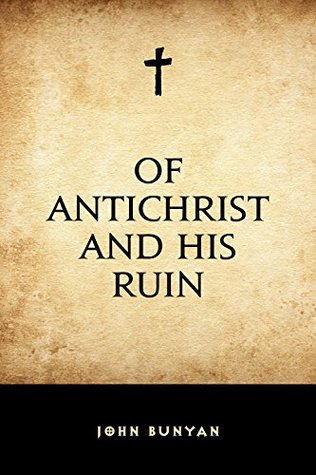
Of Antichrist And His RuinJohn Bunyan’s works are steeped in Scripture. His thoughts about the Antichrist and other end times events are either directly taken from biblical passages, or else his line of reasoning fits perfectly with the intent of the Scriptures. You can read my full book review by clicking here. Below are some quotes I found enlightening.

“Coercion, in anything connected with religion, whether it imposes creeds, liturgies, or modes of worship, is Antichrist: whom to obey, is spiritual desolation, and if knowingly persevered in, leads to death.” —George Offor, editor

“As God therefore did put it into the hearts of the wicked kings of Babylon, to distress in His church and people for their sins; so He put it into the hearts of the kings of the Medes and Persians, who were to be, in a sense, their saviors; to ease them of those distresses, to take off the yoke, and let them go free.”

“This twenty years we have been degenerating, both as to principles, and as to practice; and have grown at last into an amazing likeness to the world, both as to religion and civil demeanor.” 

“Take heed in laying the cause of your troubles in the badness of the temper of governors. … God is the chief, and has the hearts of all, even of the worst of men, in His hand. Good tempered men have sometimes brought trouble; and bad tempered man have sometimes brought enlargement to the churches of God: Saul brought enlargement (1 Samuel 14:28). David brought trouble (2 Samuel 12:10).) Ahab brought enlargement (1 Kings 21:29). Jehoshaphat and Hezekiah did both sometimes bring trouble (2 Chronicles 19:2; 20:35; 32:25). Therefore, the good or bad tempers of men sway nothing with God in this matter; they are the sins or repentances of His people, that make the church either happy or miserable upon earth.”

“Antichrist is the adversary of Christ; an adversary really, a friend pretendedly. So then, Antichrist is one that is against Christ; one that is for Christ, and one that is contrary to Him (and this is that mystery of iniquity [2 Thessalonians 2:7]). Against Him in deed; for Him in word, and contrary to Him in practice. … Christ prefereth His Father’s will above heaven and earth: Antichrist prefereth himself and his traditions above all that is written, or that is called God, or worshiped.”

“Nor can all the fallen angels, with all the members and limbs of Antichrist, cause that their brat should abide so much as one day longer than our God’s prefixed time.”

“Now, by ordinances of Antichrist, I do not intend things that only respect matters of worship in Antichrist’s kingdom, but those civil laws that impose and enforce them also; yea, that enforce that worship with pains and penalties, as in the Spanish Inquisition. … What could the king of Babylon’s golden image have done, had it not been for the burning fiery furnace that stood within view of the worshipers (Daniel 3)? Yea, what could that horrible command, to pray for thirty days to neither God nor man, but to the king, have done, had it not been for the dark den and the roaring lions therein ready to devour those that disobeyed it (Daniel 6)? … For as the furnace would have been next to nothing, if void of fire; and the den as little frightful, if destitute of lions; so these laws will be as insignificant, when Christ has slain that spirit that is in them; that spirit that causes that as many as will not worship the image of the beast, should be killed.”

“What say ye now, ye sons of God! Will you learn to make a judgment of things according to the mystery of the wisdom of God, or will ye longer conclude according to sense and reason?”

“Cold blasts in November are not received with that gentleness as are colder in March and April; for that these last cold ones are but the farewell notes of a piercing winter; they also bring with them the signs and tokens of a comfortable summer. Why, the church is now at the rising of the year; let then the blasts at present, or to come, be what they will, Antichrist is assuredly drawing towards his downfall.”

Valuing Life

SOHL“As surely as I valued your life today, so may the Lord value my life and deliver me from all trouble.” —David, in 1 Samuel 26:24

This is as strong of a pro-life statement as any in the Bible! 

The Hebrew word for value in this verse means…

  • to grow up
  • to become great or important
  • to do great things

Throughout the Old Testament this word is used to describe people growing from a small, infantile state to a place of maturity and prominence.

David held King Saul’s life in his hand. Since Saul was hell-bent on messing up David’s life (even killing him, if he could), we could say that David had plenty of rationale to justify ending Saul’s life. But David would not touch Saul because he recognized Saul’s God-given human dignity.

David asked God to value his life in the same way that David valued Saul’s life. Even Saul himself affirmed this when he said, “May you be blessed, my son David; you will do great things and surely triumph” (v. 25).

What if God only valued your life as much as you valued others’ lives? 

What if God only spoke up for you as much as you spoke up for the not-yet-born? 

What if God only blessed you as much as you blessed the aged and disabled? 

How much would your life be blessed by God?

Something to think about as we celebrate Sanctity of Human Life month. We will be honoring Sanctity of Human Life Sunday this week by bringing our donations for Alpha Family Center of Cedar Springs. I would love for you to join us!

Cry Before You Confront

Listen to the podcast of this post by clicking on the player below, and you can also subscribe on AppleSpotify, or Audible.

As a pastor, one of your responsibilities is to point out what may be harmful in someone’s life. We have a word for that: confrontation.

Handled correctly, confrontation can lead to restoration and newfound maturity. Handled incorrectly, and, well, let’s just say it can get very ugly!

I just heard the story of a pastor who felt like he needed to confront one of his board members. I don’t really know this pastor, nor do I know the board member; I don’t know what was said in their meeting, but I have heard about the outcome, and it got ugly.

Samuel was going to be sent by God to confront King Saul about the sin he had committed. Look at this passage:

Then the word of the Lord came to Samuel: “I am grieved that I have made Saul king, because he has turned away from Me and has not carried out My instructions.” Samuel was troubled, and he cried out to the Lord all that night. (1 Samuel 15:10-11)

Did you catch how Samuel responded? He cried out to the Lord all that night.

Perhaps if we, as pastors, cried before we confronted the results might be more healthy.

“Tears shed for self are tears of weakness, but tears shed for others are a sign of strength.” —Billy Graham

Nehemiah was another pastoral/prophetic figure that was going to confront the inhabitants of Jerusalem about their sin.

When I heard these things, I sat down and wept. For some days I mourned and fasted and prayed before the God of heaven. Then I said: …I confess the sins we Israelites, including myself and my father’s house, have committed against You. (Nehemiah 1:4-6)

Before Nehemiah confronted the sins of the people, he tearfully took a hard look at himself, and then asked for forgiveness. Jesus shared this same concept with these words:

Why do you look at the speck of sawdust in your brother’s eye and pay no attention to the plank in your own eye? How can you say to your brother, “Let me take the speck out of your eye,” when all the time there is a plank in your own eye? You hypocrite, first take the plank out of your own eye, and then you will see clearly to remove the speck from your brother’s eye. (Matthew 7:3-5)

So before you confront your brother or sister, let the Holy Spirit confront you. Then, if it’s needed, confess your sin and ask God’s forgiveness. Let the Holy Spirit remove things in your life so that you can see clearly how to lovingly confront your brother.

Cry before you confront. Cry over your sin. Cry over the sinful state of your brother or sister. Plead with the Lord for this time of confrontation to lead to restoration and maturity.

►► Would you please prayerfully consider supporting this ministry? My Patreon supporters get behind-the-scenes access to exclusive materials. ◀︎◀︎

Empowering The Team

In reading Leadership Is Dead, one passage particularly stood out to me:

“The wise leader understands that sharing the burden benefits the entire team over the long term. Empowering others makes tasks manageable while also allowing team members to sharpen their skills and build upon their strengths. When a leader refuses to share the load, he brings disservice to the organization because those on his team are not allowed to develop their own leadership skills, and the next generation of leaders are not developed properly for future organizational success.”

Think back to the first two kings in Israel’s history: Saul and David. Both stood out from everyone around them as a strong leader. But only one of them left behind a lasting leadership legacy.

Both Saul and David had men who were immediately attracted to them. Saul was surrounded by valiant men, while David was surrounded by society’s rejects. But clearly David was an empowering leader, and Saul was not. Want proof?

The Bible gives a lengthy list of David’s mighty men, along with quite a résumé of their heroic accomplishments. The list of Saul’s mighty men is: .

I think David was secure in the fact that God called him to lead, while Saul was constantly second-guessing.

  • This made David generous, and Saul jealous.
  • David liberated his men, and Saul contained his men.
  • David encouraged, and Saul controlled.

In the end: David left a legacy, and Saul did not.

What kind of leader do you want to be?

UPDATE: Being secure to serve is one of the main points I tackle in my book Shepherd Leadership: The Metrics That Really Matter. Check out this short clip—

Lamenting Over The Fallen

How The Mighty Have Fallen! Long before Jim Collins entitled his latest book with this phrase, David said this when King Saul and Prince Jonathan were killed in battle. In fact, he said it not once, but three times in just eight verses.

It is understandable that David would lament the death of his friend Jonathan. They were covenant brothers, they shared the same heartbeat for God and for Israel, and they stood by each other through thick and thin.

But Saul? Why would David lament the death of Saul? This is the man who was jealous of David. So jealous that he did everything he could to trip David up. Including trying to kill him. Saul chased David from his home, from his family, from his wife, even from his country.

Why would David lament Saul’s death? Wouldn’t it be more appropriate to rejoice over it?

But David still saw Saul as “the Lord’s anointed.” David recognized the good in Saul. He called him…

  • the glory of Israel
  • a successful warrior
  • gracious
  • lovable
  • strong
  • Israel’s provider

When David heard Saul had been killed, he lamented, Oh, how the mighty have fallen!

When I see the mighty, God-anointed leader fall, do I lament?

I may shake my head, I may feel vindicated, I may be disgusted, but I don’t know that I have ever lamented or grieved when one of these mighty brothers has fallen. Or if I have, my lament has been short-circuited by other less appropriate emotions.

Despite their sin, they are still God’s anointed.

Who am I to sit in judgment? Who am I to do anything but lament their fall?

Lord, forgive me! Father, help me to see Your anointed ones in the proper perspective: as Your anointed. Holy Spirit, remind me of the tragedy of even one mighty one who falls. May my response be one of lament, and mercy, and prayer.

Your Part In The Battle

The story about David defeating the giant Goliath in battle is familiar to just about everyone. (If it’s not a familiar story to you, you can read it here.) I was struck by how David saw his part in this fight. Look what he said:

All those gathered here will know that it is not by sword or spear that the Lord saves; for the battle is the Lord’s.

After the fight was over, and Goliath lay dead at David’s feet, the biblical writer said the same thing:

So David triumphed over the Philistine with a sling and a stone; without a sword in his hand he struck down the Philistine and killed him.

If you are a God-follower, then your battles are really God’s battles. David recognized that it was God’s battle, but David also knew that he played a part in this too.

1.  He had to train. David had to know how to use a sling with deadly accuracy.

2.  He had to reject “good” advice. Saul advised David, “Here, wear my armor.” That sounded like good advice, but it didn’t fit for David. He had to be true to what the Spirit of God spoke to his heart, even as he rejected what seemed like good advice.

3.  He had to have faith. David truly believed that God was going to do something big—something no one else could even imagine.

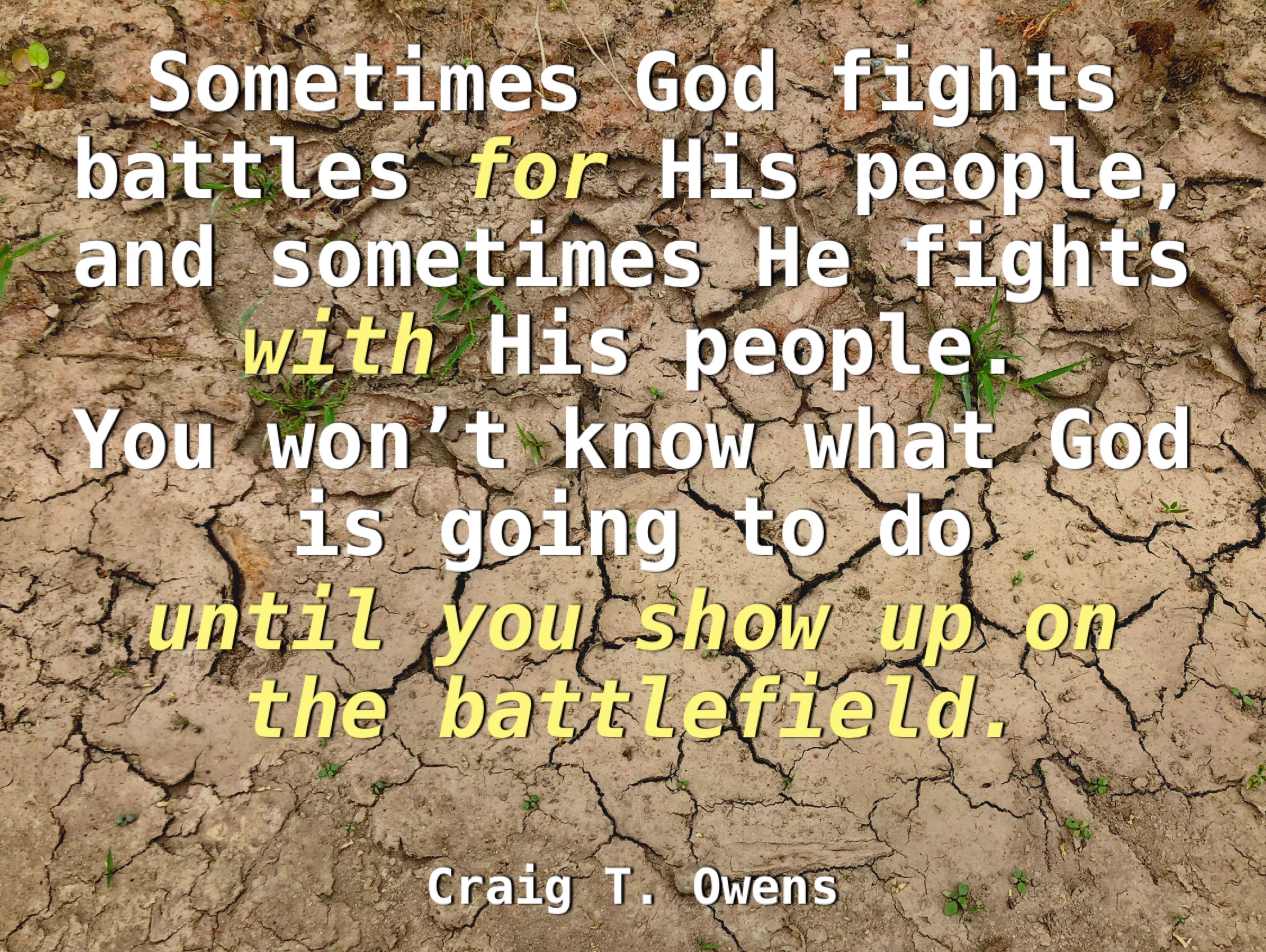
4.  He had to show up. Sometimes God fights battles for His people, and sometimes He fights with His people. David didn’t know what God was going to do in this instance until he showed up on the battlefield.

God wants you to win big battles. And if you’re following God, He will bring the victory. But you still have a very important part to play. Train hard, reject advice that is contrary to what God has told you, have faith, and then show up for the battle. These are the keys to victory.

Brave Enough

If God asks me to give $1, I can quickly and easily say, “Yes!”

If God asks me to give $10, I say, “Okay!”

If God asks me to give $100, I say, “Um, well, if You say so.”

If God asks me to give $1000, I say, “I need to pray about this ‘faith promise.’”

If God asks me to give $10,000, I say, “As soon as You bless me, I’ll be able to do this.”

This same principle holds true for anything else:

  • Used clothing? Sure. Brand new stuff? I’m not so sure.
  • Volunteer an hour? Okay! Make a commitment for an hour every week? Let me pray about it.
  • Pray for someone? No problem. Add them to my daily prayer list? Whoa!
  • Support missionaries? Yes! Become a missionary? Well….

It’s easy to obey when we think the stakes are low. But the more “zeroes” that get added to the amount, the higher the stakes seem. Am I brave enough to obey then?

This is what tripped up Saul, Israel’s first king. He was supposed to devote everything from the defeated Amalekites to God. “Devote” means a complete and irrevocable giving to God. When the stakes were low, he obeyed, but when he perceived the stakes being too high, he lost the courage to follow through:

Saul and his men spared Agag’s life and kept the best of the sheep and goats, the cattle, the fat calves, and the lambs—everything, in fact, that appealed to them. They destroyed only what was worthless or of poor quality. (1 Samuel 15:9 NLT)

He captured Agag, king of Amalek, alive. Everyone else was killed under the terms of the holy ban. Saul and the army made an exception for Agag, and for the choice sheep and cattle. They didn’t include them under the terms of the holy ban. But all the rest, which nobody wanted anyway, they destroyed as decreed by the holy ban. (1 Samuel 15:9, The Message)

Ironically, because Saul held on to what he thought was valuable, he lost something invaluable: a close relationship with God. His cowardice led to disobedience, and his disobedience led to his ultimate collapse.

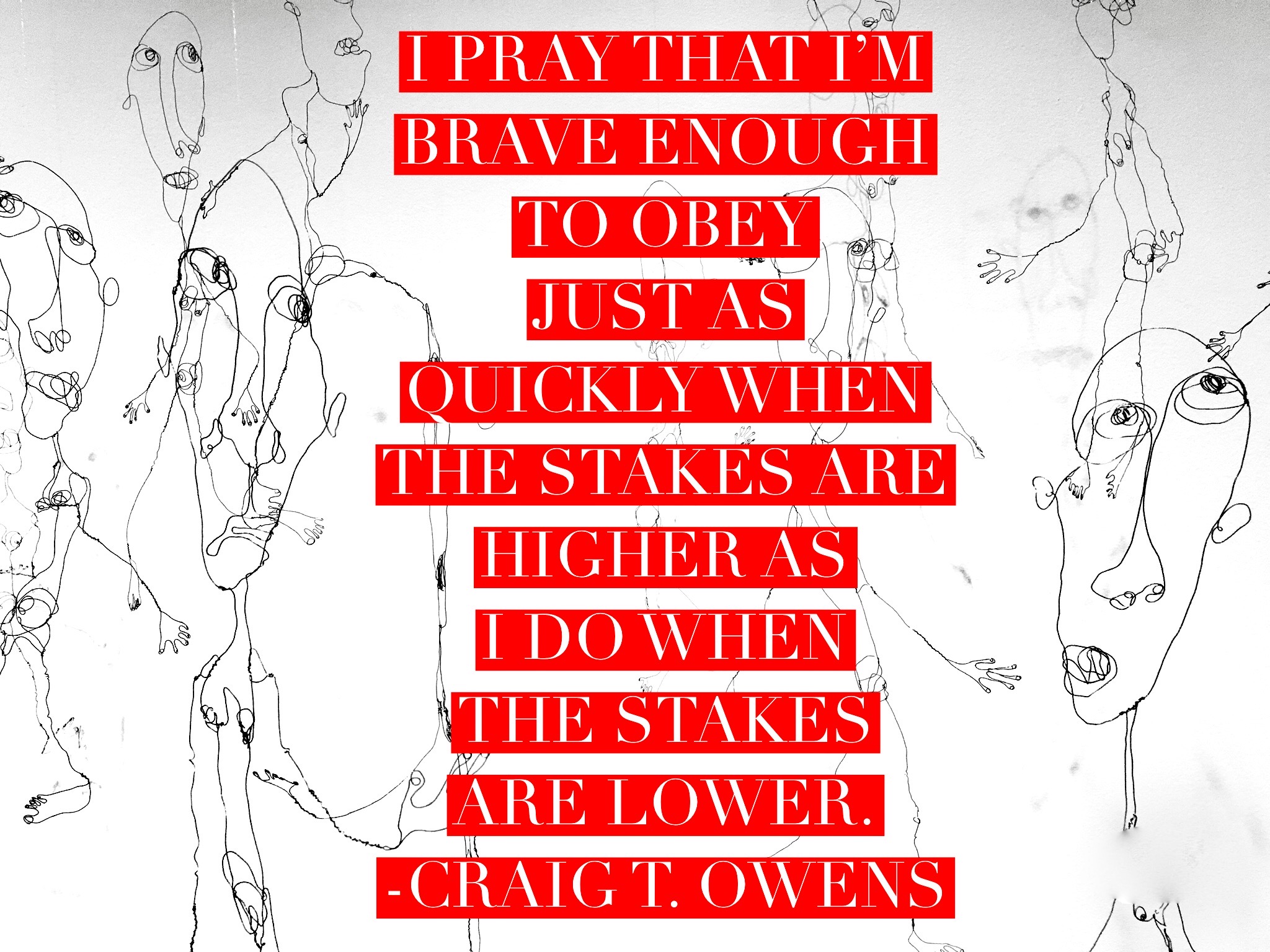
I pray that I’m brave enough to obey just as quickly when the stakes are higher as I do when the stakes are lower.

What about you? Are you brave enough?

UnZone

UnZone

We kicked off our Bigger Than Me series last night talking about one of my favorite Bible stories where Jonathan and his armor-bearer pick a fight with the Philistines.

What I love about this story is the contrast between Jonathan and his father Saul. King Saul was enjoying life as the king, hanging out with his friends, sitting under a pomegranate tree, far away from his enemies. Life was good for Saul, life was familiar and risk-free. Saul was living in his comfort zone.

But the comfort zone is a lousy place to stay. In the comfort zone you only tell stories, but never live an adventure. In the comfort zone, you only hear about what God has done for others. But Jonathan wasn’t willing to stay in this comfort zone.

Jonathan stepped out into The UnZone. He went into unfamiliar territory, with an unusual battle strategy, and uncertain results. Jonathan said, “Perhaps God will help us.” But he didn’t stop there. Jonathan quickly added, “I don’t know how, but I know God can come through.”

After Jonathan stepped out of his comfort zone into The UnZone, God not only gave him a victory but encouraged the entire Israelite army. This never would have happened if Jonathan had stayed in his comfort zone.

In The UnZone you don’t just tell stories, you live adventures.

In The UnZone you don’t just hear about God’s power, you experience it firsthand.

I challenged our youth group last night to step out of their comfort zones and into The UnZone. How cool it was to see all of the uncomfortable, unfamiliar, uncertain, unusual things they wrote down on their UnZone cards and tacked up on our bulletin board. I’m looking forward to seeing our bulletin board covered with these cards over the next few weeks.

What about you? What comfort zone is God calling you out of? What UnZone do you need to step into? The Apostle Paul said, “When I am weak then I am strong.” In other words, “When I step into my UnZone, I step into God’s Strength Zone.”

The UnZone is a great place to live, so step out today.

Are You A Trustworthy “Enemy”?

Sticks and stones may break my bones but words will never hurt me, right? Wrong—words hurt!

At times you may think, “Well, I may have deserved that one.” Perhaps you did or said something inappropriate, and the other person responded out of their anger or frustration or embarrassment. But what about when you’ve done nothing wrong? Those sharp, wounding words seem to come out of the clear blue, from someone you never would have expected to be so hateful—angry, spiteful words deliberately hurled at you like stones.

David was forced to hide in Philistine territory to get away from Israelite King Saul. This was smart on David’s part because the Philistines had been ancient enemies of the Israelites, so Saul would never cross into Philistine territory to look for David. David asked King Achish for refuge in his territory, and Achish gave him the city of Ziklag in which to settle.

There’s a cliché that says, “The enemy of my enemy is my friend.” Achish was Saul’s enemy, so David could have assumed that Achish was his friend (the enemy of David’s enemy).

But here’s the important point—David didn’t consider Saul his enemy. Saul may have thought David was his enemy, but David didn’t reciprocate. David didn’t treat Saul as an enemy, but neither did David treat Achish as a friend.

Yet the Bible records an amazing statement: Achish trusted David (1 Samuel 27:12). Neither Saul nor Achish could ever claim that David slandered them, maligned their character, or did them any harm at all.

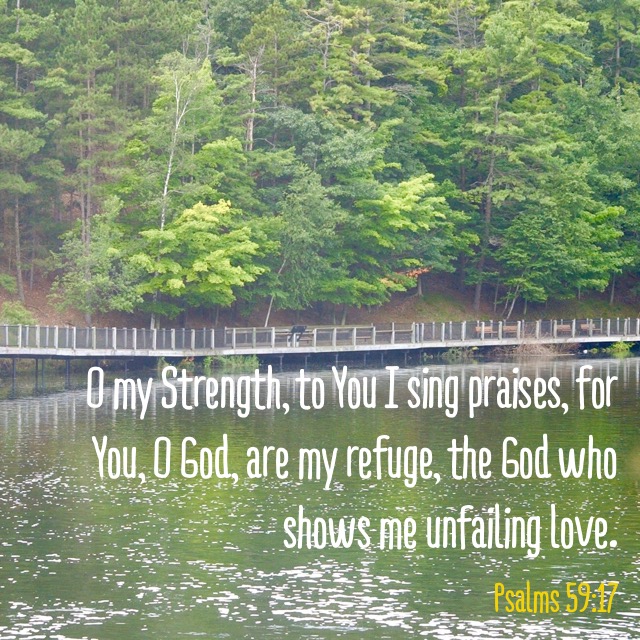
How could David do this? How could he keep from lashing out at the one who hurled insults at him (Saul) or the one who was his ancient foe (Achish)? David asked God to help him—

Fierce men conspire against me for no offence or sin of mine, O Lord.
I have done no wrong, yet they are ready to attack me.
Arise to help me; look on my plight!
(Psalm 59:3-4)

I see three great life applications when you are wrongly attacked or slandered:

  1. Don’t treat those who criticize and slander you as an enemy.
  2. Don’t find the enemy of your enemy and call him a friend.
  3. Do acknowledge your hurts and take them to God.

You don’t have to befriend your foes, but neither do you need to lash out at those who are falsely attacking you. Let God arise to help you, and may even your enemies find you trustworthy!