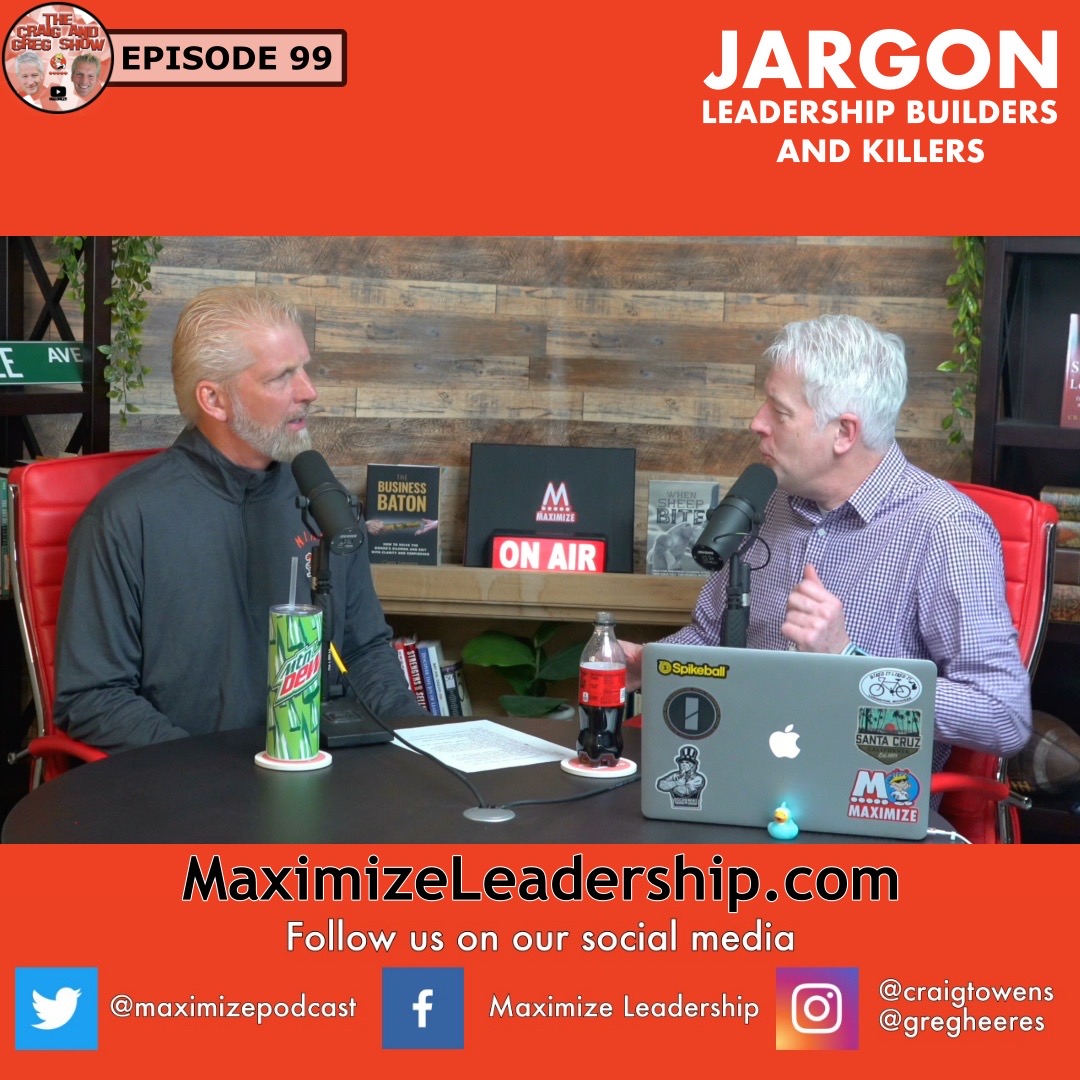
The Craig And Greg Show: Jargon

Listen to the podcast of this post by clicking on the player below, and you can also subscribe on AppleSpotify, or Audible.

If the expected target metrics of today’s program are met, we expect significant workflow performance advancements from team lead positioned individuals.

Does that seem a little complicated? Jargon in the workplace can very quickly cause significant problems, leading to confusion and disengagement in your team. The solution is simple—clear, concise communication. So let’s try this again without the jargon: Greg and I hope that this episode inspires you to remove the jargon from your communication, and as a result you will see your leadership influence grows.

  • [0:41] Today we are returning to Leadership Builders and Killers with a topic inspired by a series of videos I saw online about business jargon.
  • [3:21] Greg asks, “Why all the jargon?”
  • [5:34] Jargon can take away from what you want to communicate, and can cause others to disengage from the conversation.
  • [8:26] Jargon is antithetical to a commitment to clarity.
  • [9:33] I share a story of a conversation with students that highlights wisdom we can take into the workplace.
  • [12:06] One of the lowest form of communication is assumption.
  • [14:03] It’s important to circle back with people after a meeting to maker sure they understood.
  • [15:13] Jargon frequently shows up when there’s bad news to share, and when leaders are trying to cast vision.
  • [16:50] Sometimes we use jargon to hide.
  • [19:30] I share a story from the life of John Wesley about how he became a better communicator.
  • [21:14] It’s important to communicate with everyone on an even playing field, and not use jargon to avoid being pinned down.
  • [22:39] Using jargon can negatively impact your influence as a leader. Conversely, clear communication will lift your influence.
  • [24:58] Jargon can creep into your communication without you being aware of it. A coach from outside your industry can help you notice these blind spots.

Check out this episode and subscribe on YouTube so you can watch all of the upcoming episodes. You can also listen to our podcast on Spotify and Apple.
Sowing In Expectation

Listen to the podcast of this post by clicking on the player below, and you can also subscribe on AppleSpotify, or Audible. 

I’ve noticed how quick some people are to give up when things don’t get them the results they thought they should get, or the results don’t come as soon as they expected. 

Anytime we try something new, there is always the potential for failure. Even later on, those who appear to be an expert at something rarely do it perfectly. But in either case, there are three things we need to do if we don’t get the results we expected: (1) reflect, (2) evaluate possible improvements, (3) re-engage. 

Even before Jesus commissioned us to take His message of Good News to every street everywhere, He told us not to expect perfect results. In one of His best-known parables, Jesus talked about the farmer sowing seed (see Luke 8:5-8). 

(You can see all of the Scriptures I mention in this post by clicking here.)

Jesus didn’t say, “All of your efforts at sharing the Gospel will be successful.” In fact, He said some efforts would totally fail (falling on the hard path), and some would have only temporary success (falling on the weedy and stony ground). But we keep on sowing the seed because some will fall on good soil and yield a harvest a hundred times more than was sown! 

So, as John Wesley said, “Do all the good you can, by all the means you can, in all the ways you can, in all the places you can, at all the times you can, to all the people you can, as long as ever you can.” 

The baptism of the Holy Spirit brings dynamic, life-changing power (Acts 1:8). The life that is changed first is our own. Everything about us begins to change. 

When people heard Jesus speak, they said, “How did this Man get such learning without having been taught?” (John 7:15). The same Holy Spirit who empowered Jesus to speak is the same Holy Spirit who will empower our words. 

When our words are Spirit-empowered words, people can feel it. When our words are matched by our lifestyle, people can’t ignore it (John 7:46; Acts 2:37, 4:13, 6:10)! 

Just like salt that influences effortlessly, silently, and irreversibly, we never know what part the salt of our lives is playing in someone else’s life, even if it appears that nothing substantial is happening at all. But God said His word always accomplishes its purpose (Isaiah 55:10-11), which is why we keep on living and speaking as Spirit-empowered witnesses. 

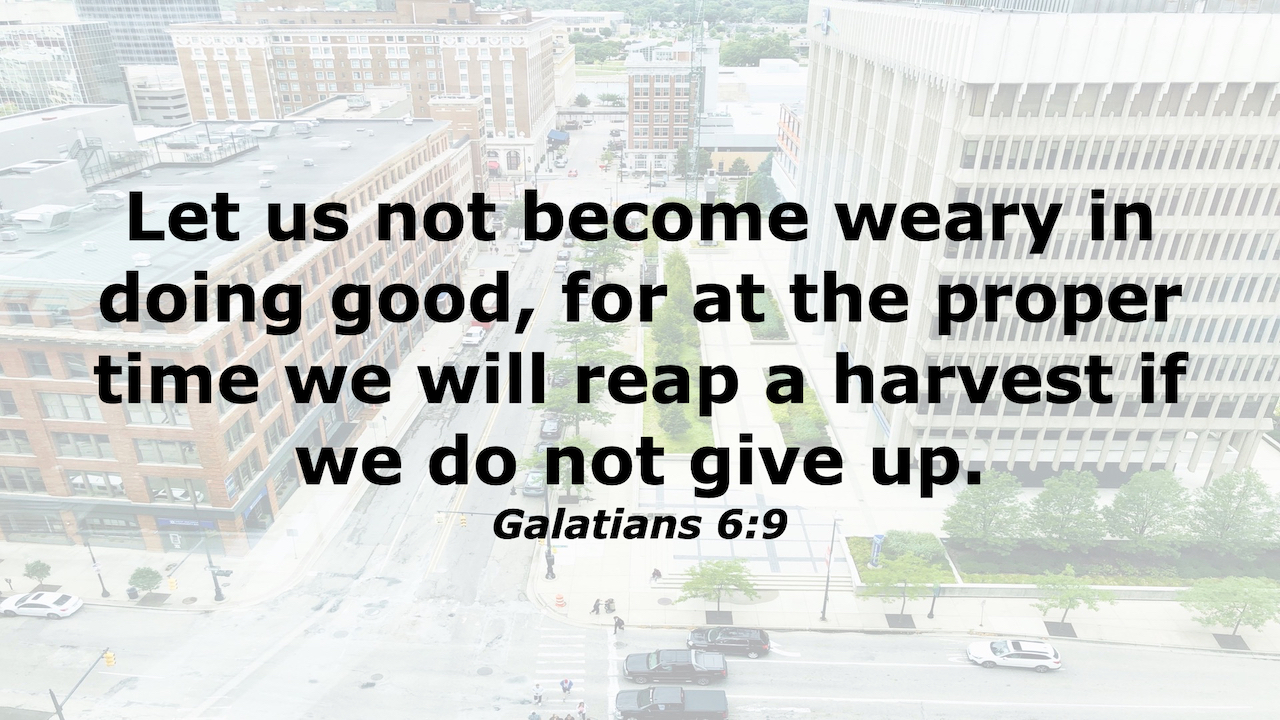
And we live expecting that something is happening—Let us not become weary in doing good, for at the proper time we will reap a harvest if we do not give up (Galatians 6:9). 

How do we take this message of Jesus to every street? 

  1. Stay yielded to the influence of the Holy Spirit 
  2. Regularly and consistently read and apply God’s Word to your own life 
  3. Keep sowing in expectation 
  4. If your efforts appear to fail: reflect, evaluate, re-engage in expectation 

We can be salt without being salty; we can be light without being annoying. 

We have been empowered to take the Good News to every street, so let us not become weary in doing this. 

If you’ve missed any of the message in our series Takin’ Him to the Streets, you can find them all by clicking here. 

►► Would you please prayerfully consider supporting this ministry? My Patreon supporters get behind-the-scenes access to exclusive materials. ◀︎◀︎

Poetry Saturday—For Fear Of Feeble Man

Listen to the podcast of this post by clicking on the player below, and you can also subscribe on AppleSpotify, or Audible.

Shall I, for fear of feeble man,
The Spirit’s course in me restrain?
Or, undismayed, in deed and word
Be a true witness for my Lord?

Awed by a mortal’s frown, shall I
Conceal the Word of God Most High?
How then before Thee shall I dare
To stand, or how Thine anger bear?

Shall I, to soothe the unholy throng,
Soften Thy truths, and smooth my tongue,
To gain earth’s gilded toys, or flee
The Cross, endured, my God, by Thee?

What then is he whose scorn I dread,
Whose wrath or hate makes me afraid?
A man! an heir of death! a slave
To sin! a bubble on the wave!

Yea, let men rage, since Thou wilt spread
Thy shadowing wings around my head;
Since in all pain Thy tender love
Will still my sure refreshment prove.

Savior of men, Thy searching eye
Doth all my inmost thoughts descry;
Doth aught on earth my wishes raise,
Or the world’s pleasures, or its praise?

The love of Christ doth me constrain
To seek the wandering souls of men;
With cries, entreaties, tears, to save,
To snatch them from the gaping grave.

For this let men revile my name.
No cross I shun, I fear no shame,
All hail, reproach, and welcome, pain!
Only Thy terrors, Lord, restrain.

My life, my blood, I here present,
If for Thy truth they may be spent,
Fulfill Thy sovereign counsel, Lord!
Thy will be done, Thy Name adored!

Give me Thy strength, O God of power;
Then let winds blow, or thunders roar,
Thy faithful witness will I be:
’Tis fixed; I can do all through Thee! —Johann Joseph Winckler (translated by John Wesley)

►► Would you please prayerfully consider supporting this ministry? My Patreon supporters get behind-the-scenes access to exclusive materials. ◀︎◀︎

My Mom

One of the last pictures I took with my Mom ♥

This is my first Mother’s Day without my Mom here. I miss her, but her legacy lives on.

“I learned more about Christianity from my mother than from all the theologians in England.” —John Wesley

“Amen!” —Craig T. Owens

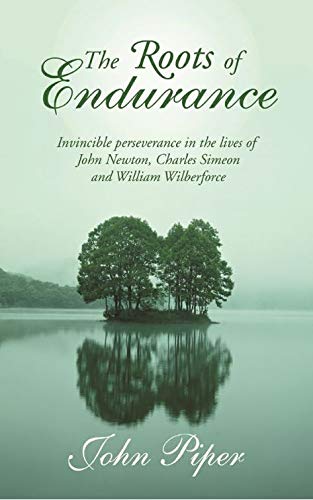
10 Quotes From “The Roots Of Endurance”

John Piper’s intertwining of the biographies of John Newton, Charles Simeon, and William Wilberforce in The Roots Of Endurance was masterfully done! Especially because, unlink the previous books in Pastor John’s “The swans are not silent series,” all three of these men knew each other and interacted with each other. Check out my full book review by clicking here. 

“Simeon with us—his heart glowing with love of Christ. How full he is of love, and of desire to promote the spiritual benefit of others. Oh! that I might copy him as he Christ.” —William Wilberforce, writing in his journal about Charles Simeon 

“It is hoped and believed that the Lord has raised you up for the good of His church and for the good of the nation.” —John Newton, in a letter to William Wilberforce 

“Unless God has raised you up for this very thing, you will be worn out by the opposition of man and devils. But if God be for you, who can be against you.” —John Wesley, at 87 years of age, in a letter to William Wilberforce 

“Frustration is normal, disappointment is normal, sickness is normal. Conflict, persecution, danger, stress—they are all normal. The mind-set that moves away from these will move away from reality and away from Christ. —John Piper 

The remaining six quotes are exclusive content for my Patreon supporters. In addition to book quotes, there are videos and behind-the-scenes views that only these supporters have access to. I would love it if you would prayerfully consider supporting my ministry for just $5 per month.

Susanna Wesley (book review)

Listen to the podcast of this post by clicking on the player below, and you can also subscribe on AppleSpotify, or Audible. 

I think most people are familiar with the saying, “Behind every good man there is a good woman.” In the case of Samuel and Susanna Wesley almost the opposite is true: Susanna excelled as a godly mother despite the obstinacy and shortcomings of her husband Samuel. Arnold A. Dallimore delivers a fair overview of their lives in his biography of Susanna Wesley. 

Rev. Dallimore does an admirable job of telling Susanna’s story through the first person accounts of almost all of the Wesley family members. He has culled through the historical records, reading the letters of Samuel, Susanna, their children, and their relatives to give us a fairly unbiased look at this notable family. The subtitle of the book is, “The mother of John and Charles Wesley,” which is no small gift to the world! The preaching and song-writing ministries of these two brothers has had a huge impact on both the secular and church worlds, which is still being felt today. 

Samuel Wesley at times was distant from his family, to the extent of even abandoning them for a period of time, and was a very poor provider for his family. They were constantly in debt and struggling for the basic necessities. But despite these obstacles, Susanna created her own curriculum to instruct her children, and continued to correspond with them into their adulthood to give them her motherly wisdom. 

What a debt of gratitude we owe to this godly woman for not only persevering but thriving in the face of challenges that would have thwarted most people. And we also should be grateful to Arnold Dallimore for his well-researched biography of this amazing woman. 

(I previously reviewed Rev. Dallimore’s biography of George Whitefield.) 

►► Would you please prayerfully consider supporting this ministry? My Patreon supporters get behind-the-scenes access to exclusive materials. ◀︎◀︎

Poetry Saturday—Give To The Winds Thy Fears

Give to the winds thy fears,
hope and be undismayed;
God hears thy sighs and counts thy tears;
God shall lift up thy head.

Through waves and clouds and storms,
He gently clears the way;
wait thou His time, so shall this night
soon end in joyous day.

Still heavy is thy heart,
still sink thy spirits down?
Cast off the weight, let fear depart,
and ev’ry care be gone.

What though thou rulest not,
yet heav’n, and earth, and hell
proclaim, God sitteth on the throne,
and ruleth all things well.

Leave to His sov’reign sway
to choose and to command.
so shalt thou wond’ring own His way,
how wise, how strong His hand!

Far, far above thy thought
His counsel shall appear,
when fully He the work hath wrought,
that caused thy needless fear.

Thou seest our weakness, Lord,
our hearts are known to Thee;
O lift Thou up the sinking heart,
confirm the feeble knee.

Let us in life, in death, 
Thy steadfast truth declare,
and publish with our latest breath
Thy love and guardian care. —Paul Gerhardt (translated by John Wesley)

Thursdays With Spurgeon—The Most Unlikely Recruits

This is a weekly series with things I’m reading and pondering from Charles Spurgeon. You can read the original seed thought here, or type “Thursdays With Spurgeon” in the search box to read more entries.

The Most Unlikely Recruits

     Men and women have come in simply out of curiosity—a curiosity often created by some unfounded story or malicious slander of prejudiced minds. Yet Jesus Christ has called them and they have become both His disciples and our warmhearted friends. Some of the most unlikely recruits has been, in after days, our most valuable soldiers. They began with aversion and ended with enthusiasm. They came to scoff but remained to pray. Such cases are not at all uncommon.

     They were not unusual in the days of Whitefield and Wesley. They tell us in their journals of persons who came with stones in their pockets to throw at the Methodists, but whose enmity was slain by a stone from the sling of the Son of David. Others came to create disturbances, but a disturbance was created in their hearts that could never be quelled till they came to Jesus Christ and found peace in Him. The history of the church of God is studded with the remarkable conversions of persons who did not wish to be converted, who were not looking for grace but were even opposed to it, and yet, by the interposing arm of eternal mercy, were struck down and transformed into earnest and devoted followers of the Lamb. 

From The Autobiography of Charles Spurgeon

It is true that “the history of the church of God is studded with the remarkable conversions.” Think of the murderous persecutor Saul of Tarsus who encountered Jesus on a road near Damascus. This unlikely recruit to Christianity spread the Gospel of Jesus Christ far and wide. 

Think of an atheistic college professor named C.S. Lewis who eventually surrendered to the truth in the Bible, calling himself the most dejected and reluctant convert in all of England. Lewis went on to write some of the most influential Christian apologetic books of the 20th century. 

And most personally, think of yourself. Paul reminds us, “Brothers and sisters, think of what you were when you were called. Not many of you were wise by human standards; not many were influential; not many were of noble birth” (1 Corinthians 1:26). Yet God is using you right now to build His Church.

Keep on loving Jesus. Keep on sharing Jesus with your unsaved friends—no matter how antagonistic they may seem to your message. You never know what God may do with those “reluctant recruits.” 

Thursdays With Spurgeon—Honorable Disagreement

This is a weekly series with things I’m reading and pondering from Charles Spurgeon. You can read the original seed thought here, or type “Thursdays With Spurgeon” in the search box to read more entries.

Honorable Disagreement

     If you ask me, do I hold the doctrinal views that were held by John Calvin, I reply, I do in the main hold them, and rejoice to avow it. … 

     Most atrocious things have been spoken about the character and spiritual condition of John Wesley, the modern prince of Arminians. I can only say concerning him that, while I detest many of the doctrines that he preached, yet for the man himself I have a reverence second to no Wesleyan; and if there were wanted two apostles to be added to the number of the Twelve, I do not believe that there could be found to men more fit to be so added than George Whitefield and John Wesley. The character of John Wesley stands beyond all imputation for self-sacrifice, zeal, holiness, and communion with God; he lived far above the ordinary level of common Christians and was one of whom the world was not worthy.

From The Autobiography Of Charles Spurgeon

Calvinists and Arminians have appeared at odds with each other for centuries. Spurgeon teaches us a valuable truth—

Men can disagree on doctrines without vilifying the men who believe and teach those doctrines. 

Spurgeon (an avowed Calvinist) and Wesley (an outspoken Arminian) strongly believed and forcefully and persuasively taught what they saw to be true in Scripture. Yet they did so without attacking or demonizing each other. They practiced what the Apostle Paul taught—

If it is possible, as far as it depends on you, live at peace with everyone. (Romans 12:18) 

Oh, that today we would again follow the counsel of Paul and the example of Spurgeon and Wesley!

12 Quotes For Mother’s Day

“All I am, or can be, I owe to my angel mother.” —Abraham Lincoln

“My mother was the most beautiful woman I ever saw. All I am I owe to my mother. I attribute all my success in life to the moral, intellectual and physical education I received from her.” —George Washington

“I remember my mother’s prayers and they have always followed me. They have clung to me all my life.” —Abraham Lincoln

“The foundations of national morality must be laid in private families. In vain are schools, academies, and universities, instituted, if loose principles and licentious habits are impressed upon children in their earliest years. The mothers are the earliest and most important instructors of youth.” —John Adams

“The fundamental truths reported in the four gospels as from the lips of Jesus Christ, and that I first heard from the lips of my mother, are settled and fixed moral precepts with me.” —Abraham Lincoln

“The devil never reckons a man to be lost so long as he has a good mother alive. O woman, great is thy power!” ―Charles Spurgeon

“I learned more about Christianity from my mother than from all the theologians in England.” ―John Wesley

“Your motherhood is in God’s sight holier and more blessed than you realize.” —Andrew Murray

“God could not be everywhere, and therefore He made mothers.” —Jewish Proverb

“An ounce of mother is worth a ton of priest.” —Spanish Proverb

“To be a mother is the greatest vocation in the world. No being has a position of such great power and influence. She holds in her hands the destiny of nations, for to her is necessarily committed the making of the nation’s citizens.” —Hannah Whitall Smith

“Youth fades, love droops, the leaves of friendship fall; a mother’s secret hope outlives them all.” —Oliver Wendell Holmes