Jesus Is Mighty God

Listen to the podcast of this post by clicking on the player below, and you can also subscribe on AppleSpotify, or Audible. 

Have you ever heard the phrase “in name only”? For instance, someone might say, “He’s the boss around here in name only, but the one who really calls the shots is someone else.” We might give the title “boss” to someone just for convenience because “The guy who thinks he’s in charge” is probably too awkward to keep saying! We know the true boss by what he or she says or does, and how people respond to him or her. 

I think this is true when someone says, “God,” you might wonder just what they mean by that. Sennacherib’s field commander appeared to be confused by this, as he uses both “God” and “god” interchangeably in 2 Kings 18:19-22, 32-35. But the foretelling of the Advent of the Christ makes it perfectly clear to Whom the prophets were pointing (Isaiah 9:6-7). 

(Check out all of the Scriptures in this post by clicking here.) 

Let’s consider the title Mighty God. The word God is the Hebrew word el. It is translated many ways, but let’s find out which definition is correct in this foretelling of Jesus. 

  1. A god-like person  
  2. A mighty hero  
  3. An angel  
  4. A manmade god  
  5. The One True God 

We can eliminate “a god-like person” from Exodus 15:11.
We can eliminate “a mighty hero” from Psalm 82:1.
We can eliminate “an angel” from Psalm 29:1 and Isaiah 6:1-3.
We can eliminate “a manmade god” from Isaiah 14:12-15.

So it must mean He is The One True God! One of Isaiah’s favorite phrases is “the Lord Almighty” which he uses 61 times (e.g. Isaiah 47:4)! 

Isaiah 40 is one of the most descriptive chapters of the Lord Almighty. In here we see that…

  • He forgives sin (vv. 1-2) 
  • He is beyond description (v. 12)—holding the world’s 326 quintillion gallons of water in the hollow of His hand, fitting the 10 septillion stars of the cosmos across the breadth of His hand, and carrying the weight of the Earth (1.3 octillion pounds) easily in His basket! 
  • He is distinguished from manmade gods (vv. 18-20, 25) 
  • His strength is absolutely unrivaled (vv. 26, 28) 

How do we know these descriptive words in Isaiah point to Jesus? Look at these First Testament Scriptures compared to Christ’s First Advent: 

  • Isaiah 40:3-5 foretells the messenger who would herald Christ’s arrival. Zechariah is inspired by the Holy Spirit to make this connection to his son John (Luke 1:76-77), and then John lives this out (Mark 1:1-3).  
  • Remember that 40:1-2 says that The One True God forgives sins, which is what John the Baptizer sees in Jesus (John 1:29).  
  • In 41:10, 13-14 we read of God shining His light into darkness to set people free, which is another thing that Zechariah connects to Jesus (Luke 1:67-75). 

Jesus wasn’t God in name only, but His words and action—and the response of those who saw and heard Him—affirmed that He is the Mighty God that was foretold (John 8:48-59; Mark 14:60-64). 
Notice also how the early New Testament saints proclaimed Christ’s unique deity, stating clearly that He is the fulfillment of all of the prophetic words that point to Him as The One True God (Acts 4:8-10, 12, 18; 5:27-32). 

Peter and John said, “We are witnesses of this.” We too are witnesses of this if we have accepted Jesus as our Lord and Savior. We get to proclaim His Lordship by our verbal testimony and our lifestyle. As C.S. Lewis said, “A man who was merely a man and said the sort of things Jesus said would not be a great man or a moral teacher. He would either be a lunatic—on the level with the man who says he is a poached egg—or else he would be the devil of hell. You must take your choice. Either this was, and is, the Son of God; or else a madman or something worse. You can shut Him up for a fool…or you can fall at His feet and call Him Lord and God.” 

In Philippians 2:9-11, Paul points out that Jesus has the name above every name and that every knee must bow to Him and every tongue confess that He is Mighty God! Today, let us bow our knee to Him and lift our voices proclaiming that He is Lord and God until our One True God takes us home or returns at His Second Advent. 

If you’ve missed any of the other message in our Advent series called Jesus Is…, you can find them all here. 

►► Would you please prayerfully consider supporting this ministry? My Patreon supporters get behind-the-scenes access to exclusive materials. ◀︎◀︎
More Popular Than Jesus?

Listen to the podcast of this post by clicking on the player below, and you can also subscribe on AppleSpotify, or Audible. 

In March 1966, at the height of Beatlemania, John Lennon was quoted—

“Christianity will go. It will vanish and shrink. I needn’t argue about that; I’m right and I will be proved right. We’re more popular than Jesus now; I don’t know which will go first—rock ’n’ roll or Christianity. Jesus was all right but His disciples were thick and ordinary. It’s them twisting it that ruins it for me.” 

Maureen Cleave, the reporter who included this quote in her article about the Beatles, tried to clarify that John was talking specifically about the Church of England, especially when John mentions the disciples of Jesus twisting the words and example of Jesus as it is recorded for us in the New Testament. 

But I wonder if the same argument could be made today about the “stars” in the evangelical movement? Many of those who claim to be preachers of the Gospel have both an online and in-person following that rivals that of the Beatles of the 1960s. Their gatherings are rock concert-esque, with their fans spending lavishly on their books, videos, and seminars. 

But here’s my question: Are these “rock star preachers” making Jesus famous or themselves famous? 

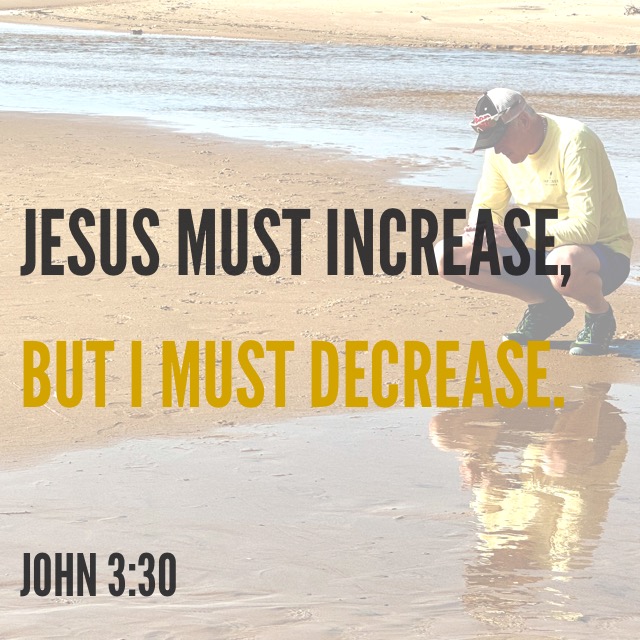
How would John the Baptist’s words sound coming out of the mouths of these mega-stars: “[Jesus] must increase, but I must decrease. He must grow more prominent; I must grow less so” (John 3:30 AMPC)? 

Before John was born, the angel Gabriel told Zechariah that John “will be great in the eyes of the Lord” (Luke 1:15). 

Notice: “Great in the eyes of the Lord” is so infinitely better than “great in the eyes of the world”! 

John’s whole life was one of confident humility (or humble confidence). He spoke God’s Word confidently, but wasn’t seeking the praise of men nor intimidated by the criticism of men. As a result, God’s Spirit remained on him in an unmistakable way. 

God will use anyone in the way that He used John, if they will only have the same attitude John had: “I must decrease and Jesus must increase.”

May I suggest this attitude-adjusting prayer for everyone who has been called by God to herald the Good News about Jesus—

Heavenly Father, as I preach today may all eyes move past me and turn to Jesus. “He must increase, but I must decrease. He must grow more prominent; I must grow less so.” Thank You for this opportunity You have given me today to point people to You. May I only be seen as great in Your eyes, but may the world view me only as Your humble servant. 

►► Would you please prayerfully consider supporting this ministry? My Patreon supporters get behind-the-scenes access to exclusive materials. ◀︎◀︎

Profound Humility

When something is recorded in all four Gospels, we should really take note.

Look at the profound humility of John! His birth was foretold by an angel, his ministry was so powerful that people wondered if he was the Messiah or possibly Elijah, yet he never let all these accolades go to his head. 

“I am such a lowly servant of Jesus that I don’t even have the right to take off His sandals.” 

As C.S. Lewis said, “Humility is not thinking less of yourself, it’s think of yourself less.” John was too focused on making sure people saw Jesus that he had no time to think about himself. 

Jesus said John was the greatest of the prophets (Matthew 11:11; Luke 7:28). The applause of the world means nothing. All that matters is the applause from nail-scarred hands, and the voice of the Master saying, “Well done, good and faithful servant.”

Who Looks Good?

Listen to the podcast of this post by clicking on the player below, and you can also subscribe on AppleSpotify, or Audible. 

The Gospel of John introduces John the baptizer to us like this, “He himself was not the Light; he came only as a witness to the Light” (John 1:8). 

  • John had a similar birth announcement as Jesus had (Luke 1:11-14, 28-33) 
  • John’s birth prompted a Holy Spirit-inspired song from his father that resonates with Mary’s Magnificat (Luke 1:46-55, 68-70) 
  • The early years of John are described in much the same terms as how Luke describes the early years of Jesus (Luke 1:80, 2:52) 
  • John quoted Scripture and taught with very similar authority as Jesus did (Matthew 3:1-12; Luke 3:1-19) 

Yet for all their similarities, John knew that he was only a herald of Jesus (John 1:19-27). 

John was not the Light—he was only a witness to the Light.

I am not the Light—I am only a witness to the Light. 

You may think that this statement is pretty obvious, and I did too. But as I read these words from John 1:8 again, it caused me to reevaluate just how much I really believe this. 

Do I remember this when no one compliments my sermon? Do I remember this when what I thought was an insightful comment on a verse of Scripture gets hardly any “likes” on my social media channels? Do I remember this when I am complemented and my posts are appreciated? 

Who exactly am I trying to make look good: me or Jesus?

I want John’s desire to become my desire and my prayer: “Jesus must increase, but I must decrease” (John 3:30). 

(Please check out all of the Scriptures I referenced in this post by clicking here.)

►► Would you please prayerfully consider supporting this ministry? My Patreon supporters get behind-the-scenes access to exclusive materials. ◀︎◀︎

Sin Is Never Manageable

Listen to the podcast of this post by clicking on the player below, and you can also subscribe on AppleSpotify, or Audible. 

King Herod Antipas was the son of King Herod the Great. Herod the Great is the one who tried to kill Jesus shortly after He was born, and in the process murdered numerous infant boys in and around Bethlehem (Matthew 2:16). 

Herod Antipas seduced his sister-in-law Herodias (who was married to his brother Philip), who then divorced her husband to marry Antipas, who had also divorced his own wife (Matthew 14:3). This is also the Herod who so desperately wanted to see Jesus perform a miracle (Luke 9:7-9, 23:6-10). 

Antipas was no choir boy! And yet he had a strange fascination with spiritual matters. Not only did he want to see Jesus, but he liked hearing John the Baptist preach. At the same time, he hated John’s message that said he was living in sin (Mark 6:17-18; Leviticus 20:21). Herod wanted John dead, but he also feared the backlash from the people who thought John was God’s prophet. Later on, he tried to protect John from death, but in trying to save face with his guests, he had to have John killed (Mark 6:26; Matthew 14:5). 

Herod Antipas continually flirted with sin—never killing it, never running away from it. And this eventually caught up with him.

The Gospel of Mark records, “Finally the opportunity came” (Mark 6:21). Herodias’ daughter performed a seductive dance for Herod on his birthday, which cause him to say in front of everyone, “I’ll give you whatever you want.” Prompted by her mother, this young lady seized the opportunity and said, “I want the head of John the Baptist on a platter!” Following in his father’s footsteps, Herod Antipas became a murderer. 

If sin is left close, it will kill you. The Bible tells us sin is crouching nearby, always looking for an opportunity, always a part of the devil’s scheming plan to destroy us (Genesis 4:7; Luke 4:13; Ephesians 6:11; 1 Peter 5:8). 

Sin is never manageable. The little compromises eventually strengthen and blossom, and we are undone by our sin. No matter how “little” we may think our sin is, “little sins” are anything but harmless indiscretions. That’s why as soon as any sin comes to light, it must be killed instantly!

Let us not make the same fatal mistake that Herod Antipas made by flirting with our sin instead of killing it. Paul wrote, “So put to death the sinful, earthly things lurking within you. Have nothing to do with sexual immorality, impurity, lust, and evil desires. … [N]ow is the time to get rid of anger, rage, malicious behavior, slander, and dirty language” (Colossians 3:5, 8).

Or, as John Owen put it, “Be killing sin, or it will be killing you.” 

►► Would you please prayerfully consider supporting this ministry? My Patreon supporters get behind-the-scenes access to exclusive materials, like this recent post about building trust. ◀︎◀︎

An Unimpressive But Praiseworthy Resume

Listen to the podcast of this post by clicking on the player below, and you can also subscribe on AppleSpotify, or Audible. 

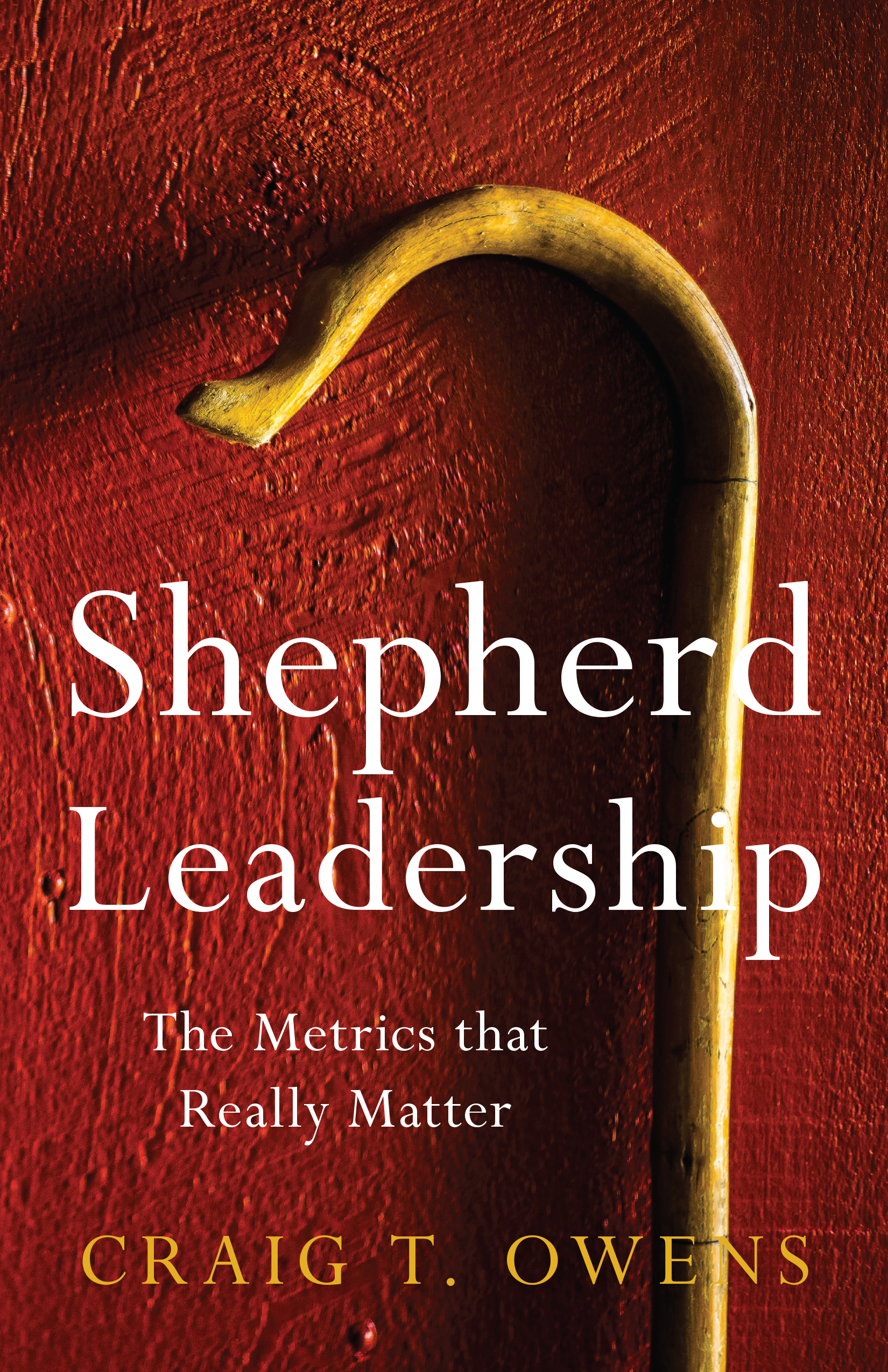
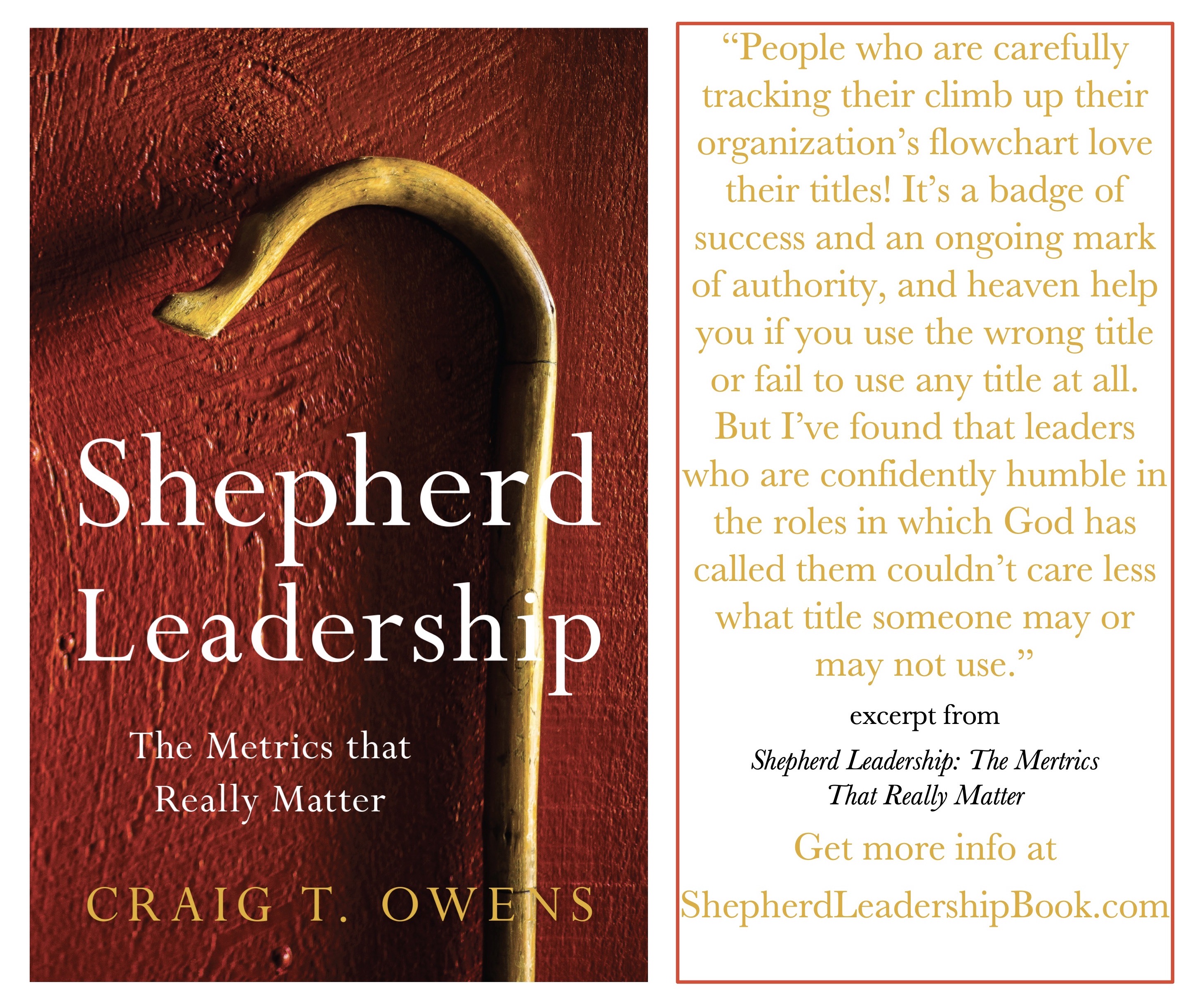
In my book Shepherd Leadership, I have a chapter entitled ‘The Wrong Ladder.’ Let me share two short paragraphs with you to set the stage—

Maybe, like many people, you’ve been working on a plan to climb your own ladder of success. You’ve been careful to get the best education, meet the right people, and put in the right amount of time on each level, all while keeping your eyes and ears open for the next “rung” of the ladder. 

Perhaps this is successful in the corporate world, but I wonder how this idea has crept into the ministry world. Make no mistake: this mindset is prominent in our churches and nonprofit organizations. We may dress it up in churchy language, but the attitude is still there. 

On the pages of Luke’s Gospel, we read a very unimpressive but praiseworthy resume of a vital ministry leader: John the Baptizer. 

His first ministry job begins when “the word of the Lord came to John son of Zechariah in the wilderness” (Luke 3:2). 

A word from God had already been spoken about John’s life that was pretty impressive (Luke 1:13-17, 76-77). From birth, John knew that he was to be the forerunner of the long-awaited Messiah. John could have walked around with quite an ego, but instead, we read, “And [John] grew and became strong in spirit; and he lived in the wilderness until he appeared publicly to Israel” (1:80).

No special education, no ladder-climbing positions, no getting to know all the right people who could open doors for him. He was simply alone with God in the wilderness for nearly 30 years! 

Then just as quickly as he burst on the scene, God took John off the scene (Luke 3:20; Matthew 14:3-11). John knew this would happen—that he was merely a herald, and that his ministry would decrease as Christ’s increased. John shows us that it’s not about how many people are in your church, how big of a budget you’ve raised, or how long you’ve been in a particular position. It’s about faithful obedience. 

It’s about being comfortable with anonymity, if that’s what God chooses. It’s about allowing God to place and remove him when and how He chooses. 

Listen to this observation from Dr. Henry Halley

Assuming that John began his ministry shortly before he baptized Jesus, it lasted about a year and a half. Thirty years in seclusion, one and a half years of public preaching, a year and four months in prison—and then the final curtain. 

This is the resume of the man who ushered in the Savior of the world, and of whom Jesus said there had not been born anyone greater (Matthew 11:11). 

In ‘The Wrong Ladder’ chapter, I concluded with this—

God frequently picks people we would consider the least qualified. He sometimes has one in an unglamorous position for years, and sometimes He catapults somebody immediately to the top. Sometimes God will keep His hand-selected individual in a prominent leadership position until death, and sometimes He will remove that person to a place of obscurity after only a short time. 

God’s ladder of success is nothing like ours! 

May all of us in leadership positions make this our prayer: Father, this is for Your glory, not my advancement. I’m not here to build my following, my resume, my fame. I only want to live and lead and minister for Your glory and for Your fame. Holy Spirit, help me keep this example of John at the forefront of my mind anytime I think about building my own resume. In the name of Jesus I ask. Amen.

►► Would you please prayerfully consider supporting this ministry? My Patreon supporters get behind-the-scenes access to exclusive materials. ◀︎◀︎

Eloquent Silence

Listen to the podcast of this post by clicking on the player below, and you can also subscribe on AppleSpotify, or Audible. 

We’ve just looked at two back-to-back bold statements of Jesus. To the Sanhedrin, He said, “I am the I AM,”  and to Pontius Pilate, He said, “I am a king.” Christ’s third bold claim essentially amounts to, “And I don’t have to prove either of these to you; I don’t have to argue with you about it.” 

After He was arrested, there was a back-and-forth shuttling of Jesus from the Sanhedrin to Pilate, then from Pilate to King Herod, and then back to Pilate again. Pilate told the Sanhedrin, “I find no basis for a charge against Him.” But the Sanhedrin countered, “But He is stirring up trouble all the way from Galilee to here in Jerusalem!” (see Luke 22:67-23:11).

Pilate was looking for “an out”—a way he could safely discharge or punish Jesus that would keep both the Sanhedrin and his Roman superiors happy. So when Pilate heard that Jesus was from Galilee, he was more than happy to pass this “hot potato” to King Herod. When Jesus was hauled before Herod, we read that he was greatly pleased to see Jesus. 

Why was that? To answer that question, we need to understand who Herod was. His name is Herod Antipas, and he was the son of Herod the Great. Herod the Great was king when Jesus was born, and he was the one who attempted to kill Jesus. 

Herod Antipas was infamous for having seduced his sister-in-law Herodias, whom he married after divorcing his wife. Shortly after this, Herod arrested John the Baptist for calling out this marriage as sinful. Herodias especially was embarrassed by this and wanted John killed, but Herod feared the backlash from the people if he did this. Eventually Herodias got her way and Herod was forced to have John beheaded (Matthew 14:5; Mark 6:17-28).

When news about Jesus began to reach his ears, Herod thought that Jesus was John reincarnated and he wanted to see him (Luke 9:9). So now when Jesus is brought before him, Herod is looking for a magic trick—Jesus remains silent. Then the religious leaders resume their accusations against Jesus, and still He remains silent. Then Herod and his soldiers began mocking and ridiculing Jesus, and amazingly, He still doesn’t say a word. 

Jesus knew the Scriptures that make it clear that there is nothing to be gained by bantering with fools. For instance, Solomon wrote, 

Do not answer a fool according to his folly, or you yourself will be just like him. … Don’t waste your breath on fools, for they will despise the wisest advice. (Proverbs 26:4, 23:9). 

So here is the next bold claim from Jesus: {Eloquent silence.}

Even in the face of accusation, ridicule, and mocking, Jesus refused to engage in meaningless arguing with Herod or the Sanhedrin’s false witnesses. His silence was so eloquent that it got the attention of Governor Pilate:  

“Then Pilate asked [Jesus], ‘Don’t You hear the testimony they are bringing against You?’ But Jesus made no reply, not even to a single charge—to the great amazement of the governor.” (Matthew 27:13-14) 

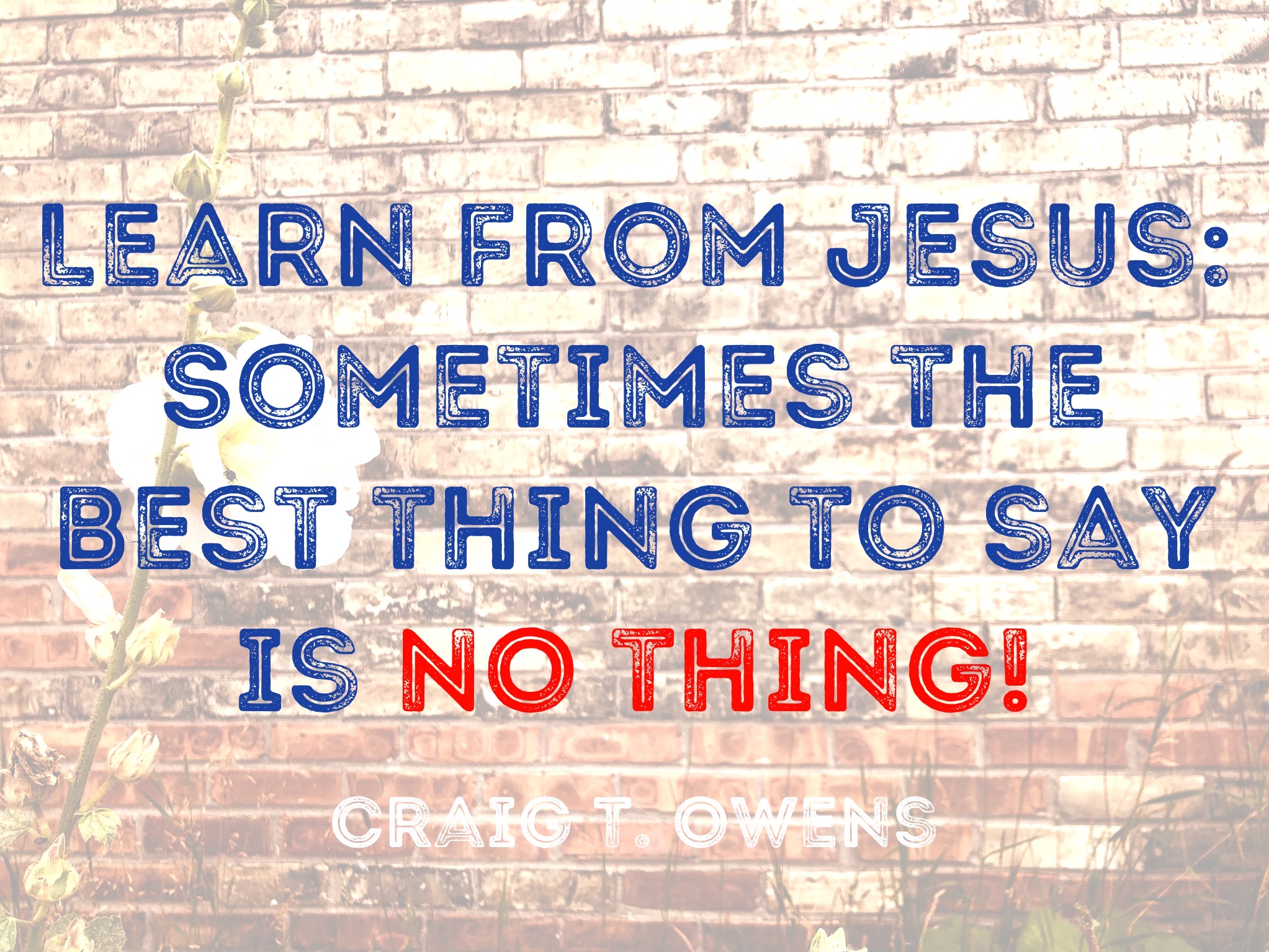
Let’s learn from Jesus: Sometimes the best thing to say is NO thing! 

Peter pointed Christians to this example of Jesus when he wrote—

To this you were called, because Christ suffered for you, leaving you an example, that you should follow in His steps. “He committed no sin, and no deceit was found in His mouth.” When they hurled their insults at Him, He did not retaliate; when He suffered, He made no threats. Instead, He entrusted Himself to Him who judges justly. (1 Peter 2:21-23)

Jesus called us to let our good deeds shine brightly to bring glory to God. Fools will ridicule and mock and accuse us, just as the religious crowd did to Jesus. Let’s not let our bantering with fools put out the light of our testimony. 

When I was a little kid in Sunday School, we used to sing a song called This Little Light Of Mine. We would hold up our pointer finger like a candle as we sang. But holding up our pointer finger across our lips is also a way to let our light shine too. Your silence in the face of foolish ridicule will speak so eloquently!

Let’s learn this lesson from Jesus. Instead of bantering with fools, entrust yourself to the perfect Judge who is perfectly keeping track of every word. He is the One who can add eloquence to your silence as you shine brightly for Him. 

If you’ve missed any of the other messages in our series of Bold Claims, you can find them all by clicking here. 

►► Would you please prayerfully consider supporting this ministry? My Patreon supporters get behind-the-scenes access to exclusive materials. ◀︎◀︎
Attitude Adjustment

Listen to the podcast of this post by clicking on the player below, and you can also subscribe on AppleSpotify, or Audible. 

Imagine if 700 years before you were born there was a prophecy given about you (Matthew 3:3). Or if on the day of your birth your father said, “And you, my child, will be called a prophet of the Most High; you will go on before the Lord to prepare the way for Him” (Luke 1:76). 

This was John the Baptist.

With these kinds of announcements and the stamp of approval from God Himself, it’s really quite astounding how humble John remained:

  • “After me comes One Who is more powerful than I, Whose sandals I am not worthy to carry” (Matthew 3:11). 
  • “[Jesus] must increase, but I must decrease” (John 3:30). 

The confidence that he was God’s man for the hour gave John boldness to speak truth to religious leaders, wealthy people, and Roman soldiers (Matthew 3:7-12; Luke 3:7-20). Yet his humility was almost his undoing. 

John preached boldly, fulfilling the prophecies that were made about him. But when Jesus came to him to be baptized, John’s humility caused him to defer initially. Then Jesus reminded him that His baptism was necessary “to fulfill all righteousness. Then John consented” (Matthew 3:13-15). 

Whether I am lacking confidence to speak or lead boldly, or lacking humility to let someone else take the lead, I need to return to the Word of God—just as John did. Both his confidence and his humility were balanced by words spoken over him by God. So it must be for you and me too. 

Confidence without humility or humility without confidence can trip me up and cause me to miss out on all that God needs me to do. So my daily prayer must be: Holy Spirit, may I be sensitive to every correction and adjustment You need to make in me. Illuminate the Scriptures that I need to apply to my life that will keep me in a healthy, balanced place. 

I wrote about this tension between confidence and humility in my book Shepherd Leadership. This was also a topic of conversation in two interviews I did, which you can find here and here. Healthy leaders need the proper balance of confidence and humility to keep their leadership in a place that God can use powerfully. 

►► Would you please prayerfully consider supporting this ministry? My Patreon supporters get behind-the-scenes access to exclusive materials. ◀︎◀︎
Firsthand Experience

Listen to the podcast of this post by clicking on the player below, and you can also subscribe on AppleSpotify, or Audible. 

I had an encounter with my atheist college professor that has always stuck with me. I was reminded of that interaction when I was reading the question John the Baptist sent to Jesus from prison. 

Always remember:

The one with a firsthand experience is never at the mercy of the one with only secondhand information. 

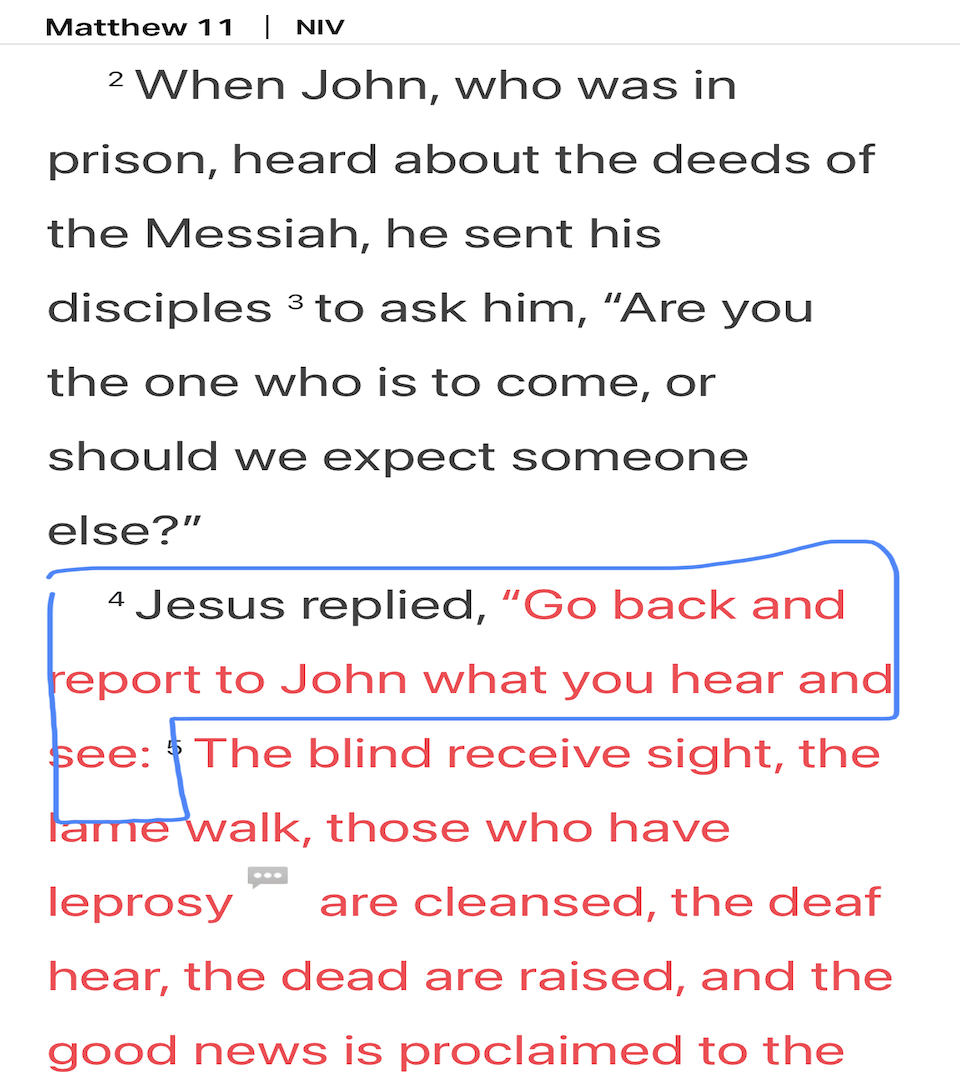
The biblical passages I reference in this video are Matthew 11:1-6 and 1 Peter 3:12-16. 

►► Would you please prayerfully consider supporting this ministry? My Patreon supporters get behind-the-scenes access to exclusive materials. ◀︎◀︎
The Value Of Journaling

Listen to the podcast of this post by clicking on the player below, and you can also subscribe on AppleSpotify, or Audible. 

Do you keep a journal? I’m not talking about a diary of your daily events, but a journal of your ongoing dialogue with God. This is a discipline I began over 25 years ago, and it’s been immensely helpful to me. 

Every time you read the history of Israel in the Old Testament, you are really reading a written history—a journal—of what God did for His people.

In Luke 1:46-55, we read Mary’s song about the soon-to-be-born Jesus that someone journaled to record for posterity. The same thing is true for Zechariah’s song about his son John in Luke 1:67-79. I am sure that many people found great comfort in reading and recalling these songs, perhaps even Jesus Himself and John the Baptist. 

Even Jesus told His disciple John to journal the words He spoke to him about events still to come (Revelation 1:11, 19; 2:1, 8, 12, 18; 3:1, 7, 14; 14:13; 19:9; 21:5). 

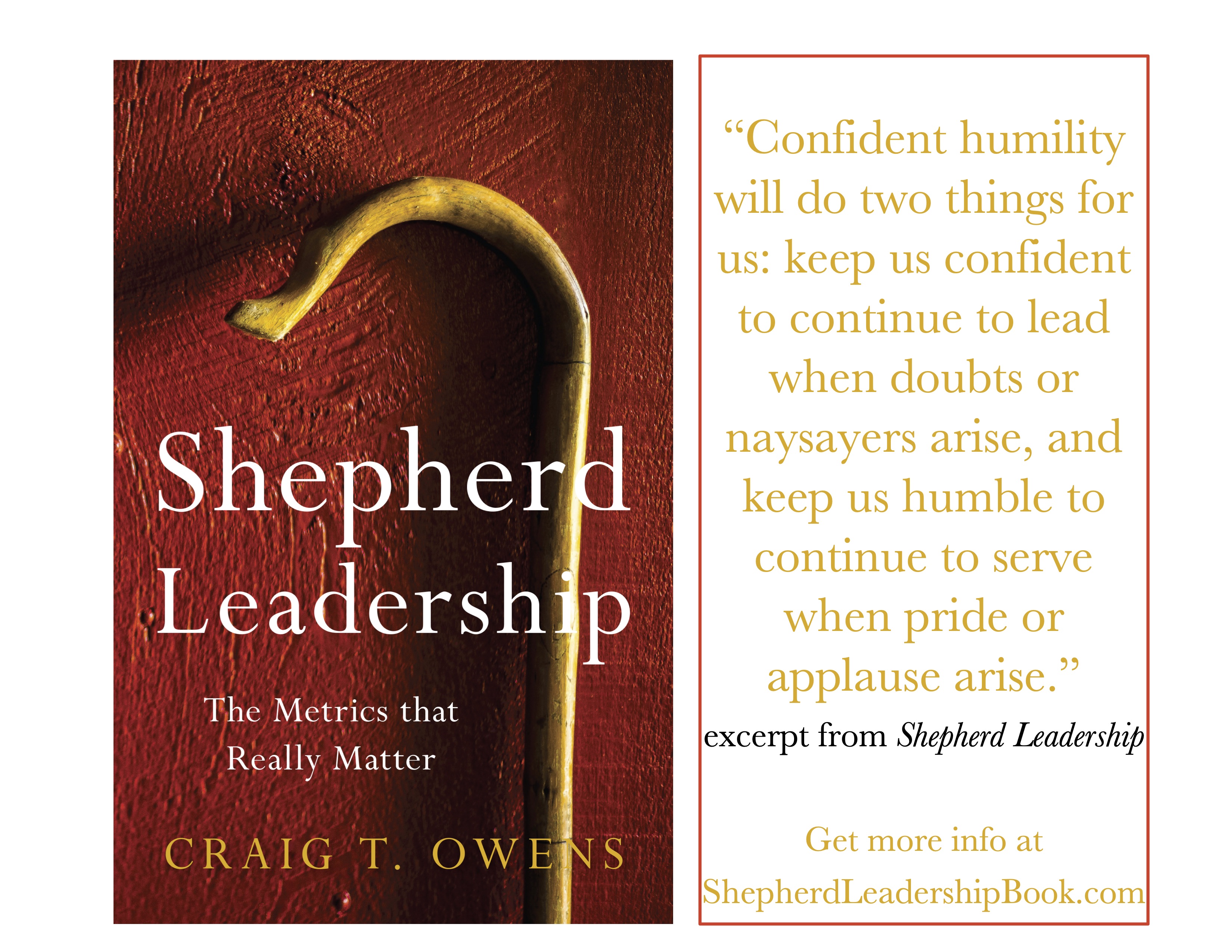
Journaling has helped me at so many crucial points in my life. Especially when I needed to look back to be reminded of something God had spoken to me. I shared one example of this in my book Shepherd Leadership: The Metrics That Really Matter

       The board was making a major decision. They were considering a change in their leadership to one who had completely different credentials and training from all of their previous leaders. Because this change would be so momentous, the board interviewed me for more than four hours. When they finally felt they had deliberated long enough, they asked me to leave the room while they prayed and voted. I stepped out into the lobby for just a couple of minutes when the door opened again and they asked me to step back inside. 

       “Well, Craig,” the spokesman began, “we prayed and we feel you are the one God has selected for this position.” I told them I would be happy to accept their offer. After they prayed over me, I began to pack up my things to head home. 

       “Hold on a minute,” one of the board members said to me, “we’re about to discuss the budget, and we think it would be good for you to be a part of this discussion.” I agreed and resumed my seat at the table. 

       I was handed both the year-to-date financial report and the projected income and expenses for the remaining quarter of the year. “As you can see,” the treasurer began, “we are projecting a $70,000 loss for this year.” Then he turned to me and asked, “What are you going to do about that?” 

       I gulped, tried not to show that my stomach was doing flips, and said, “Honestly, I don’t know.” I paused, and since no one else said anything, I continued, “But I’ll let you know what we come up with.” 

       All the way home, I kept thinking, “What have I gotten myself into? I’m walking away from a successful business to oversee an organization that’s going to go bankrupt before I even get started?!” But then I began to remind myself of something else: God chose me. 

       When I returned home, I immediately went to my journal. I flipped to the page where I had written down all of the reasons why I had concluded that God chose me for this position. I looked at the way God had spoken to me and to my wife, and the way friends who knew nothing about this decision spoke a confirming word to me. I looked at the pages where I had written down the vision I believed God had given me for this new organization, and how the board chairman’s handwritten vision for the organization matched mine thought-for-thought. Looking at these words—at the specific dates and ways God had spoken, and confirmed, and re-confirmed His direction—gave me the confidence to step into this assignment, even when facing such a huge financial mountain. (excerpt from chapter 5 “A Humble Leader’s Attitude Adjustment”) 

If you haven’t journaled in the past, I encourage you to begin this spiritual discipline today. I can tell you from both what I read in the Bible and my own personal experience how valuable this will be for you. 

►► Would you please prayerfully consider supporting this ministry? ◀︎◀︎