Listen to the podcast of this post by clicking on the player below, and you can also subscribe on Apple, Spotify, or Audible.
All leaders—but especially pastoral leaders—need to work on a better response when we are bitten by a sheep in our pasture. Our natural first response is usually not going to be very helpful for us or for the biting sheep.
When a painful attack suddenly confronts me, I go to the mirror. Instead of asking, “What’s wrong with them that they would bite me like this?” I go to prayer to ask, ‘“Did I do something that provoked this?’’ Sometimes I have literally gone into my bathroom, closed the door, and gotten nose-to-nose with myself to ask this question, and then listened for the Holy Spirit to speak to my heart.
My cousin Dick Brogden wrote, “Critics and skeptics are gifts to us, for in their aspersions they often bring to light a brokenness or a liability early on in its development in us. If we are secure enough to ferret out the truth through the condemnation of others, we remain healthy in the long term as our malady is exposed and dealt with before it becomes to serious.”
Remember that we are naturally self-protective, so this time of introspection will need to be supernaturally empowered by the Holy Spirit if we are going to see the true prompter of the attack. A prayer I have prayed more times than I can count is, “Search me thoroughly, O God, and know my heart! Try me and know my thoughts! And see if there is any wicked or hurtful way in me, and lead me in the way everlasting” (Psalm 139:23-24 AMPC).
Get a copy of my book here to help you heal from the painful sheep bites, and to learn how to respond better with each new biting experience.
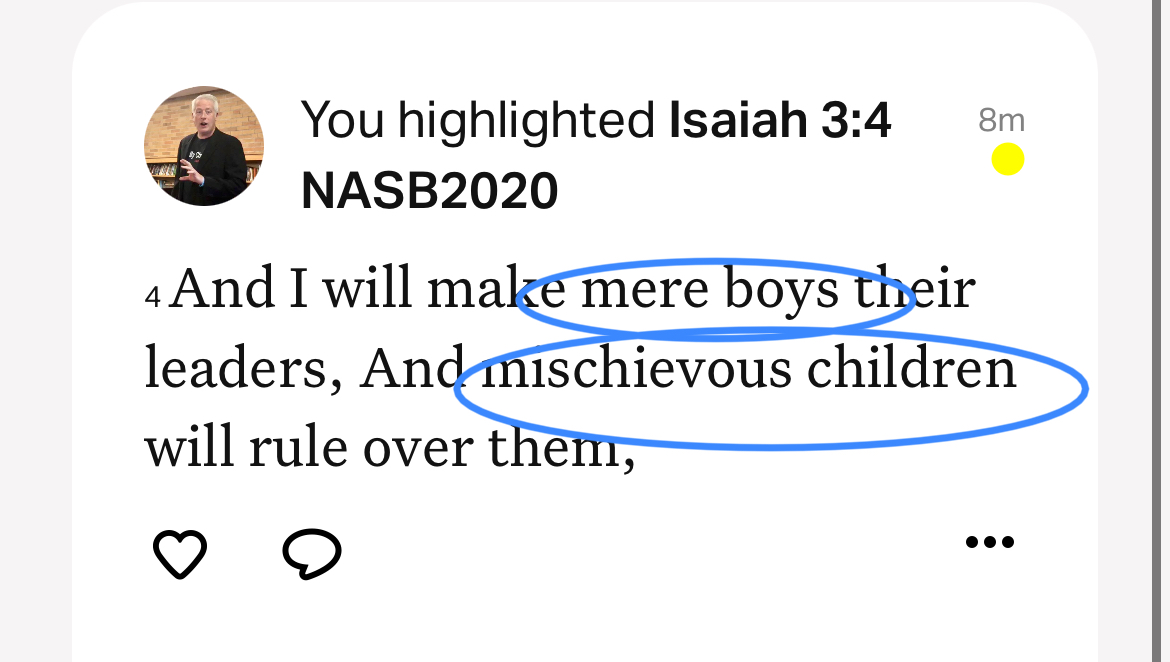
“And I will make mere boys their leaders, and mischievous children will rule over them, and the people will be oppressed, each one by another, and each one by his neighbor; the youth will assault the elder, and the contemptible person will assault the one honored.” (Isaiah 3:4-5)
God gives nations the “leaders” they deserve. They are leaders in that they occupy an office, but they don’t lead people nor care for the citizens—they don’t have wisdom to lead nor do they care about anyone but themselves. This is the inevitable result for a nation that turns its back on God!
In Hebrew, “mere boys” and “mischievous children” are defined as arbitrary, unprepared, unskilled, immature people. The AMPC translation says, “And I will make boys their princes, and with childishness shall they rule over them with outrage instead of justice” (Isaiah 3:4).
If we think our political and civic leaders are self-focused, unskilled, and childish, we should look in the mirror. We must be the leaders in confession and repentance if we want to see a change “downstream” in our governmental leaders. It’s not “them,” it’s us. We have to change—turning wholeheartedly to God—and only then God can change our leadership.
Listen to the podcast of this post by clicking on the player below, and you can also subscribe on Apple, Spotify, or Audible.
I’m going to guess that I’m not alone in this: I don’t like when people criticize me.
Especially when I’m in a leadership position, trying my best to make good decision for the entire organization, and someone comes up to me to criticize my decision-making abilities or my skill at carrying out my decisions.
The easiest thing to do is simply dismiss their biting remarks. We can so easily say, “They have no idea what they’re talking about so I can ignore everything they’ve said to me.”
Criticism is one of the most common bites that sheep dispense to those who are trying to shepherd them.
But before we simply dismiss them, let me ask you to consider this:
Is it possible that God is using these critics to get your attention?
Is it possible that you have a flaw in a blind spot, and this critic is showing you something that you’ve been missing?
If you can answer, “Yes” to even one of those questions, then you can also say that your critic is a God-sent gift for you to improve your leadership capacity.
I discussed this recently on the Fellowship of Ailbe podcast.
The full quote from Dick Brogden’s book Proverbs: Amplified and Applied says: “Critics and skeptics are gifts to us, for in their aspersions they often bring to light a brokenness or a liability early on in its development in us. If we are secure enough to ferret out the truth through the condemnation of others, we remain healthy in the long term as our malady is exposed and dealt with before it becomes too serious.”
This means that criticism should lead us to a time of honest introspection.
In the chapter “Is God Trying to Get My Attention?” in my book When Sheep Bite, I wrote—
Remember that we are naturally self-protective, so this time of introspection will need to be supernaturally empowered by the Holy Spirit if we are going to see the true prompter of the attack. A prayer I have prayed more times than I can count is, “Search me thoroughly, O God, and know my heart! Try me and know my thoughts! And see if there is any wicked or hurtful way in me, and lead me in the way everlasting” (Psalm 139:23-24 AMPC).
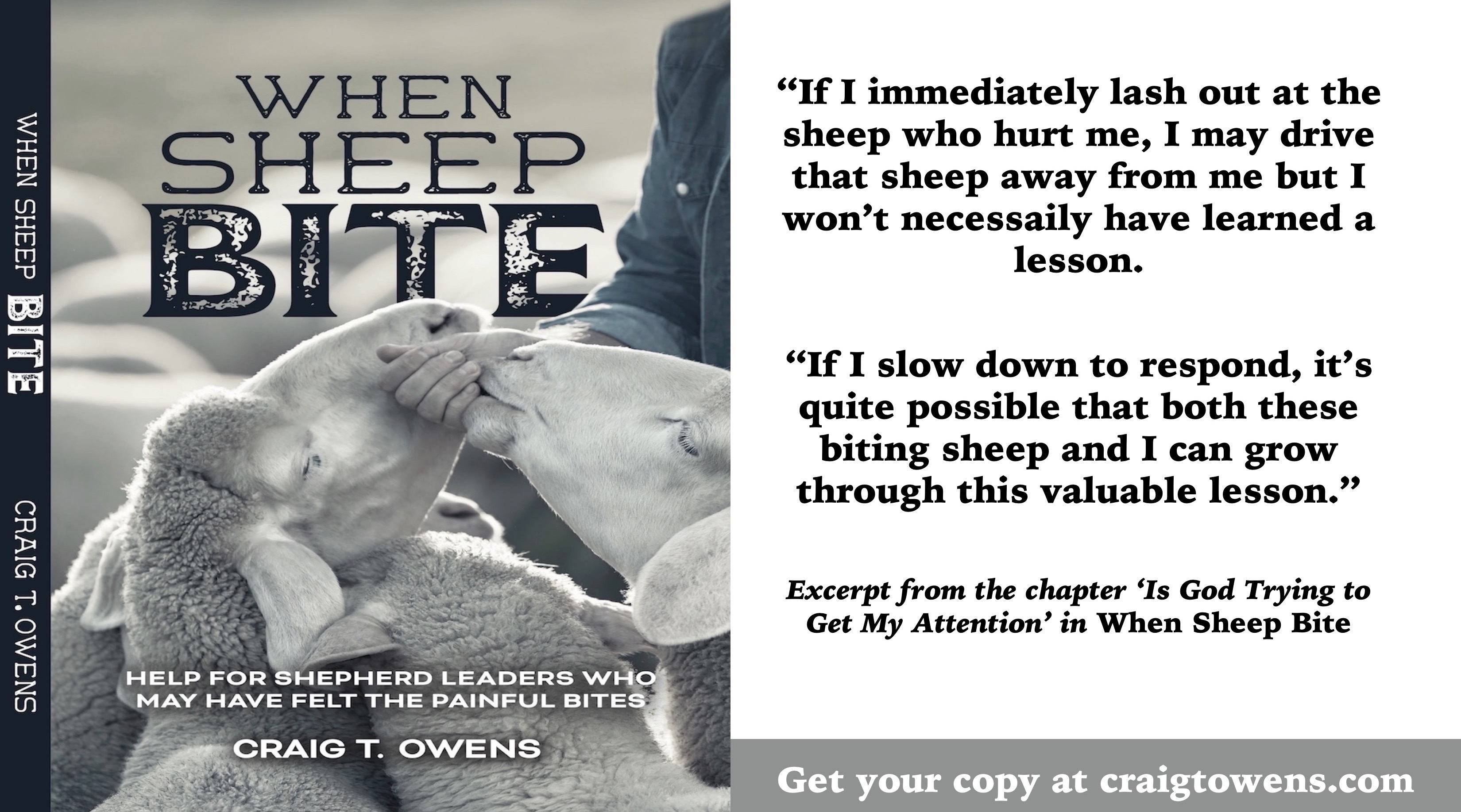
It is only this humble reflection that can turn an experience into a lesson. If I immediately lash out at the sheep who hurt me, I may drive that sheep away from me but I won’t necessarily have learned a lesson. The one who bit me may have left my pasture, but perhaps they will never join any other pasture but may wander in the wilderness for the rest of their life. If I slow down to respond, it’s quite possible that both these biting sheep and I can grow through this valuable lesson.
Let’e reframe the way we think about critics and their criticism. Before we simply dismiss it, let’s prayerfully consider if there is a lesson that God is trying to teach to us through this critic.
Listen to the podcast of this post by clicking on the player below, and you can also subscribe on Apple, Spotify, or Audible.
I have probably heard this verse quoted more by non-Christians than any other verse: “Do not judge, or you too will be judged” (Matthew 7:1).
Does Jesus mean that we can never point out to anyone else an area of concern? No, because Jesus Himself did this as well as nearly every epistle writer of the New Testament. What it does mean is that confrontation needs to be truly corrective and never condemning.
Correcting means that I am never serving as the judge and jury. But it does mean that I can lovingly help someone before they have to stand before God on Judgment Day. Jesus said that if I am a mean, self-serving judge of others, I can expect to receive that same treatment (v. 2).
Instead, I need to first recognize that what I may see in another person may only be apparent to me because I am afflicted with the same thing. So my first response when I see “a speck” in someone else’s eye is to ask the Holy Spirit to show me a possible “plank” in my own eye. Only after I have dealt with this through repentance and making appropriate changes, will I have the necessary empathy and gentleness to help my brother or sister deal with their own eye speck (vv. 3-4).
Jesus said that trying to get someone else to repent of something that still exists in my own life is being a hypocrite. It’s playing a role that isn’t me. So Jesus says “first” deal with my own sin, “then” I may help a brother or sister (v. 5).
Notice that I have been very careful to use the phrase “brother and sister.” I believe that Christians should deal with fellow Christians, but we shouldn’t try to bring correction to those who don’t come from the same biblical paradigm that we have. In legal terms, I may say that we have no standing, or that non-Christians are out of my jurisdiction.
One final thought. I think I need to treat a concern that another person brings to me in a very similar fashion as I would treat an eye speck in someone else. Perhaps God sent them to me, so I need to ask the Holy Spirit to show me any “plank” that may be in my eye, even if it has been brought to my attention through a judgmental person. It is very God-honoring for me to give that person the benefit of the doubt by saying that they cared enough for my well-being that they would be willing to point something out to me.
Correction is an important aspect of Christian maturity. But we need to make sure we do it in a Christlike way.
This is a weekly series with things I’m reading and pondering from Charles Spurgeon. You can read the original seed thought here, or type “Thursdays With Spurgeon” in the search box to read more entries.
Listen to the podcast of this post by clicking on the player below, and you can also subscribe on Apple, Spotify, or Audible.
Be Careful
Having a form of godliness but denying its power…. (2 Timothy 3:5)
Time was when to be a Christian was to be reviled, if not to be imprisoned and perhaps burned at the stake. Hypocrites were fewer in those days, for a profession cost too much. …Today religion walks forth in her velvet slippers. And in certain classes and ranks, if men did not make some profession of religion, they would be looked upon with suspicion. Therefore men will take the name of Christian upon them and wear religion as a part of full dress. …
I do not doubt that a form of godliness has come to many because it brings them ease of conscience and they are able, like the Pharisee, to thank God that they are not as other men are. …
Many who have the form of godliness are strangers to its power and so are in religion worldly, in prayer mechanical, in public one thing, and in private another. True godliness lies in spiritual power, and they who are without this are dead while they live. …
In the depths of winter, can you warm yourself before a painted fire? Could you dine off the picture of a feast when you are hungry? There must be vitality and substantiality—or else the form is utterly worthless and worse than worthless, for it may flatter you into deadly self-conceit. Moreover, there is no comfort in it. The form without the power has nothing in it to warm the heart, to raise the spirits, or to strengthen the mind against the day of sickness or the hour of death. …
If you tremble at God’s Word, you have one of the surest marks of God’s elect. Those who fear that they are mistaken are seldom mistaken. If you search yourselves and allow the Word of God to search you, it is well with you. …
If the Spirit of God leads you to weep in secret for sin and to pray in secret for divine grace, if He leads you to seek after holiness, if He leads you to trust alone in Jesus, then you know the power of godliness, and you have never denied it.
From The Form Of Godliness Without The Power
Spurgeon mentioned the Pharisee that said, “God, I thank You that I am not like other people. Especially like that tax collector over there.” Jesus said that the tax collector who humbly said, “God, be merciful to me, a sinner” is the one who went home justified by God (see Luke 18:9-14).
That’s where the warning comes in. When we begin to compare ourselves to others, when we begin to say, “I’m better than him” or “At least I don’t mess up as bad as she does,” instead of judging ourselves by God’s standard, we are in real danger of having merely a form of godliness without any real power.
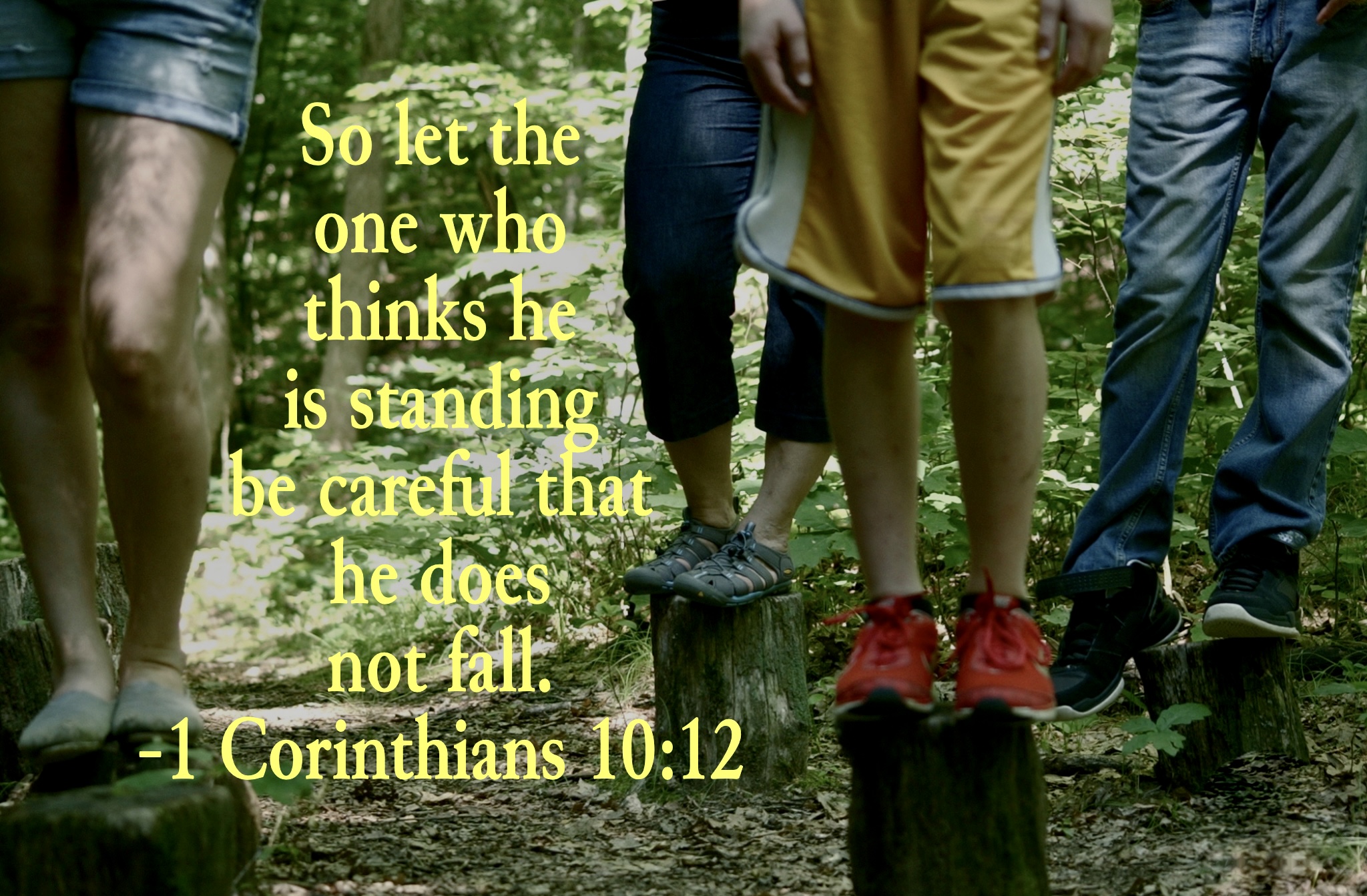
Paul said, “So, if you think you are standing firm, be careful that you don’t fall,” and challenged each of us to “test their own actions. Then they can take pride in themselves alone, without comparing themselves to someone else” (1 Corinthians 10:12; Galatians 6:4).
I would challenge everyone that calls themself a Christian to be careful! Don’t fool yourself by saying, “I do all of the things a Christian is supposed to do, so I must be standing firm.” But ask the Holy Spirit to reveal to you even your hidden sins, and then just as the tax collector who experienced God’s reassurance in his heart did, pray: “God, be merciful to me. Help me to correct what’s wrong. May my life be godly not just in outward performance, but in the power that can only come from a vibrant, growing relationship with You!”
Let’s all strive to not only have the form of godliness, but to have the real energizing power of godliness on full display in our daily lives.
This is a weekly series with things I’m reading and pondering from Charles Spurgeon. You can read the original seed thought here, or type “Thursdays With Spurgeon” in the search box to read more entries.
Listen to the podcast of this post by clicking on the player below, and you can also subscribe on Apple, Spotify, or Audible.
Do Your Own Growing
Having a form of godliness but denying its power. Have nothing to do with such people. (2 Timothy 3:5)
But now, as these people had not got the power of godliness, how did they come to hold the form of it? This needs several answers. Some come by the form of godliness in a hereditary way. Their ancestors were always godly people, and they almost naturally take up with the profession of their fathers. …
Not generation but regeneration makes the Christian. You are not Christians because you can trace the line of fleshly descent throughout twenty generations of children of God. … Grace does not run in the blood. If you have no better foundation for your religion than your earthly parentage, you are in a wretched case. …
I have seen the form of godliness taken up on account of friendships. Many a time courtship and marriage have led to a formal religiousness but a lacking heart. … Godliness should never be put on in order that we may put a wedding ring upon the finger. This is a sad abuse of religious profession. …
I put these things to you that there may be a great searching of hearts among us all and that we may candidly consider how we have come by our form of godliness. …
Let me remind you of the questionable value of that which springs out of fallen human nature. Assuredly, it brings no one into the spiritual kingdom, for ‘that which is born of the flesh is flesh.’ Only ‘that which is born of the Spirit is spirit’ (John 3:6). ‘You must be born again’ (3:7). Beware of everything that springs up in the field without the sowing of the Husbandman, for it will turn out to be a weed.
From The Form Of Godliness Without The Power
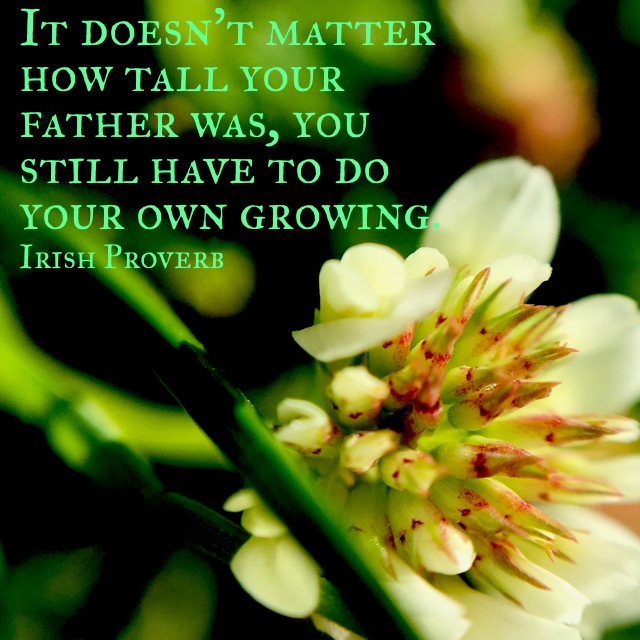
There’s an old Irish proverb that says, “You’ve got to do your own growing, no matter how tall your grandfather is.” This is equally true for Christians!
I’m a fourth-generation Pentecostal Christian, which means I was practically raised in a church building. But still I had to come to a point in my life where I had to decide: Do I believe that Jesus is my Savior just because my parents and grandparents believed this, or because I truly believed it for myself. All of us, regardless of our parentage, have to make this choice.
This is a weekly series with things I’m reading and pondering from Charles Spurgeon. You can read the original seed thought here, or type “Thursdays With Spurgeon” in the search box to read more entries.
Listen to the podcast of this post by clicking on the player below, and you can also subscribe on Apple, Spotify, or Audible.
No Fear Of Inspection
Having a form of godliness but denying its power. Have nothing to do with such people. (2 Timothy 3:5)
Paul warns us of certain characters that will appear in the last times. It is a terrible list. The like have appeared in other days, but we are led by his warning to apprehend that they will appear in greater numbers in the last days than in any previous age. ‘People will be lovers of themselves, lovers of money, boastful, proud, abusive, disobedient to their parents, ungrateful, unholy, without love, unforgiving, slanderous, without self-control, brutal, not lovers of the good, treacherous, rash, conceited, lovers of pleasure rather than lovers of God’ (2 Timothy 3:2-4). …
The raw material of a devil was an angel bereft of holiness. You cannot make a Judas except out of an apostle. The eminently good in outward form, when without inward life, decays into the foulest thing under heaven. You cannot wonder that these are called perilous times, in which such characters abound. …
Those who constantly associate in worship, unite in church fellowship, and work together for sacred purposes have a form of godliness, and a very useful and proper form it is. Alas, it is of no value without the power of the Holy Spirit.
Some go farther than public worship. They use a great deal of religious talk. They freely speak of the things of God in Christian company. They can defend the doctrines of Scripture, they can plead for its precepts, and they can narrate the experience of a believer. …
That religion that comes from the lips outward but does not well up from the deep fountains of the heart is not that living water that will spring up to eternal life. Tongue godliness is an abomination if the heart is destitute of divine grace.
When we have done all the work our position requires of us, we may only have displayed the form of godliness. Unless we harken to our Lord and from His presence derive power, we will be as a sounding brass and a tinkling cymbal. Brethren, I speak to myself and to each one of you in solemn earnestness. If much speaking, generous giving, and constant occupation could win heaven, we might easily make sure of it. But more than these are needed. …
O my active and energetic brother, remember the word, ‘Therefore let him who thinks he stands take heed lest he fall’ (1 Corinthians 10:12). If any of you dislikes this searching sermon, your dislike proves how much you need it. He that is not willing to search himself should stand self-incriminated by that unwillingness to look at his affairs. If you are right, you will not object to being weighed in the balances. If you are indeed pure gold, you may still feel anxiety at the sight of the furnace, but you will not be driven to anger at the prospect of the fire. Your prayer will always be, ‘Search me, God, and know my heart; test me and know my anxious thoughts.See if there is any offensive way in me, and lead me in the way everlasting’ (Psalm 139:23-24).
From The Form Of Godliness Without The Power
Those who are in right standing with God—in other words, those who are not merely godly in outward appearance only—should have no fear of their lives being inspected. Accountability among fellow Christians is a liberating thing because it keeps us in a place of safety. But even better is when we pray, “Search me, Lord” and then we quickly, and without offering any excuses, correct whatever the Holy Spirit reveals to our hearts.
In these last days, let us be even more attentive to this!











 Craig T. Owens