Come To God As A Father

Listen to the podcast of this post by clicking on the player below, and you can also subscribe on AppleSpotify, or Audible. 

Jesus told us numerous times that we can come to God as our Father. 

Have you ever played a word association game? For instance, if I said “winter” you might say “shoveling” (or kids might say “sledding”). If I said “summer” you might say “vacation.” But I think the word “father” may bring up a lot of very different feelings or images. Some may have fond memories of the word “father” while others may think:

  • playful but not a good provider 
  • disciplinarian 
  • hard to please 
  • absent
  • unavailable 

Even if our human fathers were good, they were still flawed. Jesus said this about us, “If you parents, that even know how to give good things to your kids are evil, how much more amazing is the goodness and love of God” (Matthew 7:11). But Jesus had something entirely different in mind for us when He told us we could come to God as our Father. And, sadly, it’s a level of intimacy that many have never known. 

All of us could only experience limited intimacy with our earthly fathers, but with our Heavenly Father we can have unlimited and unimaginable intimacy! 

When Jesus was teaching us to pray in Matthew 6:6-9, there are two thoughts that stand out to me about coming to God as our Father. First, Jesus tells us that we don’t have to use any special language. When He said some people babble in prayer, Jesus was saying they were using a language that was unnatural to them—they weren’t being themselves. 

Our Heavenly Father wants us to come to Him as children: full of innocence, and wonder, and expectation, and imagination!

Second, I notice that three times Jesus calls God “your Father,” but when He begins His model prayer He says, “Our Father.” Think of that: Jesus is saying we can approach God the same way He approached His Father! 

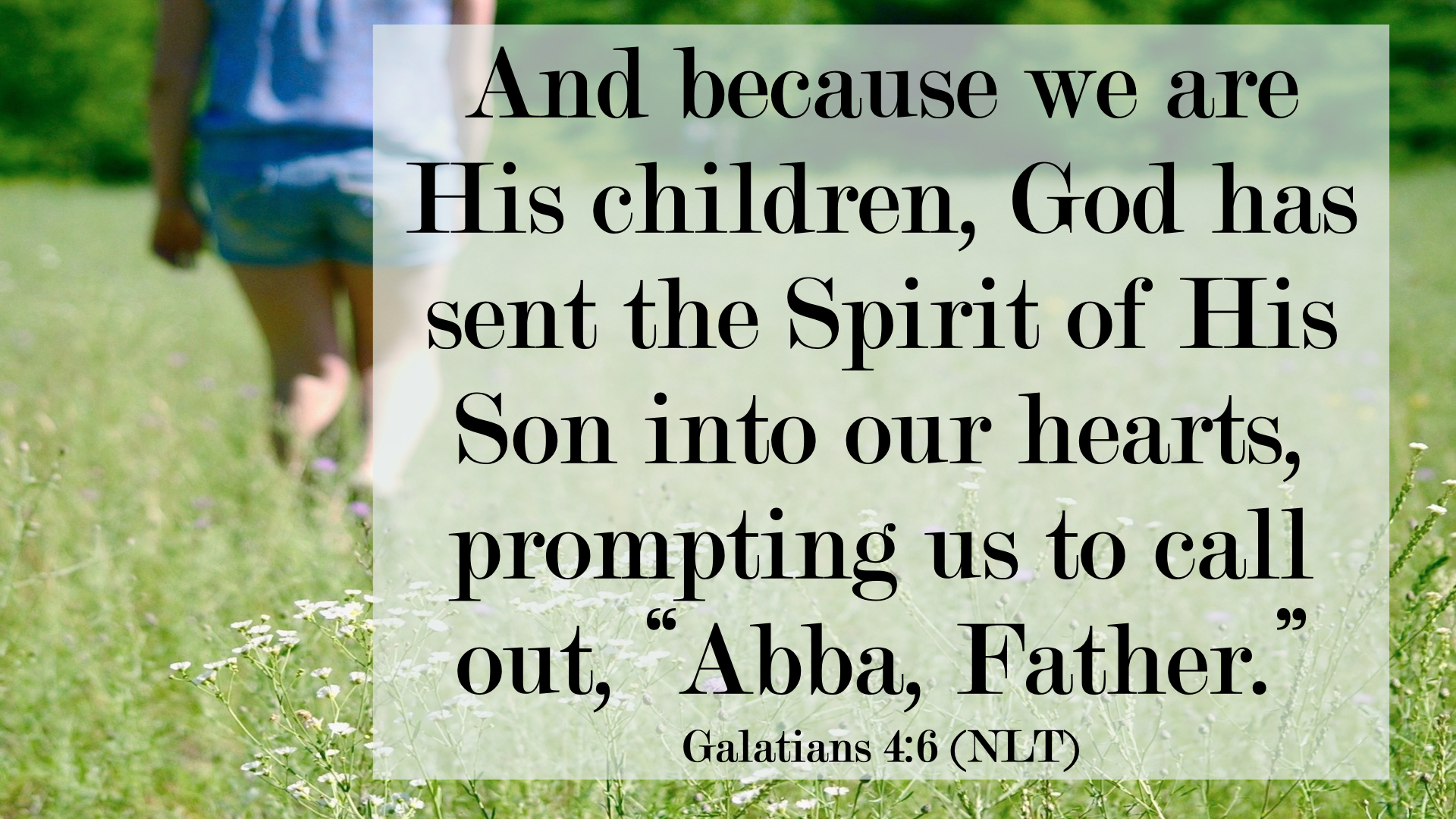
In His intense prayer time just before His crucifixion, Jesus used the phrase “Abba Father” to express His intimacy. This phrase is used two other times in the New Testament. Both of these times it’s telling us that we can approach our Heavenly Father the same way Jesus did (see Mark 14:36; Galatians 4:6; Romans 8:15). 

The Romans understood the weight that was associated with the practice of adoption. They knew that a father chose that child to be a part of his family, giving that child full acceptance into the family. Marvin Vincent noted,

“We have but a faint conception of the force with which such an illustration would speak to one familiar with the Roman practice; how it would serve to impress upon him the assurance that the adopted son of God becomes, in a peculiar and intimate sense, one with the heavenly Father.”

In writing to the Romans, Paul reminds them that for those who are in Christ Jesus, there is no condemnation—nothing holding them back from God’s presence. He also said that God has fully adopted us into His family, and that the Holy Spirit was now in us, encouraging us to call God “Abba Father” just as Jesus did (Romans 8:1, 14-16). 

Check out these two final thoughts from Jesus: He encourages us to approach God as innocent children, and He praises Our Father for then intimately confiding in His children—

“Truly I tell you, unless you change and become like little children, you will never enter the kingdom of heaven. … I praise You, Father, Lord of heaven and earth, because You have hidden these things from the wise and learned, and revealed them to little children.” (Matthew 18:3, 11:25) 

No matter what your relationship was with your earthly father, Jesus encourages us to approach our Heavenly Father in innocence, wonder, expectation, imagination, and intimacy. This is what God desires in His relationship with you! 

If you’ve missed any of the messages in our series Intimate Conversation, you can find them all by clicking here. 

►► Would you please prayerfully consider supporting this ministry? My Patreon supporters get behind-the-scenes access to exclusive materials. ◀︎◀︎

Intimate Conversation

The dictionary defines the word “intimate” with these phrases: 

  • associated in close personal relations 
  • characterized by warm friendship 
  • closely personal

These words perfectly describe the relationship God wants to have with His children through prayer. Pete Briscoe said, “Prayer is an intimate conversation with the One who passionately loves you and lives in you.” 

The One who loves you so passionately desires to walk with you and share intimate knowledge with you. Prayer is not something formal, cold, or mechanical, but it is vibrant, warm, engaging, and life-changing. 

I invite you to join us for our prayer series called Intimate Conversation beginning this Sunday. We would love to have you join us in person, but if you are unable to do that, we will make all of the messages available on Facebook and YouTube. If you’ve missed any of the messages, you will be able to find them all here:

Forgive Like You’ve Been Forgiven

Listen to the podcast of this post by clicking on the player below, and you can also subscribe on AppleSpotify, or Audible. 

Jesus said that the devil’s agenda was to steal, kill, and destroy (John 10:10). We see this on full display in the aftermath of the first sin in the way relationships humans had with each other changed. 

God said to Eve, “Your desire will be for your husband, and he will rule over you” (Genesis 3:16). Dr. Henry Halley commented, “The last two lines of this verse could be paraphrased, ‘You will now have a tendency to try to dominate your husband and he will have the tendency to act as a tyrant.’” And to Adam, God said that he would now have to work harder than ever before to harvest the food he needed for survival, which undoubtedly caused stress in his relationship with Eve. In the very next chapter, the strained relationship between Cain and Able resulted in the first homicide (Genesis 3:17-19, 4:1-8). 

In these relationships, intimacy was stolen, closeness was killed, and life was destroyed. 

An irreplaceable tool for avoiding this heartache and destruction that sin causes in our relationships is forgiveness. 

Peter asked Jesus, “How many times should I forgive my brother or sister who sins against me? Up to seven times?” (Matthew 18:21). In reply, Jesus told a story about a man who owed the equivalent of 20 years of a day laborer’s wages and a man who owed about three months of a day laborer’s wages. The first man who owed so much was forgiven entirely of his debt, but he wouldn’t forgive the paltry amount that was owed to him by the second man. 

To the forgiven but unforgiving man, Jesus said, “Shouldn’t you have had mercy on your fellow servant just as I had on you?” (see Matthew 18:22-35). 

That should be our standard: Not how others treat me, but how God has treated me! Not how much others owe me, but how much God has forgiven me!

Do I want God to put a quota on how many times I can be forgiven? Do I want there to be a limit on how big of an offense God will forgive in me?

Of course not!

That’s my standard. I must show the same mercy to others as I have been shown by God. 

If my forgiven sins are forgotten sins (and they are), then I need to treat my brother and sister the same way. This is why Jesus told Peter to stop counting the number of offenses. We are to treat every offense as though it was the first and only offense.

The man who owed so much money asked for more time to repay his debt. But the master did more than that: He forgave the debt—he wiped it off the books completely, as though it had never happened! 

When God forgives our sin, He separates our sin from us as far as the east is from the west. He keeps no record of the offense ever having occurred (Psalm 103:10-12). 

This is to be our standard too. We are to forgive others as God has forgiven us. Forgiveness will restore intimacy, closeness, and life to our relationships. 

This is difficult to do. As Peter pointed out, a brother or sister—someone close to his heart—had sinned against him. But this is why Jesus taught us to pray, “Forgive us our sins, as we have forgiven those who sin against us” (Matthew 6:12). Or as Eugene Peterson paraphrases that verse in The Message, “Keep us forgiven with You and forgiving others.” 

May the Holy Spirit help us in this important work of ongoing, complete, and restoring forgiveness!

►► Would you please prayerfully consider supporting this ministry? My Patreon supporters get behind-the-scenes access to exclusive materials. ◀︎◀︎

Thursdays With Spurgeon—New Songs Everyday

This is a weekly series with things I’m reading and pondering from Charles Spurgeon. You can read the original seed thought here, or type “Thursdays With Spurgeon” in the search box to read more entries.

Listen to the podcast of this post by clicking on the player below, and you can also subscribe on AppleSpotify, or Audible. 

New Songs Everyday

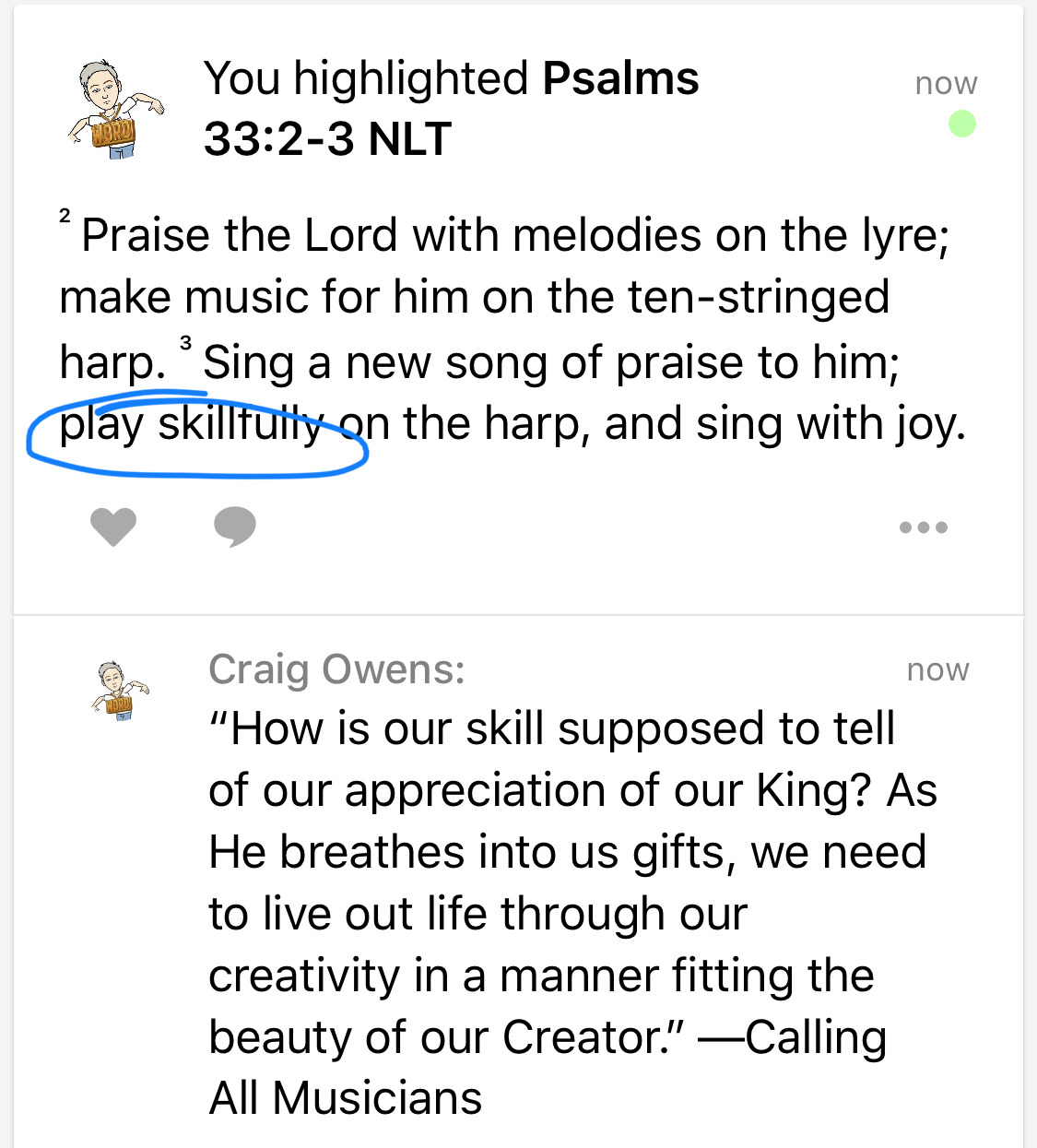
Sing joyfully to the Lord, you righteous; it is fitting for the upright to praise Him. Praise the Lord with the harp; make music to Him on the ten-stringed lyre. Sing to Him a new song; play skillfully, and shout for joy. (Psalm 33:1-3)

     To keep up the freshness of worship is a great thing, and in private, it is indispensable. Let us not present old, worn-out praise but put life and soul and heart into every song, since we have new mercies everyday and see new beauties in the work and Word of our Lord. 

     It is wretched to hear God praised in a slovenly manner. He deserves the best we have. All Christians should endeavor to sing according to the rules of the art so that they may keep time in tune with the congregation. The sweetest tunes, and the sweetest voices, with the sweetest words, are all too little for the Lord our God; let us not offer Him limping rhymes, set to harsh tunes, and growled out by discordant voices.

From Spurgeon And The Psalms

Imagine if I told my wife something like this—

Every Thursday night is going to be our date night. I’m going to plan something special, dress up in some nice clothes, and be totally tuned in to your needs. I’m going to listen to everything you have to say to me, express my unending love to you, ask forgiveness for areas I may have messed up that week, and then endeavor to put into practice everything you tell me that you would like. 

I promise I’ll be there every Thursday. 

The other days of the week, I’ll think about you every once in a while—especially if I need something—but other than that I’ll be doing my own thing. 

How rich and meaningful would you expect that relationship to be? 

Sadly, this is how many people who call themselves Christians view their relationship with Jesus. They put on nice clothes every Sunday, show up at church, sing some songs, listen to a sermon, repent of sins, and promise to live a better life in this new week. But after they leave their church service, they seldom give their Savior another thought—unless they get themselves into trouble where they really need a Savior’s immediate help. 

In Psalm 33, the psalmist is calling us to—as Spurgeon puts it—“freshness in worship” not just in a public worship service, but in private worship at every moment of every day. Our God is continually revealing Himself to us in new and fresh ways, so our worship should be equally as fresh, vibrant, and passionate—both planned times of worship and spontaneous songs of praise. 

Both our relationship with God and with our loved ones will go to new levels of intimacy when we seek to know the other one more deeply. Our God is worthy of the very best praise we can give Him, which means we will always be finding new ways to sing our worship to Him every single day.

►► Would you please prayerfully consider supporting this ministry? My Patreon supporters get behind-the-scenes access to exclusive materials. ◀︎◀︎

Questioning God

Listen to the podcast of this post by clicking on the player below, and you can also subscribe on AppleSpotify, or Audible. 

In the first six chapters of the book of Zechariah, question marks appear 18 times. 

Question marks invite a conversation; whereas, periods or exclamation points tend to end the conversation. Clearly, God enjoys dialogue.

God sometimes asks questions to get Zechariah to evaluate his surroundings or the prevailing culture. Sometimes God asks Zechariah a question to get him to clarify what he is seeing or thinking. 

But without a doubt, most of the questions are posed by Zechariah to either God or to the angelic messenger who sometimes serves as Zechariah’s guide. Not once does God nor the angel tell Zechariah to hold his tongue. Zechariah’s questions are never belittled nor treated as though they were a bother. Nor are his questions ignored. 

Rather, every single question is answered.

God enjoyed talking with Adam and Eve in the garden of Eden, He walked and talked with Enoch, He listened to the questions asked by Job and the psalmists, and here He engages Zechariah in conversation too. 

Prayer is never designed to be a monologue—with us just speaking to God—nor is Bible reading designed to be a monologue—with just God speaking to us. Both prayer and Bible reading are used by the Holy Spirit to keep a dialogue active and engaging. You and I should never be afraid to approach God with our questions, nor should we be afraid to listen to the questions God asks us. 

The dialogue between us and God builds an intimacy that cannot be developed in any other way. So keep asking those questions!

►► Would you please prayerfully consider supporting this ministry? My Patreon supporters get behind-the-scenes access to exclusive materials. ◀︎◀︎
Spirit-Filled Dads 

Listen to the podcast of this post by clicking on the player below, and you can also subscribe on AppleSpotify, or Audible. 

Last week I mentioned that there are numerous people who only appear in the Bible once. They come on the scene—many of them nameless to us—to play their part and then we never hear about them again. 

But we still hear from them because their lives are still teaching us. 

Remember that each of you is God’s gift to the world IF you are using God’s gift in you to glorify God in the world. We meet one of those gifts in the Book of Luke that can teach us Dads some valuable lessons. 

There are several “one-timers” listed by Luke in the Advent story. Luke was a first-rate historian, researching his subject and talking to eyewitnesses to the events. Some of these one-timers have a few details Luke shared with us: 

  • Zechariah and Elizabeth—we know their family lineage (priestly), Zechariah’s role in the temple, and the fact that Elizabeth was barren 
  • Shepherds—we know where they came from (the fields surrounding Bethlehem) and their occupation. 
  • Anna—we know her tribe (Asher), her father (Phanuel), and role (prophetess), and that she had been married and is now widowed. 

But all Luke can say of Simeon is, “There was a man called Simeon…” (Luke 2:25-35). 

Although, even that short introduction is packed with meaning. 

Simeon in Greek means harkening while Simeon in Hebrew means heard. So he was both one who heard God and one who was heard by God. This speaks to me of an intimacy of relationship. Simeon didn’t view his conversation with God as a monologue but as a dialogue. I think that far too often we view our Bible reading time as God simply speaking to us, and our prayer time as us speaking to God. But both of these activities should be a two-way dialogue.

A.W. Tozer has a great definition of a godly leader that I believe accurately portrays Simeon: “A true and safe leader is likely to be one who has no desire to lead but is forced into a position of leadership by the inward pressure of the Holy Spirit and the press of the external situation.” 

I think this means that a safe, godly leader is one who sees what is happening in a Christ-less culture, who then cries out in pain to God, and then who hears the Holy Spirit telling him how to live a holy life in that Christ-less culture.

We could call this external pressure grief over unrighteousness. Simeon so stood out in his culture that Luke calls him “righteous.” This is one whose way of thinking, feeling, and acting is wholly conformed to the will of God. 

He also calls Simeon “devout.” This is a compound Greek word that only Luke uses in the New Testament which means to catch good things and make them your own. Simeon took hold of the things of God, made them his own, and then observed them carefully.

Finally, Luke tells us that Simeon was “waiting for the consolation.” He was living expectantly to see God’s Word come to its fulfillment. He could do all of this because the Holy Spirit was upon him and the Holy Spirit had revealed truth to him. 

That phrase “revealed to him by the Holy Spirit” again speaks to the intimate relationship Simeon had with God. 

Simeon knew that what God promises, He fulfills. He knew the consolation God had promised through Isaiah (Isaiah 40:1-2), and then Simeon saw its fulfillment in Jesus the Christ—

“Sovereign Lord, as You have promised, You may now dismiss Your servant in peace. For my eyes have seen Your salvation, which You have prepared in the sight of all nations: a light for revelation to the Gentiles, and the glory of Your people Israel.” (Luke 2:29-32)

In today’s darkening, Christ-less culture, godly men like Simeon are needed again. 

Dads, do you feel the external pressure of today’s culture? If so, I pray that you will also feel the inward strengthening of the Holy Spirit drawing you into a more intimate relationship with Himself.

God gives His Word to men that will wait expectantly and pray fervently for its fulfillment. God is looking for men—for Dads—that will not cave in to cultural pressure. 

Guys, let the Holy Spirit’s inward pressure strengthen you to stand strong. As you see the external downward spiral away from God, don’t collapse, don’t complain, but hear God’s Word and remain a righteous and devout man for your family and your community. 

In our series We Are: Pentecostal, we talked much more in-depth about how the Holy Spirit wants to help us. You can check out all of those messages by clicking here.

►► Would you please prayerfully consider supporting this ministry? My Patreon supporters get behind-the-scenes access to exclusive materials. ◀︎◀︎

Thursdays With Spurgeon—How Pruning Helps Prayer

This is a weekly series with things I’m reading and pondering from Charles Spurgeon. You can read the original seed thought here, or type “Thursdays With Spurgeon” in the search box to read more entries.

Listen to the podcast of this post by clicking on the player below, and you can also subscribe on AppleSpotify, or Audible. 

How Pruning Helps Prayer 

If you remain in Me and My words remain in you, ask whatever you wish, and it will be done for you. (John 15:7)

     How is this privilege of mighty prayerfulness to be obtained? The answer is, ‘If you abide in Me and My words abide in you.’ … Beloved, the first line tells us that we are to abide in Christ Jesus our Lord. … 

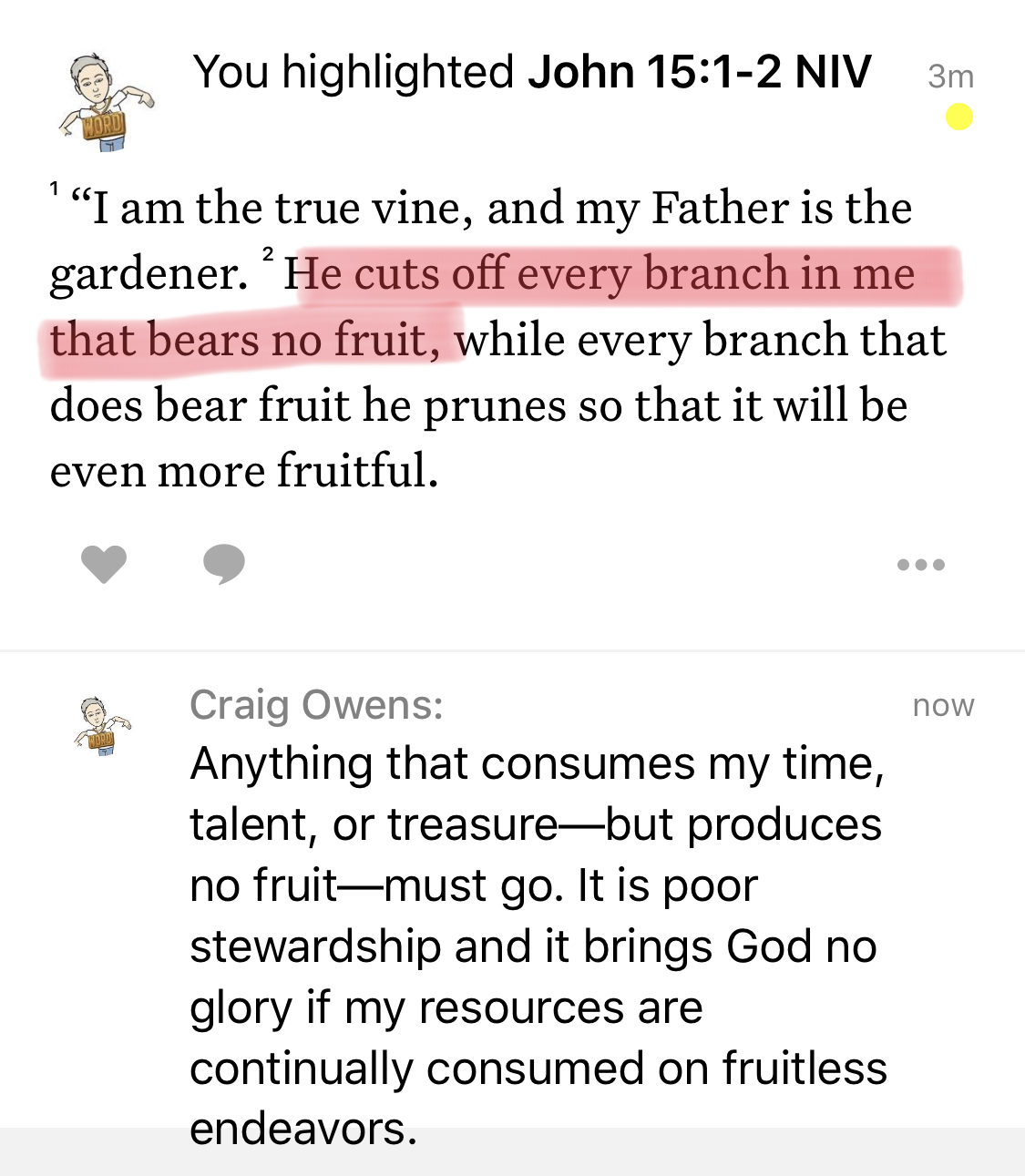
     As if to help us understand this, our gracious Lord has given us a delightful parable. Let us look through this discourse of the vine and its branches. Jesus says, ‘Every branch in Me…that bears fruit He prunes’ (John 15:2). Take care that you abide in Christ when you are being purged. ‘Oh,’ says one, ‘I thought I was a Christian. But alas! I have more troubles than ever. Men ridicule me, the devil tempts me, and my business affairs go wrong.’ Brother, if you are to have power in prayer, you must take care that you abide in Christ when the sharp knife is cutting everything away. …  

     Take care, also, that when the purging operation has been carried out you still cleave to your Lord. … When you see the work of the Spirit increasing in you, do not let the devil tempt. He will try to get you to boast that now you are somebody; you need not come to Jesus as a poor sinner and rest in His precious blood alone for salvation. Abide still in Jesus. … Your work for Christ must be Christ’s work in you or else it will be good for nothing.

 From The Secret Of Power In Prayer

Our Heavenly Father wants us to be fruitful because that brings Him glory and lifts Jesus up for others to see. 

We have to commit to abiding in Jesus despite the pruning process. It’s helpful to remember that the reason the Husbandman prunes us is because He has seen fruitfulness in us, but He wants us to be even more fruitful. When we stay in the process during the uncomfortable—and sometimes painful—pruning, more fruit will begin to appear in our lives. 

It’s at this point that we have to guard against pride. The devil loves for me to get proud of “my accomplishments.” But I have to remind myself that apart from the Vine I am worse than fruitless; I’m just a dead branch only fit for the fire. I’ve learned that there is a danger in success, so I must constantly choose humility over pride, and abiding over self-sustaining. 

As we abide, our prayers take on an ever-increasing vitality so that conversation with our Lord becomes as natural as breathing. I hope none of us will ever settle for anything less than this intimate, ongoing communion with our Master!

►► Would you please prayerfully consider supporting this ministry? My Patreon supporters get behind-the-scenes access to exclusive materials. ◀︎◀︎

Thursdays With Spurgeon—The Natural Out-Gushing

This is a weekly series with things I’m reading and pondering from Charles Spurgeon. You can read the original seed thought here, or type “Thursdays With Spurgeon” in the search box to read more entries.

Listen to the podcast of this post by clicking on the player below, and you can also subscribe on AppleSpotify, or Audible. 

The Natural Out-Gushing

If you remain in Me and My words remain in you, ask whatever you wish, and it will be done for you. (John 15:7) 

   He does not say, ‘If you abide in Me, and My words abide in you, you will do spiritual things,’ but ‘you will ask.’ By prayer you will be enabled to do. But before all attempts to do, you will ask. The choice privilege here given is a mighty prevailing prayerfulness. Power in prayer is very much the gauge of our spiritual condition. …  

     Prayer comes spontaneously from those who abide in Jesus. … Prayer is the natural out-gushing of a soul in communion with Jesus. Just as the leaf and the fruit will come out of the vine without any conscious effort on the part of the branch but simply because of its living union with the stem, so prayer buds and blossoms and produces fruit out of souls abiding in Jesus. … They do not say to themselves, ‘Now is the time for us to get to our task and pray.’ No, they pray as wise men eat—namely, when the desire for it is upon them. …  

     Habitual asking comes out of abiding in Christ. You will not need urging to pray when you are abiding with Jesus. … 

     ‘If you abide in Me, and My words abide in you, you will ask’—and you will not wish to cease from asking. He has said, ‘Seek My face,’ and your heart will answer, ‘Your face, Lord, I will seek’ (Psalm 27:8). … 

     This power in prayer is like the sword of Goliath. Wisely may every David say, ‘There is none like it; give it to me’ (1 Samuel 21:9). This weapon of all-prayer beats the enemy and at the same time enriches its possessor with all the wealth of God.

 From The Secret Of Power In Prayer

When I first met the beautiful young lady that would eventually become my wife, we spent hours and hours and hours talking with each other. It was how I got to know her heart, and how she got to know mine. My conversations with Betsy are still some of the most cherished times I have. 

But what if after we got married I said to Betsy, “I love you, my darling, and I’m so looking forward to a lifetime with you! I will make it a priority to give you my undivided attention for 90 minutes every Sunday morning. Other than that, I’ll be thinking about you while I go about my busy life.” How intimate is this relationship going remain? 

Sadly, this is how many Christians treat their relationship with Jesus. “Thank You for saving me from the penalty of my sin, Jesus! I love You and I’m so looking forward to an eternity with You in Heaven. I will make it a priority to give You my undivided attention every week at church. Other than that, I’ll be thinking about You while I go about my busy life.” 

This is not abiding. 

No branch can remain healthy and produce any fruit if it is only occasionally attached to the vine. In order for the branch to be fruitful, it must be continually abiding in the life-giving sap of the vine. 

Intimacy with Jesus means abiding with Him at all times. It means engaging in conversation with Him at all times. Brother Lawrence commented, “The time of business does not with me differ from the time of prayer; and in the noise and clatter of my kitchen, I possess God in as great tranquility as if I were upon my knees at the blessed sacrament.” 

My friend, let’s all seek to become more aware of the closeness of Jesus. Let us “take delight in the Lord” (Psalm 37:4) and continually engage Him in intimate conversation. As we do, the fruitfulness of our prayer life cannot help but blossom into beautiful things that give God great joy and glory.

►► Would you please prayerfully consider supporting this ministry? My Patreon supporters get behind-the-scenes access to exclusive materials. ◀︎◀︎
Thursdays With Spurgeon—Present Communion With Jesus

This is a weekly series with things I’m reading and pondering from Charles Spurgeon. You can read the original seed thought here, or type “Thursdays With Spurgeon” in the search box to read more entries.

Listen to the podcast of this post by clicking on the player below, and you can also subscribe on iTunes or Spotify.

Present Communion With Jesus

     The desire of a renewed soul is to find Christ and to be with Him. … Past communion with Christ is very well: ‘Therefore I will remember Thee from the land of Jordan…’ (Psalm 42:6). But these are only stale meats, and a loving soul wants fresh food every day from the table of Christ. … 

     A true loving soul, then, wants present communion with Christ. So the question is, ‘Tell me where You feed. Where do You get Your comfort from, O Jesus? I will go there. … Where do You feed Your flock? In Your house? I will go there, if I may find You there. In private prayer? Then I will not be slack in that. In the Word? Then I will read it night and day. Tell me where You feed; wherever You stand as the Shepherd, there will I be, for I want You. I cannot be satisfied to be apart from You. My soul hungers and thirsts to be with You.’

From The Church’s Love To Her Loving Lord

There are so many pictures in the Bible about our continual reliance on God’s presence—from the manna that was only good for each day, to Jesus teaching us to pray for “our daily bread,” to the vivid example of Christians being as dependent on Jesus as a branch is dependent on the vine (see Exodus 16:4-5, 14-17; Matthew 6:11; John 15:1-8).  

All of these mean that we need to constantly abide with our Savior. 

In my book Shepherd Leadership: The Metrics That Really Matter, I spend two chapters talking to leaders about the need to rest—or sabbath. In fact, I call it sabbathing to give it the emphasis on the ongoing nature of this activity. I wrote—

“Without building in sabbath breaks, we run down emotionally, spiritually, mentally, and physically, which means loving God becomes a chore, not a delight (Mark 12:30). This then means loving your neighbor becomes nearly impossible (Mark 12:31). Ultimately, this means that we aren’t able to be the compassionate, wise, strong shepherds that the sheep under our care need us to be. … 

“The goal of sabbathing is to infuse more vitality into the shepherd leader for the purpose of pasturing the sheep under that leader’s care. You cannot give hope to others unless you are hope-filled; you cannot give health to others unless you are healthy; you cannot consistently speak wisdom to others unless you are growing in wisdom. All of this healthy growth for the shepherd leader takes place while sabbathing….” 

To reiterate what Pastor Spurgeon said: “A true loving soul, then, wants present communion with Christ.” I hope you will always seek that for yourself.

►► Would you please prayerfully consider supporting this ministry? ◀︎◀︎

Global And Personal

Listen to the podcast of this post by clicking on the player below, and you can also subscribe on Apple or Spotify.

You who answer prayer … You answer us with awesome and righteous deeds, God our Savior…. Shout for joy to God, all the earth! (Psalm 65:2, 5; 66:1). 

Psalms 65 and 66 tell of God’s awesome involvement in our lives. He is both globally involved and personally involved. He’s not too big to care for my needs, and He’s not so preoccupied with me that He is unaware of global events. 

Look at the grandeur of our Creator—

  • You answer us with awesome deeds of righteousness 
  • You are the hope of all the ends of the earth 
  • You formed the mountains by Your power
  • You stilled the roaring of the seas 
  • You care for the land and water it; You enrich it abundantly 
  • Your carts overflow with abundance 
  • all of creation shouts for joy and sings praise to You
  • all the earth says, “How awesome are Your deeds!” and bows down to You in praise 
  • You rule forever by Your power, Your eyes watch the nations 
  • how awesome are Your works on man’s behalf! 

And yet He is not just God of global events, but He is intimately involved with each and every person. He notices me! 

The psalmist says, “Come and listen, all you who fear God; let me tell you what He has done for me.” Then he tells how God…

  • forgave my sin
  • listened to my prayer
  • honored my prayer 
  • has not withheld His love from me 

Oh, come and see! See how awesome God is that the earth trembles before Him. See how awesomely loving He is that He stoops to listen to me. He is indeed a global God but He is also an intimately personal God. 

The more we know our God in both His majesty and His intimacy, the more we will praise Him.

►► Would you please prayerfully consider supporting this ministry? ◀︎◀︎