Links & Quotes

link quote

“Don’t hold onto anything so tightly that Jesus can’t take it from you.” —Corrie ten Boom

“Forgiveness doesn’t diminish justice; it just entrusts it to God. He guarantees the right retribution.” —Max Lucado

“History is a vast early warning system.” —Norman Cousins

“How do we develop such trust? We seek the Lord in prayer, meditate on His Word, and walk in obedience. You may object, ‘But those things are all works.’ I disagree. They are all acts of faith. As we observe these disciplines, we are trusting that the Holy Spirit is at work in us, building up a reservoir of strength for our time of need.” Read more of David Wilkerson’s post Entering God’s Rest.

A couple of thousand years ago Socrates called the youth generation lazy, disrespectful, and lacking responsibility. Tim Elmore points out that there are 7 changes that affect every generation. Parents, teachers, coaches, and others that work with youth need to check this out.

Every summer in Cedar Springs all of the churches combine together for a huge worship service called UNITED. This year we have a special project: united to change the world.

[VIDEO] This morning I launched my first live broadcast on Periscope. You can find me there at username @craigtowens. Here is the video from my live feed—

That Grand Old Flag

American flagToday is Flag Day in the United States of America. I proudly fly the stars and stripes outside my home, and I get misty-eyed every time I sing the national anthem or say the pledge of allegiance. These words from Rev. Henry Ward Beecher penned many long years ago still ring true today for me—

“If one asks the meaning of our flag, I say it means just what Concord and Lexington meant, what Bunker Hill meant. It means the whole glorious Revolutionary War. It means all that the Declaration of Independence meant. It means all that the Constitution of our people, organizing for justice, for liberty, and for happiness, meant. Under this banner rode Washington and his armies…. It waved on the highlands at West Point…. This banner streamed in light over the soldiers’ heads at Valley Forge…. It crossed the waters rolling with ice at Trenton…. Our flag carries American ideas, American history, and American feelings. Beginning with the colonies, and coming down to our time, in its sacred heraldry, in its glorious insignia, it has gathered and stored chiefly this supreme idea: Divine right of liberty in man. Every color means liberty. Every thread means liberty. Every form of star and beam or stripe of light means liberty. Not lawlessness, not license, but organized, institutional liberty—liberty through law, and laws for liberty. This American flag was the safeguard of liberty. Not an atom of crown was allowed to go into its insignia. Not a symbol of authority in the ruler was permitted to go into it. It was an ordinance of liberty by the people, for the people. That it meant, that it means, and, by the blessing of God, that it shall mean to the end of time.” —Henry Ward Beecher

12 Quotes From “God-Breathed”

God-BreathedJosh McDowell has given us another outstanding Christian apologetic. In God-Breathed, Josh shares with us some astounding facts that show the amazing reliability of the Bible. You can read my book review of God-Breathed by clicking here. Below are some of the quotes I especially appreciated.

“The doctrines and commands of Scripture act as two guardrails to guide us down the right path of life. The teachings of Scripture (doctrine) keep us thinking and believing rightly. The instructions of Scripture (commands) keep us acting and living rightly. But without the proper context, we can miss the true purpose of Scripture, which is to guide us into keeping right thinking and right living in balance. … Scripture was given to lead us into a deeper love relationship with the One Who wrote the Book, and then also with everyone around us.” 

“The infinite God is personal. And because He is personal, we can love Him, worship Him, and please Him with our trust and obedience. Because He is personal, He can love us, rejoice with us, comfort us, and reveal Himself and His ways to us.”

“What is it that really parents our children? Is it the directives, instructions, and commands we give them? Those are behavioral guidelines, but they are not what raises our kids. It is not ‘parenting,’ as a concept, that brings up children; it is the parents themselves—relational human beings—who do the work and perform that role. That is the way God designed it. He wants kids to be brought up in loving relationships. Without relationship with another person, all attempts to instill right beliefs and right behavior will be ineffective, because they are detached from the necessary elements of personal love and care. … The Holy Spirit administers Scripture to us like a loving parent, in order to provide us with wisdom through its lessons (Proverbs 3:5), security through its boundaries (Exodus 20), caution through its warnings (Ephesians 4:17-22), and reproof through its discipline (Philippians 2:3-4).” 

“By AD 100, the apostles had died, but the Christian Church was still in its infancy, with fewer than twenty-five thousand proclaimed followers of Christ. But within the next two hundred years, the fledgling church experienced explosive multiplication of growth, to include as many as twenty million people. This means the church of Jesus Christ quadrupled every generation for five consecutive generations!”

“In AD 367, Athanasius of Alexandria compiled the first official list of books that we know today as the New Testament. There were twenty-seven books listed in all. These books were then canonized officially by the church at the councils of Hippo (AD 393) and Carthage (AD 397). Again, these councils didn’t authorize which writings were God-breathed works; rather, they recognized that these writings were authorized by God Himself.” 

“The Old Testament, comprised of thirty-nine books, was officially recognized as God-breathed Scripture as early as the fourth century BC and certainly no later than 150 BC.”

“The Bible is now the most translated book of all-time. The United Bible Society reports that, as of 2014, the Bible or portions of the Bible has been translated into 2,650 languages. Their Digital Bible Library now hosts more than 800 translations in 636 languages spoken by 4.3 billion people.” 

“Compared with other ancient writings, the Bible has more manuscript evidence to support it then the top ten pieces of classical literature combined.”

“No other work in all literature has been so carefully and accurately copied as the Old Testament.”

“Once archaeologists completed their search of the Qumran caves—eleven caves in all—almost 1,050 scrolls have been found in about 25,000 to 50,000 pieces (a number that varies depending on how the fragments are counted). Of these manuscripts, about 300 were texts from the Bible, and many of the rest had ‘direct relevance to early Judaism and emerging Christianity.’ Every book of the Old Testament was represented, except for the book of Esther, and the earliest copies dated from about 250 BC. … Once the Dead Sea Scrolls were translated and compared with modern versions of the Hebrew Bible, the text proved to be identical, word for word, in more than 95% of the cases. (The 5 percent deviation consists mainly of spelling variations. For example, of the 166 words and Isaiah 53, only seventeen letters are in question. Of those, ten are a matter of spelling, and four are stylistic differences; the remaining three letters comprise the word light, which was added to Isaiah 53:11.)”

“The writings of the most authoritative writers of the early church—the leaders scholars referred to collectively as the Apostolic Fathers—give overwhelming support to the existence of the twenty-seven authoritative books of the New Testament. Some Apostolic Fathers produced extensive, highly accurate quotes from the text of the New Testament. … Early church writers provide quotations so numerous and widespread that if no manuscripts of the New Testament were extant, ‘the New Testament could be reproduced from the writings of the early Fathers alone.’” —Norman Geisler and William Nix 

“The earliest preachers of the gospel knew the value of…first-hand testimony, and appealed to it time and again. ‘We are witnesses of these things,’ was there constant and confident assertion. And it can have been by no means so easy as some writers seem to think to invent words and deeds of Jesus in those early years, when so many of His disciples were about, who could remember what had and had not happened. … One of the strong points in the original apostolic preaching is the confident appeal to the knowledge of the hearers; they not only said, ‘We are witnesses of these things,’ but also, ‘As you yourselves also know’ (Acts 2:22). Had there been any tendency to depart from the facts in any material respect, the possible presence of hostile witnesses in the audience would have served as a further corrective.” —F.F. Bruce

Read The Red Letters

Read the red lettersLet’s see if you can guess what famous person said the following (the answers are below … but no cheating!):

  1. “The phonograph is of no commercial value.”
  2. “I think there is a world market for about five computers.”
  3. “I tell you Wellington is a bad general, the English are bad soldiers; we will settle the matter by lunch time.”
  4. “There will never be a bigger plane built.”
  5. “The world potential market for copying machines is 5000 at most.”

People get it wrong lots of times. Even really smart, successful people. King Solomon, who was called the wisest of all, wrote a book called Ecclesiastes in which he shared some bad advice he tried to follow. In the closing verses he gave this warning, “My son, be warned. Of making many books there is no end so do not believe everything you read, and much study is the weariness of the flesh” (Ecclesiastes 12:12).

In the Hebrew world there were three departments of knowledge:

  • Law―words from God to man
  • Prophesy―judgment from God on how man is doing in observing God’s law
  • Wisdom―man’s attempt to live out God’s law based on observation, experience, and reflection (for a great example of all three departments at work, see Luke 10:25-37)

What we need is someone who (1) knows God’s way, (2) lives God’s way, and (3) can teach us how to live out God’s way for ourselves. Someone who is perfect, flawless in every phase. We need the One Who said, “Heaven and earth will pass away, but My words will never pass away” (Matthew 24:35). That One is Jesus.

Can I make a suggestion that will bring you amazing results? Spend some time reading the red letters. That is, go to the Gospels of Matthew, Mark, Luke and John and focus on the words of Jesus (which many Bible translations print in a red font). There I am certain you will discover the greatest words ever spoken!

If you can, please join me over the next few Sundays as we will be attempting to discover the greatest words ever spoken on a variety of subjects. Folks have turned in the questions that they would like answered, and we are going to look to the red letters to see what Jesus has to say.

Answers to the quiz:

  1. Thomas Edison, remarking on his own invention 
  2. Thomas Watson, Sr., chairman of IBM
  3. Napoleon Bonaparte, at a breakfast with his generals preceding the Battle of Waterloo
  4. A Boeing engineer, after the first flight of the 247, a twin engine plane that held ten people 
  5. IBM board of directors, to the eventual founders of Xerox

Charles Spurgeon On Prayer

C.H. SpurgeonSome great quotes from Charles Spurgeon on prayer…

“We are not to tolerate for a minute the ghastly and grievous thought that God will not answer prayer. History, as manifested in Christ Jesus, demands it.” —Charles Spurgeon

“Be pleased to visit your Church with the Holy Spirit. Renew the day of Pentecost in our midst, and in the midst of all gatherings of Your people, may there come the downfall of the holy fire, the uprising of the heavenly wind. May matters that are now slow and dead become quick and full of life, and may the Lord Jesus Christ be exalted in the midst of His church which is His fullness—‘the fullness of Him that filleth all in all.’ May multitudes be converted; may they come flocking to Christ with holy eagerness to find in Him a refuge as the doves fly to their dovecotes.” —Charles Spurgeon

“Lord, educate us for a higher life, and let that life be begun here. May we be always in the school, always disciples, and when we are out in the world may we be trying to put into practice what we have learned at Jesus’ feet.” —Charles Spurgeon

“Sometimes we think we are too busy to pray. That is a great mistake, for praying is a saving of time.” —Charles Spurgeon

“If I neglect prayer for never so short a time, I lose all the spirituality to which I had attained; if I draw no fresh supplies from heaven, the old corn in my granary is soon consumed by the famine which rages in my soul.” ―Charles Spurgeon

“Sins creep from their lurking places when the darkness reigns; I must myself mount the watch-tower, and watch unto prayer.” ―Charles Spurgeon

“If you would reach to something higher than ordinary groveling experience, look to the Rock that is higher than you, and gaze with the eye of faith through the window of importunate prayer. When you open the window on your side, it will not be bolted on the other.” ―Charles Spurgeon

Henry Ward Beecher On Prayer

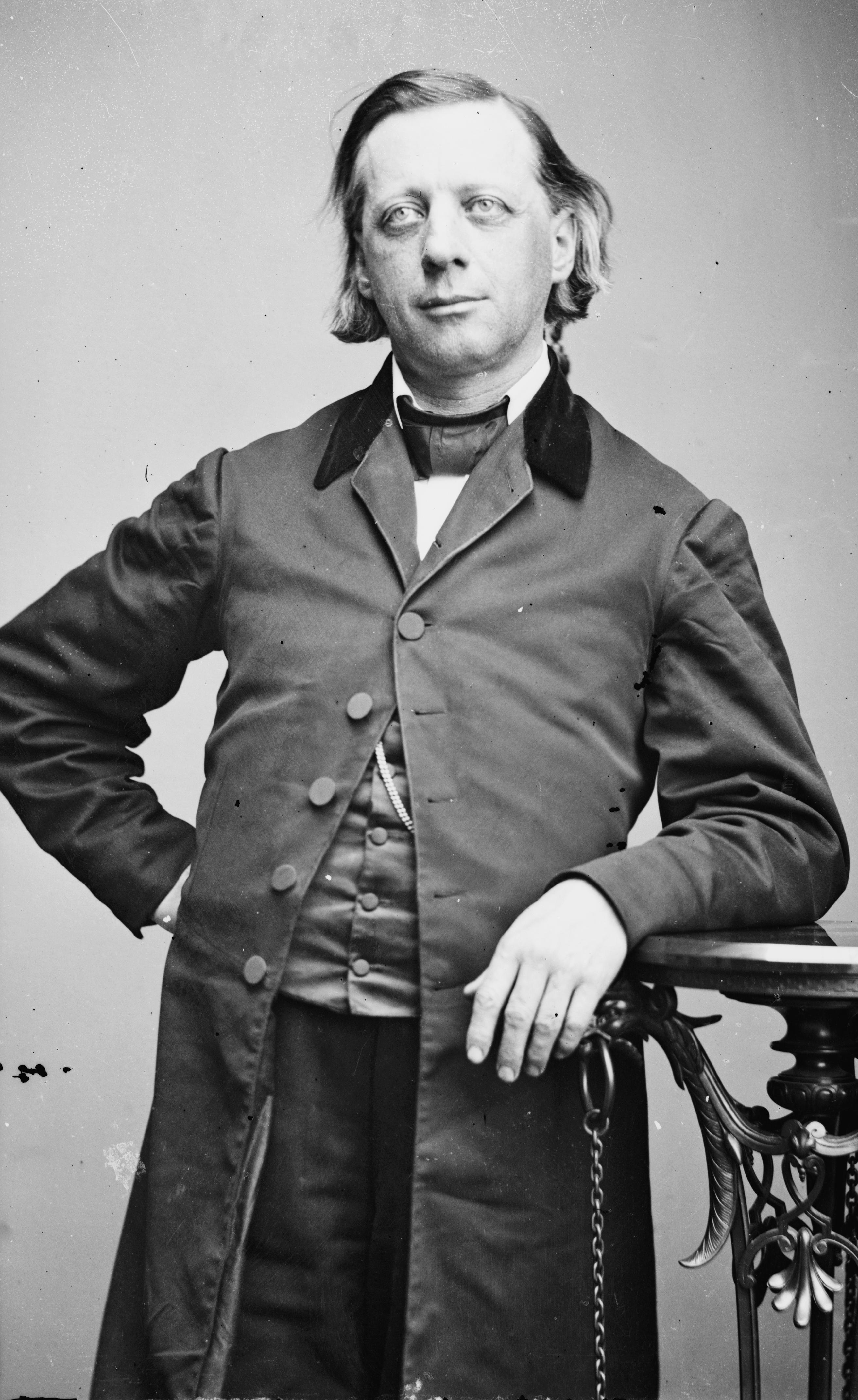
Henry Ward BeecherSome great quotes from Henry Ward Beecher on prayer―

“The world’s battlefields have been in the heart chiefly; more heroism has been displayed in the household and the closet, than on the most memorable battlefields in history.” —Henry Ward Beecher

“The strength of a man consists in finding out the way God is going, and going that way.” —Henry Ward Beecher

“Prayer covers the whole of a man’s life. There is no thought, feeling, yearning, or desire, however low, trifling, or vulgar we may deem it, which, if it affects our real interest or happiness, we may not label for God and be sure of sympathy. His nature is such that our often coming does not tire Him. The whole burden of the whole life of every man may be rolled on to God and not weary Him, though it has wearied the man.” —Henry Ward Beecher

“It is not well for man to pray cream, and live skim milk.” —Henry Ward Beecher

Links & Quotes

link quote

“Everything the world has to offer, God is better and more abiding. There is no comparison. God wins—every time. The question is: will we have Him? Will we wake up from the trance of this stupefying world and see and believe and rejoice and love?” —John Piper

A nice mini-biography on Supreme Court Justice Clarence Thomas.

Max Lucado says, “You cannot be anything you want to be. But you can be everything God wants you to be!” Read more in his post All Things New.

“No prayer is at all likely to bring down an immediate answer if it be not a fervent prayer. ‘The effectual fervent prayer of a righteous man availeth much’ [James 5:16]; but if it be not fervent we cannot expect to find it effectual or prevalent. We must get rid of the icicles that hang about our lips.” —Charles Spurgeon

“The Christian is in a different position from other people who are trying to be good. They hope, by being good, to please God if there is one; or—if they think there is not—at least they hope to deserve approval from good men. But the Christian thinks any good he does comes from the Christ-life inside him. He does not think God will love us because we are good, but that God will make us good because He loves us.” —C.S. Lewis

A great overview on what really happened in the Crusades.

[VIDEO] John Maxwell says what is on the inside is always more attractive than what is on the outside―

Links & Quotes

link quote

John Calvin explaining how singing together in church is like praying together. “We do this [sing corporately] openly, that all men mutually, each one from his brother, may receive the confession of faith and be invited and prompted by his example.” —John Calvin

“It is not that we prepare a palace for God, but that He comes into our mortal flesh and we do our ordinary work, in an ordinary setting, amongst ordinary people, as for Him.” —Oswald Chambers

“Let every man remember that to violate the law is to trample on the blood of his father, and to tear the character of his own, and his children’s, liberty. Let reverence for the laws be breathed by every American mother to the lisping babe that prattles on her lap. Let it be taught in schools, in seminaries, and in colleges. Let it be written in primers, spelling books, and in almanacs. Let it be preached from the pulpit, proclaimed in legislative halls, and enforced in courts of justice.” —Abraham Lincoln

This makes me respect Tim Tebow even more―he is organizing Valentine proms for students with special needs.

Have you ever read how Solomon describes his bride in the Song of Songs? The talented folks at The Overview Bible Project have actually put this together, and it is quite…eye-opening! Check it out.

[VIDEO] I like Kid President! Check out his letter to the future―

Links & Quotes

10 Quotes From “How Do You Kill 11 Million People?”

How Do You KillAndy Andrews pulls no punches in this amazing book: How Do You Kill 11 Million People? You can read my full book review by clicking here. Below are some of the more noteworthy quotes I highlighted in this book.

“The punishment which the wise suffer who refuse to take part in the government, is to live under the government of worse men.” —Plato

“The past is what is real and true, while history is merely what someone recorded.”

“How fortunate for leaders that men do not think. Make the lie big, make it simple, keep saying it, and eventually they will believe it.” —Adolf Hitler

“It is a fact that fewer than 10 percent of Germany’s population of 79.7 million people actively worked or campaigned to bring about Hitler’s change. Even at the height of its power in 1945, the Nazi political party boasted only 8.5 million members. So the remaining 90 percent of Germans—teachers and doctors and ministers and farmers—did . . . what? Stood by? Watched? Essentially, yes.”

“The danger to America is not a single politician with ill intent. Or even a group of them. The most dangerous thing any nation faces is a citizenry capable of trusting a liar to lead them.”

“Have you ever wondered why America doesn’t have a balanced budget? Have you ever in your life heard of a politician who wasn’t for a balanced budget? Have you ever heard a politician speak in favor of a complicated tax code that ordinary citizens would find difficult to understand? Then why do we have a complicated tax code that ordinary citizens find difficult to understand? Meet the 545 men and women who enact every law, propose every budget, and set every policy enforced on the citizens of the United States of America: one president, nine Supreme Court justices, one hundred senators, and 435 members of the House of Representatives. By the way, have you ever noticed that if any one of us lies to them, it is a felony? But if any one of them lies to us, it is considered politics.”

“During the past quarter century, no presidential election has been won by more than ten million ballots cast? Yet every federal election during the same time period had at least one hundred million people of voting age who did not bother to vote!”

“History shows that any people who are sheeplike in following their leadership (so long as their personal self-interests are satisfied) may one day awaken to find that their nation has changed in dramatic ways.”

“If we don’t demand honesty and integrity from America’s leadership now—and reward that integrity with our votes—our leaders will lack the fortitude to make the hard decisions that must be made to change course.”

“Now, more than ever before, the people are responsible for the character of their Congress. If that body be ignorant, reckless, and corrupt, it is because the people tolerate ignorance, recklessness, and corruption. If it be intelligent, brave, and pure, it is because the people demand these high qualities to represent them in the national legislature. … If [one hundred years from now] the next centennial does not find us a great nation … it will be because those who represent the enterprise, the culture, and the morality of the nation do not aid in controlling the political forces.” —President James A. Garfield, in his address to Congress on the centennial of our country (1876)