Listen to the podcast of this post by clicking on the player below, and you can also subscribe on Apple, Spotify, or Audible.
The disciples of Jesus heard His story and asked Him to explain to them what the parable meant. He said, “Don’t you understand this parable? How then will you understand any parable?” (Luke 8:9; Mark 4:13).
The parable in question was the one we refer to as the parable of the sower. According to Christ’s own words, this is the most basic and understandable of all of His parables. If this was a college class, this would be Parables 101.
The kingdom of heaven is so otherworldly, infinite, and utterly beyond a succinct description that even Jesus asked out loud, “What shall we say the kingdom of God is like, or what parable shall we use to describe it?” (Mark 4:30). Then time and time again, Jesus continued to reveal His kingdom with the phrase, “The kingdom of God is like….”
Before we move on to Parables 201 or Parables 301, let’s make sure we know this most basic parable intimately. According to Jesus, this parable is the key to unlocking the meaning of all of His other parables. Approach this one again as you ask the Holy Spirit to reveal something new to your heart.
For instance, as I read through this parable again this week I was captivated by those whom Jesus said had shallow roots. It reminded me that I need to temper my teaching with gentleness. If I’m too aggressive or too theologically deep, I may do damage these tender plants. On the other hand, if I’m too timid, I may leave these plants vulnerable to the ravages of disease or the scorching of the sun. Here again, I must rely on the Holy Spirit’s help. The message may be the same, but perhaps my delivery needs to be more appropriate to my audience.
Let me leave you with this challenge: When was the last time you saw something for the first time in this simplest of parables? If it’s been a while, it may be time for a quick refresher in Parables 101, then you will have the key to go deeper into the other parables. Try it and let me know how it works for you.
Listen to the podcast of this post by clicking on the player below, and you can also subscribe on Apple, Spotify, or Audible.
“…He reached out His hand and touched the man…” (Mark 1:41).
Jesus touched a leper.
We have to be careful not to rush past this or make too light of this action. Those with leprosy were completely shut out of their old way of life—removed from their homes, from their places of work, and ostracized from their family and friends. Wherever they went, they lived with the shame of having to publicly cry out in a loud voice, “Unclean! Unclean!” so that everyone had a chance to scatter and not become contaminated by getting too close to them.
But this leper asked Jesus for healing. Jesus touched the untouchable man and healing immediately appeared! Leprosy was gone, and the man was restored to his former life, to his family, to his friends!
Look at the power of the touch of Jesus:
He touches the hand of a woman, and her fever immediately leaves (Matthew 8:15; Mark 1:31)
A woman with an incurable bleeding disorder touches Jesus, and immediately receives relief (Matthew 9:20–22; Mark 5:25–34; Luke 8:43–48)
Blind eyes are opened (Matthew 9:29–30, 20:34; Mark 8:22–25)
All manner of diseases are instantly cured (Matthew 14:35–36; Mark 3:10; 6:55–56; Luke 6:17–19)
Fear is banished (Matthew 17:7)
A mute tongue is loosed (Mark 7:33–35)
Children are blessed (Mark 10:13; Luke 18:15)
A dead man is raised back to life (Luke 7:13–15)
A severed ear is reattached and restored (Luke 22:50–51)
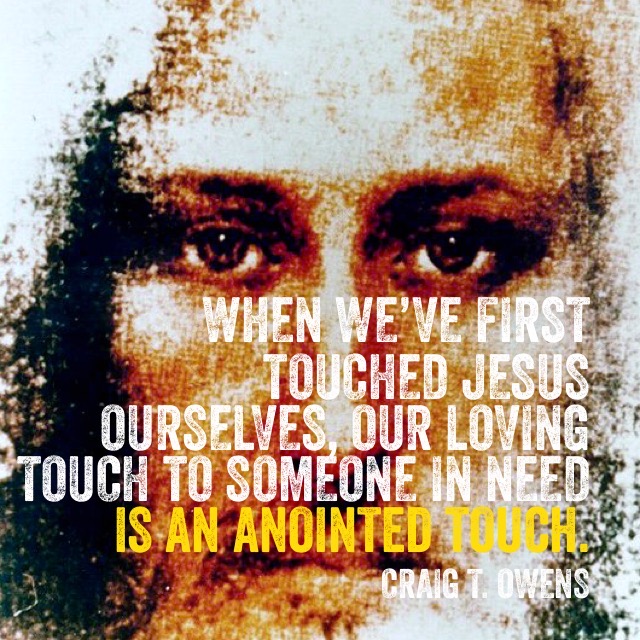
There is a power in touching someone that goes beyond words or any other actions.When we’ve first touched Jesus ourselves, our loving touch to someone in need is an anointed touch.
I am reminded of the words of the old song—
Oh to be His hand extended
Reaching out to the oppressed
Let me touch Him
Let me touch Jesus
So that others will know
And be blessed
My touch alone has very little lasting value. But when I’ve touched Jesus first, my touch carries His power and His love to the one whom I touch. Let us keep touching Jesus so that we can keep touching the untouchables around us and bringing to them the healing and deliverance and blessing that only Jesus can give.
Listen to the podcast of this post by clicking on the player below, and you can also subscribe on Apple, Spotify, or Audible.
Some people are either afraid to say what they really think, or else they aren’t entirely confident in what they believe. As a result, they tend to take an indirect approach to communicate what they want someone else to hear.
Some try to imply what they’re really trying to say: “Do you get what I’m saying? Can you read between the lines?” Others hope the other person will infer the right meaning. But bold claims are something completely different—there’s no implying, no hoping the other person will infer the right thing, but just a clear statement. Like Caiaphas’ statement that we looked at last week: “Jesus must die so that the rest of us can keep our cushy positions.”
You can always tell if the message got through by how the recipients respond. Usually the stronger the reaction, the more clearly the message was received!
Remember that I talked about the clout that Annas still held, even though he wasn’t officially the high priest anymore? We see it right after the arrest of Jesus. Instead of taking Him directly to the Sanhedrin, He was first taken to Annas. There Jesus was questioned about His followers and His teaching, and He simply replied, “Everything I taught is public knowledge. I’ve boldly and clearly proclaimed Who I am” (John 18:12-14, 19-24).
All throughout His public ministry, Jesus did make it clear who He was. There are so many places we could read about this in the Gospels, but let me just show you three examples from the Gospel of Luke:
He forgives sins and heals a paralytic to prove that He has the power of God to forgive—Luke 5:20-25
Demons recognize Him and submit to His power—Luke 8:28-35
His disciples recognize that Jesus is the Son of God—Luke 9:18-22
Finally, Jesus was asked directly by the Sanhedrin and He made His bold claim that He was indeed the Son of God (Luke 22:66-71). Remember I said earlier that you can tell how clearly the message got through by the response of the people? Well, check out this response—
Then the high priest tore his clothes and said, “He has spoken blasphemy! Why do we need any more witnesses? Look, now you have heard the blasphemy. What do you think?”
“He is worthy of death,” they answered. (Matthew 26:65-66)
What about you and me?Do we have to imply that we believe Jesus is the Son of God? Do we have to hope the other person will infer that we are His disciples? Or can it be said that our verbal and lifestyle testimony is a bold claim of what we believe and Whose we are?
The Book of Acts records the response of the Sanhedrin to the first Christians, and it appears to be identical to their response when they heard Jesus say, “I am the Son of God.” For instance:
After Peter and John healed a lame man, the Sanhedrin could see “that these men had been with Jesus” but they ordered them not to talk about Jesus anymore. These men said they could not obey that directive (Acts 4:13-14).
When they were called back in for a second appearance, Luke tells us the Sanhedrin “were furious and wanted to put them to death.” But they persisted in boldly proclaiming Jesus to everyone (Acts 5:30-39).
Then there was an early church leader named Stephen. His bold preaching brought him before the Sanhedrin as well, who ended up stoning him to death (Acts 6:8-10, 15; 7:55-56).
So let me repeat the question: Can it be said that our verbal and lifestyle testimony is a bold claim of what we believe and Whose we are? Or do we simply speak empty words?
Jesus made His bold claim and He backed it up. What about us? Do we make the bold claim that we will stand for Jesus even if that means we will be ridiculed, persecuted, or killed? Is our bold claim backed up by a lifestyle of complete trust in our Savior? These are questions every Christian should ask and allow the Holy Spirit to help them answer honestly.
If you are a pastor (or if you really want to encourage your pastor), I’ve got a super-special deal on my book Shepherd Leadership. Check it out by clicking here.
Listen to the podcast of this post by clicking on the player below, and you can also subscribe on Apple, Spotify, or Audible.
I don’t think there’s any arguing that Jesus must have been the healthiest Person to ever live. Dr. Luke records His growth in just one succinct verse: “And Jesus grew in wisdom and stature, and in favor with God and man” (Luke 2:52). Every word of Scripture is inspired, right down to the order the words are penned. So when Luke says first that “Jesus grew in wisdom,” that is our indication that a healthy mind is the foundation for every other aspect of health.
I recently received an email from a Christian brother asking for prayer and counseling in overcoming lust and pornography. I naturally agreed to pray with him, but I also said, “Before I offer you any strategies to try, let me ask you a quick question: What have you already tried to get victory over this?”
He replied, “I’ve tried praying, watching videos on it, and basically saying no to the devil. But the temptation comes when I am weak and I think, ‘I can just try again tomorrow!’ And then I fall into it. I am just tempted at times throughout the day, and sometimes I fight it with prayer, but other times I just fall right into it basically without even trying.”
What my friend is dealing with here is a natural, unconscious response. Our brains like well-worn paths because it’s very easy and comfortable for our minds to automatically respond as they have responded before. As in the case of my friend, it may be heading down a path of lust that leads to pornography. For others, it may be unhealthy choices made in response to certain triggers, or it may be the anger that flares up into biting words when a certain someone pushes your buttons.
We head down that well-worn path unconsciously and automatically. Our immediate response might bring some temporary relief, but usually, we’re not very happy with where we’ve ended up once again.
If we are going to make a new path—or a new, healthier response—we first need to become aware of the well-worn path we automatically go to. So my counsel to my friend who emailed me for help was to start keeping a journal. I wrote back:
Your willpower alone isn’t going to cut it (as you’ve probably realized). Here’s the first step I would suggest: keep a journal of every time you are tempted to lust or porn. Write down what you were feeling, was it day or evening, what was happening just before that, did you have time in prayer and Bible reading that day or not, how did you fight the temptation, were you successful or not? I think as you keep track of these things you will begin to see some triggers and some patterns. Maybe you were physically tired, or lonely, or hungry. Maybe it was a certain person you talked with or a show you watched. Maybe it was after checking your social medias or after a super-hard day at work. When you start to see patterns of what is causing you to go to porn for relief, you can recognize them earlier and head them off before they grip your mind so strongly.
Psychologists call it metacognition when we think about what we’re thinking about—when we think about why we are taking a certain well-worn path again.
We don’t think about our thinking very frequently. We keep thinking along those well-worn paths out of habit, not because we want to go down those paths. This is where the Holy Spirit is invaluable: He helps us see those well-worn paths, identify which paths are unhealthy or unproductive, and then help us begin to carve out a new path.
It’s not just thinking about right things, but thinking rightly about all things—even the painful things or the triggering things.
In Ephesians 4:22-25, Paul counsels us to take off the “old self” and “put on the new self, created to be like God in true righteousness and holiness. Therefore” (and this is an important conclusion) “each of you must put off falsehood and speak truthfully to his neighbor.”
Do you remember that Jesus taught us to love our neighbor as ourselves (Mark 12:28-31)? Paul says we are to speak truthfully to our neighbor, so doesn’t that mean that we have to first speak truthfully to ourselves? Yes, we do! If we are going to make new paths for our mind, we are going to have to talk to ourselves differently.
My cousin Dick Brogden wrote, “A primary theater of spiritual warfare is in our heads and thoughts. The primary weapon of the enemy is deceit. He starts with attractive little lies and half-truths, and works his way up to blatant, ridiculous, perverted nonsense. Winning the battle for truth in the mind is critical to winning the war. If we lose enough of the little skirmishes, we can believe and do any wicked thing. If we daily combat lies with light and truth, we will stand firm.”
The “little lies and half-truths” will keep us trapped on our old, well-worn paths. But identifying those lies, and speaking the truth to them, will help us travel down new paths that lead to health and freedom.
Let the Holy Spirit be your Counselor. Let the Holy Spirit help you think about what you’re thinking about when you’re triggered to unconsciously head down the unhealthy well-worn path. Let the Holy Spirit help you see a new path. And then let the Holy Spirit empower you to stick with it—to keep doing the hard work of blazing a new path.
I am going to build on this series of messages about a Christian’s mental health, but let’s start with this simple prayer:
Holy Spirit, help me make new paths.
As you pray this, listen to how the Holy Spirit will guide you away from the unhealthy, unconscious, well-worn paths, and will then lead you into the new, healthy path that brings you freedom.
Peter’s mother-in-law was sick with a fever. “They immediately told Jesus about her. So He went to her…” (Mark 1:30-31).
They didn’t call a doctor first, or try a home remedy first, or consult a friend about how they treated a fever first. They immediately went to Jesus. And as soon as they did, Jesus went to the sick woman and healed her.
The old hymn What A Friend We Have In Jesus has a powerful reminder: “Oh, what peace we often forfeit—Oh, what needless pain we bear—all because we do not carry everything to God in prayer.”
What are we waiting for? Why do we try to help ourselves first when Jesus is standing right there waiting to help us?
Let’s respond differently. Let’s make going to Jesus our first—our immediate—response so that Jesus can come to our aid right away.
Listen to the podcast of this post by clicking on the player below, and you can also subscribe on Apple, Spotify, or Audible.
CEO stands for “chief executive officer” and usually designates the person who is at the top of the organization’s flowchart. Those who occupy that office frequently exhibit a top-down mindset, where everyone below them is only in that position to serve the CEO.
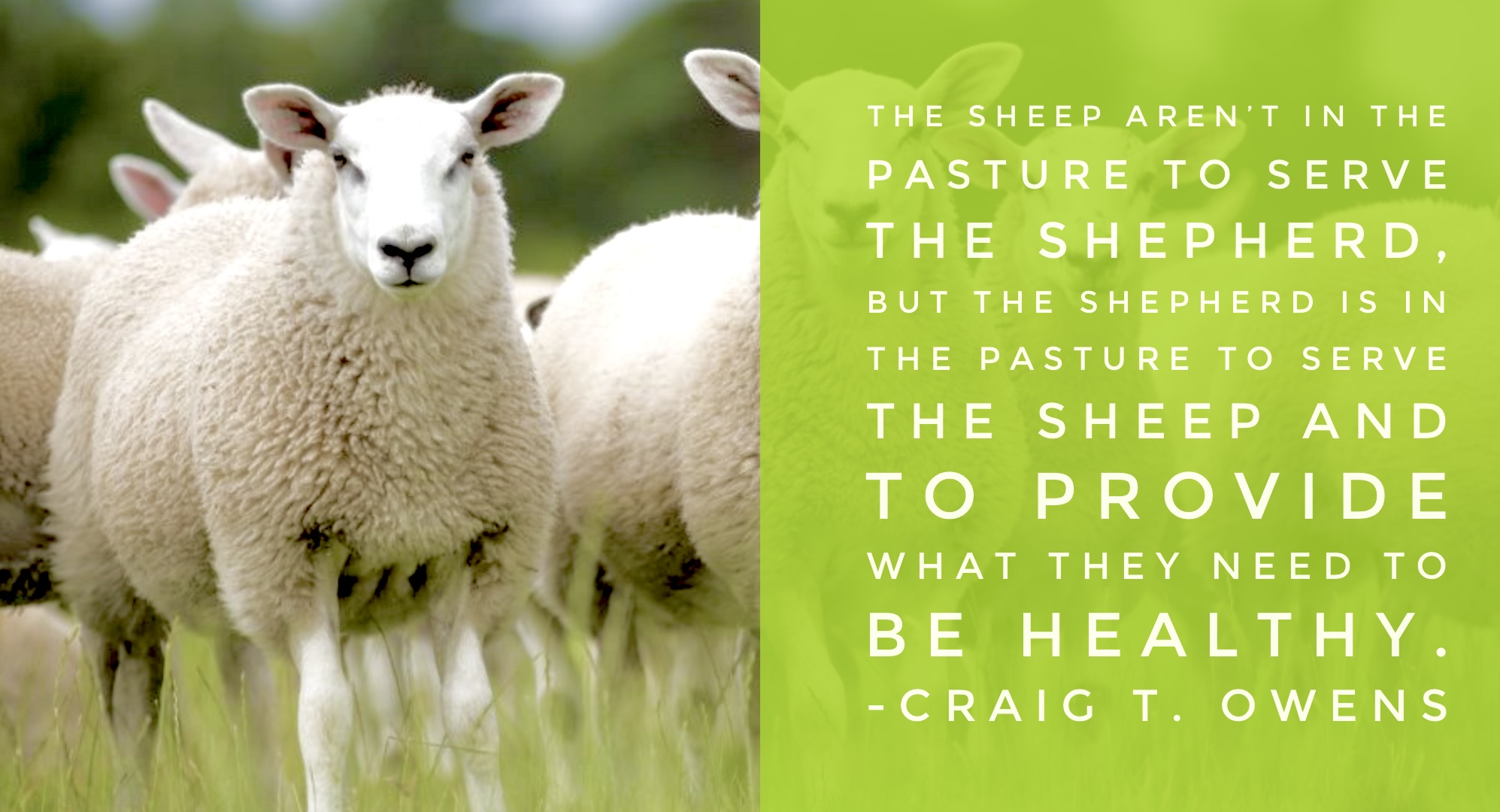
This may work well in the corporate world, but this is not at all the heart Jesus demonstrates toward us. Therefore, it shouldn’t be the mindset or practice of Christ’s under-shepherds—those whom He has called to pastor His sheep. The sheep aren’t in the pasture to serve the shepherd, but the shepherd is in the pasture to serve the sheep and to provide what they need to be healthy.
Check out this conversation I had when I joined a pastoral staff that is using my book Shepherd Leadership as a study guide.
Jesus was confident in who He was and what His Father’s plan was: “Jesus knew that the Father had given Him authority over everything and that He had come from God and would return to God” (John 13:3 NLT).
Yet Jesus also said, “For even the Son of Man came not to be served but to serve others and to give His life as a ransom for many” (Mark 10:45 NLT).
If you are a pastor, you have been charged with caring for the sheep under your care, and not the other way around—
Tend (nurture, guard, guide, and fold) the flock of God that is your responsibility, not by coercion or constraint, but willingly; not dishonorably motivated by the advantages and profits belonging to the office, but eagerly and cheerfully; not domineering—as arrogant, dictatorial, and overbearing persons—over those in your charge, but being examples (patterns and models of Christian living) to the flock (the congregation). (1 Peter 5:2-3 AMP)
Listen to the podcast of this post by clicking on the player below, and you can also subscribe on Apple, Spotify, or Audible.
Jesus told us numerous times that we can come to God as our Father.
Have you ever played a word association game? For instance, if I said “winter” you might say “shoveling” (or kids might say “sledding”). If I said “summer” you might say “vacation.” But I think the word “father” may bring up a lot of very different feelings or images. Some may have fond memories of the word “father” while others may think:
playful but not a good provider
disciplinarian
hard to please
absent
unavailable
Even if our human fathers were good, they were still flawed. Jesus said this about us, “If you parents, that even know how to give good things to your kids are evil, how much more amazing is the goodness and love of God” (Matthew 7:11). But Jesus had something entirely different in mind for us when He told us we could come to God as our Father. And, sadly, it’s a level of intimacy that many have never known.
All of us could only experience limited intimacy with our earthly fathers, but with our Heavenly Father we can have unlimited and unimaginable intimacy!
When Jesus was teaching us to pray in Matthew 6:6-9, there are two thoughts that stand out to me about coming to God as our Father. First, Jesus tells us that we don’t have to use any special language. When He said some people babble in prayer, Jesus was saying they were using a language that was unnatural to them—they weren’t being themselves.
Our Heavenly Father wants us to come to Him as children: full of innocence, and wonder, and expectation, and imagination!
Second, I notice that three times Jesus calls God “your Father,” but when He begins His model prayer He says, “Our Father.” Think of that: Jesus is saying we can approach God the same way He approached His Father!
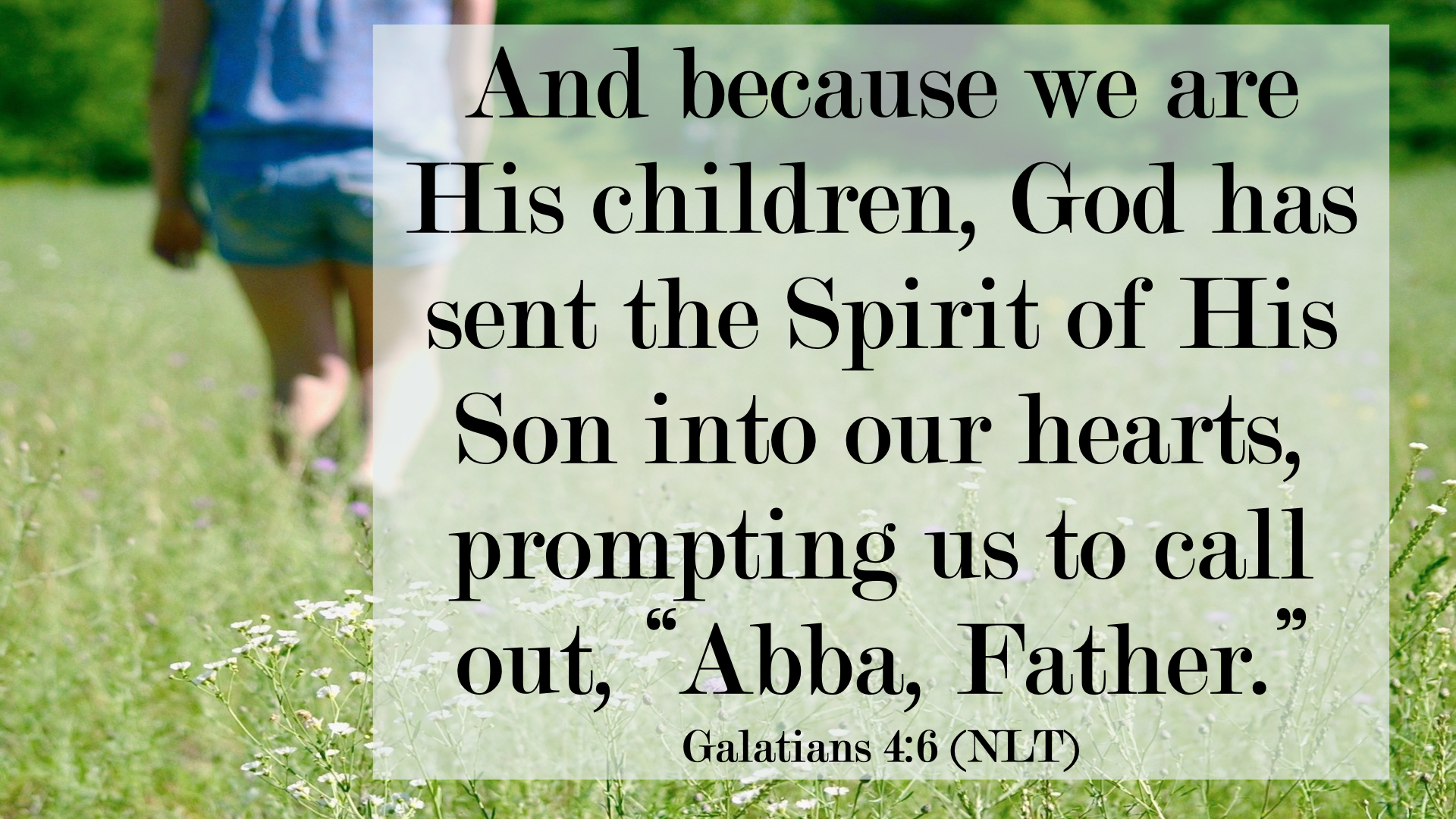
In His intense prayer time just before His crucifixion, Jesus used the phrase “Abba Father” to express His intimacy. This phrase is used two other times in the New Testament. Both of these times it’s telling us that we can approach our Heavenly Father the same way Jesus did (see Mark 14:36; Galatians 4:6; Romans 8:15).
The Romans understood the weight that was associated with the practice of adoption. They knew that a father chose that child to be a part of his family, giving that child full acceptance into the family. Marvin Vincent noted,
“We have but a faint conception of the force with which such an illustration would speak to one familiar with the Roman practice; how it would serve to impress upon him the assurance that the adopted son of God becomes, in a peculiar and intimate sense, one with the heavenly Father.”
In writing to the Romans, Paul reminds them that for those who are in Christ Jesus, there is no condemnation—nothing holding them back from God’s presence. He also said that God has fully adopted us into His family, and that the Holy Spirit was now in us, encouraging us to call God “Abba Father” just as Jesus did (Romans 8:1, 14-16).
Check out these two final thoughts from Jesus: He encourages us to approach God as innocent children, and He praises Our Father for then intimately confiding in His children—
“Truly I tell you, unless you change and become like little children, you will never enter the kingdom of heaven. … I praise You, Father, Lord of heaven and earth, because You have hidden these things from the wise and learned, and revealed them to little children.” (Matthew 18:3, 11:25)
No matter what your relationship was with your earthly father, Jesus encourages us to approach our Heavenly Father in innocence, wonder, expectation, imagination, and intimacy. This is what God desires in His relationship with you!












 Craig T. Owens