Solomon opens the third chapter of Proverbs with these words, “My son, do not forget my teaching, but keep my commands in your heart.” Then he goes on to list the blessings that come from doing things God’s ways. Here they are—
Would you like God to bless your work? Would you like Him to bless all of your work?
He said it pretty simply. There are two actions / attitudes (because the actions must be done with the right attitude) that will bring God’s blessings:
There’s a really cool comment in parentheses in the book of Exodus: “(The Lord made the Egyptians favorably disposed toward the people, and Moses himself was highly regarded in Egypt by Pharaoh’s officials and by the people)” (Exodus 11:3; see also 12:36).
At Moses’ word bad things have happened in Egypt; in fact, nine bad things have happened so far. Blood, frogs, gnats, hail, locusts, and other nasty things have plagued the Egyptians, and still the general population—and even the inner court of Pharaoh—hold Moses and the Israelites in high regard!
The King James Version says it this way: “The Lord gave the people favor.”
Favor with people doesn’t come when I try to please people. Favor with people comes when I try to please God.
People didn’t respect Moses because he cowered before Pharaoh, but because he feared God.
Ironic, isn’t it? We fear the opinion of people, which excludes us from the favor of God, which robs us of favor with people!
To grow in favor with people, to earn their respect, I must be sold-out to God. I must not care about the opinion of people in order to be highly favored by people.
Listen to the podcast of this post by clicking on the player below, and you can also subscribe on Apple, Spotify, or Audible.
Today some call her “the holy mother” and revere her as a saint. But 2000 years ago, Mary saw herself as only an ordinary, faceless, fame-less, Israelite girl.
She came from Nazareth (a town of which people said, “Can anything good come from Nazareth?!”)
Nazareth was in the region of Galilee (an area of which people said, “No one special has ever come from Galilee”)
She was pledged to be married (probably a marriage that she had no say in)
And she was a young teenager
What did Mary think of herself? We can infer her self-image from what went on her mind when God’s angel greeted her with the words, “Greetings, you who are highly favored! The Lord is with you.”
She was greatly troubled and wondered what kind of greeting this might be. Psychologists today would describe Mary’s response as inner dissonance—the feeling that something is not quite right, but she couldn’t put her finger on exactly what was wrong. The phrase greatly troubled is a single Greek word which means agitated and perplexed by doubts.
In short: the way the angel greeted Mary didn’t jive with the way Mary saw herself (see Luke 1:26-38).
Mary, like many of us still today, didn’t think she was worthy of God’s attention, let alone His special blessings.
But the word the angel used when he said she was highly favored is a wonderful word! It’s root word is grace, and it only appears twice in the New Testament. This word means God’s grace which is constantly reaching out to us, even when we’re unaware of it. Look at the other passage where this word is used—
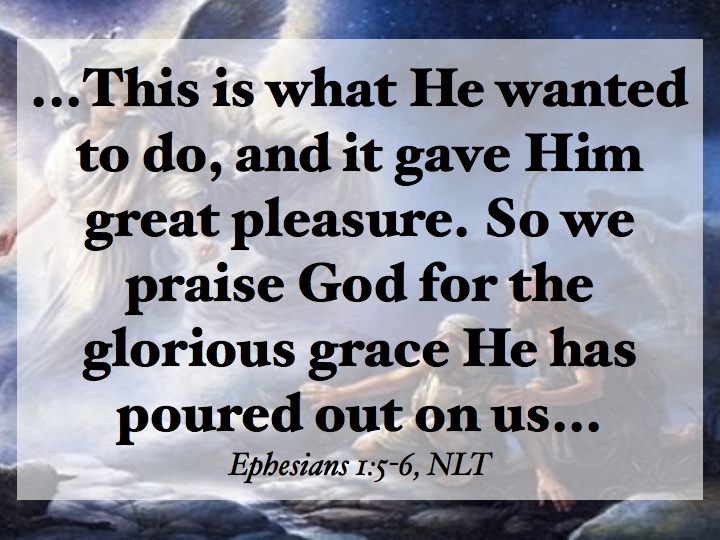
God decided in advance to adopt us into His own family by bringing us to Himself through Jesus Christ. This is what He wanted to do, and it gave Him great pleasure. So we praise God for the glorious grace He has poured out on us who belong to His dear Son. (Ephesians 1:5-6 NLT)
How amazing! God wants to adopt you! It’s something that brings Him great pleasure, so He constantly pours out the blessing of His grace on us!
Are you worthy of God’s favor? YES!! Not because you did anything to earn it, but because Jesus paid the price for you on the Cross.
Now you need to respond the way Mary did. The angel told Mary to “Fear not!” The verb tense implies that Mary needed to stop fretting about her (un)worthiness, and simply accept the grace that God was extending to her. In other words, she needed to see herself as God saw her.
Mary’s response should be our response: “I am the Lord’s servant. May it be to me as you have said.”
The Apostle Paul asked the Christians in Galatia an important question:
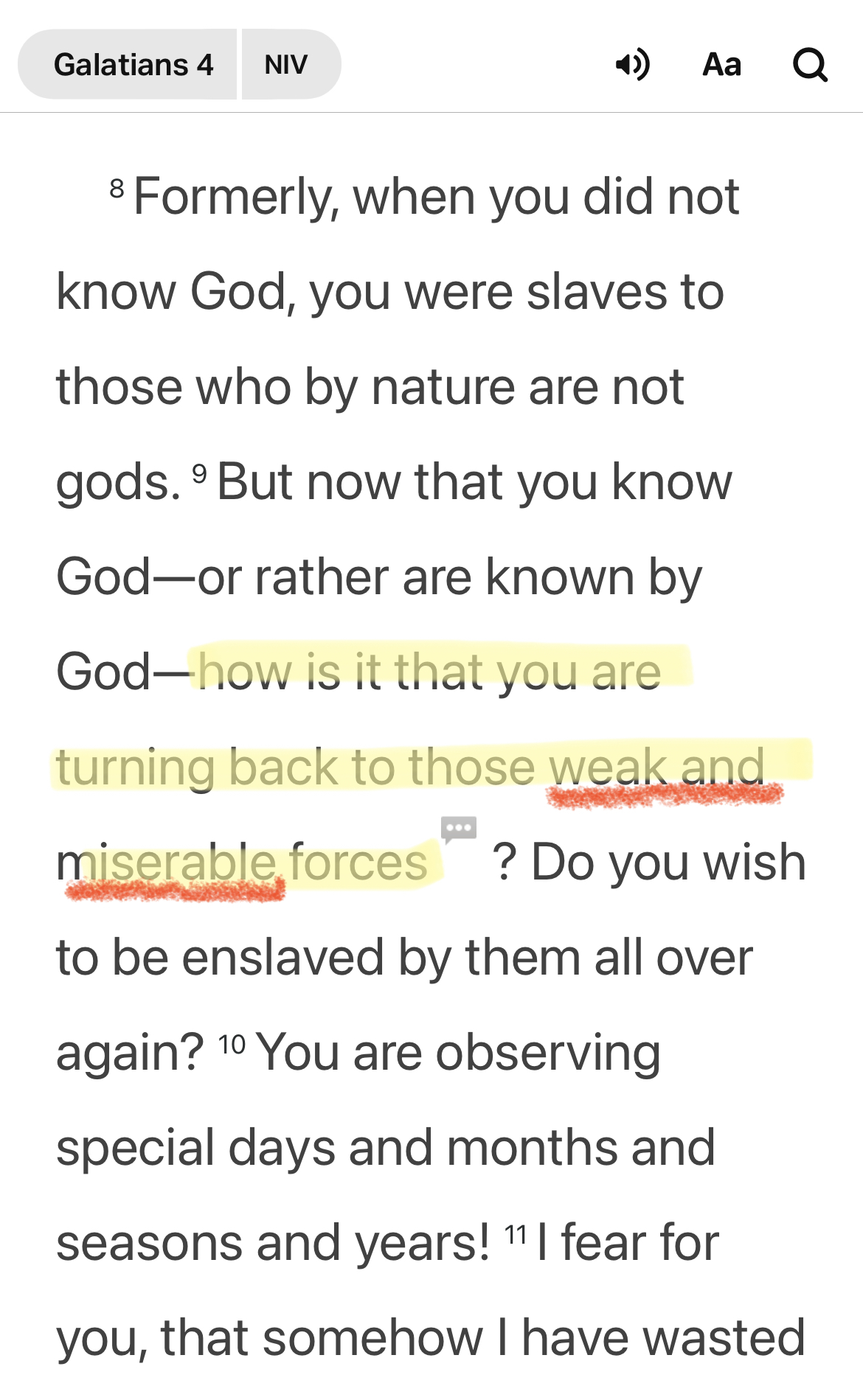
How is it that you are turning back to those weak and miserable principles? (Galatians 4:9)
The two words together in the Greek—weak and miserable—imply things that impoverish us and reduce us to lowly paupers and beggars. That’s not a pretty picture!
Look at the contrast between the princely life and the pauper’s life.
Those who follow Christ:
Are called sons of God (Galatians 4:6a)
Experience Abba Father’s favor (4:6b)
Are heirs to God’s Kingdom (4:7)
Those who don’t follow Christ:
Live as slaves (4:7)
Are separated from God’s favor (4:1-3)
Live as miserable beggars (4:9)
Why would anyone choose the miserable beggar’s life?
Here’s the principle: Everyone serves someone! I will either serve God and be called His son, or I will serve myself (my desires, my passions, my way of doing things) and be called a stranger to God.
Do I want to be in control, or do I want to let God be in control? When I try to control my own life, not only am I not in control, but I actually become a slave to my own passions. Ironic, isn’t it?
The choice is simple, but the choice must be made every day. I must choose to serve God in every moment of every day. It’s the only way to avoid the miserable life, and live the blessed life God has for me.
I cross paths with far too many people who think God is unapproachable, distant, or—perhaps worst of all—angry with them.
But listen to this good news: God is for you!
God created you to be in relationship with Him.
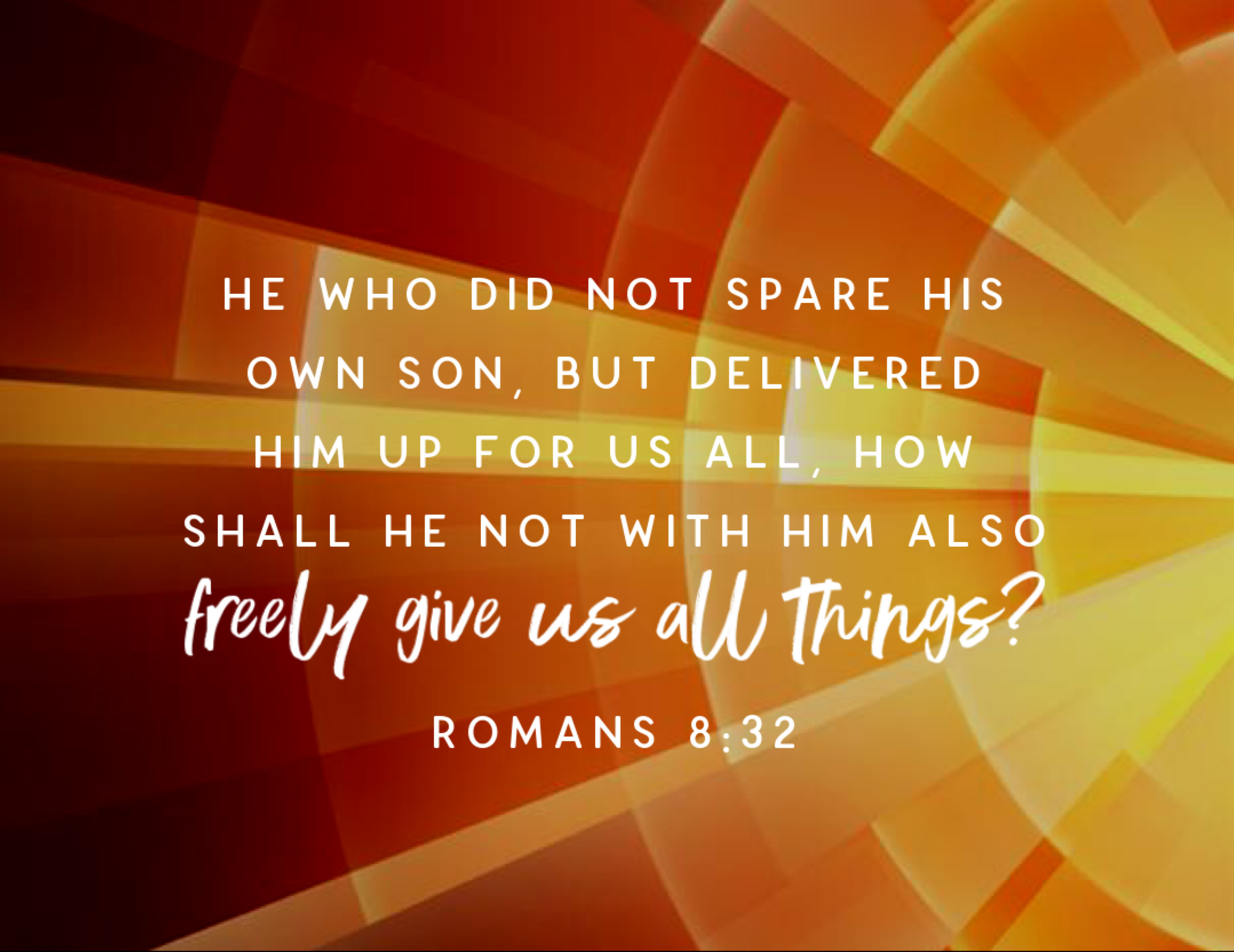
When Paul writes in Romans 8:31, “If God is for us, who can be against us,” it’s not a wondering, uncertain “if” (as in, “I wonder if this is true?”). No! What Paul is saying is, “If you already know that God is for you, why are you wondering about who or what is against you?”
I read something very interesting: Next to Christmas, more money is spent on Halloween than on any other holiday event. Halloween?!? Wow! We’re in the midst of planning our church’s role on Halloween night, so I’ve been thinking quite a bit about engaging our culture.
It’s better to light a candle than to curse the darkness.
So here’s how I think followers of Jesus Christ should light a candle to engage culture:
(1) Have the right motivation. In Jesus’ inaugural sermon, He said He was coming to preach the Good News about God’s love. He purposely left out the part of Isaiah’s prophesy that talked about God’s coming judgment. There will be a time for that, but for now, our motivation should be to make known the favor of the Lord.
(2) Get out of your box. If you only hang around with Christians, your ability to effectively engage culture will be diminished. If you never get around others, it’s sort of like salt that sits in the saltshaker too long. Paul told the Athenians that he had been walking around their city looking at their culture.
(3) Listen. As Paul talked to the Athenians, he quoted their poets to them. He knew what they were listening to because he was listening too. What are people watching on TV? What movies are they talking about? What music are they listening to? You can find the key to their heart by knowing something about what interests them.
(4) Collaborate. There are lots of other faith-based organizations, non-government organizations, and churches that are already active in your community. Join forces with them.
(5) Just be there. Go to local restaurants, cheer on the local sports teams, join a rec league team, attend the city council meetings, volunteer at a shelter or food pantry. Just be there! After a while, people will begin to ask you why you are so involved, and you’ll have a great platform to speak to them.
It started when God said, “Light up the darkness!” and our lives filled up with light as we saw and understood God in the face of Christ, all bright and beautiful.
Are you engaging your culture? It’s time to go shine!
I don’t think anyone would mind having his or her name inserted in any of the following compliments:
___________ is a righteous person.
___________ is blameless before God.
God looks favorably on ___________.
___________ walks with God.
Pretty nice pedigree, huh?
This is the description of Noah in the Bible. I especially love the phrase “walks with God.” It’s only used of two people in the Bible: Noah and Enoch. But it’s even more encouraging to me when I read it about Noah’s life.
Noah is the first in Adam’s family line to be born after Adam died. That’s significant because all of his ancestors (including Enoch) would have been able to get a first-hand account from Adam himself about what it was like to be in the Garden of Eden. All of Noah’s ancestors could have heard right from Adam’s mouth what it was like to visit with God personally each evening, to talk to Him face-to-face. And they could have heard firsthand how devastatingly painful it was to lose that intimate fellowship because of sin.
Since Noah was the first person in this family tree to hear about this secondhand, he’sthe first person to walk with Godby faith. Which is the exact same way we walk with God today:
Faith is being sure of what we hope for and certain of what wedo not see (Hebrews 11:1).
You too can insert your name in this blank: “___________ walks with God.”
How do you do this? Pray this:
“God, I want to walk with You. I knowit’s impossible to please You except by faith. I want to get closer to You. So I believe that You exist and that You care enough to respond to me when I seek You and love You with all of my heart, soul, mind, and strength.”
Let’s enourage one another to walk in this way every single day.



 Solomon opens the third chapter of Proverbs with these words, “My son, do not forget my teaching, but keep my commands in your heart.” Then he goes on to list the blessings that come from doing things God’s ways. Here they are—





 Craig T. Owens