Surprise!

Last night I went to a surprise party for a great guy in our church. His sons initiated the idea on Sunday evening, and we all went into action to figure out when, where, and (most importantly) what food we were going to bring. After just a few minutes of discussion, everything was in place, and it all came together pretty smoothly.

I think the birthday boy was genuinely surprised. And pleased. And everyone had a fun evening.

But I got to thinking, “Should it really be a surprise that we want to express our appreciation, love, and respect to someone?” Hmmm.

Perhaps today—and every day—we could find a way to “surprise” someone we love or appreciate. You know, just find an unexpected way to let someone know they’re special.

  • A surprise note/text/email
  • A surprise gift
  • A surprise hug
  • A surprise phone call
  • A surprise lunch invitation
  • A surprise cup of coffee or favorite treat

It’s amazing what happens inside people’s hearts when we go out of our way to express our love. Try it, and see what happens.

Make today a surprise day for the people you love and appreciate.

Be All There

Once a friend of mine (whom I happen to think is more tuned-in to people’s needs than almost anyone else I know) went on a first date. He said the evening was pleasant, but felt his date was a bit distant. At the end of the evening when he brought up the subject of possibly going out again she informed him, “No, I don’t think we can go out again. You’re just not emotionally available for me.”

I know this wasn’t true for my friend, but have you ever been there? Ever been with someone, but it was obvious that they weren’t really there with you in the room? Frustrating, isn’t it?

[Insert tongue firmly in cheek as you read this next paragraph.] Now I’m certain that none of the readers of my blog would ever be distracted like this. And I know I’ve never done this myself. Since you and I, dear reader, always are 100% attentive to the people in the room with us, these next two quotes probably won’t pertain to you, but here they are anyhow:

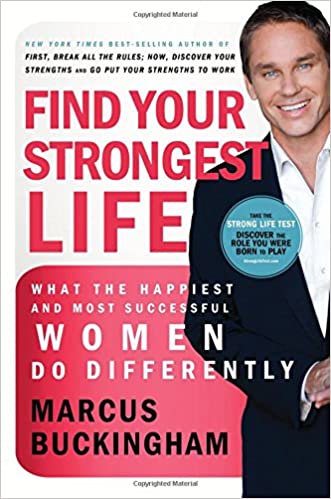
“The human brain is simply not designed to multitask. You can get by doing multiple things at once, but you can’t do them well. Your brain is physically unable to process more than one set of instructions at a time, so while you are juggling all of those actions at once, your brain is scrambling to keep up. Through a variety of experiments measuring brain activity, scientists have discovered that the constant switching back and forth from one activity to another energizes regions of the brain that specialize in visual processing and physical coordination, while simultaneously disrupting the brain regions related to memory and learning. According to the research, ‘we are using our mental energy to concentrate on concentrating at the expense of whatever it is that we’re supposed to be concentrating on.’ Got that?

“More simply: when we multitask we’re dumber. How much dumber? A recent study for Hewlett Packard exploring the impact of multitasking on performance revealed that the average worker’s functioning IQ drops ten points when multitasking…. (The analogy the researchers used is that a ten-point drop in IQ is equivalent to missing one night of sleep.)” —Marcus Buckingham, Find Your Strongest Life

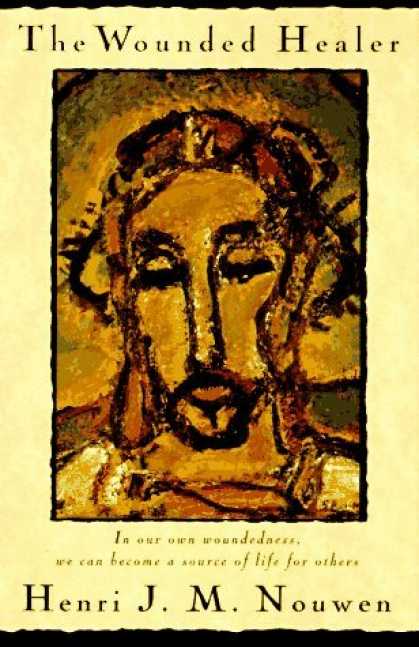
“Concentration, which leads to meditation and contemplation, is therefore the necessary precondition for true hospitality. When our souls are restless, when we are driven by thousands of different and often conflicting stimuli, when we are always ‘over there’ between people, ideas and the worries of this world, how can we possibly create the room and space where someone else can enter freely without feeling himself an unlawful intruder?” —Henri Nouwen, The Wounded Healer

This week I’m making it my goal to be all there for whomever is here with me. I’m going to try my best to eliminate multitasking and truly concentrate on the one spending time with me. Are you ready to try this with me? Let me know how it goes.

Dinner That’s More Than Dinner

The apostles returned to Jesus from their ministry tour and told Him all they had done and taught. Then Jesus said, “Let’s go off by ourselves to a quiet place and rest awhile.” He said this because there were so many people coming and going that Jesus and His apostles didn’t even have time to eat. So they left by boat for a quiet place, where they could be alone. (Mark 6:30-32 NLT)

Sometimes dinner is more than dinner. It’s not just food for our physical bodies; it can be so much more.

The apostles returned from their first ministry assignment. They were so excited to come back and tell Jesus how incredible their time had been. They breathlessly rushed into the house where Jesus was waiting for them. “Master,” Peter started, “You should have seen how Andrew…” and he was cut short by a new visitor.

Next James tried, “Whoa, it was so cool when we…” and yet another distraction.

Time and time again their stories and questions and concerns were interrupted by the busyness of life and ministry. In fact, it got so chaotic that the disciples couldn’t even eat their food, except in quick gulps between visitors.

Finally, Jesus said, “Guys, let’s get out of here. I really want to hear about your ministry. I want to debrief a little with you. And, frankly, we’re all hungry and could use a quiet dinner. Let’s go someplace to hang out together.” Now that’s more than a dinner!

Check out the advantages of simply eating together:

  • Families who eat dinner together eat healthier.
  • Families who eat dinner together have higher communication skills.
  • Children in families who eat dinner together perform better academically.
  • Children in families who eat dinner together are less likely to try cigarettes, illegal drugs, or alcohol.

I love our family mealtimes—it is one of the best times to catch up on what’s happening with everyone. Last night we were joined at dinner by a young couple from our church. After dinner, the kids were off playing and Betsy and I could have a quiet conversation just with our friends. We talked about the newlyweds’ adjustment to marriage, what makes a good church, education, career, china patterns, and the way God speaks to us. We laughed and dreamed and talked about dreams. It was fantastic!

Turn off the TV. Make a healthy dinner. Set aside time to eat with family and friends. Jesus gave us a great example: “C’mon, friends, I really want to spend some quiet time with you.”

So here’s to dinners that are more than dinners.

Walking In Someone Else’s Flip-Flops

DSCN0970“Empathy is a stunning act of imaginative derring-do, the ultimate virtual reality—climbing into another’s mind to experience the world from that person’s perspective.” —Donald H. Pink
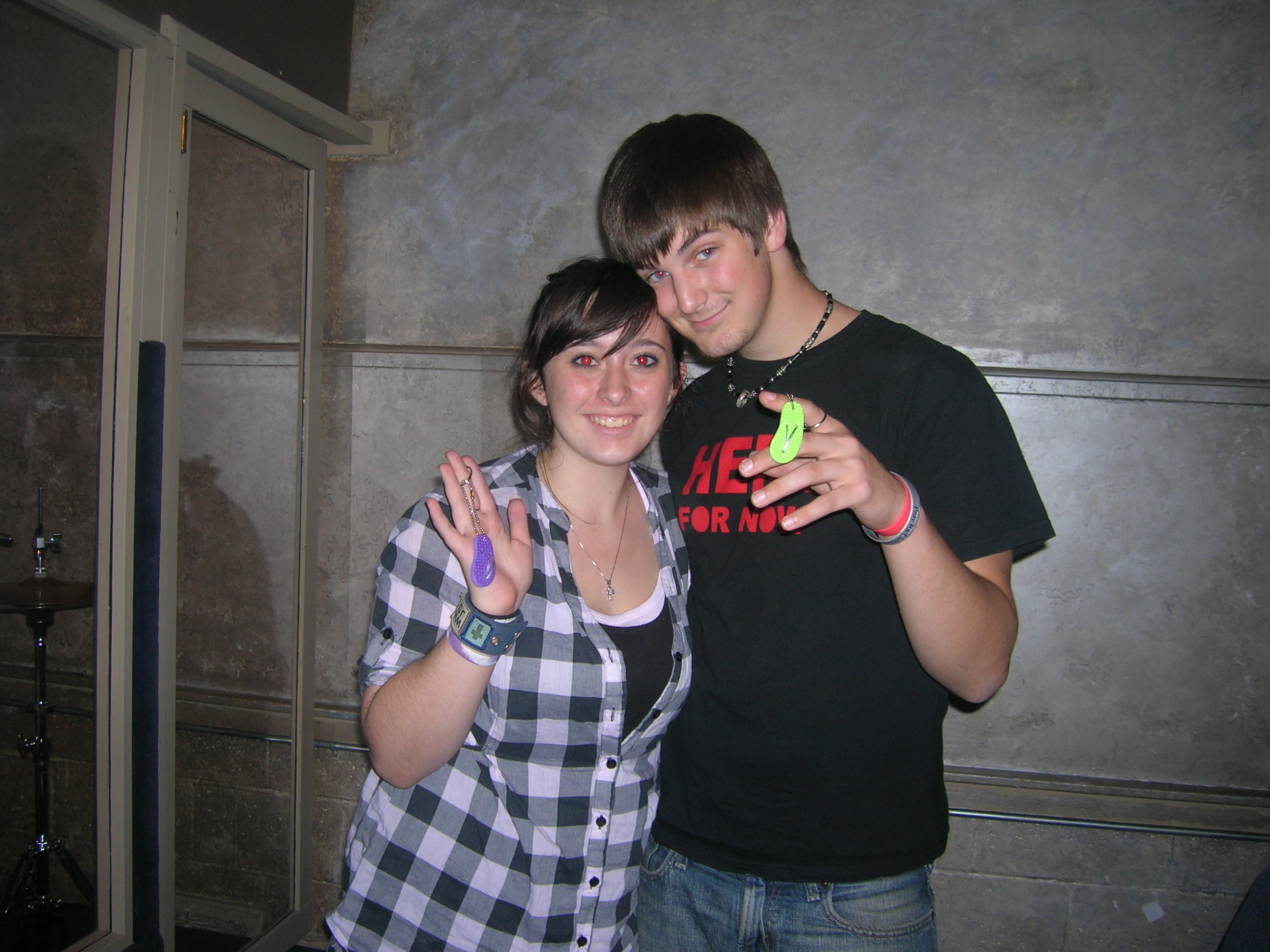

As we continued our series called Bigger Than Me last night (part 1 is here), we challenged our Impact! youth group to develop greater empathy. That word literally means to be immersed in the feelings of others … to step into someone else’s reality … to walk around in someone else’s flip-flops.

The greatest example ever of this is when Jesus Christ came to earth. He stepped into our flip-flops by coming to live among us in human flesh. He experienced everything we ever have or ever will experience; He knows our weaknesses, our dreams, our joys.

For we do not have a High Priest Who is unable to understand and sympathize and have a shared feeling with our weaknesses and infirmities and liability to the assaults of temptation, but One Who has been tempted in every respect as we are, yet without sinning. … For because He Himself [in His humanity] has suffered in being tempted (tested and tried), He is able [immediately] to run to the cry of (assist, relieve) those who are being tempted and tested and tried…. (Hebrews 4:15, 2:18)

Our youth have committed themselves to develop this Christ-like attribute of empathy. Last night they came to the altar to pick up a flip-flop keychain to remind themselves of this commitment. All of us who made this commitment are going to try to walk in others’ flip-flops by trying to find out:

  1. What do they cry about?
  2. What do they sing about?
  3. What do they dream about?

(Thank you, John Maxwell, for your instruction to me on this!)

I hope you have personally experienced the incredible empathy of Jesus. He understands your fears, your joys, and your dreams even better than you understand them yourself. And I hope that you will join us in our commitment to greater empathy with each other. What a blessing you can be to others when you choose to walk in their flip-flops for awhile.

Deadly Viper Character Assassins

The dictionary defines an assassin as “one who murders by surprise attack.” No assassin worth his/her salt sends you an announcement to say, “I’ll be stopping by your office tomorrow morning to kill you. If that’s not a convenient time for you, please let me know.” Of course not! Assassins never tell you that they’re coming.

Theodore Roosevelt said, “Character, in the long run, is the decisive factor in the life of an individual and of nations alike.”

So a “character assassin” is something that sneaks up and takes out the essential factor that could have made us successful and effective in life. This is why Deadly Viper Character Assassins is such a vital resource.

Here are the two pulls in my life:

Be self-controlled and alert. Your enemy the devil prowls around like a roaring lion looking for someone to devour [assassinate]. (1 Peter 5:8)

You, therefore, must be perfect [growing into complete maturity of godliness in mind and character, having reached the proper height of virtue and integrity], as your heavenly Father is perfect. (Matthew 5:48)

If I keep our character intact, I’ve developed a foundation that will sustain me for the long haul. In my experience, here’s what I’ve done to keep developing my character:

  1. Be more concerned about my character than my popularity.
  2. Regularly look myself in the mirror of God’s Word to see chinks in my armor.
  3. Make myself accountable to godly friends.

Don’t wait until the assassin has already taken a shot at your character, but begin to protect yourself now. Continue to grow in the character Jesus Christ exhibited for us.

Spiritual Cross-Training

Several years ago the term “cross-training” became more popular in physical fitness circles. The idea was that training or working out in a secondary sport better prepared the athlete for their primary sport. For example, a long-distance cyclist playing basketball would help develop some of the fast-twitch muscles needed for quick bursts on the bike. This was valuable insight and has helped many athletes excel.

It’s just as true spiritually.

The Apostle Paul encourages us to, “Carry each other’s burdens.” No small task in itself. In fact, that usually requires some very heavy lifting. But if I’m going to be prepared for the heavy lifting, I’ve got to put in some spiritual cross-training time.

It’s no secret that if I don’t eat right, my body doesn’t have the fuel to burn. If I don’t sleep enough hours, my body doesn’t have the stamina to function properly. If I’m not handling stress right, my mind and emotions will be clouded in their processing capabilities.

All of these areas are just as true spiritually. If I’m not getting the right spiritual food, rest, and peace, I’m going to break down. I won’t be any good to myself or others.

In the same burden-carrying / cross-training passage, Paul says, “Brothers, if someone is caught in a sin, you who are spiritual should restore him gently. But watch yourself, or you also may be tempted.”

Yesterday I did some cross-training. I was having lunch with a B.T.D.T. pastor friend (been there, done that). I was soaking up his counsel on vision-casting for my church, enjoying his encouragement for the road ahead of me, and just generally being filled up.

As our lunch was wrapping up, I received a call from another friend who needed help. This friend was in trouble and needed me to help shoulder a burden. I spent the next three hours doing some very heavy lifting.

Here’s the deal: if I hadn’t been doing some spiritual cross-training to prepare myself, I may not have been able to lift that burden. Or, worse yet, I may have been tempted to take shortcuts and fall into the same trap as my struggling friend.

It doesn’t always happen back-to-back like this. But I know the joy of being able to carry a heavy burden for a brother because I have done my cross-training time, and I (unfortunately) also know the heartache of not being a very effective lifter because I didn’t make the time for cross-training.

We never know when we’ll be called upon by a friend. So we need to stay in tip-top spiritual fitness all the time. Your spiritual cross-training regime should include time with God’s Word and time in prayer; reading good books; spending time with encouraging, uplifting people; plenty of rest, good food, and physical exercise; and an attentive ear to those in need.

Cross-train regularly so you can be a great burden-lifter when a friend-in-need calls on you.

Slowing Down Fast Food

It’s named “fast” food because it is supposedly prepared quicker than you could fix it yourself at home. It’s also called “fast” because so many of us order it from our cars in the drive-thru lane, and then inhale our food as we speed down the road to our next appointment.

But have you noticed how fast people eat their fast food even when they sit down in the restaurant?

Have you noticed how fast we eat the food we prepare at home? Usually, it takes less time to eat it than it took to prepare it!

Have you noticed how fast we “eat” life?

The other day I took a break from my study time to eat a healthy breakfast bar. I munched on it while I continued to type notes on my computer. A couple minutes later I looked next to me and saw the empty wrapper but honestly couldn’t remember what flavor I just ate! What’s the point of flavor if I’m not even going to enjoy it?

The Psalmist said, “Taste and see that the Lord is good.”

Taste: That implies that I slow down to actually notice the taste.

How many blessings from the Creator do I treat as fast food every day?

  • I “see” yet don’t perceive the incredible pallet of colors in the flowers and trees and sunset.
  • I “hear” yet don’t appreciate the robin’s early morning song.
  • I “smell” yet don’t savor the newly-blossomed flowers on the bush outside my front door.
  • I “taste” yet don’t marvel at the golden beauty of the nectar-turned-to-honey for my tea.
  • I “touch” yet I’m unmoved by the silky black fur of my cat.

It’s time to slow down … savor … relish … bask … enjoy … marvel… appreciate … and then truly praise God for His incredible goodness.

Some ideas for us to try:

  • When you talk with your spouse or children today, look deep into their eyes. What color are they? I mean, really look. Don’t settle for saying “blue” or “green” or “brown.” Look at them like an artist would. “Crystal blue: like the color of my favorite lake early in the morning.”
  • When you sit down to eat, take a bite, put your fork down, chew slowly, try to identify each flavor. Take a drink before taking your next bite, so that each bite of food is like the first bite.
  • If you’re eating with others, don’t rush away from the table after the meal is eaten. Talk, ask questions, listen, learn something new.
  • Walk outside. Close your eyes and listen attentively. How many sounds can you hear? The birds singing, the bee buzzing, the leaves rustling, children laughing, sprinklers sprinkling, mowers mowing. Appreciate the sounds.

S-l-o-w  d-o-w-n. Taste—savor and appreciate—all of the Creator’s blessings around you. If you don’t, you’ll eat without tasting. Don’t let your life become a fast food life.

More?

I keep getting these annoying messages on Twitter that say something like, “I got over 500 new followers on Twitter, and you can too!!” Then I get these sorts of emails, “We can increase the traffic to your blog 300% per day!”

What would make them think I want more? Maybe it’s because almost everything in our lives is about more.

  • After high school, go to college to get more education.
  • After college, climb the corporate ladder to get more money or more recognition.
  • After you start working, take more vacations and enjoy more perks.

Lately, I’ve become focused on better. I think better is better than more.

More is about width, better is about depth.

More is an exhausting pursuit, better is a satisfying pursuit.

More is about quantity, better is about quality.

So here’s my challenge, trade more for better

  • Instead of looking for more friends, make your current friendships better.
  • Instead of getting more followers on Twitter, make better followers.
  • Instead of getting more education, get a better education.
  • Instead of trying to read more books, read better books.
  • Instead of spending more time with a lot of people, spend better time with a few people.

In what areas of your life can better be better than more?

My Injured Thumb

I sliced my thumb open yesterday. Okay, maybe “sliced” is a little too dramatic. But I did cut my thumb, and it did bleed. True, it didn’t gush blood—more like oozed blood—but blood was escaping my body. It was a small cut; perhaps a ¼-inch long.

I pressed a tissue on it until it stopped bleeding. I washed my thumb thoroughly with antibacterial soap and water. I applied some Neosporin ointment. And I wrapped the injury in a fresh Band-aid.

All of this care and concern for a small cut on my thumb.

Do you realize how much one uses their thumb in the course of a day?

  • Trying to rinse dishes in the sink I couldn’t hold the plate or the dish scrubber without my thumb being involved
  • My thumb was involved when I turned the doorknob of the front door
  • When I was opening a package of fruit snacks for my son, my thumb was needed for either the holding or the ripping
  • Ditto when I attempted to open the lid of the 2-liter bottle

That small cut on the thumb on my non-dominant hand was affecting my entire day. One little cut and my entire body was adversely affected!

A friend called me the other day. His heart was ripped open. Okay, maybe “ripped” is a little too dramatic. But he was emotionally damaged. True, he didn’t need a trip to the emergency room and he probably won’t have to start taking anti-depressants, but emotional “blood” was escaping his heart.

He called me, and I responded. One little wound in my friend’s heart and I was affected! Do you realize how much one’s emotions are involved in the course of a day?

Dr. Paul Brand was a renowned hand surgeon and missionary who worked with leprosy patients in India for years. He learned that leprosy doesn’t mangle a person’s foot or hand, but their lack of ability to feel pain does. They don’t feel the cut on their pinky toe or left thumb, and so they never attend to it. The injury becomes infected, and still no pain registers to tell them to take care of it. Eventually serious, irreversible damage is done.

Listen to what Dr. Brand wrote in his book In His Image

“A body only possesses unity to the degree that it possess pain…. We must develop a lower threshold of pain by listening, truly listening, to those who suffer. The word compassion itself comes from Latin words cum and pati; together meaning ‘to suffer with.’ … The body protects poorly what it does not feel.”

“Management of pain requires a delicate balance between proper sensitivity, to determine its cause and mobilize a response, and enough inner strength to keep the pain from dominating the whole person. For the Body of Christ, the balance is every bit as delicate and as imperative.”

We must develop a lower threshold of pain by listening, truly listening. … The body protects poorly what it does not feel. Are you listening, truly listening to those who are hurting around you today? You are connected to them. If one person hurts, we all hurt.

Truly listen. If they are hurting, it does affect you … and me. Let’s find them, bandage them, apply ointment to their wounds, and protect them from further injury. Let’s feel their pain so we can protect them from further pain.

Full Tank

The other day a friend of mine wrote on Facebook that he was shopping with his daughter. He half-jokingly added, “I think that is her love language!” I say half-jokingly because I think the time with Daddy was speaking volumes to his daughter.

Spending time shopping with Dad was filling her love tank!

Have you ever felt like one of your relationships was in a rut? Or maybe even in a rut with ends in it (also known as a grave!)? Do you ever feel like the other person just doesn’t get you? Have you ever been frustrated that the other person doesn’t understand all that you are doing for him/her?

My guess is that you are speaking different love languages.

Dr. Gary Chapman wrote an amazing book called The Five Love Languages. In his book, he lays out five “languages” that we use to communicate our love to one another:

  • Words of affirmation
  • Quality time
  • Gifts
  • Acts of service
  • Physical touch

When you and I communicate, we naturally communicate in a way that is most comfortable to us. We communicate in our primary love language. But if the other person in the relationship has a different love language, no matter how much you love them, you are simply not getting through effectively. You are leaving the other person with a near-empty love tank.

I would suggest you start by taking a brief love language assessment (download the free PDF here → 5 Love Languages assessment) to determine YOUR OWN love language first. This is the language you will feel most comfortable using. Second, you need to learn the love languages of OTHERS CLOSE TO YOU so you can change your love dialect.

In the great love chapter in the Bible, the apostle Paul says this, “When I was a child, I spoke and thought and reasoned as a child. But when I grew up, I put away childish things” (v. 11, New Living Translation). Our love—and the way we express it to others—should always be growing up. If you are trying to communicate your love to someone special in the same ways (the same “languages”) you’ve always used, there’s a good chance your love is being viewed as childish.

As you mature in your expressions of love — as you speak the other person’s love language — you will begin to fill their love tank. Guess what happens next? Out of a full love tank, the other person is motivated to begin to speak your love language, to fill your tank. It can become so much fun to love with a full tank! Because when the other person’s love tank is full, almost any love language will work for them—wow, what a blast!

For married couples, YouVersion has an excellent reading plan that teaches specifically how the love languages operate in the context of your marriage.

UPDATE… my friend Greg Heeres and I host a leadership podcast on YouTube. Recently, we discussed the value of leaders learning and speaking the love languages of their teammates.