The Domineering Pastor

I wrote to the church, but Diotrephes who loves to be first, will have nothing to do with us. (3 John 9)

The King James Versions says that Diotrephes loveth to have the preeminence. He loved his title, his position of authority, and having everything in the church flow through him.

He wanted not only to approve who spoke in the church, but even with whom church people could socialize outside of church. He wielded his positional authority like a sword and cut off people from the fellowship of the church if they didn’t join lockstep with him.

He used fear and intimidation to demand people follow him, and wouldn’t receive a loving letter from the Apostle John. To counteract any who would question him, Diotrephes engaged in gossip and character assassination of any he perceived to be a threat to his position as pastor.

For shame! 

This type of attitude has no place in the Body of Christ, especially among the pastorate! Jesus came to serve, and taught us to do likewise. Jesus didn’t snuff out the smoldering wick or stomp on the bruised reed, but ministered lovingly to all. Peter told shepherds to never use their position to lord it over others.

My fellow pastor, having the title of pastor doesn’t mean I’m the smartest person in the room, or that I have all the answers. I am one member of the Body of Christ. Each member of the Body needs all the other members of the Body. I should humbly serve, never demanding allegiance to me or blind obedience to my wishes. I should never try to hide behind my title, but be the most transparent, the most willing to admit my mistakes, and the first to forgive and to ask forgiveness.

Lord, guard my heart against the spirit of Diotrephes!!

UPDATE: This is one of the seed thoughts that went into my book Shepherd Leadership.
Scared Half To Death

Mega fearHave you ever had a really good scare that turned your life around? For some people, they need to be scared half to death in order for them to make changes in their lives.

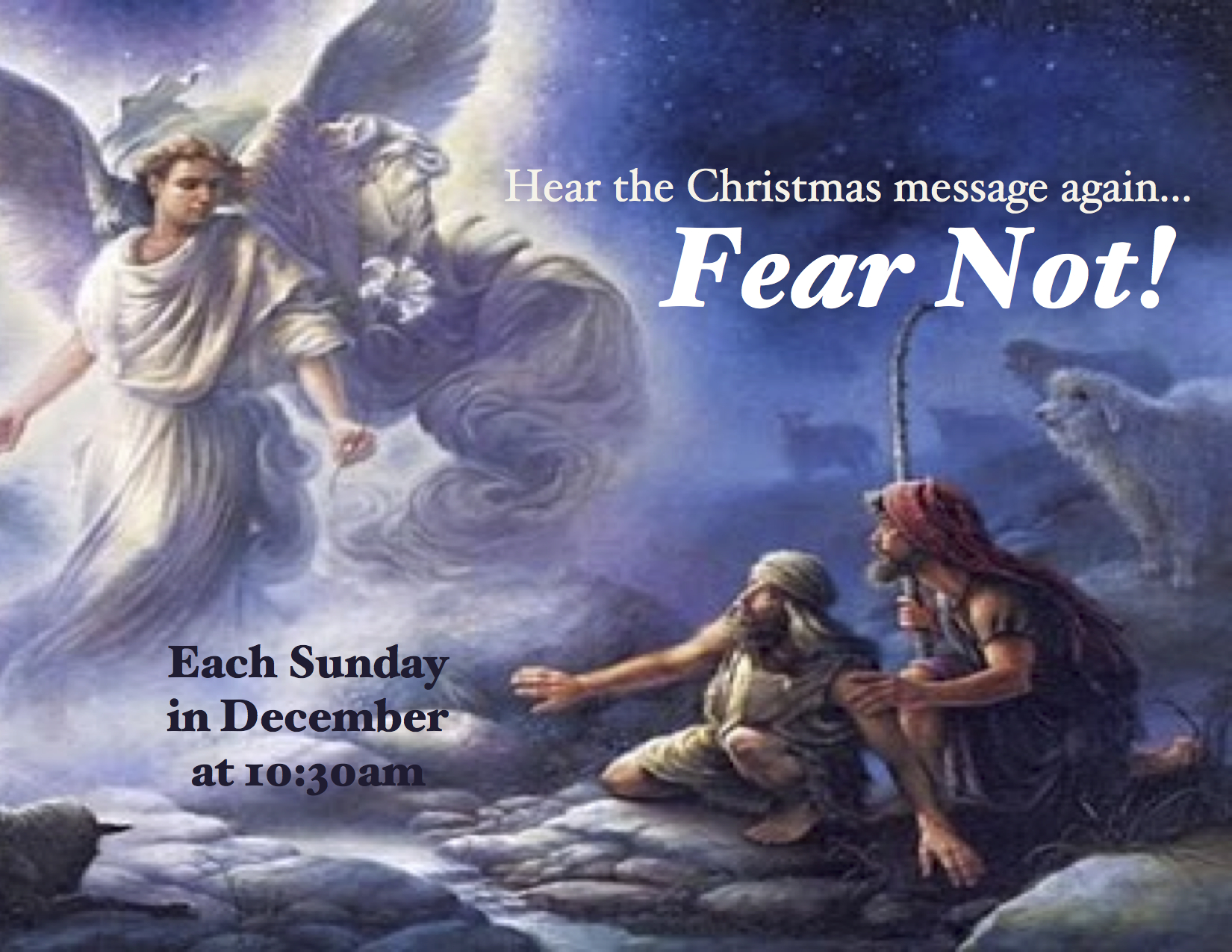
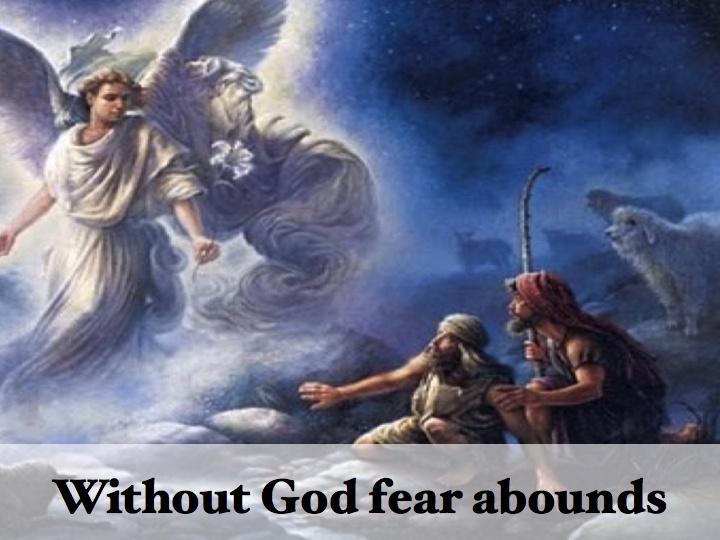
I think this is what happened to the shepherds outside Bethlehem the night Jesus was born (Luke 2:8-20). The Bible says that when the glory of the Lord shone around them they were terrified (the King James Version is very picturesque when it says they were sore afraid). The Greek word for fear is phobeo, but the phrase Luke uses here for “terrified” is megas phobeo phobos. Get the picture? They were scared half to death!!

But now, what to do what that fear? The angel gave them the first step—Go find Jesus. He didn’t tell them to get themselves cleaned up, or start going to church, or even to stop acting a certain way. Simply go find Jesus.

The shepherds obeyed and went to meet Jesus, and then something amazing happens.

  • Their fear is turned to praise—the shepherds returned, glorifying and praising God.
  • Their silence is turned to testimony—they spread the word concerning what had been told them.

Jesus was born as a Man to experience all our fears and sorrows and pains. But He took these upon Himself as He became the perfect, once-for-all sacrifice. Now there are no fears that can keep us from God’s presence. Jesus conquered all that kept us from God! 

There was nothing beautiful or majestic about His appearance, nothing to attract us to Him.He was despised and rejected—a Man of sorrows, acquainted with deepest grief. We turned our backs on Him and looked the other way. He was despised, and we did not care. Yet it was our weaknesses He carried; it was our sorrows that weighed Him down. And we thought His troubles were a punishment from God, a punishment for His own sins! But He was pierced for our rebellion, crushed for our sins. He was beaten so we could be whole. He was whipped so we could be healed.

All praise to God, the Father of our Lord Jesus Christ, who has blessed us with every spiritual blessing in the heavenly realms because we are united with Christ. Even before He made the world, God loved us and chose us in Christ to be holy and without fault in His eyes. (Isaiah 53:2-5; Ephesians 1:3-4)

This Christmas I pray you will…

Find Jesus for yourself!

Let your praises to Him ring out!

Tell others what Jesus has done for you!

If you have missed any of the messages in our Fear Not! series, you can find them all by clicking here.

What Does It Mean To Fear God?

Fear GodWhat does it mean to fear God? Does it mean we cower before Him? That He is utterly unapproachable? Or maybe it means we’re always looking over our shoulder wondering if God is coming after us in anger?

Let me ask the question another way:

  • Are you afraid that you won’t buy the right Christmas gift for someone?
  • Are you afraid that you’ll forget someone?
  • Are you afraid that your response won’t be right when you open a gift?
  • Are you afraid you’ll offend a family member by something you say or do?
  • Do other people’s opinion of you factor into your decisions?

If you answered “Yes” to the above questions, you have a fear problem. That is: you fear letting other people down.

I think this was the issue for Joseph in the Bible (Matthew 1:18-25). When he found out that Mary was pregnant before their marriage, Joseph carefully deliberated his response. Based on the meaning of the words had in mind and considered, and examining the way the angel told Joseph to “Fear not,” it appears that Joseph, too, lived in this same fear of letting others down.

But here’s the issue: Joseph placed greater value on people’s opinions than he did on God’s opinion. And what makes it even worse is that Joseph simply assumed what people would say about him, as he never actually asked anyone.

The angel challenged Joseph to re-evaluate his value system. To give greater weight to God’s opinion than to man’s opinion. In short, to change his fear of man to fear of God.

That’s really what it means to fear God: To give greater weight to His Word and His opinion than to anyone or anything else.

The wise king Solomon explored everything he could to find the meaning of life. He tried money, education, art, travel, women, food, power, and the like. At the end of his exploration, he came to this conclusion—

Now all has been heard; here is the conclusion of the matter: Fear God and keep His commandments, for this is the whole duty of man. (Ecclesiastes 12:13).

We should be living for the approval of an Audience of One. 

We should be longing to hear, “Well done, good and faithful servant” from our Creator. 

We should be listening only for the applause from nail-scarred Hands. 

“The remarkable thing about fearing God is that when you fear God you fear nothing else, whereas if you do not fear God you fear everything else.” —Oswald Chambers

If you have missed any of the messages in our Fear Not! series, you can find them all by clicking here.

Are You Worthy Of God’s Favor?

Listen to the podcast of this post by clicking on the player below, and you can also subscribe on AppleSpotify, or Audible. 

Today some call her “the holy mother” and revere her as a saint. But 2000 years ago, Mary saw herself as only an ordinary, faceless, fame-less, Israelite girl.

  • She came from Nazareth (a town of which people said, “Can anything good come from Nazareth?!”)
  • Nazareth was in the region of Galilee (an area of which people said, “No one special has ever come from Galilee”)
  • She was pledged to be married (probably a marriage that she had no say in)
  • And she was a young teenager

What did Mary think of herself? We can infer her self-image from what went on her mind when God’s angel greeted her with the words, “Greetings, you who are highly favored! The Lord is with you.”

She was greatly troubled and wondered what kind of greeting this might be. Psychologists today would describe Mary’s response as inner dissonance—the feeling that something is not quite right, but she couldn’t put her finger on exactly what was wrong. The phrase greatly troubled is a single Greek word which means agitated and perplexed by doubts.

In short: the way the angel greeted Mary didn’t jive with the way Mary saw herself (see Luke 1:26-38).

Mary, like many of us still today, didn’t think she was worthy of God’s attention, let alone His special blessings.

But the word the angel used when he said she was highly favored is a wonderful word! It’s root word is grace, and it only appears twice in the New Testament. This word means God’s grace which is constantly reaching out to us, even when we’re unaware of it. Look at the other passage where this word is used—

God decided in advance to adopt us into His own family by bringing us to Himself through Jesus Christ. This is what He wanted to do, and it gave Him great pleasure. So we praise God for the glorious grace He has poured out on us who belong to His dear Son. (Ephesians 1:5-6 NLT)

How amazing! God wants to adopt you! It’s something that brings Him great pleasure, so He constantly pours out the blessing of His grace on us!

Are you worthy of God’s favor? YES!! Not because you did anything to earn it, but because Jesus paid the price for you on the Cross.

Now you need to respond the way Mary did. The angel told Mary to “Fear not!” The verb tense implies that Mary needed to stop fretting about her (un)worthiness, and simply accept the grace that God was extending to her. In other words, she needed to see herself as God saw her.

Mary’s response should be our response: “I am the Lord’s servant. May it be to me as you have said.”

If you have missed any of the messages in our Fear Not! series, you can find them all by clicking here.

►► Would you please prayerfully consider supporting this ministry? My Patreon supporters get behind-the-scenes access to exclusive materials. ◀︎◀︎

No Missed Opportunities

Listen to the podcast of this post by clicking on the player below, and you can also subscribe on AppleSpotify, or Audible.

One fear that can haunt us is the fear that we’ve missed an opportunity. The fear becomes even more acute when the opportunity we fear we’ve missed is an opportunity that we believe God has promised us.

That’s the fear that plagued Zechariah (Luke 1:5-13). He and his wife Elizabeth were both PKs (priest’s kids), they were godly people who were upright in God’s estimation. Zechariah was even chosen by God to offer the incense in the Holy Place of the temple. Yet one fear haunted Zechariah: He and Elizabeth were childless.

The Bible says they were well along in years; or as the King James Version more poetically says it, they were stricken with years. This literally means they had moved on—they weren’t in their prime childbearing years any longer.

Zechariah had almost pushed this out of his mind, thinking that he had missed his window of opportunity, when the angel showed up with God’s message to him—

Do not be afraid, Zechariah; your prayer has been heard. Your wife Elizabeth will bear you a son…. (Luke 1:13)

Did you notice this phrase: your prayer HAS BEEN heard? The verb tense really makes it say: “The thing you used to pray for—the child you used to believe for, the pregnancy you used to try for—has been heard. But you stopped praying, you stopped believing, you stopped trying to get pregnant.”

Zechariah let his fears speak louder than God’s voice. That’s why the angel called him by name. Zechariah means Jehovah doesn’t forget

What has God promised you? Are you still praying for it? Still believing for it? Are you still doing what you need to do to see it happen? Zechariah needed to sleep with his wife. What do you need to do? Do you need to go back to school? Make a phone call? Set up an appointment?

If God spoke it to you, He has not forgotten you! Don’t believe the lie that the window of opportunity has closed!

If it seems slow in coming, wait patiently, for it will surely take place. It will not be delayed. (Habakkuk 2:3)

If you have missed any of the messages in our Fear Not! series, you can find them all by clicking here.

►► Would you please prayerfully consider supporting this ministry? My Patreon supporters get behind-the-scenes access to exclusive materials. ◀︎◀︎

Fear Not!

Christmas is a time of celebration, peace on earth, and goodwill toward men! But have you ever stopped to wonder why the celebration? Yes, it’s the time we celebrate Jesus Christ’s birth, and the advent of His ministry on earth. But what’s the real good news about that?

In the Christmas stories recorded in the gospels of Matthew and Luke, there is a recurring phrase—

FEAR NOT!

Fear paralyzes. Fear blinds. Fear immobilizes. Fear exaggerates all that is wrong. Fear obscures all that is right.

Before Jesus comes into our lives, we are slaves to fear. Before Jesus comes into our lives, we aren’t truly alive.

So let the good news of Christmas ring out again—FEAR NOT!

We will be talking about the good news of this Christmas message each Sunday leading up to Christmas. I hope you can join me at Calvary Assembly of God as we learn more about the fear-busting, joyful news that Jesus can set you free.

If you missed any of the messages in this series, check them out here:

(Dis)Approval

Have you ever been doing or saying something, and then “the look” on someone’s face caused you to stop or change what you were saying/doing? We often look to certain people for their (dis)approval to gauge how we’re doing.

But what if we’re looking at the wrong faces?

God called Jeremiah to be a prophet while he was still fairly young. So when this young man starts saying, “This is what God says,” can you imagine the looks he’s going to get?!

So right out of the gate, God says two things to Jeremiah: Do not be afraid of them … Do not be terrified by them (Jeremiah 1:8, 17). I like how the King James Version renders these verses: Do not be afraid of their faces … Do not be dismayed by their faces.

  • Afraid means to look at faces for approval.
  • Dismayed or terrified means to look at faces for disapproval.

But people’s faces aren’t the faces Jeremiah—or you or I—should be looking at. The only face that matters is God’s! Look how many “I” statements God makes about Himself in this chapter:

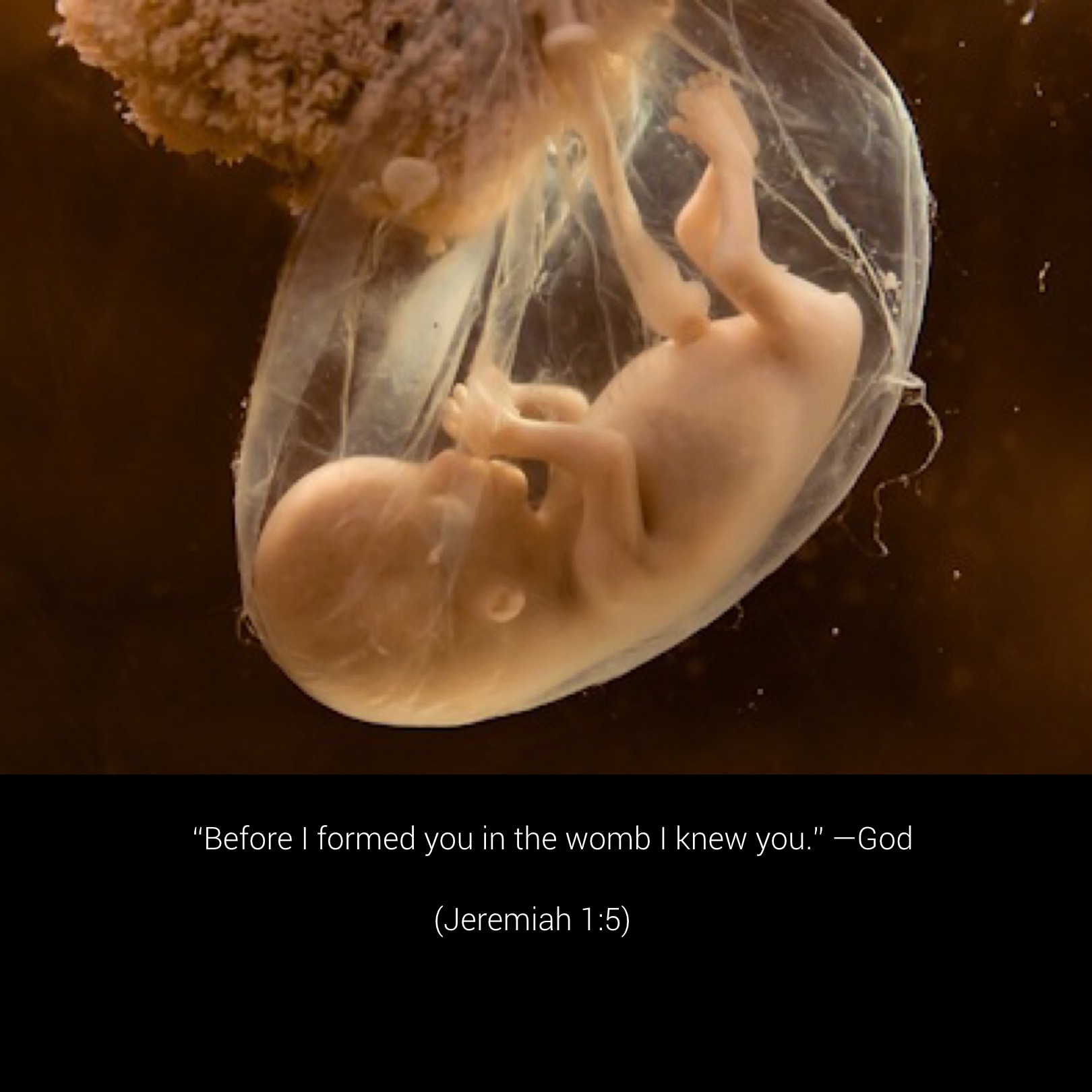
  • I formed you (v. 5a)
  • I knew you in advance (v. 5b)
  • I set you apart (v. 5c)
  • I appointed you (v. 5d, 10)
  • I am sending you (v. 7a)
  • I give you the words to say (v. 7b, 17)
  • I am with you (v. 8a, 19a)
  • I will rescue you (v. 8b, 19b)
  • I will put my words in your mouth (v. 9)
  • I am watching over you (v. 12)
  • I am making you strong (v. 18)

The faces of people are not how you and I should gauge (dis)approval.

How sad to look at other faces for approval, only to hear God say, “Depart from Me. I never knew you!

How liberating to know that even though other faces may disapprove me, I can still hear my Master say, “Well done, good and faithful servant!

Whose face are you looking at today?

Fearless (book review)

Max Lucado has always had a unique way of turning a phrase, of capturing a moment in Scripture that makes biblical truths pop off the page. I’ve always appreciated the way he can bring first-century truths into twenty-first-century applications. Fearless is no exception to this.

Fearless is also exceptionally well-timed in its release. Lucado quotes Frank Furedi’s findings that the appearance of the term “at risk” was printed in US newspapers more than 18,000 times in the year 2000. A ninefold increase over the previous six years. A ninefold increase! We are a fear dominated society:

“Fear loves a good stampede. Fear’s payday is blind panic, unfounded disquiet, and sleepless nights. Fear’s been making a good living lately.” —Max Lucado

In his unique style, Lucado unmasks thirteen fears that have been “making a good living.” He unmasks these fears by countering each of them with Christ’s admonishment to us to “Fear not!” This is not a fear-denying book, nor is it a run-for-the-hills-because-the-sky-is-falling book.

Lucado presents a straightforward look into our most besetting fears and shows the fears for what they really are: monsters in the dark. And once these “monsters” are exposed to the light of Jesus Christ, they become toothless, harmless shadows.

A great read for anyone! I also loved the discussion questions at the back of the book. These helped me confront some fears head-on. They would also be an excellent springboard for a Bible study group.

I’m giving this book five unreserved stars! Imagine your life without fear— you can do it—this book will help.

Scarecrows In The Melon Patch

Think about the imagery: some old clothes stuffed with straw, perhaps a burlap bag with a funny face drawn on it, and maybe a raggedy hat on top. Then hang this creation on a wooden pole, arms all akimbo, in an attempt to scare away birds from a melon patch.

Are you scared? I certainly hope not!

Yet this is exactly the thing God used to describe the fear His people were experiencing

Like a scarecrow in a melon patch, their idols cannot speak; they must be carried because they cannot walk. Do not fear them; they can do no harm nor can they do any good.

The scarecrow doesn’t hurt anyone, but he doesn’t help either. God said His people were afraid of a scarecrow. But here’s the amazing part: they made their scarecrows!

These people had forgotten God—forgotten His goodness, forgotten His blessings, forgotten His mercy, forgotten His strength, forgotten His wisdom, forgotten His power. Since they had forgotten that He was the One in charge, that He was the One who could protect them, they tried to create their own protection. They built their own scarecrows, and then became afraid of what they created!

I think we have done the same thing today.

We have forgotten God’s goodness, forgotten His blessings, forgotten His mercy, forgotten His strength, forgotten got His wisdom, forgotten His power. To protect ourselves we have made scarecrows of economic systems, and governments, and elected officials, and medicines, and insurance companies. And just like scarecrows, they can do no harm nor can they do any good.

That’s why fear is so rampant in our hearts: We are looking to the scarecrows we have created instead of looking to the Creator who gave us life.

Are you fearful? Do you feel panicky? Does your future seem ominous? If so, perhaps there are a few scarecrows you need to dismantle. Rip them apart and scatter the straw to the wind. And then begin to read God’s Word. Jeremiah also records these words from God to us

This is what the LORD says: “Let not the wise man boast of his wisdom or the strong man boast of his strength or the rich man boast of his riches, but let him who boasts boast about this: that he understands and knows Me, that I am the LORD, who exercises kindness, justice and righteousness on earth, for in these I delight,” declares the LORD.

Understanding and knowing God’s kindness, justice, and righteousness will destroy your scarecrows and set you free from fear. Get rid of those scarecrows today!

Real Raw Emotions

This week I’ve been writing about my favorite book—the Bible—and why I find it so fascinating. Yesterday I talked about how the Bible helps me mentally. But we are not just mental creatures, we are emotional, too, and I have found my Bible to be an excellent way to express some of my deepest, rawest emotions.

(If you would like to read the other parts of this series, they are here, here, here, and here.)

Humans are created in God’s image, and God expresses emotion. In fact, God expresses emotion more deeply and purely than we humans can His sorrow is more bitter, His love is more intense, His jealousy is more pure.

Emotion is expressed throughout the Bible, but I’m particularly attracted to the emotional responses in the Psalms. These are prayers and songs which express the deepest emotions of angry, loving, hurting people. A few examples—

You know what I long for, Lord; You hear my every sigh. (Psalm 38:9 NLT)

Be merciful to me, O God, for men hotly pursue me; all day long they press their attack. My slanderers pursue me all day long; many are attacking me in their pride. (Psalm 56:1-2 NIV)

God, smash my enemies’ teeth to bits, leave them toothless tigers. Let their lives be buckets of water spilled, all that’s left, a damp stain in the sand. Let them be trampled grass worn smooth by the traffic. Let them dissolve into snail slime, be a miscarried fetus that never sees sunlight. Before what they cook up is half-done, God, throw it out with the garbage! (Psalm 58:6-9 The Message)

O my God, my life is cast down upon me and I find the burden more than I can bear…. (Psalm 42:6 AMP)

My God, my God, why have You forsaken me? Why are You so far from saving me, so far from the words of my groaning? O my God, I cry out by day, but You do not answer, by night, and am not silent…. I am poured out like water, and all my bones are out of joint. My heart has turned to wax; it has melted away within me. My strength is dried up like a potsherd, and my tongue sticks to the roof of my mouth…. Dogs have surrounded me; a band of evil men has encircled me, they have pierced my hands and my feet. …But you, O Lord, be not far off; O my Strength, come quickly to help me. (Psalm 22:1-2, 14-16, 19 NIV)

Jesus came to earth as fully God and fully man, able to experience the deepest, rawest emotions of anyone. “He was despised and rejected—a man of sorrows, acquainted with deepest grief” (Isaiah 53:3). Jesus knows what you feel because He felt it, too: “For we do not have a High Priest Who is unable to understand and sympathize and have a shared feeling with our weaknesses and infirmities and liability to the assaults of temptation” (Hebrews 4:15). As a result, “He lives forever to intercede with God on [our] behalf (Hebrews 7:25).

Don’t ever be afraid to express your rawest emotions in God’s presence—He knows profoundly what you are feeling. When you are struggling with deep emotion, the Bible knows how to speak your heart’s cry to God.