8 Quotes From “Promotion”

PromotionPromotion by Rick Renner is a book to help both ministry and for-profit business organizations make better personnel decisions. You can read my full book review by clicking here. The following are a few quotes I highlighted.

“When choosing people for promotion, it’s important to understand that nothing is more important to God in the life of a leader then his heart. The heart takes first place over gifts, talents, education, and everything else.” 

“A person who is satisfied with little will never achieve much. On the other hand, a person who has a desire for excellence will never be satisfied with a low level performance in his or her life.”

“Any person who does just the required minimum should never be considered for leadership. … So be very careful not to over-spiritualize the selection process when choosing leaders. Don’t ignore telltale signs in a candidates natural life that alert you to a lack of desire.” 

“It’s normal for people to occasionally misunderstand. But when staff members misunderstand their leader’s instructions 99% of the time, something is wrong with the way that leader is communicating with those under his authority. His followers cannot be wrong all the time.”

“You should not look for a candidate free of problems, but for one who knows how to turn to God and manage life’s challenges according to Scripture.”

“Never forget that when you’re a leader, the most important pulpit you’ll ever possess is the testimony of your own personal life.”

“You’re never going to find a perfect person. … So never forget to let mercy triumphs over judgment. But if your peace is disturbed because of things you see occurring in a potential leader’s life, don’t ignore what is bothering you. Pay attention to what your spirit is telling you. Perhaps he or she is the right leader, but it isn’t the right time yet. It’s better to be slow and sure then to move forward without the inner conviction that you’re on the right track.”

“You may have a more visible position than others do during this earthly life, but your value to God for eternity is no different than anyone else in His Body.”
Read More And Read Better

It’s no secret that I like to read. I read a little for pleasure, but mostly I read because it makes me a better Christian, a better husband, a better dad, a better preacher. It expands my horizons. It gives me new ideas. It teaches me life lessons. It gives me insights to share with others.

My first priority is to read my Bible every day, and then all of my other reading is filtered through that prism of Scripture. I don’t read only “Christian” books, but I do only read good books.

It’s true: Leaders are readers. If you want to lead more and lead better, read more and read better.

“When a very young minister, I asked the famous holiness preacher, Joseph H. Smith, whether he would recommend that I read widely in the secular field. He replied, ‘Young man, a bee can find nectar in the weed as well as in the flower.’ I took his advice (or, to be frank, I sought confirmation of my own instincts rather than advice) and I am not sorry that I did. John Wesley told the young ministers of the Wesleyan Societies to read or get out of the ministry, and he himself read science and history with a book propped against his saddle pommel as he rode from one engagement to another.” —A.W. Tozer

“Keep yourself full with reading. Reading gives you a vocabulary. Don’t read to remember; read to realize.” —Oswald Chambers

“It is a dreadful deception that learning and mental growing are strictly associated with school. Good reading should be the vocation of a lifetime.” —John Piper

“Paul says to Timothy, so he says to everyone, ‘Give yourself to reading.’ He who will not use the thoughts of other men’s brains proves that he has no brains of his own. You need to read. Renounce as much as you will all light literature but study as much as possible sound theological works, especially the Puritans and expositions of the Bible. The best way for you to spend your leisure is to be either reading or praying.” —C.H. Spurgeon

“The reading of all good books is like conversation with the finest men of past centuries.” —Rene Descartes 

“After all that professors may do for us, the real University is a collection of good books.” —Thomas Carlyle

“Ignoring good books enfeebles vision and strengthens our most fatal tendency; the belief that the here and now is all there is.” —Allan Bloom

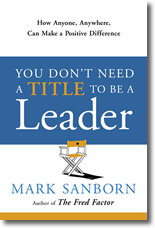
10 Quotes From “You Don’t Need A Title To Be A Leader”

You Don't Need A Title To Be A LeaderMark Sanborn has given us a wonderful book to help people be more well-rounded in their leadership, whether they have a title or not. You can read my full book review by clicking here. These are some of the quotes from this book that caught my eye.

“Leaders, untitled or otherwise, realize the extraordinary impact they can have on others and the world around them. They consciously choose to exercise their abilities, skills, and knowledge to help make a difference.”

“The reality is that we all work ‘backstage’ in our lives at times. Real leaders bring the same commitment to excellence to whatever they do, whether on the stage or behind it.”

“I began to see what happened to me as an opportunity rather than an obligation. And it made all the difference. Now when the phone rings, I respond to each call as an opportunity to serve, earn, learn, influence, network, encourage, or teach. The difference isn’t in the caller or the purpose for the call; the difference is in my response. … Genuine, authentic leadership infuses meaning into your life, because you know that your efforts count and that you are serving the needs of others as well as your own.”

“I think of the ‘self-mastery index’ as the ratio between promises made and promises kept—both to oneself and to others. If your mouth keeps making promises that you can’t keep, there is a great deal of room for improvement. Integrity, after all, is measured by the distance between your lips and your life. If you want to be a leader in your own life and in the lives of others, you’ve got to follow through on your own promises, whether you have a title or not.”

“You don’t necessarily have to be smarter or better educated to succeed. Your power lies in your ability to focus on doing what is important. If you focus on the right things, and work at them often, you will achieve exceptional results.”

“People do things for their own reasons, not for yours. To be an effective leader, you need to know how to motivate others.”

“One of the greatest compliments you can be paid as a leader is to have someone say that you helped them be better than they thought they could be.”

“People remember stories. Stories are the coat pegs of the mind. They are where people hang their ideas. Once they have a memorable story to help them remember, they can recall whatever important moral or point you have to make. … Telling an entertaining story is important, but being the story is better.”

“When something doesn’t happen, there is always an explanation. But never accept an explanation as an excuse. … Instead, use explanations to figure out what happened, then look for the lesson that will prevent that something from happening again.”

“Everyone makes a difference. The choice we all have is whether we want to make positive difference or a negative one.”

Keep On Learning

Safe pathDon’t ever think you know it all.

Because you can’t!

There’s no way you can know it all.

So keep on learning.

Keep on digging into God’s Word.

Keep on letting the Holy Spirit teach you.

God is the only Know-It-All.

And He wants to teach you too.

What should a man learn?
Not hard to answer:
steadfastness in holiness,
shortness of words,
gentle brotherliness…
walking in obedience to God…
zeal in prayer…
bringing pride low,
simplicity of heart…
patience in the face of hardship. —Colmán mac Beógnai


Living Sermon

Pastors, this is a timely word from Mark Batterson…

There is a world of difference between preaching a sermon and living a sermon.  No amount of study can compensate for deficiencies in your life. You can “study it” but if you aren’t “living it” it’ll ring hollow.  The opposite is true as well.  Jesus’ teaching was authoritative because it was backed up by his life.  You can’t back up your sermons with a seminary degree.  You’ve got to back it up with your life. My advice?  Don’t just get a sermon. Get a life.  Then you’ll get a sermon!

Let me be blunt: if your life is boring your sermons will be too.

If you have no life outside of church—no hobbies, no friends, no interests, no goals—your illustrations will feel canned, your applications will feel theoretical instead of practical, and your sermons will be lifeless instead of life-giving.

The greatest sermons are not fashioned in the study.  They are fleshed out in the laboratory of everyday life.  Now, please don’t misinterpret what I’m saying.  You need to study to show yourself approved and rightly divide the word.  So keep studying!  In fact, study more.  But you can’t just study the word.  You need to live it.  The most powerful sermons are well-studied and well-lived.

At the end of the day, God won’t say, “Well studied, good and faithful servant.”  He won’t say, “Well thought” or “Well said” either.  There is only one commendation: “Well done.”

Now let’s be brutally honest: most Christians are educated way beyond the level of their obedience already! We don’t need to know more, we need to do more.  That’s why I think sermons should focus on application more than interpretation.  Theological doesn’t mean theoretical.  In fact, as you get a life, your messages will be less theoretical and more experiential.  You won’t just preach your sermons. You’ll incarnate them!

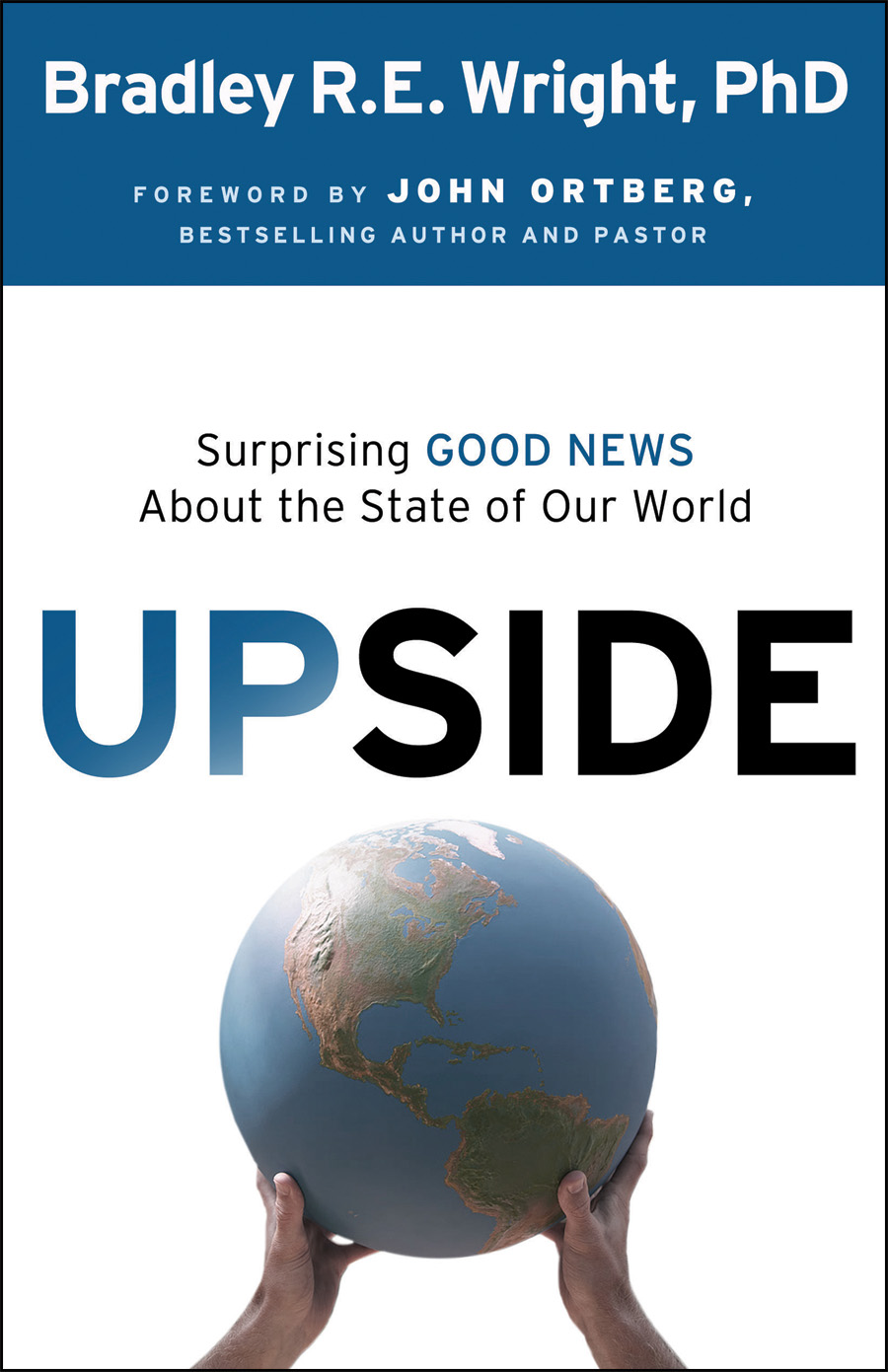
Upside (book review)

Have you ever heard how a TV news producer decides what the lead story will be? Or how a managing editor decides which stories get the front page of the newspaper? It comes down to this: “If it bleeds, it leads.” Sad, but too often true. With all of this negative news leading, Dr. Bradley R.E. Wright’s book Upside: Surprising Good News About the State of Our World is indeed surprisingly good news!

Dr. Wright notes that sociologist Joel Best “classifies the different types of bad statistics as follows: some numbers are bad to begin with; some numbers get bad as they are passed along; and some numbers are chosen because they are bad.” In other words, there’s just a lot of bad news out there!

But despite all of this negative press, people around the world are surprisingly upbeat. That’s because when a sociologist like Dr. Wright gets a hold of all of these statistics, he can put them into the proper perspective. He looks at the data on a variety of topics:

  • Personal finances
  • Education
  • Health
  • Crime and war
  • Marriage and divorce
  • The environment

“The trouble with this country is that there are too many people going about saying ‘the trouble with this country is….’” —Sinclair Lewis

Do bad things happen? Yes. Are there some issues that still need to be addressed? Absolutely. Is the world ready to collapse all around us? It doesn’t appear so. Christians should have the clearest and keenest worldview because it’s a biblical worldview. Dr. Wright does an excellent job of helping the reader find the perspective that is realistic, yet balanced.

Economist professor Julian Simons summarized it this way—

Almost every economic and social change or trend points in the positive direction, as long as we view the matter over a reasonably long period of time. That is, all aspects of material human welfare are improving in the aggregate.

I am a Bethany House book reviewer.

How To Read The Bible (book review)

People who call themselves Christians should know how to read the Bible, right? Maybe, but many times I think we assume far too much. Fortunately How To Read Your Bible by A.J. Conyers can help.

  • Some people avoid the Old Testament, saying, “It’s too confusing!”
  • Some people simply flip their Bibles open to any passage and simply start reading.
  • Some people only open their Bibles when they’re at church.

All of these methods may work, but they’re not the best way to learn what God has to say to us in His Word. A.J. Conyers explains to his readers the art of reading the Bible, as well as the practice of reading the Bible. He gives enough background information to get you started in the right direction, and he gives you ample resources to continue digging into God’s Word more.

As you might have noticed, I love to read. But hands-down-without-question my favorite book is the Bible. Every time I open it up, I find something new to apply to my life. If you’re having difficulty getting started on a Bible study, this book may be just the thing to help get things rolling.

(I’m also a big fan of YouVersion: the Bible app for your smart phone. You can download it for your iPhone or Droid by clicking here.)

Do You Read The Bible Or Does The Bible Read You?

I’ve been studying the lives of the kings of Judah. The last God-fearing king before the fall of Jerusalem was a man named Josiah. He became king as an 8-year-old and really began looking for God as a teenager. Apparently, during all of this time, the book of the Law (the first five books of our current Bible) was hidden away and forgotten. As Josiah started seeking God, he gave orders that the temple in Jerusalem be repaired. During the clean-up work, the workers rediscovered the book of the Law and brought it to the palace. They began to read the Law to Josiah…

When the king heard the words of the Law, he tore his robes.

Tearing of the robes is a sign of deep mourning. The words of Scripture cut Josiah like a dagger to the heart because he knew he and his people weren’t living according to God’s standards. He started telling everyone the Scriptural standards that they needed to honor, and had the words of the Law read aloud for everyone to hear. Then in the presence of everyone, Josiah reaffirmed his commitment to be a man who lived by the words of God’s Word.

This got me thinking:

  • Do I have an emotional response when I read the Bible? Or is it just a mental exercise? Or worse yet, just a meaningless daily habit?
  • Am I truly sorry when I read in the Bible where I’ve fallen short of what God desires? Or do I make excuses?
  • Do I ask the Holy Spirit to help me live out what I’ve read in the Word? Or do I convince myself that those parts don’t pertain to me?
  • Do I share with others what’s been revealed to me? Or do I keep it to myself?
  • Am I willing to be accountable to others about the changes I need to make? Or am I trying to be a lone ranger saint?

Do I just read the Bible? Or do I allow the Bible to read me?

Challenging Concepts

Part two of our Spiritual Self-Defense series went well last night. Considering this was a difficult concept to wrap our finite, human brains around, I felt that everyone was tuned in. Trying to wrestle with the concepts of God as omnipresent, the unique Three-in-One arrangement of the Trinity, or Jesus as fully God and fully Man are not easy. But it is so important to keep learning and keep growing in our understanding of who God is.

Some people bail out too quickly. “It’s too hard,” they complain, and then walk away. But we have to keep stretching.

A couple of thoughts I’m pondering today:

“If you believe what you like in the gospels, and reject what you don’t like, it is not the gospel you believe, but yourself.” —Augustine

“It seems that when we encounter a hard truth about God, we either bend our understanding to Him or bend Him to our understanding.” —Chris Tomlinson

I want to believe the Bible more, so I’m asking the Holy Spirit to continue to bend me and shape me to the deeper truths about God.

I Went Back To Middle School

Yesterday morning was the second annual Parent Shadowing Day at Cedar Springs Middle School, so I got to follow my daughter for a couple of hours. It was a little weird being back in middle school after 30+ years, but I had a lot of fun being with my daughter.

Here are a couple of thoughts on my day:

First hour band

  • Got to sit in my old section: percussion. It was all I could do to keep from jumping in on the marimba!
  • A little painful to listen to middle schoolers working their way through a song, but slowly Feliz Navidad and Greensleeves begin to emerge.
  • I love the way band teachers explain music verbally. Mr. Green said to the brass, “You’re supposed to start with a strong staccato ‘Tah!’ but you’re giving me a slurred ‘Blaaah.’”

Second hour computers

  • When I was in middle school we had precisely zero computers … in the whole building! Now each student is sitting at their own workstation.
  • I’m amazed at how fast these students are on the computer (but I’m still faster!)
  • Some kid just sneezed into the sleeve of his sweatshirt. Nice catch! He says, “Eww, gross!” I say, “Better your sleeve than your computer monitor!”
  • My overachieving daughter just completed her project that isn’t due for another two weeks!

Third hour writing

  • I used to dread going to writing class in middle school, but now I love writing. I’m thankful to Mr. Cochrane who encouraged and invested in my writing skills.
  • The class welcomed a new student who just moved to Cedar Springs. It’s got to be tough to be “the new kid.” I need to remember how that feels so I can make new people feel welcomed.
  • Cool! This class throws around a Koosh ball to help identify who’s supposed to be talking. It’s like having gym in writing class.
  • I love the peer-to-peer editing of each other’s research papers. They have to write down PATS: Praise, Ask a question, Tell something that sticks in their mind, and give a Suggestion. Encouraging encouragement is way cool.
  • The students here are much more quiet and respectful of their teachers than we were in middle school. I’m just saying….

Fourth hour science

  • Fascinating how a folded piece of pre-printed paper and a brass brad can help students learn the position of the sun relative to our latitudinal position in Michigan. And I’m amazed at how quickly the students grasp the concept.
  • We got to leave science early to wish student teacher Miss Nicki a fond farewell. She’s graduating and now looking for a full-time teaching assignment. We celebrated with Tootsie Pops.

What a wonderful experience. It’s so cool to “walk in someone else’s shoes.” I need to make that a more regular discipline in my life.